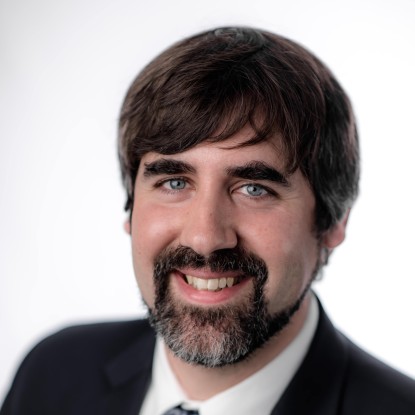
Bruno Filipe Rama Travassos is an Associate Professor with Tenure at the University of Beira Interior (UBI) , affiliated with the Department of Sports Sciences and the CIDESD - Research Center in Sports Sciences, Health Sciences and Human Development . He directs courses in Data Analysis and Research in Football and Futsal , Entrepreneurship and Career Management in Sports , and Futsal Training . His roles include teaching units such as Seminars in Sports Science and Strategic Planning in Futsal . Research Focus: Decision-making in sports, tactical behavior in soccer/futsal, ecological dynamics, spatiotemporal analysis, athlete-environment interaction, and training task manipulation. Publications Trends: Recent work explores weekly training load impacts on futsal performance (2023), age/numerical relation dynamics in youth football (2022), team composition effects on tactical behaviors (2021), and network metrics for training adaptation (2020). Earlier studies address perceptual constraints, volleyball decision-making, and rink-hockey physiology (2016–2017). Labs & Teams: Active in CIDESD research center, focusing on sports sciences and human development.
Juan García López is a Lecturer at the Faculty of Physical Activity and Sports Sciences , University of León. He is a leading researcher in Sports Biomechanics with a focus on cycling, running, and racket sports performance optimization. Head of Biomechanics Lab at High Performance Sports Center of León Supervised 5 PhD students (3 awarded Best Thesis by University of León) Member of Spanish Society of Sports Biomechanics (President 2023-present) and International Society of Biomechanics in Sports His research examines: Cycling biomechanics (saddle height, pedal systems, crank length) Footwear technology effects on running performance (mountain running, sprinting) Load monitoring in racket sports (badminton) through inertial measurement units Development of velocity-based resistance training monitoring tools With over 50 JCR publications (Q1-Q2 Sports Sciences) and 3000+ Google Scholar citations, he has secured >1.5M€ in research funding. His work includes knowledge transfer projects with professional teams like Euskaltel-Euskadi Cycling Team and Deportpublic SL . Scientific recognition includes: 5 x 6-year research periods from Spanish Ministry of Universities High impact metrics: >700,000 ResearchGate reads, >3000 citations He serves on editorial boards of 2 Spanish journals and reviews for 10+ international journals (Journal of Sports Sciences, Journal of Applied Biomechanics). His lab focuses on biomechanical evaluation for injury prevention and performance enhancement across multiple sports disciplines.
Gauthier SCHAAL is a Lecturer and researcher at the University of Western Brittany since 2012, affiliated with the LEMAR Laboratory. His research focuses on trophic ecology, stable isotopes, and fatty acids to study ecosystem functioning. He has supervised multiple theses exploring marine ecosystems in locations like Gabon, Mayotte, Mexico, and the Antarctic. His work integrates biomarker analyses to understand trophic interactions and ecological niche dynamics. Education: PhD at Roscoff Biological Station (Sorbonne Universities) Post-doctorate at Rhodes University, South Africa Research Interests: Trophic biomarkers (stable isotopes, fatty acids) Shark ecology and conservation Mangrove ecosystem dynamics Benthic invertebrate taxonomy Advising and Grants: Co-supervised 10+ theses on topics ranging from shark migration to mangrove pollution Involved in projects like ADJUST Shark DNA, IROCWA, and OMEGA Labs & Teams: Active researcher at the LEMAR Laboratory, collaborating with teams in France, Gabon, Mexico, and Belgium.
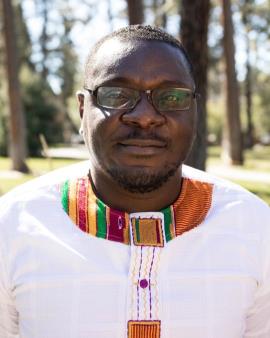
Dr. Ernest Ofori is an Assistant Professor in the Department of Physical Therapy at Whitworth University, joining the faculty in 2021. His research focuses on neurorehabilitation, cardiovascular health, and exercise science, with a particular interest in dance-based interventions for mobility and aging populations. Education: PhD in Rehabilitation Sciences (Physical Therapy), University of Illinois Chicago (2020) MS in Biomedical Engineering, Southern Illinois University Carbondale (2014) BS in Physical Therapy, University of Ghana (2007) A Postdoctoral Fellowship in Cardiovascular Health & Physical Activity at the Medical College of Wisconsin (2020-2021) further enriched his expertise. Research interests emphasize the application of music, singing, and dance-based exergaming to improve cardiovascular health and mobility. His work combines biomechanical analysis with clinical outcomes, leveraging inertial sensors for mobility assessment. Key contributions include studies on stroke rehabilitation and the acute effects of music on cardiovascular biomarkers. Presentations include discussions on dance-based interventions for fall prevention in older adults (Ghana Physiotherapy Association, 2021) and sensor validation for balance kinematics (Physical Health Webinar, 2021). He has also contributed to diversifying academic faculty through participation in the Statewide Conference for Diversifying Faculty in Illinois (2019). Teaching responsibilities span courses in exercise science, global health, and doctoral research methods, reflecting his commitment to both clinical practice and academic rigor.
Dr. Michelle Danyluk is a Professor in the Food Science and Human Nutrition Program at the University of Florida's Institute of Food and Agricultural Sciences (UF/IFAS) Citrus Research and Education Center. Her work bridges academic research and practical extension services focused on microbial food safety in produce systems. Her research interests center on microbial food safety and quality , with emphasis on the microbiology of fresh fruits, vegetables, nuts and juices. She investigates bacterial pathogens in produce environments including production, packing and processing settings, their movement mechanisms, and mitigation strategies with direct public health implications. Her extension program delivers critical training on FSMA, HACCP, GAPs and specialized food safety protocols for agricultural stakeholders. Dr. Danyluk's scholarly output reveals strong focus areas in pathogen dynamics in agricultural water systems , produce contamination pathways , and post-harvest intervention strategies . Her recent publications demonstrate particular expertise in Salmonella and Listeria monocytogenes behavior on cantaloupe, mangoes, and tomatoes, along with agricultural water safety assessments. Member of International Commission on Microbiological Specifications for Food (ICMSF), 2016 IAFP Executive Board Member, 2019 She actively mentors graduate students and postdoctoral researchers while leading significant multi-institutional food safety initiatives. Her laboratory team conducts field and controlled environment studies on pathogen behavior in agricultural settings, with strong emphasis on translating research into practical food safety solutions for growers and processors. Current projects include agricultural water safety assessments and development of practical pathogen mitigation strategies for fresh produce systems.
Dr. Jane Kent-Braun is a Professor at the University of Massachusetts Amherst within the School of Public Health and Health Sciences . Her research spans muscle physiology , neurology , and aging , with a focus on Skeletal muscle fatigue mechanisms Age-related neuromuscular adaptations Metabolic responses to exercise Pathophysiological changes in multiple sclerosis Her research interests include: Mechanisms of human muscle fatigue Neuromuscular control in aging populations Physiological basis of mobility limitations Muscle energy metabolism in vivo Applications of MRI to muscle function analysis Interactions between physical activity and muscle performance Recent publications reveal trends in muscle physiology (2014), computational modeling (2013), and aging-related adaptations (multiple entries). Key subfields include Skeletal Muscle Fatigue , Neurological Disorders , and Metabolic Pathways . Collaborators include Richard Van Emmerik and Michael Busa , with affiliations across School of Public Health and Health Sciences Biomedical Engineering Clinical Neurophysiology Technical approaches emphasize in vivo muscle analysis using MRI and magnetic resonance spectroscopy , with applications to multiple sclerosis and age-related decline .
Catrien Bijleveld is a Professor of Methods and Techniques of Criminological and Empirical-Legal Research at VU Amsterdam , a Senior Researcher at the Netherlands Study Centre for Crime and Law Enforcement (NSCR) , and Chair of the Dutch Association of Criminology . She serves as President-Elect of the European Society of Criminology and contributes to policy via roles such as Chair of the Advisory Board of the SEMA Foundation and the Commission on Information Management at the Ministry of Justice and Security (Cadi). Her research spans criminology , victim studies , and empirical legal research , focusing on topics like crime victim health outcomes , judicial compensation predictability , extremism’s impact on child protection , and genetic influences on social support . Her recent work includes twin studies on crime victimization, epigenetic aging, and international crimes. Her publications highlight trends in empirical analysis of legal systems , international criminal justice , and victim-centered policy . She co-authored studies on insider witness assessments at the ICTY, ICTR, and ICC , sentencing disparities, and psychosocial service delivery for victims. Bijleveld leads multidisciplinary teams at NSCR, advancing research on crime prevention, legal accountability, and victim support frameworks. Her methodological expertise bridges criminology and behavioral genetics , emphasizing rigorous empirical approaches.
Prof. Dr. Joke SPILDOOREN serves as a Senior Lecturer at Hasselt University's Faculty of Rehabilitation Sciences, Department of Rehabilitation Sciences and Physiotherapy. She maintains an active research profile while holding leadership positions including Chair of the Bachelor and Master Examination Committees for Rehabilitation Sciences and Physiotherapy. Her research interests focus on geriatric rehabilitation, with particular expertise in balance control, vertigo treatment in elderly populations, dementia rehabilitation through exercise and music interventions, and the impact of frailty syndrome in cardiovascular disease patients. Her work bridges clinical practice with scientific inquiry to improve rehabilitation outcomes for aging populations. Analysis of her publication record reveals a strong focus on neurological rehabilitation, particularly Parkinson's disease gait disorders and cognitive-motor interactions. Her research increasingly incorporates interdisciplinary approaches combining exercise physiology, neuroscience, and geriatric medicine to address complex rehabilitation challenges in aging populations. Scientific Awards: Young research award 2021 from Stichting Alzheimer onderzoek (Alzheimer Research Foundation) Prof. SPILDOOREN actively mentors six doctoral candidates across various aspects of rehabilitation science, with current projects examining vertigo treatment in elderly, music-based exercise interventions for dementia patients, and balance control mechanisms. Her research portfolio includes 15 active projects totaling over €1.2 million in funding, with significant grants from Alzheimer Research Foundation and external partnerships. She leads the Rehabilitation Sciences Research Group and contributes to the interdisciplinary 'Interdisciplinary Learning Workplace' project, focusing on community service learning within evolving rehabilitation contexts.
Dr. Polemnia (Nia) Amazeen is a Professor in the Department of Psychology at Arizona State University (ASU), with cross-disciplinary affiliations including the Biosocial Complexity Initiative, Center for Social Dynamics and Complexity (CSDC), and Institute for Social Science Research. She also serves as a Senior Global Futures Scientist within ASU's Global Futures Scientists and Scholars program. Education: Ph.D. in Center for the Ecological Study of Perception and Action, University of Connecticut, 1996 Postdoctoral Training, Vrije Universiteit - Amsterdam Her research centers on identifying universal mathematical principles of dynamical similitude across diverse behavioral systems. Specializing in dynamical systems and complex systems theory, she develops analytical frameworks for real-time detection of behavioral transitions and anomalies using multiscale data streams (neural, physiological, kinematic, communication). Her work bridges cognitive science, human factors, and artificial intelligence to decode complex human behavior through interdisciplinary lenses including kinesiology and psychology. Analysis of her 15 most recent publications (2002-2024) reveals consistent application of nonlinear dynamics to coordination phenomena across scales—from neural signatures in team cognition to motor-respiratory synchronization. Key trends include fractal/multifractal analysis of behavioral data, pink noise effects on state transitions, and computational modeling of memory foraging. Her work increasingly integrates real-time analytics for human-autonomy teaming applications. Scientific Awards: HFES Jerome H. Ely Award for Best Paper in Human Factors Amazeen has chaired or served on Ph.D. dissertation committees for 14 students including J. G. Holden, J. E. Butner, and A. Likens. Her research is funded by major federal agencies including NSF, ARL, DARPA, ONR, and USAMRMC, supporting investigations into team coordination dynamics and human-system interactions. She leads the Dynamics of Perception, Action, and Cognition (DPAC) research group, which develops analytical dashboards for translating complex behavioral data into actionable insights for military personnel, educators, and scientists through cross-disciplinary collaboration.
Jason Edsall, Ph.D., is a researcher and Director of Athletic Training and Exercise Science at Chatham University's College of Health Sciences. Based in Pittsburgh, PA, he holds certifications in athletic training, emergency medical response, and functional movement screening. BS in Athletic Training (Slippery Rock University, 2002) MEd in Post-Secondary Education (Salisbury University, 2004) Ph.D. in Athletic Training (Rocky Mountain University of Health Professions, 2016) His research focuses on exercise physiology, thermoregulation, and nutritional impacts on physiological responses. Key work includes studies on caffeine's effects on heart rate variability, brown adipose tissue dynamics, and moisture-wicking garments during exercise. Publications highlight his expertise in autonomic nervous system responses, metabolic regulation, and sports technology. He has co-authored systematic reviews on genetic variability in caffeine responses and dietary impacts on human physiology.
Abbigail Fietzer is an Associate Professor in the Department of Physical Therapy at Mount Saint Mary’s University. She serves as the department’s research curriculum coordinator and director of the MSMU sports physical therapy pro bono clinic. Her clinical expertise includes sports and orthopedic physical therapy, with extensive experience in medical coverage for performing artists and athletes. PhD in Biokinesiology, University of Southern California DPT in Physical Therapy, Mount Saint Mary’s University BS in Biology (Biochemistry), Occidental College Dr. Fietzer’s research investigates how altered biomechanics and neuromotor control contribute to overuse injuries, employing uncontrolled manifold analysis to study movement variability in Achilles tendinopathy. She explores attentional focus effects on motor control and injury prevention strategies. Her publications span journals like Human Movement Science and Journal of Sports Sciences , with presentations at major biomechanics and sports medicine conferences. She is a two-time funding recipient of the Foundation for Physical Therapy and has received multiple presentation awards. Her teaching includes biomechanics, kinesiology, research design, and scientific writing, with a focus on musculoskeletal management and outcomes research.
Nina Skjæret Maroni is an Associate Professor at the Department of Neuromedicine and Movement Sciences, Faculty of Medicine and Health Sciences, Norwegian University of Science and Technology (NTNU). She received her PhD in Health Sciences from NTNU, with a thesis focused on fall prevention training using exergames and welfare technology. Her academic work involves interdisciplinary research at the intersection of geriatrics, physical therapy, and technology-driven rehabilitation solutions. Bachelor's in Physiotherapy (2008), Sør-Trøndelag University College Master's in Movement Science (NTNU), focusing on cerebral palsy and posture PhD in Health Sciences (NTNU, 2016) with EU project FARSEEING Her research interests center on: Human movement analysis in elderly populations Exergames and welfare technology for fall prevention Balance and physical activity measurement Design of therapeutic gaming systems Biomechanics of postural control Recent publications highlight her work on exergaming efficacy, movement quality assessment, and smart home technologies for aging populations. She leads projects within the EXACT thematic group (Exergaming for active healthy aging and rehabilitation) under NTNU Health, focusing on technology-enhanced rehabilitation and preventive care for elderly individuals.
Diego Mo Groba serves as Assistant Professor in the Department of Political Science and Sociology at the University of Santiago de Compostela's Faculty of Political and Social Sciences, specializing in the psychological dimensions of political behavior with emphasis on electoral decision-making processes. He earned his PhD from the University of Santiago de Compostela in 2021 with the dissertation Impact of emotions on the decision to vote: towards an emotional perspective of electoral behavior , supervised by Dra. Nieves Lagares Díez and Dr. Ramón Máiz Suarez. Mo Groba's research program investigates how emotional responses shape political attitudes, particularly regarding far-right movements like VOX, nationalist sentiments, monarchical institutions, and aging populations' political engagement. His methodological approach integrates quantitative survey analysis with discourse examination across traditional and social media platforms, consistently contextualized within contemporary Spanish political dynamics. Analysis of his 2021-2024 publications reveals three dominant trajectories: emotional voting mechanisms (especially regarding VOX), temporal dimensions in institutional evaluations (notably monarchy), and demographic intersections in political participation (including aging populations). His work demonstrates increasing methodological sophistication in measuring emotional variables while maintaining strong empirical grounding in Spanish electoral contexts. As an active member of the Political Analysis research team, he contributes to collaborative projects examining political methodology and electoral systems, with emerging work exploring pandemic-related political fear and European cohesion policy implementation.
Prof. Christoph Hoog Antink is an Assistant Professor (Tenure Track) in Biomedical Engineering at TU Darmstadt. His research focuses on Artificial Intelligence in Medicine, Medical Signal Processing, and Unobtrusive Health Monitoring. He leads projects like the OptiVasc Project for non-invasive vascular assessment and develops novel hardware accelerators for neural networks in medical devices. He holds a PhD in Electrical Engineering from RWTH Aachen University and has extensive industry experience as Head of the Medical Signal Processing Group there. Education: PhD (Dr.-Ing.) in Electrical Engineering and IT, RWTH Aachen University (2012-2017) M.S. Mechanical Engineering, University at Buffalo, USA (2009-2011) Dipl.-Ing. in Electrical Engineering, RWTH Aachen University (2005-2012) Research emphasizes sensor fusion for healthcare applications, including gesture recognition with FMG/EMG and cardiac activity monitoring via capacitive ECG. His work bridges machine learning with clinical needs, such as automated ECG analysis and camera-based vital sign estimation in frail geriatric patients. Recent articles highlight advancements in 3D pose estimation using MediaPipe, tinyHLS hardware tools for neural networks, and cross-subject validation in gesture recognition. His contributions address challenges in unobtrusive monitoring for chronic conditions and elderly care.
Sharanne Raidal is a Professor at Charles Sturt University, affiliated with the Faculty of Agricultural, Environmental and Veterinary Sciences and based at the Gulbali Research Institute. She is actively involved in equine veterinary research and serves as a Registered Supervisor, mentoring graduate research students. Externally, she holds the position of Assistant Chief Examiner at the Australian New Zealand College of Veterinary Sciences since July 2018, contributing to professional standards in veterinary education and assessment. Research Interests: Her work spans several critical areas in veterinary science, particularly focused on equine health. Key interests include pharmacokinetics of drugs such as meloxicam and salbutamol, gastrointestinal diseases (especially gastric ulcers in performance horses), neonatal foal care (including sepsis and diarrhea), respiratory physiology, and the impact of transport on horse welfare. Her recent studies leverage advanced techniques like metagenomics and fecal microbiota transplantation, reflecting a modern, interdisciplinary approach to animal health. The analysis of her recent publications reveals a consistent focus on improving clinical outcomes in horses through evidence-based interventions. Trends include biomarker discovery (e.g., nucleosomes in sepsis), microbiome modulation, non-invasive respiratory support, and stress reduction during transport. Her research bridges laboratory science with practical applications in equine management and veterinary practice. Scientific Engagement: Regular speaker at industry events such as the Southern Breeders Seminar and AgriFutures symposium. Contributor to media discussions on equine drug studies (e.g., CSU’s research on performance horse medications). Active participant in academic and teaching activities, including CSU Ed 2015. Advising and Grants: As a Registered Supervisor, Dr. Raidal mentors postgraduate research students. While specific grants are not listed, her sustained research output and leadership in collaborative studies suggest successful grant acquisition and project leadership in equine health and pharmacology. Laboratories and Research Teams: She is embedded in the Gulbali Research Institute, a hub for agricultural, environmental, and veterinary research at CSU. Her collaborations span national and international networks, particularly in studies involving equine transport, microbiota, and critical care, often working with multidisciplinary teams across institutions.



/filters:format(webp)/prod01/channel_18/media/website/directory/Abbigail-Fietzer-headshot.jpg)