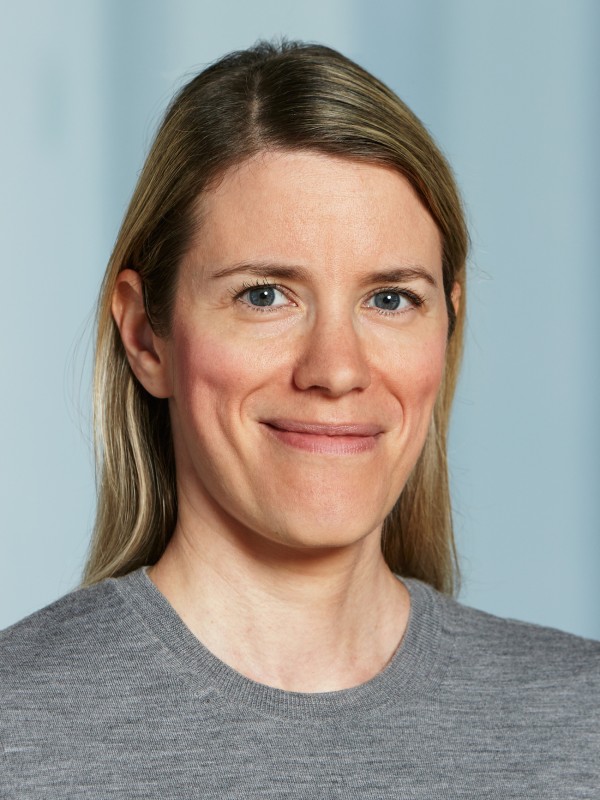
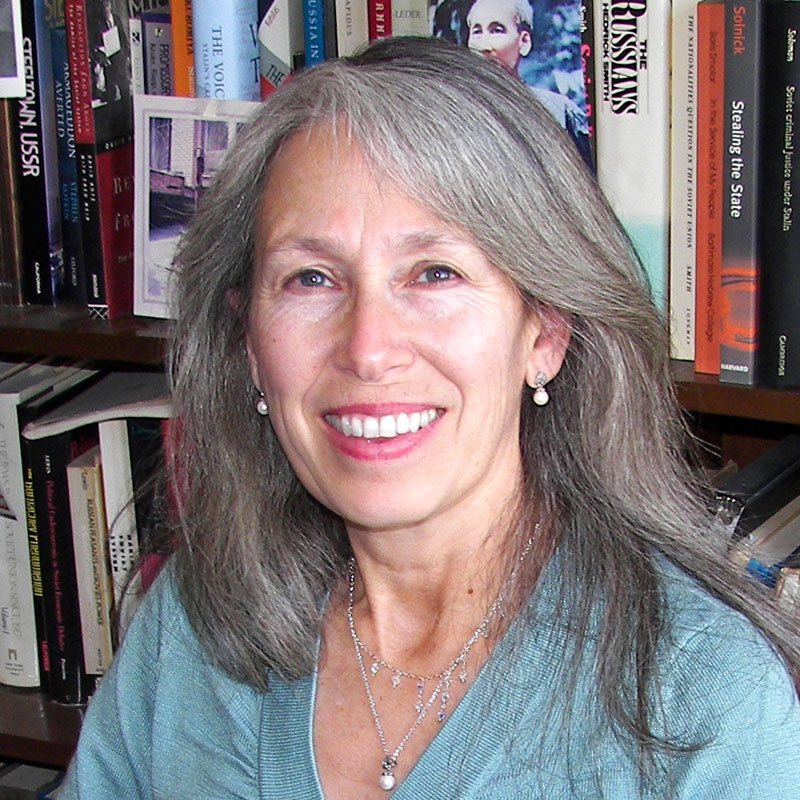
Prof. Olga Sorkine Hornung is a Full Professor of Computer Science at ETH Zürich, leading the Interactive Geometry Lab. She holds a BSc and PhD from Tel Aviv University (2000 and 2006) and conducted postdoctoral research at Technical University Berlin. Her research focuses on computer graphics, geometric modeling, and geometry processing, with applications in shape editing, digital fabrication, and animation. She has received numerous accolades, including the ACM Fellowship (2020), ERC Consolidator Grant (2020), and the Golden Owl Teaching Award (2021). Her work bridges theoretical foundations and practical algorithms, addressing challenges in parameterization, surface compression, and interactive design tools. Her research interests span: Computer Graphics & Visualization Geometric Modeling & Processing 3D Content Creation & Digital Fabrication Garment Design & Simulation Human Motion Analysis & Animation Awards and grants include: 2024: Best Paper Honorable Mention (EUROGRAPHICS) 2023: Member of Swiss Academy of Engineering Sciences (SATW) 2020: ERC Consolidator Grant 2017: Rössler Prize (ETH Zurich) Her lab focuses on developing novel methods for interactive geometry processing, with recent advancements in garment modeling (e.g., AIpparel, Rags2Riches) and motion retargeting systems like WalkTheDog. She actively collaborates on interdisciplinary projects, including biomedical applications and sustainable fashion technology.
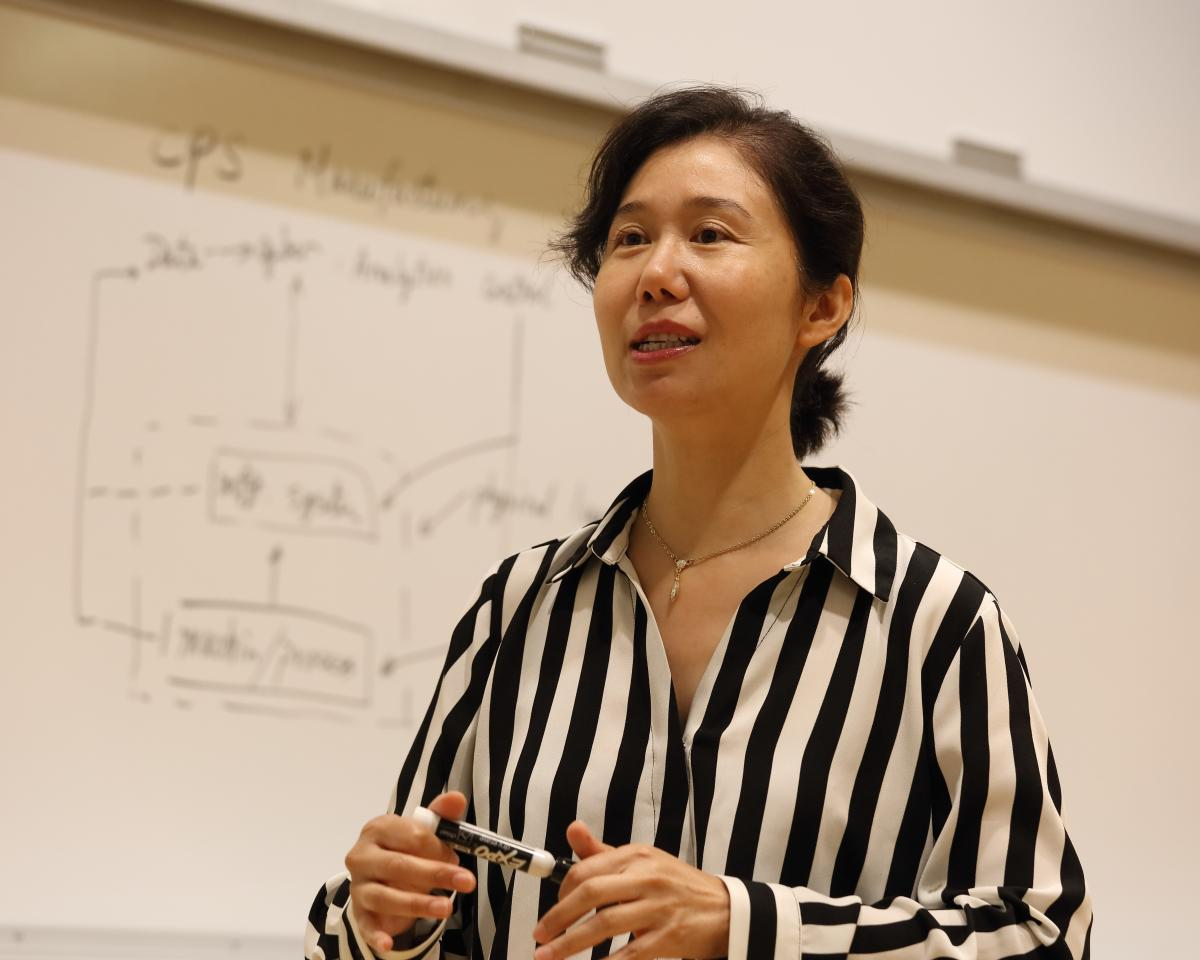
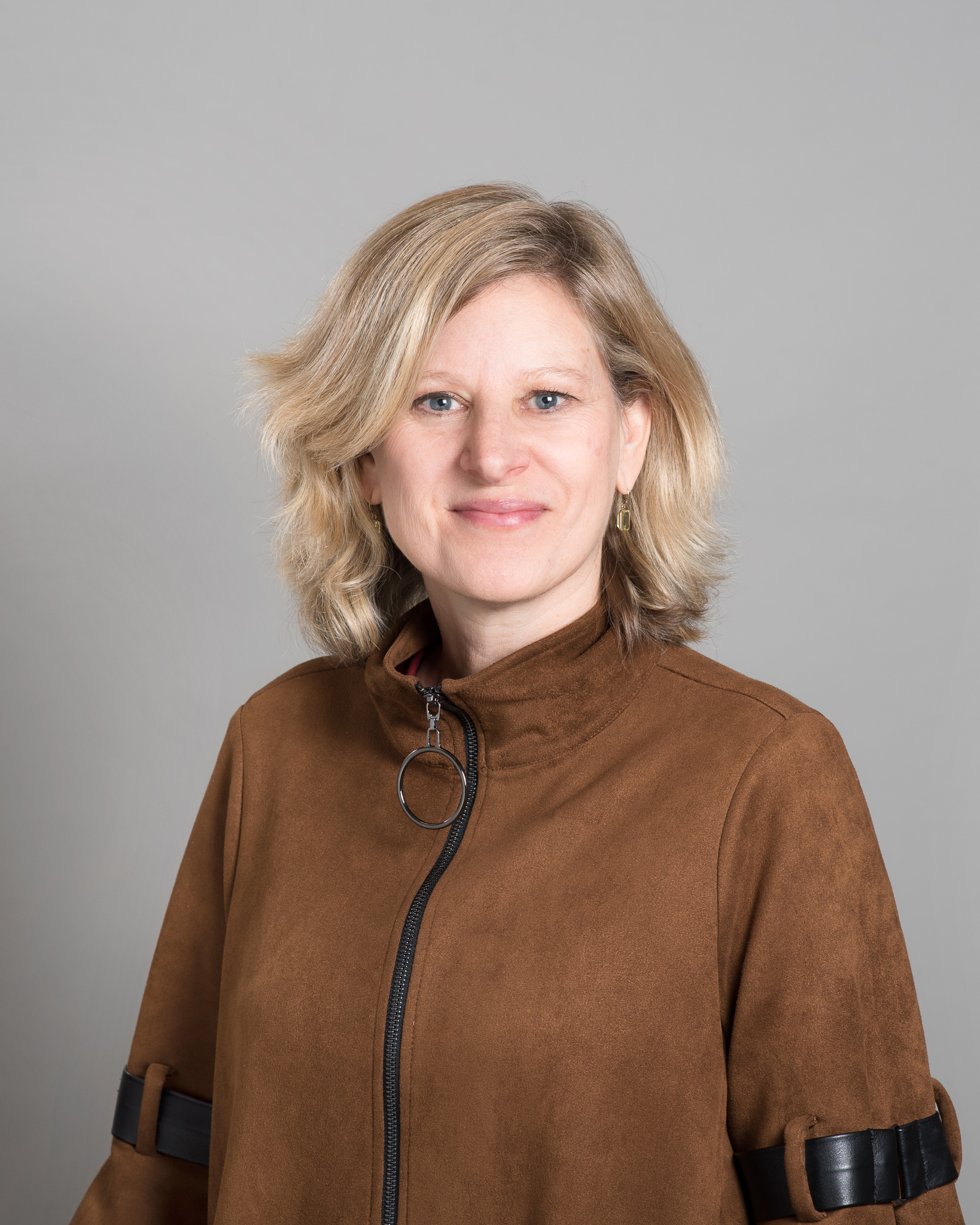
Qing (Cindy) Chang is a Professor in the Department of Mechanical and Aerospace Engineering at the University of Virginia, where she directs the Intelligent Systems Lab. She joined UVA in 2019 after serving as an associate professor at Stony Brook University. Prior to academia, she spent a decade at General Motors R&D, receiving their highest innovation awards. Education: M.S. from University of Wisconsin-Madison Ph.D. in Manufacturing from University of Michigan Research Focus: Chang's work integrates math-based modeling and data-driven methods to optimize manufacturing systems. Key areas include: Adaptive control and machine learning for production efficiency Human-robot collaboration frameworks Sustainable manufacturing through energy management Real-time control of cyber-physical production systems Reinforcement learning applications in industrial automation Research Trends: Her recent publications (2024-2025) demonstrate strong focus on AI-driven manufacturing optimization, with 80% leveraging reinforcement learning/LLMs for robotic control. Key themes include multi-agent coordination (67% of papers), energy efficiency (53%), and flexible production systems (47%). Awards & Recognition: Inducted as SME Scholar (2024) 20 Most Influential Professors in Smart Manufacturing - SME (2020) NSF CAREER Award (2014) Three-time GM Boss Kettering Award winner (2005,2006,2008) ASME and SME Fellow Leadership & Funding: Serves on NAMRI/SME Board of Directors with editorial roles across ASME/IEEE/SME journals. Research supported by NSF (including CAREER), Department of Energy, and multiple industry partners. Leads projects on human-robot collaboration and sustainable manufacturing. Lab & Collaboration: Directs the Intelligent Systems Lab at UVA, focusing on industrial AI applications. Collaborates with automotive and energy sectors to translate research into practical solutions for smart factories.
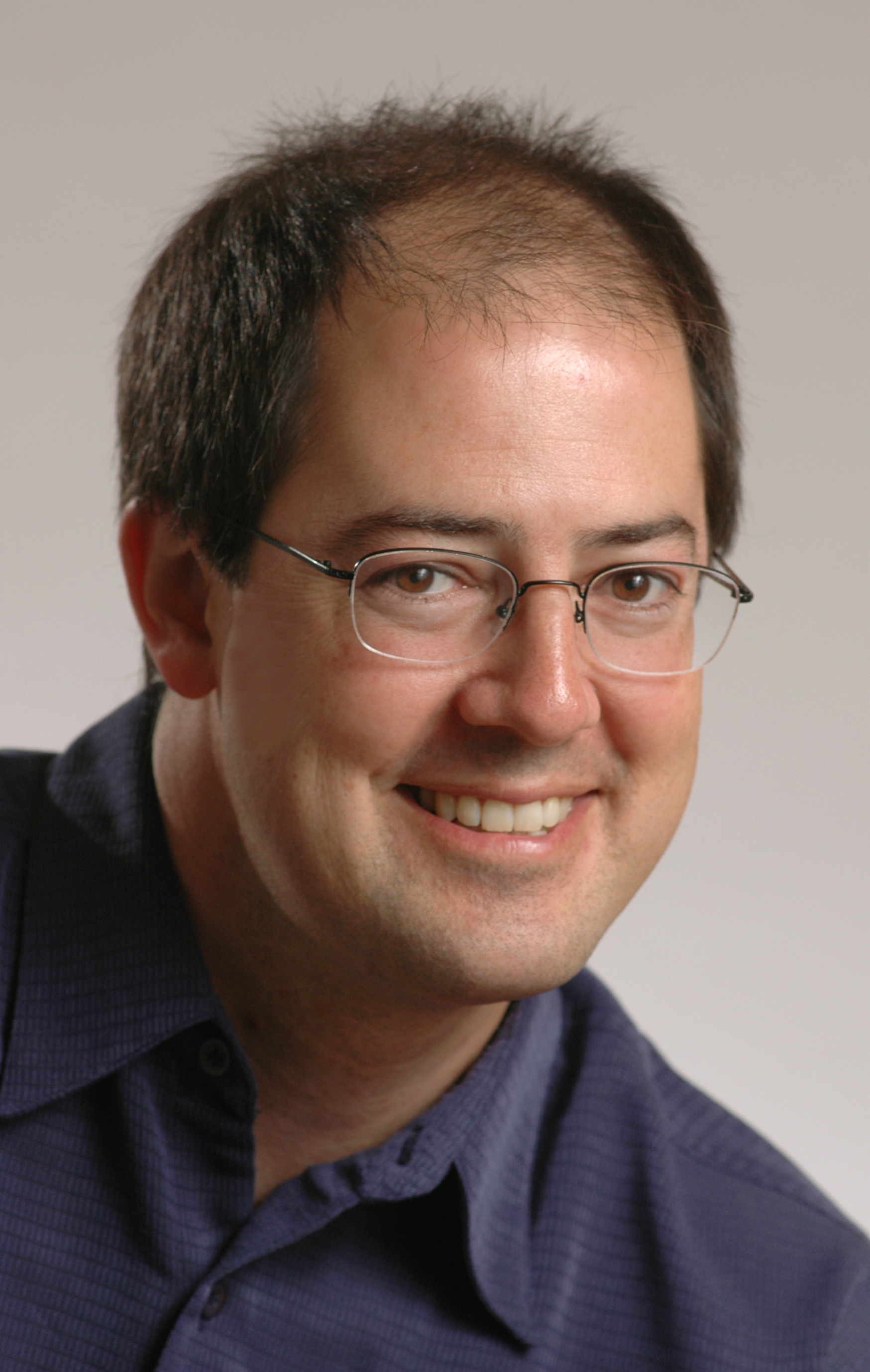
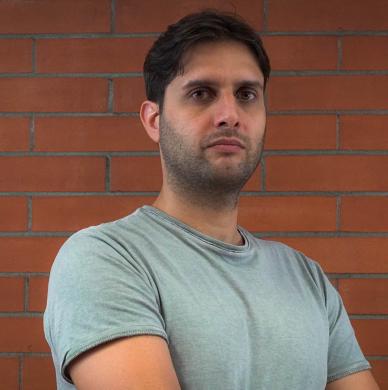
Kristofer Pister is a Professor in the Department of Electrical Engineering and Computer Sciences at the University of California, Berkeley. He co-directs the Berkeley Sensor and Actuator Center (BSAC) and the Ubiquitous Swarm Lab. His career spans groundbreaking innovations in Micro/Nano Electro Mechanical Systems (MEMS), Control Systems, and Low-Power Circuits, with a focus on Smart Dust and synthetic insects. Education: Ph.D. and M.S. in EECS from UC Berkeley (1992, 1989); B.A. in Applied Physics from UC San Diego (1986). His research areas include MEMS , Control Systems , Robotics , and Integrated Circuits , with recent work on self-powered micro-sensors, crystal-free radios, and interplanetary swarm networks. Key awards include the ISA Albert F. Sperry Founder Award (2009) , Alexander Schwarzkopf Prize (2006) , and the NSF CAREER Award (1996) . He has authored numerous influential publications in wireless sensor networks and microrobotics. His lab, Ubiquitous Swarm Lab , explores distributed robotics and swarm intelligence. Pister emphasizes open collaboration in research, ethical conduct in academia, and efficient resource utilization for graduate students.
Prof. Waldemar Kolanus leads the Molecular Immunology and Cell Biology department at the University of Bonn's Life & Medical Sciences Institute (LIMES) . His research bridges immunoregulation , stem cell dynamics , and metabolic stress responses in immune cells. Unit 2 member at LIMES Principal investigator in SFB 704 and ImmunoSensation Cluster Leads a multidisciplinary lab with postdocs, PhD students, and technical staff His work focuses on intracellular signaling pathways connecting immune activation to tissue homeostasis, particularly through: Cytohesin proteins in integrin-mediated adhesion and migration TRIM71 in stem cell regulation and congenital hydrocephalus High-salt environments affecting macrophage function Publication trends show expertise in immune cell migration , genetic models , and chemical inhibition , with frequent use of mice and zebrafish for in vivo studies. Key articles explore: TRIM71's dual role in auditory development and germ cell maintenance Cytohesin family's Golgi regulation and insulin signaling Ruxolitinib's off-target migration inhibition of dendritic cells Contact details: Address: LIMES Institute, Carl-Troll-Straße 31, Bonn Email: kolanus.sekretariat@uni-bonn.de Phone: +49 228 73-62788
Kai Arras is a Professor at the Institute for Artificial Intelligence (KI) at the University of Stuttgart and heads the Socially Intelligent Robotics (SIR) Lab. His research lies at the intersection of robotics, machine learning, and human-robot interaction (HRI), with a focus on open-world embodied intelligence, sustainably engaging interactive robots, and AI-based industrial robotics. He is also a Cyber Valley Endowed Chair for Autonomous Systems and leads collaborations with institutions like the Fraunhofer Society and the University of Bonn.
Harish Ravichandar is an Assistant Professor at the School of Interactive Computing , Georgia Institute of Technology, and a core faculty member of the Institute for Robotics and Intelligent Machines (IRIM) . He leads the Structured Techniques for Algorithmic Robotics (STAR) Lab , focusing on structured computational frameworks and learning algorithms with inductive biases to enhance robot efficiency, reliability, and self-sufficiency in human-robot collaboration and complex applications like dexterous manipulation and multi-agent coordination. His research bridges robot learning , human-robot interaction , and multi-agent systems , emphasizing stable, frugal, and safe skill acquisition from human demonstrations. Key themes include intention inference , trajectory optimization , and heterogeneous team coordination , often leveraging Koopman operators , hypernetworks , and graph-based methods . Scientific recognition includes the NSF CAREER Award , IEEE MRS Best Paper Award , and Georgia Tech’s College of Computing Outstanding Post-Doctoral Research Award . His work also received the ASME DSCC Best Student Paper Award and P&W Institute Graduate Fellowship . Harish’s educational background includes a Ph.D. in Electrical and Computer Engineering from the University of Connecticut (2018) , an M.S. from the University of Florida (2014) , and a B.E. in Instrumentation and Control Engineering from Anna University (2012) . He previously held postdoctoral and research scientist roles at Georgia Tech before his current position.
Olga Fernández López is an Associate Professor at the Department of History and Theory of Art, Universidad Autónoma de Madrid, and holds a PhD in Geography and History (History of Art) from Universidad Complutense de Madrid (UCM). She collaborates with institutions including Intermediae (Matadero Madrid), CA2M Madrid, and Andalusian Center for Contemporary Art Seville. PhD Curating Contemporary Art, Royal College of Art (2017) PhD in History of Art, UCM Master’s in Cultural Management, Fundación Ortega y Gasset Her research focuses on: History of exhibition models and curatorial practice Contemporary art in Spain and Latin America Visual culture and political philosophy Museum decolonization Recent publications explore: Urban curatorial practices (2016-2021) Postwar European visual culture (2019) Decolonial exhibition strategies (2020) Scientific awards include: Salvador de Madariaga grant (2020) for research at Columbia University Key projects: PUBLISHERS: Publics of Contemporary Art (2019-2021) European Forum for Advanced Practices (2019-2022) Decentralized Modernities: Cold War Art (2018-2020)
Neville Hogan is a Professor of Mechanical Engineering and Brain & Cognitive Sciences at MIT, and Director of the Newman Laboratory for Biomechanics and Human Rehabilitation. He holds a Ph.D. from MIT and has been a faculty member since 1979, leading roles in the Mechanical Engineering department's System Dynamics and Control division. His research bridges biology and engineering, focusing on motor neuroscience, rehabilitation robotics, and human-robot interaction. He co-founded Interactive Motion Technologies, Inc. and is a board member at Advanced Mechanical Technologies, Inc. Education: Dip. Eng. (Dublin College of Technology), M.S., M.E., and Ph.D. (MIT) Research interests include developing robots for neurological rehabilitation, such as gentle physiotherapy devices for stroke patients. His work emphasizes physically cooperative machines and human balance control analysis. Awards include Honorary Doctorates from Delft University and Dublin Institute of Technology, and the Silver Medal from Ireland’s Royal Academy of Medicine. Awards: Honorary Doctorates, Silver Medal, and other distinctions Led the Newman Lab, focusing on biomechanics and human rehabilitation. Advised numerous students (not listed here). His publications explore dynamic primitives, impedance control, and human-robot interaction, with applications in exoskeletons and rehabilitation therapies.
Wendy Z. Goldman serves as Paul Mellon Distinguished Professor of History in the Department of History at Carnegie Mellon University's Dietrich College of Humanities and Social Sciences, where she has been a core faculty member since 1988. Her scholarship establishes her as a leading authority on Russian and Soviet social history, with particular focus on gender dynamics, state repression, and wartime societal transformations. Her academic foundation includes a Ph.D. from the University of Pennsylvania (1987). Ph.D.: University of Pennsylvania, 1987 Goldman's research traverses critical junctures in Soviet history, examining how revolutionary policies reshaped family structures, industrial labor, and daily survival under Stalinism. Her groundbreaking work on women's emancipation during industrialization revealed the contradictions between state promises and lived realities, while her studies of denunciation practices exposed the grassroots mechanics of terror. Recent scholarship pioneers comprehensive analysis of the Soviet home front during World War II, documenting civilian mobilization, food crises, and industrial adaptation that sustained the war effort. Her comparative turn includes co-editing The Ghetto in Global History , examining spatial segregation across civilizations. Her publication trajectory demonstrates deepening engagement with socialist political economies and their human consequences, evolving from gender-focused analyses of early Soviet policy to systemic studies of wartime resilience and repression mechanisms. This work consistently bridges microhistorical detail with macrohistorical significance, emphasizing ordinary citizens' experiences within totalitarian systems. Goldman's contributions have earned significant recognition: Berkshire Conference Book Award for Women, the State and Revolution Reginald Zelnik Book Prize Honorable Mention for Inventing the Enemy Society for Military History Prize for Fortress Dark and Stern Her research program has been sustained by major grants from the Guggenheim Foundation, National Endowment for the Humanities, American Council of Learned Societies, Social Science Research Council, and National Council for Eurasian and East European Research. Beyond individual scholarship, she actively cultivates academic communities through directing CMU's faculty and graduate exchange with Russian State University for the Humanities, leading the Socialist Studies Seminar on socialist/post-socialist movements, and spearheading the CMU Prison Education Project which provides college instruction to incarcerated individuals. These initiatives reflect her commitment to transnational scholarly dialogue and expanding educational access, complementing her classroom instruction in specialized seminars on revolutionary movements, Stalinism, and comparative labor history.
Mireille E. Broucke is a Professor in the Department of Electrical and Computer Engineering at the University of Toronto, where she is a member of the Systems Control Group within the Faculty of Applied Science and Engineering. She teaches various undergraduate and graduate courses including Adaptive Control and Reinforcement Learning, Robot Modeling and Control, and Introduction to Nonlinear Systems, demonstrating her commitment to education in control systems engineering. Professor Broucke's research focuses on mathematical system theory with particular emphasis on Systems Neuroscience, Reach Control Problems, and Patterned Linear Systems. Her work bridges theoretical control theory with applications in neuroscience and robotics. She has developed theoretical frameworks for understanding neural adaptation through control theory principles and has applied reach control theory to robotics problems including motion control of quadrocopters. Her research demonstrates how control theory can provide insights into biological systems while also advancing engineering applications. Her recent publications show a clear trend toward applying control theory to neuroscience, particularly in understanding adaptive internal models in the brain. The publications span from theoretical reach control problems on simplices and polytopes to practical applications in robotics and neural systems. Her work increasingly focuses on the intersection of control theory and neuroscience, examining how the brain implements adaptive control mechanisms for motor functions. This represents a significant shift from her earlier work which was more focused on pure control theory problems. Professor Broucke has advised several PhD students including Fatima Ghadieh, Erick Mejia Uzeda, and Mohamed Hafez. Her research has been supported by various grants that enable her work in control theory and its applications to neuroscience and robotics. She maintains an active research program with numerous publications in top control theory journals including IEEE Transactions on Automatic Control, Automatica, and Systems and Control Letters.
Donato Romano serves as Associate Professor at The BioRobotics Institute of Scuola Superiore Sant'Anna, Italy, where he coordinates the Bio-Robotic Ecosystems Lab and co-founded the spin-off company HUBILIFE srl. His interdisciplinary work bridges robotics, biology, and AI to develop biohybrid systems for biodiversity preservation, sustainable environmental management, and life support in extreme scenarios including space exploration. With over 90 publications and an H-index of 27 (Scopus, March 2025), he has established significant academic leadership through editorial roles across 12+ international journals. Romano's educational foundation includes advanced degrees with honors: an M.Sc. in Agriculture Science and Technologies (2014) and a PhD in BioRobotics (2018), both from Scuola Superiore Sant'Anna. His academic journey includes visiting scholar positions at Khalifa University and substantial industry-academia collaboration through HUBILIFE srl, which commercializes bioinspired devices for human daily life improvement. His research program focuses on bioinspired and biomimetic robotics with particular emphasis on animal-robot interaction, biohybrid systems, and natural intelligence. Key projects address critical global challenges: SENSORBEES develops biohybrid environmental surveillance for ecological monitoring; REGOLIFE investigates lunar soil-terrestrial organism interactions for space agriculture; and OCEAN ROBOCTO explores marine ecosystem solutions. This work demonstrates a strategic progression from fundamental behavioral studies toward applied ecological and extraterrestrial systems. Analysis of his recent publications reveals strong trends in AI-driven behavioral analysis, with deep learning increasingly applied to entomological studies and pest management. The research spans agricultural applications (precision monitoring traps, larval detection systems), ecological conservation (biodiversity surveillance), and extreme-environment adaptation (lunar regolith studies). A distinctive feature is the consistent integration of biohybrid approaches where living organisms and robotic systems create synergistic capabilities exceeding either component alone. Romano's scientific recognition includes election as Junior Fellow of the Italian Academy of Engineering and Technology (2025), the Lucani fuori dal Comune award (2024), and multiple best-thesis prizes. His editorial leadership spans high-impact journals including IEEE Transactions on Medical Robotics and Bionics and Pest Management Science, where he serves as Associate Editor. As principal investigator, Romano coordinates major international projects totaling over €15M in funding: HORIZON-EIC's SENSORBEES (2024-2029), ASI's REGOLIFE (2024-2027), National Geographic's OCEAN ROBOCTO (2024-2026), and PRIN's COSMIC (2023-2025). His teaching portfolio includes PhD courses in Biosystems for Biorobotics and M.Sc. instruction in Bionics Engineering at Scuola Superiore Sant'Anna and University of Pisa. The Bio-Robotic Ecosystems Lab under Romano's direction pioneers biohybrid technologies where living organisms and robotic systems create integrated solutions. Current initiatives include SENSORBEES' environmental monitoring swarms, REGOLIFE's moonworm colonization systems, and HUBILIFE's commercial vector-control devices. The lab maintains active collaborations with space agencies, agricultural institutes, and conservation organizations, positioning biohybrid systems as next-generation tools for planetary-scale challenges.
Dr. Minglun Gong is a Professor and Director of the School of Computer Science at the University of Guelph (since 2019). Previously, he served as Professor and Head of the Department of Computer Science at Memorial University of Newfoundland. He holds a Ph.D. from the University of Alberta (2003), M.Sc. from Tsinghua University (1997), and B.Engr. from Harbin Engineering University (1994). His research focuses on visual computing, including computer graphics, computer vision, visualization, image processing, and pattern recognition. He has authored over 150 referred papers and holds patents in the field. He is an Associate Editor for Pattern Recognition and IEEE Signal Processing Letters , and has received awards such as the Izaak Walton Killam Memorial Award and multiple best paper awards. Dr. Gong has advised numerous students, including Ph.D./M.Sc. candidates and visiting scholars. His lab's recent work includes UAV path planning for urban reconstruction, image stylization techniques, and 3D human pose estimation. He actively participates in academic service, including editorial roles, conference program committees, and administrative roles at multiple institutions. His teaching spans courses in image processing, computational photography, and technical communication. He is also involved in administrative committees, such as Graduate Studies and Promotion at Memorial University. Key research contributions include advancements in transparent object modeling, underwater 3D reconstruction, and image-to-image translation. His work emphasizes practical applications in fields like medical imaging, autonomous systems, and environmental modeling.
Mehdi Khamassi is a Research Director at the French National Center for Scientific Research (CNRS), assigned to the Institute of Intelligent Systems and Robotics (ISIR) at Sorbonne University in Paris, France. He holds an engineering background in computer science (specializing in AI and statistical modeling) from the National School of Computer Science for Industry and Business (2003), a Cogmaster in cognitive science from Pierre and Marie Curie University (2003), and a PhD in cognitive neuroscience from UPMC/Collège de France (2007). Recruited by CNRS in 2010, he co-organizes the Symposium of Biology of Decision-Making (SBDM) and co-directs the modeling major for the Cogmaster program. His research integrates computational modeling , neuroscience experiments , and robotic systems to study decision-making and learning mechanisms. Key interests include: Reinforcement learning in biological and artificial systems Role of social/non-social rewards in adaptive behavior Ethical implications of autonomous decision-making in AI Neuro-robotic models of hippocampal-prefrontal interactions Recent publications (2023-2025) demonstrate strong focus on reinforcement learning paradigms, AI alignment with human values, neurorobotics, and computational neuroscience. Work frequently bridges machine learning theory with empirical validation in biological systems or robotic platforms. He leads research within the ACIDE team at ISIR, exploring adaptive coordination of learning strategies in brains and robots. Current collaborations include NTUA (Greece), University of Oxford, and University of Trento.
Yan Zhang is a scientific leader at Meshcapade and a guest lecturer at ETH Zurich's Computer Vision and Learning Group (VLG). He previously served as a postdoctoral researcher at ETH Zurich (2020-2023) and research intern at Max Planck Institute for Intelligent Systems (2018-2020). His research focuses on generative human foundation models, human motion and behavior synthesis, 3D human perception, and applications in AR/VR, embodied AI, and interactive avatars. He has pioneered methods for scene-conditioned motion generation, contact-aware reconstruction, and egocentric interaction modeling. His recent publications (2025-2020) span Real-time motor models for avatars (PRIMAL, ICCV'25) Diffusion architectures for motion (RoHM, CVPR'24) Scene-population algorithms (Odysseus, CVPR'22) Physics-aware reconstruction (EgoHMR, ICCV'23) Whole-body grasping models (SAGA, ECCV'22) Multi-modal datasets (EgoBody, ECCV'22) Scientific recognition includes the Qualcomm Innovative Fellowship Europe 2023 . He organized workshops at CVPR'25, ECCV'24, and ECCV'22, and served on senior program committees (AAAI'26) and area chairs (CVPR'25). As co-supervisor, he mentored student projects on diffusion-based hand motion capture, 3D pose estimation, body-scene interaction, and mixed reality navigation at ETH Zurich (2020-2023). His work bridges computer vision, machine learning, and computer graphics to advance human-centric AI systems.
Peter K. Allen is a Professor of Computer Science at Columbia University's School of Engineering and Applied Science, with a career spanning over three decades in robotics research. His work focuses on robotic grasping , 3D vision and modeling , and medical robotics , where he has made significant contributions to autonomous manipulation and sensor integration. Current affiliation: Columbia University Robotics Lab Academic rank: Professor Key research areas: Robotics, Computer Vision, Artificial Intelligence Education A.B. in Mathematics-Economics from Brown University M.S. in Computer Science from University of Oregon Ph.D. in Computer Science from University of Pennsylvania (recipient of CBS Foundation Fellowship, Army Research Office Fellowship) Research Interests Allen's research bridges fundamental robotics challenges with applied domains. His work on robotic grasping explores low-dimensional subspaces and semantic task suitability, while 3D vision contributions include illumination coherence and texture registration methods. In medical robotics , he develops surgical imaging tools and BCI-enabled grasping systems. Recent publications show trends in: Deep learning for robotic manipulation (2017-2022) Human-robot interaction through BCI and augmented reality Deformable object manipulation (garments, thin shells) Multi-modal sensing (vision-tactile fusion) Scientific Recognition NSF Presidential Young Investigator Award Best Student Paper Award (2007) for collaborative work Over 30 years of continuous funding from NSF, Army Research Office, and medical grants Teaching and Mentorship He has taught graduate courses in robotics (COMS 4733/6731) since 2010, emphasizing hands-on projects with advanced platforms like Baxter, PR2, and Fetch robots. His lab provides immersive training in: 3D photography Humanoid robotics Autonomous navigation Grasp planning