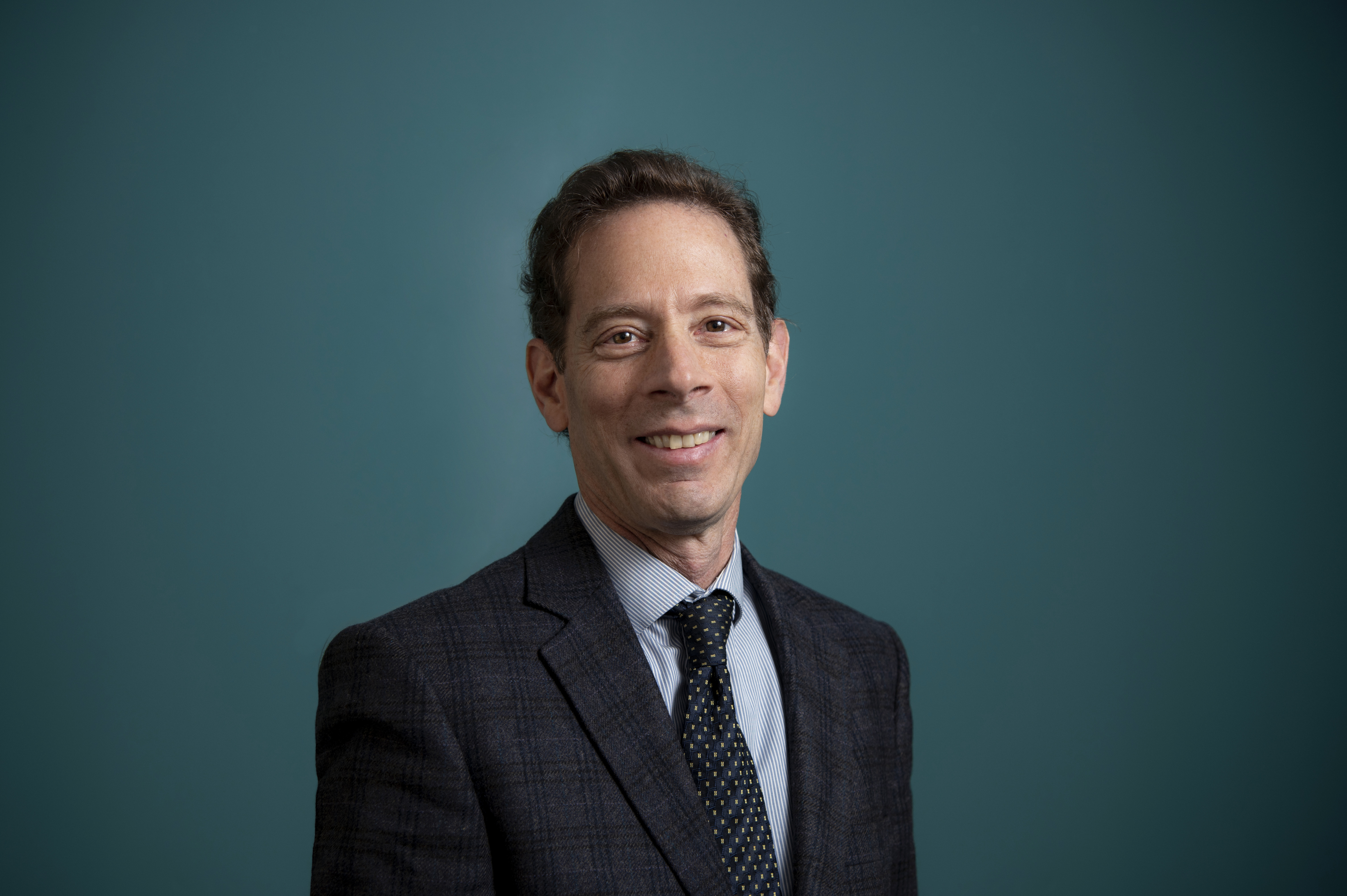
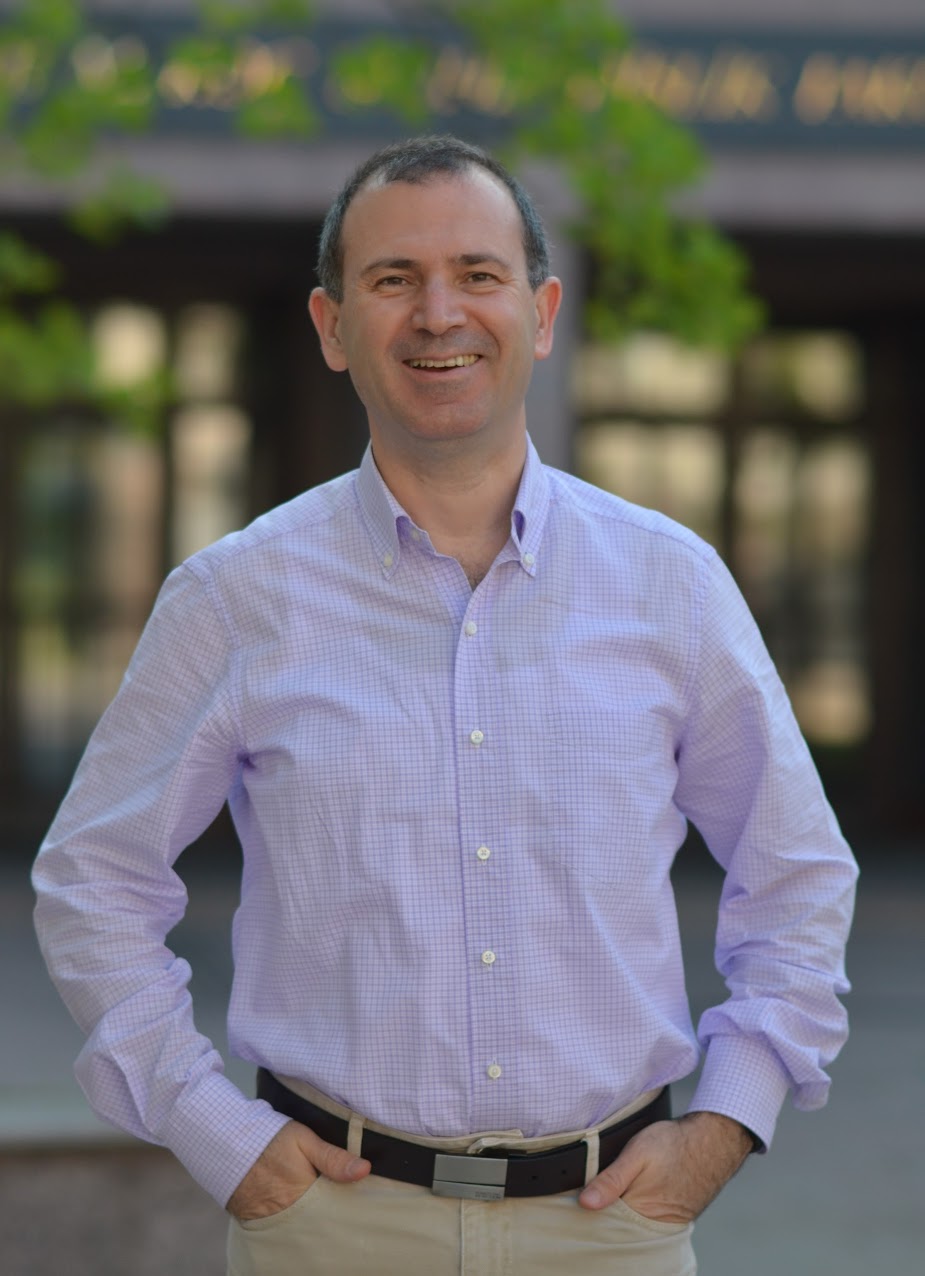
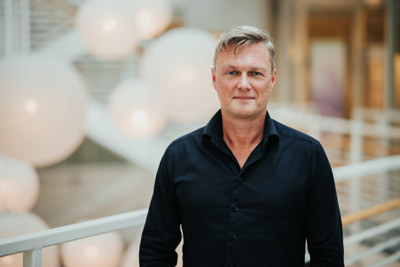
Dr. Gábor Koloh is a contemporary Assistant Professor and Research Fellow at the Eötvös Loránd University (Department of Economic and Social History) and the HUN–REN RCH Institute of History . His scholarly work focuses on demographic history , social history , and rural economic structures , with particular emphasis on fertility transitions , household organization , and modernization processes in 19th-20th century Hungary. Education : Law (ELTE), Aesthetics (BA), MA and PhD in Economic and Social History (supervised by György Kövér) Research Themes : Demographic change in interwar Hungary Ethnic agricultural practices in Baranya Temporal/spatial patterns in peasant communities Social mobility of Protestant clergy Methodology : Micro-historical analysis, family reconstitution, manuscript source interpretation Current Projects : Interdisciplinary studies on pronatalist discourse, cooperative territorial development, and aristocratic demographic patterns
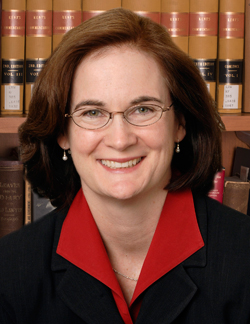
Mary Graw Leary is a Professor of Law at The Catholic University of America Columbus School of Law. A former federal prosecutor with expertise in criminal law, technology, and victim advocacy, she directs the Law School’s Modern Prosecution Program and serves as Chair of the United States Sentencing Commission’s Victim Advocacy Group. Her scholarship focuses on the intersection of criminal law and procedure, technology, and the exploitation of marginalized populations, particularly children and women. J.D., Georgetown University Law Center B.A., Georgetown University Her research explores contemporary legal challenges in human trafficking, Section 230 of the Communications Decency Act, and Fourth Amendment implications in digital privacy. Recent publications analyze AI regulation, child exploitation, and the moral dimensions of legal frameworks. She has testified before Congress and international bodies, advocating for stronger victim protections and corporate accountability. Professor Leary’s awards include the Catholic University Award for Teaching Excellence in Early Career and the Mary, Mirror of Justice Award (2009). She has been recognized as Faculty Marshal/Professor of the Year by multiple graduating classes. Her policy work spans roles at the National Center for Missing and Exploited Children, National Center for Prosecution of Child Abuse, and collaborations with the Australian Human Rights Commission. The Failed Experiment of §230 of the Communications Decency Act (2025) Screaming into the System: Flannery O'Connor and Legal Advocacy (2025) Global Modern Slavery Compliance (2022) Scientific honors include keynote speaker at Catholic University Research Day and recognition for victim-centered legal scholarship. She teaches courses in criminal procedure, human trafficking, and juvenile law, while maintaining a robust media presence as a legal commentator for outlets like The New York Times and National Public Radio.
Linda J. Richards serves as the Chair of the Department of Neuroscience and Edison Professor of Neuroscience at Washington University School of Medicine. Her career spans decades of groundbreaking research in brain development, particularly focusing on interhemispheric connections of the mammalian brain. She leads the Brain Development and Disorders Laboratory, which investigates both normal brain wiring and conditions where this wiring is altered. Professor Richards earned her Bachelor of Science (Honours) from The University of Melbourne in 1990, followed by her PhD from the same institution between 1991-1994. Her educational background laid the foundation for her pioneering work in developmental neurobiology. Her research interests center on the development, plasticity, and function of long-range connections in the cerebral cortex, with particular focus on the corpus callosum - the largest fiber tract connecting the brain's hemispheres. She investigates how cellular and molecular mechanisms regulate brain wiring during development and how these processes are altered in congenital corpus callosum dysgenesis (CCD), which occurs in approximately 1 in 4,000 people. Her work explores the underlying causes of CCD, the mechanisms of long-range axonal plasticity, and how structural changes in brain wiring impact cognition and behavior. Analysis of Professor Richards' recent publications reveals a consistent focus on corpus callosum development and disorders across multiple model systems. Her work spans from basic molecular mechanisms involving transcription factors like the Nuclear Factor I (NFI) family to human clinical studies of corpus callosum disorders. She employs diverse methodologies including genetic analysis, neuroimaging, behavioral assessments, and comparative studies across mammalian species. A notable trend is her increasing focus on translating basic science findings into understanding human conditions, particularly through genetic studies of CCD patients and their families. 2020: Cajal Club, Krieg Cortical Kudos Discoverer Award, Pinckney J Harman Memorial Lecture 2019: Appointed Officer (AO) of the Order of Australia for distinguished service to medical research and education in developmental neurobiology 2016: Elected Fellow of the Australian Academy of Health and Medical Sciences 2015: Elected Fellow of the Australian Academy of Science 2017-2018: President of the Australasian Neuroscience Society 2010: Nina Kondelos Prize from the Australasian Neuroscience Society 2004: Charles Judson Herrick Award from the American Association of Anatomists Professor Richards is deeply committed to neuroscience advocacy and mentorship. She has contributed significantly to establishing major international neuroscience initiatives including the International Brain Initiative, the Australian Brain Alliance, and the Australian Brain Bee Challenge. As a board member of the International Brain Bee and member of the Dana Alliance for Brain Initiatives, she actively promotes neuroscience education and public engagement. Her lab provides training opportunities for numerous graduate students, postdoctoral fellows, and research staff who contribute to her diverse research programs. Professor Richards leads the Brain Development and Disorders Laboratory, which focuses on three primary research areas: activity-dependent mechanisms of early brain wiring, cellular and molecular mechanisms of early brain wiring (particularly involving NFI transcription factors), and human corpus callosum disorders. Her lab employs innovative approaches including studies of the fat-tailed dunnart (a marsupial model with postnatal brain development), advanced imaging techniques, and partnerships with individuals who have corpus callosum disorders to understand how brain wiring impacts cognitive, social, and emotional function.
Liz M O'Laughlin serves as Professor in the Department of Psychology within Indiana State University's College of Arts & Sciences. Holding a Ph.D. in Clinical Psychology from the University of Wisconsin-Milwaukee (1993), she maintains active research in child clinical psychology with emphasis on ADHD assessment and family dynamics despite her expired 2020 psychology license. Her educational credentials include: Ph.D. in Clinical Psychology, University of Wisconsin-Milwaukee (1993) M.S. in Clinical Psychology, University of Wisconsin-Milwaukee (1989) Dr. O'Laughlin's research centers on ADHD diagnostic methodologies , parent-child interaction patterns , and executive function assessment . She pioneered studies on religiousness in parenting, sleep disturbances in ADHD children, and BRIEF tool validation. Her work bridges clinical practice with community-based interventions through the Wabash Valley. Recent publications (2023-2025) reveal evolving focus toward ADHD comorbidity detection using BRIEF2 ERI scales and parent help-seeking behaviors, indicating sophisticated understanding of diagnostic nuances beyond symptom checklists. Her scientific recognition includes: Faculty Award for Community-Based Learning and Scholarship (2007) MAPS Mentor Award (2006) Dual Educational Excellence Awards (2001) Nomination for Faculty Distinguished Service Award (2005) Securing over $350,000 in grants including the $298K NIH-funded 'Predictors of Compassionate Love' study, she mentors students through McNair Scholars and MAPS programs while chairing Graduate Council and Clinical Faculty Search committees. Community engagement spans CARE Council leadership (2006-2012) and CASA program consulting. Current research teams focus on autism screening in ADHD referrals and cultural factors in diagnostic practices, with ongoing presentations at APA conventions through 2024.
Marco Rozendaal is a researcher at Delft University of Technology's Industrial Design Engineering department, specializing in Human-Centered Design and Human Technology Relations. He focuses on ethical dimensions of technology, human-robot interaction, wearable health solutions, and critical design philosophies. His work bridges theoretical research and practical applications, such as designing embodied coaches for stroke rehabilitation and exploring moral stress in technical practice. Research Interests: Rozendaal investigates how technology impacts human behavior and ethics, emphasizing embodied interaction, friction in digital systems, and healthcare innovations. Notable areas include AI ethics, wearable technologies for body awareness, and the sociotechnical implications of robotics in workplaces and healthcare settings. His projects often involve interdisciplinary collaborations with theater professionals, medical practitioners, and farmers. Publications Trends: His recent work highlights themes like moral stress in technical fields, human-robot collaboration in mixed-reality environments, and ethical design frameworks. Key contributions include guidelines for robot communication in dairy farming and critical analyses of seamless technology's societal impacts. Awards: He received the 2018 Best Paper Award for exploring ambiguity in behavioral design, recognizing his contributions to design theory and ethics. Teaching & Projects: Rozendaal teaches courses like Design in Robotics and Videography . He leads research initiatives such as Wearable Technology for Increased Body Awareness and MUG CUP , which support parents of hospitalized children. His work also addresses the 'New Normal' in post-pandemic design practices. Labs & Teams: His research is conducted within TU Delft's Human-Centered Design group, collaborating with industry partners and academic networks to advance ethical and human-centric technological solutions.
Roee Holtzer is a Professor at the Ferkauf Graduate School of Psychology and Department of Neurology at Albert Einstein College of Medicine. He holds dual faculty appointments bridging psychology and clinical neurology. His research focuses on brain mechanisms underlying cognitive and motor function in aging and neurological diseases, with emphasis on dual-task walking, prefrontal cortex activation, and cognitive reserve. Dr. Holtzer directs the Clinical Neuropsychology minor and teaches courses like Clinical Neuropsychology I/II and Neuropsychology Research Seminars. Education: MA and PhD from Binghamton University. Postdoctoral training at Columbia University’s Sergievsky Center. Licensed psychologist in NY State. His work integrates neuropsychology, neuroimaging (fNIRS), and clinical trials to develop interventions for mobility and cognition in aging populations. Key research areas include multiple sclerosis, mild cognitive impairment, and the effects of comorbidities like asthma on neurological functioning. Over 100 peer-reviewed publications focus on neural efficiency, physical/cognitive reserve, and interdisciplinary interventions. Active in mentoring graduate students conducting predoctoral projects on topics like music therapy effects, social support, and gender differences in cognitive decline. His lab collaborates with institutions like Montefiore Medical Center and uses advanced tools like functional near-infrared spectroscopy (fNIRS) to study brain-behavior relationships.
Stef Aupers serves as Professor of Media Culture at KU Leuven's Institute for Media Studies within the Faculty of Social Sciences. His research centers on cultural sociology of media, examining meaning production, representation, and consumption in contemporary digital cultures with particular focus on conspiracy theories, game studies, and religious mediatization. His primary research domains include: Conspiracy Theory Discourse in Digital Spaces Digital Game Culture and Social Dynamics Religion-Media Intersections Popular Culture Analysis Mediatization of Modern Myth Analysis of his 2021-2025 publications reveals consistent exploration of how conspiracy theorists construct worldviews through digital platforms, the commodification of religion in gaming ecosystems, and socio-technical exclusion mechanisms. His work demonstrates methodological sophistication in analyzing YouTube/Reddit communities, audiovisual rhetoric, and epistemological boundary work between mainstream and alternative knowledge systems. Aupers actively contributes as keynote speaker, conference organizer, and academic journal reviewer, with expertise spanning media analysis, conspiracy culture interpretation, and science-religion discourse. His research provides critical frameworks for understanding contemporary digital culture's most contentious phenomena through cultural sociological lenses.
Martin Andersen is an Associate Professor with the Water Research Laboratory and School of Civil and Environmental Engineering at the University of New South Wales (UNSW). His research focuses on hydrogeology, groundwater dynamics, and surface water-groundwater interactions, with particular emphasis on coastal zone processes and reactive flow and transport modeling. Dr. Andersen's research interests span several critical areas in hydrogeology and environmental science. His work on reactive flow and transport modeling examines how chemical reactions affect water movement through geological formations. He investigates geochemical processes and groundwater dynamics in coastal zones, which is crucial for understanding saltwater intrusion and managing coastal aquifers. His research on surface water-groundwater interactions helps inform sustainable water resource management, particularly in Australia's diverse hydrological environments. Andersen has made significant contributions to understanding how climate variability affects groundwater recharge processes and the implications for water security in arid and semi-arid regions. Analysis of Dr. Andersen's recent publications reveals a strong focus on understanding complex hydrological systems through innovative methodologies. His work spans multiple disciplines including hydrogeology, climate science, biogeochemistry, and computational modeling. A key trend in his research is the investigation of groundwater dynamics in various environmental contexts - from arid zone aquifers to coastal wetlands and fractured rock systems. He employs diverse approaches including field monitoring networks, laboratory experiments, statistical modeling, and paleoclimate reconstructions to address pressing water resource challenges. His research has significant implications for sustainable groundwater management, climate adaptation strategies, and ecosystem conservation. Dr. Andersen is actively involved in several research teams and laboratories. As an Associate Director in the School of Civil and Environmental Engineering at UNSW, he contributes to the Water Research Laboratory's mission of advancing water science and engineering. His work often involves interdisciplinary collaborations across hydrology, geology, environmental science, and climate research. Through his leadership in establishing monitoring networks and conducting field experiments, he has helped build valuable infrastructure for ongoing water research in Australia.
Carolyn Strange is a Professor and former Head of the School of History at the Australian National University (ANU). She holds adjunct and visiting professorships at Murdoch University and the University of Toronto. Her research focuses on legal, social, and cultural history, particularly crime and justice, gender studies, and environmental history. She has taught at institutions in Canada, the U.S., and Australia, and her work bridges academia with public engagement through museum exhibitions and symposia. Strange has been awarded prestigious fellowships at Warwick, Macquarie, and Sydney Universities, and is a Fellow of both the Academy of Social Sciences and the Australian Academy of the Humanities. Her research has been supported by grants from the Australian Research Council and others, including a five-year strategic grant for a cross-campus network on the History and Legacies of Violence. She currently leads a working group on Coercive Control funded by the ANU Gender Institute. Her research interests span gendered homicide, capital punishment, and historical memory. Recent projects include analyzing inter-gender homicide in NSW and examining public attitudes toward coercive control. She has published extensively on crime, justice, and gender in Canadian, Australian, and British contexts. Strange’s teaching expertise includes graduate training, having founded ANU’s Cross-Cultural Research and History graduate programs. She has also served as an external assessor for Hong Kong’s Lingnan University History Department and curates exhibitions linking history with contemporary issues. Key achievements include the 2013 ‘Researcher of the Year’ award from the New York State Archives and a 2014 Huntington Library Fellowship. Her work often involves interdisciplinary collaboration with scholars in law, environmental science, and media studies.
János Kertész is a Professor at the Department of Network and Data Science at Central European University (CEU) since 2012, and previously held the position of Professor at the Budapest University of Technology and Economics (1992–2018). He obtained his PhD in Physics from Eötvös University (1980) and DSc from the Hungarian Academy of Sciences (1989). His research spans statistical physics applications, complex networks, and financial analysis. He has authored over 280 papers and served on editorial boards of journals like Journal of Physics A and Physical Review E . His research focuses on interdisciplinary topics including social network dynamics, systemic risk in economic systems, and algorithmic bias in digital environments. Notable awards include the Széchenyi Prize (Hungary’s highest scientific honor) and the Finland Distinguished Professorship. He has led projects such as SAI (Socially Explainable AI) and HUMANE-AI-NET, addressing algorithmic bias and AI ethics. His work bridges physics-based modeling with real-world social and economic systems, emphasizing computational approaches to corruption, opinion formation, and innovation diffusion. Key contributions include modeling cascading failures in interdependent networks and analyzing attention dynamics on platforms like Sina Weibo during the pandemic. He advises on systemic risk mitigation strategies and collaborates internationally, with visiting roles in Germany, the U.S., France, Italy, and Finland.
Engin Erzin is a Professor at Koç University's College of Engineering, leading the KUIS AI Lab and Multimedia, Vision and Graphics Lab . His research focuses on AI-driven human-centric systems, affective computing, and multimodal interaction analysis. He has contributed extensively to robotics, speech processing, and human-robot interaction through over 70 peer-reviewed publications since 2008. Research interests include: Affective computing and emotion recognition from speech/gestures Human-robot interaction and socially engaging agents Speech-driven animation and gesture synthesis Multimodal data fusion for interaction analysis Deep learning applications in robotics and biomedical engineering Recent work emphasizes: Developing adaptive pHRI controllers for manufacturing tasks Creating engagement measurement frameworks for human-machine interfaces Advancing Turkish speech recognition through self-supervised learning Designing multimodal databases for interaction studies Labs: KUIS AI Lab : Focuses on AI applications in robotics and human-computer interaction Multimedia Lab : Specializes in vision, graphics, and audiovisual analysis
Sarah D. Wald is an Associate Professor in the Department of Environmental Studies & English at the University of Oregon's College of Arts and Sciences. She also serves as Director of Graduate Admissions for the English program. Her research focuses on environmental justice, Latinx and Asian American cultural studies, and food systems, with a particular emphasis on farmworker rights and migration narratives. She holds a Ph.D., M.A., and B.A. in American Studies from Brown University and Reed College respectively. Wald's academic work bridges environmental humanities with critical race theory, examining issues like decolonial frameworks in outdoor spaces, food justice, and the intersection of labor and citizenship. She has published extensively, including co-editing volumes such as Latinx Environmentalisms and authoring The Nature of California . Her research collaborations include the Tierra Viva Collaborative and the Northwest Forest Plan Just Futures initiative. Her teaching focuses on inclusive pedagogy and community-based learning, including developing the UO Common Reading Program's Under the Feet of Jesus guide. She actively engages in public scholarship through symposia like the Race, Environmental Justice and Public Lands Symposium and digital humanities projects like Racial Ecologies of Mt. Hood National Forest . Wald's scholarly contributions span peer-reviewed articles, edited collections, and interdisciplinary projects addressing environmental equity, transmedia narratives, and racialized access to natural spaces. Her work consistently integrates activism, literature, and policy analysis to advance justice-centered environmental scholarship.
Meg Crofoot is a Professor at the University of Konstanz and Director of the Department for the Ecology of Animal Societies at the Max Planck Institute of Animal Behavior. She previously held roles as a Professor at the University of California, Davis, a lecturer at Princeton University, and a research fellow at the Smithsonian Tropical Research Institute. Her research focuses on the evolution of social complexity in animal societies, leveraging GPS technology and remote sensing to study group dynamics in primates and other species. Key projects include investigating baboon movement decisions in Kenya and capuchin tool use in Panama. Crofoot has received prestigious awards like the Packard Fellowship and Alexander von Humboldt Professorship. She advocates for diversity in science and collaborates globally to advance understanding of animal sociality.
Faltin Karlsen is a Professor and Pro-Dean at the School of Communication, Leadership and Marketing at Kristiania University of Applied Sciences. His work focuses on media studies, game research, and digital culture, with particular emphasis on ethical implications of digital media, gaming controversies, and digital detox practices. He has contributed extensively to understanding the societal impact of online gaming, media consumption patterns, and the interplay between technology and human behavior. His research interests span digital culture, media ethics, and the psychological and sociological dimensions of gaming. Notable themes include the disconnection movement, dark design patterns in dating apps, and the ethical challenges of game monetization. He has also analyzed historical moral panics around games and their representation in media. Recent publications highlight trends in digital detox practices, the paradoxes of disconnection, and critical discourse analysis of digital platforms. His work often bridges theoretical frameworks with empirical studies, addressing topics such as online dating dynamics, productivity tools, and the cultural significance of gaming in modern society. While no scientific awards are explicitly mentioned, his contributions to media and game studies have shaped academic discourse on digital media’s societal role. He advises on research projects and engages in interdisciplinary collaborations, reflecting his commitment to understanding technology’s multifaceted impact.
John Horgan is a Teaching Assistant Professor in the School of Humanities, Arts and Social Sciences at Stevens Institute of Technology, where he also serves as Director and Chair of the Stevens Center for Science Writings. He teaches courses in science writing, freshman communication, and the relationship between science and war, while maintaining an active career as a science writer and commentator. His educational background includes a BA in English and an MS in Journalism, both from Columbia University. These foundations have shaped his interdisciplinary approach to analyzing science, technology, and their societal implications. Horgan's research and writing focus on the limits of scientific knowledge, consciousness, the philosophy of mind, science and spirituality, and the roots of war and peace. He critically examines whether science can answer all fundamental questions, especially regarding subjective experience and existential meaning. His work bridges journalism, philosophy, and cognitive science, often challenging mainstream assumptions in neuroscience, physics, and artificial intelligence. His recent publications reflect a consistent thematic thread: the boundaries of rationality and empiricism. From quantum mechanics to mysticism, from war to mortality, Horgan explores topics where data meets doubt. His books and articles reveal a deep skepticism toward scientism while affirming the value of inquiry, narrative, and ethical reflection. Included in Best American Science Writing (2009) Included in The Best American Science and Nature Writing (2007, 2006, 2005) Templeton-Cambridge Journalism Fellowship in Science and Religion (2005) American Psychiatric Association Certificate of Commendation (1997) American Association for the Advancement of Science Journalism Award (2007, 1992) National Association of Science Writers Science-in-Society Award (1993) Forbes Media Guide 'Excellent' rating (1994) National Magazine Award (1986) Society of National Association Publications Award (1985) Horgan has mentored students through senior theses and seminars in science writing, and has played a key role in shaping Stevens’ academic initiatives, including serving on faculty search committees and developing a new undergraduate course in quantum technology. He continues to direct the Center for Science Writings, hosting public lectures by prominent science authors. His influence extends beyond the classroom through his widely read columns and books, which have reached millions of readers globally. The Stevens Center for Science Writings, under Horgan’s leadership, functions as a hub for dialogue between science, humanities, and public audiences. It organizes lectures, supports student writers, and fosters interdisciplinary engagement with science communication. Horgan’s own website, johnhorgan.org, serves as a platform for independent commentary, further amplifying his role as a public intellectual.