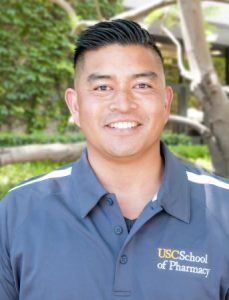
Angel P. Tabancay Jr. is an Assistant Professor (Teaching Track) in the Department of Pharmacology and Pharmaceutical Sciences at the University of Southern California (USC) School of Pharmacy. He joined the USC Mann faculty in July 2015 with primary teaching responsibilities in the PharmD program across multiple years of the curriculum. Dr. Tabancay also contributes to the MS program in Pharmaceutical Sciences, teaching about drug mechanisms and research methodology. Dr. Tabancay received his educational training at the University of California, Los Angeles, where he earned his BS in Molecular, Cell, and Developmental Biology in 1998, followed by a PhD in Microbiology, Immunology, and Molecular Genetics in 2004. His doctoral research focused on 'Genetic approaches to the study of Rheb GTPase' using model organisms Saccharomyces cerevisiae and Schizosaccharomyces pombe. He subsequently completed postdoctoral training at the University of Southern California in the lab of Susan L. Forsburg, continuing his work with Schizosaccharomyces pombe to investigate DNA replication. Dr. Tabancay's research spans multiple interconnected domains at the intersection of basic science and pharmaceutical education. His primary research interests include pharmacy education methodologies, signal transduction pathways involved in cancer development, DNA replication mechanisms, and the application of model organisms to understand human diseases. His expertise encompasses molecular genetics, microbiology, cellular biology, molecular biology, immunology, and yeast genetics, providing a strong foundation for his interdisciplinary approach to both research and teaching. Analysis of Dr. Tabancay's publication record reveals a consistent focus on molecular mechanisms of cell growth and regulation, particularly centered around the Rheb GTPase protein family and DNA replication processes. His early work established foundational knowledge about Rheb's role in nutrient sensing, arginine uptake, and cell cycle progression using yeast models. Later publications expanded this research to examine chromatin context in DNA replication, demonstrating how epigenetic factors influence fundamental cellular processes. This trajectory shows a researcher who successfully bridges basic molecular biology with potential therapeutic applications. Dr. Tabancay has made significant contributions to pharmaceutical education through his teaching and course coordination responsibilities. In the PharmD program, he coordinates and teaches Biological Systems I and II for first-year students, co-coordinates General Medicine Therapeutics for second-year students, and teaches Pharmacy Education courses for students interested in academic careers. He also coordinates the Scholarly Project course for third-year students. Within the MS program, he teaches about Drug Transporters, Anticancer Agents, and Principles of Research Methodology, demonstrating his commitment to developing the next generation of pharmaceutical scientists.