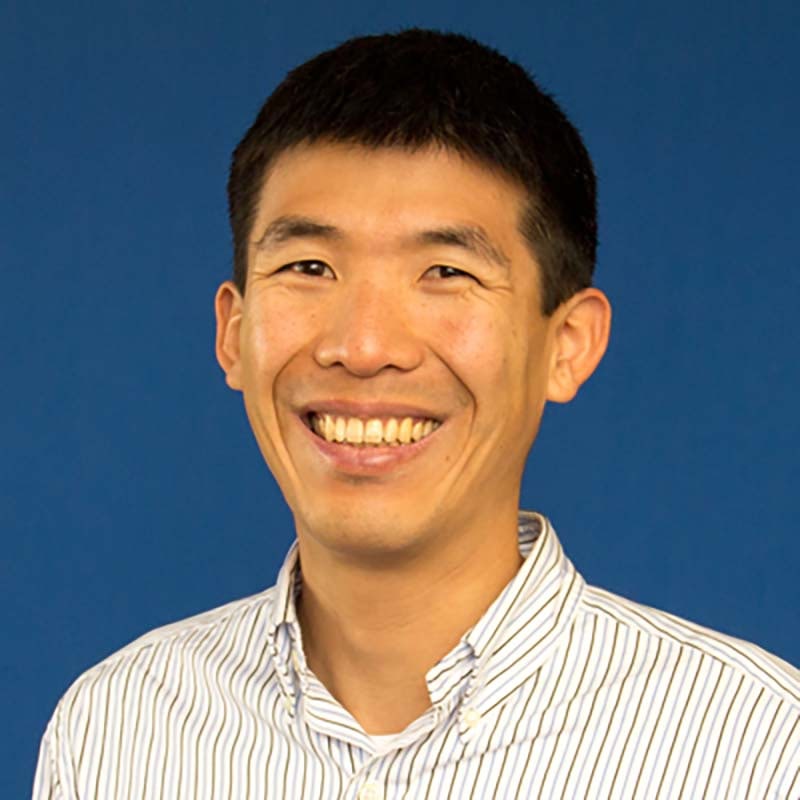
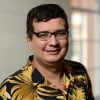
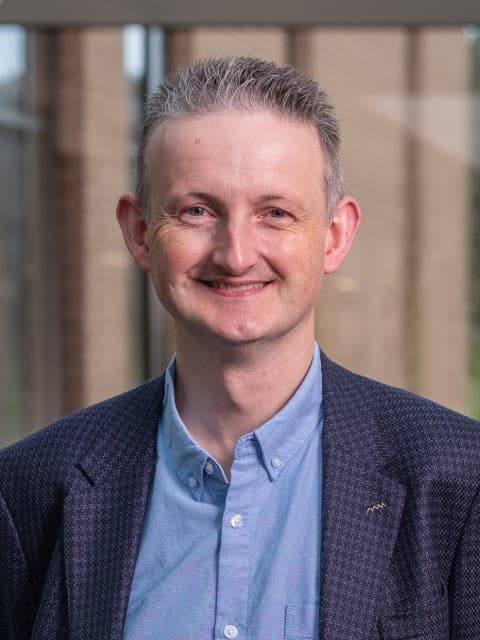
Byron Yu is a Professor in Electrical & Computer Engineering and Biomedical Engineering at Carnegie Mellon University, with affiliations to the Neuroscience Institute and Robotics Institute. He is a core faculty member of the Center for the Neural Basis of Cognition. Research focuses on computational neuroscience , neural dynamics , and brain-machine interfaces . Key contributions include dimensionality reduction techniques and neural population activity analysis. Recent publications explore topics such as neural dynamics during motor imagery, BCI optimization, and attentional processing. His work has appeared in Nature Neuroscience , Neuron , and eLife , often as cover articles. Awardees include the Gerard G. Elia Career Development Professorship and AIMBE Fellowship . His lab has mentored numerous PhD and postdoctoral researchers, many now in academic and industry leadership roles.
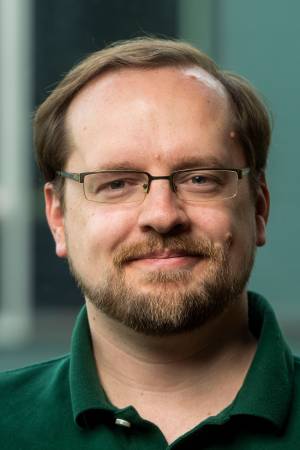
Raul Vicente Zafra is a Professor of Data Science at the University of Tartu, Faculty of Science and Technology, Institute of Computer Science, where he has been working since 2013. His research spans computational neuroscience, artificial intelligence, and data science, with a particular focus on bridging biological and artificial models of intelligence. Education: PhD in Physics (2001-2006), University of the Balearic Islands BSc in Physics (1997-2001) Professor Zafra's research interests center on computational neuroscience and artificial intelligence, with specific expertise in brain-computer interfaces, reinforcement learning, neural modeling, and explainable AI. His work bridges the gap between biological and artificial intelligence systems, exploring how neural principles can inform machine learning algorithms and vice versa. He has made significant contributions to understanding neural coherence, time interval learning in neural systems, and the application of information theory to brain-computer interfaces. His research often involves interdisciplinary collaboration between computer science, neuroscience, and medicine. Analysis of Zafra's recent publications reveals a strong focus on the intersection of artificial intelligence and neuroscience. His work spans explainable AI methods, brain-computer interfaces, reinforcement learning models that mimic cognitive processes, and neurophysiological studies of brain activity. A notable trend is his exploration of how biological principles of neural computation can inform and improve artificial intelligence systems, particularly in areas like time-based learning, consciousness modeling, and neural coherence. Scientific Awards: 2012: Attendee at the 62nd Lindau Nobel Laureate Meeting 2007: Quantum Electronics and Optics Division Prize of the European Physical Society for the best PhD Thesis in Applied Optics in Europe 2006: PhD Extraordinary Award of the Physics Department of the University of the Balearic Islands 2001: Physics Degree Extraordinary Award (First Class Honors, best GPA) 1997: Bronze Medal in the "8th Spanish Physics Olympiad" Professor Zafra has been principal investigator on numerous significant research projects including the Estonian Centre of Excellence in Artificial Intelligence, Cardiovascular Stress Impacts On Neuronal Function, and Bridging biological and artificial models of vision. His grant portfolio demonstrates strong funding support from the Estonian Research Council, European Commission, and other major funding bodies. He has supervised multiple PhD students and mentored early-career researchers in computational neuroscience and AI. His laboratory work focuses on developing computational models of neural systems and applying these insights to artificial intelligence. Current research directions include explainable AI methods, brain-computer interfaces, modeling of consciousness and cognitive processes, and the application of AI to healthcare challenges.
Silvestro Micera is a Full Professor at the Swiss Federal Institute of Technology Lausanne (EPFL) and holds the Bertarelli Foundation Chair in Translational Neuroengineering. He directs the Translational Neural Engineering Laboratory and teaches courses including Neural signals and signal processing and Translational neuroengineering . His research bridges neural interfaces, robotics, and neuroprosthetics to restore motor functions in spinal cord injuries, stroke, and amputations. Micera's research integrates implantable neural interfaces, robotic rehabilitation, and hybrid neuro-prosthetic systems. Key focus areas include: Robotic neurorehabilitation for mobility restoration Neural control mechanisms in movement CNS/PNS neural interface development Bioelectronic modulation for sensory feedback His recent publications emphasize machine learning-driven motor recovery prediction, closed-loop sensory feedback systems, and minimally invasive neuroprosthetics. Trends include AI-optimized stimulation protocols, multimodal data fusion for rehabilitation, and clinical translation of neural bypass technologies. Awards: IEEE EMBS Early Career Achievement Award (2009) IEEE EMBS Technical Achievement Award (2021) Micera leads EU-funded projects such as TIME, CLONS, and NeuWalk, focusing on neural prostheses. He advises 8 current and 18 former PhD students in neuroengineering. His lab collaborates with MIT, Harvard, and industry partners (e.g., Plexon) to advance translational neurotechnologies.
Oliver Kroemer is an Associate Professor at Carnegie Mellon University's Robotics Institute (RI), affiliated with the Intelligent Autonomous Manipulation (IAM) Lab. His research focuses on enabling robots to learn versatile manipulation skills through lifelong frameworks, with applications in elder care, environmental maintenance, and hazardous operations. Developed methods for robot learning via physical interaction and reinforcement learning Created representations for contact states and motor primitives to improve skill generalization Research Interests: Spanning robot learning, tactile sensing, force-velocity control, and lifelong skill acquisition. Projects include Agile and Dynamic Interactions for Mobile Manipulation and Integrated Planning and Learning (Pillar project). Scientific Awards: Finalist, Georges Giralt Ph.D. Award (2015) Education: Masters & Bachelors in Engineering, University of Cambridge (2008) Ph.D., Technische Universitaet Darmstadt (2014) Students & Affiliates: Current PhD: Mark Lee, Sarvesh Patil, Saumya Saxena, Yunus Seker, Zilin Si Past PhD: Alex LaGrassa, Tabitha Lee, Qiao Liang, Shivam Vats, Kevin Zhang
Malcolm McCulloch serves as Professor of Energy Systems and Group Leader of the Energy and Power Group within the Department of Engineering Science at the University of Oxford. He also holds the position of Co-Director for the Oxford Martin Programme on Integrating Renewable Energy and maintains affiliation with Christ Church college. His research spans four primary domains: domestic energy systems, electric vehicle technology, renewable generation, and energy solutions for developing regions. McCulloch's research focuses on practical energy transition challenges. His domestic energy work develops user-centric demand side management technologies and behavior change interventions, leading to the spin-out Intelligent Sustainable Energy (now Navetas Energy Management). In transportation, he pioneered the Morgan LifeCar hydrogen sports car project, resulting in high-efficiency motors and the Oxford Yasa Motors spin-out. His renewable generation research includes lightweight tidal turbines through Kepler Energy, while his Energy for Development work creates nano/micro grid solutions for distributed electrification. Analysis of his recent publications reveals a strong emphasis on integrating variable renewables through innovative market mechanisms, grid flexibility solutions, and electric vehicle integration. His work consistently addresses the technical and economic barriers to decarbonization, with increasing focus on peer-to-peer energy trading, thermal storage, and climate-resilient cooling solutions since 2020. McCulloch previously served as Co-Director of the Institute for Carbon and Energy Reduction in Transport (2008-2013) under the Oxford Martin School. His leadership extends to creating the Integrated Transport Network for Oxford and developing practical applications through multiple successful spin-out companies that bridge academic research and commercial implementation.
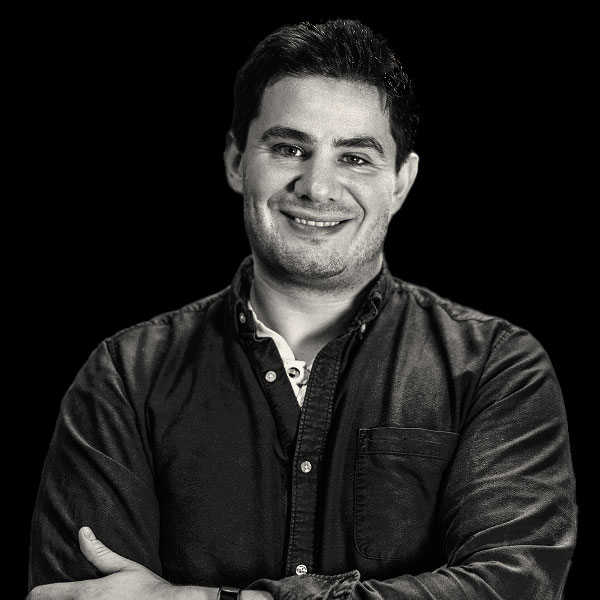
Michel M. Maharbiz is a Professor in the Department of Electrical Engineering and Computer Science at the University of California, Berkeley. He leads research on miniaturized bioelectronic interfaces, including neural dust implants and cyborg insects. He holds affiliations with the Berkeley Sensor & Actuator Center (BSAC), Center for Neural Engineering & Prostheses (CNEP), and SWARM Lab. His education includes a Ph.D. in EECS from UC Berkeley (2003) and a B.S. in EE from Cornell University (1997). Maharbiz's research integrates MEMS, ultrasonic systems, and synthetic biology to develop wireless neural interfaces, implantable sensors, and biohybrid devices. Key focus areas are neural dust technology for peripheral nerve recording, magnetoelastic strain sensors for medical applications, and electrochemical biosensing using bacterial flagellar motors. His publications emphasize neural interfaces, ultrasonic implants, and biomedical monitoring. Recent articles explore ultrasonic power delivery (2025), radiation detectors for oncology (2025), and fracture-healing smart plates (2019). Trends include miniaturization of wireless implants, closed-loop therapeutic systems, and novel biomaterials. Scientific Awards: McKnight Technological Innovations in Neuroscience Award (2017) Chan-Zuckerberg Biohub Investigator (2017) NSF CAREER Award (2009) MIT TR10 Top Emerging Technology (2009) Bakar Fellows Spark Award (2012) He directs the Maharbiz Lab, advancing neural dust and bioelectronic interfaces. Projects include impedance-based fracture monitoring, carbon fiber neural arrays, and hernia repair sensors. Funding includes NSF and industry partnerships for implantable device development.
Professor Carlo Harvey is a creative technologist at the School of Digital Arts (SODA), Manchester Metropolitan University. His interdisciplinary research merges games , machine learning , virtual production , and cultural heritage reinterpretation . He leads industry collaborations with entities like Jaguar Land Rover and Epic Games, focusing on AI-driven interactive audio, real-time visualization, and accessibility solutions. Award-winning projects : TIGA, Innovate UK, and Epic Games MegaGrant for Accession Industry partnerships : Automotive sector, cultural institutions His research spans human-computer interaction , multisensory virtual environments , and acoustic-visual cross-modal perception . Recent publications address robotic simulations, motion alignment, and haptic feedback systems. Scientific recognition : TIGA Award, Innovate UK Funding, Epic Games MegaGrant Advocacy : Digital inclusion, creative collaboration, social impact of technology
Un J. Kang, MD is the Founders Professor of Neurology at NYU Grossman School of Medicine and Professor in the Department of Neuroscience and Physiology. He serves as Director of Translational Research at the Marlene and Paolo Fresco Institute for Parkinson's and Movement Disorders and Co-Director of the Parekh Center for Interdisciplinary Neurology. His clinical practice focuses on Parkinson's disease and related movement disorders including tremor, dystonia, and Huntington's disease. Dr. Kang earned his MD from Johns Hopkins University in 1982, completed residency in Neurology at NY Presbyterian - Columbia University Medical Center in 1986, and specialized in Movement Disorders through fellowship training at the same institution in 1987. His research investigates the pathogenesis of Parkinson's disease and mechanisms of therapy, with particular focus on basal ganglia circuit plasticity, neural adaptation to dopamine loss, and development of biomarkers for neurodegenerative disorders. He pioneered experimental gene therapy approaches for Parkinson's disease and now directs the Kang Lab where his team studies how brain circuitry is perturbed by dopamine loss and pharmacological treatment in mouse models. Dr. Kang's research portfolio includes multiple NIH-funded projects examining striatal cholinergic interneuron dysfunction, freezing of gait mechanisms, and biomarker development for Parkinson's disease. His laboratory has published extensively on Parkinson's disease mechanisms with 178 publications to date, including significant recent work on alpha-synuclein detection methods and striatal pathway alterations in Parkinsonian motor deficits. Before joining NYU Langone in 2019, Dr. Kang created and led a multidisciplinary research team at the University of Chicago for two decades and previously served as chief of the movement disorders division at Columbia University. He leads the BioFIND consortium as principal investigator, banking biospecimens for Parkinson's disease biomarker discovery.
Belkis Ezgi Arikan is a researcher at Justus Liebig University Giessen , affiliated with the Department of Psychology and Sports Science . Her work focuses on sensorimotor integration, tactile suppression, and neural mechanisms underlying action-outcome monitoring. She collaborates with Prof. Dr. Fiehler and Dr. Voudouris on project A4 (Predictive somatosensory processing during voluntary movements). Department: Psychology and Sports Science Collaborators: Dr. Dimitris Voudouris, Prof. Dr. Katja Fiehler Her research investigates: How the brain processes self-generated vs. externally generated sensory feedback Neural correlates of tactile suppression networks Role of cerebellum and angular gyrus in temporal recalibration Modulation of BOLD responses during action monitoring Recent publications reveal trends in predictive coding , sensorimotor recalibration , and neural suppression mechanisms across tactile, visual, and multisensory domains. Her work employs neuroimaging techniques like fMRI and behavioral paradigms to study self-motion perception and feedback processing. She contributes to understanding how the brain distinguishes self-initiated from external sensory events, with implications for motor learning and perceptual timing mechanisms.
Najim Dehak is an Associate Professor in the Department of Electrical and Computer Engineering at Johns Hopkins University, part of the Whiting School of Engineering. His research focuses on machine learning applied to speech processing, audio classification, and health applications. He is renowned for developing the I-vector representation for speaker recognition, introduced in 2008 during a workshop at Johns Hopkins’ Center for Language and Speech Processing. Prior to this role, he was a research scientist at MIT’s Computer Science and Artificial Intelligence Laboratory. Dehak holds a PhD from the School of Advanced Technology in Montreal (2009). He is a Senior Member of IEEE and contributes to the IEEE Speech and Language Technical Committee. His work bridges AI, healthcare, and signal processing, with notable contributions to neurodegenerative disease detection via speech and handwriting analysis. Research interests include adversarial attacks on speech systems, multimodal biomarker discovery, and robust speech processing across demographics. His lab’s tools, like the Hermespeech Recorder, enable scalable data collection for clinical and research applications. Education: PhD in Advanced Technology (2009), Montreal Affiliations: Johns Hopkins University, IEEE Labs/Teams: Center for Language and Speech Processing (CLSP) His recent work explores AI’s role in aging research, including Alzheimer’s and Parkinson’s disease detection through speech, eye tracking, and handwriting analysis. Ongoing projects address fairness in speaker verification and robustness against adversarial attacks in ASR systems.
Dr. Praneet Prakash is a Researcher in the Department of Applied Mathematics and Theoretical Physics at the University of Cambridge, working under Prof. Raymond Goldstein. His research focuses on interdisciplinary approaches combining microfluidics, microscopy, and theoretical physics to study biological systems. Key areas include microbial motility, active matter dynamics, and the interplay between physics and living systems. He utilizes experimental techniques such as microfluidics and advanced microscopy to investigate phenomena like bacterial swimming, nutrient exchange in microbial communities, and growth oscillations in filamentous fungi. His work bridges Soft Matter Physics, Statistical Mechanics, and Biophysics, with applications ranging from understanding microorganism behavior to developing biosensor technologies. Recent studies explore phototactic algae behavior, ciliary surface interactions in animalcules, and adaptive motility in marine microorganisms. Publications highlight contributions to microbial ecology, active matter systems, and biophysical modeling. While no formal awards are listed, his research has been published in high-impact journals like Journal of the Royal Society Interface and Physical Review Fluids . He is affiliated with the Biological Physics and Mechanics research group and maintains an active presence on academic platforms like Twitter and LinkedIn.
Dr. Yi-Feng Chen is a Research Assistant Professor and Master's Supervisor in the Department of Biomedical Engineering at the Southern University of Science and Technology (SUSTech) in Shenzhen, China. He joined SUSTech as a postdoctoral fellow in November 2020 and was promoted to Research Assistant Professor in February 2023. His academic journey includes interdisciplinary training across engineering, neuroscience, and biomedical applications. Dr. Chen's educational background includes: Ph.D. in Engineering from Wuhan University of Technology (2014-2017), supervised by Professor Quan Liu M.Sc. from Wuhan University of Technology (2011-2014), supervised by Professor Zhou Zude B.Sc. from Wuhan University of Technology (2007-2011) He also participated in exchange programs at Yuan Ze University in Taiwan (2012) and the University of Auckland in New Zealand (2015). Dr. Chen's research spans the intersection of biomedical engineering, neuroscience, and artificial intelligence, with particular focus on brain-computer interfaces and rehabilitation technologies. His work combines advanced signal processing techniques with clinical applications, especially in decoding neural signals for movement intention and monitoring brain states during anesthesia. His research has significant implications for neurorehabilitation, assistive technologies, and intraoperative neurophysiological monitoring. His recent publications demonstrate a clear trajectory toward increasingly sophisticated neural decoding techniques, with a focus on coordinated limb movements and practical rehabilitation applications. The work shows progression from basic EEG signal processing to complex bimanual movement decoding and robot-assisted rehabilitation systems, reflecting a translational research approach from basic science to clinical applications. Dr. Chen has secured significant research funding as principal investigator and core contributor on multiple projects: National Natural Science Foundation of China Youth Science Fund Project (2024-2026) Guangdong Natural Science Foundation General Project (2024-2026) Ministry of Science and Technology National Key R&D Program Project (2023-2026) Shenzhen Science and Technology Innovation Commission Key Project (2022-2025) As a Master's Supervisor, Dr. Chen mentors graduate students in biomedical engineering with focus on neural engineering and rehabilitation robotics. His laboratory collaborates closely with clinical partners to ensure research relevance to real-world medical challenges, particularly in neurorehabilitation and intraoperative monitoring.
Ian Greer is a Research Fellow at Cornell University's School of Industrial and Labour Relations , with a career focused on marketisation , industrial relations , and transnational solidarity . He holds a PhD from Cornell University and has previously studied at Bard College. His work examines labor dynamics in globalised industries , welfare states , and multinational corporations , often through qualitative comparative methods . Education : BSc (Bard College), MSc/PhD (Cornell University) Greer's research spans marketisation of employment services , social movement unionism , and labour policy in crisis situations . His publications include studies on European welfare-to-work schemes , healthcare privatisation , and labour migration . He is associated with the Centre for Employment Relations, Innovation and Change (CERIC) at the University of Leeds. Greer's recent work analyses precarious labor and project-based employment in social services across Slovenia and France. He also contributes to debates on social dumping , work-first welfare states , and activist labor strategies in sectors like healthcare and automotive manufacturing. He has no listed scientific awards. His work often involves collaboration with scholars like Marco Hauptmeier , Charles Umney , and Nathan Lillie , though no formal advisees are named in the provided text. His email is icg2@cornell.edu .
Prof. Dr. Malte Oppermann is a full Professor at the University of Basel , leading the Ultrafast Chiral Dynamics Laboratory within the Department of Chemistry. His group specializes in developing cutting-edge time-resolved spectroscopic techniques to probe molecular transformations on femtosecond to microsecond timescales, focusing on chirality and structural dynamics in complex systems. Research Focus: Ultrafast Chiral Spectroscopy : Using circularly polarized laser pulses to resolve structural changes in chiral systems. Molecular Motors & Protein Dynamics : Capturing conformational changes in synthetic motors and proteins in native environments. Photoactive Materials : Investigating light-energy conversion mechanisms in chiral photochemical systems. His research bridges physics and chemistry, employing state-of-the-art laser technology and collaborating internationally across synthesis, spectroscopy, and theory. Publications & Impact: Prof. Oppermann’s work (2011–2025) spans ultrafast spectroscopy , chiral dynamics , nanomaterials , and biomolecular photophysics . Key themes include spin-crossover dynamics, DNA photodamage, and plasmonic nanoparticles, with techniques like transient X-ray absorption and deep-UV circular dichroism. Team & Opportunities: The group actively recruits MSc/PhD students and postdocs in physics, chemistry, and materials science. Interested candidates are encouraged to contact Prof. Oppermann directly.
Professor Mark King is a leading academic in Sports Biomechanics at Loughborough University, affiliated with the School of Sport, Exercise and Health Sciences, where he serves as Lead for the Sport Performance Research Theme. He holds a BSc (1993) and PhD (1998) in Mathematics and Sports Science from Loughborough, with career progression from Lecturer (1999) to Senior Lecturer (2006), Reader (2012), and Professor (2019). He is also Warden of Royce Hall since 1999, overseeing 375 students' welfare. Education: BSc in Mathematics and Sports Science (1993), PhD in subject-specific computer simulation of dynamic jumping (1998). Affiliations: England and Wales Cricket Board (ECB), International Cricket Council (ICC), Badminton World Federation, Lawn Tennis Association. His research focuses on optimizing elite sport performance through biomechanical analysis, particularly in cricket and badminton. Key areas include injury prevention (e.g., ACL risks in badminton, lumbar stress injuries in cricket bowlers) and technique optimization. He has pioneered ICC-accredited testing for illegal bowling actions and explored machine learning applications in data collection. His work highlights trends in cricket fast bowling kinematics, racket sports smash mechanics, and gender-specific performance metrics. He actively collaborates with national and international sports organizations to translate research into practical guidelines for athletes and coaches. Awards: None explicitly mentioned in the text. Grants/Advising: No listed advisees, but extensive industry partnerships support his research. Labs/Teams: National Centre for Sport and Exercise Medicine (NCSEM), part of his research infrastructure.