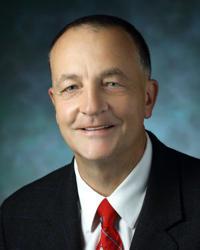
Seth Taylor is an Assistant Professor in the Cell Biology & Physiology department at Brigham Young University's College of Life Sciences. He specializes in neuroscience research with a focus on cellular and molecular mechanisms governing neuronal function and diversity. Education: BS in Neuroscience, Brigham Young University PhD in Neuroscience, Yale University Dr. Taylor’s research interests include Confocal Microscopy, Single-cell RNA Sequencing, and Cellular Neuroscience. His work primarily explores the transcriptomic and molecular underpinnings of neuronal identity and function using Caenorhabditis elegans as a model organism. He has contributed extensively to understanding gene expression, RNA splicing, and chromatin remodeling in neurons through high-throughput sequencing techniques. His recent publications (2021-2025) highlight expertise in: Single-cell transcriptomics for neuronal diversity mapping C. elegans nervous system molecular profiling RNA sequencing methodology optimization Transcriptional regulatory networks in neuronal development Neurotransmitter signaling in stress and psychiatric models
Oluwole Awosika is an Associate Professor at the University of Cincinnati College of Medicine, specializing in Neurology and Rehabilitation Medicine. His research focuses on stroke recovery, spasticity management, and non-invasive neuromodulation techniques. Bachelor of Science in Neuroscience and Physiological Science from University of California, Los Angeles (2003) Medical Degree from University of Illinois-Chicago College of Medicine (2011) Residency in Adult Neurology Research at Massachusetts General/Brigham and Women’s Hospitals/Harvard Medical School (2012) Fellowship in Clinical Neurorehabilitation at MedStar National Rehabilitation Hospital (2015) His work examines locomotor training through backward/forward treadmill exercises and transcranial/spinal stimulation to enhance post-stroke recovery. Key findings include insights into functional connectivity of subcortical locomotor centers and cortical superficial siderosis as a predictor of recurrent hemorrhage. Dr. Awosika has received competitive grants from the National Institute of Child Health and Human Development (R01HD093694, R21HD115776) and private awards from the American Academy of Neurology (2020 Career Development Award, 2024 MSR Scholarship). His scientific contributions span locomotor neuroplasticity, cognitive deficits in stroke survivors, and spinal cord repair strategies. American Academy of Neurology 2020 Career Development Award American Academy of Neurology 2024 MSR Scholarship His clinical expertise includes in-patient/out-patient neurorehabilitation, spasticity management, and neuropathic pain treatment. He is board-certified in Neurology by the American Board of Psychiatry and Neurology since 2012.
Anna Maria Feit is a Professor at Saarland University's Saarland Informatics Campus, leading the Computational Interaction Group (CIX) since January 2021. She previously served as a postdoctoral researcher at ETH Zurich (2018-2020) and completed her doctoral studies at Aalto University in Helsinki, where she focused on optimizing text input methods. Her research centers on computational interaction, developing algorithmic and mathematical methods to optimize and adapt user interfaces. She specializes in using optimization techniques to automate UI design processes, particularly in text input systems and adaptive interfaces that respond to users' changing contexts, environments, and capabilities. Her work bridges Human-Computer Interaction with methods from Machine Learning, Optimization, and Data Science to create intelligent interfaces that seamlessly integrate with real-world usage scenarios. Feit's publication record demonstrates consistent contributions to top HCI venues, with recent work focusing on gaze-based assessment of AI reliance, adaptive XR interfaces, and ergonomic 3D interaction design. Her research has evolved from foundational text input optimization to increasingly sophisticated adaptive systems that consider multiple contextual factors simultaneously. SIGCHI outstanding dissertation award Best Paper Award at CHI'21 Work featured on cover of Communications of the ACM (2021) As leader of the Computational Interaction Group, Feit has organized academic events including the 6th Summer School on Computational Interaction at Saarland University in 2022. Her group collaborates with institutions worldwide and is part of the Center for Perspicuous Computing (CPEC) since 2023. The CIX group maintains an active research agenda with publications spanning computational design methods, human-AI interaction, and user behavior modeling.
Yi-Ning Wu, Ph.D., serves as Associate Professor in the Department of Physical Therapy and Kinesiology within the Zuckerberg College of Health Sciences at the University of Massachusetts Lowell, concurrently holding the position of Scientific Lead in Physiological Measurement at the New England Robotics Validation and Experimentation (NERVE) Center. Her institutional affiliations extend to multiple research centers including HEROES, FDC, and SCORE, reflecting her interdisciplinary approach to rehabilitation science. Bachelor of Science in Physical Therapy (2000), National Cheng Kung University, Taiwan Ph.D. in Biomedical Engineering (2007), National Cheng Kung University, Taiwan (Dissertation: Quantification of Abnormal Muscle Tone in Animal Model and in Clinical Setting) Postdoctoral Research Associate, Rehabilitation Institute of Chicago (now Shirley Ryan Ability Lab) Postdoctoral Research Associate, Neuroscience Department, Brown University Dr. Wu's research program spans neurorehabilitation technology development, with evolving focus from pediatric cerebral palsy interventions to military rehabilitation applications. Her early work pioneered robotic assessment of spasticity mechanisms in children, while recent investigations address human performance limitations during Explosive Ordnance Disposal (EOD) operations with heavy personal protective equipment (PPE). This trajectory demonstrates strategic adaptation from clinical rehabilitation to defense-related human performance optimization, maintaining core expertise in biomechanics and physiological measurement. Current projects integrate exoskeletons, wearable sensors, and AI-driven home rehabilitation systems. Analysis of her publication record reveals three distinct phases: (1) foundational work on spasticity quantification in cerebral palsy (2005-2015), (2) expansion into home-based rehabilitation technologies (2013-2018), and (3) military human performance applications (2018-present). The most recent publications (2021-2024) show strong emphasis on EOD operational ergonomics, exoskeleton integration with PPE, and neurophysiological monitoring for adaptive human-robot collaboration, indicating successful pivot toward Department of Defense funding priorities while maintaining clinical rehabilitation expertise. Faculty Award for Teaching Excellence (2015) Sarah Baskin Award for Excellence in Research (2010) Switzer Fellowship Award (2009) Student Travel Scholarship, American Academy for Cerebral Palsy (2007) Li Foundation Fellow (2005) Podium Paper Award, Biomedical Engineering Society (2003) TiC100 Design Award (2002) Dr. Wu has secured substantial research funding across multiple domains, including $1.2M from the U.S. Army Combat Capabilities Development Command for EOD performance studies, NIH/NIDRR fellowships for cerebral palsy rehabilitation, and industry partnerships with Biogen Idec. Her mentorship includes directing graduate students in the NERVE Center's robotics validation programs, with recent focus on developing AI-driven home rehabilitation systems for children with cerebral palsy. Current projects bridge military and civilian applications through wearable sensor networks and adaptive exoskeleton control systems. As Scientific Lead at the NERVE Center, Dr. Wu directs the Physiological Measurement Core, developing novel methodologies for quantifying human performance under extreme conditions. Her laboratory integrates motion capture, EMG, force sensing, and neuroimaging to evaluate rehabilitation interventions, with recent expansion into EOD operational environments. The HEROES initiative focuses on human-robot teaming for hazardous operations, while SCORE develops sensor-based outcome measures for clinical rehabilitation.
Mathias Hegele is a Professor at the Faculty of Psychology and Sports Science, Justus-Liebig Universität Gießen. His research focuses on motor learning, predictive error processing, and the neural mechanisms underlying human agency and sports performance. Project B6: Investigates predictive error perception in natural environments Project C5: Explores animate-inanimate distinctions in action and language perception His work combines neurophysiological methods with behavioral experiments, spanning studies on elite basketball players, schizophrenia patients, and general motor adaptation. Collaborators include Prof. Dr. Hermann Müller and Dr. Lisa Maurer. Recent publications analyze: Mechanisms of outcome prediction in sports Neural correlates of error valuation Agency perception in biological motion tracking Sensory signal integration in motor tasks He advises PhD students Theresa Brand and Lea Junge-Bornholt, with email contact mathias.hegele@sport.uni-giessen.de.
Juha Gogulski serves as a Postdoctoral Researcher in the Department of Neuroscience and Biomedical Engineering at Aalto University's School of Science. His research focuses on advancing transcranial magnetic stimulation (TMS) techniques for clinical neuroscience applications, particularly in depression treatment and cortical excitability mapping. Dr. Gogulski's research centers on non-invasive brain stimulation with expertise in Transcranial Magnetic Stimulation (TMS) , fMRI integration , and cortical excitability assessment . His work targets depression treatment optimization , language mapping , and somatosensory representation , emphasizing individualized therapeutic approaches through multimodal neuroimaging. Key methodologies include real-time TMS parameterization, sensory-entrained stimulation, and network engagement analysis prior to intervention. Analysis of his 15 most recent publications reveals dominant trends in clinical translation of brain stimulation (73%), depression treatment innovation (67%), and multimodal neuroimaging integration (53%). His research consistently bridges fundamental neuroscience with therapeutic applications, particularly in treatment-resistant depression where conventional pharmacotherapy fails. Recent work demonstrates rapid symptom remission within weeks using personalized TMS protocols developed through Helsinki-Stanford collaborations. His media engagements highlight significant clinical impact, with 6 press appearances in 2024-2025 discussing breakthroughs in depression treatment where patients achieved symptom remission within weeks. Finnish media extensively covered his collaborative research with Stanford University on individualized magnetic stimulation for depression management. Dr. Gogulski actively collaborates across international networks, with recent external partnerships spanning 12 similar research profiles focused on transcranial magnetic stimulation (100%), evoked potential studies (67%), and dorsolateral prefrontal cortex research (67%). His work contributes to UN Sustainable Development Goals through neuroscience applications for mental health improvement.
Thomas Rylander is an Assistant Professor in the Signal Processing research group at Chalmers University of Technology. His research focuses on electromagnetics, computational methods, and microwave engineering, with applications in antenna modeling, wireless power transfer, and electromagnetic compatibility. He has led projects such as Modeling of RF emissions from e-axis (MORFex) (2024–2028) and Säker induktiv energiöverföring för elfordon (2014–2017). His work integrates advanced numerical techniques like the Method of Moments (MoM) and Finite Element Method (FEM) to solve complex electromagnetic problems. Education: PhD in Electromagnetics (2001, Chalmers University) Research Keywords: Electromagnetics, Computational Electromagnetics, Microwave Engineering, Signal Processing, Wireless Power Transfer, Finite Element Method, Method of Moments Projects: MORFex (2024–2028, funded by Energimyndigheten), Virtual Electric Driveline (2018–2022, Vinnova), FFI SAWE (2014–2017, Energimyndigheten), Model-Based Reconstruction (2011–2014, VR) His recent publications emphasize efficient electromagnetic modeling techniques, including macro basis functions for wire antennas and compressed sensing for microwave imaging. Despite extensive collaboration with researchers like Matthys M. Botha and Johan Winges, no specific scientific awards or advisees are mentioned in the provided data.
Hanna Johansson is a Lecturer and Postdoctoral Researcher at the Department of Neurobiology, Care Sciences and Society at Karolinska Institutet. She is also affiliated with Karolinska University Hospital and Stockholm Sjukhem, and is a key member of the Balance, gait, exercise and physical activity in neurological diseases – Franzén Group. As a registered physiotherapist with a PhD in medical science, Johansson bridges clinical practice and academic research in neurological rehabilitation. Her educational background includes a PhD in medical science from Karolinska Institutet (2020), where she defended her thesis "Balance and Gait in Parkinson's disease: from Perceptions to Performance." She also holds dual bachelor's degrees from Karolinska Institutet (2006) in Medical Science and Physiotherapy, establishing her foundation in both clinical practice and scientific research. Johansson's research primarily focuses on balance, gait, and exercise interventions for neurological diseases, with particular emphasis on Parkinson's disease. She is a principal investigator in the STEPS (Support for home Training using Ehealth in Parkinson's disease) trial, a collaborative project between Karolinska Institutet and Stockholm Sjukhem that evaluates eHealth-delivered home training for Parkinson's patients. Her work also explores the integration of wearable sensors for optimizing clinical assessment of Parkinson's disease in primary care settings. The Franzén Group's research philosophy, which she embodies, emphasizes translational work spanning from neuronal mechanisms to practical clinical interventions in neurological and geriatric rehabilitation. Analysis of her recent publications reveals a clear progression in her research focus from fundamental understanding of balance perception and gait disorders toward developing and validating technology-enhanced rehabilitation solutions. Her 2025-2024 work shows increased emphasis on dual-task performance, home-based interventions, and the use of advanced technologies like fNIRS for measuring brain activity during movement. Many studies employ coordinated analyses across multiple centers, reflecting her commitment to robust, generalizable findings. The consistent theme across her publications is improving functional outcomes for Parkinson's patients through evidence-based, accessible interventions. Johansson currently holds a significant grant from the Swedish Research Council for Health Working Life and Welfare (2023-2026) for the project "Promoting active ageing and participation using technology among older adults and people with Parkinson´s disease." While specific advisees aren't listed in the available information, her 2025 publication on the Global Bridges program demonstrates her active engagement in mentoring early-career researchers in healthcare sciences. Her grant portfolio reflects a strategic focus on technology-enabled solutions that address real-world challenges in neurological rehabilitation. As a core member of the Franzén Group, Johansson contributes to a dynamic research environment dedicated to understanding and improving balance, gait, and physical activity in neurological conditions. The group's work spans basic neuroscience, clinical research, and implementation science, with a strong emphasis on translating findings into practical rehabilitation approaches. Her leadership in the STEPS trial exemplifies her commitment to developing evidence-based, patient-centered solutions that can be implemented in real-world healthcare settings, ultimately improving quality of life for people with Parkinson's disease.
Mark D Bevan is the Rose, James, Sarah & Max Meltzer Professor of Neuroscience at Northwestern University's Feinberg School of Medicine. He earned his PhD in 1993 from the University of Manchester, England. His laboratory focuses on the basal ganglia circuits critical for voluntary movement and associative learning, with particular emphasis on Parkinson's disease, Huntington's disease, obsessive-compulsive disorder, and addiction pathophysiology. Research interests center on: Defining principles of basal ganglia operation in health and disease Developing corrective or neuroprotective therapies for movement disorders Investigating subthalamic nucleus dysfunction in Parkinson's and Huntington's Neural circuit dynamics and plasticity in motor control systems Dopaminergic regulation of basal ganglia pathways His publication pattern shows consistent focus on basal ganglia circuitry, with recent work emphasizing: Movement optimization through subthalamic nucleus activity (2024) Early dysfunction in Huntington's disease models (2022) Parkinsonian network dynamics (2020) Therapeutic modulation of neural circuits (2018-2019) Honors and Awards: Javits Neuroscience Investigator Award, NIH-NINDS (2012) He leads the Mark Bevan Lab and is core faculty at the Northwestern University Institute of Neuroscience (NUIN). The lab currently has positions for postdoctoral researchers investigating Huntington's disease mechanisms.
Warren M Grill , Ph.D., is the James B. Duke Distinguished Professor of Biomedical Engineering at Duke University, with secondary appointments in Neurobiology and Neurosurgery. He is a core faculty member in Innovation & Entrepreneurship, Duke Institute for Brain Sciences, and Duke Initiative for Science & Society. His research focuses on neural engineering and neural prostheses , particularly through design and testing of electrodes, stimulation techniques, and computational neuroscience applications in bladder function restoration , movement disorder treatment via deep brain stimulation (DBS), and chronic pain management with spinal cord stimulation. Education : B.S. (Boston University, 1989), M.S. (Case Western Reserve, 1992), Ph.D. (Case Western Reserve, 1995) Research Themes : Neural stimulation mechanisms, computational modeling of nerve responses, electrode design optimization, bioelectronic medicine, and closed-loop neuromodulation systems His scientific contributions include over 150 peer-reviewed publications, 18 patents, and leadership in neuroengineering societies. Current projects analyze deep brain stimulation mechanisms, peripheral nerve stimulation for bladder control, and transcranial magnetic stimulation biophysics. He teaches graduate and undergraduate courses in neural prosthetics, electrical stimulation fundamentals, and research methodology. Key awards include: Fellow of the National Academy of Inventors (2022), Capers & Marion McDonald Award (2018), Javits Neuroscience Investigator Award (2015), Duke University Scholar/Teacher of the Year (2014), and Fellowships from Biomedical Engineering Society (2011) and American Institute for Medical and Biological Engineering (2007). His recent publications (2023-2025) demonstrate: Energy-efficient neural stimulation waveforms Species-specific vagus nerve stimulation scaling Computational models for cortical neuron activation thresholds Advances in spinal cord stimulation for pain management Optogenetic mapping of DBS circuits Quasi-static field approximations in neuromodulation
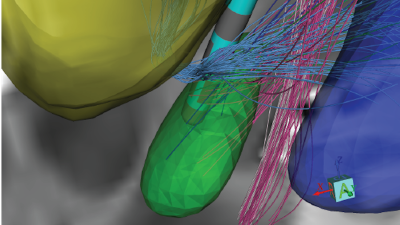
Cameron C. McIntyre is a Professor of Biomedical Engineering and Neurosurgery at Duke University. His research focuses on neural engineering, computational neuroscience, and the biophysics of brain stimulation and recording, with a particular emphasis on improving deep brain stimulation (DBS) for movement disorders and expanding its clinical applications. McIntyre earned a Ph.D. in Biomedical Engineering from Case Western Reserve University in 2001. He teaches graduate courses in Biomedical Engineering, including special topics, independent study, and advanced readings. Research Overview His work bridges computational modeling and neurosurgical applications, with key contributions to holographic visualization tools for stereotactic procedures, pathway activation models in DBS, and understanding the biophysics of neural stimulation. His lab develops patient-specific connectomic models to optimize DBS targeting for Parkinson’s disease and psychiatric disorders. Notable Trends in Recent Publications McIntyre's recent articles emphasize refining DBS computational models using in-vivo electrophysiology holographic visualization for surgical planning connectomic approaches to psychiatric neurosurgery mixed reality integration for biophysical simulations mechanisms of pathway activation in subthalamic and subcallosal cingulate DBS Lab and Collaborations The McIntyre Lab collaborates with neurosurgeons and psychiatrists to translate computational models into clinical practice. The team includes Ph.D. students, research associates, and interdisciplinary partners working on DBS innovation.
Dr. Loris Benassi is a postdoctoral researcher at the Department of Early and Preschool Education , Faculty of Educational Sciences , Jurja Dobrile University of Pula since 2015. His work bridges kinesiology, physical education, and sports sociology with a focus on youth development and regional sports culture in Istria. Graduated in 2000, Master's in 2012, PhD in 2022 Specializes in sports attitude scales , motor development , and inclusive physical education His 15 most recent publications (2013–2024) address topics like football culture, physical education infrastructure, and cross-border health studies. Key trends include anthropometric analysis , regional sports sociology , and inclusive recreational programs . Awards: 2023 Croatian Kinesiology Association Recognition . Email : loris.benassi@unipu.hr
Neil G Harris is a Professor in the Department of Neurosurgery at the University of California, Los Angeles (UCLA) School of Medicine . His research focuses on traumatic brain injury (TBI) , neuroimaging , and rehabilitation strategies , with particular emphasis on biomarker development , functional connectivity , and metabolic interventions . Current NIH-funded projects: R01NS116383 (Co-PI), UH3NS106945 (PI), UH3NS106945 (PI) Key collaborations: Richard Staba (UCLA), Fernando Gomez-Pinilla (UCLA), Paul Vesna (UCLA) Research interests span neurotrauma , neuroplasticity , and advanced neuroimaging techniques . His work integrates multicenter preclinical studies through consortia like TOP-NT and EpiBioS4Rx . Recent publications highlight MRI harmonization , BDNF mimetics , and epileptogenesis biomarkers . Grants include continuous NIH support since 2007, with leadership roles in U01NS082320 and R01NS055910 . He contributes to neurotrauma common data elements and preclinical standardization .
Dan Stoianovici is a Professor of Urology, Mechanical Engineering, and Neurosurgery at Johns Hopkins School of Medicine. He serves as Director of the Urology Robotics Program (URobotics) and holds additional appointments as Professor of Oncology and Professor of Neurological Surgery. His academic career at Johns Hopkins began in 1997 following completion of his fellowship in urology research at the institution. Dr. Stoianovici earned his undergraduate degree in mathematics and physics from the National College Fratii Buzesti in Romania and completed his Ph.D. at Southern Methodist University. His educational background bridges mathematics, physics, and engineering, forming the foundation for his interdisciplinary work in medical robotics. His research focuses on designing, manufacturing, and controlling robots for direct image-guided intervention (DIGI), with particular emphasis on prostate cancer diagnosis and treatment. He has pioneered numerous robotic systems including the Ball Worm transmission, PneuStep pneumatic stepper motor, and MrBot - a fully actuated MRI-stealth robot. His work bridges engineering innovation with clinical urological applications, developing technologies that enable precise biopsies and therapies through image-guided robotics. An analysis of his recent publications reveals consistent focus on MRI-compatible robotics, ultrasound-guided interventions, and precision needle placement systems. His work demonstrates strong interdisciplinary collaboration between engineering, radiology, and urology departments, with particular emphasis on overcoming technical challenges in creating medical devices that function within imaging environments. Outstanding Paper Award, Engineering and Urology Society (2012, 2010) Patrick C. Walsh Prostate Cancer Research Award (2012, 2007) Best Paper Award, IEEE/ASME Transactions on Mechatronics (2008) David H. Koch Award for Treatments and Cure of Recurrent Prostate Cancer (2006) Research Award, Prostate Cancer Foundation (2006) Technology Fellowship Award for Mentorship, Teaching, and Education (2005) Dr. Stoianovici serves on editorial boards for multiple journals including Minimally Invasive Therapy & Allied Technologies and Journal of Robotics. His URobotics Program, established in 1996, functions as an integrated, multi-disciplinary team collaborating with radiology departments and international research groups. The lab's unique combination of engineering expertise and clinical application, coupled with specialized manufacturing capabilities, enables rapid prototyping and development of advanced medical robotics solutions.
Stephen Trathen is an Associate Professor in Industrial Design at the University of Canberra. With expertise in industrial design and human factors, his research explores adaptive design practices, sports technology, and snow sports safety. Education: PhD in Resilient Adaptive Design Practice (RMIT), Master's in Human-Centred Product Design (La Trobe) His research focuses on design education , concussion assessment in snowsports , and human factors in sports safety . Recent projects examine hydration effects on balance, upper limb injuries, and helmet use trends in skiers and snowboarders. Trathen's publications span sports engineering , design pedagogy , and injury prevention , with a strong emphasis on interdisciplinary collaboration. He contributes to journals like Scandinavian Journal of Medicine and Science in Sports and Applied Ergonomics . Key affiliations include the CBR Sports Tek Lab and the Research Centre in Industrial Design Innovations. Trathen mentors PhD students and collaborates with institutions like Royal Melbourne Institute of Technology and La Trobe University.