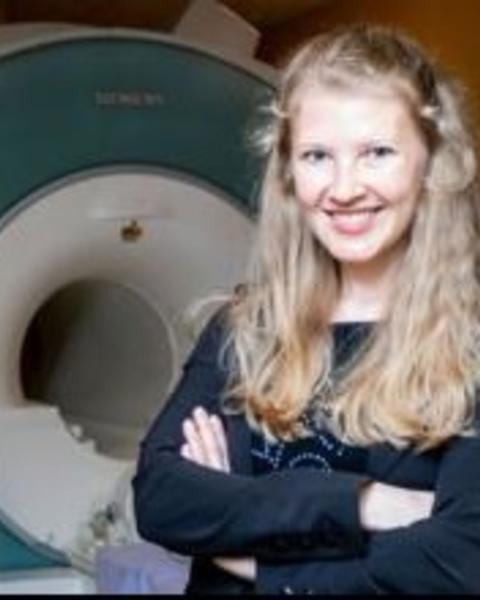
Professor Elizabeth Fisher is a leading academic in Neurogenetics at the UCL Queen Square Centre for Neuromuscular Diseases , affiliated with the Faculty of Brain Sciences at University College London. She specializes in mouse models for human neurodegenerative diseases. Undergraduate: Physiological Sciences, University of Oxford (1978–1981) PhD: Mouse Molecular Genetics, St Mary’s Hospital Medical School (Imperial College) and MRC Mammalian Genetics Unit (Harwell) (1983) Her research focuses on Down’s syndrome and amyotrophic lateral sclerosis (ALS) , using mouse models to investigate the neurological basis of these conditions. She collaborates extensively, including with Victor Tybulewicz since 1991. Recent publications highlight her work in neurogenetics , mouse modeling , and neurodegenerative disease mechanisms , including studies on ALS, Down syndrome, and metabolic alterations in genetically modified mice. Scientific recognitions include: Fellow of the Academy of Medical Sciences (2007) Member of EMBO (2009) Fellow of the Royal Society of Biology (2010) Wellcome Trust Senior Investigator (with Victor Tybulewicz) Her work emphasizes interdisciplinary collaboration and translational approaches, leveraging mouse genetics to address fundamental questions in neurodegeneration.
Eunhee Kim is a Professor in the Department of Defense Systems Engineering at Sejong University. She holds a Ph.D. in Mechanical Engineering from KAIST and has extensive industry experience in radar systems development. 1995 B.S. in Precision Engineering, KAIST 1997 M.S. in Mechanical Engineering, KAIST 2004 Ph.D. in Mechanical Engineering, KAIST Her research focuses on Radar Systems , Waveform Design , and MIMO Radar signal processing. She has contributed to projects involving space object tracking, airborne radar systems, and automotive radar optimization. Recent publications highlight her work on Machine Learning integration for Energy Forecasting and advanced MIMO Array Designs for improved radar resolution. She leads the Defense Radar Technology Laboratory, specializing in Phased Array Radar and Broadband Noise Radar systems. Patents include vehicle camouflage netting and RF-based positioning systems. Collaborations with agencies like Agency for Defense Development and companies such as LIG Nex1 and Hanwha Systems are prominent in her career.
Annette Majnemer is a Professor at McGill University's School of Physical and Occupational Therapy within the Faculty of Medicine and Health Sciences. She serves as a Senior Scientist at the Research Institute of the McGill University Health Centre (IR-MUHC), where she is affiliated with both the Child Health and Human Development Program and the Center for Evaluative Research in Health. Her academic career is firmly rooted in pediatric rehabilitation science, with particular emphasis on understanding and improving outcomes for children with developmental disabilities. Dr. Majnemer's research program focuses on child, adult, and environmental factors that influence activity limitations and participation restrictions in children and youth with developmental disabilities. She has particular expertise in studying children born at high risk of impairment, including preterm survivors and children with congenital heart disease, as well as those with cerebral palsy. A significant portion of her recent work has centered on knowledge translation and exchange strategies designed to promote best practices in early identification of impairment and adoption of effective rehabilitation interventions. She leads the CHILD-BRIGHT Network, a pan-Canadian patient-oriented research strategy targeting children with brain-based disorders, which represents one of the most significant collaborative efforts in childhood disability research in Canada. Her publication record demonstrates a strong trajectory in childhood disability research, with recent work increasingly focusing on innovative approaches to rehabilitation service delivery, including telehealth, digital interventions, and gamification strategies to enhance participation. The breadth of her research spans from basic understanding of developmental trajectories to implementation science examining how to effectively integrate evidence into practice. Her work consistently emphasizes patient and family engagement, recognizing the critical importance of incorporating the perspectives of children with disabilities and their families in research design and service development. Dr. Majnemer has been instrumental in developing and evaluating coaching interventions for parents of children with developmental delays, examining how to optimize leisure participation for children with disabilities, and creating tools to measure inclusion in community settings. Her work on the Child Community Health Inclusion Index represents an important contribution to the field's ability to assess and improve community participation for children with disabilities. Through her leadership of the CHILD-BRIGHT Network and numerous collaborative research projects, Dr. Majnemer has established herself as a central figure in Canadian childhood disability research, bridging clinical practice, research, and policy to improve outcomes for children with disabilities and their families across the country.
Ludovic Saint-Bauzel is a lecturer at Sorbonne University and head of the IRIS team at the Institute of Intelligent Systems and Robotics (ISIR). His work focuses on improving physical human-robot interaction for individuals with autonomy loss through disability or aging. Specializes in computational models of disabilities Develops user intent detection through sensor fusion Active in IFRH and Fedrha federations IEEE and True Life Lab member Research interests His research centers on Human-robot physical interaction with applications in Elderly care , Smart-walker development, and Walking exoskeleton systems. Key methodologies include: Sensor fusion (depth cameras, force sensors, IMUs) Adaptive robot control systems Pathological movement modeling Motor intent prediction algorithms Article trends show consistent focus on haptic communication (6/15), assistive robotics (9/15), and sensorimotor interaction (11/15) across 2013-2022 publications. Laboratory involvement : Leads the IRIS team at ISIR, part of Fedrha (Federation for Research on Disability and Autonomy) with 50+ research teams.
Evelina Fedorenko is an Associate Professor in the Department of Brain and Cognitive Sciences at the Massachusetts Institute of Technology (MIT) , with affiliations at Massachusetts General Hospital (MGH), Boston Campus . Her research focuses on the cognitive and neural mechanisms underlying language processing, including interactions with artificial systems like language models. Lab: Language Lab at MIT , exploring minds and brains creating language Key Research Areas: Cognitive Neuroscience of Language and Music, Neural Representations, Computational Models Her recent work examines how artificial language models map to human brain regions , investigates the universality of language networks across languages and individuals, and explores non-classical aspects like cerebellar involvement. She develops advanced methodologies for neuroimaging, including individualized brain mapping and standardized stimuli creation. Scientific contributions include debates on language localization, studies of language evolution, and frameworks for semantic analysis. Her team employs fMRI , MEG , and precision imaging to dissect the language-selective network and its interactions with other cognitive systems.
Michale Fee is the Glen V. and Phyllis F. Dorflinger Professor of Neuroscience at the Massachusetts Institute of Technology (MIT) , where he serves as Department Head of Brain and Cognitive Sciences and Investigator at the McGovern Institute for Brain Research . His research focuses on understanding how the brain generates and learns complex sequential behaviors using songbirds as a model system. Education: B.E. in Engineering Physics, University of Michigan (1985) Ph.D. in Applied Physics, Stanford University (1992) Research Interests: Fee’s work combines advanced electrophysiological techniques , optical imaging , and computational modeling to study neuronal circuits underlying sequence learning and motor control in songbirds. His lab investigates how neural circuits support vocal learning, temporal coordination, and behavioral adaptation. Scientific Awards: MIT Fundamental Science Investigator Award (2017) MIT School of Science Teaching Prize (2016) BCS Award for Excellence in Teaching (2015) Lawrence Katz Prize (2012) Dart Scholar (2003) Advising and Grants: Fee has mentored numerous PhD students , Masters students , and postdoctoral researchers . He leads the Fee Laboratory at MIT, which develops innovative neurotechnologies and contributes to global neuroscience collaborations , including the Simons Collaboration on the Global Brain.
John D. E. Gabrieli is a Professor at the Massachusetts Institute of Technology (MIT) in the Department of Brain and Cognitive Sciences, holding the Grover Hermann Professorship in Health Sciences and Technology and Cognitive Neuroscience. He serves as Director of the Athinoula A. Martinos Imaging Center at the McGovern Institute for Brain Research and leads the MIT Integrated Learning Initiative. His research spans cognitive neuroscience, focusing on memory, thought, and emotion, with clinical applications in dyslexia, autism, and psychiatric disorders. Director, Athinoula A. Martinos Imaging Center (2016–present) Grover Hermann Professor, MIT (2005–present) Faculty, Harvard Graduate School of Education (2006–present) Visiting Professor, Rush Medical College (1990–present) Gabrieli’s work combines brain imaging with behavioral studies to explore learning mechanisms in children, early intervention for reading difficulties, and neuroimaging applications in psychiatric diagnosis. Recent studies examine altered brain activity in dyslexia , neurodevelopmental patterns in autism , and predictive modeling for mental health . His 2024 dataset on adolescent anxiety/depression in the Human Connectome Project highlights longitudinal neuroimaging approaches. Scientific accolades include election to the American Academy of Arts & Sciences (2016), multiple teaching awards at MIT and Stanford, and the Alice H. Garside Lifetime Achievement Award (2017). He contributes to editorial boards of journals like Psychological Science and Biological Psychiatry . His lab emphasizes educational neuroscience , investigating how socioeconomic factors, white matter plasticity, and mindfulness interventions impact learning outcomes. Collaborations span Massachusetts General Hospital, McLean Hospital, and the Harvard Graduate School of Education, integrating clinical and educational applications of cognitive neuroscience.
Dr. Judith Mwakalonge serves as Associate Professor of Civil Engineering at South Carolina State University, Academic Program Coordinator for the Master of Science in Transportation (MST), and Associate Director of the Center for Connected and Multimodal Mobility (C2M2). Her expertise centers on transportation engineering with emphasis on safety, planning, and emerging mobility technologies. Her academic credentials include: Ph.D. in Civil Engineering from Tennessee Tech University (2010) M.S. in Civil Engineering from Florida State University (2007) B.S. in Civil Engineering from the University of Dar-es-Salaam, Tanzania (2005) Research focuses on transportation safety analysis, traffic operational efficiency, travel demand modeling, non-motorized infrastructure, micro-mobility systems, and connected vehicle environments. She investigates self-driving technology impacts and develops methodologies for transportation network planning and safety evaluation. Recent publications (2021-2022) demonstrate interdisciplinary applications across disaster logistics, renewable energy supply chains, event traffic management, micro-mobility regulation, and driver behavior psychology. These works integrate operations research, data analysis, and policy evaluation to address complex transportation challenges. As MST program coordinator, she oversees graduate education while leading federally funded national projects. Her teaching portfolio spans Transportation Planning, Economics, Systems Analysis, and Intelligent Transportation Systems courses. Through the Center for Connected and Multimodal Mobility (C2M2), she advances research on integrated transportation networks and connected vehicle technologies.
John Bartholomew is a Professor and Head of the Department of Kinesiology at Pennsylvania State University's College of Health and Human Development. He holds a Ph.D. in Exercise Science (1996) from Arizona State University and an A.B. in Psychology (Cum Laude, 1989) from Harvard University. His research focuses on exercise psychology, physical activity interventions, and sport psychology, with a particular emphasis on motivation states, pandemic-related behavioral shifts, and implementation strategies for school-based physical activity programs. Education: Ph.D. in Exercise Science (Arizona State University, 1996) A.B. in Psychology (Harvard University, 1989) His recent publications span topics like identity distress during the pandemic, physical activity in climate migrants, and classroom-based physical activity interventions. While no explicit scientific awards are listed, his work has driven international initiatives like the Creating Active Schools Framework and ACTNOW trials. He has no listed advisees in the provided text but has collaborated on multi-stakeholder projects involving teachers, policymakers, and global partners.
Youngmoo Kim is Professor of Electrical and Computer Engineering at Drexel University, where he directs the Expressive and Creative Interactive Technologies (ExCITe) Center. His leadership extends to the Music & Entertainment Technology Laboratory (MET-lab), focusing on machine listening, robotics for expressive interaction, and STEM education through music technology. Education: PhD, Media Arts & Sciences, MIT (2003) MS, Electrical Engineering, Stanford University MA, Music, Stanford University BS, Engineering, Swarthmore College BA, Music, Swarthmore College Research Focus: Kim's interdisciplinary work bridges audio signal processing, machine learning for music information retrieval, human-robot interaction, and acoustic synthesis. His lab develops novel interfaces including brain-controlled robotics, augmented instruments, and AI-driven music systems, while championing K-12 STEAM education through technological innovation. Publication Trends: Recent articles demonstrate strong convergence of deep learning with music technology, particularly in neural audio synthesis, instrument recognition, and robotic control systems. Emerging themes include differentiable physical modeling of instruments, neuroadaptive interfaces using fNIRS/tDCS, and computational approaches to creative collaboration. Awards & Honors: 2021 College of Engineering Inclusive Excellence Award 2013 Apple Distinguished Educator 2012 Lindback Foundation Distinguished Teaching Award 2012 Philadelphia Geek Awards Scientist of the Year 2007 NSF CAREER Award Leadership & Funding: Kim has secured research support from the National Science Foundation and Knight Foundation. His ExCITe Center serves as an interdisciplinary hub for creative technology development, while MET-lab advances audio-machine intelligence through collaborations across engineering, computer science, and performing arts.
Edward Bonder serves as Professor of Cell Biology and Chair in the Department of Biological Sciences within the College of Arts and Sciences at Rutgers University-Newark. His laboratory investigates the structural and functional dynamics of the actin cytoskeleton across multiple biological contexts including morphogenesis, cell-cell contact formation, and organelle motility. Utilizing marine gamete models and cultured epithelial systems, his research bridges fundamental cell biology with developmental processes. Education: B.A. in Biology, University of Pennsylvania (1976) Ph.D. in Cell Biology, University of Pennsylvania (1983) Dr. Bonder's research focuses on actin-myosin interactions governing cellular dynamics, with particular emphasis on myosin motor proteins in fertilization models, adherens junction formation, and mitochondrial motility along cytoskeletal tracks. His work demonstrates how Rho GTPase signaling, microtubule-actin crosstalk, and unconventional myosins regulate cell polarization, wound healing, and embryonic development. The laboratory employs sea urchin coelomocytes and epithelial cell cultures to dissect stimulus-response mechanisms in organelle transport and cell adhesion. Publication analysis reveals sustained contributions to cytoskeletal dynamics over 25+ years, with recent work expanding into cancer biology, stem cell regulation, and host-microbe interactions. Key themes include Rab11-dependent trafficking, CDC42-mediated tumor suppression, and TLR sorting mechanisms - all rooted in fundamental cytoskeletal principles established through earlier sea urchin and epithelial models. No scientific awards are documented in the provided materials. Dr. Bonder maintains active research programs examining cytoskeletal regulation in development and disease, with consistent funding evidenced by continuous publication in high-impact journals including PNAS, Journal of Cell Biology, and EMBO Journal. His laboratory trains researchers in advanced cell imaging, molecular perturbation techniques, and model system applications. The research group operates from 309 Boyden Hall, utilizing sea urchin fertilization models, epithelial cell culture systems, and molecular approaches to investigate cytoskeletal dynamics across scales from single molecules to tissue organization. Current projects integrate traditional cell biology with emerging work in intestinal stem cells and microbial homeostasis.
Pedro M. B. Silva Girão is a Full Professor in the Department of Electrical Engineering at Instituto Superior Técnico (IST), University of Lisbon (UL), and a Senior Researcher at Instituto de Telecomunicações where he heads the Instrumentation and Measurements Group and coordinates the Basic Sciences and Enabling Technologies area. His dual institutional roles position him at the forefront of academic research and technological innovation in Portugal. His research program focuses on instrumentation, transducers, and measurement techniques with specialized applications in biomedical and environmental domains. Key interests include wireless sensor networks for health monitoring, metrology standards, and digital data processing methodologies. This work bridges engineering principles with real-world healthcare and ecological challenges, emphasizing practical implementations in diagnostic systems and environmental sensing. Analysis of his 2019-2024 publications reveals a strong thematic trajectory in IoT-enabled healthcare solutions and precision environmental monitoring. Recurring motifs include gait rehabilitation through mixed reality systems, advanced dosimetry for liver cancer radioembolization, microvascular reactivity assessment, and water quality sensor networks. His output demonstrates consistent interdisciplinary collaboration between engineering, medical, and environmental science communities. Dr. Girão's scientific recognition includes: IEEE Senior Member status IEEE IMS Distinguished Lecturer appointment Honorary Chairmanship of IMEKO TC19—Environmental Measurements As leader of the Instrumentation and Measurements Group at Instituto de Telecomunicações, he directs a multidisciplinary team developing next-generation measurement systems. Current initiatives integrate microwave Doppler radar, wearable biopotential sensors, and wireless networks for unobtrusive health monitoring and environmental assessment, with active partnerships across medical institutions and ecological agencies.
Timothy Holy, PhD is the Alan A. & Edith L. Wolff Professor of Neuroscience and Vice Chair of Research at Washington University School of Medicine. He leads the Holy Lab, which focuses on the neural mechanisms of olfactory coding and the development of innovative imaging technologies for neuroscience research. His educational background includes a BA in Mathematics and Physics (summa cum laude) from Rice University (1991), an MA in Physics from Princeton University (1992), and a PhD in Physics from Princeton University (1997) under thesis advisor Stanislas Leibler. Dr. Holy's research spans multiple domains of neuroscience with particular emphasis on the olfactory system of mice. His lab has pioneered light sheet microscopy for calcium imaging, enabling simultaneous recording from tens of thousands of neurons. More recently, they developed PhOTseq, a technique for optically tagging neurons for later sequencing. His work bridges physics, neuroscience, and computational approaches to understand how sensory systems process information. He is also among the world's foremost creators of the Julia programming language, which has gained exponential adoption in scientific computing. Analysis of his recent publications reveals a strong focus on neural coding in decision-making circuits, olfactory processing, and the development of computational tools for biological research. His work increasingly integrates machine learning approaches with traditional neuroscience techniques. Distinguished Teaching Service Award (2005, 2008, 2014) McKnight Technological Innovation in Neuroscience Award (2007) St. Louis Academy of Sciences Innovation Award (2009) NIH Director's Pioneer Award (2009) Society for Neuroscience Research Award for Innovation in Neuroscience (RAIN) (2009) Dr. Holy has mentored numerous students and postdoctoral researchers who have gone on to establish their own research programs. His lab has secured significant grant funding supporting technology development and fundamental neuroscience research. Current projects include investigating cellular mechanisms of individuality and plasticity, navigation using olfactory cues, and developing new mathematical tools for optimization and machine learning. The Holy Lab combines a focus on understanding neural circuits and behavior with a willingness to pioneer new technologies. It maintains strong collaborations across disciplines, particularly in the development and application of the Julia programming language for biological research.
Christopher Cherry is a Professor and Associate Department Head of Undergraduate Studies in the Department of Civil and Environmental Engineering at the University of Tennessee, Knoxville. His research focuses on sustainable transportation, micromobility (e-bikes, e-scooters), pedestrian and bicycle safety, and the impacts of emerging technologies on urban mobility systems. PhD, Civil and Environmental Engineering–Transportation, University of California, Berkeley (2007) MS, Civil Engineering–Transportation, University of Arizona (2003) BS, Civil Engineering, University of Arizona (2000) Dr. Cherry’s research interests lie at the intersection of transportation engineering, behavioral science, and sustainability. He investigates travel behavior, transportation economics, and the safety implications of shared and electric micromobility systems. His work emphasizes non-motorized transportation and the integration of new technologies into urban planning. He leads the Light Electric Vehicle Education and Research (LEVER) Initiative and is an Associate Director of the Center for Pedestrian and Bicyclist Safety (CPBS), a multi-institutional UTC led by the University of New Mexico. His recent publications span topics such as e-bike adoption, micromobility safety, transit integration, and urban delivery systems. Collectively, these works reflect a strong emphasis on data-driven policy, behavioral modeling, and the environmental and public health impacts of transportation choices. NSF CAREER Award TCE Ferris Faculty Award (2015) TCE Professional Promise in Research Award (2014) CEE Research Recognition Award (2009, 2012) Member, Transportation Research Board Chair, SAE Micromobility Committee Dr. Cherry has supervised numerous PhD and MS students in transportation research and has led multiple federally and state-funded projects on micromobility, transit, and safety. He is actively involved in professional service and collaborates with institutions across the U.S. and internationally, including UC Berkeley, Tsinghua University, and the Asian Development Bank. His work bridges engineering, policy, and public health to advance sustainable and equitable urban mobility. He leads research initiatives on e-bike and e-scooter safety, urban logistics, and the integration of big data into transportation planning. His team utilizes smartphone-based data collection, video analysis, and simulation models to understand real-world behavior and improve system design.
Russell King is the Henry Armfield Foscue Distinguished Professor of Industrial and Systems Engineering (ISE) at North Carolina State University's College of Engineering. He serves as the Director of Graduate Programs for the ISE department, responsible for administering degree programs serving approximately 190 graduate students. King is also a Fellow of the Institute of Industrial and Systems Engineers and has received numerous teaching and research awards throughout his 37-year career at NC State. Dr. King earned his Ph.D. in Industrial Engineering from the University of Florida (1986), following a Master of Industrial Engineering (1982) and Bachelor of Science in Systems Engineering (1980). His undergraduate journey was unconventional, having considered seven different majors including pre-med, biology, microbiology, biochemistry, math, and ornamental horticulture before selecting engineering. His doctoral work was completed under advisor Thom Hodgson, who moved from Florida to become NC State's ISE department head during King's studies. King's research focuses on solving practical problems across diverse areas including logistics, scheduling, and inventory control for additive manufacturing, remanufacturing, and military systems under risk. His work spans pricing strategies, stress control of 3D-printed parts, supply chain design, and military logistics optimization. His research approach bridges theoretical rigor with real-world applications, resulting in consulting engagements with Ford Motors, The Gap, Dillards Department Stores, and the Institute for Defense and Business. Analysis of his recent publications shows a consistent focus on military logistics applications (5 of 10 recent papers), additive manufacturing integration (3 papers), and supply chain risk management (4 papers), demonstrating how his research has evolved to address emerging challenges in manufacturing and defense logistics while maintaining practical relevance. C. A. Anderson Outstanding Faculty Award, ISE Department at NC State University (2020, 2014, 2008, 2002, 1996, 1986) Albert G. Holzman Distinguished Educator Award, Institute of Industrial Engineers (2010) Henry Armfield Foscue Distinguished Professor (2017) Edward P. Fitts Distinguished Professor (2012) NCSU George H. Blessis Outstanding Undergraduate Advisor Award (2010) Teaching Excellence Award in the OR Division, Institute of Industrial and Systems Engineers (2019) Technical Innovation in Industrial Engineering, Institute of Industrial Engineers (2003) Fellow, Institute of Industrial Engineers (2006) As an academic leader, King has developed innovative programs including a dual Master of Industrial Engineering/Master of Business Administration program and a distance education Master of Engineering degree. His mentorship has produced three students who placed in the top 3 of IIE's dissertation award competition, with two taking first place. He has served as associate editor for the Journal of Manufacturing Systems and IIE Transactions, contributing to the scholarly community beyond his own research. Outside academia, King and his daughter are Masters of Taekwondo under Grand Master K.S. Lee of Morrisville, NC.