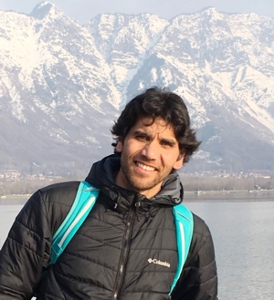
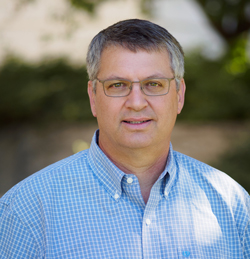
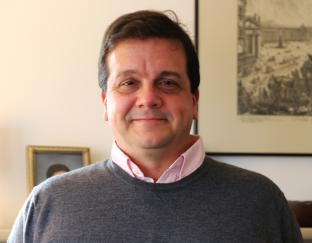
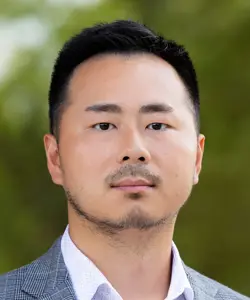
Mubarak H. Syed is an Assistant Professor at the Department of Biology, University of New Mexico, where he leads research on neural diversity and circuit function. His work bridges genetic, cellular, and molecular mechanisms to elucidate how neurons and glia develop and contribute to behaviors. Ph.D. in Biology from University of Muenster (2011) His research focuses on the genetics and cellular mechanisms underlying neural diversity, with a specific emphasis on sleep-wake and olfactory navigation circuits in Drosophila . These studies have implications for understanding human neurological disorders and advancing stem cell-based therapies. Recent publications highlight his work on RNA-binding proteins, steroid hormone signaling, and neural circuit dynamics. His findings contribute to broader insights in neurogenetics and developmental neuroscience. Scientific recognition includes: NARSAD Young Investigator Award NSF CAREER Award Sloan Research Fellow in Neuroscience As an educator, he teaches genetics, neuroscience, and developmental biology through the NeuroCURE lab. He also mentors students from Kashmir and Pueblo communities via initiatives like JKScientists and Pueblo Brain Science, aiming to build a diverse neuroscience workforce.
Kaylena Ehgoetz Martens serves as an Associate Professor in the Department of Kinesiology and Health Sciences at the University of Waterloo, where she directs the Neurocognition and Mobility Lab. Her research program integrates movement kinematics, functional neuroimaging, psychophysiology, and cognitive neuroscience to investigate the neural basis of gait control and its disruption in neurodegenerative conditions, with particular emphasis on Parkinson's disease, dementia with Lewy bodies, and isolated REM sleep behavior disorder. She focuses on the complex interplay between cognition, emotion, and motor function to develop translational approaches for early diagnosis and intervention in mobility disorders. Dr. Martens' academic training includes a BSc in Kinesiology & Physical Education from Wilfrid Laurier University, an MA in Psychology from the University of Waterloo, a PhD in Cognitive Neuroscience from the University of Waterloo, and postdoctoral training at the Medicine, Brain and Mind Centre, University of Sydney, Australia. Her educational background established the foundation for her multidisciplinary approach to movement neuroscience. Her research program centers on three interconnected aims: (1) investigating cognitive-emotional interactions in gait and balance control; (2) leveraging gait complexity to identify subclinical predictors of neurodegeneration; and (3) developing technology-enhanced diagnostic and intervention tools using virtual reality and mobile recording devices. This work addresses critical gaps in understanding how anxiety, threat processing, and autonomic dysfunction contribute to movement impairments in aging and neurodegenerative diseases. Analysis of her recent publications (2023-2025) reveals a strong trajectory in subtype-specific characterization of freezing of gait, identification of sex-specific neurodegeneration patterns, and development of AI-driven detection methods. Her work increasingly incorporates machine learning for gait analysis while maintaining clinical relevance through biomarker discovery and therapeutic innovation, particularly in the prodromal phases of synucleinopathies. Scientific Awards: No specific awards were documented in the provided source material. Dr. Martens actively supervises graduate students across all levels including undergraduate theses, MSc, PhD, and postdoctoral fellows within her Neurocognition and Mobility Lab. She provides research opportunities for volunteers, coursework interns, and research coordinators, with a focus on translating laboratory findings to clinical applications. While specific grant details weren't provided, her extensive use of advanced neuroimaging, wearable sensors, and virtual reality technologies indicates substantial research funding supporting her program. The Neurocognition and Mobility Lab operates as a collaborative hub bridging basic neuroscience with clinical practice, working closely with healthcare providers to develop practical tools for early mobility impairment detection. Current projects emphasize translating gait complexity metrics into clinical biomarkers and developing anxiety-targeted interventions to prevent falls in neurodegenerative populations, with particular attention to preserving functional independence throughout the lifespan.
David G. Drubin is the Ernette Comby Chair in Microbiology and a Professor of Cell Biology, Development and Physiology at the University of California, Berkeley. He is also an affiliate of the Division of Genetics, Genomics and Development, with his lab focusing on molecular mechanisms of actin assembly and membrane trafficking in human stem cells, organoids, zebrafish, and budding yeast. Affiliation: Department of Molecular and Cell Biology, UC Berkeley Research Focus: Actin-mediated membrane trafficking, clathrin-mediated endocytosis, cytoskeletal dynamics, genome editing, stem cell differentiation, and yeast genetics His lab employs real-time imaging, genome editing, mathematical modeling, and biochemical reconstitution to study endocytic mechanisms. Key findings include the role of membrane curvature in endocytosis and the translation of yeast discoveries to mammalian systems. Google Scholar publications up to 2025 highlight his work on myosin-I, actin networks, and membrane biophysics. Lab members include students and researchers like Sun Hae Hong, Yansong Miao, and Nate Krefman. The lab has produced educational videos (e.g., DNA gel training) and maintains active research directions in actin force generation and organelle inheritance pathways.
Athanasios Kolios serves as Professor and Head of the Structural Integrity and Loads Assessment section within the Department of Wind and Energy Systems at the Technical University of Denmark (DTU). His work focuses on advancing wind energy technology through structural analysis, materials science, and system optimization for both onshore and offshore applications. His primary research domains include wind turbine structural integrity, offshore wind farm layout optimization, and structural health monitoring systems. He investigates critical challenges in operation and maintenance strategies, techno-economic metrics for wind projects, and materials behavior under dynamic loading conditions. His fingerprint analysis reveals dominant expertise in Wind Turbine Engineering (100%), Offshore Wind Turbines Engineering (45%), and Offshore Wind Farms Engineering (36%). Recent publications demonstrate strong emphasis on data-driven approaches for wind energy systems, including structural optimization algorithms, virtual sensing techniques, and techno-economic assessments of offshore projects. His work consistently bridges theoretical engineering principles with practical industry applications, particularly in Brazilian and European offshore wind contexts. Scientific Awards: No scientific awards were documented in the provided information Professor Kolios actively supervises five PhD candidates across major research initiatives while mentoring Master's students in structural wind energy applications. His research portfolio includes six significant projects addressing critical industry needs: PhD Supervision: Chopard (anomaly interpretation), Piovesan (risk-based technology qualification), Yildirim (floating turbine uncertainty), Rodrigues Faria (autonomous operation), Al-Hagri (offshore structure maintenance) Master's Supervision: Rushil S. Mahajan (monopile buckling analysis) Current Projects: Decision support systems, life cycle cost modeling, floating wind turbine modeling, autonomous operation frameworks, sustainable offshore structure design As section head at DTU Wind and Energy Systems, he leads an internationally collaborative research group focused on structural integrity assessment, load prediction methodologies, and materials innovation for next-generation wind turbines. The team maintains strong industry partnerships and contributes to global wind energy standards development through participation in initiatives like ISSC.
Tuğba KANMAZ is an Assistant Professor at Kırşehir Ahi Evran University, Faculty of Education, Department of Basic Education since 2024. Previously, she held academic positions at Kütahya Dumlupınar University from 2018-2024, including roles as Department Head and Vice Dean . PhD in Preschool Education (Gazi University, 2023) Master's in Preschool Education (Gazi University, 2017) Bachelor's in Primary Education (Muğla Sıtkı Koçman University, 2014) Her research focuses on Preschool Education and Early Childhood Education , with emphasis on Computational Thinking , Creative Drama , and Technology Integration . Her work explores: Robotics and coding education for preschoolers Peer relationships and bullying prevention Movement programs for children with disabilities Parental involvement in digital education 21st-century skills in early childhood Recent publications analyze trends in drama-based pedagogy, coding tools like ScratchJr, and pandemic-induced learning losses. Awards include the 2023 Academic Incentive Award and 2022 Best Oral Presentation at international conferences. Collaborations span institutions including Gazi University and Kafkas University.
Professor Aideen Sullivan is Head of the Department of Anatomy and Neuroscience at University College Cork (UCC). With a career spanning over two decades at UCC, she leads research on neuroprotective therapies for Parkinson's disease, focusing on growth factors, stem cell applications, and epigenetic mechanisms. She established Ireland's first BSc in Neuroscience and co-developed the cross-College BSc in Medical and Health Sciences (CK707). BSc (First Class Honours) in Pharmacology, University College Dublin (1992) PhD in Neuropharmacology, University of Cambridge (1995) Her research program investigates Parkinson's disease through five key themes: viral vector delivery of neurotrophic factors, molecular mechanisms of neuroprotection, biomarker discovery, neuronal degeneration models, and stem cell-based treatments. She has secured significant grants from Health Research Board, Enterprise Ireland, and the Wellcome Trust. Recent publications (2022-2020) emphasize epigenetic regulation (HDAC inhibitors), microbiome-gut-brain axis interactions, and novel neurotrophic strategies. Articles highlight GDF5's neuroprotective effects, miRNA modulation, and molecular pathways like BMP-Smad and p38-MAPK. Scientific awards include: Postgraduate Certificate in Teaching and Learning (UCC, 2006) FETAC Certificate in Peer-Mentoring (2010) Leadership Foundation Aurora Programme Scholarship (2015) Over €2 million in research grants She mentors undergraduate and postgraduate students, chairs UCC's Athena SWAN 'Flexible Working' group, and serves as Editor-in-Chief of Neuronal Signaling . Her work spans laboratory research, public engagement, and educational innovation.
Mahmood Mazare is a Postdoctoral Researcher at SDU Mechatronics (CIM), University of Southern Denmark. His work focuses on advanced control systems and cybersecurity applications in energy generation technologies. Primary affiliations: University of Southern Denmark Research Interests: Control systems optimization Reinforcement learning applications Cybersecurity in energy systems Wind power generation security Optimal control strategies Compressed air motor technology Recent Research Trends: Mazare's publications demonstrate expertise in developing secure control systems for renewable energy applications, particularly focusing on mitigating cyber threats through reinforcement learning approaches and addressing disturbances in power conversion systems. Scientific Contributions: 3 peer-reviewed journal publications in the past year covering topics in control theory, wind power security, and compressed air motor systems.
Anthony Antonellis is a Professor of Human Genetics at the University of Michigan Medical School. His research focuses on transcriptional regulation and the genetic and molecular mechanisms of Mendelian disease, particularly mutations in aminoacyl-tRNA synthetases linked to neuropathies and neurodevelopmental defects. He is affiliated with the Antonellis Laboratory and the Cell and Molecular Biology (CMB) program. Implicit Bias Training Allayship Training Anti-Racism Training Disability Awareness Training Bystander Training Gender Bias/Discrimination Training Research areas include studies of gene regulation via cis-acting elements in myelinating cells, and the role of tRNA charging enzymes in neurodegenerative and developmental disorders. His group employs model organisms like yeast and zebrafish to explore clinical heterogeneity and disease mechanisms. Articles highlight Mendelian disorders, neuropathy genetics, tRNA synthetase dysfunction, and neurogenetics, with emphasis on translation to clinical diagnostics and therapeutics. Contact: antonell@umich.edu
Marsha Chechik is a Professor in the Department of Computer Science at the Faculty of Arts and Science, University of Toronto. She previously served as Department Chair from 2019-2022 and as Acting Dean in the Faculty of Information from July-December 2022. Her academic career spans numerous research contributions and leadership roles within the software engineering community. Professor Chechik's primary research interests focus on software engineering with emphasis on formal methods to enhance software quality. Her work encompasses scalable automated verification techniques including model-checking and theorem-proving, formal specification languages, verification of protocols, non-classical logics, and reasoning under inconsistency. She has made significant contributions to model management, software product lines, safety and security assurance, and automotive safety systems. Her research bridges theoretical foundations with practical applications, particularly in managing uncertainty in software models and developing techniques for automotive safety verification. Her recent publications demonstrate a strong focus on model management and transformations, software product lines and variability analysis, safety and security assurance cases, and semantic analysis of software evolution. The integration of formal methods with practical software engineering challenges, especially in safety-critical domains like automotive systems, represents a consistent theme throughout her work. Professor Chechik has been recognized with multiple prestigious awards including a Best Paper Award at RE'12, a SIGSOFT Distinguished Paper Award at ICSE'12, a Best Student Paper Award at CASCON'07, and a Distinguished Paper Award at ICSE'07, highlighting the impact and quality of her research contributions. She actively supervises graduate students and has successfully guided numerous Ph.D. candidates to completion. Her group has produced graduates who predominantly pursue research careers in both academic institutions and industrial research labs. She currently leads several funded projects including the Automotive Safety project (in collaboration with General Motors) and the Software Evolution project, focusing on practical applications of her research interests. Professor Chechik leads the Software Engineering Lab at the University of Toronto, where innovative projects like Matchmakers (a serious game for software engineering) are developed. Her collaborative network extends across institutions, with notable partnerships including Julia Rubin at the University of British Columbia, demonstrating her commitment to interdisciplinary research and academic collaboration.
Marc H. Schieber, M.D., Ph.D. is a Part-Time Professor in the Department of Neurology at the University of Rochester School of Medicine and Dentistry. He leads the Schieber Lab, which focuses on neural control of hand and finger movements and brain-machine interface technology development. His research has significant implications for restoration and repair of damaged neurological function. Dr. Schieber's educational background includes both an MD and PhD from Washington University School of Medicine (1982), followed by a Neurology residency at Massachusetts General Hospital (1983-1986) and an Internal Medicine internship at Barnes-Jewish Hospital South (1982-1983). His academic journey was supported by prestigious fellowships including the Medical Scientist Training Program Fellowship (1974-1982). His research primarily investigates how the brain controls fine finger movements used in activities like typing, playing musical instruments, or performing delicate surgery. More recent work explores the combination of reaching, grasping, and manipulating. His lab studies how the brain controls complex muscle movements to achieve required actions, with applications to brain-machine interface technology. His publications reveal consistent focus on neural coding, motor cortex function, and the development of neuroprosthetics for restoring lost function. Dr. Schieber's work shows strong trends in understanding neural representations of movement, cortical organization for motor control, and translating these findings to practical brain-computer interfaces. His recent publications (2023-2025) increasingly focus on intracortical microstimulation for injecting information into cortical networks, neural synchrony in sensorimotor systems, and computational approaches to motor control. Javits Investigator Merit Award (2003-2010) Clinical Investigator Development Award (1986-1989) Phi Beta Kappa (1974) A.B. summa cum laude (1974) Medical Scientist Training Program Fellowship (1974-1982) Dr. Schieber has mentored numerous graduate students and postdoctoral fellows who have gone on to successful careers in academia and industry. His lab has received substantial research funding supporting investigations into neural control mechanisms and brain-machine interface development. The Schieber Lab has been an important contributor to understanding distributed motor control in the cortex and translating these findings to potential clinical applications for neurological rehabilitation. His laboratory work has consistently examined the distributed nature of motor control in the cortex, challenging traditional views of somatotopic organization and demonstrating how multiple cortical areas work together to produce coordinated movements. Current research directions include investigating how to effectively inject information into cortical networks using microstimulation and understanding the computational principles underlying motor control.
Professor Lisa Barnett is a leading academic in Physical Activity and Health at Deakin University's Institute for Physical Activity and Nutrition within the Faculty of Health. She currently serves as Associate Head of School for Research and has held progressive academic positions since 2009, advancing from Lecturer to her current Professorship (2022-present). Her internationally recognized work focuses on developing measurement tools and interventions to improve physical literacy, with particular expertise in motor skills assessment. Doctor of Philosophy, University of Sydney Master of Public Health, University of New South Wales Graduate Certificate of Higher Education, Deakin University Bachelor of Social Science, Edith Cowan University Professor Barnett's research has established her as the number one researcher in the world in motor skills according to Expertscape. Her work bridges academic research with practical application through extensive industry partnerships and international collaborations. She developed the pictorial scale for Perceived Movement Skill Competence in 2016, now used in 35 countries, and co-led the development of the Australian Physical Literacy Definition and Framework in 2019. In 2021, she led development of an innovative pictorial tool to measure children's physical literacy for the Australian Sports Commission, requested by researchers from 22 countries across 17 language groups. Her research interests focus on Motor Skills, Physical Self-Perception, Physical Literacy, and Physical Activity measurement and intervention. Her recent publications demonstrate strong continuity in her research program, with 2025 articles focusing on physical literacy measurement tools, motor competence assessment, and interventions targeting children's physical activity. These works show increasing methodological sophistication with applications of artificial intelligence, longitudinal program evaluation, and digital health approaches. Number one researcher in the world in motor skills (Expertscape) Past President of the International Motor Development Research Consortium Co-leads the Physical Literacy Special Interest Group for the Asia Pacific Society of Physical Activity Professor Barnett has secured substantial research funding, including current grants such as 'Culturally adapting the Resistance Training for Teens movement intervention for Middle Eastern adolescent girls' and 'Implementation of a physical activity and physical literacy tool in schools.' She actively supervises doctoral students across diverse topics related to physical literacy, motor competence, and inclusive physical activity practices. Her leadership extends to directing research centers and contributing to national frameworks, demonstrating significant impact beyond traditional academic boundaries. She leads the Institute for Physical Activity and Nutrition research group and has been instrumental in developing international physical literacy standards and assessment tools that are transforming how children's movement skills are measured and developed worldwide.
Howard Nusbaum is a Professor in the Psychology Department within the Social Sciences Division at the University of Chicago. His research has focused since 1986 on perceptual learning, attention, and working memory, with significant contributions to understanding speech perception, auditory processing, and more recently, the science of wisdom. His laboratory employs a wide range of methods including high-density EEG, fMRI analysis, auditory brainstem recordings, and sophisticated speech analysis tools. Education: BA in Computer Science and Psychology from Brandeis University (1976) PhD in Cognitive Psychology from State University of New York at Buffalo (1981) Postdoctoral training in Speech, Hearing, and Sensory Communication from Indiana University (1984) Nusbaum's research investigates how humans learn and process speech and other auditory information, with particular emphasis on the role of attention, working memory, and sleep in perceptual learning. His laboratory has made groundbreaking contributions, including the first scientific evidence for sleep consolidation of generalized learning, the first behavioral evidence for functional effects of sleep consolidation in songbirds, and the discovery that adults can learn perfect pitch with this learning dependent on working memory capacity. His recent work has expanded to explore the cognitive neuroscience of wisdom, investigating how self-transcendent experiences contribute to wise reasoning. Nusbaum's publication record demonstrates consistent high-impact research across cognitive neuroscience, with recent work spanning from basic mechanisms of speech perception to broader questions about wisdom and decision-making. His research shows an evolving trajectory from foundational work on perceptual learning and speech processing toward more complex questions about higher cognitive functions and their neural underpinnings, with publications extending into 2025. Scientific Awards: 2018 Stella M. Rowley Professor of Psychology 2014 Fellow, The Psychonomic Society 2012 Llewellyn John and Harriet Manchester Quantrell Award for Excellence in Undergraduate Teaching 2009 Fellow, Association for Psychological Science 2007 Future Faculty Mentorship Award Nusbaum has successfully mentored numerous graduate students and postdoctoral trainees who have gone on to become tenured faculty at prestigious institutions worldwide. His NIH-funded research on 'Structure and Process in Speech Perception' has supported his work for many years. His laboratory provides comprehensive training in behavioral research methods, signal processing, statistical analysis, human electrophysiology, and computational modeling. The APEX (Attention, Perception, and Executive-function eXperience) lab at the University of Chicago, which Nusbaum directs, is equipped for high-density EEG measurements, fMRI data analysis, auditory brainstem recordings, and a wide range of speech analysis tools. The lab conducts research with human participants, including nap studies with polysomnography. Nusbaum also contributes to the UChicago Center for Practical Wisdom, reflecting his expanding research interests into the cognitive neuroscience of wisdom.
Dr. Yan Xia is an Associate Professor in the Department of Educational Psychology at the University of Illinois at Urbana-Champaign. He holds a Ph.D. in Educational Psychology and Learning Systems from Florida State University and completed a postdoctoral fellowship at Arizona State University's T. Denny Sanford School of Social and Family Dynamics. Key research areas: Statistical methods for structural equation modeling, item response theory, categorical/nonnormal/missing data analysis, and applications in special education, child development, organizational behavior, and sports psychology. Current appointments: Faculty, College of Education, University of Illinois (since 2025). Recent contributions: 2025 Monte Carlo simulation on developmental research generalizability, 2024 work on parallel analysis improvements, and meta-analysis of autism eye-tracking studies. His methodological work critically examines fit indices like RMSEA, CFI, and TLI in ordered categorical data contexts. Collaborations span autism research, educational interventions, and cross-cultural studies. Publications demonstrate expertise in DWLS/ULS estimation, factor retention, and missing data techniques. Scientific awards: Not explicitly mentioned in provided texts. Advising: Accepts new graduate students (2025). No student list provided.
Dr. Angela Hodges is a Senior Lecturer at the NIHR Maudsley Biomedical Research Centre within the Institute of Psychiatry, Psychology & Neuroscience at King's College London. She leads the Alzheimer's disease RNA biomarker group, which is part of a wider Alzheimer's disease blood biomarker programme headed by Professor Simon Lovestone. Dr. Hodges' primary research focuses on establishing robust panels of blood molecules that enable early Alzheimer's disease diagnosis and accurate assessment of disease progression. Her work aims to develop a simple blood test that would allow for personalized treatment strategies and early intervention when treatments become available. She has also expanded her research to Huntington's disease, investigating how Dictyostelium discoideum tolerates long polyglutamine-containing proteins that would be disease-causing in humans. Analysis of her recent publications reveals a strong emphasis on molecular mechanisms across multiple neurodegenerative conditions. Her work consistently addresses biomarker discovery through epigenetic modifications, genetic risk factors, and imaging correlates of disease pathology across Alzheimer's disease, dementia with Lewy bodies, and Huntington's disease. Dr. Hodges has secured significant research funding as principal investigator on multiple projects: Alzheimer's Research UK London Network Centre Grant (2022-2023) PHAGO - Targeting TREM2 and CD33 of phagocytes for Alzheimer's treatment (2016-2022) Generation of genetic models of dementia (2016-2017) Induced pluripotent stem cell models from patients with TREM2 variants (2015-2018) APP biology research related to Alzheimer's neuropathology (2015-2018) Her Alzheimer's disease RNA biomarker group operates within the broader framework of the Institute of Psychiatry's dementia research initiatives, with the goal of establishing a high-performance biomarker panel within five years. This research has potential applications beyond Alzheimer's to other neurodegenerative diseases including motor neurone disease and Parkinson's disease.
Linda L Carpenter is a Professor of Psychiatry and Human Behavior at Brown University's Alpert Medical School, where she has maintained an active physician-scientist career since joining the faculty in 1997. As Deputy Director of the Butler COBRE Center for Neuromodulation and Director of its Neuromodulation and Neuroimaging Core, she provides critical resources and training for neuromodulation researchers throughout Rhode Island. Her clinical work is centered at Butler Hospital where she leads the TMS Clinic. Dr. Carpenter's research program investigates the neurobiology of mood and anxiety disorders with a focus on developing novel treatments. Her work spans laboratory biomarker development, neuroimaging, and numerous clinical trials evaluating brain stimulation techniques including TMS, tDCS, VNS, and DBS. She has led a decade-long federally funded translational research program examining early life stress effects on adult stress biology and has conducted pivotal trials for FDA-approved neuromodulation devices. Her research bridges basic neuroscience with clinical applications, particularly in treatment-resistant depression. Her publication record demonstrates consistent research productivity with over 200 publications focusing on brain stimulation mechanisms, treatment response prediction, and novel therapeutics for mood disorders. Recent work emphasizes personalized approaches to neuromodulation, EEG biomarkers for treatment response, and expanding access to brain stimulation therapies through home-based and digital platforms. She contributes significantly to clinical guidelines as evidenced by her participation in consensus recommendations for TMS application in depression treatment. Dr. Carpenter's scientific leadership extends to collaborative efforts across multiple institutions, serving on task forces for the American Psychiatric Association and contributing to major reviews on novel biomarkers and treatments. Her work connects neurophysiological mechanisms with clinical outcomes, advancing the field of neuromodulation while maintaining strong translational relevance to patient care.