معرفی
Marc H. Schieber, M.D., Ph.D. is a Part-Time Professor in the Department of Neurology at the University of Rochester School of Medicine and Dentistry. He leads the Schieber Lab, which focuses on neural control of hand and finger movements and brain-machine interface technology development. His research has significant implications for restoration and repair of damaged neurological function.
Dr. Schieber's educational background includes both an MD and PhD from Washington University School of Medicine (1982), followed by a Neurology residency at Massachusetts General Hospital (1983-1986) and an Internal Medicine internship at Barnes-Jewish Hospital South (1982-1983). His academic journey was supported by prestigious fellowships including the Medical Scientist Training Program Fellowship (1974-1982).
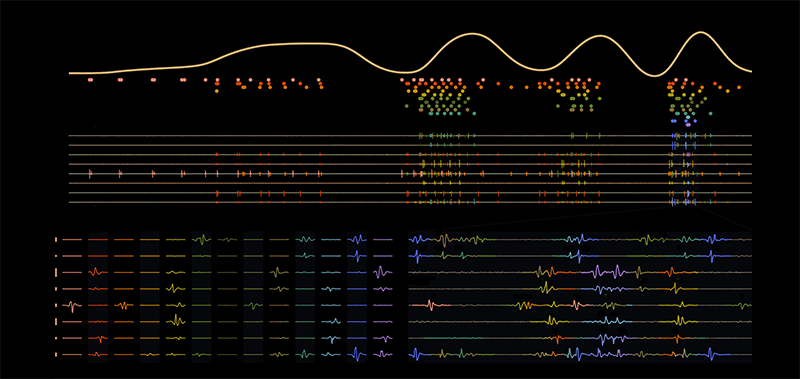
His research primarily investigates how the brain controls fine finger movements used in activities like typing, playing musical instruments, or performing delicate surgery. More recent work explores the combination of reaching, grasping, and manipulating. His lab studies how the brain controls complex muscle movements to achieve required actions, with applications to brain-machine interface technology. His publications reveal consistent focus on neural coding, motor cortex function, and the development of neuroprosthetics for restoring lost function.
Dr. Schieber's work shows strong trends in understanding neural representations of movement, cortical organization for motor control, and translating these findings to practical brain-computer interfaces. His recent publications (2023-2025) increasingly focus on intracortical microstimulation for injecting information into cortical networks, neural synchrony in sensorimotor systems, and computational approaches to motor control.
- Javits Investigator Merit Award (2003-2010)
- Clinical Investigator Development Award (1986-1989)
- Phi Beta Kappa (1974)
- A.B. summa cum laude (1974)
- Medical Scientist Training Program Fellowship (1974-1982)
Dr. Schieber has mentored numerous graduate students and postdoctoral fellows who have gone on to successful careers in academia and industry. His lab has received substantial research funding supporting investigations into neural control mechanisms and brain-machine interface development. The Schieber Lab has been an important contributor to understanding distributed motor control in the cortex and translating these findings to potential clinical applications for neurological rehabilitation.
His laboratory work has consistently examined the distributed nature of motor control in the cortex, challenging traditional views of somatotopic organization and demonstrating how multiple cortical areas work together to produce coordinated movements. Current research directions include investigating how to effectively inject information into cortical networks using microstimulation and understanding the computational principles underlying motor control.