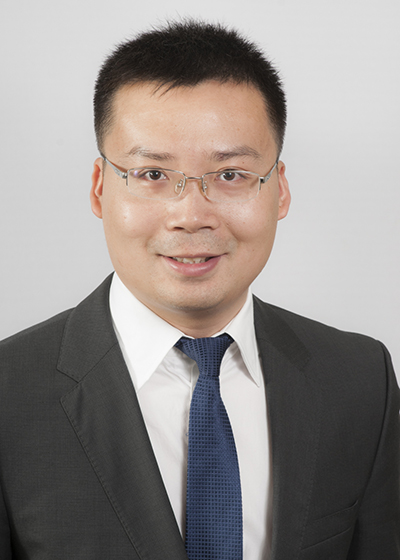
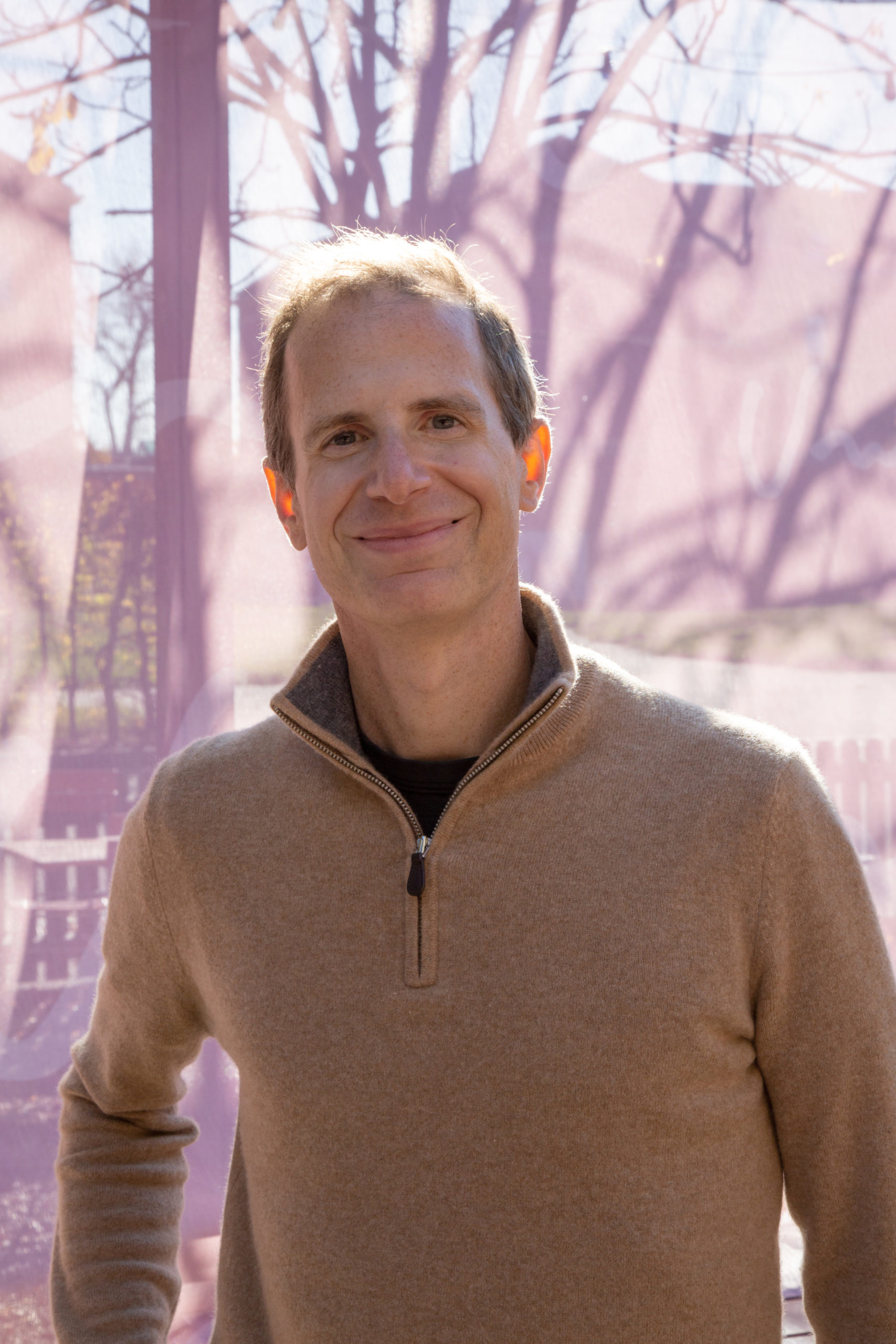
Dr. Zichun Zhong is an Associate Professor and Graduate Program Director in the Department of Computer Science at Wayne State University's James and Patricia Anderson College of Engineering. He earned his Ph.D. from the University of Texas at Dallas and completed postdoctoral training at UT Southwestern Medical Center. His research focuses on geometric modeling, computer graphics, medical image processing, and visualization technologies. Research encompasses: Geometric modeling of surfaces and volumes 3D computer vision and reconstruction Medical image segmentation and visualization Virtual/augmented reality applications GPU-accelerated algorithms Awards and honors include NSF CAREER and CRII awards, Faculty Research Excellence Award, and Excellence in Teaching recognition. He serves as Technical Paper Chair for Shape Modeling International conferences and associate editor for multiple journals. Current doctoral advisees: Shiman Zhou, Hongbo Li, Haikuan Zhu, and Sikai Zhong. Notable alumni include researchers at Samsung NEON, Skoltech, and General Motors.
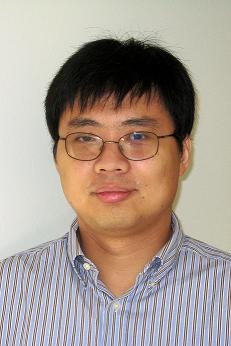
Nathan Hopkins is an Assistant Teaching Professor and Director of Undergraduate Studies in the Department of Geological Sciences at the University of Missouri. He serves as Director of the Geology Field Camp and specializes in geological field methods, geomorphology, glacial geology, and geographic information systems. His research emphasizes practical field techniques and earth surface processes. Professor Hopkins teaches foundational courses including Introduction to the Earth, The Clean Energy Transition, and the capstone Geology Field Camp course. His research focus includes till fabric analysis, glacial sedimentology, and applications of remote sensing technologies like UAVs and InSAR in geological mapping. Recent publications reflect Hopkins' expertise in glacial processes, particularly investigations of ice rheology using magnetic anisotropy techniques and studies of drumlin formation mechanisms. His work integrates field observations with laboratory analyses to understand subglacial processes and landform development. Field-based research spans locations from Alaska to Sweden, examining glacial deposits and landforms. Hopkins maintains active engagement in geological education through field instruction and curriculum development. As Field Camp Director, he oversees essential field training for geology students. His pedagogical research examines effective approaches to field education and geological mapping instruction.
Weining Kang is an Associate Professor in the Department of Mathematics and Statistics at the University of Maryland, Baltimore County (UMBC). Her research focuses on probability theory, stochastic processes, stochastic networks, and queueing systems. She holds a Ph.D. in Mathematics from the University of California, San Diego (2005). Her work emphasizes fluid models for many-server queues, stochastic networks with abandonment, and reflected diffusions. Notable contributions include analyzing nonlinear Volterra equations in queueing systems, equivalence of fluid models for Gt/GI/N+GI queues, and stationary distribution characterizations for reflected diffusions. She collaborates frequently with experts like K. Ramanan and G. Pang on stochastic network dynamics and performance analysis. Recent publications (2023-2007) explore long-time limits of measure-valued equations, submartingale problems for diffusions, and diffusion approximations for input-queued switches. Her work bridges theoretical stochastic analysis with practical applications in operations research and network engineering. While no formal awards are listed, her extensive peer-reviewed publications and collaborative research highlight her contributions to stochastic systems analysis. She advises on fluid model methodologies and has contributed to ACM Sigmetrics and SIAM journals.
Ibrahim RADWAN is an Associate Professor in Machine Learning/AI and Robotics at the University of Canberra. His research focuses on advancing AI techniques in areas such as human pose estimation, affective computing, and healthcare technology. He leads projects addressing challenges in robotics, autonomous systems, and human behavior analysis. RADWAN’s work bridges theory and application, contributing to fields like sports science, medical diagnostics, and security through innovative machine learning approaches. Research Projects: Assistive Technologies for Young People Safety on Two-Wheelers AI-Based Methods for Driver Sentiment and Mood Prediction Robotics Applications in Organic Waste Management Research Interests: RADWAN’s expertise spans human pose reconstruction , nonverbal behavior analysis , and EEG-based healthcare diagnostics . He pioneers methods for real-world applications such as: 6G Extended Reality systems using wearable sensors Multimodal deception detection via motion analysis Affective computing for mood and emotion inference Publications: His recent work emphasizes trends in spatiotemporal data analysis, few-shot learning, and synthetic data applications in healthcare and robotics. Key contributions include novel architectures like CrossFormer for 3D pose estimation and Resanet for dense prediction tasks. Advising & Grants: RADWAN supervises PhD students and has secured grants for projects integrating AI with robotics and medical technology. His team collaborates on interdisciplinary challenges, including railway safety and surgical instrument tracking. Labs/Teams: Part of the AI and Robotics research group at the University of Canberra, contributing to cutting-edge solutions in autonomous systems and human-centered AI.
Alina Roitberg is a Junior Professor (Assistant Professor) at the University of Stuttgart , affiliated with the Faculty of Computer Science, Electrical Engineering and Information Technology . Her research focuses on advancing computer vision, machine learning, and robotics applications, particularly in human activity recognition, domain adaptation, and synthetic data generation. She explores challenges in action understanding, cross-domain generalization, and real-world deployment of AI systems in fields like healthcare, autonomous vehicles, and industrial automation. Her work emphasizes robust learning under noisy conditions, multimodal data fusion, and ethical AI applications. Recent projects include foundational studies on large language models in construction (AEC), video-based muscle group estimation, and improving driver activity recognition for autonomous vehicles. She also investigates circular factory design through uncertainty-aware process optimization and human-robot interaction. Dr. Roitberg's contributions span academic publications and industrial collaborations, addressing both theoretical advancements and practical implementations. Her research bridges computer vision techniques with real-world problems, emphasizing scalability and ethical considerations in AI deployment.
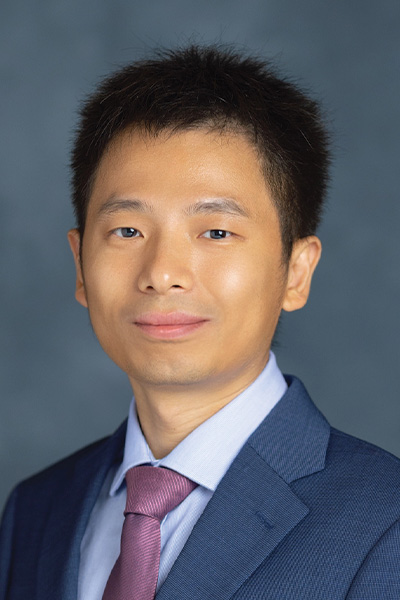
Fei Liu is an Assistant Professor in the Min H. Kao Department of Electrical Engineering and Computer Science at the University of Tennessee, Knoxville. His research focuses on surgical robotics, medical robotics, and control systems. He holds a PhD in Robotics from the University of Lyon (INSA de Lyon), France, an MSc in Control Systems and Automation Engineering from INSA de Lyon, and a BSc in Control Systems and Automation Engineering from Northwestern Polytechnical University, China. Fei's research interests include autonomous robotic systems, deformable object manipulation, and perception frameworks for surgical applications. His work emphasizes bridging real-world and simulation environments through advanced modeling and control techniques. Recent projects involve optimizing robotic actions using multi-modal demonstrations, improving tool-tissue interaction tracking, and developing frameworks for boundary parameter estimation in surgical settings. His articles highlight contributions to surgical robotics, including real-to-sim matching of deformable tissues, autonomous suturing, and trajectory optimization for wound care. He has also explored applications in haptic training systems and medical telerobotics. Fei's work often combines machine learning, physics-based simulation, and real-time control to address challenges in robotic surgery. Fei is affiliated with the Tickle College of Engineering and maintains an active research profile with collaborations in robotics and medical engineering domains. His lab focuses on advancing robotic autonomy in healthcare environments through interdisciplinary approaches.
Dr Ronojoy Adhikari is a Lecturer in the Department of Applied Mathematics and Theoretical Physics (DAMTP) at the University of Cambridge, affiliated with the Faculty of Mathematics. His research focuses on statistical physics, soft matter, stochastic processes, Bayesian inference, and machine learning. He has taught Mathematical Biology (2018–2021) and Electrodynamics (2021–2023). His work bridges theoretical frameworks with experimental insights, addressing phenomena such as active matter dynamics, non-equilibrium thermodynamics, and stochastic modeling of biological systems. Key contributions include studies on autophoretic particles, path probabilities in stochastic systems, and Bayesian approaches to epidemiological modeling. His research group, part of the Soft Matter program at DAMTP, explores interdisciplinary topics like colloidal crystallization and enzymatic network kinetics. Notable publications highlight investigations into fluctuating hydrodynamics, entropy production measurements, and the mechanics of rigid inclusions on curved surfaces. His interdisciplinary approach integrates computational methods (e.g., lattice Boltzmann simulations) with mathematical rigor to understand complex systems. While no awards are explicitly listed, his extensive publication record underscores sustained academic impact. Ongoing research includes projects on path probabilities, active particle dynamics, and the interplay between geometry and material behavior in Cosserat solids. Advising and grants are not explicitly detailed in the provided texts, but his role as a faculty member suggests involvement in student supervision and collaborative projects. His work frequently appears in top journals like Physical Review Letters , Journal of Fluid Mechanics , and Science Advances , reflecting high-quality contributions to theoretical and applied physics.
Virginia Young is the Cecil J. and Ethel M. Nesbitt Professor of Actuarial Mathematics at the University of Michigan's Department of Mathematics, within the College of Literature, Science, and the Arts. She holds a Ph.D. from the University of Virginia (1984). Her research focuses on actuarial and financial mathematics, particularly decision-making processes for individuals and insurance companies in financial and insurance contexts. This includes topics like optimal reporting strategies, reinsurance mechanisms, and risk management under uncertainty. Her work addresses modern challenges such as defined contribution pension plans and strategic insurance product design. Key research areas include stochastic control theory, game-theoretic models in insurance markets, and optimization under model ambiguity. She explores how insurers and individuals make decisions under risk, with applications to annuities, reinsurance chains, and lifetime financial planning. Recent studies investigate Stackelberg games in reinsurance, optimal deductible insurance, and minimizing lifetime ruin probabilities through strategic annuitization. Virginia Young has no listed scientific awards in the provided texts. She advises no formally documented students, though her role likely involves mentoring within the Mathematics Department. Her work contributes to both theoretical advancements and practical applications in actuarial science and financial risk management.
Julie Boland is a Professor at the University of Michigan's College of Literature, Science, and the Arts, affiliated with the Psychology and Linguistics departments. She holds a PhD from the University of Rochester and leads the Psycholinguistics Lab, focusing on interdisciplinary language processing research. Her work explores interfaces between word recognition, syntax, semantics, and sociolinguistic variables, with special attention to bilingual processing and executive function roles. Education: PhD, University of Rochester. She teaches research methods and language psychology, advising numerous PhD candidates. Key research themes include sociolinguistic priming, bilingual ambiguity resolution, and language processing in digital contexts. Her findings highlight how dialect variation, cultural background, and technology impact comprehension and production. Research Interests: Psycholinguistics, sentence processing, lexical access, sociolinguistic influences, bilingualism, and cognitive mechanisms. Labs: Director of the Psycholinguistics Lab, promoting interdisciplinary collaboration across Psychology and Linguistics. Teaching: Courses on language psychology and research methods for Psychology undergraduates/graduates. Recent work addresses conversational dynamics in Zoom interactions, cultural differences in visual attention, and L2 structural priming effects. She emphasizes practical applications of psycholinguistic insights for education and technology design.
Lynn Carol Miller is a Professor of Communication at the University of Southern California’s Annenberg School for Communication and Journalism. Her research focuses on leveraging virtual environments, AI agents, and computational models to address health-related social behaviors, particularly in HIV/AIDS prevention and mental health. Funded by NIH, CDC, and DARPA (over $20M), her work integrates neuroscience, behavioral science, and technology. She pioneered interventions like SOLVE (Socially Optimized Learning in Virtual Environments) and Systematic Representative Design. Education: PhD in Personality Psychology from University of Texas at Austin. Key areas include health communication, gaming for behavior change, and computational modeling of social processes. She has supervised 17 doctoral students and collaborators across universities globally. Research emphasizes scalable interventions using fMRI-compatible tools and virtual reality. Notable contributions include reducing shame in HIV prevention games and analyzing neural correlates of risk-taking behaviors. Awards include the Early Career Award (2003) and ICA’s Outstanding Contribution to Communication Science (2020). Labs/Teams: Active in multidisciplinary teams at USC and collaborating institutions, focusing on virtual environment design, AI-driven interventions, and neurobehavioral studies. Current projects explore AI for public health and inclusive avatar representations in social VR.
Prof. Dr. Florian Knoll is a full professor in Computational Imaging at the Department of Artificial Intelligence in Biomedical Engineering (AIBE) at Friedrich-Alexander-Universität Erlangen-Nürnberg. He leads the Computational Imaging Lab, focusing on machine learning applications in medical imaging, particularly accelerating MRI through innovative reconstruction algorithms and translating them into clinical practice. His research emphasizes improving MRI speed, artifact robustness, and accessibility, alongside developing quantitative biomarkers for disease processes. Knoll's work is funded by NIH grants, including projects on machine learning for musculoskeletal imaging, MR fingerprinting, and deep learning frameworks for MRI reconstruction. He is a key figure in open science initiatives, co-creating the fastMRI dataset with Facebook AI, providing public access to over 1300 knee and 7000 brain MRI scans. He currently serves as deputy editor of Magnetic Resonance in Medicine and chairs the ISMRM Reproducible Research Study Group. His contributions extend to reproducible research, maintaining GitHub repositories with code for image reconstruction techniques (e.g., AGILE, gpuNUFFT) and educational materials. He teaches medical imaging fundamentals at FAU, integrating theoretical and practical insights for students and researchers. Grants: NIH R01EB024532, R21EB027241, P41EB017183, R01EB029957 Labs/Teams: Computational Imaging Lab, fastMRI initiative Software: GitHub repositories for MRI reconstruction (e.g., github.com/FlorianKnoll )
Andrea Rocco is an Associate Professor in Physics and Mathematical Biology and Head of the Quantum Sciences Research Group at the University of Surrey. He holds affiliations with the School of Mathematics and Physics and the Centre for Mathematical and Computational Biology. Rocco earned his PhD in Physics from the University of North Texas (1998) and held postdoctoral positions at the University of Barcelona, University of Rome La Sapienza, CWI (Netherlands), and the University of Oxford. His research bridges theoretical physics (quantum mechanics, open systems, decoherence) and biological physics (stochastic dynamics in living systems, gene networks). Educations: BSc in Physics, University of Pisa (1994) PhD in Physics, University of North Texas (1998) Research Interests: His work explores quantum-classical transitions, quantum thermodynamics, and noise-induced phenomena in biological systems. Recent grants include a US$3M award for studying time and life. He is a Fellow of the Royal Society of Biology and the Higher Education Academy. Awards: Member of the Institute of Physics (MInstP) Fellow of the Higher Education Academy (FHEA) Fellow of the Royal Society of Biology (FRSB) Advising & Grants: Rocco leads the Quantum Sciences Group and has supervised postdoctoral researchers like Thomas Guff. His grants include major funding for interdisciplinary quantum-biological research. Labs/Teams: Head of the Quantum Sciences Research Group at Surrey, integrating theoretical physics and computational biology.
Naratip Santitissadeekorn is a Senior Lecturer in Data Assimilation at the School of Mathematics and Physics, University of Surrey, where he is affiliated with the Mathematics at the Interface Group. His work bridges mathematics, data science, and real-world applications in urban planning, crime analysis, and geophysical fluid dynamics. Dr. Santitissadeekorn received his PhD from Clarkson University in 2008, with a dissertation titled "Transport Analysis and Motion Estimation of Dynamical Systems of Time-Series data." His doctoral research was supervised by Professor Erik Bollt. Following his PhD, he completed two significant postdoctoral positions: from 2008-2011 at the University of New South Wales, Sydney, Australia, working with Professor Gary Froyland on numerical techniques for finite-time Lagrangian coherent set identification, with applications to delimiting the polar vortex and Agulhas rings; and from 2011-2014 at the University of North Carolina-Chapel Hill, working with Professor Chris Jones on data assimilation projects. Dr. Santitissadeekorn's research focuses on inverse problems and data assimilation in geophysical fluid dynamics, the applications of Lagrangian Coherent Structures (LCS), and computational ergodic theory. His work combines theoretical mathematics with practical applications, particularly in urban growth modeling and crime analysis. He has developed innovative methods for identifying coherent structures in fluid flows, estimating transition probabilities from spatiotemporal data, and creating data-driven frameworks for urban expansion scenarios. His research demonstrates how mathematical techniques can be applied to solve real-world problems in environmental science, urban planning, and public safety. An analysis of Dr. Santitissadeekorn's recent publications (2020-2023) reveals a strong focus on urban expansion modeling and network analysis. His work on urban growth has evolved from basic cellular automata models to sophisticated frameworks that manage uncertainty through parameter clustering and growth mode identification. His research on Hawkes processes has advanced ensemble-based filtering techniques for analyzing count data in large networks. These publications demonstrate a consistent pattern of applying mathematical rigor to complex spatiotemporal phenomena, with increasing emphasis on data-driven approaches and practical applications. Dr. Santitissadeekorn has made significant contributions to data assimilation methods, particularly through the development of the extended Poisson-Kalman filter (ExPKF) for urban crime modeling. His teaching includes courses in Algebra and Bayesian Statistics, reflecting his expertise in both theoretical and applied mathematics. While specific awards are not mentioned in the available information, his extensive publication record in high-impact journals demonstrates recognition within his field. Dr. Santitissadeekorn's research has practical implications for urban planning and law enforcement. His work on urban expansion models helps planners understand different growth trajectories, while his crime modeling research contributes to improved police patrolling strategies. His interdisciplinary approach, combining mathematics, computer science, and domain-specific knowledge, positions him at the forefront of applying data science to societal challenges.
Professor Adrian Hilton is a distinguished faculty member at the University of Surrey, serving as Director of the Centre for Vision, Speech and Signal Processing (CVSSP) and Director of the Surrey Institute for People-Centred AI. He is affiliated with the School of Computer Science and Electronic Engineering and leads the Visual Media Research Lab (V-Lab). His research focuses on pioneering next-generation 4D computer vision technologies that enable machines to understand and model dynamic real-world scenes. Key areas include 3D/4D shape capture, computer vision, machine learning, graphics, and animation for applications in sports analysis, film/TV production, virtual reality, and medical imaging. His work bridges the gap between real and computer-generated imagery, with notable contributions in volumetric capture, motion capture, and free-viewpoint video. Hilton's recent publications demonstrate a strong trend toward multimodal integration, particularly combining audio and visual processing for spatial audio applications, while advancing 4D reconstruction techniques for human performance capture. His work increasingly incorporates transformer architectures and neural rendering techniques for improved illumination estimation, shadow modeling, and multi-view consistency. Scientific Awards and Recognition Two EU IST Innovation Prizes Manufacturing Industry Achievement Award Royal Society Industry Fellowship (2008-2011) Royal Society Wolfson Research Merit Award in 4D Vision (2013-2018) Fellow of the Royal Academy of Engineering (FREng) Fellow of the International Association for Pattern Recognition (FIAPR) Fellow of the Institution of Engineering and Technology (FIET) Hilton actively mentors PhD and post-doctoral researchers through his leadership of CVSSP, which has a grant portfolio exceeding £31M and comprises 170 researchers. He has successfully commercialized several technologies, including systems used by the BBC for sports commentary visualization. His research collaborations span major industry partners including BBC, BT, Sony, Framestore, and The Foundry. He co-founded the G3 Games forum and the CVMP Conference on Visual Media Production, demonstrating strong engagement with the creative industries. Current research projects include the S3A Programme Grant in Future Spatial Audio and InnovateUK's ALIVE project for 360 video reconstruction.
Daniela Calvetti is the James Wood Williamson Professor in the Department of Mathematics, Applied Mathematics, and Statistics at Case Western Reserve University. Her research focuses on large-scale scientific computing, computational inverse problems, uncertainty quantification, and predictive modeling in neuroscience, metabolism, and cellular physiology. She holds a PhD from the University of North Carolina-Chapel Hill. Her work integrates advanced mathematical techniques with biomedical applications, including brain energy metabolism modeling, MEG/EEG source reconstruction, and computational methods for medical imaging. Notable contributions include Bayesian hierarchical algorithms for inverse problems and interdisciplinary collaborations bridging mathematics with neuroscience and physiology. Recent research highlights include developing sparsity-promoting Bayesian models for tomography, computational frameworks for neuromuscular control variability, and predictive models of disease dynamics like post-pandemic COVID-19 recurrence. Her methodologies emphasize statistically inspired preconditioning and adaptive meshing techniques to enhance computational efficiency in solving complex inverse problems. Dr. Calvetti has published extensively across computational science, inverse problems, and biomedical applications. She leads a research group advancing interdisciplinary computational methods with applications in neuroscience, virology, and metabolic systems.