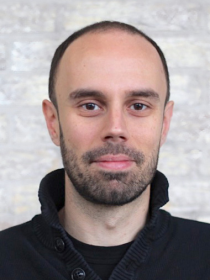
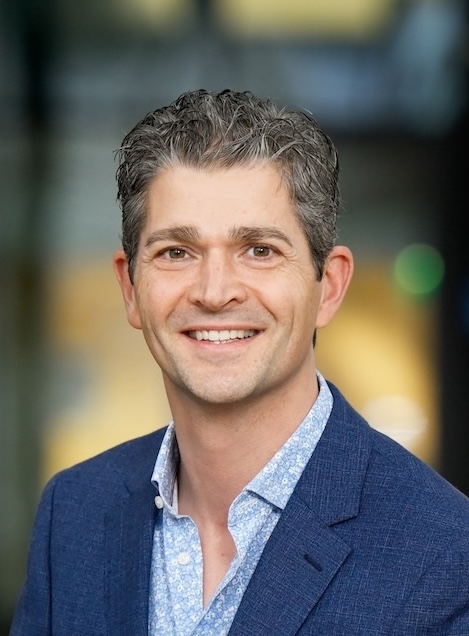
Qian Tao is an Assistant Professor at the Department of Imaging Physics , Faculty of Applied Sciences , Delft University of Technology . She previously worked at the Division of Image Processing, Department of Radiology, Leiden University Medical Center from 2009 to 2020. Academic Background: BSc in Electrical Engineering (Fudan University), MSc in Biomedical Engineering (Fudan University), PhD in Biometric Authentication (University of Twente) Research Interests: Focus on trustworthy AI methodologies for critical healthcare applications, including medical imaging for patient diagnosis and clinical intervention. Specializes in cardiac MRI analysis, image-guided interventions for cardiac arrhythmias, and AI in Radiology. Publication Trends: Recent work emphasizes motion correction in cardiac MRI, deep learning for image registration, and novel techniques like TRAFF2 mapping. Keywords include Medical Imaging , Machine Learning , Cardiac MRI , and Quantitative Analysis . Contact: Email: Q.Tao@tudelft.nl
Andreas Milias Argeitis is an Associate Professor in the Faculty of Science and Engineering at the University of Groningen. He leads the Milias-Argeitis Lab within the Molecular Systems Biology research unit at the Groningen Biomolecular Sciences & Biotechnology Institute (GBB). His research focuses on integrating experimental and computational approaches to understand cellular processes, particularly the coordination between cell growth, division, and metabolic dynamics in budding yeast. Key research areas include systems biology, TOR signaling pathways, cell cycle regulation, and the application of machine learning and mathematical modeling. His lab develops advanced tools like optogenetic control systems and deep learning algorithms for cell segmentation and tracking. Recent work has revealed metabolic oscillations linked to the cell cycle and explored the role of proteins like Sch9 in TORC1-dependent signaling. Notable achievements include an NWO Vidi Grant (2018) and an ENW Science-M Grant (2023) for studying how growth drives the cell division cycle. He has over 40 peer-reviewed publications, including work in Nature Communications , Nature Metabolism , and Journal of Cell Science . His research bridges fundamental biology with technological innovations in single-cell analysis and synthetic biology. Lab activities include CRISPR/Cas9 genome editing protocols, fluorescent protein maturation studies, and the development of photo-switchable enzymes. Collaborations span biochemistry, mathematics, and engineering, reflecting his interdisciplinary approach to unraveling cellular mechanisms.
Gerard de Haan is a Professor of Electronic Systems at the Department of Electrical Engineering , Eindhoven University of Technology (TU/e). His research focuses on video signal processing, particularly in multimedia systems and video health monitoring , aiming to enhance image quality and enable accurate sensing of vital signals amidst motion artifacts. He has documented his research in 4 books, 3 book chapters, approximately 200 papers, and over 200 patent applications, leading to commercially available ICs. De Haan has served on program committees of international conferences and as a guest editor for journals including Elsevier, IEEE, and Springer. Education : BSc, MSc, PhD in Electrical Engineering from Delft University of Technology (1977, 1979, 1992) Professional Roles : Lead researcher at Philips Research (1979–present), Full Professor at TU/e (2000–present) His research interests span noise and artifact reduction , video format conversion , display-specific processing , and enabling technologies like motion estimation and object detection . Articles highlight advancements in rPPG motion robustness , blood volume pulse signature analysis , and remote SpO2 monitoring . Scientific awards include his appointment as Fellow at Philips Research Eindhoven in 2000.
Alexander Yarovoy is a Full Professor at the Faculty of Electrical Engineering, Mathematics and Computer Science at Delft University of Technology (TU Delft), specializing in Radar Systems, Antenna Design, and mm-Wave Technology. His research bridges theoretical and applied domains, with a focus on automotive radar, weather radar, and machine learning integration in radar signal processing. Active in radar, antennas, and microwave engineering Key contributions to automotive radar and human activity recognition Collaborates on datasets like RaDelft for autonomous driving Recent work explores OTFS radar for communication integration, polarimetric calibration, and high-resolution imaging algorithms. His research often addresses challenges in real-world applications, such as urban meteorology and vehicular safety. In 2023, he received the outstanding paper award at IEEE MetroAeroSpace for radar waveform coexistence studies. He participates in conferences and editorial activities, advancing radar metrology and phased array technologies.
Kerstin Bunte is a Professor of Machine Learning for interdisciplinary data analysis at the University of Groningen, affiliated with the Faculty of Science and Engineering and the Bernoulli Institute's Intelligent Systems Group. She holds an Honorary Fellowship at the University of Birmingham and leads the Intelligent Systems Group. Her research focuses on interpretable machine learning, interdisciplinary applications (e.g., astrophysics and biomedical data), and visualization techniques. Research Interests: - Machine Learning - Artificial Intelligence - Explainable AI (XAI) - Interpretable Models - Dimensionality Reduction - Data Visualization - Astrophysical Data Analysis - Medical Imaging Awards & Grants: - DSSC XS funding (2023) - NWO VIDI grant (2020) - Rosalind Franklin Fellowship (2016–present) Advising & Students: Supervised PhD students include Elisa Oostwal, Janis Norden, Matteo Marcantoni, and Petra Awad. Research spans topics like tumor segmentation in medical imaging, astrophysical structure detection, and autonomous navigation systems. Labs & Collaborations: Leads the Intelligent Systems Group, collaborating with institutions like the University of Birmingham and the University of Warwick. Work involves interdisciplinary projects combining machine learning with astronomy, biomedical sciences, and robotics.
Jan Bergmans is a Full Professor in the Department of Electrical Engineering at Eindhoven University of Technology (TU/e). He leads the Signal Processing Systems group and holds professorships at multiple research centers including the Eindhoven MedTech Innovation Center (e/MTIC), Center for Care & Cure Technology Eindhoven, NeuroPlatform, EAISI Health, and EAISI Foundational. With approximately 35 years of experience in signal processing theory and applications, Bergmans focuses on developing computationally efficient signal analysis techniques for healthcare, wireless communication, surveillance, and intelligent lighting applications. Bergmans' educational background includes: MSc in Electrical Engineering from Eindhoven University of Technology (1981) PhD in Electrical Engineering from Eindhoven University of Technology (1987) His research interests center around signal processing and data analytics theories, algorithms, architectures, and systems. Bergmans develops mathematical models that incorporate domain-specific knowledge, such as propagation models for radio communication channels or pathophysiological models for clinical decision support systems. His work emphasizes creating powerful yet computationally efficient signal analysis techniques, with significant applications in healthcare technology and medical diagnostics. The integration of engineering principles with clinical needs is a hallmark of his research approach, enabling practical solutions that address real-world medical challenges. Analysis of Bergmans' recent publications reveals a strong focus on medical signal processing, particularly in ECG and fetal monitoring applications. His work combines advanced signal processing techniques like adaptive Kalman filtering with practical healthcare applications. There's also significant research in visible light communications and sensor network technologies, showing the breadth of his expertise across different application domains of signal processing. The consistent theme across his work is developing computationally efficient algorithms that incorporate domain-specific knowledge to solve practical engineering problems. Scientific recognition includes: Senior Member of the IEEE Author of numerous papers and 2 books Holder of approximately 40 US patents Bergmans has established smooth collaborations with strategic industrial and clinical partners, including Philips Research and multiple hospitals in the Eindhoven region. He co-manages BrainBridge, the strategic collaboration between TU/e, Philips Research, and Zhejiang University (China). His research group has secured numerous projects, including recent third-tier projects like MEDEIA, PISANO SPS, and RAISE projects focusing on medical engineering innovations and robust AI for radar signal processing. As a key figure in the Signal Processing Systems group and one of the founders of the Eindhoven MedTech Innovation Center (e/MTIC), Bergmans plays a central role in bridging academic research with industrial and clinical applications. His leadership extends to managing multiple research teams working on healthcare technology, wireless communications, and sensor systems, fostering an environment where theoretical signal processing advances translate into practical medical and technological solutions.
Marcel F. Heertjes is a Full Professor at the Control Systems Technology group within the Faculty of Mechanical Engineering at Eindhoven University of Technology. Concurrently, he serves as a Principal Engineer and Control Competence Leader at ASML, focusing on nonlinear control systems for high-precision mechatronics. His work bridges academic research and industrial application, particularly in semiconductor manufacturing technologies. Research Interests Nonlinear control design and stability analysis Feedforward and learning control algorithms Data-driven optimization and self-tuning systems Breaking linear control limitations in mechatronics Industrial applications in wafer scanning and motion systems Scientific Contributions He has over 200 publications, including journal articles, patents, and conference contributions. His research emphasizes frequency-domain tools for robust nonlinear control and practical implementations in high-tech industries. Awards Best Student Paper Award at IFAC ALCOS (2022) Editorial Roles Associate Editor of IFAC Mechatronics (since 2016) and former guest editor for the International Journal of Robust and Nonlinear Control (2011) and IFAC Mechatronics (2014).
Hugh Greatorex serves as a Researcher at the University of Groningen within the Faculty of Science and Engineering, affiliated with the Bio-inspired Circuits & Systems research group. His work centers on neuromorphic hardware design, specializing in spiking neural networks and event-based processing systems that prioritize energy efficiency and real-world applicability in robotics and embedded AI. His research spans critical areas in neuromorphic engineering: Neuromorphic Engineering Spiking Neural Networks CMOS Circuit Design Memristive Computing Event-based Vision and Audio Processing Symbolic Computation in Neural Hardware Greatorex integrates circuit design with neural algorithms to solve power efficiency challenges, frequently exploring beyond-CMOS technologies like memristors and multi-timescale neural dynamics for practical implementations. Analysis of his 14 recent publications (2022-2025) reveals a cohesive trajectory toward hybrid neuromorphic processors combining CMOS with emerging devices. Key contributions include the TEXEL and Fused-MemBrain architectures for beyond-CMOS integration, alongside advancements in event-based sensory processing and symbolic operations within spiking hardware. This work consistently bridges neural computation with symbolic AI paradigms while emphasizing scalability and robustness. No scientific awards were documented in available sources. Information regarding student advisement and research grants was not provided in the source materials. As a core member of Groningen's Bio-inspired Circuits & Systems group, Greatorex contributes to internationally collaborative projects focused on biologically inspired electronic systems for intelligent processing, with applications spanning edge AI and neural computation modeling.
Rick Butler is a Postdoctoral Researcher in the ICT Lab at Eindhoven University of Technology (TU/e), focusing on optical fibre sensing for early earthquake warnings. He holds an M.Sc. in Electrical Engineering from TU/e (2020) and completed his Ph.D. at Delft University of Technology, researching computer vision for surgical workflow detection. His expertise bridges polarisation mode dispersion compensation and deep learning applications in biomedical contexts. Education: M.Sc. Electrical Engineering, TU/e (2020) His research emphasizes optical fibre sensing , deep learning , and computer vision , particularly in medical settings like cardiac catheterization labs. Recent work involves 2D pose tracking, workflow analysis, and robust object detection frameworks. Collaborations span institutions such as TU Delft and involve interdisciplinary teams in biomedical engineering and machine learning. He contributes to the UN Sustainable Development Goal of Quality Education through his academic mentorship and research innovation. His publication metrics include 92 citations (Scopus) and collaborations across Europe.
Jan WM Bergmans is a Full Professor in the Department of Electrical Engineering at Eindhoven University of Technology (TU/e). He leads the Signal Processing Systems group, focusing on healthcare, wireless communication, surveillance, and intelligent lighting. His research emphasizes computationally efficient signal analysis and domain-specific mathematical models. He co-founded the Eindhoven MedTech Innovation Center (e/MTIC) and collaborates with Philips Research, hospitals, and Zhejiang University through initiatives like BrainBridge. Education: MSc in Electrical Engineering (1981), TU/e PhD in Electrical Engineering (1987), TU/e Research Interests: Bergmans specializes in signal processing for medical applications, radar systems, and data analytics. His work integrates domain knowledge into mathematical models for clinical decision support and communication channels. Recent projects include improving fetal heart monitoring and robust radar signal processing using AI. Projects: MEDEIA: Medical Engineering Innovations PISANO: Perioperative Innovations RAISE SPS: Radar Signal Processing RAIDAR: AI for Radar Awards: IEEE Senior Member. Grants & Advising: Managed over 30 projects since 2006, including collaborations with Philips and Zhejiang University. Advised 77 research projects and holds ~40 US patents. Labs & Teams: Signal Processing Systems group, Eindhoven MedTech Innovation Center, NeuroPlatform, and EAISI initiatives.
Maarten Steinbuch is a Professor at Eindhoven University of Technology (TU/e), holding the Chair of Control Systems Technology since 1999. He is a Distinguished University Professor and serves as Scientific Director of the Eindhoven Engine since 2018. His affiliations span research groups, startups, and advisory roles in companies like Sioux Group BV and Nobleo Technology BV. Academic Background : MS and PhD from Delft University of Technology. Leadership : Former Scientific Director, TU/e High Tech Systems Center (2014-2020). Editorial Roles : Editor-in-Chief of IFAC Mechatronics (2008-2015), Associate Editor of IEEE Transactions on Control Systems Technology (2003-2008). Steinbuch’s research focuses on systems and control theory applied across automotive engineering, mechatronics, robotics, and fusion plasma. Key areas include connected cars , precision surgery robots , repetitive control , and low-cost manufacturing of high-tech systems. His work addresses UN Sustainable Development Goals like climate action and clean energy. His recent publications span AI-driven manufacturing networks , modular motion systems , and open-world robotics , reflecting trends in industrial AI , fusion energy , and ethical technology . Steinbuch’s scientific awards include IEEE Fellow (2019), Simon Stevin Meester (2016), and KIVI Academic Society Award (2015). He received Best-Teacher Awards multiple times. Patents : 9 in mechatronics and robotics. Citations : >12,873 (Google Scholar), H-index 54.
Sebastiano Vascon is an Associate Professor in the Department of Computer Science at Ca' Foscari University of Venice, with research spanning artificial intelligence, machine learning, and computer vision. His work emphasizes graph-based methods, game theory, and deep learning, applied to cross-disciplinary domains including climate change, environmental science, Polar Science, and cultural heritage restoration. His research integrates theoretical AI advances with real-world industrial applications, focusing on trajectory forecasting, time-series compression, climate risk assessment, and puzzle-based cultural heritage reconstruction. Recent publications reveal a strong trend toward solving complex environmental and archaeological challenges through neural networks, graph theory, and 3D vision, often bridging game-theoretic principles with practical AI deployment. Vascon holds significant academic service roles including Area Chair for CVPR 2025, BMVC 2025, ECCV 2024, and Program Chair for Fusion 2024. He serves as Associate Editor for Frontiers and has chaired major conferences including BMVC (2022-2024) and WACV 2021, demonstrating leadership in the global AI community.
Maarten Schoukens is an Associate Professor in the Control Systems group at the Department of Electrical Engineering, Eindhoven University of Technology. He holds a PhD from Vrije Universiteit Brussel (2015) and has held postdoctoral positions at both VUB and TU/e. His research focuses on nonlinear system identification, machine learning applications in control, and data-driven modeling of complex systems. He has received prestigious awards including an ERC Starting Grant (2022) and an EU Marie Skłodowska-Curie Fellowship (2018). He leads projects like DAMOCLES (2021–2025) and CELLSYSTEMICS (2022–2026), advancing constitutive law modeling and human measurement systems. Active in editorial roles for IEEE and ECC conferences, he also co-organizes the nonlinearbenchmark.org initiative. Education: MSc and PhD in Electrical Engineering from VUB (2010–2015). Postdoctoral Researcher at TU/e (2017–2018) before becoming Assistant Professor (2018) and later Associate Professor (2023). Research emphasizes nonlinear dynamical systems, with contributions to system identification, neural network architectures for control, and frequency-domain methods. Key projects include developing LPV control strategies and physics-guided learning frameworks. His work bridges classical control theory with modern machine learning, addressing challenges in autonomous systems and high-tech engineering. Awards include FWO PhD Fellowship (2011), Marie Skłodowska-Curie Fellowship (2018), and ERC Starting Grant (2022). Supervised over 15 graduate students and led multidisciplinary teams in EU-funded initiatives. Labs include the Autonomous Motion Control Lab and High Tech Systems Center, fostering collaborations in robotics, aerospace, and biomedical engineering.
Jan W.M. Bergmans is Full Professor at Eindhoven University of Technology, leading the Signal Processing Systems group. With over 35 years of expertise, his research focuses on developing computationally efficient signal processing algorithms for healthcare, wireless communication, surveillance, and intelligent lighting applications. He co-founded and manages the Eindhoven MedTech Innovation Center (e/MTIC), a major collaboration between TU/e, Philips Research, and regional hospitals. His research integrates mathematical modeling with domain-specific knowledge, creating solutions for radio communication channels and clinical decision support systems. Bergmans' work demonstrates strong industrial and clinical partnerships to enhance scientific impact. Education includes MSc (1981) and PhD (1987) in Electrical Engineering from TU/e. Professional experience spans: Royal Netherlands Navy communication projects (1981-1982) Philips Research Laboratories (1982-1999) Hitachi Central Research Labs, Japan (1988-1989 exchange) Scientific advisor to Philips Research (2000-present) Co-manager of BrainBridge collaboration with Zhejiang University (2006-present) Research awards and recognition include Senior IEEE membership and 40 US patents. Current projects focus on medical engineering innovations, AI for radar signal processing, and perioperative technology development.
Tom Oomen is a full professor in the Department of Mechanical Engineering at Eindhoven University of Technology. He specializes in control systems, system identification, and mechatronics, with applications in precision engineering, semiconductor technology, and healthcare. His research focuses on data-driven control strategies, integrating machine learning and artificial intelligence to enhance system performance. He has held academic positions at KTH Royal Institute of Technology, The University of Newcastle, and Delft University of Technology. Recipient of the 7th Grand Nagamori Award and NWO Veni/Vidi grants. Editor roles: Senior Editor of IEEE Control Systems Letters and Co-Editor-in-Chief of IFAC Mechatronics. Research interests include advanced motion control, iterative learning control, and fault detection. He teaches courses like Advanced Motion Control and organizes post-academic courses through the Mechatronics Academy. Collaborates with industries in semiconductor equipment, printing, space technology, and healthcare. Recent articles explore topics such as random learning in ILC, nonlinear control for ventilators, and gravitational wave detection systems. Advises PhD students including Max van Meer, Max van Haren, and Koen Classens.