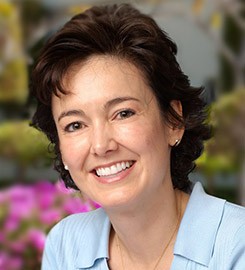
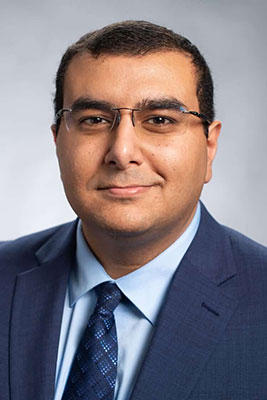
Dr. Adriana Molitor-Siegl is an Associate Professor in the Department of Psychological Sciences at the University of San Diego. Her teaching spans foundational courses like Introductory Psychology and Advanced Research Methods Capstone, alongside specialized courses in Social-Emotional Development, Play and Development, and Child Development Across Cultures. Her research focuses on the dynamics of mother-child interactions, particularly how parenting practices influence emotional and social development in children, with attention to at-risk groups and cross-cultural contexts. Education: Baccalaureate Degree in Psychology and Human Development, University of California at Riverside Master’s Degree in Developmental Psychology, Duke University Doctorate in Developmental Psychology, Duke University Post-Doctoral Research Training, Yale University Child Study Center Dr. Molitor’s work examines how maternal structuring and autonomy-supportive strategies during conflict negotiations affect toddler cooperation, emphasizing the role of relationship quality in amplifying these dynamics. She also investigates broader factors that optimize mother-child exchanges and emerging social skills in young children. Honors: Mortar Board Outstanding Faculty Award Contact: Office in Saints Tekakwitha & Serra Hall 154, Phone: (619) 260-4511, Email: amolitor@SanDiego.edu
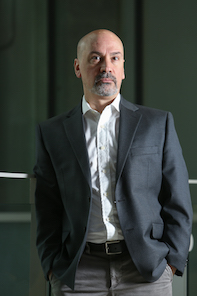
Bahattin Kimençe is a Lecturer in the Civil Engineering Department at Istanbul Technical University (ITU). He holds a PhD in Civil Engineering from ITU (1993–1997), an MSc in Structural Engineering (1985–1989), and a BSc in Civil Engineering (1982–1986). His research focuses on Solid Body Mechanics, Structural Dynamics, and Numerical Modeling with applications to masonry structures, seismic performance, and anisotropic material behavior. He has been a member of the Chamber of Civil Engineers from 1987 to 2018. Education: PhD in Civil Engineering, Istanbul Technical University (1993–1997) MSc in Structural Engineering, Istanbul Technical University (1985–1989) BSc in Civil Engineering, Istanbul Technical University (1982–1986) His research interests emphasize the analysis of masonry structures, mortar thickness effects, seismic performance of multi-story steel buildings, and tunnel-structure interactions. His work combines numerical methods like the Boundary Element Method with anisotropic modeling to assess structural integrity and dynamic behavior. He has published extensively on topics such as historical building preservation, load distribution irregularities in multi-story systems, and soil-structure interaction for foundations. His articles consistently explore structural dynamics, material behavior under stress, and innovative numerical techniques. Recent trends focus on earthquake-resistant design and historical masonry preservation through advanced modeling. He has contributed to understanding geometric and load asymmetries in buildings and optimizing container structures over variable soil conditions. Notable Activities: Doctorate Lecturer in Disaster Management (Master’s Program) at ITU since 2024 Academic duties spanning over three decades at ITU No scientific awards were explicitly mentioned in the provided information. His work involves advising students in structural engineering and disaster management, though specific grants or lab affiliations were not detailed.
Filippo Ubertini is Professor of Civil and Environmental Engineering at the University of Perugia, Italy, where he coordinates the International Doctoral Programme in Civil & Environmental Engineering and represents the University inside the FABRE national bridge-research consortium. He leads the Structural Health Monitoring Laboratory ( SHM-Lab ) and is the primary contact for assignments linked to smart-infrastructure research. Education: While explicit degrees are not listed in the supplied text, his role as programme coordinator and full professor implies completion of a PhD and habilitation in Civil Engineering. Research focus: Ubertini’s work sits at the intersection of smart materials and data-driven infrastructure management . He develops self-sensing cementitious composites doped with carbon micro-fibers or graphene nano-platelets that can measure strain, cracking and moisture in real time, turning whole bridges and buildings into distributed sensors. Complementary research threads include low-cost acquisition electronics, UAV & InSAR remote sensing, Bayesian & adversarial machine-learning algorithms for damage detection, digital twins and life-cycle cost analysis of bridge networks. Publication trends (2024-2025): Roughly 30 peer-reviewed items per year concentrate on (i) AI-enhanced operational modal analysis and transfer-learning damage classification across bridge populations, (ii) experimental characterisation of 3D-printed and cast self-sensing concrete, (iii) full-scale validation on curved box-girder, masonry and railway bridges, and (iv) integration of satellite radar data with numerical collapse simulations to predict residual service life of landslide-affected viaducts. Scientific awards & recognition: No specific prizes or fellowships are mentioned in the provided text. Doctoral supervision & grants: The text does not enumerate individual students or funded projects; however, his coordination of an international PhD programme and numerous experimental campaigns imply sizeable supervisory and funding responsibilities. Laboratory & team: Ubertini heads the SHM-Lab at UniPg, maintaining facilities for material mixing, 3D concrete printing, electrical impedance tomography, UAV photogrammetry, and large-scale structural testing, while collaborating with the European FABRE consortium and multiple EU projects.
Pablo D. Zavattieri is the Jerry M. and Lynda T. Engelhardt Professor in Civil Engineering at the Lyles School of Civil Engineering, College of Engineering, Purdue University. His research focuses on solid mechanics applied to the multiscale modeling of advanced and innovative engineering materials, with emphasis on bridging between atomistics to continuum-based models and combining computational tools with experimental validation. Education: B.S./M.S., Instituto Balseiro, Argentina, 1995 Ph.D., Purdue University, 2000 Professor Zavattieri's research spans solid mechanics applied to multiscale analysis and design of advanced architectured materials, interfaces, and complex structures. His work lies at the intersection of Solid Mechanics and Materials Engineering, focusing on developing novel materials with exceptional properties inspired by natural systems. His contributions include micromechanical models for polycrystalline materials, new fracture models for thin-walled structures, and pioneering work on biomimetic materials using 3D printing technology. Current projects investigate the multiscale modeling of heterogeneous and hierarchical materials, micro and nanomechanics of biological materials, bioinspired materials, architectured materials, micropatterned interfaces, and smart materials. His publication record demonstrates a strong focus on understanding natural materials like chiton radular teeth, nacre, and mantis shrimp structures, translating these biological designs into engineered solutions. His recent work spans biological materials characterization, phase-transforming cellular materials, cellulose nanocrystal composites, and 3D printing of cementitious materials, consistently combining computational modeling with experimental validation across multiple length scales. Scientific Awards and Recognitions: NSF CAREER award (2013) Roy E. & Myrna G. Wansik Research Award (2013) Purdue University Faculty Scholar (2015-2020) Kavli Frontier of Science Fellow of the National Academy of Science (2015) National Academy of Engineering US Frontier of Engineering Symposium attendee (2014) Engineering Fracture Mechanics Journal Most Cited Articles award (2005-2009 period) Second Most Cited Journal of the Mechanics and Physics of Solids Article (2007-2012) Cover page of Cellulose journal (2013) Cover page of Advanced Functional Materials journal (2014) Professor Zavattieri has mentored numerous graduate students who have received prestigious awards including William and Mary Goetz Graduate Scholarships, William L. Dolch Graduate Scholarships, Purdue Doctoral Fellowships, and SURF Research Symposium awards. His research has been supported by NSF, AFOSR, INDOT/JTRP, Forest Product Laboratory, General Motors, Velcro, and the Purdue Research Foundation. Notable projects include a $7.5M DoD/MURI award for 'Convergent Evolution to Engineering: Multiscale Structures and Mechanics in Damage Tolerant Functional Bio-Composite and Biomimetic Materials' and multiple NSF grants focusing on biomimetic materials and 3D printing of civil infrastructure. He directs the Multi-Scale Mechanics and Materials by Design Lab at Purdue University, which maintains a strong collaborative network with institutions including UC Riverside (David Kisailus' group), UC San Diego, Northwestern University, and UC Berkeley. The lab has produced significant research on biological materials like chiton radular teeth, mantis shrimp structures, and nacre, translating these natural designs into engineered solutions for applications in infrastructure, lightweight structural materials, and energy absorption systems.
Associate Professor Kirk Vessalas is Head of School at the School of Civil and Environmental Engineering , University of Technology Sydney. He has led groundbreaking research on low-carbon concrete , supplementary cementitious materials (SCMs) , and alkali-silica reaction (ASR) mitigation since 1992. His work integrates industrial by-products like fly ash and slag into high-performance concrete systems, supporting Australia's transition to a net-zero economy . PhD in Civil Engineering (UTS, 2009) Bachelor of Applied Science in Materials Science (UTS, 1991) Research interests span: Concrete durability and decarbonisation Mechanisms of ASR and DEF (Delayed Ettringite Formation) Development of smart cement-based sensors with self-sensing and self-cleaning properties Application of nanotomography for microstructural analysis Regulatory reform in Australian and New Zealand concrete standards Recent publications highlight advancements in alkali-activated binders , DEF risk assessment , and SCM integration for sustainable infrastructure. His studies often combine chemical analysis , durability testing , and industry collaboration to address practical challenges. Supervision and grants include mentoring students like Johnson Mak and Nicholas Allan, with over $6M AUD secured from ARC Research Hub , SmartCrete CRC , and international partnerships . He actively collaborates with Cement Concrete & Aggregates Australia , Concrete New Zealand , and infrastructure agencies.
Ali Karrech is a Professor at the University of Western Australia (UWA), affiliated with the School of Engineering and the Department of Civil, Environmental and Mining Engineering (CEME). He previously held roles as Senior Research Scientist at CSIRO (until 2012) and Assistant Professor at the Petroleum Institute of Abu Dhabi (2007–2009). His expertise spans materials science, geomechanics, mineral processing, and sustainable resource engineering. He serves as Graduate Research Coordinator in CEME and has led the Structures Laboratory (2015–2016). Education: He holds a Higher Doctorate (Habilitation) in Engineering Sciences from École Normale Supérieure Paris-Saclay (2014), a PhD in Structures and Materials from École des Ponts ParisTech (2008), and a Multidisciplinary Master's from Tunisia Polytechnic School (2001). Research Interests: Focus on computational geomechanics, resource engineering (surface mining, in-situ leaching), mineral processing (hydrometallurgy), waste repurposing, and thermal-hydraulic-mechanical-chemical coupling. His work aligns with UN Sustainable Development Goals related to education, energy, and the built environment. Awards: Recognitions include the School of Engineering Teaching Excellence Award (2021), Prize of Best Paper in Concrete Research (2021), and CEEC High Commendations (2023). His research has produced over 194 publications and 20 grants. Teaching: Coordinates units like Engineering Materials (ENSC1004), Finite Element Method (GENG5514), and Surface Mining (MINE4503). Engages in interdisciplinary projects, including the ARC Training Centre in Critical Resources and the FBI-CRC for Future Batteries.
Andrea Carpinteri is a Full Professor of Structural Mechanics in the Department of Engineering and Architecture at the University of Parma, Italy. He has been a leading figure in the fields of fracture mechanics, fatigue of materials, and structural integrity for over three decades. He previously served as an Associate Professor at the University of Parma (1994–2000) and the University of Padua (1988–1994). He earned his degree in Civil Engineering from the University of Bologna in 1980 with top honors (110/110 cum laude). His academic journey reflects a strong foundation in structural engineering, which evolved into a research career focused on material failure mechanisms. His research interests include fracture mechanics , multiaxial fatigue , size effects in structures , fatigue crack propagation , and constitutive modeling of traditional and advanced materials . He has developed influential fatigue criteria, such as the Carpinteri-Spagnoli (C-S) criterion, and applied fractal theories to model fatigue behavior. His work bridges theoretical modeling, numerical simulation, and experimental validation. The 15 most recent publications highlight a consistent focus on multiaxial fatigue , fretting fatigue , crack path modeling , and energy-based life assessment . His research spans metallic alloys (e.g., Inconel 718, Al 7075), composites, and natural fiber-reinforced materials, often using critical plane and damage mechanics approaches. Recent works emphasize random loading, spectral analysis, and innovative modeling of crack morphology. ESIS Fellow (2012) IGF Honorary Member (2017) Publons Reviewer Award (Top 1% in Engineering, 2018) Multiple 'Most Active Reviewer Awards' (2013–2018) Winner of the BANDO OPEN-UP Prize (2018) International Prize on Renewable Energy Projects (2011) He has supervised numerous PhD students and collaborated with researchers globally. He has been the Principal Investigator or Local Coordinator of multiple national and EU-funded research projects, including H2020 and MIUR grants. His editorial leadership includes serving as Guest Editor for 26 special issues and as a board member of 10 international journals. He chairs TC3 (Fatigue) of ESIS and has organized over a dozen international conferences on fatigue and fracture. He leads research in structural integrity, particularly through his involvement in the Laboratory of Materials and Structures Testing at the University of Parma. His team focuses on both theoretical advancements and practical applications in civil, mechanical, and aerospace engineering.
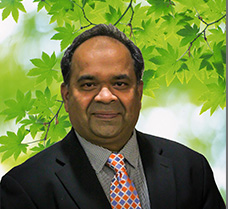
Dr. Prasad Rao Rangaraju is a Professor of Civil Engineering at Clemson University's Glenn Department of Civil Engineering. His research focuses on sustainable materials engineering, decarbonization of cement production, and concrete durability. He holds a B.Tech from Jawaharlal Nehru Technical University (India), an M.S. from Iowa State University, and a Ph.D. from Purdue University. Professional affiliations include the American Society of Civil Engineers, American Concrete Institute, and Transportation Research Board. His work emphasizes eco-friendly material innovations like geopolymer alternatives, recycled glass utilization, and additive manufacturing with cementitious materials. He teaches courses on sustainable construction, advanced concrete technology, and materials characterization techniques. Key research contributions include developing rapid testing methods for alkali-silica reactivity, optimizing ternary blends for durability, and advancing full-depth reclamation techniques for pavements. His lab explores cutting-edge solutions for infrastructure rehabilitation and low-carbon construction practices.
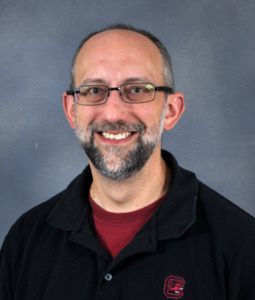
John J. Lavigne is an Associate Professor in the Department of Chemistry and Biochemistry at the University of South Carolina, affiliated with the McCausland College of Arts and Sciences. He also serves as the Building Facilities Coordinator. His research focuses on molecular recognition, supramolecular chemistry, and the development of sensors and materials for applications in cancer diagnostics, food spoilage detection, and energy storage. Lavigne holds a B.S. (1993), M.Ed. (1997) from St. Lawrence University, and a Ph.D. (2000) from the University of Texas at Austin. His research interests include boronate-linked materials, conjugated polymers, and synthetic lectins. He has mentored numerous graduate and undergraduate students, leading to patents and impactful publications. Lavigne has received awards such as the Mortar Board Excellence in Teaching Award (2012) and the Michael J. Mungo Undergraduate Teaching Award (2009). His grants include support from the NIH, NSF, and the Research Corporation. Education: B.S., Chemistry, St. Lawrence University, 1993 M.Ed., General Education, St. Lawrence University, 1997 Ph.D., Chemistry, University of Texas at Austin, 2000 His work spans the design of self-assembling materials, sensors for biomedical and environmental applications, and collaborations with engineering and medical fields. Notable projects include synthetic lectins for cancer diagnostics and boronate-based polymers with self-repairing capabilities. Grants & Awards: NIH COBRE Center (Colon Cancer Diagnostics), NSF (Boronate-Linked Materials), and multiple teaching awards. His research has been supported by the American Chemical Society, South Carolina EPSCoR, and others. Labs & Teams: Lavigne’s lab focuses on interdisciplinary projects, combining organic synthesis, materials science, and analytical methods. Collaborations include work on covalent organic frameworks (COFs) and peptide-based sensors.
Dr. Muhammad M. Sherif is an Assistant Professor in the Department of Civil, Construction, and Environmental Engineering at the University of Alabama at Birmingham (UAB), part of the School of Engineering. He joined UAB in Fall 2019 after completing his Ph.D. at the University of Virginia and M.S. at Carnegie Mellon University, both in structural engineering. His research focuses on smart materials, structural systems, and machine learning applications in civil infrastructure. He is particularly interested in additive manufacturing for construction and the development of innovative materials like engineered cementitious composites. Education: B.S., United Arab Emirates University M.S., Carnegie Mellon University Ph.D., University of Virginia Research Interests: Dr. Sherif’s work spans material characterization, machine learning models for structural analysis, and the integration of advanced materials into infrastructure systems. He explores topics like crack detection using UAVs, superelastic shape memory alloys, and multi-objective optimization in welding processes. His Advanced Materials and Smart Infrastructure Systems (AMSIS) lab emphasizes interdisciplinary approaches to solving civil engineering challenges. Publications: His recent work includes studies on UAV-based pavement crack detection, machine learning for concrete strength prediction, and optimization of tube-to-tubesheet joints. These reflect trends toward AI-driven solutions and sustainable material innovations. Advising: He actively mentors students in multidisciplinary research projects, emphasizing self-motivation and innovation. His lab collaborates on topics like composite materials, structural health monitoring, and infrastructure resilience. Labs/Teams: His AMSIS lab at UAB focuses on advancing smart materials and infrastructure systems through cutting-edge research and collaboration.
Wenbo Duan is a Senior Lecturer and MSc Programme Leader in Mechanical Engineering at the University of Hertfordshire. He holds a PhD from the University of Manchester (2010) and previously served at Brunel University London as a Research Fellow, Senior Research Fellow, and Technical Advisor. His research focuses on advanced non-destructive testing techniques, including ultrasonic and guided wave methods, finite/spectral element modeling, and acoustic communication in industrial pipelines. He specializes in numerical simulations of wave propagation in complex media, defect detection, and signal processing innovations. Education: PhD in Mechanical Engineering, University of Manchester (2010) MSc in Engineering BSc (Distinguished) in Engineering Research Interests: Ultrasonic Non-Destructive Testing (NDT) Guided Wave Defect Detection Piezoelectric-Structure Coupling Acoustic Communication in Pipes Multiphysics Spectral Element Modeling Fluid-Structure Interaction Analysis Key Projects (2021–2025): "Noise Cancelling for Powered Air Purifying Respirators" (PI) "Guided Wave Inspection in Fluid-Filled Wells" (PI) "Assessing the Impact of Strain on Temperature Readings" (Co-Investigator) Advisees & Grants: No specific advisees listed. Active in securing research funding for NDT and acoustics-related projects. Labs & Teams: Involved in the Centre for Engineering Research at the University of Hertfordshire, focusing on computational mechanics and industrial applications.
Dr. Katalin KOPECSKÓ is Associate Professor in the Department of Engineering Geology and Geotechnics , Faculty of Civil Engineering, Budapest University of Technology and Economics (BME) . She lectures on construction-materials chemistry, durability and advanced concrete technologies, and maintains an active research portfolio spanning radioactive-waste solidification, geopolymer binders, supplementary cementitious materials and fibre-reinforced cementitious composites. Education & Academic Career Long-standing faculty member at BME Faculty of Civil Engineering (exact degrees not specified in text). Regular instructor for master-level courses: Alkali Activated Materials in Civil Engineering , Chemistry of Construction Materials , Durability of Construction Materials , Structure–Property Relations of Concrete . Holds weekly consultation hours on Thursdays 12–14 in building K, basement level, room 10/5. Research Focus Her research integrates materials science , geotechnical engineering and nuclear-waste management . Recent investigations include: Development of alkali-activated recipes for borate-rich liquid radioactive waste using limestone-portland blends. Application of semi-adiabatic calorimetry to identify optimal cement types for radioactive waste cementation. Enhancement of 3D-printing performance of concrete via metakaolin and silica fume. Long-term geotechnical and hydraulic impacts of municipal solid-waste leachate on soils. Durability of natural-fibre and nanocellulose-reinforced geopolymer mortars. Corrosion behaviour of vitrified high-level waste glass under simulated repository conditions. Across 2022-2025 she has published more than 40 peer-reviewed articles, reflecting a clear shift toward sustainable construction materials , nuclear environmental safety and advanced testing methodologies . Laboratory & Collaborative Environment Dr. KOPECSKÓ operates within BME’s well-equipped Engineering Geology and Geotechnics laboratories, where calorimetry facilities, geopolymer synthesis rigs and microstructural analysis tools support her projects. Close collaboration exists with the Vásárhelyi Pál Doctoral School and the national nuclear-waste management programme at Paks NPP, evidenced by joint publications on cemented-waste testing laboratories. Grants & Awards While specific grant numbers are not listed, her sustained output in high-impact journals and participation in national projects (e.g., NVKP_16-1-2016-0019 “Increasing the Chemical Resistance of Concrete”) indicate continuous external funding. Contact Office: Building K, basement, room 10/5, Budapest University of Technology and Economics. E-mail: kopecsko.katalin@emk.bme.hu Phone: +36 1 463 2238
Cameron Murray is an Associate Professor in the Department of Civil Engineering at the University of Arkansas. He specializes in concrete research with a focus on alternative cement technologies, particularly belitic calcium sulfoaluminate (BCSA) cement, and prestressed concrete structures. Dr. Murray directs a research group that investigates rapid-setting concrete materials for infrastructure repair and bridge engineering applications. His work bridges fundamental material science with practical engineering solutions for transportation infrastructure. Dr. Murray's educational background includes: Ph.D. in Civil Engineering from the University of Oklahoma (2017) M.S. in Civil Engineering from the University of Arkansas (2014) B.S. in Civil Engineering from the University of Arkansas (2012) Dr. Murray's research focuses on innovative concrete technologies with particular emphasis on alternative cementitious materials that offer environmental benefits and rapid-setting properties. His work explores the structural applications of belitic calcium sulfoaluminate (BCSA) cement for infrastructure repair, prestressed concrete systems, and bridge engineering. He investigates material properties, durability mechanisms, and structural performance to develop practical solutions for transportation infrastructure challenges. His research addresses critical issues such as early-age concrete behavior, corrosion resistance, and sustainable construction practices that reduce carbon emissions in the concrete industry. Analysis of Dr. Murray's recent publications reveals a strong focus on alternative cement technologies, particularly belitic calcium sulfoaluminate (BCSA) cement and its structural applications. His work spans material characterization, structural performance testing, and practical implementation in transportation infrastructure. Key research themes include rapid-setting concrete for infrastructure repair, prestressed concrete behavior, and sustainable concrete technologies with reduced carbon footprints. His publications demonstrate a progression from fundamental material studies to applied research addressing real-world infrastructure challenges, particularly in bridge engineering and rapid repair applications. Dr. Murray has received significant recognition for his teaching and research contributions: Department's outstanding teacher award (three times) College of Engineering Rising Teacher Award (2022-23) ACI Walter P Moore, Jr. Faculty Achievement Award (2022) Dr. Murray has successfully mentored numerous graduate students through their research projects, with a particular focus on concrete technology and structural engineering applications. His research group has secured substantial external funding totaling $6.2 million as PI or Co-PI, with additional $650,000 in equipment donations. Current funding sources include state DOTs, concrete industry groups, private industry, and federal agencies such as the US Army Corps of Engineers. His projects address critical infrastructure needs including rapid bridge deployment systems, alternative cement technologies, and concrete durability solutions. Dr. Murray directs the Concrete Research Laboratory at the University of Arkansas, located at the Grady Harvell Civil Engineering Research and Education Center (CEREC). The laboratory features a 20,000 sq. ft. high-bay testing area with a 100 ft. by 40 ft. strong floor, capable of handling large-scale structural testing. The facility includes specialized equipment for concrete material characterization, structural testing of reinforced and prestressed concrete members, and environmental monitoring systems. His research team collaborates with industry partners including Coreslab Structures and government agencies to address practical infrastructure challenges.
Michael Raupach is a Professor at RWTH Aachen University holding the Chair of Building Materials Science - Building Conservation. His work focuses on concrete durability, reinforcement corrosion, and sustainable construction materials, with particular expertise in alkali-activated binders, carbon textile reinforcement, and electrochemical monitoring systems. Research Interests: Concrete durability, corrosion protection, sustainable materials, structural maintenance, BIM applications, and non-destructive testing. Recent Work: Investigates electrically heated carbon textile reinforced concrete systems, develops hybrid alkali-activated materials for realkalization, and explores chloride diffusion mechanisms in low-carbon binders. Publications: Active in journals covering concrete technology, corrosion engineering, and sustainable construction methods.
Zeynep Başaran Bundur is an Associate Professor and Chair of Civil Engineering at Özyeğin University in Istanbul, Turkey. She leads the Sustainable and Adaptive Materials (SAM) Research Group and oversees the Construction Materials Laboratory at the university. Her academic journey began with a Bachelor's degree in Civil Engineering from Bogazici University in 2009, followed by Master's and Ph.D. degrees from The University of Texas at Austin in 2011 and 2013, respectively. Dr. Başaran Bundur's educational background is impressive and well-focused on her research interests: Bachelor's in Civil Engineering, Bogazici University, 2009 Master's in Civil Engineering, University of Texas at Austin, 2011 Doctorate in Civil Engineering, University of Texas at Austin, 2013 Dr. Başaran Bundur's research focuses on the development of sustainable and adaptive materials for civil engineering applications. Her work centers on understanding the relationship among processing, chemistry, properties, and performance of cement-based materials to develop novel, sustainable, and durable construction solutions. She is particularly known for her pioneering work in bio-based self-healing concrete technologies, where microorganisms are incorporated into cementitious materials to enable automatic crack repair. Her research spans several key areas: Advanced cementitious and mineral building materials (self-healing, self-cleaning) Effect of supplementary cementitious materials and geopolymers Additive manufacturing (3D printing) of cement-based composites Development of bio-based rheology modifying admixtures Use of end-of-life materials as alternative binders in concrete Her publication record demonstrates a consistent focus on sustainable construction materials, with over 40 publications and more than 500 citations as of 2022. The trend in her research shows a progression from fundamental studies on biomineralization in cement-based materials toward practical applications in construction technology, particularly in additive manufacturing and sustainable material development. Her work bridges the gap between biological processes and civil engineering materials, creating innovative solutions for the construction industry's environmental challenges. Dr. Başaran Bundur has received significant recognition for her research contributions: Patent for "CEMENT-BASED COMPOSITIONS WITH IMPROVED RHEOLOGICAL PROPERTIES AND METHODS FOR PRODUCTION THEREOF" (2016) Development of BioCrete, an eco-friendly cement-based mortar with adaptive performance Multiple research grants from TÜBİTAK (The Scientific and Technological Research Council of Turkey) Funding from industrial partners like ÇİMSA A.Ş. for applied research International collaborations with universities in Belgium, France, and the USA As an educator, Dr. Başaran Bundur has supervised numerous graduate and undergraduate students, many of whom have continued their academic careers at prestigious institutions worldwide. Her research group, SAM, actively works on cutting-edge projects that address global challenges in the construction sector, particularly focusing on reducing CO2 emissions and developing sustainable alternatives to traditional construction materials. The group's work aligns with the urgent need to transform the construction industry, which accounts for approximately 8% of global CO2 emissions. The SAM Research Group operates at the intersection of biology, material science, and civil engineering, developing innovative solutions such as: BioCrete: A sustainable and self-healing cement-based grout with improved rheology Geo-3D: Additive manufacturing using fiber-reinforced geopolymers Conc-3D: Additive manufacturing of fiber-reinforced cement-based composites ReCement: Regenerating end-of-life materials for reuse in cement/concrete