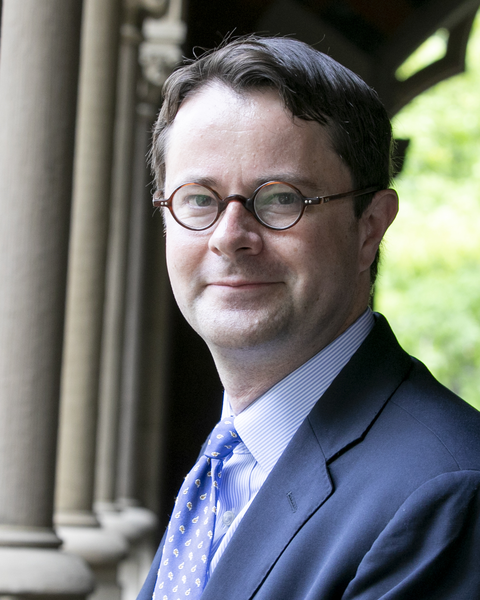
Tyler VanderWeele is the John L. Loeb and Frances Lehman Loeb Professor of Epidemiology in the Departments of Epidemiology and Biostatistics at the Harvard T.H. Chan School of Public Health. He serves as Director of the Human Flourishing Program and Co-Director of the Initiative on Health, Spirituality, and Religion at Harvard University. His educational background includes: Ph.D. (Biostatistics) 2006, Harvard University A.M. (Biostatistics) 2005, Harvard University M.A. (Mathematics) 2005, University of Oxford M.A. (Finance and Applied Economics) 2002, Wharton School, University of Pennsylvania B.A. (Philosophy and Theology) 2000, University of Oxford B.A. (Mathematics) 2000, University of Oxford VanderWeele's research spans two interconnected domains: methodological work focused on distinguishing between association and causation in biomedical and social sciences, and psychosocial measurement theory; and empirical research encompassing psychiatric and social epidemiology, the science of happiness and flourishing, and the study of religion and health. His work integrates rigorous statistical methodology with substantive questions about human well-being across diverse populations and cultural contexts worldwide. His recent publications reveal a strong emphasis on cross-national analysis of human flourishing across 22 countries through the Global Flourishing Study. This research examines demographic variations and childhood predictors of numerous aspects of well-being including sense of mastery, physical pain, optimism, social trust, volunteering behavior, and religious beliefs. His methodological contributions include sensitivity analysis tools like E-values for unmeasured confounding, and frameworks for mediation and interaction analysis. Among his notable scientific recognitions is the 2017 Presidents' Award from the Committee of Presidents of Statistical Societies (COPSS), one of the highest honors in the field of statistics. VanderWeele has secured multiple NIH research grants as Principal Investigator, including R01CA222147 on mediation and interaction methods, R01AI104459 on longitudinal causal mediation analysis in HIV, and R01ES017876 on sufficient cause interactions. He has published over 500 peer-reviewed papers and authored influential books including Explanation in Causal Inference (2015), Modern Epidemiology (2021), Measuring Well-Being (2021), Handbook of Religion and Health (2023), and A Theology of Health (2024). He founded the journal Epidemiologic Methods with Eric Tchetgen Tchetgen to advance methodological research in epidemiology. His research group develops various tools and tutorials for sensitivity analysis, mediation analysis, and interaction analysis, making advanced statistical methods accessible to researchers worldwide.