Friederike Käte Evelyn Marie-Luise Lüpke is a Professor of African Studies at the University of Helsinki , affiliated with the Faculty of Arts and Department of Languages . She leads the Afristadi research forum and contributes to the Helsinki Institute of Sustainability Science (HELSUS) and Helsinki Inequality Initiative (INEQ) . Research focuses on West African languages (Mandé, Atlantic families) and small-scale multilingualism Develops LILIEMA (Language-independent literacies for inclusive education) Key areas: verbal argument structure, nominal classification, sociohistorical linguistics Selected Publications: Grammar of Jalonke argument structure, Oxford Guide to Atlantic languages, and work on Baïnounk Gujaher. Recent articles explore situational languaging models, multilingual education, and decolonial approaches. Projects include the LILIEMA literacy program (2019-2023), Crossroads on Senegambian multilingualism (2014-2018), and DoBeS documentation initiatives. Current 2023-2024 work at the Helsinki Collegium for Advanced Studies examines multilingualism's role in decolonization research.
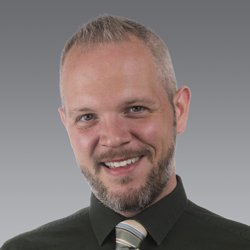
Charles Yang is a Professor at the University of Pennsylvania's Department of Linguistics, with joint appointments in Computer and Information Science and Psychology. As Chair of Linguistics and Director of the Program in Cognitive Science since 2011, he co-directs the Integrated Language Science and Technology group with John Trueswell. PhD in Computer Science, MIT AI Lab Faculty at Yale (2000-2008) Current roles: Chair of Linguistics, Director of Cognitive Science Program His research bridges linguistics, cognitive science, and computational modeling, focusing on human and machine language acquisition, phonological and morphological learning, and computational modeling of historical language change. He develops the Tolerance Principle for quantifying language acquisition thresholds and investigates neural language models as cognitive theories. Recent publications analyze language acquisition through computational models (2021-2024), with the 2025 work evaluating LLMs for low-resource languages. His 2016 book The Price of Linguistic Productivity won the Leonard Bloomfield Award and explores productivity in language systems. Guggenheim Fellowship (2018) Bloomfield Book Award (2018) NSF GRFP Fellowship Leonard Bloomfield Book Award (2016) Yang advises students in language acquisition, computational linguistics, and cognitive modeling. His lab collaborates with researchers like Bob Berwick, Johan Bolhuis, and Noam Chomsky on integrated approaches to language science.
Noora Ahola is a Doctoral Researcher at the University of Helsinki's Department of Languages within the Faculty of Arts, actively contributing to the Doctoral Programme in Linguistics. Her work centers on linguistic typology with specialized focus on micro-scale structural analysis and language contact phenomena across understudied language families. Her educational background includes a Master's degree in Linguistics, recognized with the prestigious Finnish Linguistic Society Master's Thesis Award in 2024 for her microtypological investigation of inalienable possession systems in New Guinea languages. Ahola's research agenda spans language typology, microtypology, language contact, morphosyntax, and possession systems. She employs rigorous typological methodologies to examine cross-linguistic variation, integrating sociolinguistic factors to understand how language contact reshapes grammatical structures in endangered and understudied languages. Her approach combines empirical fieldwork with theoretical frameworks to address gaps in linguistic diversity documentation. Analysis of her recent publications reveals concentrated expertise in microtypological case studies of possession systems and language contact effects, particularly in New Guinea and Eastern Indonesian languages. She demonstrates innovative synthesis of typological data with sociolinguistic variables to model linguistic variation patterns, with significant contributions to understanding morphosyntactic change in contact scenarios. Scientific recognition includes: Finnish Linguistic Society Master's Thesis Award (2024) Ahola serves as an active researcher in the European Research Council Starting Grant project 'Linguistic Adaptation: Typological and Sociolinguistic Perspectives on Language Variation' (2019-2024). She maintains robust scholarly engagement through conference presentations at international venues and holds a board membership position in the Finnish Linguistic Society since March 2024, reflecting her growing leadership in the field. She collaborates within the ERC project research team and contributes to academic community development through conference organization, notably the HALS workshop on innovating linguistic fieldwork methodologies, demonstrating commitment to advancing methodological rigor in typological research.
Professor Hjalmar P. Petersen, Dr.phil., leads the Faculty of Faroese Language and Literature at The University of the Faroe Islands. With academic qualifications from University of Hamburg (PhD), Yale University (MA), University of Copenhagen (Cand. phil.), University of Iceland (BA), and University of the Faroe Islands (Exam. art.), he specializes in Faroese language history, phonology, morphology, and sociolinguistics. PhD in Gender Assignment in Modern Faroese (University of Hamburg, 2008) MA in Linguistics (Yale University, 1998) Cand. phil. in Nordic Philology (University of Copenhagen, 1993) BA in Linguistics (University of Iceland, 1991) Exam. art. in Faroese and Nordic (University of the Faroe Islands, 1983) His research focuses on Modern Faroese syntax, morphology, and phonology, with particular emphasis on language variation and change. His work explores language contact effects between Faroese, Danish, English, and Celtic languages, while his projects examine word order patterns, prosody, and language acquisition processes. Recent publications and projects reveal specialization in dialect variation, sociophonetic changes in Tórshavn, phonological interfaces, and multilingualism dynamics. He actively supervises PhD candidates in sociophonetics, language acquisition, and historical analysis. Bókmentavirðisløn M.A. Jacobsens (2020) Hjalmar supervises PhD students including Sandra Saxov-Lamhauge (sociophonetics), Iben Nyholm Debess (language acquisition), and Sissal M. Rasmussen (Old Faroese phonology). He collaborates internationally with institutions in Iceland, Greenland, and Finland.
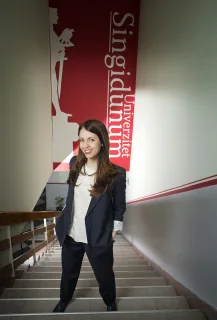
Marijana Prodanović is an Associate Professor at Singidunum University, with a focus on applied linguistics, language teaching, and translation studies. She holds a Ph.D. in International Education and Communication from Universidade da Coruña (2023) and a doctorate in language from the Faculty of Philology, University of Belgrade (2015). Education: University of Belgrade (Ph.D., M.A., B.A. in English), Universidade da Coruña (Ph.D. in International Education and Communication) Research Interests: Applied linguistics, online language education, pragmatics, contrastive analysis, and language testing. Her work bridges pedagogy and technology , particularly in post-pandemic educational contexts. Recent publications explore AI's role in language tasks, textbook analysis, and intercultural communication in tourism. She actively contributes to academic societies and journal reviews. Notable trends in her recent articles include: AI integration in TEFL practices Comparative studies of grammar acquisition Intercultural nuances in translation Online assessment methodologies Pragmatic awareness in multilingual learners Language's role in shaping identity
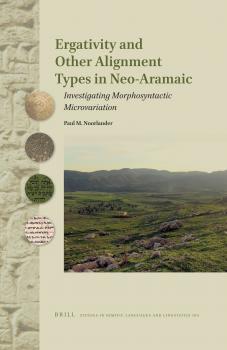
Dr. Paul M. Noorlander is a Researcher in Hebrew & Aramaic Studies at the University of Cambridge , affiliated with the Faculty of Asian and Middle Eastern Studies and a Fellow of St Edmund's College . He specializes in endangered Neo-Aramaic languages, focusing on their documentation, typology, and historical-sociocultural context. His research spans Areal Linguistics , Historical Syntax , and Language Contact , particularly in regions where Semitic and Iranian languages intersect. He leads projects like the North Eastern Neo-Aramaic Database and the ERC-funded Echoes of Vanishing Voices initiative, which reconstructs the linguistic history of Aramaic-speaking communities in contact with Iranian. He teaches courses including Comparative Semitic Linguistics , Biblical Hebrew , and Linguistic Typology , emphasizing interdisciplinary approaches. His publications explore word order typology, ergativity, and corpus-based analyses of Neo-Aramaic dialects, with recent works focusing on VO/OV alternations and contact-induced syntactic shifts.
Jack B. Martin is a Professor in the English and Linguistics department at William & Mary, where he has taught since 1993. His work spans language documentation, revitalization, and theoretical linguistics, with a focus on Native American languages. Joint position: English & Linguistics (William & Mary) Teaching history: University of Michigan, Rice University, Leiden University, University of Oklahoma, University of Florida Fieldwork: Eastern Oklahoma, South Florida, Western Louisiana Research Interests: Dr. Martin specializes in documenting Muskogean languages (Muscogee/Creek, Miccosukee, Koasati, Choctaw), including creating dictionaries, grammars, and educational materials. His theoretical work connects phonetics, syntax, and metrical structure. Collaborations: He partners with the Muscogee (Creek) Nation, Seminole Tribe, Coushatta Heritage Department, and Mississippi Band of Choctaw Indians on community-driven language projects. Notable collaborators include Margaret Mauldin, Carol Cypress, and Linda Langley. Articles Trends: His publications emphasize Muskogean syntax, prosody, and revitalization, with recent works focusing on switch-reference, prominence, and collaborative documentation models. Earlier studies include comparative phonetics and historical morphology.
Christopher R. Green is an Associate Professor of Linguistics and Associate Department Chair at Syracuse University's Department of Languages, Literatures, and Linguistics within the College of Arts & Sciences. He holds a Ph.D. and M.A. in Linguistics from Indiana University (2010 and 2008 respectively). His research focuses on prosodic phonology, tone systems, and field linguistics, with a specialization in African languages including Mande, Cushitic, Dogon, Jarawan, and Bantu. He leads projects funded by NSF and NEH grants, such as describing tone roles in Luyia languages and documenting Jarawan. Recent work includes studies on Cushitic moraic structure, Somali vowel harmony, and Kenyan Maay's tone system. Green has authored Somali Grammar (2021) and contributed to volumes like The Oxford Guide to the Bantu Languages . Awards include the 2024 Graduate Teaching Excellence Award and 2022 LLL Research Achievement Award. He advises students across linguistic subfields and collaborates internationally, presenting at conferences like ACAL and Bantoid Language Conferences. His service roles include the Vice Provost's Humanities Working Group and editorial boards for journals like Mandenkan and Linguistique et Langues Africaines .
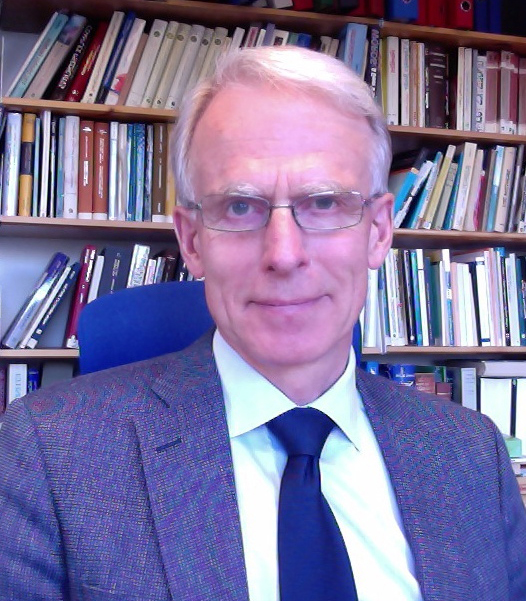
Helge Julius Jakhelln Dyvik is a Professor of General Linguistics at the University of Bergen, Norway. He has held this position since 1983, following roles as Researcher (1981–1983) and Research Assistant (1976–1981) at the same institution. His academic journey includes a Dr. philos. in Theoretical Linguistics (1981) from the University of Bergen, alongside advanced studies in Vietnamese, Old and Middle English, and Scandinavian languages. His research focuses on syntax, computational linguistics, machine translation, corpus linguistics, and Old Norse studies. Notable projects include pioneering work on the PONS machine translation system, leadership in the ParGram and LOGON projects, and contributions to semantic analysis via translation-based methods. He has also been involved in standardization efforts for Norwegian language through roles in national committees like Fagråd for normering og språkobservasjon and the Norwegian Academy’s dictionary project. His awards include membership in Norway’s leading scientific academies (1995–1998) and the Fridtjof Nansen Award for Research Excellence (1987). His publications span theoretical linguistics, computational frameworks, and language policy, emphasizing collaborative approaches in computational linguistics. Key contributions include the development of treebanking infrastructure, semantic analysis techniques, and methodologies for language variation studies. He remains active in academic governance, including roles at Nansenfondet and advisory boards for language standardization initiatives.
Andrej Malchukov is an active Apl. Professor (Außerplanmäßiger Professor) at the Department of English and General Linguistics, Johannes Gutenberg University Mainz, and an affiliated Senior Researcher at the St.-Petersburg Institute for Linguistic Research (Russian Academy of Sciences). His academic journey began with Germanic philology and linguistics studies at St-Petersburg University, followed by a candidate thesis (1990) and habilitation thesis (2002) focusing on the morpho-syntax of North Tungusic Even. His research spans multiple domains of linguistic inquiry with particular emphasis on linguistic typology , morpho-syntactic structures , and Siberian languages . Malchukov's scholarly work demonstrates exceptional depth in analyzing grammatical phenomena across diverse language families, especially concerning case systems, argument structure, and grammaticalization processes. Malchukov's publication record reveals consistent contributions to theoretical linguistics, with significant focus on typological patterns across languages. His work shows increasing specialization in grammaticalization scenarios and cross-linguistic variation, particularly evident in his recent publications on Ewen (North-Tungusic) and verbal category hierarchies. The research demonstrates strong methodological rigor through systematic cross-linguistic comparison and development of typological frameworks. Member of Academia Europaea (2022) Alexander von Humboldt Research Fellow (1994-1996) JSPS fellowship at Kobe University, Japan (2004) Visiting Professorship at NINJAL, Tokyo (2010) Malchukov has served on numerous PhD examination boards across European institutions including University of Mainz, University of Helsinki, and University of Amsterdam. His collaborative research has been supported by multiple DFG-funded projects, particularly the long-term collaboration with Bernard Comrie and Martin Haspelmath on ditransitive constructions and valency classes. He currently coordinates the DFG-supported project 'Universal and areal patterns in grammaticalization' with Walter Bisang, involving an international research team. Malchukov is also a member of the St-Petersburg Typology Group and serves on editorial boards for several major linguistics journals including Journal of Linguistics and Linguistic Typology.
Dr. Sonja Riesberg is affiliated with the Department of Linguistics at the University of Cologne. Her research focuses on theoretical linguistics, language documentation, and the study of Austronesian and Papuan languages. She has contributed significantly to understanding symmetrical voice systems, morphosyntactic alignment, and prosodic structures in understudied languages. Her work integrates fieldwork methodologies with formal syntactic analysis, particularly in regions like Eastern Indonesia and Papua. Key research areas include syntax, morphosyntax, and the documentation of endangered languages such as Yali and Totoli. She has led projects on prominence-related structures in symmetrical voice languages (SFB 05) and prosodic entrainment in multilingual interactions. Notable publications include edited volumes on caused motion events and dictionaries of Yali, reflecting her commitment to both theoretical and applied linguistic research. Her recent work explores differential object marking, valency alternations, and the interface between syntax and prosody. Collaborations with institutions like Asia-Pacific Linguistics and contributions to journals such as Linguistic Typology and Studies in Language highlight her interdisciplinary approach to linguistic inquiry.
Dr Masoud Mohammadirad is a Researcher in the Faculty of Asian and Middle Eastern Studies at the University of Cambridge, specializing in Iranian linguistics and language documentation. His work focuses on Kurdish and Gorani languages, particularly in areas such as language contact, morphology, and corpus linguistics. Education: PhD in Linguistics (2020), Sorbonne Nouvelle, Paris III M.A. in General Linguistics (2013), Bu-Ali Sina University B.A. in Teaching English as a Foreign Language (2010), Sanandaj University Research Interests: Western Iranian languages (Hewrami, Laki, Kurdish dialects) Language contact phenomena in the Zagros region Historical linguistics and sound change Morphosyntactic typology Projects: ERC-funded project "Echoes of Vanishing Voices" (2021-2025) investigating minority language histories in West Asia Co-authoring A Grammar of Hewramî (forthcoming) Teaching: "Sounds and Words" (Li1) "Historical Linguistics" (Li11)
Bethwyn Evans is a faculty member at the Australian National University (ANU), affiliated with the Evolution of Cultural Diversity research group. She serves as part of the executive leadership team alongside Nicholas (Nick) Evans, Kim Sterelny, and other prominent scholars, contributing to the strategic direction of this interdisciplinary research initiative. Dr. Evans specializes in historical and comparative linguistics, with particular expertise in how language serves as a window into both linguistic and non-linguistic past. Her research integrates linguistic evidence with archaeological and population genetic data to reconstruct the histories of ethnolinguistic groups and understand broader processes of linguistic and social change. Her current research program centers on the history of linguistic diversification and contact among Austronesian- and Papuan-speaking groups of Bougainville in Papua New Guinea. A major component involves the documentation and description of endangered languages from southern Bougainville, including Nasioi, Torau, and Nagovisi. This work contributes to understanding Island Melanesia after Lapita and explores transdisciplinarity, narrative construction, detecting remote historical signals, Holocene revolutions, local diversification, and cultural transitions. Dr. Evans' publication record demonstrates consistent scholarly output across multiple venues, with a clear trajectory from detailed language-specific studies toward broader theoretical contributions in historical linguistics. Her recent work shows increasing engagement with interdisciplinary methodologies, particularly the integration of genetic evidence with linguistic data to reconstruct population histories in Oceania. Her research on Bougainville languages has made significant contributions to understanding linguistic diversity in one of the world's most complex linguistic regions. As an active researcher, Dr. Evans collaborates with scholars across disciplines including anthropology, archaeology, and genetics, reflecting the transdisciplinary nature of her work and the growing recognition of integrated approaches to understanding human history.
Dr. Robin Meyer is an Assistant Professor of Historical Linguistics at the Department of Language and Information Sciences, Université de Lausanne. Previously, he served as the Diebold Research Assistant in Comparative Philology (2018–2020) and Instructor in Ancient Greek and Latin at the University of Oxford's Faculty of Classics. He is an associate member of the Faculty of Linguistics, Philology & Phonetics at Oxford and holds roles such as Director of the Centre de Linguistique et des Sciences du Langage and Department Head (2025–26). Education: Bachelor’s in Classics and Oriental Studies M.Phil. in General Linguistics and Comparative Philology (Oxford) PhD in Historical Linguistics (Oxford) Research Interests: Focuses on historical syntax, particularly relative clauses in Italic languages and language contact phenomena between ancient languages like Classical Armenian and Western Middle Iranian (Parthian/Middle Persian). Explores syntactic borrowing (“borrowed syntax”) and alignment changes in Indo-European languages. Active in Armenian historiography and codicology. Professional Roles: Associate Editor at the Journal of Indo-European Studies , editorial board member of the Advances in Historical Linguistics series, and elected member of the Steering Committee of the Association Internationale des Études Arméniennes. Holds Chartered Linguist status specializing in Language Education. Labs & Teams: Leads research initiatives at the Centre de Linguistique et des Sciences du Langage and collaborates across departments at Université de Lausanne.
Nathan Hill is a Professor at Trinity College Dublin, holding the Sam Lam Professorship in Chinese Studies and serving as Director of the Trinity Centre for Asian Studies. He previously taught at the School of Oriental and African Studies (SOAS), University of London, where he was Head of the Department of East Asian Languages and Cultures and Director of the London Confucius Institute. Educational Background: Ph.D. in Linguistics, Harvard University, 2009 Nathan Hill specializes in Sino-Tibetan historical linguistics, with a focus on Tibetan, Burmese, and Chinese. His research spans Old Tibetan descriptive and corpus linguistics, Tibeto-Burman comparative linguistics, historical phonology, and the typology of evidential systems. He integrates computational methods with traditional philology to reconstruct ancestral languages and develop tools for endangered language communities. His recent work includes automated phonological reconstruction, NLP pipelines for Tibetan and Newar, and critical reassessments of Old Chinese reconstruction methodologies. His publications reveal consistent engagement with sound change, morphological evolution, and syntactic-pragmatic features across Sino-Tibetan languages. He frequently collaborates on interdisciplinary projects combining linguistic theory, digital humanities, and language technology. His recent articles highlight trends toward computational modeling, uncertainty quantification in reconstruction, and practical applications in text recognition and language processing for under-resourced languages. Scientific Awards: Li Fang-Kuei Society for Chinese Linguistics, Young Scholar (2018) Li Fang-Kuei Society for Chinese Linguistics, Young Scholar (2013) China Times Young Scholars Award (2008) Nathan Hill actively mentors doctoral and postdoctoral researchers, supervising work on language documentation, computational modeling, and historical analysis. He has led major research projects funded by the European Research Council, the UK Arts and Humanities Research Council, and the British Academy, securing over €11 million in funding. His projects have produced practical tools such as part-of-speech taggers, predictive keyboards for minority languages, and text recognition systems, with real-world impact recognized in the UK's Research Excellence Framework. He is involved in several research labs and collaborative teams, including those developing NLP tools for low-resource Sino-Tibetan languages, corpus creation initiatives, and computational reconstruction frameworks. His future work continues to bridge philological rigor with computational innovation, aiming to elevate the study of Sino-Tibetan languages to the level of classical Indo-European traditions.