معرفی
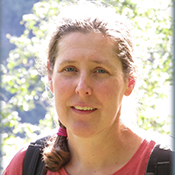
Bethwyn Evans is a faculty member at the Australian National University (ANU), affiliated with the Evolution of Cultural Diversity research group. She serves as part of the executive leadership team alongside Nicholas (Nick) Evans, Kim Sterelny, and other prominent scholars, contributing to the strategic direction of this interdisciplinary research initiative.
Dr. Evans specializes in historical and comparative linguistics, with particular expertise in how language serves as a window into both linguistic and non-linguistic past. Her research integrates linguistic evidence with archaeological and population genetic data to reconstruct the histories of ethnolinguistic groups and understand broader processes of linguistic and social change.
Her current research program centers on the history of linguistic diversification and contact among Austronesian- and Papuan-speaking groups of Bougainville in Papua New Guinea. A major component involves the documentation and description of endangered languages from southern Bougainville, including Nasioi, Torau, and Nagovisi. This work contributes to understanding Island Melanesia after Lapita and explores transdisciplinarity, narrative construction, detecting remote historical signals, Holocene revolutions, local diversification, and cultural transitions.
Dr. Evans' publication record demonstrates consistent scholarly output across multiple venues, with a clear trajectory from detailed language-specific studies toward broader theoretical contributions in historical linguistics. Her recent work shows increasing engagement with interdisciplinary methodologies, particularly the integration of genetic evidence with linguistic data to reconstruct population histories in Oceania. Her research on Bougainville languages has made significant contributions to understanding linguistic diversity in one of the world's most complex linguistic regions.
As an active researcher, Dr. Evans collaborates with scholars across disciplines including anthropology, archaeology, and genetics, reflecting the transdisciplinary nature of her work and the growing recognition of integrated approaches to understanding human history.