David Hansen is the John L. & Sue Ann Weinberg Professor in Historical & Philosophical Foundations of Education and Director of the Philosophy and Education Program at Teachers College, Columbia University. His work bridges philosophy, ethics, and educational practice, emphasizing cosmopolitanism, moral inquiry, and teacher development. He holds a BA from the University of Chicago, MA from Stanford, and PhD from the University of Chicago. Research focuses on philosophical foundations of education, including Deweyan pragmatism, Montaigne’s educational thought, and the ethical dimensions of teaching. He explores cosmopolitanism’s role in education and the concept of 'bearing witness' in pedagogy. Hansen has been Past-President of the John Dewey Society and Philosophy of Education Society. His awards include the AERA Fellowship (2011) and the Weinberg Professorship (2013). Publications span books like The Teacher and the World (2011) and Reimagining the Call to Teach (2021), alongside influential articles in Education Theory and Philosophy of Education . His work consistently integrates historical philosophy with contemporary educational challenges.
Tyson Ashley Retz is an Associate Professor of Intellectual History at the University of South-Eastern Norway (Department of Culture and Language Sciences, Faculty of Education and Humanities). He holds a PhD from the University of Melbourne and is a Fellow of the Royal Historical Society. His research focuses on the philosophy of history, historiography, and the intellectual history of political thought, particularly in 19th-century Europe. Retz has held visiting positions at the University of British Columbia (2014), Tallinn University (2018), and the University of Oslo (2021), and is currently a Senior Research Fellow at the University of Vienna (2024-25). Retz’s scholarly work critiques traditional concepts of empathy in historical understanding, advocating instead for a hermeneutical approach rooted in Collingwood’s question-answer logic. His books *Empathy and History* (2018) and *Progress and the Scale of History* (2022) explore foundational issues in historical methodology and the evolution of progress narratives. Current research examines the religious-political dynamics of Restoration France (1815–1830) and the role of historical writing in liberal thought during Catholic revival periods. His peer-reviewed articles span topics such as historical scale, the Anthropocene’s ethical challenges, and comparative progress theories. Retz actively contributes to history education through editorial roles: he edits the *Bloomsbury History: Theory and Method* digital resource, chairs the *History Education Research Journal*, and guest-edited special issues on history didactics. He has supervised at least one PhD student, Jacob Tom (2025), and frequently publishes in journals like *Journal of the Philosophy of History* and *Rethinking History*. Awards include his Royal Historical Society fellowship. Retz’s interdisciplinary work bridges historical theory, education, and political philosophy, emphasizing the societal role of historical inquiry in addressing contemporary ethical and epistemological issues.
Prof Ruth Abbey is a Professor and Department Chair of Humanities and Social Sciences at Swinburne University of Technology's School of Social Sciences, Media, Film and Education. She holds a PhD from McGill University and previously taught at the University of Notre Dame and University of Kent at Canterbury. As former Editor-in-Chief of The Review of Politics , her work bridges political theory, philosophy, and historical analysis. Her research focuses on Friedrich Nietzsche, Charles Taylor, feminist political thought, liberal theory, and animal ethics. Research Interests: Prof Abbey specializes in Nietzsche's middle-period writings, Charles Taylor's philosophical contributions, feminist critiques of political theory, and intersections of animal ethics with liberal political frameworks. Her work often examines moral progress, historical narratives, and the ethical dimensions of social change. Key Themes in Publications: Her recent scholarship explores Nietzsche's Enlightenment critiques, comparative analyses of Taylor and Pinker on moral progress, and gender dynamics within animal rights movements. Notable works include Nietzsche’s Middle Period and Charles Taylor, Second Edition , which contextualize complex philosophical ideas for broader audiences. Awards & Grants: No specific awards listed, though her extensive editorial roles and prolific publication record reflect academic recognition. Active in supervising doctoral candidates in political theory and philosophy. Labs & Collaborations: Engaged in interdisciplinary dialogues on cosmopolitanism, animal ethics, and feminist theory through collaborative edited volumes and international conferences.
Takayuki Sato is a Professor at Waseda University's Faculty of Education and Integrated Arts and Sciences, School of Education, where he has held a professorship since 2011. Previously, he served as Associate Professor at the same institution from 2008-2011 and held teaching positions at Tamagawa University College of Education from 2000-2007. He was also a visiting scholar at Columbia University's Teachers College from 2016-2017. Dr. Sato earned his PhD in Education from Waseda University, with additional educational background including studies at Waseda University's Faculty of Education, Department of Education, and a Master's degree from the University of Chicago's Department of Education. His research focuses on American Progressive Education, particularly the Project Method, citizenship education, and the educational philosophies of John Dewey and William Heard Kilpatrick. His work examines how progressive educational theories were implemented in early 20th century America, with special attention to the relationship between school and community, moral education, and the formation of democratic citizens. Analyzing his extensive publication record, Sato's scholarly work reveals a consistent focus on the intersection of citizenship education and progressive educational practices. His research traces the historical development of concepts like the 'School as Social Center,' examines rituals of patriotism in American schools, and explores how project-based learning can balance individual and collaborative learning. His recent work increasingly addresses how diversity education has coexisted with Americanization efforts throughout educational history. 2001 Japan Dewey Society Research Encouragement Award Dr. Sato has received significant research funding, including multiple Japan Society for the Promotion of Science Grants-in-Aid for Scientific Research projects examining citizenship education in progressive education, school social centers, and the spread of patriotic rituals in American schools. His research has been supported continuously since 2008, demonstrating the significance and impact of his scholarly contributions to the field of educational history. He actively contributes to educational practice through social activities including teacher training courses at Yokohama Municipal Sakuragaoka High School and lesson studies at Waseda Jitsugyo Elementary School, where he provides expert commentary on project-based teaching and information ethics education from a citizenship perspective.
Iver Bernstein is a Professor of History, African and African-American Studies, and American Culture Studies at Washington University in St. Louis. His scholarship focuses on the long 19th-Century United States, particularly examining slavery, race, political culture, and the traumatic legacies of the Civil War.
Professor Marek Piechowiak is a distinguished academic at SWPS University of Social Sciences and Humanities, where he serves as Head of the Department of Public Law and Legal Theory within the Faculty of Psychology and Law in Poznań. A renowned lawyer and philosopher, he specializes in philosophy of law and international and constitutional protection of human rights. With extensive experience in human rights institutions and visiting professorships across Europe, Professor Piechowiak has established himself as a leading expert in constitutional law, dignity theory, and human rights frameworks. Professor Piechowiak's research interests focus on the philosophical foundations of law, with particular emphasis on human dignity, constitutional theory, and the relationship between morality and law. His work explores the concept of dignity from multiple perspectives, analyzing its role in constitutional interpretation and human rights protection. He has made significant contributions to understanding the axiological basis of Polish law, the concept of the common good in constitutionalism, and the philosophical underpinnings of natural law theory. His scholarship bridges legal theory with practical human rights applications, examining how constitutional frameworks can address social exclusion and protect fundamental rights. His extensive publication record, comprising over 120 academic articles, reveals a consistent focus on dignity as a central concept in constitutional law and human rights. Professor Piechowiak's recent work has increasingly examined the philosophical dimensions of dignity, its various interpretations in constitutional contexts, and its relationship to justice and legal theory. His scholarship demonstrates a progression from practical human rights applications to deeper philosophical inquiries into the foundations of legal systems, with notable contributions on Plato's philosophy, Thomas Aquinas' natural law theory, and contemporary constitutional dilemmas. Ad hoc judge of the European Court of Human Rights Research fellowships at Netherlands Institute for Advanced Study Hague Academy of International Law Netherlands Institute of Human Rights International Institute of Human Rights in Strasbourg Professor Piechowiak has made significant contributions to legal education, having previously served as the first Commissioner for Children's Rights in Poland after the position was established in 2000. He teaches constitutional law, human rights, and theory and philosophy of law at the Faculty of Psychology and Law in Poznań, and doctoral courses in axiology of law and philosophy at SWPS University in Warsaw. His academic career reflects a commitment to bridging theoretical legal scholarship with practical human rights applications.
Dr. Roemer Visser is an Associate Professor at TIAS School for Business and Society, specializing in leadership development and organizational psychology. He focuses on leveraging human potential through programs for clients like Royal IHC, De Lage Landen, and Randstad. Since 2021, he has served as Academic Director of the Executive MBA program. Education: Graduated in Industrial and Organizational Psychology from VU University Amsterdam, with a PhD in Human Resource Development from Texas A&M University. His work emphasizes challenging mental models that hinder performance, particularly in leadership paradoxes, team collaboration, and influence. Research interests include leadership agility, VUCA environments, ethical dilemma management, and ecological perspectives in leadership. His podcast Rethinking Leadership explores these themes with industry experts, covering topics like courage, authenticity, and boardroom dynamics. Awards: None explicitly mentioned. However, his influence is evident through his role as an ICF-certified coach and sought-after speaker in executive education. Grants/Advising: Develops leadership programs and advises on organizational resilience. His recent work includes optimizing business performance through team dynamics and strengthening organizational resilience in EMBA programs. Labs/Teams: Leads TIAS Executive MBA initiatives and collaborates with corporate partners to design custom leadership solutions.
Carl Wennerlind is Professor of History at Barnard College, Columbia University, where he specializes in early modern European intellectual history and political economy. His office is located at 806 Milstein Center. His research examines the historical development of ideas about money/credit, economy-nature relationships, and concepts of 'improvement' within capitalism. Education: B.A., University of South Florida Ph.D., University of Texas at Austin His research interests span intellectual history, political economy, and the history of capitalism, with particular emphasis on how economic ideas shape societal structures. He explores themes like monetary systems' cultural impacts, environmental dimensions of economic thought, and historical critiques of capitalism. His publications consistently analyze capitalism's evolution through interdisciplinary lenses, merging economic theory with environmental studies, philosophy, and social history. Recent work critically engages with scarcity, ecological crises, and capitalism's historical legitimacy across Europe and the Atlantic world. Awards and Fellowships: Warren Samuels Prize (2012) History of Economics Society's Best Article Prize (2006) European Society Award for Best Article (2006) Grants from NEH, ACLS, Institute for New Economic Thinking, Princeton's Davis Center Heyman Center for the Humanities Faculty Fellowship (2022) He teaches diverse courses including 'History of Money,' 'Capitalism and the Enlightenment,' and graduate seminars on political economy. His pedagogical approach connects historical analysis with contemporary economic debates.
Susan McDonough is an Assistant Professor in the School of Education at Dominican University with 14 years of direct classroom teaching experience and over a decade mentoring teacher candidates in PreK-12 grade classrooms. Her educational background includes: PhD in Curriculum and Design from the University of Illinois MEd in Curriculum and Instruction from the University of Illinois BS from Illinois State University Dr. McDonough is passionately committed to democratic teaching that empowers students through inclusive and participatory educational practices. Her research bridges moral philosophy and classroom practice, particularly examining Iris Murdoch's concept of attention and its application to teaching. She investigates how democratic principles can be integrated into everyday classroom settings to foster civic engagement, social justice awareness, and student voice in the learning process. Her scholarly trajectory shows a clear progression from theoretical philosophical explorations of moral vision in education (2000) to practical applications of democratic practices in community and classroom contexts (2021). Her work consistently emphasizes the ethical dimensions of teaching and learning, with a particular focus on how educators can create inclusive environments that honor student perspectives. Her scientific recognition includes: CASS Excellence in Teaching Award from Dominican University (2020) Dr. McDonough has actively mentored teacher candidates for over ten years while presenting her research at major conferences including the American Educational Research Association (2023) and the Critical Questions in Education Conference. Her presentations on democratic teaching practices, inclusive education for teachers of color, and deliberative democracy in elementary classrooms demonstrate her commitment to translating theoretical frameworks into practical classroom applications that empower both teachers and students. Her collaborative research with Benchik-Osborne and Porfilio suggests active engagement with research teams focused on democratic education and liberal arts integration, particularly examining how these approaches can be implemented effectively in diverse educational settings including Minority-Serving Institutions.
Susan Dieleman is the Jarislowsky Chair in Trust and Political Leadership and Associate Professor of Philosophy at the University of Lethbridge's Faculty of Arts & Science. She joined ULethbridge in July 2023 after teaching positions at Southern Illinois University Edwardsville (2018-2023), the University of Saskatchewan (2015-2018), and Dalhousie University (2012-2015). As the inaugural holder of the Jarislowsky Chair, she leads an innovative program focused on the ethics of politics, political leadership, and democratic governance across a national network of five Canadian universities. Her educational background includes a PhD in Philosophy from York University (2011), an MA in Public Policy and Administration from Toronto Metropolitan University (2012), an MA in Philosophy from Memorial University of Newfoundland and Labrador (2005), and a BA (Hons) in Philosophy from Wilfrid Laurier University (2002). Dieleman's research centers on pragmatism (especially Richard Rorty's work), feminist philosophy (particularly epistemic injustice), and social and political philosophy (with emphasis on deliberative democracy). Her scholarship bridges theoretical philosophy with practical political concerns, exploring how philosophical insights can address contemporary democratic challenges and enhance inclusive political participation. She is particularly interested in how Rorty's pragmatism can inform contemporary political discourse and democratic practice. Her publication record shows a consistent focus on the intersection of pragmatist philosophy with democratic theory and feminist concerns. Over the past decade, her work has increasingly examined how philosophical concepts can address real-world political issues, particularly regarding trust in political institutions, epistemic justice in democratic deliberation, and the relationship between class politics and cultural politics in contemporary society. Dieleman is actively involved in professional philosophy organizations, serving as co-founder, Secretary, and Communications Director for the Richard Rorty Society, and as a member of the Board of Directors for the Society for the Advancement of American Philosophy. She has previously held leadership positions including Vice-President of the Illinois Philosophical Association and President of the Canadian Section of the International Association for Philosophy of Law and Social Philosophy. She has developed extensive teaching experience across philosophy subfields, including introductory courses in philosophy and critical thinking, legal political philosophy, applied ethics, and feminist philosophy. Her teaching reflects her research interests, connecting philosophical theory to practical ethical and political concerns.
Tage S. Rai serves as Assistant Professor of Management at the Rady School of Management, University of California, San Diego. His research examines the intersection of ethics, culture, and violence through interdisciplinary psychological and anthropological lenses, with particular focus on moral motivations in violent contexts. PhD in Cognitive Psychology, UCLA Post-doctoral training, Kellogg School of Management, Northwestern University Former Editor for Social and Behavioral Sciences at Science Magazine Former Lecturer at MIT Sloan School of Management Professor Rai's research centers on the social-relational nature of morality, investigating how moral sentiments paradoxically drive both humanization and violence. His work reveals that moralistically motivated perpetrators often exhibit greater self-control while harming victims and respond irrationally to material costs. Current projects develop psychological frameworks for understanding organizational and institutional violence, with emphasis on relationship regulation theory. His methodology combines experimental designs with qualitative cultural analysis to explore moral psychology across diverse contexts. Recent publications (2021-2025) demonstrate consistent focus on moralistic aggression, punishment systems, and violence psychology. Key trends include examining how moral motivations alter punishment sensitivity, the role of mind perception in political violence, and how material incentives undermine moral enforcement. Work spans experimental economics, political psychology, and criminology, frequently analyzing real-world conflicts through laboratory paradigms. The research consistently challenges rational actor models by demonstrating morality's capacity to override cost-benefit calculations in violent contexts. Professor Rai actively mentors graduate students and leads an inclusive research laboratory at UCSD focused on equity and diversity in moral psychology. His lab supports interdisciplinary collaboration while examining how cultural contexts shape moral judgments about violence and aggression. Current projects investigate organizational violence mechanisms and cross-cultural variations in moral punishment systems.
Dmitry Kurakin is a Professor at the Institute of Education , HSE University, and Leading Research Fellow at the Centre for Fundamental Sociology . He has been affiliated with HSE since 2006, contributing to sociology of education, cultural sociology, and inequality studies. PhD in Theory, History and Methods of Sociology (2012, HSE University) Degree in Physics (2000, Lomonosov Moscow State University) Kurakin’s research interests span cultural sociology, social inequality, cognitive sociology, and the application of Durkheimian theories to modern societal challenges. His work explores the sacred as a catalyst for cultural dynamics, the temporal structuring of action in educational trajectories, and gender segregation in labor markets. He investigates how root metaphors and emotional markers shape societal norms and individual agency. His recent publications examine narratives in educational decision-making , vaccination behavior during the pandemic , and cosmetic surgery as ritual . These works reflect a consistent focus on cultural mechanisms and inequality reproduction within systems of education and labor. Member of the Editorial Board , American Journal of Cultural Sociology (2019) Member of the Editorial Board , Russian Sociological Review (2010) Recipient of HSE Gratitude (2020, 2022) and publication bonuses for international impact Kurakin supervises doctoral students like E. Pavlenko (2024) and M. Kotelnikov (2024), integrating cultural sociology into studies of emotional experience and reading practices . He collaborates internationally, notably with the University of Iowa and the eduLIFE project at the European University Institute.
Daniel P. Maher is a Professor of Philosophy and Director of CTEQ at Assumption University, holding appointments in the D’Amour College of Liberal Arts and Sciences and the Department of Philosophy. He teaches diverse undergraduate courses including Ethics and the Good Life, Metaphysics, Biomedical Ethics, and Early Modern Philosophy, emphasizing classical texts and contemporary applications. His educational background includes: PhD in Philosophy from Boston College (1997) PhL from The Catholic University of America, School of Philosophy (1987) BA in Philosophy from The Catholic University of America (1986) Professor Maher's research centers on Ancient Philosophy, Ethics, and Metaphysics, with significant contributions to Bioethics and Philosophy of Law. He critically examines Aristotle, Plato, and Augustine while addressing modern dilemmas in reproductive technology and human nature. His interdisciplinary approach bridges classical philosophy with poetry, political theory, and theological perspectives, revealing enduring relevance of ancient thought for contemporary ethical challenges. His 2013-2019 publications demonstrate consistent engagement with classical texts while tackling emerging issues like reproductive ethics and scientific epistemology. The work shows progression from textual analysis (Augustine, Aristotle) toward applied ethics (reproductive technology, parental rights), with increasing attention to interdisciplinary connections between philosophy, science, and political theory. No scientific awards were listed in the provided information. Information regarding graduate student advising and research grants was not provided in the source material, though his conference presentations and editorial work indicate active scholarly mentorship. No information about laboratories or research teams was provided, though his role as Director of CTEQ suggests institutional leadership in academic programming.
Dr. Samuel Jarvis is a Senior Lecturer in International Relations at York St John University's School of Humanities. He holds a PhD from the University of Sheffield (2018), MA and BA from the University of Leeds. His research focuses on the intersection of international relations and political theory, examining global collective action challenges related to mass atrocities, climate change, and pandemics. Key areas include UN Security Council dynamics, R2P normativity, and UK foreign policy post-Brexit. Research highlights include a British Academy-funded project analyzing UK's UNSC role post-Brexit, and ongoing studies on climate/security linkages. Teaching modules include International Security, Global Governance, and Global Health Politics. Professional roles include membership in ECR2P, Academic Council of the UN System, and peer review for major publishers. Notable outputs include his 2022 monograph on R2P's motivational limits and 2023 European Journal of International Security article on R2P and human rights contestation. His work frequently engages with emerging security threats and UNSC informal practices to address global challenges.
Mary Bunch is an Associate Professor at York University’s School of the Arts, Media, Performance & Design (AMPD), holding the Canada Research Chair in Critical Media Arts Ecologies. Her work bridges critical theory with media arts creation, focusing on decolonizing frameworks, queer theory, and critical disability studies. Research Focus: Transitional worldmaking via socio-political concepts, emphasizing ethics in extended reality (XR) and collaborative methodologies. Collaborations: Co-directs the Peripheral Visions CoLab, integrating diverse epistemologies through community-based practices. Creative Outputs: Artworks co-created with Dolleen Tisawii’ashii Manning exhibited at Nuit Blanche (2022), ImagineNative (2023), Aga Khan Museum (2024), and UN Water Conference (2023). Leadership: Co-editor of a special issue on Access Aesthetics in the journal Public , with a monograph-in-progress titled Ecstatic Ethics . Research Trends: Combines critical theory (feminist, queer, decolonial, crip frameworks) with media arts practice, exploring XR’s ethical implications, biopolitics, and marginalized subjectivities. Collaborative projects emphasize embodied knowledge and anti-oppressive methodologies. Scientific Awards: Canada Research Chair; SSHRC-funded Pluriversal Worlding with Extended Reality. Advising: Only accepts graduate students aligned with her research in critical theory and media arts. Collaborative grants and community-based projects dominate her funding, prioritizing interdisciplinary and inclusive approaches.



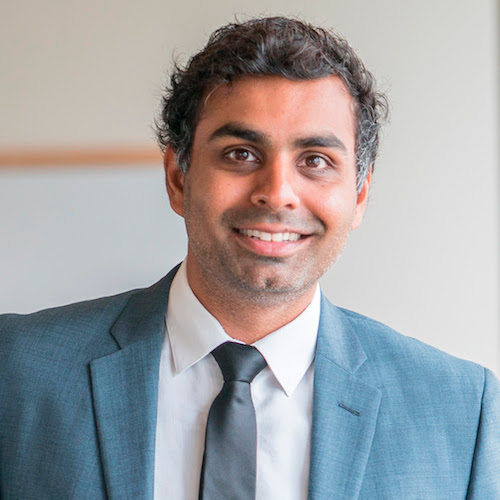


/prod01/yorksjacuk/media/content-assets/staff-profile-images/Sam-Jarvis.jpg)
