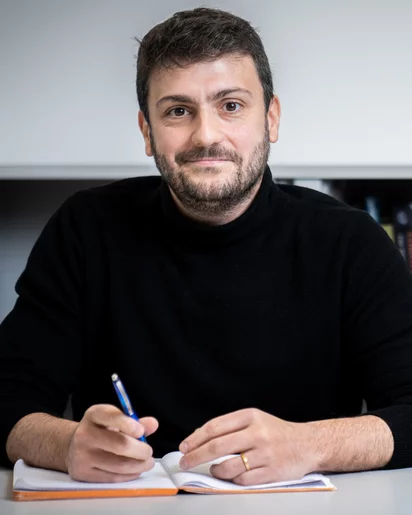
Imad El Haddadمشاهده پروفایل
پژوهشگر
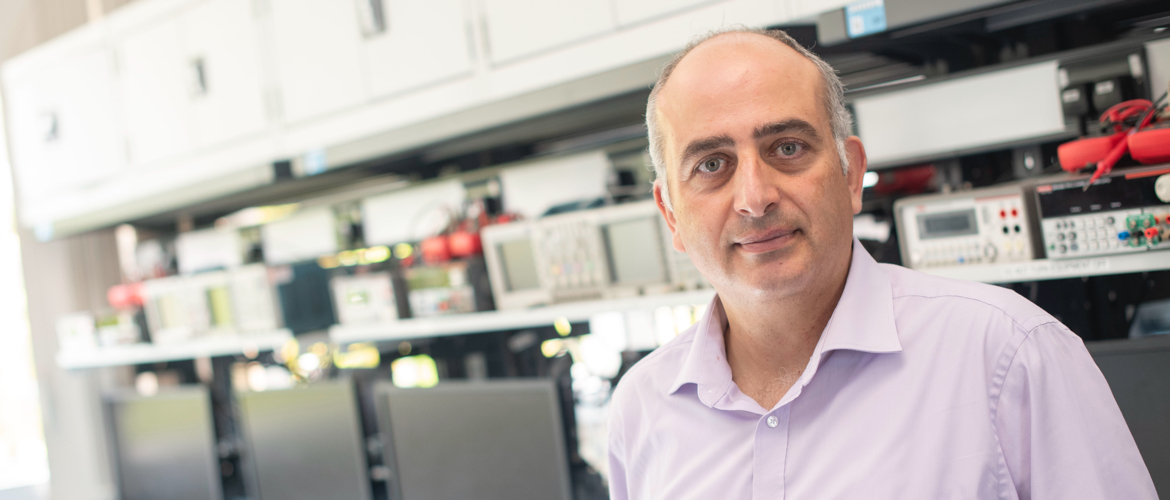
Dr. Imad El Haddad serves as Group Head of the Molecular Cluster and Particle Processes group at the Laboratory of Atmospheric Chemistry (LAC), part of the Center for Energy and Environmental Sciences at Paul Scherrer Institute (PSI), Switzerland, since 2018. Previously, he held positions as Tenured Scientist and Deputy Head (2018-2019), Senior Scientist in the Smog Chamber group (2015-2018), and Postdoctoral Fellow (2011-2015) at PSI. His research aims to quantify how anthropogenic emissions alter atmospheric pollutant composition and impact Earth's climate and public health through molecular-level analysis using advanced mass spectrometry techniques. His academic background includes: Ph.D. in Atmospheric Chemistry, University of Provence, Marseille (2007-2011) Master's in Environmental Sciences (with distinction, rank 1/9), University of Provence (2006-2007) Master's in General Chemistry (with distinction, rank 1/10), Saint-Joseph University of Beirut (2005-2006) Bachelor of Science in Chemistry (with distinction, rank 1/14), Saint-Joseph University of Beirut (2002-2005) El Haddad's work centers on molecular fingerprinting of atmospheric aerosols , utilizing mass spectrometry (GC/MS, HPLC/APCI-MS2, HPLC/ESI-MS2) to identify primary and secondary molecular markers. He conducts smog chamber experiments to characterize emissions from wood burning, traffic, and cooking processes, determining secondary organic aerosol potential and oxidation state evolution. His group also studies in-cloud aqueous-phase aging and collaborates with global modelers to link aerosol composition to climate forcing and health outcomes like oxidative stress. Recent publications (2025-2024) reveal three dominant trends: (1) rigorous molecular-scale analysis of secondary aerosol formation under varying humidity/temperature, (2) source apportionment breakthroughs in diverse regions (India, Europe, Arctic) using 14C and AMS data, and (3) quantification of health-relevant aerosol properties such as oxidative potential through DTT assays. High-resolution mass spectrometry is a consistent methodological thread across these studies. His scientific awards include: MENRT research fellowship from French ministry of research (2007-2010) Excellence Scholarship (top 1% student, University of Saint Joseph, 2005) Distinction Prize (best student, University of Saint Joseph, 2005) As Group Head, El Haddad oversees the Molecular Cluster and Particle Processes group's research direction and mentorship of junior scientists. While specific grant details are absent from the text, his leadership in multi-institutional publications (e.g., CERN CLOUD, iCUPE) implies active grant management and international collaboration. The group's work bridges laboratory simulations, field deployments, and health/climate modeling to address air pollution complexities. The Molecular Cluster and Particle Processes group develops cutting-edge online/offline mass spectrometers for 1 Hz-resolution atmospheric analysis. They deploy instruments in laboratory smog chamber experiments and global field studies, focusing on molecular marker identification, emission source characterization, and aging process quantification. Collaborations with biochemists and climate modelers extend their impact beyond pure aerosol physics into health risk assessment and policy-relevant climate science.