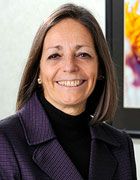
Laura Robbins, DSW, is an Associate Professor at Weill Cornell Medicine and Senior Vice President of Education Institute & Global Affairs at Hospital for Special Surgery (HSS) . Her work focuses on addressing healthcare disparities through qualitative research and developing public health strategies for disease management in underserved communities. Doctorate in Social Work from Silberman School of Social Work at Hunter College Leadership roles in National Institutes of Health (NIH)-funded studies and NYS Osteoporosis Prevention Program Research Themes : Qualitative methodologies in healthcare access Service utilization for osteoporosis and lupus Knowledge-belief dynamics in patient-centered care Scientific Leadership : Co-investigator on NHLBI-funded Translational Behavioral Research Consortium Principal Investigator for NYSOPEP grant Executive Editor of HSS Journal Advising & Grants : Teaches research courses and mentors academic committees Developed educational frameworks aligned with Accreditation Council on Graduate Medical Education Labs & Collaborations : Collaborates with Weill Cornell Medicine faculty Industry relationships with Arthritis Foundation
Eric Mirenga is a current Research Associate in the Department of Soil Science , Faculty of Spatial and Environmental Sciences at the University of Trier . He has previously served as an Adjunct Lecturer at Jomo Kenyatta University of Agriculture and Technology (2017–2021) and as a Research Assistant for the DANIDA-GECKO Project at the Kenya Industrial Research and Development Institute (2018). His work focuses on the environmental fate of contaminants and microbial biodegradation. Education : Master of Science in Molecular Biology from Masinde Muliro University of Science and Technology (thesis: Biodegradation Kinetics of Chlorpyrifos and Diuron Degrading Bacterial Isolates from the Nzoia River Drainage Basin, Kenya), supported by TWAS and NRF Kenya grants. Research Interests include metabolomics techniques, partitioning and degradation kinetics of pharmaceutical contaminants, surface chemistry, and their toxicological impacts on soil ecosystems. His work integrates metagenomics and metatranscriptomics to assess microbial responses to contaminants. Selected Publications : His 2018 article explores bacterial degradation of pesticides, aligning with his expertise in soil contaminant dynamics. Scientific Awards : Recipient of TWAS and NRF Kenya funding for his MSc research.
Jianbo Jiao is an Associate Professor in Computer Vision and Machine Learning at the School of Computer Science, University of Birmingham, where he leads the MIx (Machine Intelligence + x) research group. Previously, he was a Postdoctoral Researcher in the Biomedical Image Analysis (BioMedIA) group and Visual Geometry Group (VGG) at the University of Oxford, working on the SeeBiByte and VisualAI projects. MSc from Peking University (2015) PhD in Computer Science from City University of Hong Kong (2018), supported by Hong Kong PhD Fellowship Scheme Visiting scholar at Beckman Institute, University of Illinois at Urbana-Champaign (2017-2018) Dr. Jiao's research focuses on Computer Vision, Machine Learning, Healthcare AI, and AI for Science. His work primarily investigates learning representations in open-world scenarios by exploring auxiliary information from multiple modalities (image/video, speech/audio, text/NLP, depth/stereo, gaze/saliency, motion) and reducing dependency on supervision through self-supervised, weakly-supervised, and semi-supervised learning approaches. His group has made significant contributions to multimodal learning, medical image analysis, and 3D vision. His recent publications demonstrate strong trends in multimodal learning, medical AI applications, and 3D computer vision. The research spans fundamental computer vision tasks like segmentation and scene understanding while addressing practical challenges in healthcare and scientific domains. Notably, there's significant focus on making vision systems more robust to distribution shifts and requiring less labeled data. Amazon Research Award recipient (2024) Royal Society Short Industry Fellow Best Paper Award at MICAD 2024 Best Paper Award at MICCAI 2024 ASMUS Workshop Best Presentation (Runner-Up) Award at MICCAI 2024 ASMUS Workshop Best Paper Award at ECCV 2022 Medical Computer Vision Workshop Multiple Outstanding Reviewer Awards from top conferences Dr. Jiao serves as Associate Editor for The Transactions on Machine Learning Research (TMLR) and IEEE Transactions on Circuits and Systems for Video Technology (T-CSVT), and has been actively contributing to the community as Area Chair for NeurIPS, ICML, ICLR, and ACM MM. His MIx group has secured multiple research grants including the Amazon Research Award for the PCo3D project on Physically Plausible Controllable 3D Generative Models. Current PhD students include Isaac Akintaro, Hao Ai, and Kangning Zhang. The MIx group maintains active collaborations with industry partners including Amazon and Meta, and has developed notable datasets such as 360+x for panoptic multi-modal scene understanding and DyMVHumans for dynamic human modeling. Their research bridges fundamental computer vision with practical applications in healthcare, physics, chemistry, and other scientific domains.
Michelle L Halls is an Associate Professor at Monash University's Monash Institute of Pharmaceutical Sciences, where she leads the Spatial Organisation of Signalling Laboratory. A Viertel Senior Medical Research Fellow (2020-2025) and former NHMRC RD Wright Fellow (2014-2019), her career spans postdoctoral training at the University of Cambridge after completing her PhD in Molecular Pharmacology at Monash University (2007). Her research focuses on G protein-coupled receptors (GPCRs), investigating how their spatial organization within protein scaffolding networks enables highly localized signaling in subcellular compartments. This work has driven innovations in targeted drug development that surpass traditional cell-surface receptor therapies. Current projects explore GPCR dynamics in metastatic cancer, nuclear hormone receptor activation, and lipid-binding protein interactions. Key publications in Nature , Science Advances , and Nature Chemical Biology highlight her contributions to spatial proteomics and AI-driven drug discovery. Her work aligns with UN Sustainable Development Goals through biomedical advancements. Awarded: ASCEPT Achievement Award (2024), British Pharmacological Society Geoffrey Burnstock Prize (2023), Faculty of Pharmacy and Pharmaceutical Sciences Future Research Leader Award (2019), and Young Investigator Award (2012). Michelle actively organizes academic events like the ASCEPT Drug Discovery Symposia and chairs the Her Research Matters Collective for gender equity in senior academic roles. Her methodological expertise combines high-resolution microscopy, mass spectrometry, and advanced drug delivery systems.
Paul Bohn is the Arthur J. Schmitt Professor at the University of Notre Dame, with joint appointments in the Department of Chemical & Biomolecular Engineering (College of Engineering) and the Department of Chemistry & Biochemistry (College of Science). He leads an interdisciplinary research group that bridges chemistry, engineering, and health sciences, and is affiliated with the Berthiaume Institute for Precision Health and the Center for Bioanalytical Metrology. His research focuses on advancing chemical analysis at the nanoscale using molecular nanotechnology. Key areas include low-dimensional analytical electronics and photonics , analytical nanofluidics , and correlated imaging . His group develops innovative tools such as nanopore sensors, zero-mode waveguides, and microfluidic biosensors for applications in disease detection, microbial communication, and energy materials. By integrating nanofabrication, high-sensitivity spectroscopy, and electrochemistry, the Bohn Group pushes the limits of detection down to single molecules. The recent publications reflect a strong trend in developing ultrasensitive, miniaturized analytical platforms for biomedical and environmental applications. Themes include single-vesicle monitoring, bacterial metabolite detection, cytokine sensing for brain injury, and smart nanofluidic control. These works span journals in analytical chemistry, materials science, and microbiology, demonstrating the interdisciplinary nature of the research. Awarded numerous honors, including: C.N. Reilley Award in Electroanalytical Chemistry (2022) American Chemical Society Award in Electrochemistry (2017) Theophilus Redwood Award, Royal Society of Chemistry (2010) Fellow of the Royal Society of Chemistry and AAAS Repeated inclusion in The Analytical Scientist Power List Dr. Bohn has advised numerous graduate students and postdoctoral researchers, many of whom have gone on to academic and industrial positions. His research is supported by strategic university initiatives and collaborative centers involving multiple institutions and industry partners. He continues to lead active research projects, publish in top-tier journals, and present nationally, reflecting sustained leadership in analytical science. The Bohn Research Group fosters collaboration across disciplines and institutions, with strong ties to Purdue University, Indiana University, and biotechnology partners. The group emphasizes innovation in measurement science, aiming to translate fundamental discoveries into real-world diagnostic and therapeutic applications.
Dr. Yi Liu serves as the Facility Director of Organic and Macromolecular Synthesis at the Molecular Foundry, Lawrence Berkeley National Laboratory, which is managed by the University of California, Berkeley. Dr. Liu leads a research group focused on the development of nanostructured materials through molecular design and synthesis, with applications in energy conversion and storage. Dr. Liu's research interests include: Organic Electronics and Semiconductors Covalent Organic Frameworks (COFs) and Supramolecular Organic Frameworks (SOFs) Molecular design for controlled functionality across scales Charge transport in hybrid semiconducting materials Self-assembly of 2D and 3D framework materials Organic-inorganic nanocomposites for optoelectronic applications Dr. Liu's research group has made significant contributions to functional organic framework materials, particularly in developing new synthetic methods for COFs and understanding their electronic properties. The research demonstrates a strong focus on creating materials with tailored electronic and optical properties for applications in organic photovoltaics, transistors, and energy storage devices. Recent work has emphasized greener synthesis methods, machine learning approaches to materials discovery, and high-temperature energy storage solutions. Dr. Liu has received notable recognition including the 2021 Horizon Prize for Team Science and the 2020 R&D 100 Award for Porous Graphitic Frameworks. 2021 Horizon Prize for Team Science on new dimension of Click Chemistry 2020 R&D 100 Award for Porous Graphitic Frameworks Mentored Henry Li who won the inaugural Best Postdoc Paper award Dr. Liu actively mentors a diverse research team including postdoctoral researchers, graduate students, and undergraduates. Current team members include Dr. Zhiyuan Huang, Dr. Qingsong Zhang, Dr. Zongliang Xie, Dr. Lu Fan, Ashlin Deatherage, Shiqi (George) Lai, Shannon Hoang, and Zhiyang Ji. The group collaborates extensively with researchers at Fudan University, South China Normal University, and other institutions. The research group operates within the Molecular Foundry, a Department of Energy user facility that provides state-of-the-art instrumentation and expertise for nanoscience research. Dr. Liu's team utilizes this facility to develop and characterize novel organic and hybrid materials with applications in energy conversion and storage.
Rezvan D. V. is a researcher at the Center for Free-Electron Laser Science (CFEL), part of Deutsches Elektronen-Synchrotron (DESY) in Hamburg, Germany. Their work focuses on advanced atomic and molecular physics using X-ray free-electron lasers and synchrotron radiation sources to investigate fundamental photoionization processes in molecules. Research interests include photoelectron angular distributions, molecular dynamics under intense X-ray fields, and the interaction of light with matter at the quantum level. Their work employs sophisticated experimental techniques such as cold target recoil ion momentum spectroscopy to study fixed-in-space molecules including N 2 , CO, and O 2 . Recent publications demonstrate expertise in observing nondipolar effects in photoelectron angular distributions and investigating charge-up dynamics in molecules exposed to XFEL pulses. Their research contributes to our understanding of fundamental quantum mechanical processes in molecular systems under extreme radiation conditions. Current work appears focused on the detailed characterization of photoionization dynamics in diatomic molecules, with implications for understanding matter-radiation interactions across physics and chemistry.
Atilay Ayasli is a Postdoctoral Researcher at the Center for Free-Electron Laser Science (CFEL), affiliated with Deutsches Elektronen-Synchrotron (DESY) and Universität Hamburg. His work focuses on advancing imaging techniques for chemical and macromolecular dynamics. University: Universität Hamburg Research Center: CFEL (DESY) Specialization: Imaging chemical dynamics, X-ray imaging, and single-particle diffractive methods His research addresses challenges in nanoparticle and biomolecule imaging, particularly through laser-induced alignment and computational methodologies. Recent work includes collaborations on improving molecular orientation recovery and structure retrieval in X-ray experiments. Key publications highlight innovations in numerical simulations for nanoparticle injection , machine learning applications for molecular excited states , and laser-alignment techniques for macromolecular imaging . These contributions intersect with fields like computational physics, quantum chemistry, and advanced imaging.
A. S. Chatterley is a researcher at the Center for Free-Electron Laser Science (CFEL) at the University of Hamburg, specializing in molecular physics and advanced laser spectroscopy techniques. Their work primarily focuses on laser-induced molecular dynamics, photoelectron imaging, and the study of molecules embedded in helium nanodroplets. Chatterley's research interests center on ultrafast molecular dynamics, particularly the application of advanced laser techniques to study molecular alignment, Coulomb explosion imaging, and the behavior of multiply-charged anions. Their work often investigates the repulsive Coulomb barrier effects in dianions and the rotational-vibrational dynamics of complex molecules using time-resolved photodetachment anisotropy techniques. Recent research has expanded into the study of molecular dimers within superfluid helium environments. Analysis of Chatterley's publication record shows a consistent focus on developing and applying novel laser spectroscopy methods to probe molecular structure and dynamics at the quantum level. Their research demonstrates expertise in both experimental techniques and theoretical interpretation of complex molecular phenomena, with particular emphasis on time-resolved measurements and three-dimensional ion imaging. While specific awards are not documented in the available records, Chatterley's publications in high-impact journals including Physical Review Letters and Journal of Chemical Physics indicate significant contributions to the field of molecular physics and physical chemistry.
Madeline Memovich is a Postdoctoral researcher at the Center for Free-Electron Laser Science (CFEL) within Deutsches Elektronen-Synchrotron (DESY) in Hamburg, Germany, focusing on advanced imaging techniques using X-ray free-electron lasers. Her work bridges physics, structural biology, and computational science to solve macromolecular structures. Her research spans Free-Electron Laser Science, Structural Biology, and Macromolecular Imaging, with emphasis on laser-induced molecular alignment for single-particle diffractive imaging (SPI). Key interests include overcoming orientation challenges in SPI, improving resolution for protein structure determination, and integrating machine learning with quantum dynamics simulations. Recent breakthroughs involve geometric confinement of molecules to enhance image reconstruction fidelity. Dr. Memovich's 2025 publications reveal interdisciplinary trends: merging nanotechnology with laser physics for quantum dot analysis, optimizing computational fluid dynamics for nanoparticle injection, and applying normalizing flows to quantum chemistry. This reflects her dual focus on experimental methodology development and computational innovation for macromolecular imaging. She operates within CFEL's collaborative framework involving DESY, Max Planck Society, and University of Hamburg, utilizing facilities like the European XFEL. Her team recently demonstrated laser-alignment techniques that significantly advance SPI capabilities for structural biology applications.
Rosario González Férez is a theoretical physicist affiliated with the University of Granada and a long-time collaborator with the CFEL-CMI group in Hamburg. She holds the Mildred Dresselhaus Guest Professorship and is a regular visitor, contributing to research on molecules in external fields. Fields of Interest : Theoretical physics, molecular alignment in external fields, laser-induced orientation, X-ray imaging techniques, quantum mechanics, macromolecular structure analysis. In 2014, she conducted long-term research in Hamburg thanks to the Dresselhaus fellowship. Currently, she partially supervises graduate students Evangelos Karamatskos and Linda Thesing . Scientific Contributions : Developed numerical simulation methods for nanoparticle injection systems (2025). Applied machine learning (normalizing flows) to molecular excited-state calculations (2025). Advanced laser-alignment techniques for single-particle X-ray imaging (2025).
Dr. Bakhos Jneid is a Postdoctoral Researcher at the Curie Institute in Paris, affiliated with the "Immunité innée" (Innate Immunity) team within the "Immunity and Cancer" (U932) unit . Research Focus: His work centers on the role of Mucosal-Associated Invariant T (MAIT) cells in immune responses, particularly in monitoring intestinal dysbiosis and host protection during colitis. This aligns with broader investigations into innate immunity's interactions with cancer and microbial imbalances in disease contexts. Publications: His 2024 article in Science Immunology highlights MAIT cells' protective mechanisms in colitis, emphasizing their relevance to microbiome-cancer dynamics and therapeutic strategies.
Professor Tessa Crompton (ORCID: 0000-0002-8973-4021) is a leading researcher in experimental immunology at the University College London , affiliated with the Infection, Immunity & Inflammation Department . Her work explores how morphogens like Sonic hedgehog and BMP4 regulate T-cell development and immune function in barrier tissues. PhD (University College London, 1990) BA (University of Oxford, 1986) Her research bridges developmental and clinical immunology, focusing on: Thymic epithelium signaling in T-cell maturation Morphogen roles in adult immune homeostasis Translational applications in transplantation and metabolic diseases Single-cell dynamics in immune pathogenesis Key trends in her 15 most recent publications include: TCR repertoire analysis in pediatric multisystem inflammatory syndromes Hedgehog pathway modulation for allergic and transplant-related inflammation Comparative fetal vs adult thymus development Metabolic-immune crosstalk in genetic disorders At UCL, she supervises BSc Biomedical Sciences projects and scientific writing modules , contributing to next-generation immunology education. Her affiliations span the Great Ormond Street Institute of Child Health and University College London , with research aligned to the UN Sustainable Development Goal 3: Good Health and Well-being .
Eriola Shanko is a Postdoctoral Researcher in the Mechanical Engineering department at the Technische Universiteit Eindhoven (TU/e) , affiliated with the Eindhoven MedTech Innovation Center (EMIC) and the Microsystems Group Den Toonder . Her work focuses on magnetic actuation of micro-beads and integrated micro-actuators for high-precision handheld diagnostics. Education: PhD in Mechanical Engineering from TU/e. Research Interests revolve around microfluidics , magnetic mixing , and lab-on-a-chip systems for biomedical diagnostics. Key applications include HIV detection using LUMABS and enhancing low-target-concentration sensing through homogeneous mixing platforms. Scientific Contributions include publications on magnetic bead integration, microfluidic mixing at low Reynolds numbers, and point-of-care diagnostic devices. Her work aligns with UN Sustainable Development Goals related to healthcare innovation and accessible diagnostics. Projects include the 2016–2020 Magnetic control of micro-particles and integrated micro-actuators for high precision handheld diagnostics , where she served as a project member.
Shannen Cravens, Ph.D. , is an Assistant Professor in the Department of Chemistry & Biochemistry at Gonzaga University. Her research integrates biophysical chemistry and molecular biology to investigate fundamental biological processes. Key Research Areas: DNA biophysics, sequence-specific DNA targeting molecules, and biochemical mechanisms of DNA repair enzymes. Recent Expansion: Applied atomic force and confocal microscopy to study tooth decay and enamel erosion. The Cravens Lab focuses on three primary projects: (1) Investigating chemical damage effects on DNAzymes for RNA-targeting therapeutics; (2) Characterizing anti-bacterial/anti-tumor chalcones interacting with DNA; (3) Analyzing calcium leaching from tooth enamel under dietary stressors. Students engage with molecular biology, structural biology, and analytical chemistry techniques. Recent publications highlight her work on ubiquitin ligase regulation (2024), DNA glycosylase dynamics (2017, 2014), and damage search mechanisms (2016). Research aligns with Sustainable Development Goals 3 (Good Health) and 4 (Quality Education).