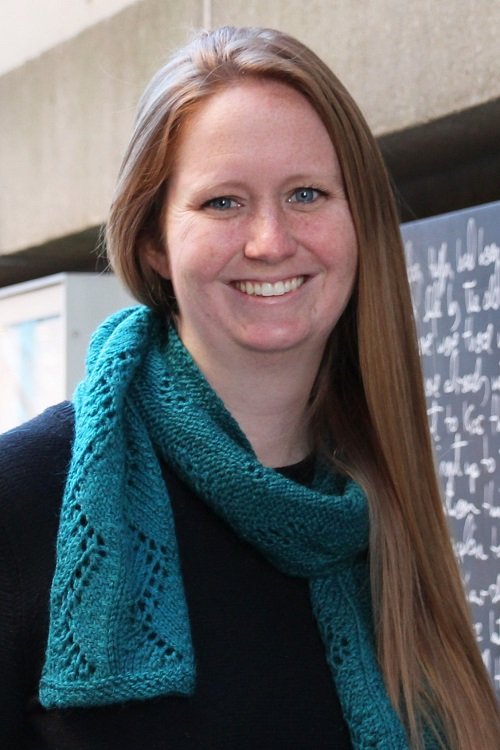
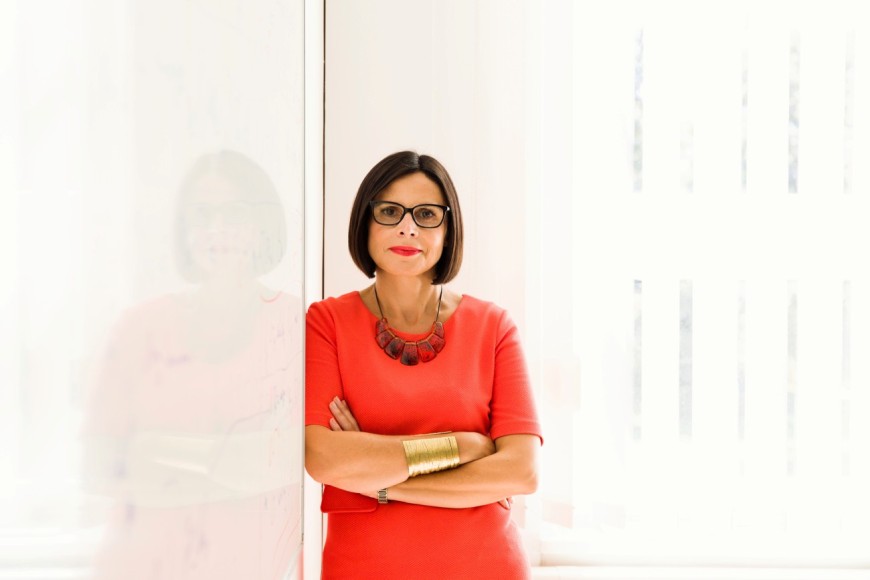
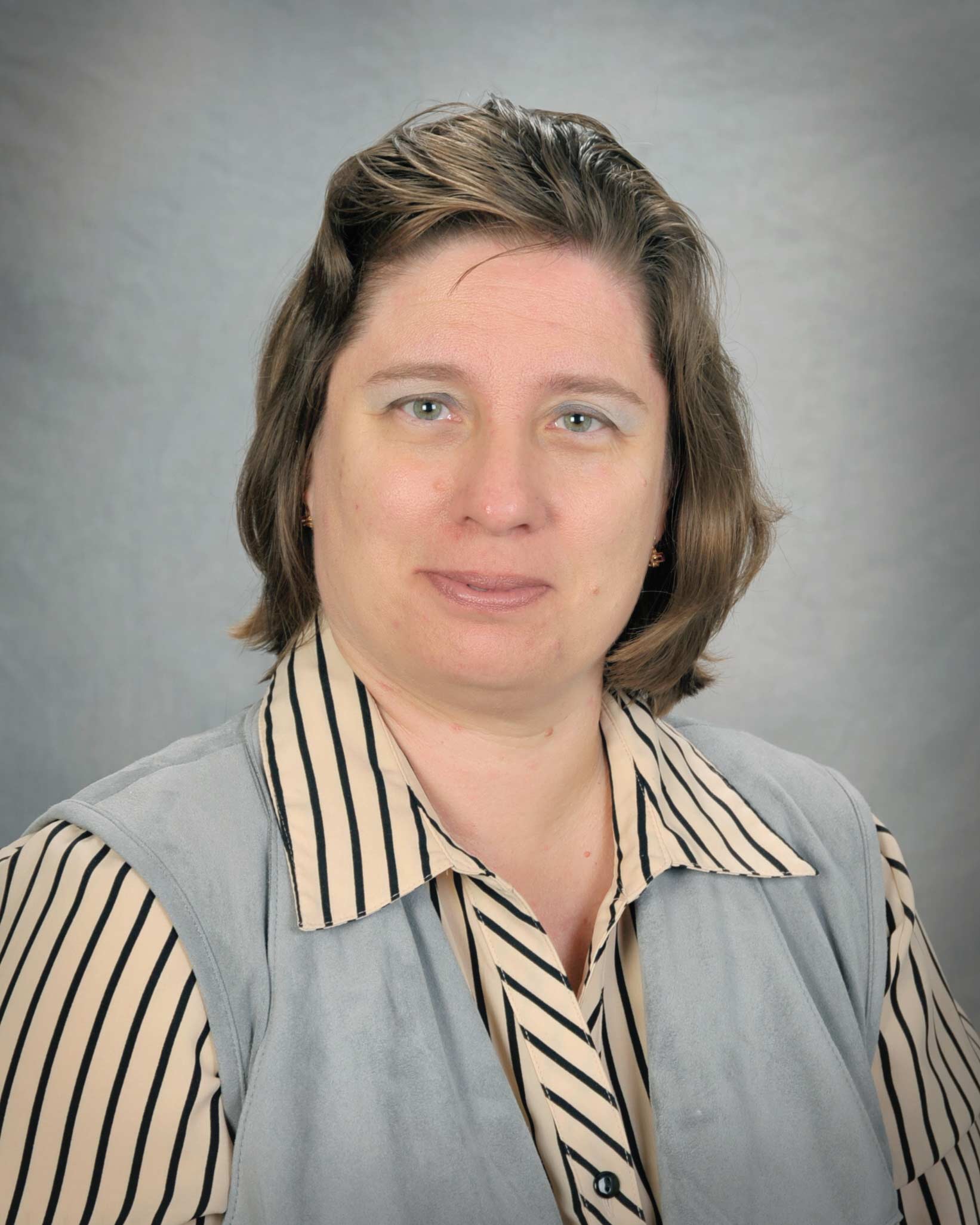
Anja Groten is an Assistant Professor at Leiden University's Academy of Creative and Performing Arts (ACPA) and a designer, educator, and researcher based in Amsterdam. She co-founded the collective Hackers & Designers in 2013, focusing on hands-on learning and collaboration across technology, design, and art. Her PhD research at PhDArts, titled "Figuring Things Out Together: On the Relationship Between Design and Collective Practice," explores the tensions and ambiguities of collective practice in the cultural sector, particularly through workshops and open-source methodologies. Education: PhD candidate at PhDArts (completed 2022) Affiliation: Co-founder of Hackers & Designers collective Roles: Course director at Sandberg Instituut Amsterdam's design department (Master of Rietveld Academie) Her research critically examines how collective practices intersect with precarious working conditions in the cultural sector and challenges neoliberal trends in workshop formats. She emphasizes non-hierarchical learning environments and the development of living documents like Hackers & Designers' Code of Conduct to articulate implicit power dynamics. Her work spans both theoretical and practice-based outputs, including publications and modular workshop spaces. While no explicit scientific awards are mentioned, her contributions include a dissertation and co-edited publication "First, Then… Repeat," which documents experimental workshop practices. She utilizes open-source tools and hybrid online/offline formats to democratize access to knowledge production.
Lily Qiao is a Senior Lecturer in Space Systems Engineering at the School of Engineering and Technology , University of New South Wales (UNSW) Canberra . She holds a PhD in Guidance, Navigation, and Control (GNC) from Nanjing University of Aeronautics and Astronautics (2011) and has been affiliated with UNSW since 2011, progressing from Research Associate to her current role. Her teaching includes postgraduate courses on Space Systems Design (ZEIT8008) and Global Navigation Satellite Systems (GNSS) (ZEIT8009), and undergraduate Radar Technology and Application (ZEIT4227). PhD in Guidance, Navigation, and Control (NUAA, 2011) Study exchange at UNSW Sydney Certificate of Completion with Merit (Graduate Teaching Training Program, UNSW Canberra, 2015) Foundations of University Learning and Teaching (FULT) Program (2019) National Mental Health First Aid Certificate (2019–2021) UNSW Course Design Institute (2023) Her research focuses on space systems engineering and the application of AI/CI-based methods to aerospace challenges, including autonomous spacecraft navigation (GNSS, celestial navigation), spacecraft attitude determination and control , Kalman filter technology , and cybersecurity for space systems . She has published over 50 peer-reviewed works and supervised six PhD students. Her recent publications highlight trends in cybersecurity for space systems, GNSS reflectometry for Earth observation, and modular design analysis for CubeSats. Notable awards include the UNSW Career Advancement Fund for Female Academics (2018–2020) and IEEE Senior Membership (2024) . Associate Editor, IEEE Transactions on Aerospace and Electronic Systems Chair, IEEE Australian Capital Territory (ACT) Section (2024) Founder and Chair, AESS Chapter in IEEE ACT Section (2022–2024) President, Women in Space Chapter (WiSC) , National Space Society of Australia Executive Committee, IEEE ACT Section (2020–2023) UNSW Canberra Representative, Women in Research Network (since 2021) She offers $35,000 AUD scholarships for PhD candidates with H1/High Distinction in undergraduate or Master’s programs. Current research supervision topics include AI Test and Evaluation , Real-Time Cybersecurity Platforms , and Dynamic Modular System Architectures .
Daniella Tola serves as an Assistant Lecturer in the Department of Electrical and Computer Engineering at Aarhus University, Denmark, focusing on the integration of digital twin technology with robotics for industrial applications. Her work bridges theoretical frameworks and practical implementations in manufacturing automation. Her research portfolio centers on: Digital twin development for manufacturing systems Modular robotics integration Anomaly detection in robotic operations Visualization techniques for cyber-physical systems Analysis of her recent publications (2023-2024) reveals a strategic emphasis on enabling digitalization in modular robotic systems, with particular attention to cooperative digital twins and unit-level manufacturing applications. Her work consistently addresses practical implementation challenges through modeling approaches and standardized frameworks like URDF. International collaboration is evident through her 2022 visiting researcher position at Queensland University of Technology, reflecting active engagement in the global robotics research community.
Natasha Wright is the Richard and Barbara Nelson Assistant Professor in the Department of Mechanical Engineering at the University of Minnesota, Twin Cities, where she leads the Wright Lab focused on water treatment technologies for low- and middle-income communities. Her research spans membrane-based separation processes, desalination, engineering for global development, and water and sanitation in emerging markets. She teaches courses including ME8243 Research and Methods for Sustainability Impact, ME5312 Solar Thermal Technologies, and ME4054 Design Projects. Dr. Wright's educational background includes: Ph.D. in Mechanical Engineering, Massachusetts Institute of Technology (2018) M.S. in Mechanical Engineering, Massachusetts Institute of Technology (2014) B.S. in Mechanical Engineering, University of St. Thomas, St. Paul, MN (2012) Dr. Wright's research focuses on developing practical water treatment solutions for resource-constrained settings worldwide. Her lab works on membrane-based separation processes with applications in brine management, decentralized peritoneal dialysis fluid production, food loss reduction through evaporative cooling, electrodialysis desalination, and gas extraction from wastewater. The research spans multiple countries including India, Nigeria, Zimbabwe, Kenya, Navajo Nation, and Minneapolis, emphasizing implementation in real-world contexts. Her recent publications reveal a strong focus on convection-enhanced evaporation systems for brine management, decentralized dialysis solutions, and design ethnography methodologies for global health applications. The work combines mathematical modeling with experimental validation and field testing across diverse geographical contexts, demonstrating a commitment to translating engineering solutions into practical applications that address critical needs in water, sanitation, and healthcare. Notable scientific achievements include: KidneyX Sustainability Prize (January 2025, $1M award for expanding global access to dialysis treatment) American-Made Solar Desalination Prize quarterfinalist (December 2020) Dr. Wright actively mentors a diverse team of graduate and undergraduate researchers. Her current advisees include Ph.D. candidates Carolyn Bernemann, Ali Abdelkawi, Jenn Hoody, and Ian Manning, as well as M.S. student Pauly Soulia. She has successfully guided multiple students to degree completion, including Ph.D. graduate Ian Song (2024) and M.S. graduates Adithya Ganapathiraju (2024) and Trenton Brown (2023). Her students have received prestigious fellowships including an NSF Graduate Research Fellowship (Carolyn Bernemann) and a Circularity Impact Program Fellowship (Jenn Hoody). The Wright Lab operates as a multidiplinary team conducting research across the globe, with active projects in India, Nigeria, Zimbabwe, Kenya, Navajo Nation, and Minneapolis. The lab maintains strong collaborations with researchers from Civil, Environmental, and Geo-Engineering at the University of Minnesota (Profs. Bill Arnold and Paige Novak) and the University of Illinois at Urbana-Champaign (Prof. Jeremy Guest). They frequently present their work at major international conferences including the International Desalination and Reuse Association World Congress and the International Water Association conferences.
Qian Xu is a Sherman Fairchild Postdoctoral Scholar Research Associate at the Walter Burke Institute for Theoretical Physics, California Institute of Technology (Caltech), supervised by John Preskill. Their research focuses on quantum error correction and fault-tolerant quantum computing within Caltech's theoretical physics ecosystem. Education: Ph.D. in Quantum Science and Engineering, University of Chicago (2024), advised by Liang Jiang. Thesis: 'Towards Practical Fault-Tolerant Quantum Computing'. B.S. in Physics, Nanjing University (2019). Research Interests: Xu pioneers approaches to minimize space-time overhead in fault-tolerant quantum systems through novel error-correcting codes and noise-robust processor design. Their work integrates quantum error correction, quantum control, and reservoir engineering to develop practical quantum computing architectures. Key innovations include tailored codes for biased noise environments and hardware-efficient protocols for bosonic qubit systems. Current investigations span quantum LDPC codes, homological product codes, and cat qubit stabilization techniques. Publication Trends: Xu's 12 publications (2021-2024) reveal three dominant research thrusts: (1) Low-overhead fault tolerance using quantum LDPC and homological product codes; (2) Hardware-efficient bosonic qubit systems (cat/squeezed cat codes); (3) Noise-adaptive topological code design. This work demonstrates consistent focus on reducing physical resource requirements while maintaining fault tolerance, with increasing emphasis on experimental feasibility through collaborations with quantum hardware groups. Labs and Teams: As a member of Caltech's Walter Burke Institute for Theoretical Physics, Xu collaborates extensively with the Preskill research group and experimental teams at Harvard/MIT. Their work bridges theoretical quantum information science and near-term quantum device engineering through the Institute's cross-disciplinary framework.
Mira Mezini is a Professor of Computer Science at Technical University of Darmstadt, where she leads the Software Technology Group. She holds a LOEWE Professorship and serves as founding co-director of hessian.AI, the Hessian Center for Artificial Intelligence, and as a board member of ATHENE, the national research center for applied cybersecurity. Previously, she served as Dean of Computer Science (2013-2014) and in Vice President roles (2014-2019) at TU Darmstadt. She has held visiting professorships at Lancaster University (UK) and Università della Svizzera Italiana (Switzerland). Her research focuses on three central areas: programming systems for distributed software and AI, automated software analysis, and fundamental code models. With over 200 peer-reviewed publications in top venues, Mezini is particularly renowned for her pioneering work on aspect-oriented programming and breakthrough contributions to automated code completion. Her work has evolved from early innovations in modularization and software product lines to cutting-edge research integrating AI with programming systems. Her recent publications reveal a strong trend toward integrating artificial intelligence with traditional programming systems, with significant work on code language models, static analysis techniques, and programming models for distributed applications. The research spans foundational programming language concepts while addressing practical challenges in software development, particularly in the context of AI-assisted programming tools that have become increasingly important in the industry. IBM Eclipse Innovation Award (2005, 2006) Google Research Award (2017) Horst Görtz Foundation's IT Security Award (2nd prize, 2014) ERC Advanced Grant (2012) ACM Fellow (2024) Dahl-Nygaard Prize (2025) Mezini has chaired major conferences in software engineering and programming languages (ECOOP, OOPSLA, FSE, and ICSE) and has served on numerous influential committees, including the Computer Science Panel of the German Research Foundation (DFG) and the Computer Science Consolidator Grant Panel of the European Research Council (ERC). She is currently a member of the ERC Scientific Council's selection committee and the DFG Senate. As co-spokesperson of the Excellence Cluster 'Reasonable Artificial Intelligence,' she leads significant research initiatives at the intersection of AI and software engineering. Her Software Technology Group at TU Darmstadt functions as a hub for innovative research in programming languages and software engineering, with strong connections to both theoretical foundations and practical applications. The group maintains active collaborations with industry partners and other academic institutions, particularly through hessian.AI and ATHENE, focusing on translating research into real-world impact in areas like secure software development and AI-assisted programming tools.
Pınar Doğan is a Senior Lecturer in Public Policy at Harvard Kennedy School, Harvard University. She holds a PhD in Economics and a Master's in Mathematical Economics from the University of Toulouse, France. Her academic roles include serving as Faculty Chair of the Master in Public Policy Program (2021-2023) and Associate Editor of Information Economics and Policy . Previous affiliations include visiting positions at the Institute for Advanced Study (Princeton), Télécom ParisTech, and Koc University. Her research centers on industrial organization, network economics, regulatory frameworks, and competition policy. Key themes include market incentives, digital innovation, telecommunications regulation, and strategic decision-making. Publications emphasize telecommunications regulation (e.g., fiber/copper transitions, broadband access), digital markets (e.g., music digitization, pricing models), and collaborative strategies (e.g., R&D joint ventures). Recurring topics include game theory applications, regulatory impacts on infrastructure investment, and competition in network industries. No scientific awards, grants, or student advising details are documented.
Prof. Dr. Martin Grunow is a Professor in Production and Supply Chain Management at the TUM School of Management, Technical University of Munich , where he leads the Production and Supply Chain Management Group. With previous roles as Professor in Operations Management at the Technical University of Denmark and Assistant Professor at Technical University of Berlin, his career spans academia and industry research at Evonik AG. Education: Habilitation (2005), PhD (1999, summa cum laude), Master of Industrial Engineering (1993), and Management (1988) from Technical University of Berlin and Dublin City University Research Interests include smart manufacturing , perishable supply chains , and sustainability optimization . His work addresses dynamic assembly layouts , climate risk inventory systems , and RFID applications across industries. Recent publications focus on automotive production transitions to electric vehicles, deep reinforcement learning for ameliorating inventory , and stochastic lot sizing in food supply chains. He has secured grants from DFG, EU, and NSF, among others. Scientific Leadership Editor-in-Chief of OR Spectrum (2008–2021) Area Editor, Flexible Services and Manufacturing Journal Head of GOR Working Group on Supply Chain Management He oversees 10 doctoral candidates and 7 external doctoral researchers , with significant contributions to pharmaceutical market launch planning , semiconductor scheduling , and milk concentrate lifecycle assessments .
Petter Wiik (b. 1966) is an Assistant Professor and pianist at the Academy of Dance within Oslo National Academy of Arts (KHiO), holding a full-time position since 2005. He holds an MSc from the Norwegian Institute of Technology (1984-1990) and studied composition at the Norwegian Academy of Music (1994-1998). His research focuses on electronic and electroacoustic music for dance performances, emphasizing collaborative choreography, experimental sound design, and studio production. Key themes include kinetic rhythm integration, spatial audio, and narrative-driven compositions. Recent works (2018-2024) demonstrate interdisciplinary approaches to dance and performance art, utilizing modular synthesis, generative systems, and literary adaptations. His compositions frequently explore emotional resonance through abstract soundscapes and thematic motifs. Awards and Grants: Komponistfondet Stipends (11 awards: 1999-2011, 2021) Norsk Kulturråd Funding (2010, 2014, 2017) Komponistenes vederlagsfond Support (1998-2013) He coordinates artistic projects and advises on sound design for student performances at KHiO, though no formal PhD/Master's advisees are listed.
Stefan Wagner serves as a Professor at the University of Applied Sciences Upper Austria (FH OOE), based at the Research Center Hagenberg Center of Excellence for Smart Production. His academic affiliation resides within the Department of Production and Operations Management under the institution's ICT focal area. Wagner holds the title FH-Prof. DI Dr. and actively serves as Principal Investigator (PI) on multiple research projects including ENPro (Energy Neutral Production) and JRZ adaptOp (Josef Ressel Center for Adaptive Optimization), driving innovation in optimization and smart manufacturing systems. Wagner's research expertise centers on Evolutionary Computation and Optimization , with specialized focus on Genetic Algorithms, Heuristic Optimization, and Dynamic Optimization. As lead developer of HeuristicLab —an open-source optimization environment—he bridges theoretical advances with industrial applications in Symbolic Regression, Production Scheduling, and Energy-Efficient Manufacturing. His work addresses complex challenges in logistics, crane scheduling, and energy-neutral production through evolutionary techniques. Recent publications (2025) reveal a pronounced trend toward distributed and dynamic optimization frameworks. Key themes include diversity management in changing environments, containerization for scalable evolutionary computation, and hybrid cooperative approaches for symbolic regression. Applications span container terminal logistics, energy-neutral manufacturing, and robust unloading bay optimization, demonstrating strong industry-oriented problem-solving. Wagner received the FH OÖ Researcher Award in 2019 for exceptional contributions. He has secured funding for 9 research projects including ENPro (2025-2028) and SMART UNLOAD, frequently serving as PI or Co-PI. His projects tackle production optimization, workforce planning, and energy efficiency in Upper Austrian manufacturing. With 4 supervised students and extensive community engagement through EvoSoft at GECCO and EUROCAST peer review, he actively shapes the evolutionary computation landscape. Leading the HeuristicLab project, Wagner collaborates with industry partners through the Center Hagenberg research team to develop simulation and optimization tools for adaptive scheduling. His current work in the ENPro project targets energy-neutral production via modeling and optimization, positioning him at the forefront of sustainable manufacturing innovation in industrial settings.
Galina V. Tsvetkova is a Senior Lecturer in the Department of Nuclear Engineering at Texas A&M University. Contact: Phone 979-845-4162, Email tsvetkovag@tamu.edu , Office AIEN M406B. Ph.D., Nuclear Engineering, Texas A&M University (2003) M.S., Molecular Physics and Physics of Kinetic Phenomena, Moscow State Engineering Physics Institute (1995) Her research spans Reactor Physics , Isotope Separations , and Molecular Dynamics & Separations Phenomena , focusing on advanced nuclear systems like the STAR-H2 and HTGR for hydrogen production, co-generation, and sustainable fuel cycles. Key publication trends include fast reactor systems , lead-cooled reactors , helium-cooled reactor integration , nuclear process heat applications , and actinide utilization to extend reactor fuel lifecycles.
Olivier Kerbrat is a University Professor affiliated with the University of Rennes , specifically within the ENS Rennes school and its Mechatronics Department . His research focuses on manufacturing processes, where he develops performance indicators across multiple dimensions including cost-quality-deadline, flexibility, and environmental impacts. He has created design methodologies for hybrid modular products and additive manufacturing, integrating environmental and multi-criteria assessment techniques with computer demonstrators. Contact details include office number 10B - 31 and email olivier.kerbrat@univ-rennes.fr .
Federico Della Croce Di Dojola is a Full Professor at the Department of Management and Production Engineering (DIGEP) of Politecnico di Torino. He is also a member of the Interdepartmental Center Ec-L - Energy Center Lab. His academic career spans over two decades with international collaborations including a Visiting Researcher position at Université Paris Dauphine (2004-2005). Research Interests focus on algorithm development and optimization techniques, particularly in combinatorial optimization. His work applies to diverse areas including operations research, production scheduling, and mathematical programming, with connections to sustainable cities and communities (SDG Goal 11). Publications demonstrate expertise in exact algorithms, heuristic methods, and scheduling problems across multiple domains. Key contributions include advancements in transportation optimization, bilevel scheduling, and fuel treatment planning. Scientific Recognition : Member of Editorial Board, European Journal of Operational Research (2016-) Member of Editorial Board, Computers & Operations Research (2016-) Principal investigator in multiple research projects Academic Leadership includes: Director of Department of Control and Computer Science (2012-2015) Doctoral College Member (2003-2025) Course Lecturer at multiple degree levels PhD Supervision includes Quentin Schau (2024-in progress) focusing on Industry 4.0 scheduling problems.
Dr. Mohamed Al-Hussein is a Professor and NSERC Industrial Research Chair in the Industrialization of Building Construction at the University of Alberta’s Department of Civil and Environmental Engineering. His work focuses on advancing modular and offsite construction technologies through automation, lean principles, and Building Information Modelling (BIM). PhD, Construction Engineering & Management, Concordia University (1999) MASc, Construction Engineering and Management, Concordia University (1995) MSc, Civil Engineering, University of Architecture & Civil Engineering, Bulgaria (1988) BSc, Civil Engineering, University of Architecture & Civil Engineering, Bulgaria (1983) Dr. Al-Hussein’s research spans five key domains: Modular Construction: Pioneering high-efficiency offsite building systems, including rapid assembly of student dorms and mid-rise residential buildings. BIM & Digitalization: Developing 3D/4D modeling frameworks, automated design systems, and digital twin applications for construction optimization. Environmental Sustainability: Quantifying CO2 emissions, exploring nano energy storage, and advancing solar PV integration in residential construction. Urban Planning: Specializing in age-restricted community design, municipal infrastructure maintenance, and housing affordability analysis related to paving standards. Construction Safety: Applying ergonomic risk assessment tools and virtual reality to enhance worker safety and reduce construction-related hazards. His 400+ peer-reviewed publications reflect cutting-edge applications of AI, deep learning, and simulation across construction processes. Recent work explores metaverse integration, blockchain collaboration tools, and advanced crane operation optimization using reinforcement learning. As Editor-in-Chief of the International Journal of Industrialized Construction , Dr. Al-Hussein remains a global authority in this field. He has developed industry-transforming technologies like the Quikmod-2 modular lift frame and PCL lift frame project , with real-world implementations ranging from Shell Scotford complex equipment replacement to CBC News and Forbes featured projects.
Dr. Mostafa Yakout serves as an Assistant Professor in the Department of Mechanical Engineering within the Faculty of Engineering at the University of Alberta. A Professional Engineer (P.Eng.) licensed in Alberta and Ontario, he also holds an Adjunct Research Professor position at Western University (2022-2025). Previously, he served as a Sessional Instructor at McMaster University and an Assistant Lecturer at Alexandria University. His educational background includes: Postdoctoral Fellowship, McMaster University, Canada, 2019-2022 Ph.D. Mechanical Engineering, McMaster University, Canada, 2015-2019 M.Sc. Production Engineering, Alexandria University, Egypt, 2011-2013 B.Sc. Production Engineering, Alexandria University, Egypt, 2005-2010 Dr. Yakout's research focuses on developing process-driven solutions for additive manufacturing of next-generation materials, including alloys containing rare-earth metals, high-performance metal alloys, and high-temperature materials. His group employs numerical, analytical, and experimental methods to establish critical process-structure-property-performance relationships. This work directly supports clean technology development and industrial transformation toward net-zero emissions in Canadian manufacturing. Analysis of his recent publications (2021-2025) reveals dominant themes in laser powder bed fusion (LPBF), particularly Inconel 617 applications for small modular reactors, rare earth element-doped coatings, and magnetic alloy optimization for electric motors. His research consistently integrates multiphysics modeling, in-situ process monitoring, and microstructure-property relationship studies targeting aerospace, nuclear energy, and biomedical engineering applications. No specific scientific awards or fellowships are documented in the provided materials. Dr. Yakout currently accepts undergraduate students for research supervision. His group collaborates extensively with industry, government agencies, and academic institutions across Canada and internationally. As CARDD-Tech Research Lead, he focuses on critical minerals and rare earth elements to advance sustainable manufacturing solutions aligned with national clean technology initiatives. He leads the ANGAM Group, which specializes in additive manufacturing process development for advanced materials. The team's work emphasizes hybrid additive manufacturing techniques and design optimization for industrial applications requiring high-performance material solutions.