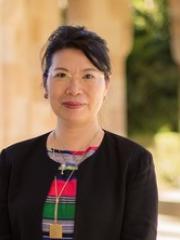
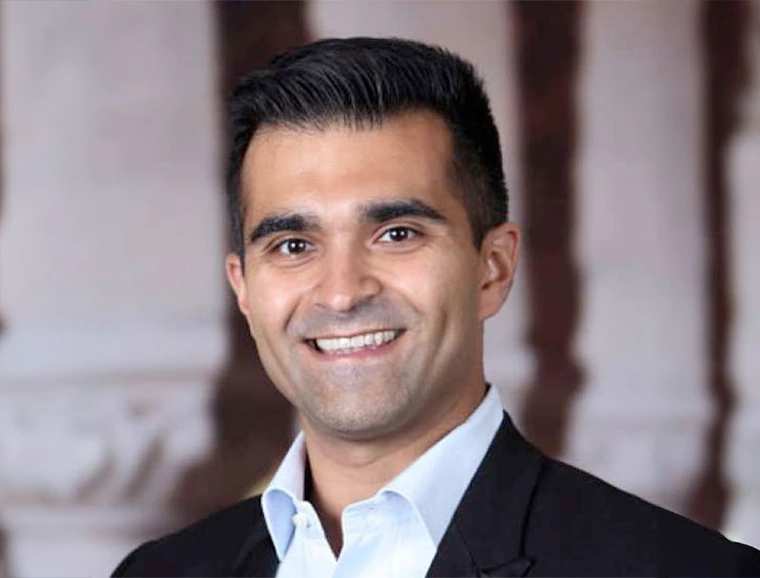
Ross Thyer is an Assistant Professor in the Department of Chemical and Biomolecular Engineering at Rice University. He holds a BSc (Hons) from the University of Western Australia and a PhD from the Harry Perkins Institute of Medical Research under Drs. Rackham and Filipovska. His postdoctoral training at the University of Texas at Austin with Prof. Andrew Ellington focused on engineered biosynthesis pathways and non-canonical amino acids. He co-founded GRO Biosciences, a Boston-based biotech startup, and leads the Thyer Lab at Rice. His research bridges synthetic biology, protein engineering, and molecular programming to address global challenges. Key areas include expanding genetic codes for therapeutics, engineering biosynthetic pathways via genetic circuitry, and developing microbial systems for environmental bioremediation. Core technologies include deep learning for protein design, modular DNA assembly, and high-throughput selections. The lab also develops tools like MutCompute for enzyme engineering and domesticates non-model bacteria for bioproduction. His work emphasizes technology innovation, with recent advances in selenocysteine incorporation, L-DOPA sensing systems, and actinobacteria toolkits. The Thyer Lab actively collaborates on biocatalyst development and translational applications in healthcare and industry.
Iris D. Tommelein serves as the Roy W. Carlson Distinguished Professor in the Civil and Environmental Engineering Department at the University of California, Berkeley's College of Engineering, where she directs the Project Production Systems Laboratory (P2SL). A globally recognized pioneer in Lean Construction, she has revolutionized architecture-engineering-construction (AEC) practices through research, industry workshops, and leadership since co-founding the Lean Construction Institute in 1997. Her educational foundation spans multiple disciplines: Ph.D. in Civil Engineering (Construction Engineering and Management), Stanford University, 1989 M.S. in Computer Science (Artificial Intelligence), Stanford University, 1989 M.S. in Civil Engineering (Construction Engineering and Management), Stanford University, 1985 B.S. (5-year degree) in Civil Engineer-Architect, Vrije Universiteit Brussel, Belgium, 1984 Professor Tommelein's research centers on transforming construction processes through Lean principles and digital innovation . Her work pioneers takt planning for workflow reliability, industrialized construction for labor and sustainability challenges, and mistakeproofing to eliminate errors. She integrates digital twins , AI , and optimization to develop practical decision-support systems for supply chains, logistics, and production management. Recent focus includes modular offsite construction and Industry 4.0 applications. Analysis of her 2023-2025 publications reveals intensifying research on takt planning maturity models and industrialized construction feasibility , with growing emphasis on mass timber automation and visual management systems. Her work consistently bridges lean theory with practical implementation across megaprojects, subcontracting networks, and heavy civil engineering. Her exceptional contributions have earned: Lean Pioneer Award (Lean Construction Institute, 2015) National Academy of Construction induction (2019) PPI Technical Achievement Award (2022) Robert B. Harris Award (University of Michigan, 2024) ASCE Construction Management Award (2024) - first woman recipient in 51 years Through the P2SL, she leads industry-collaborative research on production system design, mistakeproofing frameworks, and digital transformation. Her grant-funded projects develop assessment tools for industrialized construction adoption and takt planning methods adaptable to diverse project types. She actively mentors graduate students and drives knowledge transfer via workshops and the annual Construction Innovation Day. The Project Production Systems Laboratory (P2SL) operates as a global hub for construction innovation, partnering with owners, contractors, and suppliers to implement lean production systems. Current initiatives include developing serious games for mistakeproofing training, optimizing work density methods for heavy civil projects, and creating digital twins for real-time construction management.
Dr. Michel Chaaya is a Senior Lecturer in Civil Engineering at the University of Sydney, with expertise in project management, construction engineering, and sustainability. He holds a PhD from the University of Sydney and is a Fellow of the Institution of Engineers Australia and the College of Leadership and Management. His research focuses on innovative project management methodologies, sustainable construction practices, and BIM implementation. Education: BE, ME(Res), PhD in Project Management and IT from the University of Sydney. Research Interests: Enhancing project success through risk management, modular construction, and BIM adoption. He emphasizes communication, sustainability, and community wellbeing in construction projects. Recent projects include studies on net-zero steel production, BIM in SMEs, and NCC 2022 energy requirements. Awards: ARCHIBUS Excellence Awards (2017-2013), Best Residential Development Awards (2009-2010), and Australian Postgraduate Award (1997). Teaching: Courses include Project Planning, Professional Practice in Engineering Management, and Global Project Management. He has supervised over 250 theses since 2003. Industry Roles: Director of Business Development for multiple organizations, specializing in construction, IT systems, and real estate. He advises on complex project delivery and stakeholder management.
Eric Thun is a Tutorial Fellow in Management at Brasenose College and the Peter Moores Associate Professor in Chinese Business Studies at the University of Oxford’s Saïd Business School. He has taught at Princeton University and joined Oxford in 2005, focusing on undergraduate management education and executive programs. Thun holds a BA from Princeton University (1990) and a PhD from Harvard University (1999). He served as a postdoctoral fellow at MIT’s Industrial Performance Center before returning to Princeton as an Assistant Professor in the Woodrow Wilson School and Department of Politics. His research interests center on China’s political economy, particularly how industrial structures and policies influence firm capabilities and competition. Thun has extensively studied China’s automotive industry, multinational corporations, and the integration of China into global production networks. More broadly, he explores strategies of indigenous and multinational firms in emerging markets and the impact of digital transformation on global value chains. Thun’s recent articles (2021–2025) highlight themes of modular ecosystems, state-market dynamics, and challenges in reshoring supply chains. Earlier works (2019–2000) emphasize innovation, policy impacts on GVCs, and sustainability in global trade. No scientific awards are explicitly listed. While he teaches and advises across multiple programs, no formal advisees or grants are detailed in the provided texts. His affiliations include Brasenose College and Saïd Business School, with no lab or team affiliations mentioned.
Myrto Mavraki is an Assistant Professor in the Department of Mathematics at the University of Toronto, with affiliations to both the St. George and Mississauga campuses. She specializes in arithmetic geometry and dynamical systems, particularly the theory of unlikely intersections and canonical heights in families of rational maps. Institution: University of Toronto School: Faculty of Arts and Science Department: Department of Mathematics Rank: Assistant Professor Her research focuses on deep connections between arithmetic geometry and dynamical systems. Key areas include equidistribution, variation of canonical heights, preperiodic points, and unlikely intersections in families of maps, especially on the projective line and in elliptic surfaces. These topics lie at the heart of modern arithmetic dynamics and have strong ties to Diophantine geometry and number theory. The most recent publications show a sustained focus on canonical height variation, equidistribution, and the geometry of post-critically finite and preperiodic loci in parameter spaces. Collaborations with leading mathematicians such as Laura DeMarco, Harry Schmidt, and Hexi Ye reflect her central role in current developments in arithmetic dynamics. Her work combines algebraic, analytic, and arithmetic techniques to solve deep conjectures and establish foundational results. Her research is supported by an NSERC Discovery Grant and an Early Career Supplement (2024–2029), and previously by an NSF grant (DMS-2200981). She has mentored or collaborated with several prominent researchers and is likely supervising graduate students, though none are explicitly named. She does not list formal awards, but her publication record in top journals and prestigious fellowships indicate high recognition in the mathematical community. Mavraki held the Benjamin Peirce Fellowship at Harvard (2020–2023), a highly competitive postdoctoral position, and prior positions at the University of Basel and Northwestern University. She earned her PhD from the University of British Columbia under Dragos Ghioca.
Benoit Combemale is a Full Professor of Software Engineering at the University of Rennes , currently on leave as Research Director at Inria . He is affiliated with the DiverSE research team (joint between IRISA and Inria) and the SM@RT team at IRIT. He serves as Editor-in-Chief of the Springer-Nature journal Software and Systems Modeling (SoSyM) and holds leadership roles in academic conferences like ACM SIGPLAN Intl. Conference on Software Language Engineering and MODELS . Education : Habilitation (2015) and PhD (2008) in Software Engineering from University of Rennes and University of Toulouse, respectively. Research : Focuses on Model-Driven Engineering , Digital Twins , and ICT for Sustainability , with applications in cyber-physical systems, scientific computing, and industrial systems. Recent Publications highlight trends in digital twin modeling, energy-aware software engineering, polyglot programming, and formal verification for heterogeneous systems. His scientific awards include: Editor-in-Chief of SoSyM Steering Committee member of ACM SIGPLAN Intl. Conference on Software Language Engineering General Chair for ICT4S 2023 and MODELS 2016 PC Chair for MODELS 2024, ECMFA 2019, and SLE 2014 Coordinator of Dagstuhl Seminars and Bellairs workshops Advising includes 30+ students in topics ranging from digital twin engineering to software testing and language design. He leads the GEMOC Initiative and contributes to projects like SciHook and GEMOC Studio .
Jian Zhao is an Associate Professor at the University of Waterloo's School of Computer Science, specializing in Information Visualization (InfoVis), Human-Computer Interaction (HCI), and Data Science. With a Ph.D. from the University of Toronto (2016), his research emphasizes interactive visualization techniques, AI integration in design processes, and socio-technical systems. He explores how human-AI collaboration can enhance data analysis, presentation, and user experience in complex systems. Key research areas include: 1) AI-Driven Design (e.g., code generation via sketching, infographic creation), 2) Health Informatics (therapeutic AI tools for autism support), 3) Immersive Technologies (VR/AR interfaces for presentations and education), and 4) Social Computing (remote family communication, multi-modal emoticons). His work bridges technical innovation with human-centered design principles. His publications (2021–2025) reflect a focus on interactive visualization frameworks (e.g., iTrace for cross-view data analysis), AI-human collaboration (CoLadder for hierarchical code editing), and specialized applications like TherAIssist for art therapy and EMooly for autism support. Zhao frequently explores novel interaction modalities , including gesture-based VR interfaces and sketch-based programming tools. He leads projects in computational notebooks (EDAssistant, Slide4N), visual analytics (MissBin for bipartite networks), and neurofeedback training games (Eggly). His work often emphasizes systematic design considerations for missing data, cross-view analysis, and contextual visualization in spatial AR environments.
Andrew Pavlo is a Professor in the Computer Science Department at Carnegie Mellon University's School of Computer Science. His research focuses on database management systems, particularly in the areas of transaction processing, in-memory databases, and self-driving database systems. He leads a productive research group that has published extensively in top database venues including VLDB, SIGMOD, and CIDR. Pavlo's research interests span database management systems, transaction processing, in-memory databases, non-volatile memory databases, and self-driving database systems. His work often bridges theoretical database concepts with practical system implementation, focusing on performance optimization, query processing, and system architecture. Recent work has explored machine learning applications for database tuning, novel storage techniques, and innovative approaches to transaction processing. An analysis of his recent publications reveals a strong focus on self-driving database systems, with significant work on the Database Gym framework for training machine learning models to optimize database performance. His research also examines columnar storage formats, transaction scheduling, and novel approaches to user-defined function optimization. The work demonstrates a consistent trajectory toward making database systems more autonomous and efficient through a combination of systems techniques and machine learning. Pavlo has been instrumental in mentoring numerous PhD students who have become active contributors to the database research community. His research has been supported by significant grants that have enabled the development of innovative database technologies and frameworks. His research group operates within CMU's vibrant database ecosystem, collaborating with other researchers on projects related to database systems, storage engines, and query processing frameworks. The group maintains close connections with industry partners to ensure practical relevance of their research contributions.
Michael D. Ernst is a Professor in the Computer Science & Engineering department at the University of Washington's College of Engineering. His research aims to make software more reliable, more secure, and easier (and more fun!) to produce. Previously, he was a tenured professor at MIT and a researcher at Microsoft Research. Ernst's primary technical interests are in software engineering, programming languages, type theory, security, program analysis, bug prediction, testing, and verification. His research combines strong theoretical foundations with realistic experimentation, with an eye to changing the way that software developers work. He focuses particularly on programmer productivity and developing practical tools that can be integrated into developers' workflows. Analysis of his recent publications (2018-2025) reveals a continued focus on verification techniques, program analysis, and testing methodologies. His work spans from theoretical foundations of type systems to practical applications of NLP for test generation and LLMs for test oracle creation. A consistent theme is developing lightweight, modular approaches that can be practically applied in real-world development environments. Scientific Awards: ACM Fellow (2014) John Backus Award (2009) NSF CAREER Award (2002) ACM SIGSOFT Impact Paper Award (2013) 8 ACM Distinguished Paper Awards across multiple conferences ECOOP 2011 Best Paper Award Microsoft Academic Search ranked #2 in software engineering research (2013) Ernst has received significant research funding including the NSF CAREER Award, supporting his work on program analysis and verification techniques. His research combines theoretical rigor with practical impact, often resulting in tools that are adopted by the software engineering community. He actively collaborates with researchers across institutions and has served in leadership roles for major conferences in programming languages and software engineering. His research group develops practical tools that address real challenges in software development, with a focus on making verification and analysis techniques more accessible to working developers. Current projects include applying machine learning techniques to software engineering problems while maintaining strong theoretical foundations.
Bernhard Rumpe is a Professor and Chair of Software Engineering at the Department of Computer Science 3, RWTH Aachen University, Germany. He leads a research group focused on model-based software engineering, domain-specific languages, and digital twins, with strong industrial collaborations and applications in embedded systems, AI, IoT, and autonomous vehicles. His research centers on improving software development through model-driven engineering, generative techniques, and formal modeling using UML, SysML, and the MontiCore language workbench. Key interests include digital twins, variability modeling, model composition, and the integration of cyber-physical systems with information systems. The recent publications highlight a consistent focus on model-driven digitalization, language workbenches, and system integration. Trends show increasing emphasis on digital twins in manufacturing and societal systems, formal verification of model transformations, and educational applications of model-driven low-code platforms. His work bridges theoretical foundations with industrial applicability. Keynote Speaker, OOPSLE 2025 General Chair, GPCE 2023 Session Chair, MODELS 2020 Program Committee Member, SLE, GPCE, ICSE, ECMFA He advises master’s and doctoral students and leads a vibrant research team that has successfully executed over 100 research projects. His group develops foundational tools like MontiCore and applies them in industrial contexts, contributing to software quality and developer efficiency. No formal grants are listed, but sustained project funding is evident. He is involved in several research labs and teams centered around the Software Engineering Chair at RWTH Aachen, focusing on language workbenches, model-driven development, and digital twin systems. The team actively contributes to open research through publications, tools, and industrial partnerships.
M.Sc. Maximilian Mühlbauer is a researcher at the Chair of Sensor-Based Robot Systems and Intelligent Assistance Systems at Technische Universität München (TUM), part of the Faculty of Computer Science. His work focuses on robotics, artificial intelligence, and space robotics, particularly in areas like in-orbit manufacturing, virtual fixtures, and human-robot interaction. He contributes to projects such as the ACOR initiative and the AI-In-Orbit-Factory, exploring fault-tolerant processes and adaptive robotic systems for space applications. Research Interests: Maximilian’s research emphasizes AI-driven robotics , space robotics , and control systems . He develops methodologies for virtual fixtures , reconfigurable robotic systems , and teleoperation with shared control . His work integrates probabilistic models and machine learning for resilient systems in challenging environments like space. Publications: His recent work spans topics from in-orbit manufacturing and force-sensitive space manipulators to multi-modal haptic teleoperation , reflecting a focus on practical robotic applications in aerospace and industry. Grants/Advising: Maximilian oversees available theses on topics like mixture of experts fixture learning and virtual fixture adaptation , inviting collaboration on AI-driven robotics projects. He collaborates with Prof. Alin Albu-Schäffer and contributes to TUM’s research initiatives in autonomous systems. Labs: He is part of the Sensor-Based Robot Systems lab, advancing robotics for human-centric and space-oriented applications.
Sara Nabil is an Assistant Professor at Queen's University's School of Computing within the Faculty of Arts and Science. She leads the HCI Design Studio and previously held a postdoctoral position at Carleton University's Creative Interactions Lab. Her research focuses on integrating interior design, fashion, and product design with interactive technologies, emphasizing e-textiles, smart materials, and shape-changing interfaces. She holds a PhD from Newcastle University and prior experience as an HCI Lecturer, interior designer, and senior software developer. Education: PhD in Computing, Newcastle University (2019) MSc in Computing BSc in Computing Research interests include designing computational spaces, wearable technology, and e-textile interactions. Her work explores sustainable fabrication methods, user-centered design for smart environments, and bridging traditional crafts with digital technologies. Notable projects include exhibitions like 'Living with Adaptive Architecture' and 'Persuasive Pharmacy Space,' showcasing interactive wearables and spaces. Her recent articles (2023–2025) emphasize e-textile innovations, sustainable design, and human-building interactions. Key themes include smart materials in fashion, modular wearables, and community-driven interaction systems. Awards: None explicitly mentioned. Advising/Grants: No details provided. Labs/Teams: Head of HCI Design Studio and part of iStudio Lab, focusing on interioraction design.
Dongming Xu is an Associate Professor in Business Information Systems at the University of Queensland Business School. She holds a PhD from the City University of Hong Kong in Information Systems and has established herself as a prominent researcher in the field of information systems with over 100 publications in top-tier journals and conference proceedings. Her educational background includes a PhD from City University of Hong Kong in Information Systems, though specific details about earlier degrees are not provided in the available text. Dr. Xu's research focuses on the confluence of information technology use and innovation, with particular emphasis on IT entrepreneurship, social media applications in business contexts, and business intelligence systems. Her work explores how information systems influence society and business performance, with applications spanning disaster management, eFinance, eHealth, and knowledge management. She combines theoretical model building with laboratory and field experiments, often developing prototype systems to validate her research. Her publication record demonstrates consistent high-quality output across multiple domains of information systems research, with recent work emphasizing digital disruption, platform ecosystems, social media in disasters, healthcare technology, and micro-learning applications. Her research shows a clear trajectory from foundational work on intelligent agents and decision support systems toward contemporary topics in digital transformation and platform-based innovation. Associate Editor, Information & Management Associate Editor, Journal of Electronic Commerce Research Associate Editor, Australasian Journal of Information Systems Dr. Xu has supervised numerous PhD students to completion, with research topics spanning digital disruption, IT startup development, social media in disasters, conceptual modeling, and environmental management. She has received multiple research grants, including current funding for 'Empowering Australia's Visual Arts via Creative Blockchain Opportunities' (2023-2026) and past projects on 'Smart micro learning with open education resources' (2018-2022). Her research has been supported by various agencies including the Hong Kong Government Research Grant Council, The National Natural Science Foundation of China, The University of Queensland, and City University of Hong Kong. She leads research in several key areas including IT entrepreneurship, business intelligence systems, and social media applications across multiple domains. Her work often involves developing innovative systems such as web-service-agent-based family wealth management systems, decision support systems for securities exception management, and knowledge management systems for disaster management.
Charles Gomez is an Associate Professor in the School of Sociology at the University of Arizona. He is affiliated with the College of Information Science and the Applied Math Graduate Interdisciplinary Program (GIDP), reflecting his interdisciplinary focus. His work centers on computational and mathematical sociology, particularly the study of inequality in global scientific knowledge production, diffusion, and diversity. Dr. Gomez received his Ph.D. from Stanford University, master’s degrees from Harvard Kennedy School and Columbia University, and a B.Sc.Eng. from Duke University. Ph.D., Stanford University M.A., Harvard Kennedy School M.S., Columbia University B.Sc.Eng., Duke University His research integrates natural language processing, social network analysis, survey experiments, simulations, and interviews to explore hierarchies, complexity, and diversity in science. He is particularly interested in how political and institutional forces shape AI research and global knowledge systems. The recent publications reflect a strong focus on global science, AI, knowledge diffusion, and inequality. His work employs both computational and qualitative methods to analyze large-scale scientific networks, epistemic diversity, and the structural biases in research collaboration and dissemination. Themes include international politics in AI, peer review bias, simulation of knowledge spread, and the role of elite institutions in shaping scientific agendas. His scientific recognition includes the prestigious National Science Foundation (NSF) CAREER Award (2024–2029). He has secured over $1 million in research funding as PI or co-PI. National Science Foundation (NSF) CAREER Award (2024–2029) Dr. Gomez leads the Global Knowledge Lab and Observatory ("The Global Lab"), an interdisciplinary research group dedicated to studying science, knowledge, and innovation at a global scale. He is actively involved in mentoring and welcomes Ph.D. students and collaborators. He has published in top journals including Nature Human Behaviour , Nature Communications , Research Policy , Social Networks , and Sociological Science .
Dr. Xiaopeng Li is the Harvey D. Spangler Professor in the Department of Civil and Environmental Engineering at the University of Wisconsin-Madison, with an affiliation in the Department of Electrical and Computer Engineering. He leads the USDOT Rural Autonomous Vehicle Program and previously directed the National Institute for Congestion Reduction. He earned his B.S. in Civil Engineering from Tsinghua University (2006), M.S. in Civil Engineering (2007), M.S. in Applied Mathematics (2010), and Ph.D. in Civil Engineering (2011) from the University of Illinois at Urbana-Champaign. His research focuses on modeling and field experiments for connected, electric, and automated vehicles (CAVs), infrastructure systems analysis, and interdependent network modeling. He has pioneered physics-enhanced machine learning frameworks for vehicle control and developed simulation tools for CAV deployment. His 2025-2024 publications highlight advancements in Connected vehicle trajectory modeling Energy consumption optimization Edge computing for autonomous operations Residual learning control systems Equity analysis in AV deployment Communication technologies for V2X Awards include: TRB Best Paper Award (2025) NSF CAREER (2015) ASCE Fellow (2024) IEEE Senior Member (2022) Multiple institution-specific fellowships He has advised 15+ graduate students, secured $35M+ in grants from NSF, USDOT, and industry partners, and chairs the IEEE ITSS Emerging Transportation Technology Testing committee. His work addresses real-world AV implementation, safety validation, and sustainable transportation systems.