
Justin Radu Bojoi is a Full Professor at the Department of Energy (DENERG) within Politecnico di Torino. He serves as Coordinator of the Interdepartmental Center PEIC (Power Electronics Innovation Center) and Scientific Advisor for the Partnership Agreement with MARELLI. Research Interests: Electrical Machines, Power Electronics, Renewable Energy Integration, Transportation Electrification, and Grid Stabilization. His work focuses on high-efficiency electrical drives, eMobility power electronics, and renewable energy systems. Article Trends: Recent publications emphasize virtual synchronous machine technologies, GaN/SiC wide bandgap devices, modular control systems for electric vehicles, and advanced inverter designs for fuel cell and renewable energy applications. Scientific Awards: 2024 IEEE Industry Applications Society Third Prize Paper Award 2024 Energy Conversion Congress First Prize 2022 IEEE Industry Applications Third Prize 2019 Nagamori Award 2016 ICEM Brian Chalmers Award 2005 IPEC First Prize Advising & Grants: Supervises 15+ PhD students in electrical drives and power electronics. Leads EU, international, and industrial research projects including HiEFFICIENT , TEAMING , and ROCKET , with commercial collaborations at VOLVO CARS, Dana-TM4, and MARELLI.
جستوجوی استاد و پژوهشگر
استاد راهنما، استاد دانشگاه یا پژوهشگر مناسب برای مسیر پژوهشیتان را پیدا کنید و با او ارتباط بگیرید.
نمایش ۶۱-۷۵ از ۱۶۷ استاد راهنما
اطلاعات این پروفایلها از صفحات عمومی دانشگاهها جمعآوری شده و ممکن است بهروز نباشد.

Piyush Kantمشاهده پروفایل
استادیار
- Power Electronics
- Electrical Machines
- Drives
- +۳ مورد دیگر
Piyush Kant is an Assistant Professor in the Department of Electrical Engineering at the Indian Institute of Technology Kanpur (IIT Kanpur). He joined IIT Kanpur in May 2022 after working as a Control Engineer at Danfoss Drives in Chennai from March 2020 to April 2022. Education: PhD in Electrical Engineering from Indian Institute of Technology Delhi M.Tech in Electrical Engineering from Motilal Nehru National Institute of Technology Allahabad B.Tech in Electrical Engineering from National Institute of Technology Agartala Dr. Kant specializes in Power Electronics, Electrical Machines and Drives (PEEMD). His research interests include multi-winding transformers for multi-pulse AC-DC converters, multi-level inverters, modulation techniques, medium voltage drives, electrical machines and drives, and motor control algorithms for electric vehicles. His work focuses on improving power quality and efficiency in electrical drive systems through innovative converter and inverter topologies. Dr. Kant has published numerous papers in prestigious journals including IEEE Transactions on Industry Applications, IEEE Transactions on Power Electronics, and IET Power Electronics. His research demonstrates a consistent focus on developing advanced solutions for power quality improvement in electrical drive systems, with particular emphasis on multi-pulse converters, multilevel inverter configurations, and sophisticated control techniques for induction motor drives across various voltage levels. His office is located in ACES-205B, Department of Electrical Engineering, IIT Kanpur, Kanpur 208016. He can be reached at +91-512-259-2308 or via email at piyushkant@iitk.ac.in.
Gavin Sergeمشاهده پروفایل
پژوهشگر
Gavin Serge is a Researcher at the School of Engineering and Management of the Canton of Vaud (HEIG-VD), part of the University of Applied Sciences Western Switzerland (HES-SO). He holds two BSc degrees from HES-SO: one in Energy and Environmental Techniques and another in Electrical Engineering, specializing in Power Electronics. Research Interests: Power Electronics Modular Multilevel Converters (MMC) High Voltage Engineering Energy Storage Systems Smart Grids and Renewable Integration Electric Resonance Applications Plasma Physics in Industrial Devices Key Contributions: 2024: Repetitive 10 kV nanosecond pulse generator for medical/biological applications 2022: 70 kV power supply for industrial X-ray with 0.01% stability 2021: 50 kVA Soft Open Point (SOP) converter for low-voltage grid interconnection 2019: Supercapacitor sizing analysis for hybrid vehicle efficiency 2017: Acoustic resonance-based plasma confinement in sulfur lamps 2015: Contactless speed control system for multiphase linear motors Collaborations: Mauro Carpita Simon Kissling Patrick Favre-Perrod Mario Marchesoni Massimiliano Passalacqua
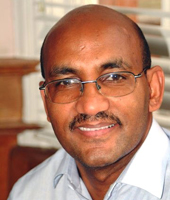
Yehdego Habtayمشاهده پروفایل
مدرس ارشد
Dr Yehdego Habtay is a Senior Lecturer at the School of Engineering within the Faculty of Engineering and Science at the University of Greenwich. He holds BEng, MSc, and PhD degrees, with expertise in power systems engineering and control systems. His research focuses on power systems modeling/operation, Flexible AC Transmission Systems (FACTS), induction motor starting in isolated systems, and control instrumentation. Key contributions include work on fault ride-through mechanisms in HVDC systems, power hardware-in-the-loop (PHIL) testing for grid stability, and DC microgrid design. His publications span topics like inverter droop control, voltage regulation in low-voltage grids, and energy-efficient communication systems in healthcare. Dr. Habtay has held academic roles since 2004, complemented by industry experience at Bowman Power Systems and Scottish Power. His research integrates theoretical models with practical experimentation, emphasizing renewable energy integration and grid resilience.
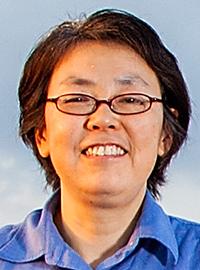
Hui Liمشاهده پروفایل
استاد
Hui Li is the FSU Provost McKenzie Professor in the Electrical and Computer Engineering Department at the FAMU-FSU College of Engineering. She holds a Ph.D. from the University of Tennessee (2000) and degrees from Huazhong University of Science & Technology (B.E.E., 1992; M.S., 1995). Her research focuses on power electronics, including bi-directional dc-dc converters, micro-grid inverter control, and Wide Bandgap (WBG) device integration for renewable energy systems. Her current projects include DOE-funded work on WBG-based PV converters targeting cost reduction and reliability improvements. She serves as an Associate Editor for the IEEE Transactions on Power Electronics and has received the NSF Career Award (2007). Her work emphasizes high-power density converters, fault protection, and smart grid technologies. Key research trends in her articles include advancements in SiC MOSFET applications, grid-tied inverter stability, and novel modulation techniques for modular converters. Recent studies address challenges like dv/dt suppression, partial discharge mitigation, and sensorless control strategies. Scientific Awards: NSF Career Award (2007) Grants & Projects: DOE Next Generation Power Electronics Innovation Institute, WBG device integration in PV systems Labs/Teams: Leads the FSU team in the DOE-funded Power Electronics Innovation Institute, focusing on WBG device applications and high-performance power systems.
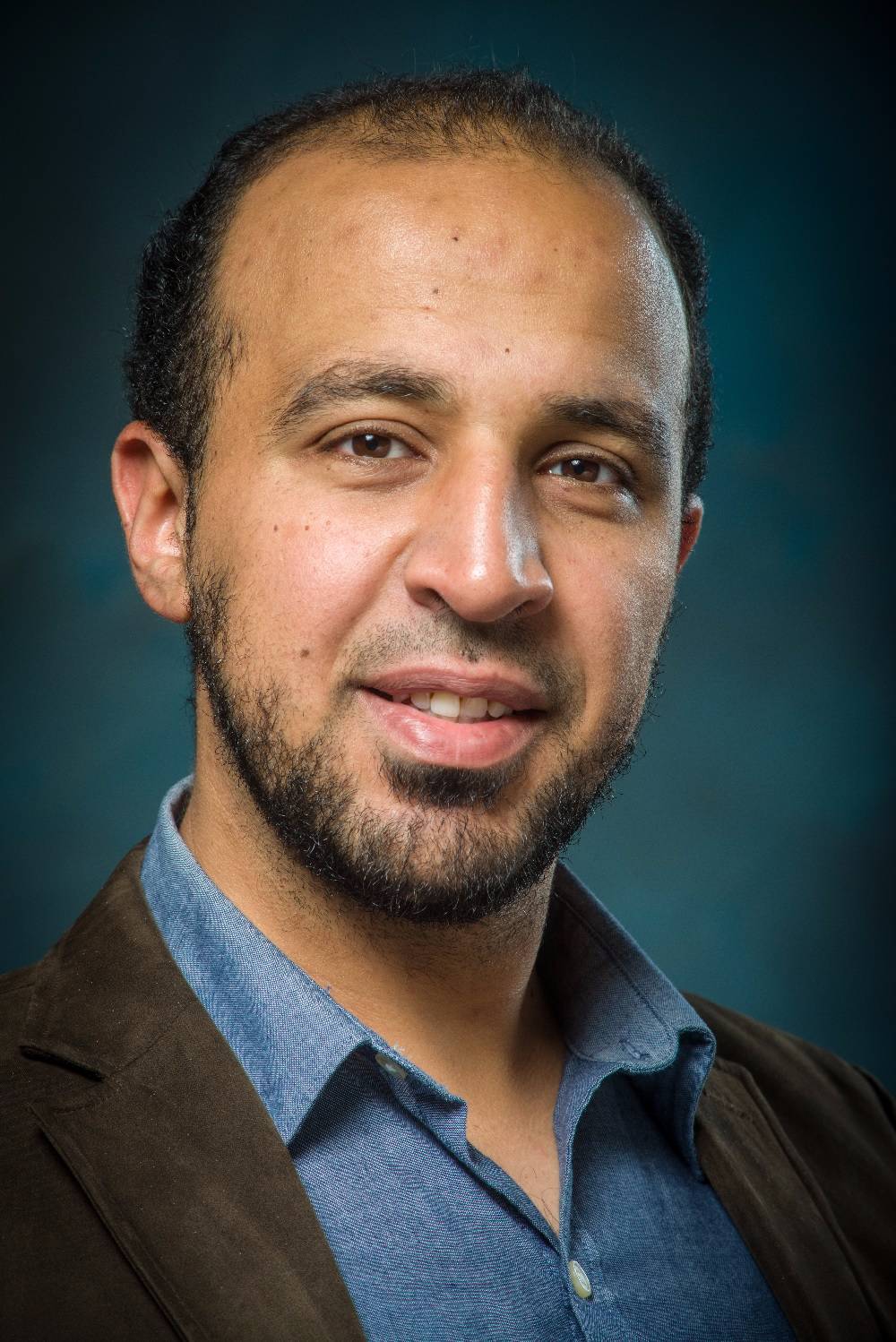
Mohamed Badawyمشاهده پروفایل
استادیار
Mohamed Badawy is an Assistant Professor in the Electrical Engineering Department at San José State University, where he established the Center of Power Electronic Converters (CPEC). He holds a Ph.D. (2016) and M.Sc. (2012) from The University of Akron, and a B.Sc. in Electrical Engineering from Cairo University (2007). Prior to academia, he worked in the power generation industry with PGESCo. His research focuses on Electric Vehicle (EV) power electronics architectures Renewable energy systems integration High-efficiency power converters Battery energy storage systems Wireless EV charging The CPEC lab supports his work on power electronic converters for both academic and industrial applications. Recent publications (2017–2022) emphasize advanced control strategies for EV systems, photovoltaic energy harvesting, and modular multilevel converters. His work bridges theoretical models with practical implementations in grid-tied systems and hybrid energy storage. Teaching includes courses on Semiconductor Power Electronics (EE-136) Automatic Control Theory (EE-231) Advanced Power Electronics (EE-238) Renewable Energy Systems and Electric Vehicles (EE-239)
Dr. Theodor Heath is a Lecturer in Power and Energy at the School of Electrical and Electronic Engineering, University of Manchester. His research focuses on modular multilevel converters (MMC), embedded systems, and distributed control architectures for power conversion applications. He specializes in hardware validation of grid-connected systems and power converter testing methodologies. His recent work investigates time delay impacts in MMC-HVDC systems and fault event analysis in HVDC valves. Research interests include power electronics design, grid stability, and renewable energy integration. Key projects include the design of MMCs with distributed control architectures and contributions to the Interfacing Next-Generation Grid-Scale Storage project (2022-2024). He maintains collaborations with GE Renewable Energy and supervises Formula Student engineering teams.

Faheem Ahmadمشاهده پروفایل
پژوهشگر ارشد
Faheem Ahmad is a Research Fellow at AAU Energy, Aalborg University, specializing in power electronics and industrial heating applications. He holds a PhD in Power Electronics from Aalborg University (2023), an M.Sc. in Energy Engineering (2020), and a B.Sc. in Electrical Engineering (2014) from Delhi Technological University. His research focuses on high-frequency converter topologies, resonant converters, and wide bandgap semiconductors, particularly for industrial heating systems. He has contributed to projects like GreenHeat (2023–2026) and RFheat (2020–2021), addressing energy-efficient RF generators and curing technologies. Education: PhD in Power Electronics, Aalborg University (2021–2023) M.Sc. in Energy Engineering, Aalborg University (2018–2020) B.Sc. in Electrical Engineering, Delhi Technological University (2010–2014) Research Interests: His work emphasizes advancing power electronics for industrial applications, including high-frequency converters and semiconductor integration in dielectric heating systems. He explores RF-based solutions for energy efficiency and modernizing industrial heating processes. Projects: GreenHeat : Developing energy-efficient RF generators for industrial heating (Innovation Fund Denmark, 2023–2026). CoDE : Center for Digitalized Electronics (Poul Due Jensen Foundation, 2021–2026). Transistorization of Industrial Dielectric Heating Plants : PhD project focusing on semiconductor-based heating systems (2021–2023). Impacts: His work on modular power converters has yielded economic impacts through improved industrial heating systems. He has presented at events like the PDJF Grundfos Prize Expo (2022–2023).
Dr. Mark Broadmeadow is a faculty member at Queensland University of Technology (QUT) in the School of Electrical Engineering & Robotics within the Faculty of Engineering. He holds a PhD from QUT along with several graduate certificates in academic practice and research commercialisation. His educational background includes: Doctor of Philosophy (Queensland University of Technology) Graduate Certificate in Academic Practice (Queensland University of Technology) Graduate Certificate in Research Commercialisation (Queensland University of Technology) BEng(Hons)(Infomechatronics) (Queensland University of Technology) Dr. Broadmeadow's research focuses on power electronics, particularly in the areas of power converters, modular multilevel converters, battery storage systems, and power quality. His work has significant applications in renewable energy integration, electric vehicles, and power grid stability. He has made notable contributions to the development of advanced control strategies for power electronic systems and has explored innovative approaches to improve efficiency and reliability in power conversion. His publication record shows a consistent progression from fundamental gate driver research to sophisticated battery-integrated converter systems and machine learning applications for battery state estimation. His scientific contributions span various aspects of power engineering, with a particular emphasis on practical implementations and hardware solutions. His research often involves collaboration with industry partners to address real-world challenges in power electronics, as evidenced by his numerous conference papers presented at major power engineering conferences. Dr. Broadmeadow has been actively involved in supervision, with topics including 'Small, high efficiency, low cost appliance UPS.' His laboratory work appears to focus on power hardware implementation, with research involving modular power converters, FPGA-based control systems, and experimental validation of novel power electronic topologies.
- Control Systems
- Optimization
- Machine Learning
- +۵ مورد دیگر
Prof. Maryam Kamgarpour is a faculty member at ETH Zurich's Automatic Control Laboratory within the Department of Information Technology and Electrical Engineering. Her research focuses on control systems, optimization, and machine learning, with applications in robotics, power systems, and multi-agent systems. She has contributed significantly to safe reinforcement learning, stochastic control, and distributed optimization frameworks. Her work bridges theoretical foundations and practical implementations in areas like safe trajectory planning, market mechanisms for energy systems, and algorithmic guarantees for greedy methods. Key technical areas include model-based multi-agent reinforcement learning, robust control policies under uncertainty, and parameterization techniques in control theory. Collaborations with institutions like ETH Zurich's Automatic Control Lab and researchers such as Andreas Krause highlight her interdisciplinary approach. Her research has been supported by grants from the Swiss National Science Foundation (NCCR Automation) and the European Union (Reliable Data-Driven Decision Making in Cyber-Physical Systems). Publications span top journals and conferences in control systems, machine learning, and robotics, emphasizing rigorous analysis and practical scalability. Recent work addresses challenges in safe black-box optimization, stochastic hazard management in robotics, and market-based resource allocation in power grids.
Prof. Dr.-Ing. Rudolf Mecke is a Professor of Control Engineering and Electrical Drives at Harz University of Applied Sciences since 2006. His affiliations include the Faculty of Automation and Information and the Department of Automation and Computer Science. Studied Electrical Engineering at Otto von Guericke University Magdeburg (1985–1990) Doctorate in Electrical Engineering (1995) focusing on stator flux-oriented control Research interests span control engineering , electric drive technology , power electronics , and energy conversion/storage . Key contributions include: Dynamic control systems for three-phase drives Model-based state variable determination Inductive contactless power transmission Energy-efficient control strategies Power converter topologies for renewable energy EMC analysis for industrial systems His publications focus on power electronics, wireless energy transfer, and efficiency optimization. Recent work includes multilevel inverters and SiC/GaN semiconductor applications. Research groups under his supervision explored topics like: Contactless energy transmission systems PWM inverter topologies Rotor flux control in induction machines Converter integration in PV/wind systems EMC behavior of IGBT systems High-frequency drive analysis
Dr. Amirnaser Yazdani is a Professor and Associate Chair for Graduate Studies in the Department of Electrical and Computer Engineering at Toronto Metropolitan University. He holds adjunct appointments as Associate Professor at the University of Toronto and University of Western Ontario. His academic background includes a Ph.D. in Electrical Engineering from the University of Toronto (2005), M.Sc. from University of Tehran (2001), and B.Sc. from Sharif University of Technology (1995). Education: Ph.D. Electrical Engineering, University of Toronto (2005) M.Sc. Electrical Engineering, University of Tehran (2001) B.Sc. Electrical Engineering, Sharif University of Technology (1995) Research Focus: Dr. Yazdani leads pioneering research in high-power electronic conversion systems with applications in renewable energy integration, microgrids, and smart grids. His work emphasizes modeling, control design, and stability analysis of distributed energy resources. Key areas include: Advanced converter topologies for HVDC transmission and renewable integration Energy management strategies for DC distribution networks and electric vehicles Robust control frameworks for islanded microgrid operation Protection systems for inverter-based distributed generation Publication Trends: His recent articles demonstrate strong focus on DC power systems, microgrid resilience, and electric vehicle integration. Theoretical contributions include novel control methodologies for power converters, while applied research features case studies on grid modernization. Recurring themes include stability enhancement, fault tolerance, and optimization of hybrid renewable systems. Awards & Honors: IEEE Student Branch Professor of the Year (2016, 2017) Chair's Research & Teaching Awards, Ryerson University (2013, 2014) NSERC Industrial Research Fellowship (2005-2006) Multiple teaching excellence awards from University Students' Council IEEE Senior Member status (2009) Edward S. Rogers Scholarship (2004-2005) Academic Leadership: As Project Leader of NSERC-funded Canadian Smart Microgrid Strategic Network, he coordinates national research initiatives. He chairs the IEEE PES Working Group on Distributed Energy Resources Modeling and serves as Associate Editor for IEEE Transactions on Sustainable Energy. His research group focuses on power electronics applications for next-generation grids.

João Guimarães França is a Doctoral Candidate in Electrical Engineering at Eindhoven University of Technology (TU/e), specializing in the Electromechanics and Power Electronics Group. His research focuses on multilevel converters, DC-DC power converters, and Solid-State Transformers, with a strong emphasis on optimizing silicon area and harmonic reduction in power electronics systems. Education: B.Sc. in Electrical Engineering, Universidade Federal de Viçosa, Brazil (2022) M.Sc. in Electrical Engineering, Centro Federal de Educação Tecnológica de Minas Gerais, Brazil (2024) Research Interests: João’s work addresses challenges in power electronics, particularly in Static Synchronous Compensators (STATCOM), harmonic analysis, and silicon area optimization. He explores innovative solutions for power converter efficiency and semiconductor device modeling. Collaborations: He contributes to the RelSST: Reliable Solid-State Transformer for Smart-Grid project (2024–2028), focusing on control strategies and power electronic converters. Labs/Teams: Active member of the Electromechanics and Power Electronics Group at TU/e, collaborating on advanced power electronics research.

Ariya Sangwongwanich is an Associate Professor at the Department of Energy Technology, Aalborg University, within the Faculty of Engineering and Science. He leads the Sustainable Power Electronics and Electrification (SPELL) research program and has conducted visiting research at RWTH Aachen (2017) and the University of Cambridge (2023). Education: B.Eng. in Electrical Engineering, Chulalongkorn University (2013) M.Sc. in Energy Engineering, Aalborg University (2015) Ph.D., Aalborg University (2018) His research focuses on power electronics, grid-connected converters, photovoltaic systems, and reliability/sustainability in energy systems. Recent work emphasizes fault diagnosis, digital twin technology, and battery-PV system interactions. Notable scientific awards include the Danish Academy of Natural Sciences' Ph.D. Prize (2019), Spar Nord Foundation Research Award (2019), IEEE IPEMC-ECCE Asia Best Paper Award (2020), Best Presentation Awards at IEEE APEC (2016, 2021), and a DFF Sapere Aude Starting Grant (2024). Key projects include: GreenMag: Green High-Power Planar Magnetic Components (2025-2029, Innovation Fund Denmark) CirclePE: Circular Power Electronics for Green Transition (2025-2028, Independent Research Fund Denmark) OMRES: Operation & Digital Twin Solutions for Hybrid Renewable Energy (2025-2027, Horizon Europe) TEAMING: Predictive Maintenance for e-Powertrains (2024-2027, Horizon Europe) ALL2GaN: GaN IC Solutions for Greener Applications (2023-2026, Horizon Chips)
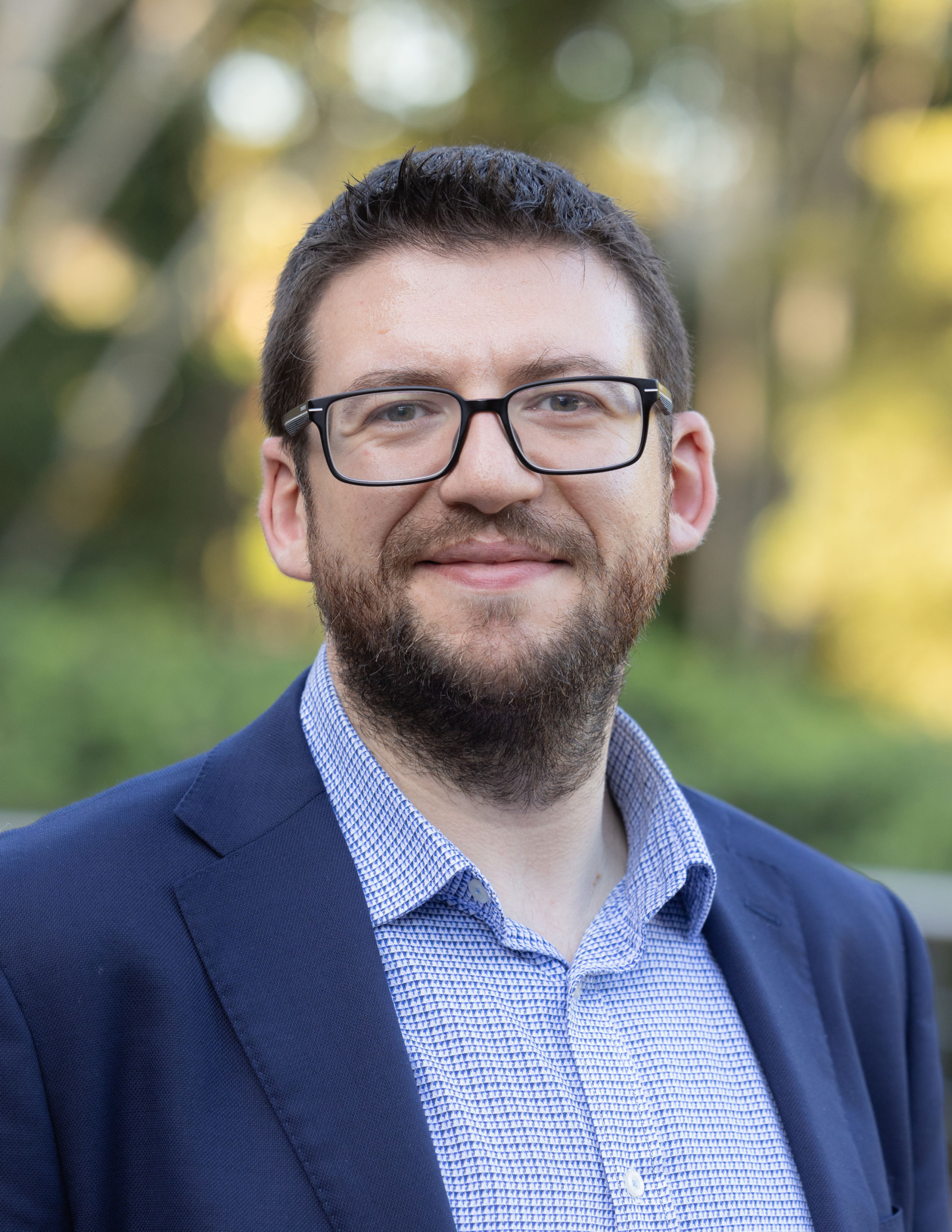
Georgios Konstantinou is an Associate Professor in Energy Systems at the School of Electrical Engineering and Telecommunications, University of New South Wales (UNSW) Sydney. He leads the Real-Time Simulations Laboratory (RTS@UNSW), which hosts the largest Real-time Digital Simulation Laboratory in Australia. Dr. Konstantinou is also an ARC Future Fellow (FT240100038, 2025-2029) for the project "Integration and Stability of Power Electronics Defined Low Inertia Grids," and previously held an ARC Early Career Research Fellowship (DE170100370) focused on High-voltage DC grids. Dr. Konstantinou's educational background includes: PhD in Electrical Engineering from the University of New South Wales (UNSW), Sydney, Australia (2012) Thesis: "Harmonic Elimination Pulse Width Modulation of Modular and Hybrid Multilevel Converter Topologies" Diploma of Electrical Engineering (5-year degree, equivalent to Masters) from Aristotle University of Thessaloniki, Greece (2007) Graduate Diploma in University Learning and Teaching from UNSW (2015) His research focuses on power electronics and energy systems, with particular expertise in HVDC transmission systems, multilevel converters, real-time digital simulations, and hardware-in-the-loop testing. Dr. Konstantinou's work addresses critical challenges in grid integration of renewable energy and energy storage systems, with an emphasis on stability and control of power electronics-defined grids. His research bridges theoretical advancements with practical applications through close collaboration with industry partners including CSIRO and AGL. Analysis of Dr. Konstantinou's recent publications reveals a strong focus on grid-forming converters, digital twin technologies, and advanced control strategies for power systems with high renewable penetration. His work increasingly integrates artificial intelligence and machine learning techniques with traditional power system engineering to address stability challenges in low-inertia grids. Key themes include real-time simulation methodologies, fault analysis in HVDC systems, and innovative control approaches for power electronics interfaces. Dr. Konstantinou's scientific recognition includes: ARC Future Fellow (FT240100038, 2025-2029) ARC Early Career Research Fellow (DE170100370) Australia-China Young Scientist Exchange Program participant (2015) Next Steps Initiative Grant awardee (2016) Associate Editor for IEEE Transactions on Power Electronics Dr. Konstantinou actively supervises research students in areas including multilevel power electronics converters, HVDC systems, modular multilevel converters, and grid integration of large-scale renewable energy systems. His current research is supported by multiple grants totaling over $1.5 million, including an ARC Future Fellowship ($1,066,000), CSIRO Global Power System Transformation Initiative grants ($365,000 each), and various international collaboration grants. These projects focus on real-time simulation, grid integration of renewables, and stability of power electronics-defined grids. As the leader of the Real-Time Simulations Laboratory (RTS@UNSW), Dr. Konstantinou oversees Australia's largest Real-time Digital Simulation Laboratory with extensive capabilities in HVDC networks, multiterminal DC grids, power system protection relay testing, renewable energy systems, and smart grids. The laboratory serves as a critical resource for both academic research and industry collaboration, providing hardware-in-the-loop testing capabilities for next-generation power system technologies.