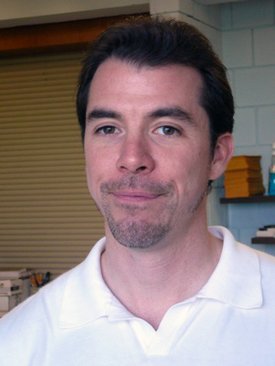
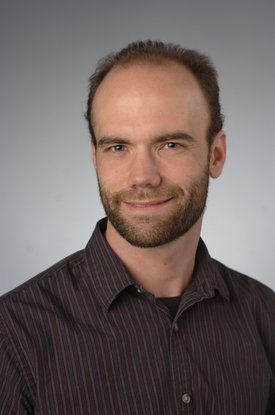
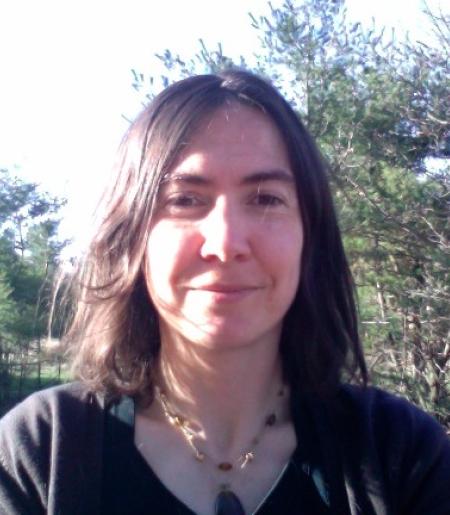
Laura Mersini-Houghton is a Professor of Theoretical Physics and Cosmology at the University of North Carolina at Chapel Hill. She is affiliated with the Gravity, Cosmology, and HEP (GCHEP) theory group and the Institute of Field Physics , supported by the Bahnson Fund. Her research spans three main areas: origins of the universe, dark energy, and quantum black hole physics. Her work includes proposing a quantum landscape multiverse theory to explain the universe's origin, with predictions tested by PLANCK and LHC experiments. She has also demonstrated that Hawking radiation back-reaction prevents singularity formation in collapsing stars. Education : PhD in Physics (University of Wisconsin-Milwaukee, 2000), MSc (University of Maryland-College Park, 1997), Fulbright Scholar (University of Maryland, 1994). Key trends in her recent publications include cosmological tensions, quantum multiverse implications, and time crystal-based dark energy models. She co-authored works on inflationary cosmology and cosmic probes of fundamental physics. Scientific Awards : UWM Distinguished Alumni She has been featured in media coverage and public talks, exploring topics like the arrow of time and cosmic puzzles. Her research integrates theoretical physics, string theory, and observational cosmology, supported by the Bahnson Fund.
Associate Professor Sara Baratchi heads the Mechanobiology and Microfluidics Laboratory at the Baker Heart and Diabetes Institute and co-leads the Heart Attack Research Program. She holds academic appointments as a supervisor at RMIT University and the University of Melbourne, and is the Alice Baker and Eleanor Shaw Gender Equity Fellow. Her interdisciplinary work bridges engineering, immunology, and clinical science to address cardiovascular pathologies through innovative bioengineering approaches. Dr. Baratchi's research centers on mechanotransduction in vascular and immune cells, particularly how hemodynamic forces and extracellular matrix stiffness regulate cellular behavior in diseases like atherosclerosis and calcific aortic valve disease. She pioneers organ-on-a-chip platforms that replicate human vascular systems under pathological conditions, integrating microfluidics, single-cell omics, and patient-derived samples to develop ethical alternatives to animal testing and identify novel therapeutic targets. Her recent publications demonstrate a cohesive research trajectory focused on Piezo1-mediated mechanosensing, microfluidic device innovation, and the pathophysiological impact of altered hemodynamics. Key themes include endothelial cell responses to shear stress, substrate stiffness effects on vascular cells, and the development of dynamic flow systems for cardiovascular modeling, all aimed at translating mechanobiological insights into clinical interventions. Dr. Baratchi has received significant recognition including: Australian Vascular Biology Society Achievement and Career Development Award (2023) Alice Baker and Eleanor Shaw Gender Equity Fellowship (2023) ARC Discovery Early Career Researcher Award (2017-2020) Best Basic Research Award at Baker Institute (2020) RMIT University Established Researcher Award (2022) She has secured over $2.5 million in competitive funding from ARC and NHMRC, mentoring 20+ PhD researchers who now lead in academia and industry. As President Elect of the Australian Society for Mechanobiology and committee member for MicroTAS 2024-2025, she actively shapes the field through leadership and international collaboration. Her laboratory develops cutting-edge microfluidic platforms adopted globally, collaborating with institutions across 11+ disciplines. Current work focuses on dissecting how matrix stiffness and hemodynamic alterations in cardiovascular conditions drive pathological cellular crosstalk, aiming to establish foundational knowledge for non-invasive disease-modifying therapies.
Daniel Braun is a Professor at the University of Tübingen, affiliated with the Faculty of Mathematics and Natural Sciences and the Department of Physics. He holds the Theoretical Physics (Braun Chair) and has been active in academia since October 1, 2013. Email: daniel.braun@uni-tuebingen.de Research Interests: His work bridges quantum optics, metrology, and gravitational physics. He explores quantum-enhanced measurement techniques, nonlinear optical phenomena in curved spacetime, and mechanical systems for fundamental tests of physics. Institutional Affiliation: Institute for Theoretical Physics (ITP) Recent Publications (2025-2024): Focus on quantum-limited interferometry, machine learning applications in quantum channels, gravitational effects in particle accelerators, and nonlinear soliton dynamics in relativistic settings. Scientific Awards: No specific awards mentioned in the provided data.
Prof. G. Scott Watson is a Professor in the Department of Physics at Syracuse University, affiliated with the College of Arts & Sciences. His research focuses on the interplay between fundamental particle physics and cosmology, particularly early universe cosmology, inflationary models, dark matter/energy, and string theory applications. He holds a Ph.D. in Physics from Brown University (2005) and B.S. degrees in Mathematics and Physics from the University of North Carolina at Wilmington (2000). Key research interests include string phenomenology as a quantum gravity framework, probing inflationary scenarios through cosmic microwave background (CMB) studies, and exploring dark matter origins. He leads major projects like CMB-S4 and contributes to the CMBPol mission concept. Watson has received the American Physical Society Outstanding Referee Award (2021) and serves on high-profile collaborations such as the Inflation Probe Study Analysis Group (IPSAG). Teaching responsibilities include advanced courses like Quantum Field Theory, Relativity and Cosmology, and Quantum Mechanics II. He actively mentors students through independent studies and advises on graduate admissions. Watson has secured significant grants, including a Department of Energy-funded project on theoretical particle physics and cosmology (2013–2025) and NSF support for cosmic acceleration research (2018–2023).
Prof. Dr. Michael Kramer is a Professor of Astrophysics at the University of Manchester and a Scientific Member (Managing Director) at the Max Planck Institute for Radio Astronomy. He leads the COMPACT Research Group and specializes in radio astronomical fundamental physics. University of Manchester: Professor for Astrophysics Max Planck Institute for Radio Astronomy: Managing Director, Radio Astronomical Fundamental Physics Research Interests: Dr. Kramer focuses on pulsars , neutron stars , and gravitational physics , using these as tools to test general relativity , detect gravitational waves , and study transients in the Milky Way. Recent Research Trends: His 15 most recent publications emphasize fast radio bursts (FRBs) , axion dark matter searches , black hole imaging , and pulsar timing arrays for gravitational wave detection. Studies include the M87 jet, Galactic Center magnetars, and MeerKAT telescope optimizations.
David Lowe is a Professor of Physics at Brown University, where he has been a faculty member since 1997. His academic journey includes a B.A. and M.A. from Cambridge University and a Ph.D. in theoretical physics from Princeton University (1993), followed by postdoctoral research at UC Santa Barbara and Caltech. His research focuses on string theory applications to gravitational physics , particularly black hole thermodynamics, quantum gravity, and cosmological implications of holographic principles. Key contributions include foundational work on AdS/CFT correspondence, black hole information paradox resolution, and de Sitter space holography. His publications span high-impact journals including Journal of High Energy Physics and Physical Review D , with recent emphasis on quantum information aspects of black holes. Richard B. Salomon Faculty Research Award BSF Research Grant NSF Travel Award Lowe has maintained extensive international collaborations, holding visiting positions at U. Tokyo, Max Planck Institute, CINVESTAV, KITP, and Aspen Center for Physics. His teaching portfolio includes graduate courses in general relativity, quantum field theory, and advanced electrodynamics, reflecting his expertise in theoretical physics.
Martin Rey is a Lecturer in the Department of Physics at the University of Bath, specializing in theoretical astrophysics with a focus on galaxy formation and evolution. His research employs advanced computational methods to investigate fundamental questions about dark matter, star formation, and cosmic structure. His primary research interests include: Modeling the formation and co-evolution of stars, galaxies, and cosmic structures Using supercomputers for detailed fluid dynamics models of galaxies Investigating the nature of dark matter and its distribution Exploring the formation of the first stars and early universe processes Understanding how chemical elements permeate the Universe Dr. Rey's research portfolio reveals a strong concentration in Dark Matter Physics (100%), Dwarf Galaxy Physics (80%), Galactic Evolution Physics (74%), and Stellar Mass Physics (63%). His recent publications demonstrate expertise in radiation-hydrodynamics simulations, particularly through the EDGE project framework, which examines various aspects of dwarf galaxy physics and dark matter distribution. His notable scientific achievements include: Christopher Skinner Prize for outstanding PhD research (2020) Fellow of the Royal Astronomical Society (awarded December 7, 2024) Beecroft Fellowship (awarded September 1, 2021) Dr. Rey is actively engaged in research leadership as Co-Principal Investigator on the MEGATRON project (2023-2028) and Engineering Dwarf Galaxy project (2019-2027), and as Co-Investigator on the Vintergatan project (2020-2025). He serves as a peer reviewer for prestigious journals including Monthly Notices of the Royal Astronomical Society, Astronomy & Astrophysics, and The Open Journal of Astrophysics, and regularly presents at international conferences such as his Maynooth University seminar (November 2024) and First Galaxies conference (April 2025).
Kyle Dawson is a Professor of Physics and Astronomy at the University of Utah, where he has been employed since 2009. He currently serves as both a full Professor and Director of Graduate Studies in the Department of Physics and Astronomy, having progressed from Assistant Professor (2008-2015) to Associate Professor (2015-2019) before achieving his current position in 2019. His institutional affiliation places him within the College of Science at the University of Utah, a major research university in the western United States. Dawson earned his BA in Physics from Cornell University in 1998, followed by a PhD in Physics from the University of California, Berkeley in 2004. After completing his doctoral studies, he served as a postdoctoral researcher at the Lawrence Berkeley National Laboratory before joining the University of Utah faculty. His educational background in physics provided the foundation for his transition into observational cosmology, where he has made significant contributions through large-scale spectroscopic surveys. Professor Dawson's research focuses on observational cosmology through large spectroscopic surveys designed to measure the fundamental properties of the universe. He is currently the co-Spokesperson for the Dark Energy Spectroscopic Instrument (DESI), a major cosmological survey that has produced numerous high-impact publications in 2024-2025. Previously, he served as Principal Investigator for the Extended Baryon Oscillation Spectroscopic Survey (eBOSS), which concluded in 2020 with final cosmological measurements. His work centers on measuring baryon acoustic oscillations to constrain cosmic expansion history, dark energy properties, neutrino masses, and to test General Relativity. His research group employs techniques including galaxy clustering analysis, quasar astrophysics, and large-scale structure mapping to address fundamental questions in cosmology. The analysis of Dawson's recent publications reveals a strong focus on extracting cosmological constraints from the DESI survey data. His work spans multiple aspects of cosmological analysis, including baryon acoustic oscillation measurements, full-shape power spectrum analysis, imaging systematics mitigation, and cross-correlation studies with cosmic microwave background data. The publications demonstrate collaborative work with large international teams and contribute to increasingly precise measurements of cosmological parameters, with particular attention to dark energy equation of state, neutrino masses, and potential deviations from General Relativity. Professor Dawson has secured significant research funding throughout his career, including multiple grants from the Department of Energy (DOE), NASA, and the National Science Foundation. His grant portfolio includes leadership roles in major cosmological surveys like DESI and eBOSS, as well as support for postdoctoral researchers and graduate students. His research group has mentored numerous students who have gone on to successful careers in academia, industry, and data science fields. Dawson leads a vibrant research group at the University of Utah focused on cosmological data analysis from large spectroscopic surveys. His current team includes two postdoctoral researchers (Angela Berti and Sarah Eftekharzadeh) and a graduate student (Allyson Brodzeller). The group specializes in galaxy clustering analysis, quasar astrophysics, and machine learning applications to spectroscopic data. The research environment fosters collaboration with international teams working on DESI and related cosmological surveys, providing students with opportunities to engage with cutting-edge cosmological research and large-scale data analysis techniques.
Jay Hubisz is a Professor of Physics at Syracuse University's College of Arts and Sciences. He holds a Ph.D. in Theoretical Particle Physics from Cornell University (2006) and a B.S. in Physics from the California Institute of Technology (2001). His research focuses on Physics Beyond the Standard Model, Quantum Field Theory, Cosmology/Astrophysics, and Quantum Information Science. Recent work explores cosmological quasiparticles, holographic phase transitions, and quantum algorithms for lattice field theory. Hubisz has led major grants including a decade-long Department of Energy grant on Theoretical Particle Physics and Cosmology (2013-2025). He teaches advanced courses like Quantum Computing Demystified and serves as Director of Undergraduate Studies in Physics. Awards include the 2024 Undergraduate Majors Teaching Award. He chairs the Joint CAS|MAX Faculty Council and contributes to curriculum development, faculty mentoring, and physics outreach initiatives.
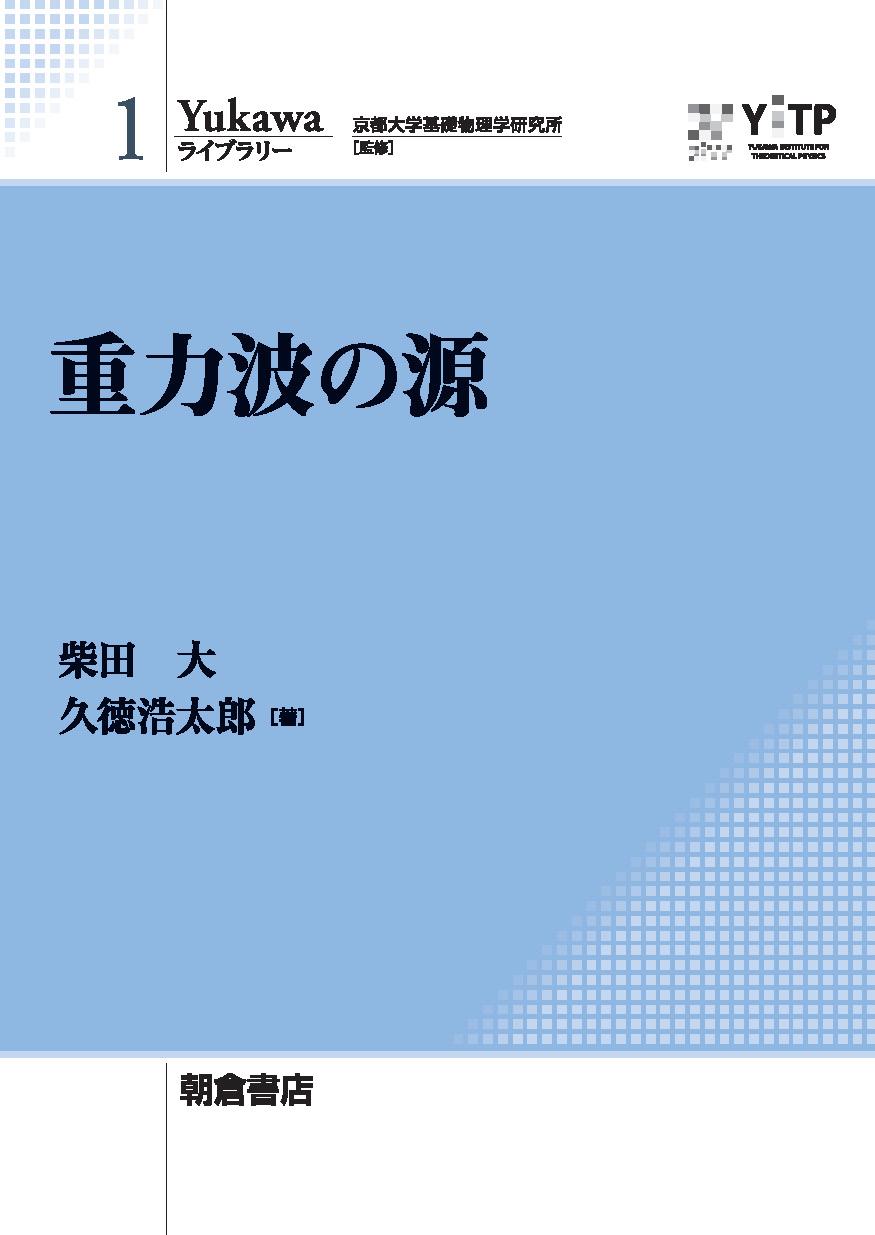
Prof. Masaru Shibata is a leading figure in computational relativistic astrophysics, currently serving as Director at the Max Planck Institute for Gravitational Physics (Albert Einstein Institute) since 2018 and Professor at Kyoto University's Yukawa Institute for Theoretical Physics since 2009. His career spans multiple prestigious institutions including University of Tokyo and Osaka University. PhD in Physics, Kyoto University (1994) Graduate studies in Physics, Kyoto University (1989-1993) Undergraduate in Science, Tokyo Institute of Technology (1985-1989) As a Professor with primary focus on Relativistic Astrophysics , Shibata's research investigates gravitational wave sources , neutron star mergers , black hole formation , and multimessenger astrophysics . His work combines general relativistic simulations , magnetohydrodynamic modeling , and neutrino radiation studies to understand high-energy cosmic phenomena. Recent publications (2024-2025) demonstrate expertise in supermassive star collapse , binary neutron star merger dynamics , and black hole-torus systems . These studies employ advanced numerical relativity techniques with applications to gravitational wave astronomy and gamma-ray burst modeling . 2025 Japan's Medal of Honor (Shiju-houshou) 2018 Nishina Memorial Prize 2013 International Society of General Relativity and Gravitation Fellow 2010 JSAP Excellent Young Researchers Prize 2008 Physical Society of Japan Outstanding Paper Award 2003 Nishinomiya-Yukawa Memorial Prize Shibata contributes to both theoretical frameworks and computational methodology in relativistic astrophysics, maintaining active collaborations with international research teams while leading computational projects at his dual institutions.
Sezgin Altay Demirbağ is a Professor at the Department of Mathematics, Istanbul Technical University. His research focuses on differential geometry and theoretical physics, particularly spacetime structures, curvature tensors, and modified gravity theories. He has led numerous projects exploring pseudo-symmetric spacetimes, Ricci solitons, and F(R)-gravity, reflecting his expertise in geometric analysis and gravitational physics. Key research interests include Einstein-type spacetimes, quasi-constant curvature, and geometric flows. His work bridges pure mathematics and theoretical physics, addressing questions in general relativity and cosmology. He has published extensively, including studies on perfect fluid spacetimes and F(R,T)-gravity models. Dr. Demirbağ has been the Principal Investigator (PI) for five major projects since 2014, including 'Characterization of Spacetimes with Quasi-Constant Curvature and F(R)-Gravity' (2024) and 'Generalized Ricci Solitons with Special Vector Fields' (2023-2024). These projects highlight his contributions to advancing geometric and physical theories of spacetime. His ORCID profile (0000-0002-6643-6267) and email (saltay@itu.edu.tr) provide further access to his work. He is based at ITU's Ayazaga Campus in Istanbul, Turkey.
Tomi Sebastian Koivisto is a Visiting Professor at the University of Tartu, Faculty of Science and Technology, Institute of Physics. His distinguished career includes previous appointments as Associate Professor (2021-2023), Senior Research Fellow (2019-2020), and Assistant Professor at Nordita - Nordic Institute for Theoretical Physics (2013-2019), with postdoctoral experience at leading institutions including the University of Oslo, University of Utrecht, and University of Heidelberg. Dr. Koivisto earned his PhD in theoretical physics from the University of Helsinki in 2006 with his dissertation 'Formation of structure in dark energy cosmologies' supervised by Hannu Kurki-Suonio and Finn Ravndal. His academic credentials include the title of Adjunct Professor (Docent) in Physics at the University of Helsinki (2015). His research focuses on the geometrical foundations of gravitational physics, with groundbreaking work in teleparallel gravity, metric-affine gravity, and the geometrical trinity of gravity. Koivisto investigates how modifications to general relativity can address cosmological tensions and explain dark energy phenomena. His theoretical framework explores the connections between gauge theories and gravity, with applications ranging from black hole physics to cosmological evolution. His approach combines rigorous mathematical formalism with observational implications, making significant contributions to both theoretical foundations and potential experimental tests of alternative gravity theories. Dr. Koivisto has received notable recognition including the Estonian National Research Award in exact sciences (2023, shared with Luca Marzola) for his contributions to theoretical physics. His current research is supported by substantial funding, including the 'Space-Time-Matter' project (PRG2608, 2025-2029) with 270,000 EUR from the Estonian Research Council and his role as principal investigator on the 'Foundations of the Universe' project (2024-2030) with 636,363 EUR funding. He has supervised six postdoctoral researchers and currently advises three doctoral students, establishing a productive research group focused on advancing gravitational theory. His supervision record includes notable researchers such as Miguel Zumalacarregui, now a prominent cosmologist, and current doctoral candidates Luxi Zheng, Ernest Michael Priidik Gallagher, and Roald Heinrich Ivask working on unification theories, gauge gravity, and spacetime thermodynamics respectively. At the University of Tartu, Koivisto leads a research team within the Institute of Physics that collaborates extensively with Nordita and other European theoretical physics centers. His group specializes in developing mathematical frameworks for modified gravity theories while maintaining connections to observational cosmology and potential experimental signatures. The team participates in international collaborations addressing fundamental questions about the nature of spacetime, dark energy, and the early universe.
Dr. Matthew Hull serves as a Senior Teaching Fellow in the School of Mathematics and Physics at the University of Portsmouth, where he has taught continuously since 2014 across core physics and mathematics undergraduate programs. His academic qualifications include: PhD in Physics from the University of Portsmouth, awarded with an STFC research studentship for work on alternative gravity models in cosmology MSc with distinction in Theoretical Physics, specializing in Quantum Field Theory and Early Universe Cosmology MMath degree in Mathematical Physics Dr. Hull's research integrates Theoretical Physics and Mathematics , with primary focus on Modified Gravity theories and their cosmological applications. His work in Particle Cosmology examines connections between quantum field phenomena and cosmic evolution, while his mathematical research explores advanced Differential Geometry concepts including the Calabi Conjecture and Kahler-Einstein metrics . This interdisciplinary approach bridges abstract mathematical structures with physical models of the universe. Analysis of his recent publications (2015-2017) reveals concentrated expertise in Galileon and Horndeski gravity theories, particularly investigating self-accelerating cosmological solutions and inflationary constraints. His work demonstrates consistent integration of particle physics mechanisms—such as the Higgs mechanism—into gravitational frameworks, highlighting a distinctive cross-disciplinary methodology in theoretical cosmology. While specific research grants and student supervision details aren't documented in available materials, Dr. Hull's teaching portfolio indicates substantial mentorship through courses including Electricity & Magnetism, Computational Physics, Thermodynamics, and Particle Physics. His role as Senior Teaching Fellow reflects dual commitment to educational excellence and advancing theoretical physics research.
Professor Ivo Sachs is a distinguished theoretical physicist at the Ludwig-Maximilians-Universität München (LMU), where he holds a position at the Arnold Sommerfeld Center for Theoretical Physics with a Chair on Cosmology. His research spans multiple areas of theoretical physics with a particular focus on string theory, quantum field theory, and cosmological applications. He maintains an active research program with numerous recent publications in prestigious journals. Professor Sachs' research interests center around fundamental theoretical physics, with significant contributions to string field theory, cosmological perturbation theory, and the mathematical structures underlying quantum gravity. His work often bridges abstract mathematical concepts with physical applications, particularly in understanding the early universe and quantum aspects of gravity. He has developed innovative approaches to studying cosmological correlators, spinning particles, and the relationship between quantum field theory and gravitational physics. Analysis of his recent publications reveals a strong focus on the intersection of cosmology and string theory, with particular attention to mathematical structures in quantum gravity. His work demonstrates consistent exploration of how quantum field theory techniques can be applied to cosmological problems, especially regarding correlation functions in the early universe. He frequently collaborates with researchers across Europe, indicating an active international research network. Martín Enríquez Rojo (PhD, 2022): Asymptotic symmetries in FLRW and deformations of gravitational symmetry algebras
Rachel Bean is Jacob Gould Schurman Professor of Astronomy at Cornell University and Senior Associate Dean for Math and Science. Her cosmology research focuses on dark energy properties, gravitational physics, and the early universe using cosmic microwave background and galaxy survey data. As co-recipient of the Gruber and Breakthrough prizes, she contributed to precision cosmology through the WMAP mission. Research develops methods to extract cosmological information from large astrophysical datasets, including cross-correlation techniques between CMB experiments (Atacama Cosmology Telescope, Simons Observatory) and galaxy surveys (DESI, Rubin LSST). Current projects investigate modified gravity constraints using cluster abundances and novel statistical approaches to kSZ velocity reconstruction. Publication themes include precision cosmology, gravity tests, and multi-messenger astrophysics. Recent work advances machine learning applications for cosmological inference, while earlier research established foundations in semiconductor device physics. Articles consistently demonstrate innovative approaches to cosmological parameter estimation and physical theory testing. Awards: Gruber Prize (2012), Breakthrough Prize (2018), Presidential Early Career Award, and Cottrell Scholar Award. Leadership includes former chair of LSST Dark Energy Science Collaboration and service on the Astronomy and Astrophysics Advisory Committee.