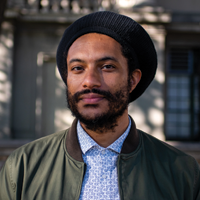
Professor Jovan Scott Lewis is a critical human geographer and anthropologist at the University of California, Berkeley , holding the Haas Distinguished Chair in Economic Disparities . His work bridges Black Geographies , Racial Capitalism , and Reparative Justice , with a focus on African-descended communities in the Caribbean and the U.S. Education : Ph.D. from the London School of Economics Leadership : Chair, UC Berkeley Department of Geography; Founder, Berkeley Black Geographies Project (2016) Public Impact : Appointed to California’s first Reparations Task Force (2021–2023); Leads post-Task Force research on racial wealth gaps His scholarship critiques reparations frameworks, advocating for relational repair beyond injury-centric models. Key works include Scammer’s Yard (2020) on Jamaican informal economies and Violent Utopia (2022) on Tulsa’s racial violence legacies. The 2023 co-edited volume The Black Geographic institutionalizes Black Geographies as a discipline. Scientific Awards : Eduardo Bonilla-Silva Book Award for Scammer’s Yard C. Wright Mills Award Finalist for Violent Utopia John Hope Franklin Prize Honorable Mention Current projects include the book State of Repair and leadership in the Alliance for Reparations, Reconciliation and Truth (AART) , alongside advisory roles for U.S. and Caribbean reparations initiatives.
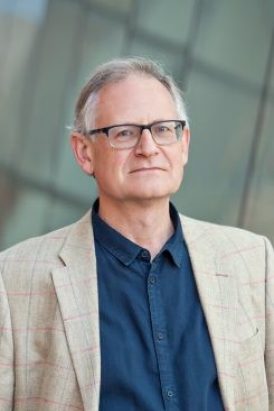
Mikhail Krutikov is the Preston R. Tisch Professor of Judaic Studies and Chair/Professor of Slavic Languages and Literatures at the University of Michigan. He holds joint appointments in the College of Literature, Science, and the Arts (LSA) and the Frankel Center for Judaic Studies. His research focuses on Yiddish literature, Jewish intellectual history, and Soviet cultural politics. Krutikov has authored seminal works like From Kabbalah to Class Struggle (2011) and Yiddish Fiction and the Crisis of Modernity (2001). Education: Mathematics (Moscow State University, 1979), Yiddish Studies (A.M. Gorky Institute, 1991), Jewish Literature (Jewish Theological Seminary, 1998). He has held fellowships at the Hebrew University, Oxford, and the Frankel Institute. His weekly Yiddish column in Forward critiques contemporary Jewish culture. Research emphasizes Soviet Yiddish literature, transnational Jewish diasporas, and urban cultural spaces. Notable projects include studies on Der Nister and Weimar Berlin's Jewish intellectual life. Krutikov edits the Jews in Eastern Europe series and serves on editorial boards for Prooftexts and East European Jewish Affairs . Key Awards: MLA Fenia Leviant Prize (2012), Head Fellow (2014-15), multiple grants from Yad Hanadiv and the Memorial Foundation. Publications: Over 50 peer-reviewed articles, 8 authored/edited books, and 1,000+ cultural essays in Yiddish. Teaching includes courses on Jewish modernism, shtetl narratives, and Russian-Jewish literature. He advises graduate students in Slavic, Judaic, and Yiddish studies. Krutikov's lab explores digital archives of Soviet Yiddish texts and collaborates with Vilnius University on Belarusian-Jewish cultural history.
James Grant is an Associate Professor in Philosophy at the University of Oxford, serving as William Kneale and Le Rossignol–Clarendon Fellow and Tutor at Exeter College. He specializes in aesthetics, ethics, and 17th-century philosophy. His research explores metaphor, art criticism, and creativity's role in artistic merit. Grant holds a BA from Queen’s University (Canada), and BPhil/DPhil from Oxford. He teaches aesthetics, ethics, and early modern philosophy. His work emphasizes the value of imaginativeness and metaphor in art criticism, arguing for experientialist approaches to aesthetic evaluation. Notable publications include The Critical Imagination (2013) and articles on moral worth, artistic achievement, and Hume’s aesthetic theories. He received the British Society of Aesthetics Prize Essay 2010 for his work on metaphor. Grant’s lectures cover aesthetics, ethics, and global poverty. His research bridges philosophical analysis with practical criticism, addressing questions of artistic value and moral psychology. He actively engages in public philosophy through interviews and blog posts.
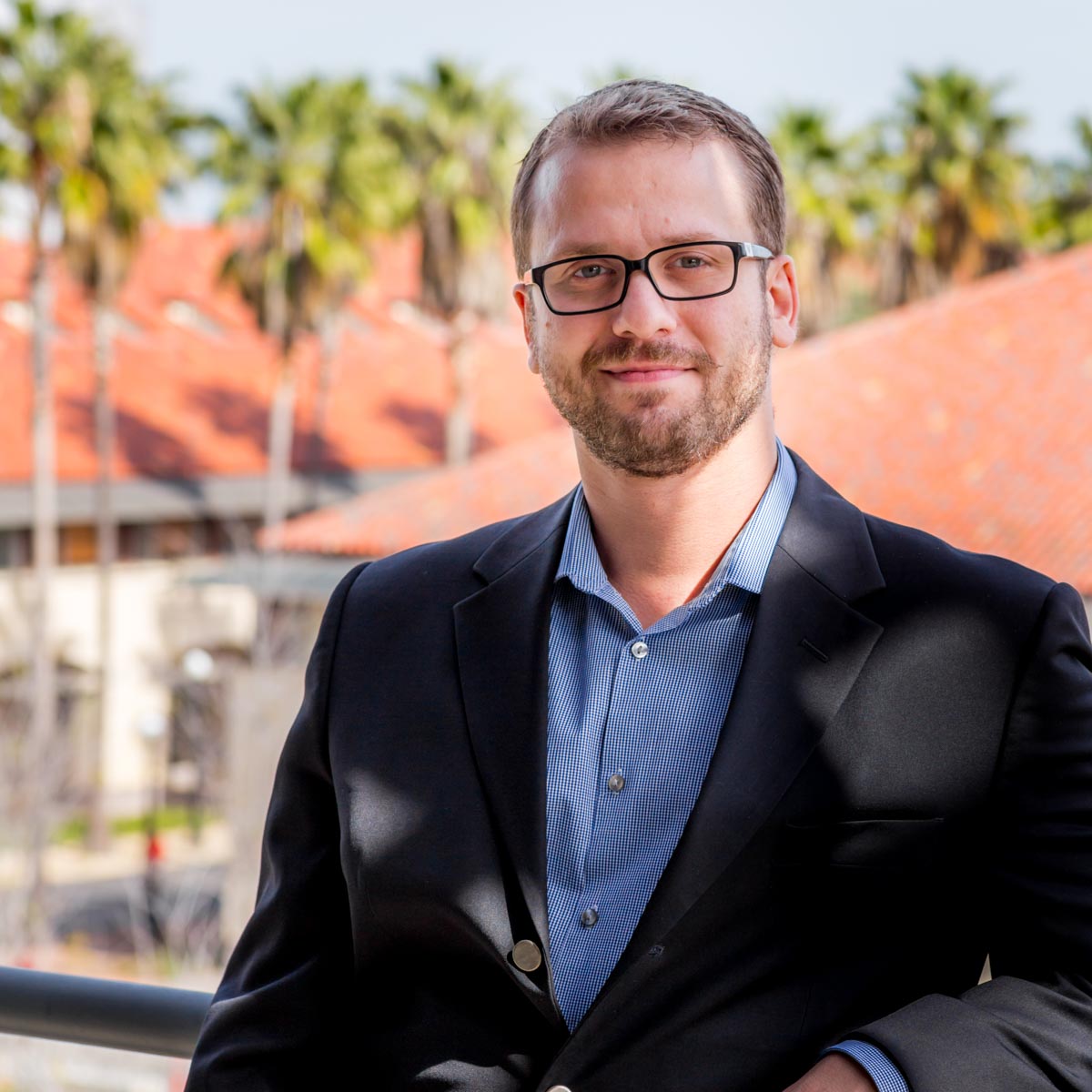
David L. Tschirley is a fixed-term Professor in the Department of Agricultural, Food, and Resource Economics at Michigan State University (MSU), co-Director of the Food Security Group (FSG), and Director of the USAID-funded Innovation Lab for Food Security Policy, Research, Policy and Influence (PRCI). He holds a Ph.D., M.S., and B.S. from MSU and Colorado State University, respectively. His work focuses on agrifood system transformation, food security policy, dietary change in Africa and Asia, and the intersection of food aid with market dynamics. Fluent in Spanish and Portuguese, he has extensive field experience in Ecuador and Mozambique. Dr. Tschirley has advised major international organizations including the World Bank, IFAD, and FAO, and received the 2022 Ralph Smuckler Award for advancing international programs at MSU. His research emphasizes policy-relevant topics such as modern vs. traditional marketing channels, emergency food response strategies, and linking smallholder farmers to cash crop markets. Over 30 years of applied research have yielded >40 journal articles, book chapters, and policy reports, with recent focus on processed food systems and the double burden of malnutrition. Education: Ph.D., Michigan State University M.S., Michigan State University B.S., Colorado State University Key Roles: Director, PRCI Innovation Lab Co-Director, FSG at MSU Lead Author, IFAD 2019 Rural Development Report Awards: Ralph Smuckler Award (2022) Labs/Teams: Feed the Future Innovation Lab for Food Security Policy Cross-country Agrifood System Transformation Initiative His recent work highlights global food system challenges, including policy responses to crises like the Russia-Ukraine war and pandemic impacts on food systems. He collaborates with institutions worldwide to strengthen policy influence and evidence-based decision-making in food security.
Smriti Srinivas is a Professor in the Department of Anthropology at the University of California, Davis. Her research focuses on urban cultures, religion, and South Asian studies, with a particular emphasis on Indian Ocean worlds. She holds a Ph.D., M.Phil., and M.A. in Sociology from Delhi School of Economics, and a B.A. in Economics from Madras Christian College. Her research has explored topics such as spirit possession in Himalayan borderlands, memory in Bangalore’s high-tech landscape, and transnational religious movements centered on Sai Baba. She has been supported by grants from the Mellon Foundation, Rockefeller Humanities, and the National Endowment for the Humanities, among others. Srinivas currently serves on the advisory board of the International Journal of Urban and Regional Studies and is Series Editor for the Routledge Series on the Indian Ocean. Her teaching spans undergraduate and graduate courses in cultural anthropology, urban studies, and comparative religions. Notable publications include Landscapes of Urban Memory (2001), In the Presence of Sai Baba (2008), and Reimagining Indian Ocean Worlds (2020). Awards include the 2020 Graduate Studies Distinguished Mentoring Award and the 2016 Social Sciences Dean’s Leadership Award.
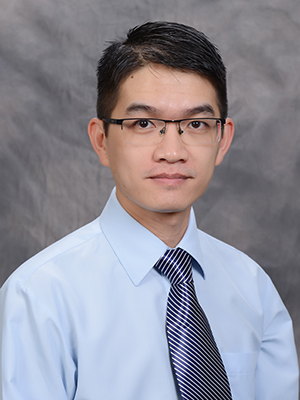
Khanh Nguyen is an Assistant Professor in the Department of Computer Science & Engineering at Texas A&M University, part of the College of Engineering. His research focuses on improving scalability and efficiency in Big Data systems through compiler and runtime innovations, particularly in memory management and distributed computing. Education: Ph.D. in Computer Science, University of California, Los Angeles (2019) M.S. in Computer Science, University of California, Irvine (2015) B.S. in Computer Science, University of California, Irvine (2012) His research interests include programming languages, compiler design, memory management, and Big Data systems. He has developed techniques such as Gerenuk for thin computation over big data, Skyway for distributed heap connectivity, and Yak , a high-performance garbage collector. His work emphasizes resource efficiency and workload scalability, particularly for machine learning and data-parallel applications. Recent publications (2021–2024) highlight advancements in adaptive memory management for warehouse-scale computers, semantics-aware swapping in disaggregated systems, and query-driven distributed tracing. Awards: Google Ph.D. Fellowship (2017) Facebook Ph.D. Fellowship Finalist (2017) His research bridges compiler/runtime systems with large-scale data processing, addressing challenges in distributed systems and far-memory utilization. He collaborates with industry and academic partners to advance practical, scalable solutions for modern data-intensive workloads.
Professor Charles Stafford is a leading anthropologist specializing in China, Taiwan, and the United States. He holds a professorship at the Department of Anthropology, London School of Economics (LSE), and is a Fellow of the British Academy (FBA). His research focuses on learning, child development, morality, and the intersection of economic life with cultural and psychological processes. His seminal works include The Roads of Chinese Childhood (1995) and Economic Life in the Real World (2020), which explore how cultural contexts shape human behavior and ethical frameworks. Professor Stafford's fieldwork spans decades, from Taiwanese fishing communities in the 1980s to recent studies of kinship and cooperation in rural China and Oklahoma. He has authored influential books such as Separation and Reunion in Modern China (2000) and edited volumes on ordinary ethics and cooperative dynamics in Chinese communities. His work bridges anthropology, psychology, and economics, emphasizing interdisciplinary dialogue. His research interests include cognitive anthropology, the psychology of economic life, and the role of ritual in structuring social relations. Recent studies investigate moral judgment and cooperative behavior in diverse cultural settings. His contributions have shaped debates on how cultural norms influence decision-making and ethical practices in both traditional and modern contexts.
George Reid Andrews is a Distinguished Professor of History at the University of Pittsburgh's Dietrich School of Arts and Sciences. His work focuses on Afro-Latin America, race relations, and comparative history. He holds a PhD from the University of Wisconsin-Madison (1978), with earlier degrees from Dartmouth College (BA, 1972) and Wisconsin (MA, 1974). Andrews has authored numerous books and articles, including Afro-Latin America, 1800-2000 and Blackness in the White Nation . His research examines racial inequality, slavery, and the African diaspora across Latin America. His teaching spans courses on colonial and modern Latin America, race in Latin America, and U.S.-Latin American relations. Andrews has advised over 15 PhD students, many of whom focus on Afro-Latino history and social movements. Awards include the Guggenheim Fellowship (1996), Chancellor’s Distinguished Teaching Award (1996), and multiple Arthur Whitaker Prizes. Andrews has held visiting professorships in Uruguay and Brazil, and serves on editorial boards for journals like Hispanic American Historical Review . His work bridges academic research with public engagement, including lectures at over 100 institutions globally.
Dr. Borna Izadpanah is a Lecturer in Typography & Graphic Communication at the University of Reading. His research focuses on the history of printing and type design, particularly in Persian and Urdu languages using the Arabic script. He emphasizes decolonizing curricula and promoting inclusivity through interdisciplinary collaborations and open access initiatives. Education: PhD in Typography (2021), University of Reading MA in Typeface Design (2015), University of Reading MA in Graphic Design (2010), London College of Communication BA in Graphic Design (2006), Soore University Research Interests: Decolonizing typography, preservation of endangered archival materials, digital humanities, and the historical development of Arabic-script typography. His work bridges print history, art history, and Islamic studies, using non-European language sources. Articles Trends: Recent publications explore Urdu typography’s colonial influences, Persian printing in Qajar Iran, and the global history of Arabic-script type design. His research highlights underrepresented communities and historical gaps in type design practices. Awards: Type Directors Club Awards (2024, 2023, 2017) Granshan Typeface Design Competition (2015–2017) Advising & Grants: Supervises doctoral research in Persian and Asian typography, with a focus on underrepresented communities. Collaborates on projects like the Typodiversity exhibition and workshops on non-Latin type design. Labs/Teams: Involved in the Type Design intensive (TDi) program and co-leads courses at the British Library. Active in the Royal Asiatic Society and Google Fonts collaborations.
Aimee Bender serves as a Distinguished Professor of English at the University of Southern California within the Dornsife College of Letters, Arts and Sciences, Department of English. Her position reflects significant contributions to literary arts and creative writing education. Education: M.F.A. in Fiction, University of California, Irvine (1998) B.A. in Literature/Creative Writing, UC San Diego (1991) Bender's research centers on contemporary fiction with emphasis on surrealism, magical realism, and experimental narrative forms. She explores the reinvention of fairy tales across classic and modern contexts while examining diverse short-form structures including short stories, novellas, and short-shorts. Her work critically investigates writing processes and the pedagogical dynamics of creative writing workshops, positioning her at the forefront of innovative literary expression. Her publications from 1998-2020 consistently merge reality with fantastical elements, revealing psychological depth through unconventional narrative techniques. Bender's work demonstrates evolving mastery in using symbolic transformations to explore family dynamics, emotional perception, and human relationships. This trajectory establishes her as a pivotal figure in advancing contemporary American fiction through genre-blending approaches that challenge conventional storytelling boundaries. Scientific Awards: USC Distinguished Professor (2017) Judge for Mid-American Review story contest (2006-2007) PEN West Mentor of the Year for Emerging Writers Program (2006-2007) Pushcart Prize (2005-2006) Bender actively mentors emerging writers as evidenced by her PEN West award, while her interdisciplinary collaborations extend to commission-based creative projects. Her opera libretto workshop with composer John B Hedges at Curtis Institute and science-inspired radio story for "Studio 360" demonstrate cross-disciplinary engagement, though specific grant funding details remain unmentioned in source materials. These ventures highlight her commitment to expanding literary expression through diverse media platforms. No laboratory or formal research team affiliations are documented in the available information.
Maria Elena Cobas Cobiella is an Associate Professor in the Department of Civil Law at the Faculty of Law, University of Valencia. Her academic work is deeply rooted in civil and private law, with significant contributions to inheritance, family, mediation, and European private law. She is an active member of two research groups: the GPF Research Group on Person and Family and the GEDPED Study Group on European Private and Digital Law. Research Interests: Her research spans civil law, succession law, bio-law, legal mediation, reproductive rights, and legal education. She has explored the legal implications of posthumous reproduction, European succession instruments, Cuban property law, and innovative teaching methods such as concept mapping and cooperative learning in legal education. Her work often bridges doctrinal analysis with practical and ethical considerations. The trends in her scholarly publications from 2001 to 2017 reflect a sustained focus on succession law and legal modernization, with increasing attention to European harmonization, digital law, and interdisciplinary issues in bio-law. Her articles also reveal a strong commitment to pedagogical innovation and comparative legal analysis, particularly between Spanish and U.S. legal systems. Scientific Contributions: PhD from the University of Valencia (2001) on testamentary executorship. Active researcher in European private and digital law. Prolific author on mediation, inheritance, and legal education. Advising and Grants: While no specific grants are listed, she has supervised PhD research, as evidenced by her role as advisor to Dr. Lorenzo Prats Albentosa’s thesis. She actively contributes to academic discourse through publications and research group leadership. Her work in legal education suggests involvement in curriculum development and pedagogical projects. Labs and Teams: She collaborates with the GPF Research Group on Person and Family and the GEDPED Study Group on European Private and Digital Law, indicating active participation in team-based legal research focused on contemporary civil law challenges.
Bianca Basciano is an Associate Professor at the Department of Asian and North African Studies , Ca' Foscari University of Venice, where she has held the Director's Delegate for Research role since 2023. Her work focuses on Chinese linguistics , particularly Mandarin morphology, syntax, and second language acquisition. Research Areas: Chinese compounding, reduplication, causative constructions, resultative compounds, and language teaching methodologies. Teaching: Offers BA/MA courses in Chinese language and linguistics at Ca' Foscari University. Editorial Roles: Member of the editorial boards for Sinica Venetiana and Lingue e Linguaggio . Research Projects: Principal investigator for the PRIN 2020 project on Italian learners' acquisition of Chinese resultative verbs, with extensive corpus-based analysis. Collaborates with Giorgio Arcodia and other international scholars. Key Themes: Event structure delimitation, Vendlerian verb classes, micro-parametric syntactic variation. Publications: Over 40 works including monographs with Oxford University Press and Bologna University Press. Her methodological approach combines theoretical linguistics with corpus analysis, contributing to the understanding of Chinese as both a linguistic system and a second language acquisition challenge. She has also organized international conferences like the 31st IACL Annual Meeting.
Baris Kasikci is an Associate Professor in the Paul G. Allen School of Computer Science & Engineering at the University of Washington. Previously (2017-2023), he was a Morris Wellman Assistant Professor in the Electrical Engineering and Computer Science Department at the University of Michigan. His research focuses on building efficient and trustworthy computer systems through innovative combinations of approaches from systems, computer architecture, and programming languages. Dr. Kasikci received his PhD in Computer Science at EPFL and has held research positions at Microsoft Research Cambridge, Google, Intel, and VMware. His work addresses critical challenges in system reliability, security, and performance in increasingly complex software ecosystems. His research interests center on improving the efficiency of datacenter applications and machine learning systems, analyzing and fixing failures, and enhancing hardware security. His lab develops techniques for automated bug detection, formal verification of distributed systems, and building systems support for heterogeneous hardware architectures. Recent projects include Whisper (profile-guided branch misprediction elimination), Huron (taming false sharing), and Agamotto (automatic detection and repair of bugs in persistent memory applications). Analysis of his recent publications shows a strong trend toward optimizing large language model serving, hardware security, and performance optimization for modern heterogeneous architectures. His work bridges traditional systems research with emerging AI infrastructure needs, particularly in efficient LLM serving, security vulnerabilities in modern hardware, and performance optimization for heterogeneous computing environments. NSF CAREER award Microsoft Research Faculty Fellowship Intel Rising Star Award VMware Early Career Faculty Grant Google Faculty Award Roger Needham PhD Award (best PhD thesis in computer systems in Europe) Patrick Denantes Memorial Prize (best PhD thesis at EPFL) Best Paper Award at OSDI'18 Best Paper Award at MICRO'22 Dr. Kasikci has advised numerous PhD students who have gone on to prestigious positions in academia and industry, including Tanvir Ahmed Khan (Assistant Professor at Columbia University), Akshitha Sriraman (Assistant Professor at CMU), and Jiacheng Ma (AMD). His research has been supported by significant grants from NSF, DARPA, Intel, Google, Microsoft, VMware, and Amazon. His lab, the EfesLab, focuses on building tools and techniques that make computer systems more reliable, secure, and efficient. The EfesLab, led by Dr. Kasikci, brings together postdocs, PhD students, and undergraduate researchers to tackle fundamental challenges in systems reliability and performance. The lab has developed numerous influential tools including Whisper, Huron, and Agamotto that address critical performance and reliability issues in modern computing systems. Current research directions include efficient LLM serving, security of emerging hardware technologies, and automated debugging techniques.
Mahdi Soltanolkotabi is a Professor in the Departments of Electrical and Computer Engineering, Computer Science, and Industrial and Systems Engineering at the University of Southern California's Viterbi School of Engineering. He serves as the inaugural Director of the USC Center on AI Foundations for Science (AIF4S). His academic journey includes a Ph.D. in Electrical Engineering from Stanford University (2014) under Emmanuel Candes, followed by a postdoctoral position at UC Berkeley's AMPLAB mentored by Ben Recht and Martin Wainwright. Dr. Soltanolkotabi's research spans both theoretical and applied dimensions of data science. On the theoretical side, he develops mathematical foundations for modern data science, focusing on generative AI, deep learning, machine learning, signal processing, and computational imaging. His work draws upon nonconvex optimization, high-dimensional probability, statistical estimation, empirical processes, and learning theory. On the applied side, he develops reliable AI systems for healthcare and scientific applications, collaborating with physicians and domain scientists to enhance AI reliability, develop new architectures, and create rigorous evaluation frameworks. His recent publications demonstrate strong focus on medical AI applications, image reconstruction, and theoretical foundations of deep learning. His work bridges the gap between theoretical guarantees and practical implementations, particularly in medical imaging where reliability is critical. His research group has made significant contributions to understanding the behavior of nonconvex optimization algorithms in high-dimensional settings. David and Lucile Packard Fellow Information Theory Society Best Paper Award NIH Director's new innovator award Sloan Research Fellowship NSF Career award Airforce Office of Research Young Investigator award (AFOSR-YIP) Viterbi school of engineering junior faculty research award Faculty awards from Google and Amazon Dr. Soltanolkotabi has received multiple research grants including Amazon Research Awards for projects on "Artificial intelligence for fast and portable medical imaging" and "Reliable AI for Generation of Medical Reports from MRI Scans." He actively collaborates with medical professionals and leads educational outreach initiatives with local schools through USC's Viterbi Adopt-a-School program. His work demonstrates a strong commitment to translating theoretical advances into practical healthcare solutions while maintaining rigorous mathematical foundations.
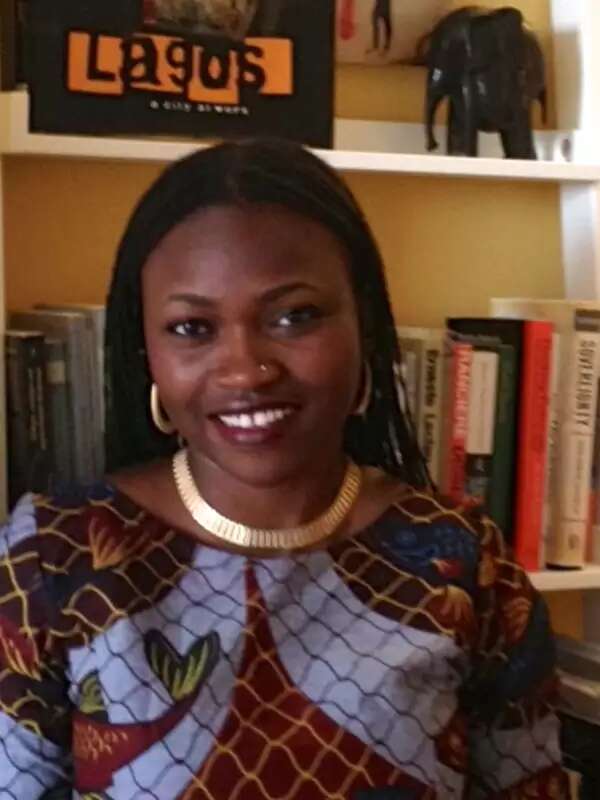
Abosede George serves as Associate Professor of History and Africana Studies at Barnard College, Columbia University, and Director of Columbia's Institute of African Studies. A historian of Modern Africa, she specializes in West African urban history with concentrated focus on Lagos, youth and childhood studies, women and gender, and migration patterns across colonial and postcolonial contexts. Her educational trajectory includes a B.A. in History and Political Science from Rutgers University (1998), followed by M.A. (2002) and Ph.D. (2006) in History from Stanford University. Prior to joining Columbia in 2007, she held an Assistant Professor position at Trinity College. George's research interrogates intersections of gender, youth, and urban development through frameworks of social reform and transnational exchange. Her acclaimed monograph Making Modern Girls (2014) examines colonial-era girlhood and labor in Lagos, while current work investigates 19th-century migrant communities' reshaping of citizenship in Lagos. She teaches courses spanning African urban history, childhood studies, and gender dynamics. Recent publications reveal evolving scholarly engagement with neoliberalism's impact on African youth, colonial subjecthood through human-animal relations, and Lagos as a site of architectural transnationalism. Her work consistently centers African agency within global historical processes while challenging Western theoretical frameworks. Award highlights include the Aidoo-Snyder Book Prize (2015), Tow Professorship (2022-2024), and fellowships from the Netherlands Institute for Advanced Studies (2022-2023) and University of Pennsylvania Wolf Humanities Center (2021-2022). George actively mentors junior colleagues across U.S. and Nigerian institutions while serving on executive boards of the African Studies Association Women’s Caucus (which she co-convenes), Global Urban History Project, and Society for History of Childhood and Youth. Her institutional leadership extends to the Columbia University Senate and advisory roles at the Barnard Center for Research on Women.