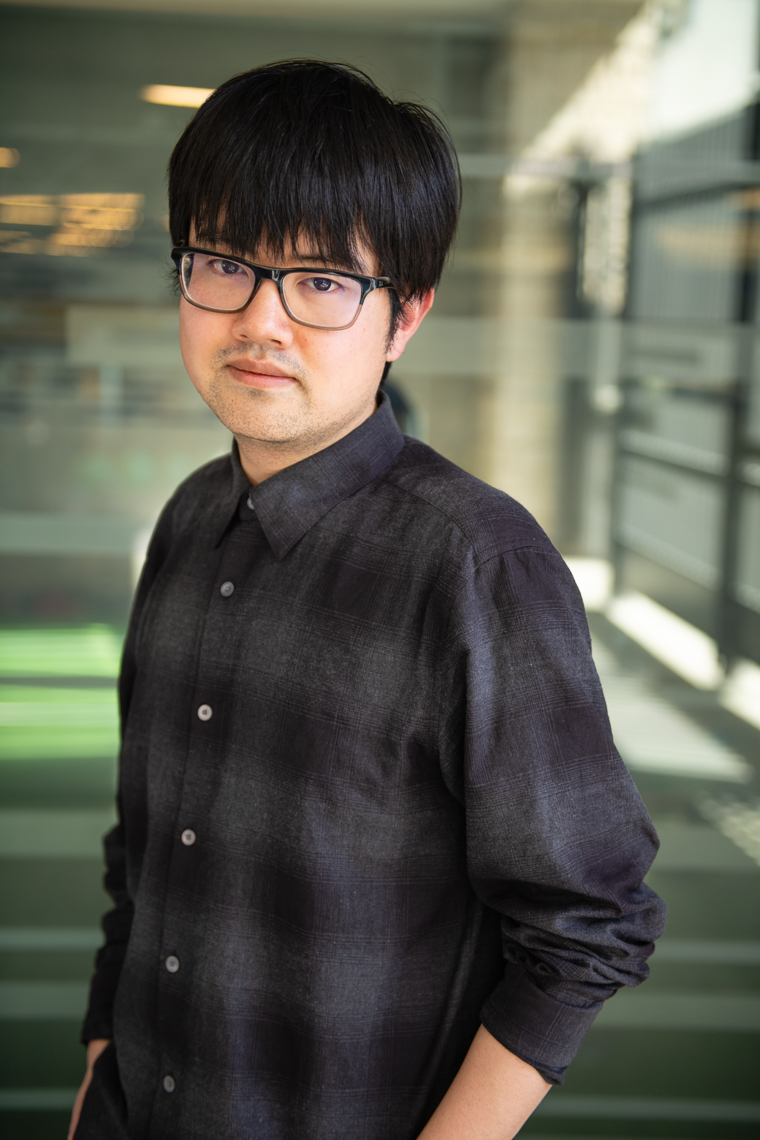
Jinhyung Park is an Associate Professor in the Department of Mathematical Sciences at KAIST, Daejeon, Korea. He obtained his Ph.D. from KAIST in 2014 under Prof. Sijong Kwak and was mentored as a CMC Fellow at KIAS (2014–2019). His research focuses on Algebraic Geometry , particularly syzygies of algebraic varieties , secant varieties , and positivity of line bundles . Education: Ph.D., KAIST (2014); MS/BS, KAIST and University of Chicago (2002/2001). Research Interests: His work explores geometric properties of projective manifolds, singularities in algebraic geometry, and applications of Okounkov bodies to divisors and syzygies. Recent trends include Castelnuovo-Mumford regularity bounds (e.g., for threefolds with rational singularities) and subadditivity of Okounkov bodies in fiber spaces. Teaching: Courses include Matrix Groups, Algebraic Geometry, and Calculus. He previously taught at Sogang University and Purdue University. Professional Affiliations: Member of the Korean Mathematical Society, American Mathematical Society, and other international societies. Organized the 8th East Asia Number Theory Conference at KAIST (2019).
Noah D. Goodman is Associate Professor of Psychology and Computer Science, and Linguistics (by courtesy) at Stanford University. He directs the Computation & Cognition Lab (CoCoLab) at Stanford, where he leads research on computational models of cognition, integrating logic and probability. His work spans cognitive psychology, linguistics, and computer science. Primary Appointment: Psychology Department By Courtesy: Computer Science Department and Linguistics Department Director: Computation & Cognition Lab (CoCoLab) Goodman's research focuses on computational models of cognition, with particular interest in probabilistic approaches to understanding human thought. His work integrates logic and probability to model concepts, categorization, intuitive theories, causal learning and reasoning, social cognition (including reasoning about others' goals, beliefs, and actions), cognitive development (especially acquisition of abstract knowledge), and natural language semantics and pragmatics. He has made significant contributions to the development of probabilistic programming languages as tools for cognitive modeling. His recent publications demonstrate a strong trend toward integrating probabilistic modeling with linguistic theory and social cognition. The articles span computational cognitive science, natural language processing, and artificial intelligence, with a consistent theme of using probabilistic frameworks to understand complex cognitive phenomena. Many papers explore how humans make inferences under uncertainty across different domains. Goodman teaches several courses at Stanford including Language and Thought (Psych 132), Computation and Cognition: the Probabilistic Approach (Psych 204/CS 428), Foundations of Cognition (Psych 205), and Introduction to Cognitive Science. He has also led seminars on topics ranging from natural and artificial intelligence to the science of meditation.
Jose Apesteguia is an ICREA Research Professor at the Department of Economics and Business, Universitat Pompeu Fabra, Barcelona, Spain. His research focuses on behavioral economics, decision theory, experimental economics, and game theory, with particular emphasis on topics such as behavioral heterogeneity, rationality measures, stochastic choice models, and social preferences. Apesteguia has collaborated extensively with scholars like Miguel A. Ballester and Jörg Oechssler, producing influential work on topics ranging from imitation dynamics to the impact of language on moral decisions. His research integrates theoretical frameworks with experimental methods, exploring how individuals make decisions under uncertainty, time preferences, and social contexts. Key contributions include the development of measures of rationality and welfare, as well as analyses of behavioral adaptation and the role of information in competitive environments. His work frequently bridges economic theory with empirical validation, addressing real-world issues such as rule compliance in public institutions and team performance in organizations. Apesteguia’s publications span top journals including the American Economic Journal: Microeconomics , Journal of Economic Theory , and Econometrica . He teaches advanced courses on bounded rationality and behavioral decision theory at the undergraduate and graduate levels. His research has been applied to fields like finance (e.g., copy trading behavior) and public policy (e.g., promoting compliance in libraries).
Chen Lian is an Assistant Professor in the Department of Economics at UC Berkeley. Holding a PhD from MIT, their research bridges macroeconomics, behavioral economics, and finance, with a focus on bounded rationality, monetary theory, and macro-finance interactions. Education: PhD in Economics, MIT Chen’s work explores how incomplete information and behavioral biases shape macroeconomic outcomes. Key themes include inflation effects on households, fiscal-monetary policy interactions, and financial stress dynamics. They employ heterogeneous-agent models and analyze how micro-level shocks propagate through the economy. Their publications and working papers address topics like credit cycles, demand shock propagation, and the psychological underpinnings of economic decisions. Papers such as Low Interest Rates and Risk Taking (2019) and Confidence and the Propagation of Demand Shocks (2022) highlight their interdisciplinary approach.
Jordi Galí is a Professor at the Department of Economics and Business at Universitat Pompeu Fabra (UPF), a Senior Researcher at the Center for Research in International Economics (CREI), and a Research Professor at the Barcelona School of Economics (BSE). He holds a PhD from MIT and has played a central role in shaping modern macroeconomic theory, particularly the New Keynesian framework used by central banks worldwide. Education: PhD in Economics, Massachusetts Institute of Technology (MIT), 1989 Master in International Management, ESADE, 1985 Bachelor in Economics, Universitat Pompeu Fabra, 1994 His research focuses on macroeconomic theory, monetary economics, and macroeconometrics. He is best known for his work on the New Keynesian Phillips Curve, optimal monetary policy rules, and the role of technology and expectations in business cycles. His influential book, Monetary Policy, Inflation and the Business Cycle , is a standard reference in graduate programs globally. The most recent articles highlight a continued focus on critical issues in modern macroeconomics: the implications of a low natural rate of interest (r*), the effectiveness of monetary policy at the zero lower bound, the role of wage and price flexibility, and the interaction between fiscal and monetary policy. His work increasingly integrates heterogeneity, financial frictions, and experimental methods, reflecting the evolving frontiers of the field. Scientific Awards: BBVA Foundation Frontiers of Knowledge Award (2025) Yrjo Jahnsson Award (2005) Premi Rei Jaume I d'Economia (2004) Premio Nacional de Investigación “Pascual Madoz” (2022) Three ERC Advanced Grants Foreign Honorary Member, American Economic Association (2020) Galí has advised numerous central banks, including the ECB, Federal Reserve, and Banque de France. He has held leadership roles as President of the European Economic Association (2012), co-editor of the Journal of the European Economic Association , and co-director of the CEPR International Macroeconomics Programme. He is a Research Fellow at CEPR, a Research Associate at NBER, and a Fellow of the Econometric Society. He has also been actively involved in public policy debates in Spain and Europe, particularly on issues of productivity, labor market reform, and fiscal policy. His research program continues to explore the design of stabilization policies in open and currency union economies.
Prof. Igors Gorbovickis is an Associate Professor of Mathematics at the Department of Mathematics, School of Computer Science and Engineering, Constructor University (formerly Jacobs University Bremen). His research focuses on complex dynamical systems, including topics such as renormalization theory, bifurcation analysis, Julia sets, and applications to mathematical physics. He also contributes to discrete geometry, particularly exploring conjectures like the Kneser-Poulsen problem. His work bridges pure mathematics with interdisciplinary applications, emphasizing rigorous analysis of nonlinear systems and geometric configurations. Key areas of investigation include critical point accumulations, Hausdorff dimension estimates, and equidistribution phenomena in parameter spaces. Recent publications highlight advancements in understanding chaotic systems, circle maps, and the interplay between algebraic structures and dynamical behavior. Prof. Gorbovickis collaborates internationally, with co-authored papers appearing in journals like Advances in Mathematics , Ergodic Theory and Dynamical Systems , and Nonlinearity . His office is located at Research I, Room 128 on the Constructor University campus in Bremen, Germany.
Prof. Dr. Philipp Habegger is a faculty member at the University of Basel's Department of Mathematics and Computer Science . His research focuses on Number Theory , specifically Diophantine Geometry, heights on abelian varieties, unlikely intersections, and algebraic number theory. He leads the Research Group in Number Theory and participates in collaborative seminars like the Number Theory Web Seminar with Mike Bennett and Alina Ostafe. Contact : philipp.habegger@unibas.ch | +41 61 207 26 98 Office : Spiegelgasse 1, 4051 Basel, Switzerland Academic Role : Research and teaching in number theory and Diophantine problems Research Overview Habegger's work addresses fundamental questions about the distribution of special points on algebraic varieties and the arithmetic properties of polynomial dynamics. His recent publications analyze degeneracy loci in abelian families, canonical heights, and the geometric Bogomolov conjecture. The 15 most recent articles reflect a focus on number theory, algebraic geometry, and effective bounds in Diophantine problems. Scientific Collaborations Collaborated with Ziyang Gao, Harry Schmidt, Umberto Zannier, and others Contributed to journals: Annals of Mathematics , Forum of Mathematics, Sigma , Compositio Mathematica Key themes: Abelian varieties , Heights , Unlikely intersections , CM jacobians
Professor Fabio Milani is a faculty member in the Department of Economics at the University of California, Irvine (UCI), where he also serves as Director of Graduate Studies for the Economics Ph.D. Program. He holds a Laurea in Economics from Bocconi University (2000) and a Ph.D. in Economics from Princeton University (2006). His research focuses on Macroeconomics, Monetary Economics, International Macroeconomics, and Time Series Econometrics, with an emphasis on deviations from rational expectations and the impact of learning behavior on macroeconomic fluctuations. Professor Milani’s work explores how psychological factors and heterogeneous expectations drive economic outcomes, including business cycles and inflation dynamics. He has extensively analyzed the role of sentiment, news shocks, and adaptive learning in macroeconomic models. His teaching spans Ph.D. courses like Macroeconomic Theory and Advanced Macroeconomics, as well as undergraduate courses on Financial Markets and the Macroeconomy. He advises numerous Ph.D. students, many of whom hold academic and policy roles globally. His publications span over 30 articles in top journals, including the Economic Journal , Journal of Economic Dynamics and Control , and Journal of Monetary Economics . Recent research includes studies on inflation tolerance, heterogeneous expectations, and the implications of learning models for monetary policy design. While no scientific awards are explicitly listed, his contributions reflect significant scholarly impact in macroeconomic theory and policy analysis.
Ran Spiegler is a Professor of Economics at both Tel Aviv University and University College London (UCL). He holds a PhD in Economics from Tel Aviv University (1999). His research focuses on economic theory, behavioral economics, and bounded rationality, with notable contributions to understanding decision-making under flawed causal reasoning, narrative-driven political and economic dynamics, and market behaviors influenced by limited consumer rationality. Spiegler has held roles including Member at the Institute for Advanced Study (Princeton, 2000-2001) and Prize Research Fellow at Nuffield College, Oxford (1999-2000). Education: PhD in Economics, Tel Aviv University (1999) Affiliations: Professorships at Tel Aviv University (2009–present) and UCL (2006–present) Research Interests: Spiegler’s work explores how bounded rationality shapes economic outcomes, including consumer decision-making, market competition, and the role of narratives in political mobilization. He has authored influential books like Bounded Rationality and Industrial Organization (2011) and The Curious Culture of Economic Theory (2024), which critique and expand economic theory’s methodologies. Recent Articles: His recent work examines topics such as false narratives in politics, monopolistic data practices, and competitive markets with imperfectly discerning consumers. These studies highlight interdisciplinary applications of economic theory to modern challenges like algorithmic transparency and platform economics. Awards: Prize Research Fellow, Nuffield College, Oxford (1999–2000) Grants & Labs: While specific grants are not detailed, his research is funded through institutional affiliations. He collaborates widely, with notable co-authors like Kfir Eliaz and Yair Antler.
Prof. Dr. Hendrik Weber is a Professor of Mathematics at the University of Münster, leading the Workgroup for Stochastic Analysis. He holds the Bridging the Gaps Professorship and is affiliated with the Faculty of Mathematics and Computer Science. His expertise lies in stochastic analysis, particularly stochastic partial differential equations (SPDEs) and their applications in mathematical physics and statistical mechanics. Weber's research focuses on regularity structures, singular SPDEs, and the interplay between stochastic processes and nonlinear dynamics. Education and Career: Weber earned his PhD from the University of Bonn (2010) and held positions at the University of Warwick (2010–2018) and the University of Bath (2018–2022) before joining Münster in 2022. He has been recognized with awards including the ERC Consolidator Grant (2022), Philip Leverhulme Prize (2017), and Rollo Davidson Prize (2016). Research Interests: Weber's work addresses theoretical challenges in SPDEs, including invariant measures, phase transitions, and scaling limits. His projects span topics like singularities in PDEs, field theory randomness, and deep learning surrogate methods. Recent studies include the dynamic Φ⁴ model, stochastic quantization in non-commutative spaces, and a priori bounds for quasilinear SPDEs. Publications: Over 60 peer-reviewed articles, including high-impact contributions to Annals of Probability , Communications in Mathematical Physics , and Archive for Rational Mechanics and Analysis . His work emphasizes rigorous mathematical analysis of stochastic systems and their physical implications. Awards and Grants: ERC Consolidator Grant (2022), Royal Society Fellowship (2016), and multiple collaborative projects funded by the EPSRC and DFG. His research also bridges theoretical developments with applications in machine learning and feature engineering using regularity structures. Labs/Teams: Leads a dynamic research group comprising PhD students (e.g., Sophie Mildenberger) and postdoctoral researchers. Collaborations with global institutions like the University of Warwick and the University of Bath drive interdisciplinary advancements in stochastic analysis.
Theo Arentze is a Full Professor at Eindhoven University of Technology (TU/e) in the Department of the Built Environment, leading the Real Estate Management and Development group. He is affiliated with EAISI Health and EAISI Mobility research institutes. Education: MSc in Psychology (Cognitive Psychology & AI) from Groningen University, PhD from TU/e Urban Planning Research: Spatial choice behavior, decision support systems, activity-based modeling, agent-based simulation His research integrates bounded rationality into spatial choice models to enhance behavioral realism, with applications in real-estate management , neighborhood development , healthy cities , and hybrid work environments . Recent work includes child-friendly urban planning and energy-efficient housing impacts . Prominent article themes include: Hybrid work location decisions Urban public space affective experiences Child friendliness in residential choices Sustainable energy preferences Spatial decision support systems Social network modeling Scientific recognition includes: Best Poster Award (2025) - Computational Urban Planning Conference Long Paper of Distinction (2021) - Healthy Buildings Europe EuroFM Best Paper Award (2017) Pyke Johnson Award (2016) As an educator, he teaches courses in Urban Planning , Housing Economics , and Quantitative Research Methods . His multidisciplinary team combines expertise from psychology, sociology, and urban economics to create high-quality built environments through behavioral research.
Alan Montgomery is a Professor of Marketing at Carnegie Mellon University's Tepper School of Business, where he has held a tenured position since 2018 (previously as Associate Professor from 2005-2017). He also maintains an affiliation with the Machine Learning Department at CMU's School of Computer Science, demonstrating his interdisciplinary research approach at the intersection of marketing, economics, and computational methods. Dr. Montgomery earned his educational credentials from prestigious institutions: Ph.D. in Marketing/Economics, University of Chicago (1994) MBA, University of Chicago (1994) BS in Economics, University of Illinois at Chicago (1989) His research focuses on applying advanced quantitative methods to marketing problems, with particular expertise in consumer behavior modeling, clickstream data analysis, pricing strategies, and micro-marketing. Dr. Montgomery's work bridges traditional marketing theory with computational approaches, making significant contributions to both academic literature and practical business applications. His research often involves large-scale data analysis to uncover patterns in consumer decision-making processes, with recent work exploring mental accounting, bandit algorithms, and the impact of digital phenomena like movie piracy on traditional markets. Dr. Montgomery has received notable recognition including the 1999 Mitchell Prize from the American Statistical Association for his paper "Estimating Price Elasticities with Theory-based Priors." His work has been published in top-tier journals across marketing, economics, and computer science disciplines, demonstrating the interdisciplinary impact of his research. As an educator and mentor, Dr. Montgomery has advised numerous PhD students and collaborated extensively with researchers across multiple institutions. His interdisciplinary approach has led to collaborations with computer scientists studying web browsing behavior and economists examining consumer decision frameworks. His research has been supported by various grants throughout his career, enabling extensive data collection and analysis projects. Dr. Montgomery's work spans multiple research environments, including collaborations with the Machine Learning Department at CMU's School of Computer Science. His research group likely focuses on applying computational methods to marketing problems, particularly in the areas of consumer behavior modeling, clickstream analysis, and data-driven marketing strategies. His recent work shows increasing integration of machine learning techniques with traditional marketing research methodologies.
Professor Ute Stephan is a Professor of Entrepreneurship at King's Business School, King’s College London, where she is affiliated with the Strategy, International Management & Entrepreneurship department. She is a globally recognized scholar in the psychology of entrepreneurship, with a focus on entrepreneurial well-being, mental health, social entrepreneurship, and the role of culture and institutions. Research Interests: Entrepreneurial well-being, stress, and mental health Social and inclusive entrepreneurship Cross-cultural innovation and national culture Family business and women entrepreneurs Entrepreneurial resilience during crises (e.g., Covid-19) Feedback-seeking and social networks Her recent publications reveal a strong trend toward understanding the psychological and social dimensions of entrepreneurship, particularly how entrepreneurs navigate uncertainty, maintain well-being, and create inclusive impact. Her work integrates insights from organizational behavior, psychology, and management, often using cross-national data and meta-analytic methods. Scientific Awards and Recognition: 2025 JIBS Decade Award Fellow, International Association of Applied Psychology (IAAP) 21st Century Entrepreneurship Fellow Winner, 2016 GLOBE Robert J. House Best Research Paper Award Highly Commended, 2015 GLOBE Robert J. House Best Research Paper Award Nominee, 2021 Journal of Management Scholarly Impact Award She has secured over £3 million in research funding from the European Commission, UK Government, UK research councils, and German institutions. She serves as Associate Editor at Journal of Management and Entrepreneurship Theory & Practice , and previously held editorial leadership roles at Applied Psychology and Journal of International Business Studies . She is an elected board member of the IAAP and chairs its publication committee. She also advises the Founder Mental Health Pledge and is an IfM Research Fellow at IfM Bonn. Labs and Research Teams: Lead investigator of the 25-country study on Entrepreneurship & COVID-19 Principal investigator of the WEWell project on women entrepreneurs’ well-being Lead investigator of the SEFORIS and SELUSI projects on social enterprises Team member in large-scale international collaborations across Europe, Asia, and the Americas
Cristina Bicchieri is the S. J. Patterson Harvie Professor of Social Thought and Comparative Ethics at the University of Pennsylvania , where she also holds appointments as Professor of Philosophy and Psychology and Professor of Legal Studies at the Wharton School. She founded and directs the Penn Center for Social Norms and Behavioral Dynamics , the Philosophy, Politics & Economics Program , and the Master of Behavioral and Decision Sciences . Education : PhD in Philosophy from Cambridge University and a Laurea (Summa cum Laude) from the University of Milano . Her research lies at the intersection of philosophy , game theory , and cognitive psychology , focusing on: Judgment and Decision-Making : Fairness, trust, cooperation, and how expectations influence behavior. Social Norms : Their nature, evolution, measurement, and application in policy (e.g., sanitation, corruption). Epistemic Foundations of Game Theory : Rational choices under bounded knowledge and computational models for game solutions. Her recent articles explore topics like norm stability , language framing effects , and sanitation interventions in India . These works emphasize behavioral dynamics , cognitive psychology , and public policy applications . Scientific Awards : Member, American Academy of Arts and Sciences (2021) Member, German Academy of Sciences (2021) Honorary Fellow, Wolfson College, Cambridge (2016) Pufendorf Medal (2015) Cavaliere Ordine al Merito della Repubblica Italiana (2007) She leads the Behavioral Ethics Lab and collaborates with organizations like UNICEF , the World Bank , and the Gates Foundation to implement norm-based interventions globally.
Tingliang Huang holds concurrent roles as the Amazon Distinguished Professor of Business Analytics at the University of Tennessee's Haslam College of Business and Honorary Professor at the UCL School of Management. He earned his PhD from Northwestern University's Kellogg School of Management. His research focuses on business analytics, AI-driven strategies, supply chain optimization, and behavioral operations, with notable contributions to Marketing Science, Management Science, and Production and Operations Management. Affiliations: Amazon Distinguished Professor, Haslam College of Business, University of Tennessee Honorary Professor, UCL School of Management Former tenured Associate Professor at Boston College's Carroll School of Management Education: PhD in Management, Kellogg School of Management, Northwestern University (2011) M.S. and B.S. from University of Science and Technology of China (USTC) Research Interests: Huang’s work bridges analytics and operations, exploring topics like opaque selling, bounded rationality in consumer decisions, supply chain dynamics, and sustainable operations. He has pioneered frameworks for probabilistic selling and dynamic pricing under uncertainty. His interdisciplinary approach integrates behavioral economics and big data analytics. Publications: Over 20 peer-reviewed articles in top journals, emphasizing service systems, supply chain strategy, and marketing-operations interfaces. Recent work explores AI's societal impacts and algorithmic targeting in vertical markets. Awards: 2025 Vallett Family Outstanding Researcher Award 2018 POMS Wickham Skinner Early Career Award 2015 POMS Best Paper Award Multiple Meritorious Service Awards (M&SOM, Management Science) Editorial Roles: Senior Editor at Production and Operations Management, Associate Editor at Manufacturing & Service Operations Management, Decision Sciences, and others. He also serves on editorial review boards for leading journals. Teaching & Mentorship: Award-winning educator recognized as Carroll School Teaching Star (2021). Advises doctoral students at UCL, UTK, and Chinese institutions, with placements at top schools like George Mason University and USTC. Labs & Teams: Leads the Business Analytics PhD Program at UTK and collaborates on AI ethics research through cross-institutional projects.