- Game Theory
- Political Economy
- Macroeconomics
- +۶ مورد دیگر
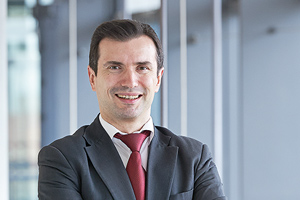
Salvatore Modica serves as a Full Professor of Economics (ECON-01/A) at the University of Palermo, Italy, within the Department of Economics in the School of Economics and Business Administration. His academic career spans over fifteen years with continuous teaching assignments from the 2009/2010 academic year through the upcoming 2026/2027 term. Professor Modica maintains regular office hours on Mondays, Wednesdays, and Fridays from 1:00 pm to 2:00 pm and can be contacted at salvatore.modica@unipa.it or by phone at +3909123895276. Professor Modica's research focuses on the theoretical foundations of economic behavior with particular emphasis on game theory, political economy, and institutional analysis. His work examines how social norms emerge and persist through evolutionary processes, how power dynamics shape institutional development, and how strategic interactions determine economic outcomes. He has developed sophisticated theoretical frameworks for analyzing collective action problems, leadership structures, and the political economy of conflict, often bridging mathematical rigor with institutional insights. His recent scholarly output demonstrates a clear trajectory toward increasingly sophisticated applications of game theory to political economy questions. Publications from 2021-2024 show deep engagement with how social norms interact with power structures, how institutions evolve through conflict, and how seemingly irrational behaviors emerge as stable equilibria. His work increasingly connects theoretical game-theoretic models with historical and contemporary political economic phenomena, particularly in understanding state formation and organizational behavior. Throughout his career, Professor Modica has maintained a robust teaching schedule across multiple disciplines including Informatics, Business Economics, Statistics and Data Science, and Economic and Financial Sciences. His core courses—Calculation of Probabilities, Game Theory, and Political Economy—have been consistently offered across various degree programs, demonstrating his central role in providing quantitative economic education at the University of Palermo.