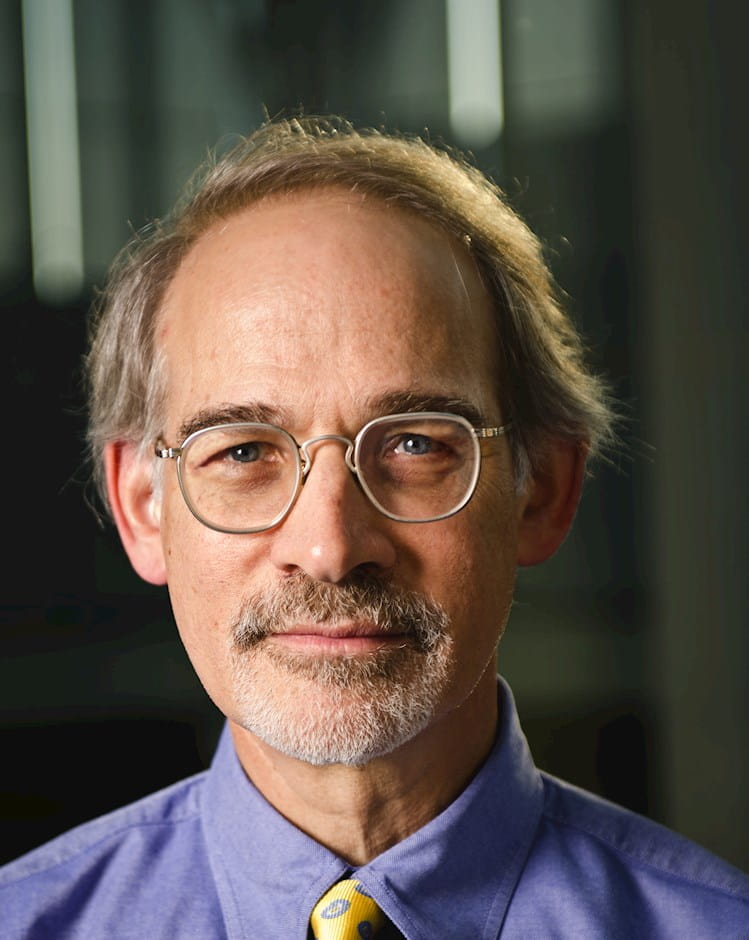
Professor Nicol McGruer is a Professor in the Department of Electrical and Computer Engineering at Northeastern University, with an affiliation to the Mechanical and Industrial Engineering department. His primary research focuses on MEMS, NEMS, micro/nanofabrication, and related technologies such as RF MEMS, microrelays, and nanoswitches. He directs the Microfabrication Laboratory and Scanning Electron Microscopy Facility. McGruer earned his B.S. in Physics and M.S./Ph.D. in Electrical Engineering from Michigan State University. Notable awards include the Søren Buus Outstanding Research Award and the Joel and Spira Excellence in Teaching Award. His work spans projects like the PLASMID (Plasmonic Microelectromechanical Infrared Digitizer) and Zero-Power Sensor initiatives, funded by DARPA. He has authored numerous high-impact publications in journals like Nature Nanotechnology and IEEE Sensors Journal. Education: Ph.D. in Electrical Engineering, Michigan State University (1983). Research highlights include advancements in microfabrication processes, MEMS device design, and nanoscale material testing. Key collaborations include work with Prof. Matteo Rinaldi on zero-power sensor technologies.
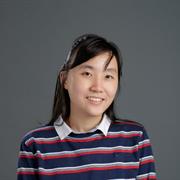
Dr. Hua Qian Vivian Ang is a Senior Lecturer in the School of Engineering at RMIT University, with a focus on light alloys, additive manufacturing, and engineering education. She is the founder of EPIC Engineering Comic, an initiative blending visual arts with engineering knowledge to enhance accessibility and engagement. Her research emphasizes magnesium alloys' mechanical properties and deformation behaviors, alongside laser processing and additive manufacturing innovations. Education: PhD in Mechanical and Manufacturing Engineering (RMIT University, 2017), Bachelor of Engineering (RMIT, 2013), Diploma in Digital and Precision Engineering (Nanyang Polytechnic, 2011). Professional memberships include Engineers Australia (Chartered Professional Engineer) and Australasian Association for Engineering Education. Research interests span light alloys, magnesium alloy applications, additive manufacturing processes, and educational initiatives. Awards include the 2024 Australian Awards for University Teaching (Outstanding Contributions), 2024 Emerging Professional Engineer of the Year (Victoria), and 2014 RMIT 3MT Competition (Winner and People's Choice). Teaching roles include coordinating mechanical and materials engineering courses across RMIT's global partners (Singapore, Hong Kong, China) and leading the EPIC educational framework. She initiated the RMIT-Macau University Joint PhD program and holds leadership roles in accreditation and program development. Engagement includes editorial board memberships (e.g., Smart Materials in Manufacturing), industry collaborations, and volunteer efforts for community-driven engineering initiatives. Recognized for contributions to STEM equity and innovative outreach through her comic series.
Sharon Hewner is a Professor at the University at Buffalo School of Nursing , specializing in healthcare informatics, transitions of care, and social determinants of health. Her research integrates technology, data analysis, and cross-sector collaboration to improve care coordination for high-need patients. Education: PhD in Anthropology, University at Buffalo MS in Gerontological Nursing, University of Rochester BS in Nursing, University of Rochester Research Interests: Hewner focuses on transitional care models , care coordination , and leveraging machine learning and natural language processing to develop conversational tools for nurses. Her work addresses health disparities , chronic disease complexity , and population health informatics . Publication Trends: Recent articles highlight machine learning applications in heart failure care, cross-sector interventions for homeless populations, and data-driven care coordination . These reflect her commitment to integrating social determinants of health into clinical workflows. Scientific Awards: Fellow, American Academy of Nursing (2018) Excellence in Research Scholarship Award, UB School of Nursing (2021) First Place: AJN Informatics Category (2023) Milton Plesur Teaching Excellence Award, UB (2013) Grant Funding: Her AHRQ-funded Coordinating Transitions project reduced Medicaid care costs by $1,300 per patient. She co-authored a $1.95M NIH-funded study on medication harm in older adults (2023). Affiliations: Hewner serves on the NIH special emphasis expert panel , Niagara Hospice , and HEALTHeLINK , and is a member of the American Academy of Nursing , NIH Care Planning Workgroup , and QSEN Consortium .
Dr. Cruz Izu is a Lecturer in the School of Computer and Mathematical Sciences at the University of Adelaide. She holds a BSc (Hons) in Computer Science and a PhD in Computer Architecture from the University of the Basque Country, along with a Graduate Certificate in Online Learning from the University of Adelaide. Her research focuses on two primary areas: interconnection network design for parallel systems and computer science education methodologies. Research Interests: Interconnection networks in parallel systems and Network-on-Chip architectures Computer Science Education, including program comprehension, code quality assessment, and pedagogical strategies for novice programmers Computational thinking and problem-solving in early university education Teaching Contributions: Coordinator for Masters of Computing and Innovation program Lead developer of Systems, Programming, and Problem Solving courses Former coordinator of the Google-funded Educators PD program (2011-2020) Collaborations: International partnerships with institutions in Spain, Italy, and Australia Contributions to the design of the SACE Digital Technologies curriculum Professional Activities: Editor of Informatics in Education (2021 Special Issue on Abstraction) PC member for SIGCE and ITiCSE conferences
Prof. Namkje Koudenburg is an Associate Professor of Psychology at the University of Groningen's Faculty of Behavioural and Social Sciences. Her research focuses on group processes, communication dynamics, and social change, particularly exploring how conversational interactions shape solidarity and regulate norms. She holds a PhD in Psychology (cum laude, 2014) and has held visiting positions at Princeton University and the University of Melbourne. Key research areas include polarization, online disagreement, and the social consequences of mediated communication. She leads projects such as the Interreg North Sea Region 'Speak Up' initiative on constructive dialogue and the 'Deviant Causes Social Change' study on norm evolution. Her work has been recognized with awards including the KNAW Early Career Award (2020) and the European Association of Social Psychology's Jos Jaspars Award (2017). Teaching responsibilities include Group Dynamics for third-year psychology students and supervising PhD candidates in topics like moralization in polarized contexts and online social regulation. She co-edits Acta Psychologica and serves on the editorial board of the Journal of Personality and Social Psychology . Notable publications span topics such as conversational flow’s role in solidarity, the depolarizing effects of diplomatic skills online, and the 'sound of silence' in norm erosion prevention. Her work bridges social psychological theory with real-world applications in climate activism and health interventions.
Silvia Holler is a Researcher (RTD-A) at the Department of Cellular, Computational, and Integrative Biology (CIBIO) at the University of Trento. She specializes in biochemistry, biotechnology, and synthetic biology with a focus on enzymology, catalysis, and structural biology. Her work spans experimental and computational studies of protocells, droplet-based systems, and self-organizing soft matter. Teaching responsibilities include co-teaching the Biochemistry course at CIBIO, where she collaborates with scholars like Giovanni Piccoli and Martin Michael Hanczyc. The course covers foundational topics in biochemistry, enzymology, and molecular structures with practical skills in chromatography and enzymatic kinetics. Research interests emphasize artificial life systems, droplet engineering, and the physics of biological organization. Key themes include protocell formation, compartmentalized biochemistry, and ethical implications of synthetic biology innovations. Recent work explores self-organized patterns in soft matter, active matter dynamics, and computational modeling of multi-phase systems. Publications focus on droplet microfluidics, vesicle interactions, and agglomeration phenomena across scales. Collaborative efforts include editorial roles for artificial life conference proceedings and interdisciplinary projects combining biophysics with materials science. No scientific awards were explicitly mentioned in the provided materials. Her research lab activities are embedded within CIBIO's facilities, focusing on experimental setups for droplet-based synthetic biology and computational simulations of complex systems.
Lisbet Fjæran is an Associate Professor at the Department of Safety, Economics and Planning within the Faculty of Science and Technology at the University of Stavanger. Her research focuses on the intersection of risk perception, uncertainty analysis, and stakeholder dynamics, particularly in high-consequence industries like petroleum and technology sectors. Risk research methodology Uncertainty-based risk perspectives Stakeholder engagement frameworks Social dynamics of risk amplification Public-private sector risk governance Recent publications highlight her work on expert roles in risk communication, critical trust frameworks, and the paradox of risk attenuation leading to disaster. Her scholarship spans both theoretical and applied domains, with fieldwork in Norwegian regulatory contexts. Active collaborations include Terje Aven and Kenneth Gould, with co-authored works appearing in top-tier journals like Journal of Risk Research and Safety Science . While no formal awards are documented in the provided texts, her contributions to safety governance theory remain significant.
Dr. Sriram Narayanan is a Full Professor and the Eli Broad Professor in Supply Chain Management at Michigan State University's Eli Broad College of Business. He specializes in supply chain management, operations strategy, and innovation, with a focus on sustainability, diversity, and global supply chain governance. His research explores topics such as disability inclusion in operations, environmental stewardship, and the integration of Industry 4.0 technologies with lean practices. His work bridges theoretical and practical challenges in supply chain dynamics, including collaborative networks in pharmaceuticals, ethical supplier governance, and organizational learning for resource efficiency. He has contributed to high-impact journals like Production and Operations Management and serves on editorial boards, including Service Science . Narayanan’s research emphasizes actionable insights for businesses and policymakers, addressing issues like water stress, agile pharmaceutical development, and inclusive workforce strategies. He has no listed advising grants, but his articles consistently highlight interdisciplinary approaches to operational challenges.
Prof. Dr. Miroslaw Malek is a Professor and Chair of Computer Architecture and Communication at the Humboldt University of Berlin's Institute of Computer Science. His research focuses on parallel/distributed systems, dependability, real-time systems, and embedded systems. He leads the Computer Architecture Research Group (ROK) and has supervised numerous PhD students across multiple institutions. Malek's work emphasizes fault management, network reliability, and proactive system design. His academic roles include advising on over 25 PhD theses and co-authoring influential books like Responsive Computer Systems . He holds a prominent position in the field, with extensive contributions to service availability, failure prediction, and fault-tolerant computing. Key affiliations include the Faculty of Mathematics and Natural Sciences and the Institute of Computer Science at Humboldt University. Research Interests: - Parallel/distributed/embedded systems - Dependability and real-time responsiveness - Web service architecture and fault tolerance - Network reliability and failure prediction Notable Achievements: - Developed consensus-based frameworks for responsive systems - Pioneered failure prediction methods using hidden Markov models - Authored/co-authored over 30 books and 200+ peer-reviewed publications - Supervised 25+ doctoral students at UT Austin and Humboldt University - Active in international workshops and symposiums on dependability and fault tolerance Labs/Teams: - Computer Architecture Research Group (ROK) at Humboldt University - Collaborations with TU Berlin, Duke University, and University of Minnesota
Dragan Djurdjanovic is the Accenture Endowed Professor of Manufacturing Systems Engineering at The University of Texas at Austin's Department of Mechanical Engineering. He holds a Ph.D. from the University of Michigan and has expertise in advanced quality control, proactive maintenance, and data analytics in biomedical engineering. His research bridges manufacturing systems, semiconductor processes, and human performance monitoring. Djurdjanovic directed the NSF I-UCRC on Intelligent Maintenance Systems and co-authored over 69 journal papers. Awards include the SME's Outstanding Young Manufacturing Engineer Award and CIRP membership. Education: B.S. Mechanical Eng. & Applied Mathematics (1997), University of Niš, Serbia M.S. Mechanical Eng. (1999), Nanyang Technological University, Singapore M.S. Electrical Eng. (Systems), Ph.D. Mechanical Eng. (2002), University of Michigan Research Focus: Djurdjanovic’s work emphasizes system-level optimization in manufacturing, including virtual metrology for semiconductor processes and predictive maintenance. He applies probabilistic modeling to neuromusculoskeletal systems and integrates IoT in manufacturing metrology. Recent articles address energy-efficient control, fatigue monitoring, and big data analytics in industrial systems. Awards: Fellow of the International Society for Engineering Asset Management 2018 August-Wilhelm Scheer Visiting Professorship Labs/Teams: Associate Director of the NSF Engineering Research Center on Nanomanufacturing (NASCENT) and leader of the Cyber-Physical Manufacturing Metrology Model (CPM3) initiatives.
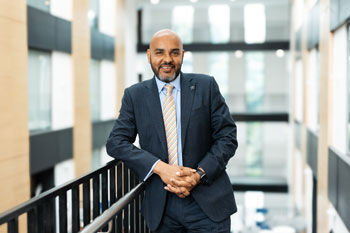
Professor David Mba is the Vice-Chancellor of Birmingham City University (BCU), appointed in October 2023. He leads strategic vision development and oversees the University’s 2030 Strategy. Previously, he served as Deputy Vice-Chancellor for Research at the University of the Arts London and Pro Vice-Chancellor at De Montfort University, holding roles including Dean of Engineering and Faculty Pro Vice-Chancellor. Educated at Cranfield University, he holds a PhD in Mechanical Engineering, awarded the Lord King Norton Gold Medal for his doctoral thesis. His research focuses on mechanical systems, fault detection, and predictive maintenance, with over 300 publications. He chairs the Birmingham Cultural Compact and co-chairs the Black Leaders in HE network, while serving as a Royal Academy of Engineering Fellow and Principal Fellow of the Higher Education Academy. His research interests span mechanical engineering, predictive maintenance, and acoustic-based diagnostics, with a focus on gearbox dynamics, bearing fault prognosis, and vibration analysis. Collaborations include commercial, EU, and EPSRC-funded projects. He actively contributes to industry-relevant technologies, such as acoustic metamaterials for signal enhancement and condition monitoring frameworks for rotating machinery. Awards include prestigious academic honors and leadership roles in higher education networks. His work bridges academia and industry, emphasizing practical solutions for mechanical system reliability and safety.
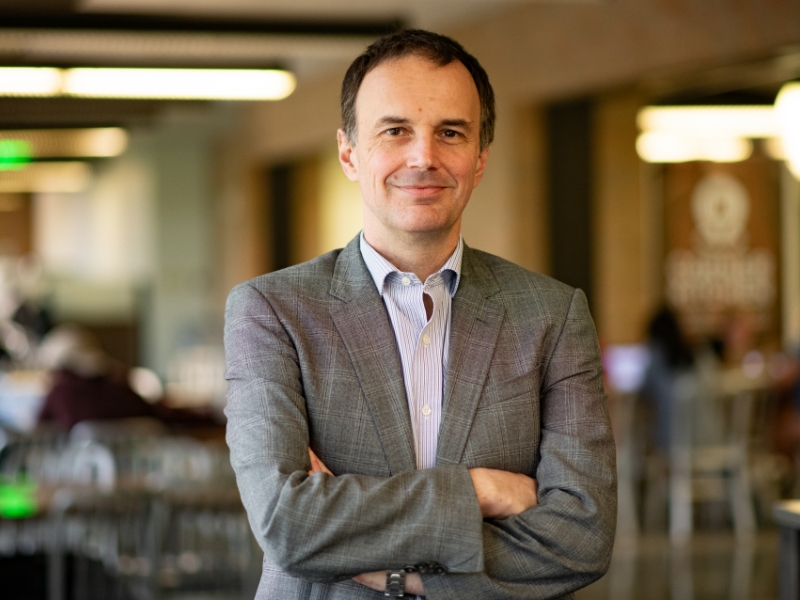
James E. Schrager is a Clinical Professor of Entrepreneurship and Strategic Management at the University of Chicago Booth School of Business. His research focuses on the application of strategy in executive decision-making, leveraging Herbert A. Simon’s Bounded Rationality model to predict business success or failure, and analyzing board governance and venture capital processes. Education: Bachelor’s in Economics, Oakland University MBA, University of Colorado J.D., DePaul University College of Law PhD in Organization Behavior and Policy, University of Chicago Booth His research spans behavioral strategy, corporate turnarounds, and technology commercialization, including collaborations on cardiovascular devices and malaria vaccines. His work has been featured in publications like the Wall Street Journal and CEO Magazine, and he served as founding editor of the Journal of Private Equity for 15 years. Awards: Emory Williams Award for Excellence in Teaching (3x) Faculty Excellence Teaching Award (2017) BusinessWeek’s Top 12 Entrepreneurship Teachers Schrager advises major corporations, startups, and professional service firms, with prior roles at The Marmon Group and Getz Brothers Co., where he executed the first private U.S. IPO in Japan. He also contributes to case-based experiments with Booth MBA students.
Ashkan Yousefpour is a Computer Scientist with a PhD from the University of Texas at Dallas , where he contributed to the FLOW project. He served as a Lecturer and research assistant at UT Dallas, while also working as a Visiting Researcher at UC Berkeley . His research spans Fog/Edge Computing , Federated Learning , Reinforcement Learning , and Distributed Systems . Current Role: AI Scientist at Meta Academic Affiliation: Department of Computer Science, University of Texas at Dallas Research Interests include: Minimizing IoT service delay through fog offloading Developing failure-resilient distributed neural networks (ResiliNet) Advancing privacy-preserving machine learning (Opacus, Papaya) Optimizing traffic flow with autonomous vehicles via reinforcement learning Advising : Supervised multiple graduate students including Ashish Patil , Harshavardhan Nalajala , and Brian Nguyen . Collaborated with researchers like Professor Alexandre Bayen (UC Berkeley) and Professor Cathy Wu (MIT) on traffic control frameworks such as Flow .
Thomas Byrd, MD, MS, serves as Assistant Professor in the Division of Hospital Medicine within the Department of Medicine at the University of Minnesota School of Medicine. His academic work bridges clinical practice with cutting-edge informatics research, focusing on improving hospital-based care through technological innovation and data-driven approaches. Dr. Byrd's research program centers on artificial intelligence applications in surgical and critical care settings, patient deterioration detection systems, and secure clinical communication technologies. His investigations span validation of deterioration index models, barriers to secure messaging adoption, AI-driven radiology follow-up systems, and earlier work in medical imaging and biomedical engineering. This multidisciplinary focus aims to enhance patient safety through real-time monitoring, workflow optimization, and predictive analytics in hospital environments. Analysis of his 15 most recent publications (2014-2024) reveals an evolving research trajectory from biomedical engineering foundations toward AI-driven clinical solutions. Key thematic clusters include: (1) AI applications in surgery and critical care triage; (2) patient deterioration monitoring systems; (3) secure mobile communication adoption; and (4) earlier biomedical engineering work in medical imaging and drug delivery systems. The publications demonstrate increasing focus on translational informatics with strong emphasis on real-world implementation challenges. Scientific Awards: No scientific awards documented in available source material Advising and Grants: While Dr. Byrd's role as faculty suggests potential advising responsibilities, no student names or grant funding details appear in the provided documentation. His research output indicates active investigation in clinical informatics but specific mentoring activities or funded projects remain unspecified in the source text. Laboratory and Team Affiliations: Dr. Byrd is institutionally anchored in the Division of Hospital Medicine at the University of Minnesota, though specific laboratory facilities or dedicated research teams are not described. His collaborative work appears cross-disciplinary, spanning departments of medicine, surgery, radiology, and biomedical engineering as evidenced by publication topics.
Franca Trubiano is an Associate Professor of Architecture and Graduate Group Chair of the PhD Program in Architecture at the University of Pennsylvania's Weitzman School of Design. She is also a Registered Architect with l'Ordre des Architectes du Québec and co-director of Penn's Mellon-funded Humanities + Urbanism + Design (H+U+D) Initiative. Her work bridges academic research with practical applications in architectural design, building technology, and ethical considerations in the construction industry. Dr. Trubiano received her PhD in Architecture from the University of Pennsylvania in 2005, following M.Arch and B.Arch degrees from McGill University. Prior to her appointment at Penn, she served as Assistant Professor at the Georgia Institute of Technology (2004-2009) and as the McMahan Visiting Associate Professor at Clemson University (2003-2004). Her research focuses on the intersection of architecture, ethics, and environmental responsibility. Dr. Trubiano investigates how building practices impact human health, labor conditions, and environmental sustainability. Her work examines the role of fossil fuels in building materials, forced labor in construction supply chains, and the ethical responsibilities of architects in addressing these critical issues. She approaches these topics through both theoretical frameworks and practical design solutions, emphasizing the need for architects to 'think through building' as a fundamental aspect of architectural practice. Dr. Trubiano's publications reveal a consistent trajectory toward addressing pressing social and environmental challenges through architectural research and practice. Her recent work has increasingly focused on material health, ethical building practices, and the connections between fossil fuel dependence and architectural design. She has made significant contributions to understanding how building materials affect human health and how architectural education and practice can address labor exploitation in the building industry. Her edited volumes often highlight underrepresented voices, particularly women in architecture, and explore innovative approaches to sustainable design. G. Holmes Perkins Award for Distinguished Teaching (2014) Sejong Outstanding Scholarly Book Award for 'Design and Construction of High-Performance Homes' (2015) Outstanding Interdisciplinary Activity Award at Georgia Tech (2008) Outstanding Teacher Award from College of Architecture at Georgia Tech (2007) ARCC Best Conference Paper Award (2005) ACSA/COTE Top Ten Student Award for student work from her studio (2015) COTE Award for student work from her studio (2009) As Graduate Group Chair of the PhD Program in Architecture, Dr. Trubiano mentors doctoral students researching diverse aspects of architectural theory, history, and technology. Her research is supported by significant grants including funding from the Mellon Foundation for the Humanities + Urbanism + Design Initiative, the Kleinman Center for Energy Policy for research on 'Fossil Fuels, the Building Industry, and Human Health,' and Penn's Perry World House for research on 'Migration, the Building Industry and Forced Labor.' She was also a Principal Investigator for the Consortium for Building Energy Innovation (CBEI), a Department of Energy-funded project that developed Advanced Energy Integrated Design Roadmaps for the architecture, engineering, and construction industry. Dr. Trubiano leads the 'Building at Risk' research project and policy initiative, which addresses human and environmental risks associated with architectural design and construction. This initiative convenes architects, engineers, builders, clients, and policymakers to address issues including material toxicity, forced labor, urban migration, building failures, and governance failures in the building industry. Through this work, she seeks to influence policy changes that address the impact of fossil fuels, climate change, and labor practices on human health and social justice.