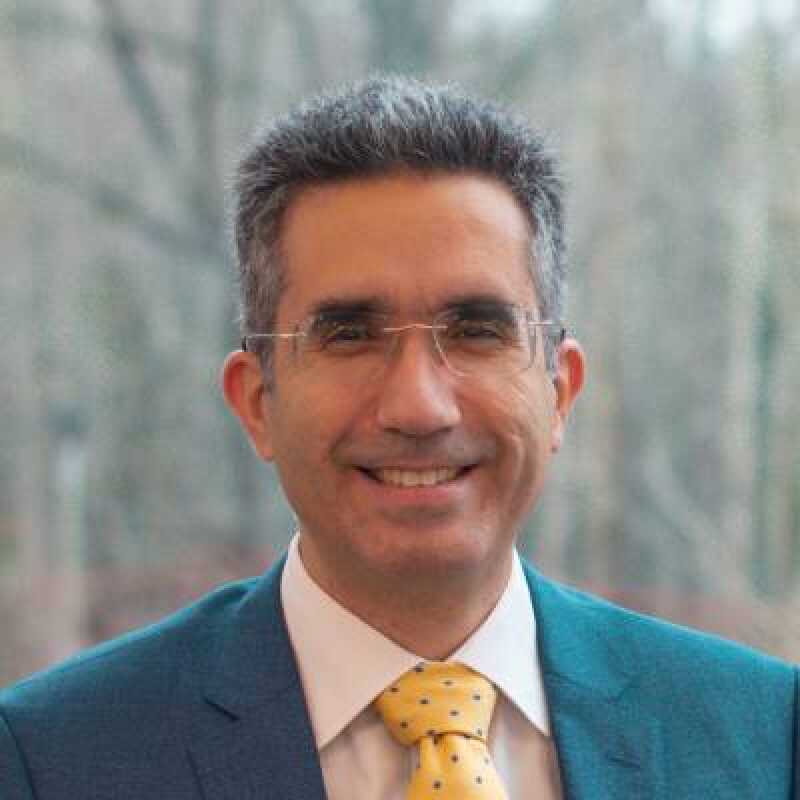
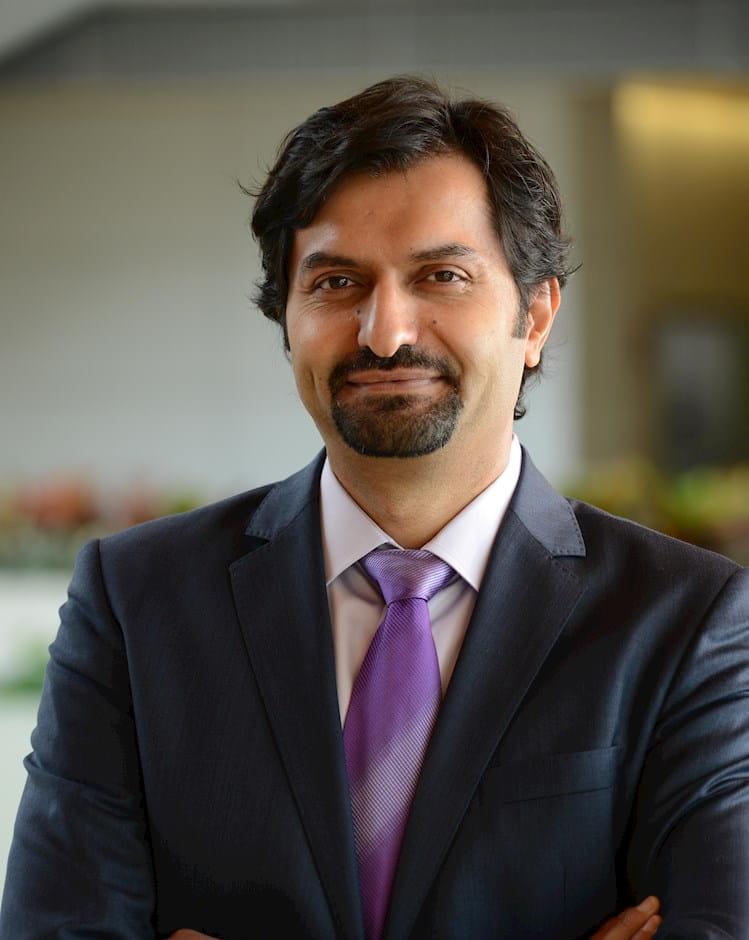
Prof. Jack van der Vorst is the Personal Professor of AgriFood Supply Chain Logistics at Wageningen University's Operations Research and Logistics Group. Previously serving as a member of the Board of Directors of Wageningen University & Research (until 2024) and General Director of the Social Sciences Group, he leads over 1000 personnel across three institutes. His advisory roles include the Topteam AgriFood (Science Captain), Top consortium for Knowledge and Innovation (TKI), The Sustainability Consortium (TSC), and Florensis BV's Supervisory Board. With 20+ PhD supervisions and 200+ publications, his research focuses on innovative logistics concepts in AgriFood systems, including supply chain resilience, sustainability, and system innovation. His work integrates modeling frameworks with practical industry applications, emphasizing perishable products, horizontal collaboration, and environmental efficiency. Research interests span AgriFood System Design, Supply Chain Strategy, and Performance Management. His recent studies address challenges like postharvest loss reduction in developing countries, CO2 emission minimization in cold chains, and circular economy implementation in mushroom supply chains. Methodologically, he employs multi-criteria decision models, optimization techniques, and simulation to address complex logistics problems. Publications highlight themes such as horizontal collaboration success factors, vulnerability assessment frameworks, and green supply chain design. His work bridges academic rigor with industry needs, often collaborating with policymakers and international organizations to promote sustainable agri-food systems.
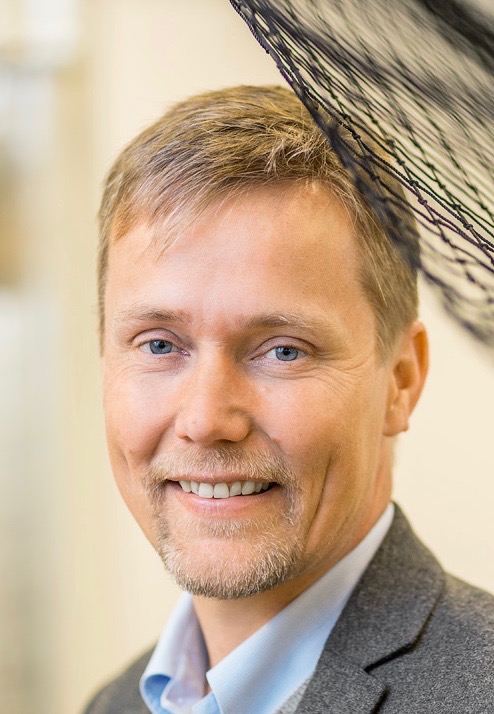
Karl Henrik Johansson is a Professor at the School of Electrical Engineering and Computer Science, KTH Royal Institute of Technology in Stockholm, Sweden, where he also serves as the Founding Director of Digital Futures. He is a Fellow of both IEEE and the Royal Swedish Academy of Engineering Sciences, and has held leadership positions including Immediate Past President of the European Control Association and IEEE Control Systems Society Vice President Diversity, Outreach & Development. Dr. Johansson earned his MSc in Electrical Engineering and PhD in Automatic Control from Lund University. His academic journey includes visiting positions at prestigious institutions such as UC Berkeley, Caltech, and NTU. His research focuses on networked control systems and cyber-physical systems with applications in transportation, energy, and automation networks. His work investigates fundamental challenges in connecting physical world systems through communication networks, exploring how wireless communication and sensor technology can enhance system robustness, reliability, energy efficiency, and safety. Current research directions include security of cyber-physical systems, distributed optimization, multi-agent systems, and applications to intelligent transportation and energy networks. Analysis of his recent publications reveals a strong focus on distributed optimization algorithms, secure networked control, multi-agent systems, and applications to transportation and energy networks. His work increasingly integrates machine learning techniques with traditional control theory, addressing challenges in privacy-preserving distributed computation, resilient state estimation, and resource allocation in complex networked systems. IEEE Control Systems Society Hendrik W. Bode Lecture Prize (2024) Swedish Research Council Distinguished Professor (2018-2027) Wallenberg Scholar (2009-2026) IFAC Young Author Prize IEEE CSS Distinguished Lecturer (2017-2019) IFAC Outstanding Service Award IEEE Fellow Dr. Johansson has supervised over 100 postdocs and PhD students, with many now holding prominent positions at institutions worldwide. His research has been supported by significant grants including the Swedish Research Council Distinguished Professor Grant (2018-2027), multiple Wallenberg Foundation grants, and numerous EU and national research projects. He has directed major research centers including ACCESS Linnaeus Centre (2009-2016) and Strategic Research Area ICT TNG (2013-2020). His research group operates within the Digital Futures initiative and maintains strong connections with industry partners through projects like the Integrated Transport Research Lab (supported by Scania and Ericsson) and Smart Mobility Lab. The group actively collaborates with international institutions and participates in major EU-funded projects addressing challenges in cyber-physical systems, transportation, and energy networks.
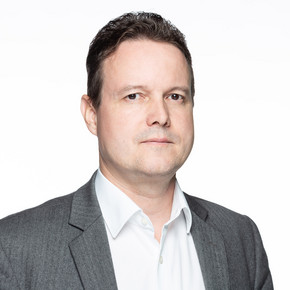
Gerald Reiner serves as Head of the Institute for Production Management at the Vienna University of Economics and Business (WU), within the Department of Information Systems and Operations Management. He holds a Magister Degree, doctorate, and Habilitation in Business Administration from WU. His academic career includes positions as full professor in Production Management and Logistics at the University of Neuchatel (Switzerland, 2007-2014) and Universitaet Klagenfurt (Austria, 2014-2018), where he also served as head of the department of Operations, Energy, and Environmental Management. Dr. Reiner has held visiting professorships at Aston Business School (UK), HEC Lausanne (Switzerland), University of Bergamo, and Università Cattolica del Sacro Cuore in Milan (Italy). His research spans several critical areas including Industry 4.0 implementation, integrated capacity and inventory management, humanitarian logistics operations, circular supply chains, and operations management for base of the pyramid contexts. His work particularly focuses on practical applications addressing food waste reduction, sustainable manufacturing, and blockchain technology in supply chains. His publication portfolio demonstrates a clear evolution toward digital transformation in operations, with recent focus on hydrogen production systems, AI integration in manufacturing, and blockchain applications for food supply chain transparency. The research shows increasing emphasis on sustainability integration within traditional operations management frameworks, particularly addressing European manufacturing challenges and food system inefficiencies. Publication Excellence Award 2021 (2023) Researcher of the month (January 2023) Highly Commended paper in the 2017 Emerald Literati Network Awards for Excellence ISIR Service Award (2014) Emerald Outstanding Paper Award (2013) Dr. Reiner coordinates multiple significant international research projects including EU-project 'Keeping Jobs in EU', EU/Ecsel-project 'Power Semiconductor and Electronics Manufacturing 4.0', 'Integrated Development 4.0', and 'Artificial Intelligence in Manufacturing leading to Sustainability and Industry 5.0'. His current projects focus on FOODIS (cross-border ecosystem for innovation in food supply chains), Circular Design implementation, and blockchain applications for banana supply chains. He actively supervises research teams working on food waste reduction, sustainable packaging systems, and AI applications in operations management.
Giuliano Di Baldassarre is a Professor of Hydrology and Environmental Analysis at the Department of Earth Sciences, Uppsala University , Sweden. He serves as Head of Division for LUVAL (Air, Water and Landscape Sciences) and directs the Centre of Natural Hazards and Disaster Science (CNDS) (2016–2025). His work bridges water, environment, and society through interdisciplinary methods , focusing on disaster risk reduction, climate adaptation, and sustainable development. Education : Details not explicitly provided in the text. His research examines feedbacks between human activities and hydrological processes , including floods, droughts, and reservoir management . Key themes include social-ecological systems , inequalities in water crises , and policy implications of hydrological extremes . He has pioneered sociohydrology and human-water system modeling . Recent articles highlight global drought-flood interactions , urban water inequality , climate service maladaptation , and sociohydrological modeling . His work spans Nature Sustainability , Science Advances , and Hydrological Sciences Journal . Scientific Awards : International Hydrology Prize (Volker Medal) Plinius Medal (EGU) Witherspoon Lecture Award (AGU) European Research Council Consolidator Grant He led Panta Rhei - Everything Flows (2013–2022), IAHS’s global initiative on water-society interactions. Current efforts include transdisciplinary praxis and climate risk reduction frameworks .
Sean McGinnis serves as a Professor of Practice and Director of the Green Engineering Program within the Department of Materials Science and Engineering at Virginia Tech's College of Engineering. His academic and professional endeavors focus on advancing sustainable engineering practices through education, research, and industry collaboration. Dr. McGinnis earned his educational qualifications from prestigious institutions: a B.S. in Chemical Engineering and Materials Science from the University of Minnesota, followed by a Ph.D. in Materials Science and Engineering from Stanford University. His research program is centered on Green Engineering principles, with specific expertise in Life Cycle Assessment, Sustainable Manufacturing Processes, Design for Environment, Carbon Footprint Analysis, Renewable Energy systems, and Interdisciplinary Education methodologies. He has pioneered courses such as Introduction to Green Engineering (ENGR 3124) and Environmental Life Cycle Analysis (ENGR 4134) that equip students with tools to evaluate environmental impacts across product lifecycles. His Earth Sustainability course (UCCS 2984) further extends this interdisciplinary approach to broader societal challenges. Analysis of his publication record reveals a consistent trajectory toward sustainable technology innovation, particularly in the life cycle assessment of nanomaterials and waste streams. Recent work examines circular economy models for nanowaste recycling, environmental implications of nanoparticle synthesis, and the development of optical systems that mitigate harmful blue light exposure while maintaining visual performance. This research bridges materials science, environmental engineering, and human health considerations. Professional recognition for Dr. McGinnis includes: LEED AP BD&C certification Life Cycle Assessment Certified Professional designation Johnson & Johnson Standards of Leadership Award (2003) In his leadership capacity as Director of the Green Engineering Program, Dr. McGinnis oversees curriculum development that integrates sustainability across engineering disciplines. He has published on educational methodologies for assessing interdisciplinary integration of green engineering knowledge and has organized introductory green engineering courses for undergraduates. His work extends to operational phase life cycle assessment of facilities and sustainable provision of food and water systems.
Anna Maria Oberländer is Assistant Professor for Information Systems and Digital Transformation at the University of Bayreuth's Faculty of Law and Economics. She also serves as Deputy Academic Director of the Research Center Finance & Information Management and holds a leading position at Fraunhofer FIT's Branch Business & Information Systems Engineering, where she co-heads a research group and manages the Digital Innovation Lab as one of its co-founders. Dr. Oberländer earned her Master of Science with honors from the Elite Graduate Program Finance & Information Management at the University of Technology Munich and the University of Augsburg in 2015, including a research visit at Queensland University of Technology. She was accepted into the 16th class of the Bavarian EliteAcademy, receiving leadership training across Germany, Belgium, China, and Vietnam. Prior to academia, she worked as a strategy consultant at McKinsey & Company from 2015 to 2018, supporting clients in Advanced Industries and Financial Services with digital transformations. She completed her dissertation at the University of Bayreuth's Law and Economics Faculty in 2020. Her research focuses on understanding and designing digital transformation and innovation from established companies' perspectives. She examines digital transformation processes and patterns, the relationship between organizational digital transformation and digital ecosystems, organizational ambidexterity, resource-based digital opportunities for incumbents, and the socio-technical and economic impacts of IoT and AI technologies. Her work spans theoretical frameworks like the OCO (Orientation, Cooperation, Orchestration) Theory for understanding digital ecosystems' influence on transformation. Dr. Oberländer's recent publications reveal a strong trend toward integrated digital-sustainability research (twin transformation), AI strategy and implementation, digital ecosystem dynamics, and industry-specific digital innovation. Her work bridges theoretical frameworks with practical applications across diverse sectors including public administration, manufacturing, and smart cities. She has developed capability maturity models for twin transformation and explored semantic search adoption in SMEs. Science Award 2020 from Universitätsverein Bayreuth e.V. With extensive industry experience at Siemens, Siemens Financial Services, Allianz, and McKinsey & Company, Dr. Oberländer brings practical insights to her academic work. Her Fraunhofer FIT role connects her research to real-world applications through the Digital Innovation Lab. She has led collaborative research projects across multiple industries, including the print industry's sustainability potential with AI, dairy industry digital innovation, and public administration digitalization. Dr. Oberländer co-heads a research group at Fraunhofer FIT and manages the Digital Innovation Lab, which serves as a hub for collaborative research between academia and industry. Her work with the Research Center Finance & Information Management facilitates interdisciplinary collaboration across finance and information systems domains.
Retsef Levi is the J. Spencer Standish (1945) Professor of Operations Management at the MIT Sloan School of Management, affiliated with the MIT Operations Research Center. He co-directs the Leaders for Global Operations (LGO) Program. His work focuses on data-driven decision models for healthcare systems, supply chain optimization, and risk management. Levi holds a PhD in Operations Research from Cornell University and has led industry collaborations with major hospitals and organizations like the FDA and Walmart Foundation. Education: PhD in Operations Research, Cornell University, 2005 Bachelor’s in Mathematics, Tel-Aviv University, 2001 Research Interests: Levi’s research addresses complex decision-making under uncertainty in healthcare, supply chains, and logistics. Key areas include food safety analytics, risk-based sampling, and predictive modeling for zoonotic diseases. He designs algorithms for inventory control, appointment scheduling, and healthcare resource allocation. Articles Overview: Recent work spans AI-driven epidemiological models, supply chain cybersecurity, and agricultural market interventions. His articles emphasize practical applications of operations research in healthcare and public health. Awards: NSF Career Grant INFORMS Optimization Prize (2008) Wagner Prize (2013) Harold W. Kuhn Award (2016) Advising & Grants: Advised 10 PhD students and 34 master’s students. Led multi-million-dollar projects like the Walmart Foundation initiative for China’s food safety. Active in hospital process optimization and FDA risk management contracts. Labs & Teams: Runs MIT’s Food Supply Chain Analytics and Sensing Initiative, collaborating with global partners on predictive risk tools and healthcare analytics.
Professor Ingrid Undeland leads the Marine research group at the Division of Food and Nutrition Science, Department of Life Sciences at Chalmers University of Technology. She is a distinguished researcher with expertise spanning marine food science, lipid chemistry, and blue biorefining, having established herself as a leading figure in sustainable seafood research and marine biotechnology. Her educational background includes food science studies from Linnaeus University and a PhD in bioscience from Chalmers University of Technology and SIK (now RISE). Between 1999-2002, she was a post-doctoral fellow at University of Massachusetts Marine Station, which significantly shaped her research trajectory in marine food science. Professor Undeland's research focuses on pioneering next-generation seafood through innovative value chains from seaweed, small pelagic fish, fish side streams, mussels, and microalgae. Her specialized expertise lies in marine lipids and proteins, particularly their stabilization, isolation from complex sources, and nutritional properties including digestibility. She has extensive experience with antioxidant strategies using plant-derived side streams or extracts and fundamental studies of fish hemoglobins as pro-oxidants. Her work also encompasses innovative technologies for biomass fractionation and nutrient recycling to build blue biorefineries, along with in vitro digestion models and general seafood analytics. Beyond marine research, she explores filamentous fungi as sustainable alternative food protein sources. The trends in her recent publications reveal a strong emphasis on valorizing marine resources through advanced processing techniques. Her work increasingly focuses on sustainable extraction methods for seaweed proteins, particularly Ulva fenestrata, and developing antioxidant strategies using berry side streams to stabilize fish proteins. There's a growing interest in understanding the nutritional properties and digestibility of alternative marine proteins, along with environmental assessments of processing technologies. Her research consistently bridges fundamental science with practical applications for creating sustainable seafood value chains. Swedish representative in Nordic Lipidforum, WEFTA, and EuCheMS Editorial board member of Journal of the Aquatic Food Product Technology Member of the National Committee for Nutrition and Food Science at the Royal Swedish Academy of Sciences Co-founder of the startup company AquaFood H-index of 47 according to Google Scholar Professor Undeland has an extensive record of academic mentorship, having supervised or currently supervising 23 PhD students, 14 postdoctoral researchers, and examining over 25 MSc students. Her research is supported by numerous grants, including the WaSeaBi Project which focuses on valorizing seafood side-streams through holistic value chain design. She collaborates with various industry partners and academic institutions across Europe. Her laboratory includes technicians Dr. Karin Larsson and Dr. Rikard Fristedt, and she leads a dynamic research team working on multiple projects related to marine biorefining and sustainable seafood development. Her research group operates within well-equipped facilities at Chalmers University, with specialized laboratories for marine food analysis, protein extraction, lipid oxidation studies, and in vitro digestion modeling. The team also maintains cultivation systems for seaweed and filamentous fungi, enabling integrated research from raw material production to final product development.
Kristofer Gunnar Paso serves as a Professor in the Department of Chemical Engineering within the Faculty of Natural Sciences at the Norwegian University of Science and Technology (NTNU), where he conducts research at the Ugelstad Laboratory. His work integrates fundamental rheological principles with practical applications in petroleum engineering and sustainable materials development, addressing critical industry challenges through experimental and theoretical approaches. Professor Paso's research spans rheology, polymer technology, enhanced oil recovery, wax deposition mechanics, and nanocellulose applications. His investigations focus on the behavior of complex fluids—including waxy crude oils, biopolymer composites, and nanocellulose suspensions—with emphasis on improving oil transportation efficiency, developing sustainable materials, and understanding interfacial phenomena. Key contributions include modeling wax deposition mechanisms, optimizing pour point depressants, and pioneering nanocellulose applications for enhanced oil recovery under extreme conditions. Analysis of his 2018-2025 publications reveals a strategic evolution from petroleum-focused rheology toward sustainable material solutions. While maintaining strong contributions to flow assurance (40% of recent work), his research increasingly incorporates biocomposites and recycled materials (25% growth since 2020), reflecting industry shifts toward decarbonization. His collaborative approach spans petroleum engineering, food science, and environmental technology, evidenced by publications in Energy & Fuels , Polymers , and Current Opinion in Food Science . No scientific awards were documented in the source material. Professor Paso maintains active collaborations across NTNU and international institutions, though specific advising relationships and grant details remain unreported. His laboratory operations center on the Ugelstad Laboratory's advanced rheological testing facilities, which support investigations into material behavior under reservoir conditions and industrial processing environments.
Professor Thanos Papadopoulos is a faculty member at the University of Kent , serving as Deputy Dean and Head of the Department of Analytics, Operations & Systems. He is affiliated with the Centre for Logistics and Sustainability Analytics (CeLSA) . PhD : Warwick Business School, University of Warwick MSc : Informatics, Athens University of Economics and Business Diploma : Computer Engineering and Informatics, Patras University His research focuses on Operations and Information Management , with emphasis on digital technologies in supply chains , resilience , and sustainability . Recent work explores AI, metaverse, and data-driven strategies. He has authored 150+ peer-reviewed publications and collaborates with journals like British Journal of Management as Associate Editor. Awards include Stanford's Top 2% Researchers and Clarivate Highly Cited distinctions. Professor Papadopoulos supervises students in supply chain management , big data , and sustainability . His projects address geopolitical disruptions and digital transformation in manufacturing and retail.
Dr. Larry Moore is a Professor of Civil Engineering at the University of Memphis, specializing in environmental engineering with a focus on wastewater treatment optimization, water quality modeling, and energy conservation in water treatment plants. He holds a B.S. from the University of South Alabama (1973) and M.S./Ph.D. in Environmental Engineering from Mississippi State University (1974/1983). His career spans over 33 years of teaching and applied research, addressing wastewater challenges for over 200 industries in Tennessee through the UT Center for Industrial Services. Research interests include water quality modeling of streams (e.g., Loosahatchie River studies), optimization of municipal/industrial wastewater treatment plants, and energy efficiency improvements in water treatment facilities. Collaborative projects with the Tennessee Department of Environment and Conservation and the U.S. Department of Energy have driven energy savings in over 24 treatment plants. Dr. Moore has served as President of the Kentucky-Tennessee Water Environment Association (KTWEA) and received the prestigious Leary Jones Award (2009) for his contributions to the wastewater profession, inducting him into the KTWEA Hall of Fame. Teaching responsibilities include advanced graduate courses such as Biological Wastewater Treatment, Water Quality Modeling, and Solid Waste Management. Awards include multiple 'Superior Performance in University Research' recognitions (1985-1989) and the 1990 Civil Engineering Outstanding Research award. He actively mentors graduate students in applied wastewater research and has advised numerous M.S. and Ph.D. candidates focusing on treatment plant optimization and emerging technologies. Professional Affiliations: Life Member of Water Environment Federation, KTWEA Pretreatment Certification Committee (since 2000), Tennessee Water and Wastewater Operator Certification Board (since 2007) Key Projects: Operational guidance for Memphis' Maxson WWTP, energy conservation studies across 24 plants, and aeration system design improvements Community Impact: Operator training programs, NPDES permit compliance support, and industrial wastewater problem resolution
Baris Ata is the Sigmund E. Edelstone Distinguished Service Professor of Operations Management at the University of Chicago Booth School of Business. His work bridges theoretical operations management with practical applications, focusing on dynamic decision-making under uncertainty. Research Interests Ata’s research spans stochastic networks, manufacturing/service operations, healthcare delivery, and social sector innovation. Recent projects address high-dimensional stochastic control, xenotransplantation candidate selection, criminal justice logistics, and last-mile delivery challenges in Africa. Scientific Awards Best Paper in Service Science Award, INFORMS (2009) William Pierskalla Best Paper Award, INFORMS (2015) Wickham Skinner Best Paper Award, POMS (2019) Manufacturing and Service Operations Management Young Scholar Prize, INFORMS (2015) Emory Williams MBA Teaching Award (2021) Recent Publications Ata’s recent work includes topics in dynamic pricing, stochastic control, and healthcare logistics. His papers examine congestion-based pricing strategies, equilibrium analysis in queues, and policy design for organ transplantation. Broad disciplines include operations management, stochastic modeling, and healthcare analytics.
Pedro Carlos De Barros Fernandes is an Associate Professor at Universidade Lusófona , Deputy Director of the 1st cycle in Biotechnology, and an integrated researcher at the Institute of Bioengineering and Biosciences (iBB-IST). He holds a PhD in Biotechnology (1999) and a Master in Biotechnology/Biochemical Engineering (1994) from Universidade Técnica de Lisboa (IST), along with a Chemical Engineering degree from IST (1989). A member of the Order of Engineers (ID 24667), he co-founded Biotrend, a Portuguese bioprocess development company. Education PhD in Biotechnology (1999), Universidade Técnica de Lisboa MSc in Biotechnology (1994), Instituto Superior Técnico BSc in Chemical Engineering (1989), Instituto Superior Técnico Research Interests span biocatalysis, enzyme immobilization for food and pharmaceutical applications, marine biotechnology, microfluidic device development for biosensing, and steroid bioconversions using mycobacterial systems. His work integrates process engineering principles with sustainable bioprocessing techniques. Publication Trends show a focus on microreactor technology, enzyme stabilization in non-conventional media, marine-derived biocatalysts, and food waste valorization. Key themes include biocatalytic process intensification, aqueous two-phase systems for biomolecule purification, and sustainable carbon sources for biopolymer production. Scientific Awards UTL/Santander Totta Scientific Award in Biological Engineering (2011) Advising has included supervision of 5 doctoral theses and over 32 master’s theses. His expertise extends to peer-reviewing scientific articles and evaluating R&D projects. Labs & Teams are associated with iBB-IST (Institute of Bioengineering and Biosciences) and BioRG (Universidade Lusófona), with contributions to the Ciência Viva program for science dissemination.
Can ÖZCAN is an Assistant Professor and Head of the Industrial Design Department at İzmir University of Economics (IUE) since 2006. He holds a PhD in Semiotics from Dokuz Eylül University and is the Director of EKOTAM Design Research and Application Center. His academic career includes roles at Izmir Institute of Technology and Yeditepe University, where he contributed to department establishment and curriculum development. Education: B.ID (Middle East Technical University), MSc/PhD (Dokuz Eylül University, Semiotics) Research focuses on Design Project Management, History of Industrial Design, Design Education, and Semiotics. He explores design's role in crime prevention, cultural industries, and food packaging through projects like 'Secure Urban Environments by Design' and 'Menemen Pottery Development Model'. Administratively, he led EKOTAM (2011–present) and managed industry collaborations in product/service design, brand development, and franchising. His courses include advanced topics in design management, semiotics, and design history. Notable projects include EU-funded urban security frameworks and brand identity studies for Turkish agricultural products. He has advised over a dozen graduate theses on topics ranging from yacht design to sustainability in cities.
Taskin Padir is a Professor in the Department of Electrical and Computer Engineering at Northeastern University and concurrently serves as an Amazon Scholar. He holds a PhD and MS from Purdue University and a BS from Middle East Technical University. His research focuses on experiential robotics, human-robot teaming, and embodied AI, with leadership roles in the Robotics and Intelligent Vehicles Research Laboratory (RIVeR Lab) and the Institute for Experiential Robotics. Padir has led projects for DARPA, NASA, and industry partners, advancing autonomous systems for extreme environments and human-robot collaboration. Education: PhD, Electrical and Computer Engineering, Purdue University (2004) MS, Electrical and Computer Engineering, Purdue University (1997) BS, Electrical and Electronic Engineering, Middle East Technical University (1993) Research Interests: Shared autonomy and human-in-the-loop robotics Embodied artificial intelligence Human-robot teaming in extreme environments (e.g., space, disaster zones) Collaborative robotics for industrial applications His work bridges robotics, AI, and real-world challenges, with recent projects addressing seafood processing automation, robotic navigation in unstructured terrains, and spectroscopy-based environmental monitoring. Awards: Recipient of the 2024 Faculty Research Team Award, 2023 Impact Award, and 2022 Amazon Scholar distinction. His research has been funded by NSF, DARPA, NASA, and industry collaborators like Amazon Robotics and Intel. Labs: Director of the RIVeR Lab and Institute for Experiential Robotics, fostering interdisciplinary research in autonomous systems and intelligent vehicles. Current projects include CRISP (Co-worker Robots for Seafood Processing) and PROSPECT (robotic spectroscopy tools).