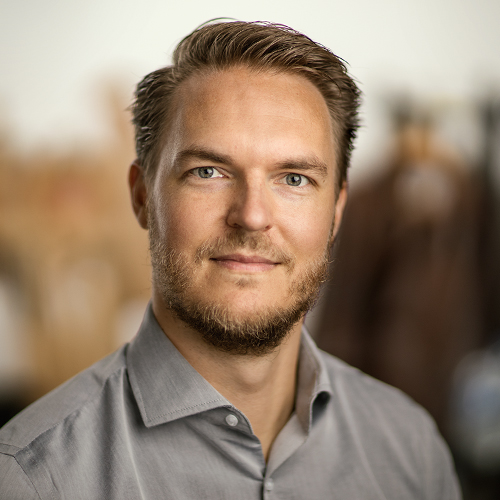
Lukas Hiendlmeier is a Researcher at the Technical University of Munich, affiliated with the Munich Institute of Biomedical Engineering (MIBE) and the Associate Professorship of Neuroelectronics led by Prof. Bernhard Wolfrum. He holds a Master of Science in Mechanical Engineering from TUM. His research focuses on advanced fabrication technologies such as 3D printing, laser micromachining, and polymer material science, with applications in neuroelectronics and biomedical devices. Hiendlmeier’s work emphasizes developing self-folding bioelectronic interfaces, flexible electrodes, and implantable neural devices for peripheral nerve interfacing. His contributions include innovations in 4D printing techniques, thermoformed materials, and origami-inspired electrode designs. He collaborates on projects involving cell manipulation, microfluidic lab-on-a-chip systems, and closed-loop neural stimulation systems. Publications span topics like self-folding bioelectronics, flexible sensor arrays, and nanorobotics, showcasing expertise in materials science and biomedical engineering. His research bridges fundamental science and translational applications, addressing challenges in neural prosthetics, wearable diagnostics, and tissue engineering. Hiendlmeier is actively involved in the neuroTUM initiative and contributes to interdisciplinary teams at TUM, focusing on advancing neurotechnology through innovative fabrication methods and biomaterials.
Christopher J. Chang is the Edward and Virginia Taylor Professor of Bioorganic Chemistry at Princeton University's Department of Chemistry. His research focuses on chemical biology, catalysis, and inorganic chemistry, with an emphasis on transition metal signaling, activity-based sensing, and drug discovery. He leads the Chang Lab, which develops innovative chemical tools to study metal-dependent biological processes, including copper's role in neurobiology and cancer, formaldehyde's role in epigenetic regulation, and redox-driven protein function. His work integrates organic, inorganic, and biological chemistry, enabling discoveries in imaging, proteomics, and precision medicine. Notable achievements include pioneering activity-based sensing platforms for copper and reactive metabolites, revealing metalloplasia in cancer, and developing copper-specific therapies. Christopher Chang has received over 50 prestigious awards, including the Guggenheim Fellowship and the Howard Hughes Medical Institute Investigatorship. His lab's infrastructure includes advanced analytical instruments, synthetic chemistry facilities, and cell culture capabilities, supported by grants from NIH, NSF, and industry partnerships. Awards: ACS Bader Award (2024), Ivano Bertini Award (2022), Blavatnik National Award (2015) Lab Focus Areas: Transition metal signaling, copper-dependent biology, formaldehyde metabolism, redox drug discovery Key Technologies: Activity-based sensors, imaging probes, bioconjugation methods
Kimberly A. Whitler serves as the Frank M. Sands Sr. Associate Professor of Business Administration at the University of Virginia's Darden School of Business. With nearly 20 years of industry experience in general management, strategy, and marketing roles within CPG and retailing sectors, she brings practical expertise to her academic work. Her career includes significant positions at Procter & Gamble, Aurora Foods, David's Bridal, and PetSmart, where she helped build $1B+ brands including Tide, Bounce, Downy and Zest. Dr. Whitler's educational background includes: B.A. in psychology and business administration from Eureka College MBA from the University of Arizona, Eller School of Business M.S. and Ph.D. from Indiana University, Kelley School of Business Whitler is an authority on marketing strategy, brand management, and marketing performance, with particular expertise in understanding how a firm's marketing performance is affected by its C-suite and board. Her research focuses on C-level marketing management challenges, digital marketing transformation, employer branding, and the emerging field of athlete branding through NIL (Name, Image & Likeness). She has authored over 350 articles as a Forbes senior contributor and published in top journals including Harvard Business Review, Journal of Marketing, and Journal of the Academy of Marketing Science. Her award-winning publications demonstrate a consistent progression from traditional brand management topics toward more strategic considerations of marketing's role at the executive and board levels. Recent work examines digital transformation, brand purpose, and the evolving CMO role, reflecting her deep understanding of how marketing strategy intersects with organizational leadership. Whitler has received numerous professional accolades: Ranked as a Top Influencer of CMOs Named Favorite Professor of Top MBA Students in Poets and Quants Winner of Darden's Morton Award in 2018 and 2021 Finalist for Journal of Marketing's 2018 MSI/Paul H. Root Award Winner of 2017 Robert D. Buzzell Best Paper award Winner of 2020 Sheth Foundation Award As an active consultant and speaker, Whitler has worked with numerous C-level organizations including Coca-Cola, McDonald's, U.S. Department of Defense, and Gartner. She has been cited over 3,600 times in major media outlets including Wall Street Journal, New York Times, and Bloomberg, establishing herself as a leading voice in marketing strategy. Her industry experience informs her teaching and research, creating a valuable bridge between academic theory and practical application. Whitler leads research initiatives focused on marketing leadership and brand strategy, often collaborating with industry partners to ensure practical relevance of her work. Her recent projects include examining the impact of marketers on corporate boards and developing frameworks for effective marketing technology implementation, positioning her at the forefront of strategic marketing research.
Jelena Vesković is a Researcher at the Department of Analytical Chemistry and Quality Control, Technical Faculty in Bor, University of Belgrade. Her work focuses on environmental chemistry, health risk assessment, and pollution source apportionment using advanced statistical models. Research Interests: Jelena specializes in analyzing potentially toxic elements in water and soil systems. Her studies integrate Monte Carlo simulations, multivariate analysis, and receptor models to assess contamination sources and health risks. Key areas include groundwater pollution, rare earth elements, and urban sediment toxicology. Recent Publications: Her 2025–2024 articles investigate radiological risks in groundwater, dietary cadmium exposure, PAH contamination in lakes, and soil-to-groundwater heavy metal migration using Monte Carlo and multivariate methods. Laboratory Affiliation: Works in the Department of Analytical Chemistry and Quality Control, contributing to environmental monitoring projects in mining regions and urban environments.
Dustin Tingley is a Professor of Government at Harvard University and holds a joint appointment at the Harvard Kennedy School of Public Policy . He serves as Interim Vice Provost for Advances in Learning and directs the Data Science and Technology Group and the Harvard Initiative on Learning and Teaching . He earned a PhD in Politics from Princeton and a BA in political science and math from the University of Rochester. Key Roles : Deputy Vice Provost (past), Chair of Harvard's Standing Committee on Climate Education Research Focus : Climate change politics, data science, causal inference, and international political economy His recent work explores the political economy of climate transitions , public opinion on carbon policies , and machine learning applications in social sciences . He co-founded ABLConnect , a repository for active learning pedagogy, and organized conferences on causal mechanisms , teaching with AI , and equitable classrooms . Awards : Gladys M. Kammerer Award (2015) for co-authored book Sailing the Water’s Edge Notable Publications : Uncertain Futures: How to Unlock the Climate Impasse (2023, with Alex Gazmararian) The Political Economy of the Clean Energy Transition (2025)
Professor Yongbo Xiao serves at Tsinghua University's School of Economics and Management, Department of Management Science and Engineering. His academic journey includes a BEng in Management Information Systems (2000), Master/PhD in Management Science and Engineering (2006), and postdoctoral research in applied economics at Tsinghua University. 2000: BEng in Management Information Systems 2006: Master/PhD in Management Science and Engineering 2006-2008: Postdoctoral Fellow in Applied Economics His research spans revenue management, pricing strategies, operations/supply chain management, and service systems. Recent work explores live-streaming e-commerce dynamics, supply chain resilience, and platform co-opetition models. Articles appear in top journals including Operations Research , Production and Operations Management , and Naval Research Logistics . Notable awards include National Natural Science Foundation Outstanding Young Scholars Fund, Changjiang Scholar Young Scholars recognition, and multiple Tsinghua University teaching/research honors. He serves as Associate Editor-in-Chief for Naval Research Logistics and Executive Editor for Journal of Systems Science and Systems Engineering . 2024: China Aviation Association Second Prize 2023: Huawei Collaborative Innovation Award 2022-2024: Tsinghua EMBA/Executive Education Teaching Excellence Professor Xiao teaches undergraduate Operations Research, Master's-level Operations Research & Optimization, and MBA courses including Data Models & Decisions, Operations Management, and ESG Frontier Exploration. His work bridges theoretical operations research with practical applications in digital commerce and supply chain innovation.
Professor Irem Dikmen is a leading academic in Construction Engineering and Management at the University of Reading, where she serves as School Director of Internationalisation in the Chancellor's Building. Her research integrates engineering, management, and information sciences to advance construction project risk management, particularly focusing on climate resilience, digital technologies, and social value in infrastructure systems. PhD, MSc, and BSc in Civil Engineering from Middle East Technical University Her work leverages systems thinking, artificial intelligence, and digital tools to develop decision-support frameworks for megaprojects and climate adaptation. Recent publications highlight innovations in NLP contract analysis, energy performance ontologies, and risk visualization techniques. She supervises students on topics spanning IoT lifecycle management, ESG risks, and NLP defect detection. Key collaborations include the Climate and Finance Research Cluster and Walker Institute , with contributions to digital construction technologies and sustainability risk assessment. Teaching modules include Construction Risk Management, Economics, and Business Organisation.
Steffi Haag is a Professor of Digital Innovation and Entrepreneurship at the Institute of Computer Science , Heinrich Heine University Düsseldorf (HHU) . She bridges the Faculty of Mathematics and Natural Sciences and Faculty of Business Administration and Economics , collaborating with the Center for Entrepreneurship Düsseldorf (CEDUS) to inspire tech startups. Her research focuses on sustainable information systems, digital experiences, and business models. Steffi Haag’s research integrates Shadow IT , Usable Cybersecurity , and Digital Idea Management . Her work emphasizes theoretical , quantitative , qualitative , and mixed-methods research , including experimental and survey methodologies. Steffi Haag’s publications (2018–2024) span Information Systems , Cybersecurity , Digital Twins , and Sustainable Design . Common themes include Shadow IT dynamics , user behavior in security , and innovation management . Hermann Gutmann Award for special scientific achievements (2023) Schöller Fellow (2020) HMD Best Paper Award (2018) Research Award in Data Protection and Data Security (2017) Dissertation Prize (2017) Steffi Haag has secured grants such as the TU Darmstadt Postdoctoral Fellowship for Female Researchers (2016–2018) and Deloitte Foundation Fellowship (2009–2011). She actively moderates conferences and serves as Associate Editor of Business & Information Systems Engineering .
Pascal Mettes is a tenured Assistant Professor at the University of Amsterdam within the Informatics Institute, specializing in Artificial Intelligence. He leads groundbreaking research in hyperbolic deep learning, a field he has significantly advanced through theoretical developments and practical applications in computer vision and multimodal learning. His research focuses on three primary domains: hyperbolic vision-language models that address the hierarchical nature of language-vision relationships; hierarchical deep learning using hyperbolic embeddings that naturally accommodate exponential growth patterns; and robust deep learning in hyperbolic space that improves out-of-distribution detection and network resilience. Mettes has established himself as a leading figure in this emerging field through numerous publications at top-tier conferences including CVPR, ICCV, ICML, NeurIPS, and ICLR. His recent work demonstrates how hyperbolic geometry provides natural solutions to fundamental limitations in modern deep learning, particularly regarding hierarchical data structures that cannot be adequately represented in Euclidean space. The publication trends show increasing impact and recognition in the computer vision and machine learning communities, with multiple papers receiving oral presentations and best paper nominations. Best paper nomination ESWC25 for 'Designing Hierarchies for Optimal Hyperbolic Embedding' Finalist MM 2023 Best Open-Source Software Competition (for HypLL) Multiple reviewer awards across major conferences including CVPR, ICLR, ECCV, ICML, and NeurIPS MM 2016 Best Doctoral Student Award TRECVID 2015 Winner Multimedia Event Detection Benchmark Mettes actively mentors eight PhD students working on hyperbolic learning and related topics, while also securing significant research funding including ELLIs PhD Award, NWO ClickNL, Google Perception Academic Funding, and Data Science Centre PhD Grants. He serves in prominent academic roles as Program Chair for International Conference on Multimedia Retrieval 2026 and has organized multiple workshops on hyperbolic learning at major conferences. His leadership in establishing hyperbolic deep learning as a recognized research direction is evident through his survey paper in IJCV 2024 and the development of the HypLL library for hyperbolic learning.
Hal S. Stern is Provost and Executive Vice Chancellor at the University of California, Irvine (UCI), and a Distinguished Professor in the Department of Statistics. He previously served as founding Chair of the Department of Statistics, Dean of the Donald Bren School of Information and Computer Sciences, and Vice Provost for Academic Planning at UCI. Earlier, he held faculty positions at Iowa State University and Harvard University. B.S. in Mathematics, Massachusetts Institute of Technology M.S. and Ph.D. in Statistics, Stanford University Stern is a leading expert in Bayesian statistical methods, with significant collaborative work in life sciences and social sciences. His current research focuses on forensic statistics (e.g., footwear impression and bloodstain pattern analysis), psychiatric studies of early-life adversity's impact on brain development, and statistical applications in sports analytics. He co-directs the NIST-funded Center for Statistics and Applications in Forensic Evidence and leads the Conte Center's NIMH-funded research on mental health vulnerabilities. His notable contributions include the third edition of Bayesian Data Analysis , which expanded computational methods and Bayesian nonparametric modeling, featuring STAN software. Stern has secured major grants from NIST and NIMH for interdisciplinary projects. Fellow, American Association for the Advancement of Science Fellow, American Statistical Association Fellow, Institute for Mathematical Statistics He has mentored graduate programs as Vice Provost for Graduate Education and contributed to UCI's academic strategy as Vice Provost for Academic Planning. Stern's leadership extends to directing centers that bridge statistics with forensic science and mental health research.
Dr. Jeannine Baumgartner is a Lecturer in the Department of Nutritional Sciences at King's College London and an Extraordinary Associate Professor at North-West University, South Africa. She holds an MSc and PhD in Human Nutrition from ETH Zurich, Switzerland. Key Appointments : Lecturer at King's College London (2022–present), Senior Scientist at ETH Zurich (2018–2022), Associate Professor at North-West University (2018). Research Focus : Optimal early-life nutrition for maternal/child health, iron and omega-3 fatty acid interventions, stable isotope methodologies, HIV-metabolic interactions, and mental health-diet links. Her recent work explores iron absorption dynamics in Thai children, maternal iron status in South Africa, and omega-3 fatty acids in depression. She leads an NIHR-funded project to reassess UK iron reference values. Scientific Leadership : Board Member, International Society for the Study of Fatty Acids and Lipids (ISSFAL) Editorial Board, European Journal of Clinical Nutrition
Theo Arentze is a Full Professor at Eindhoven University of Technology (TU/e) in the Department of the Built Environment, leading the Real Estate Management and Development group. He is affiliated with EAISI Health and EAISI Mobility research institutes. Education: MSc in Psychology (Cognitive Psychology & AI) from Groningen University, PhD from TU/e Urban Planning Research: Spatial choice behavior, decision support systems, activity-based modeling, agent-based simulation His research integrates bounded rationality into spatial choice models to enhance behavioral realism, with applications in real-estate management , neighborhood development , healthy cities , and hybrid work environments . Recent work includes child-friendly urban planning and energy-efficient housing impacts . Prominent article themes include: Hybrid work location decisions Urban public space affective experiences Child friendliness in residential choices Sustainable energy preferences Spatial decision support systems Social network modeling Scientific recognition includes: Best Poster Award (2025) - Computational Urban Planning Conference Long Paper of Distinction (2021) - Healthy Buildings Europe EuroFM Best Paper Award (2017) Pyke Johnson Award (2016) As an educator, he teaches courses in Urban Planning , Housing Economics , and Quantitative Research Methods . His multidisciplinary team combines expertise from psychology, sociology, and urban economics to create high-quality built environments through behavioral research.
Dr. Yu-Ting Lin is a Senior Lecturer and Postgraduate Research Coordinator at the School of Marketing, The University of New South Wales (UNSW) . With a PhD in Marketing from Imperial College London , an MS in Management Information Systems from National Chengchi University , and a BBA in Management Information Systems from National Chiayi University , she bridges human-computer interaction and digital marketing through innovative research. Education: BBA, National Chiayi University MS, National Chengchi University PhD, Imperial College London Her research focuses on the intersection of digital technology and consumer behavior , particularly in emotional ad design , immersive media , and real-time marketing . She also explores mHealth applications for behavioral change. Dr. Lin’s work spans Journal of Marketing , Journal of Service Research , and other high-impact venues. Her recent Google Scholar publications highlight themes in branding psychology , digital interventions , and user experience analytics . Scientific Awards: 2024 ANZMAC Best Paper in Track Artificial Intelligence and Innovation 2024 Research Impact Award, UNSW Business School 2024 Research Supervisor Award, UNSW 2022 Dean's Research Fellowship, UNSW Business School 2021 Research Excellence Award – Early Career Researcher, UNSW Business School 2021 AMA TechSIG Lazaridis Prize for Best Paper on Marketing Innovation 2020 Finalist MSI Paul Root Award 2019 Technologies Incubation Scholarship, MOE (Taiwan) 2018 Case Centre Fellowship, Imperial College Business School 2017 Tutorial Fellowship, Imperial College Business School Dr. Lin’s grants include over AUD 400,000 in funding from ARC Discovery Projects , Australian Marketing Institute , and Taiwanese Overseas Pioneers Grant . She contributes to the Media Engagement and Analytics Lab (MEAL) at UNSW Business School.
Sharon Rozovsky is a Professor in the Department of Chemistry and Biochemistry at the University of Delaware's College of Arts & Sciences, where she leads research on oxidative stress response mechanisms and protein quality control pathways. Her work bridges biochemistry, chemical biology, and structural biology with direct implications for understanding neurodegenerative diseases and viral pathogenesis. Her academic foundation includes a B.S. from Tel Aviv University (1994) and a Ph.D. from Columbia University (2000), establishing her expertise in protein dynamics and redox biochemistry. These credentials underpin her innovative approaches to studying cellular stress responses. Rozovsky's research program centers on selenoproteins—proteins containing the rare amino acid selenocysteine—and their critical roles in endoplasmic reticulum (ER) stress resolution. She investigates how membrane-bound selenoproteins like Selenoprotein S and K regulate the ER-associated degradation (ERAD) pathway, with recent work revealing their surprising autoproteolytic activity and involvement in SARS-CoV-2 replication. Her lab pioneers chemical tools including expressed protein ligation and advanced 77Se NMR spectroscopy to characterize these systems at molecular resolution. Analysis of her 2021-2025 publications shows dominant themes in selenoprotein structure-function relationships, ER stress mechanisms, and viral interactions, alongside methodological innovations in cryo-EM grid technology and NMR. This body of work demonstrates consistent focus on redox biochemistry with expanding applications in virology and structural biology. No major scientific awards or fellowships were explicitly documented in the available materials, though her research impact is evident through high-impact publications and methodological contributions. She directs the active Rozovsky Research Group, mentoring graduate students and postdoctoral researchers in biochemical and biophysical techniques. Her laboratory operations are supported by competitive funding including an NSF CAREER award (2011) focused on selenoprotein reactivity, reflecting sustained recognition of her innovative research program.
Mei-Po Kwan is a distinguished academic holding multiple roles at The Chinese University of Hong Kong (CUHK). She serves as the Head of Chung Chi College, Choh-Ming Li Professor of Geography and Resource Management, Director of the Institute of Space and Earth Information Science, and Professor at The Jockey Club School of Public Health and Primary Care. Her research focuses on geospatial health, urban mobility, environmental health, and innovative GIS methods, emphasizing individual-level environmental exposure and social disparities. Education: Ph.D. Geography, University of California, Santa Barbara (1994) M.A. Urban Planning, University of California, Los Angeles (1989) B.SoSci. Geography, The Chinese University of Hong Kong (1985) Research Interests: Dr. Kwan’s work bridges health, transport, and environmental geography, leveraging cutting-edge GIS and mixed-methods approaches. Key themes include: Uncertain Geographic Context Problem (UGCoP) and Neighborhood Effect Averaging Problem (NEAP) GIS-based analysis of greenspace, air/noise pollution, and mobility Geospatial AI and real-time sensing technologies Health disparities in urban environments Grants & Awards: She has secured over $68 million in research funding, including recent grants from the Hong Kong Research Grants Council and Innovation and Technology Commission. Notable awards include Fellowships from the American Association of Geographers, Royal Geographical Society, and multiple Highly Cited Researcher recognitions (2019, 2021). Professional Service: Editor of Annals of the American Association of American Geographers , founder of the International Geospatial Health Research Network, and member of prestigious editorial boards and advisory councils. Labs & Teams: Leads the Institute of Space and Earth Information Science and collaborates on projects like the 15-minute city framework, carbon monitoring systems, and geospatial health analytics.