Dr. Robert Pralat is a Researcher in the Department of Public Health and Primary Care at the University of Cambridge, affiliated with Sidney Sussex College. His work bridges medical sociology, reproductive health, and LGBTQ+ studies, focusing on how cultural changes and medical advancements shape family-making decisions among marginalized groups. BSc in Psychology, University of Leeds MA in Gender Studies, University of Leeds PhD in Sociology, University of Cambridge Research interests include: Reproductive decision-making among LGBTQ+ individuals and people living with HIV Moral judgments in public healthcare funding Intersection of sexual desire and medical intervention demand His publications (2010–2025) span topics like: HIV and parenthood Queer family dynamics End-of-life care policy Male reproductive health Pleasure-based HIV prevention Awards: Leverhulme Trust Early Career Fellowship (2018) British HIV Association Research Award (2014) Teaching roles: MPhil in Health, Medicine and Society (medical sociology subject manager) Human, Social and Political Science Tripos (sociology of gender and health) Medical Sciences Tripos (social context of health/illness) MPhil in Population Health Sciences Key affiliations: THIS Institute (Healthcare Improvement Research) Reproductive Sociology Research Group (ReproSoc) Sidney Sussex College British HIV Association
Katherine S. Nash, PhD, is an Associate Professor at Virginia Commonwealth University, specializing in narrative theory, British literature, and innovative pedagogy. Her academic foundation includes a PhD and MA in English Language and Literature from the University of Virginia (2006, 2003) and a BA from Earlham College (1995). Her research explores the interplay of narrative form, ethics, and historical context, with emphases on Victorian/Modernist literature and inclusive educational strategies. She investigates how narrative structures shape ethical engagement and advocates for student-centered teaching frameworks. Publications reflect interdisciplinary themes, merging literary analysis with contemporary issues like pandemic pedagogy and feminist ethics. Recent work emphasizes collaborative teaching models and structural reinterpretations of classic texts, showcasing adaptability across academic and societal challenges. Awards & Honors: Profile in Faculty Teaching Excellence (Center for Teaching and Learning Excellence, 2018) VCU Humanities Research Center Residential Fellow (2016) VCU Humanities Research Center Travel Grants (2014, 2016, 2017) NEH Seminar on Narrative Theory (2008) She teaches courses including Nineteenth-Century Novels, Modern Novel, Form and Theory of Fiction, and Virginia Woolf studies. No advising, grants, or lab affiliations are documented.
Associate Professor Dr. Vu Van Quan is a Senior Lecturer at the Department of History, Faculty of History, University of Social Sciences and Humanities, Vietnam National University. With a PhD since 1991 and Associate Professor status since 2006, he specializes in urban history, land regimes, and Nguyen Dynasty studies. Research Directions: Historical urbanization in Vietnam Feudal agricultural economies Nguyen Dynasty political systems Vietnam's territorial evolution Scientific Contributions: Leader in Thang Long-Hanoi historical documentation Key publications on southern Vietnam's integration Expert in gazetteer compilation Recipient of national historical awards Awards: Silver Prize for Co Loa Gazetteer (2007) People's Newspaper A Prize (2010) Hue Ancient Capital C Prize (2011) Tran Van Giau Award (2017) Publications: Over 30 books and chapters analyzing historical governance, land systems, and urban culture with particular focus on Thang Long-Hanoi and southern Vietnam.
Anna Leszczyńska-Rejchert serves as a Lecturer at the Department of General and Care Pedagogy within the Faculty of Social Sciences at the University of Warmia and Mazury in Olsztyn, Poland. Holding a dr. hab. (habilitated doctor) degree, she actively contributes to geragogy—the specialized pedagogy of elderly education—through research, community initiatives, and the Intergenerational University program that bridges generational divides. Her research centers on geragogical frameworks for dignified aging, examining third-age universities, silver economy models in Warmia-Mazury, and societal stereotypes about aging. She investigates preparation for aging during middle adulthood, formal care systems from a geragogical perspective, and transcultural value education in preschools. Her work emphasizes intergenerational integration as both an educational strategy and social necessity, particularly through physical spaces like the Educational Intergeneration House. Analysis of her 2020-2024 publications reveals three dominant trends: (1) Theoretical development of geragogy as a distinct pedagogical subdiscipline; (2) Regional implementation of elderly education models responding to Warmia-Mazury's demographic shifts; and (3) Practical innovations in intergenerational programming that transform community spaces into learning hubs. Her scholarship consistently connects Seligman's well-being theories with geragogical practice while addressing Poland's specific aging challenges. Through the Intergenerational University at her faculty, Dr. Leszczyńska-Rejchert operationalizes her research into community action, creating structured knowledge exchange between seniors and youth. This initiative exemplifies her commitment to translating geragogical theory into social integration, serving as both a research site and model for regional aging policy.
Dr. Stefan Marcinkiewicz is a Lecturer in the Department of Sociology at the University of Warmia and Mazury in Olsztyn. His research specializes in historical sociology, post-war memory studies, and social integration dynamics in the Masurian region of Poland. Historical Analysis: Examines WWII concentration camps like Sammellager Bogusze and Stalag IB Prostken through Operation Reinhardt and Soviet POW experiences. Memory Studies: Investigates local memory of execution sites in Kosówka and myth-making in wartime literature. Post-War Trauma: Analyzes population displacement, cultural assimilation, and marginalized identities in Ełk County after 1945. Contemporary Issues: Studies digital sociology, anti-immigrant discourse, and social integration challenges. His recent work focuses on transitional justice, leadership model evolution, and the interplay between historical trauma and modern identity politics. Dr. Marcinkiewicz contributes to understanding how digital spaces reshape social structures and migration patterns.
Siri Lamoureaux is an anthropologist and Assistant Professor in the Sociology Department (Workplace Studies) at the University of Siegen, Germany. She is affiliated with the SFB 1187 project "Media of Cooperation" and participates in the "Technoscapes in Africa" project with Richard Rottenburg and other members of the Law, Organisation, Science and Technology (LOST) network. She is also an associate of the Max Planck Institute for Social Anthropology and the Centre d'études et de documentation économiques, juridiques et sociales (CEDEJ Khartoum) based in Sudan, and an active member of AOEN, the Africa Off-Earth Network. Her educational background includes: PhD in Social Anthropology (2017), Martin Luther University / Max Planck Institute for Social Anthropology, with dissertation titled "Virtuous language: gendered morality and ethnonational politics among Moro Christians in Khartoum" MPhil in African Studies (2009), Leiden University, with thesis "Message in a Mobile: mixed messages, tales of missing and mobile communities at the University of Khartoum" Master of Arts in Linguistics (2004), University of Oregon, with thesis "Applicative Constructions in Maasai" Bachelor of Arts in Linguistics (1999), University of California, Santa Barbara Lamoureaux is an anthropologist drawing inspiration from pragmatist approaches in linguistic and semiotic anthropology, Science and Technology Studies (STS), and moral and feminist philosophy. Since 2008, she has conducted extensive fieldwork in Sudan, particularly in the Nuba Mountains, focusing on digital technologies and activism, gender, social and religious movements, morality, language and literacy, sexual violence, and ethnic identity. Her current research extends these interests into the field of space science, studying how spatial and terrestrial scientific objects are identified, documented, categorized, and made actionable through sensory media technology. She examines satellite assemblages in desertification projects in the Africa Sahel and the Square Kilometer Array, a radio telescope observatory spanning Africa and Australia. Her publication record shows a clear trajectory from early work on mobile phone communication in Khartoum to sophisticated analyses of complex technoscientific assemblages in space science projects. While maintaining a consistent theoretical grounding in linguistic anthropology and STS, her research has expanded to address how values, norms, chronotopes, spirituality, emotions, and cognitive models figure in knowledge construction across diverse contexts—from the streets of Khartoum to astronomical observatories spanning continents. Dr. Lamoureaux is actively involved in multiple research projects: Technoscapes in Africa : Examines the coproduction of technicisation and spatial orders across Africa by focusing on datafication and remote sensing in health and environment domains Visualizing the electromagnetic spectrum : Explores how spatial and terrestrial scientific objects are identified, categorized and made actionable by scholars, technicians, and sensory media technology Nuba Mountains Studies : Provides a platform for research on the Nuba Mountain region Adaptation and Creativity in Africa (Completed): Examined how technologies and significations are entwined while traveling Virtuous Language (Completed): Explored identity and gendered moral enactment through Christianity among the Moro Nuba in Sudan Her teaching portfolio reflects her interdisciplinary approach, including courses such as "Artificial Intelligence: promises and practices," "Language, Media and Technology," "Telescopes, satellites, drones and the sociology of 'seeing'," and "Black Lives Matter," demonstrating her commitment to connecting anthropological theory with contemporary technological and social justice issues.
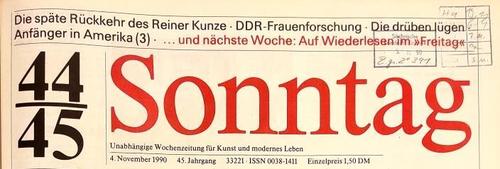
Bénédicte Terrisse is an Associate Professor in Germanic Literature at the University of Nantes, Faculty of Foreign Languages and Cultures, Department of Germanic Studies. She specializes in contemporary German-language literature with a particular focus on East German and post-East German literary production, working within the CRINI research center. Her educational background includes: Doctorate in Germanic Studies from Paris IV-Sorbonne University (2008-2012) under Bernard Banoun External Agrégation in German (2007) Master's degree in Germanic Studies from Paris IV-Sorbonne University (2005) Admission to École Normale Supérieure (2003) Preparatory literary classes at Lycée Chateaubriand in Rennes (2000-2003) Professor Terrisse's research focuses on contemporary German-language literature, particularly East German and post-East German literary production. Her work examines cultural transfers between France and Germany, editorial phenomena including collections and anthologies, literary history writing and canon theories, library studies, and the history of German studies as a discipline. She has developed significant expertise in the literary production of the German Democratic Republic, with special attention to poetic collections like the "Poesiealbum" series, the cultural weekly "Sonntag," and authors such as Wolfgang Hilbig, Thomas Brasch, and Sarah Kirsch. Her current Humboldt Fellowship research examines transnational models of literary history writing through the lens of the East German poetry series "Poesiealbum." Her recent publications demonstrate a consistent focus on East German literary production, particularly examining how literary canons were formed in the GDR through editorial practices. She has published extensively on Wolfgang Hilbig, exploring authorship models, literary transfers, and the relationship between literature and political systems. Her work increasingly incorporates digital humanities approaches to analyze literary collections and periodicals from the East German context, as evidenced by her involvement in the PERARTEM research program. Her notable awards and recognitions include: Humboldt Foundation Research Fellowship (2023-2025) Louis Forest/Thiessé de Rosemont Prize from the Chancellery of the Universities of Paris DAAD Research Mission grant CIERA mobility grant for research at the Academy of Arts in Berlin Doctoral grant from École Normale Supérieure, Paris Prime d'Encadrement Doctoral et de Recherche Professor Terrisse has supervised doctoral students and has been actively involved in research projects examining East German literary production. She currently leads research on the "Poesiealbum" collection and co-organizes an international conference on literary canons in the transnational context. She serves as deputy director of CRINI (2019-2023) and has held various administrative responsibilities including head of German aggregation and German literature courses at the University of Nantes. She is an active member of several scholarly societies including the Wolfgang-Hilbig-Gesellschaft, the Association of Germanists in Higher Education (where she served as general secretary 2018-2021), the International Association for German Studies, and the KOF - Koordinationsstelle Ostdeutschland - Frankreich. She serves on the editorial board of the journal Germanica and provides expertise for multiple academic publications.
Peter Cole serves as an Associate Professor in the Department of Curriculum and Pedagogy at the University of British Columbia's Faculty of Education, where his office (Scarfe 2329) and direct phone line (604–827–5383) reflect his active institutional presence. His work bridges Indigenous knowledge systems with contemporary educational challenges through community-engaged scholarship. Cole's research centers on Indigenous ecological knowings and climate change mitigation , exploring how Indigenous ecoliteracies form the foundation for sustainable pedagogies. His investigations into Indigenous narrativity and performativity reveal how oral traditions transmit ecological wisdom across generations, while his focus on community-based research methodologies establishes ethical frameworks for Global North/Global South collaborations. This work consistently addresses ecojustice and sustainability education , with particular attention to Indigenous agrobiodiversity conservation and language regeneration as critical components of cultural resilience. Analysis of Cole's publication trajectory (2010-2024) reveals a distinctive narrative approach using Coyote and Raven figures to explore ecojustice pedagogies, with recent work (2020-2024) advancing innovative concepts like musical diacritics of water and cross-species communication. His scholarship demonstrates consistent thematic threads: decolonizing STEM education through survivance narratives, protecting Indigenous intellectual property, and developing land-based learning models that integrate Indigenous epistemologies with climate crisis response. No scientific awards were documented in the available sources. Information regarding graduate student supervision and research funding mechanisms was not specified in the provided materials, though his community-based research methodologies suggest collaborative grant partnerships with Indigenous communities. Cole's narrative-driven approach implies engagement with Indigenous knowledge-keeper networks and interdisciplinary research collectives focused on ecological justice, though specific laboratory or team structures were not detailed in the source materials.
Saraswathi Vedam is Professor of Midwifery at the University of British Columbia's Faculty of Medicine and Lead Investigator of the Birth Place Lab. As an MSFHR Health Professional Investigator (2017), she directs community-led research examining place of birth, respectful maternity care, and health equity for over 30 years of clinical and academic experience. Her work bridges transdisciplinary collaboration with patient-centered outcomes measurement. Her educational foundation includes a PhD in Transdisciplinary Collaboration from the University of Sydney, Master of Science in Nursing from Yale University, and Bachelor's in Comparative Literature from Amherst College. Additional credentials encompass nurse midwifery certification and registered nursing diplomas from Yale. Professor Vedam's research centers on developing and validating patient-informed quality measures including the Mothers' Autonomy in Decision Making (MADM) scale, Mothers on Respect (MOR) index, and Pregnant Persons' Experience of Mistreatment by Providers (PPEMP) index. Her work exposes systemic racism in maternity care, examines interprofessional dynamics, and promotes culturally-centered models through tools like the Birthplace ResQu Index and MISS index for system integration. Analysis of her recent publications (2023-2025) reveals intensifying focus on racial justice in maternity care, LGBTQ2S+ inclusive practices, and algorithmic bias in clinical decision tools. Her scholarship consistently centers community-defined quality metrics and exposes how structural inequities manifest as mistreatment, particularly for Black and Indigenous birthing people. Her scientific recognition includes: MSFHR Health Professional Investigator (2017) Fellow of the American College of Nurse-Midwives Professor Vedam has secured major CIHR funding for national projects including the Canadian Birth Place Study, Giving Voice to Mothers-Canada, and RESPCCT study. She supervises graduate students through UBC's Interdisciplinary Studies programs while leading policy initiatives like the US Home Birth Consensus Summits. Her community-engaged approach prioritizes lived expertise in research design and implementation. She directs the Birth Place Lab and Perinatal Wellbeing Research Team, developing interventions like the Dialogue and Decisions interprofessional course. Current work focuses on global adaptation of respect measurement tools and dismantling institutional racism in maternity systems through transdisciplinary collaboration with frontline providers and community advocates.
Fionn Byrne is the founder of the Landscape Ethics Studio and an Associate Professor in Landscape Architecture. He teaches in the Master of Landscape Architecture and Bachelor of Design programs, with prior appointments at Harvard’s Graduate School of Design, the University of Toronto’s Daniels Faculty of Architecture, Landscape, and Design, and the University of Waterloo’s School of Architecture. His research interrogates sites of confrontation —political, resource-based, and military—to challenge simplistic notions of “the good” in design. By articulating diverse ethical positions, he explores obligations to nature and human communities through landscape interventions. Byrne’s publications reveal a focus on ethical dimensions of design , including landscape weaponization in warfare, health equity in historical architecture, and dialogic counter-monuments. His work often bridges theory, practice, and critical pedagogy, emphasizing ecological and social responsibility. Byrne holds an MLA and BPHE from the University of Toronto. He acknowledges living and working on the ancestral land of the xʷməθkʷəy̓əm First Nation, reflecting his commitment to ethical spatial practices rooted in Indigenous sovereignty.
Jo Walton is a Senior Research Fellow at the University of Sussex, School of Media, Arts and Humanities, specializing in interdisciplinary intersections of arts, climate, and technology. Their career spans roles at institutions including the University of Edinburgh (2018-2024), University of Leicester (2016-2017), and Northumbria University (2013-2016). Current role since 2024: Senior Research Fellow in Arts, Climate and Technology Steering Committee member for Analysis Under Uncertainty for Decision-Makers Network (since 2021) Editorial work with British Science Fiction Association and Vector journal Research interests combine speculative fiction with political economy, focusing on: New Political Economies Critical Design Fiction The Ludic (games and play) Automation and AI ethics Climate futures and immersion Recent publications explore machine learning in SF, post-capitalist economies, and critical design fiction. They co-authored works on climate storytelling games and data visualization ethics. Scientific Awards: BSFA Award Longlist (2020) BSFA Award Shortlist (2019) As a creative practitioner, Jo co-runs Sad Press Poetry and contributes to speculative poetry, including edited collections on secrecy and work themes. They hold an IEMA Certificate in Environmental Management and engage in STEM consultancy on communication and ethics.
Nicolas Labroche serves as a Researcher in the Department of Computer Science at the Polytechnic School of the University of Tours. He is affiliated with the Fundamental and Applied Computer Science Laboratory of Tours (LIFAT) within the UFR of Sciences and Technology. His academic work spans multiple research domains with significant contributions to machine learning methodology and applications. His primary research focuses on Explainable Artificial Intelligence , particularly for medical applications where model interpretability is critical. He has pioneered methods in clustering of local attributive explanations and discernibility in medical ML models . Additional expertise includes exploratory data analysis through mathematical programming for comparison queries, time series forecasting for environmental monitoring, and preference-based explanations in recommender systems. His work bridges theoretical computer science with practical applications in healthcare, environmental science, and business intelligence. Analysis of his publication trends reveals consistent innovation in making data exploration more efficient and interpretable. Recent work emphasizes user-centric explainability (2024-2025), mathematical optimization for analytics (2022-2023), and synthetic data generation (2022). His research demonstrates strong interdisciplinary connections between computer science, medicine, and environmental science. His laboratory affiliation with LIFAT provides the infrastructure for his computational research. While specific grant details aren't public, his publication record indicates sustained research productivity across multiple European-funded projects focused on data science applications.
Eray Yücel is a Lecturer in the Department of Economics at Bilkent University since 2017. He holds a PhD in Economics (2005) and MA in Economics (2000) from Bilkent University, with a B.Sc in Industrial Engineering (1998). His academic career includes roles as Associate Professor at Kadir Has University (2014-2016), part-time lecturing at multiple institutions, and 10 years as an Economist at the Central Bank of the Republic of Turkey (2003-2013) where he served as Managing Editor of the Central Bank Review (2005-2013).
Manuel Pérez García is an Associate Professor at the School of International Studies , Renmin University of China , and a Faculty Member in the Department of History at Shanghai Jiao Tong University . As Principal Investigator for the GECEM Project (2016-2021) funded by the European Research Council , he bridges global history with Sino-Latin American studies. Educational Background includes a PhD in Global and Trans-National History (European University Institute), MAs in Trans-National History, Early Modern European/American History, and Management of Historical Resources, and a BA in History from Universidad de Murcia . Research Interests Global and transnational history Economic and social history of early modern Europe and China China-Latin America relations Consumer society evolution Notable Contributions 2021 monograph on Blood, Land and Power analyzing Spanish nobility 2018 edited volume Global History and New Polycentric Approaches 2016 China and Latin America in Transition on policy dynamics Academic Recognition ERC Starting Grant (2016) Matteo Ricci Scholarship (2015) Multiple Foreign Ministry scholarships Marie Curie Fellowship
Dmitry Kurakin is a Professor at the Institute of Education , HSE University, and Leading Research Fellow at the Centre for Fundamental Sociology . He has been affiliated with HSE since 2006, contributing to sociology of education, cultural sociology, and inequality studies. PhD in Theory, History and Methods of Sociology (2012, HSE University) Degree in Physics (2000, Lomonosov Moscow State University) Kurakin’s research interests span cultural sociology, social inequality, cognitive sociology, and the application of Durkheimian theories to modern societal challenges. His work explores the sacred as a catalyst for cultural dynamics, the temporal structuring of action in educational trajectories, and gender segregation in labor markets. He investigates how root metaphors and emotional markers shape societal norms and individual agency. His recent publications examine narratives in educational decision-making , vaccination behavior during the pandemic , and cosmetic surgery as ritual . These works reflect a consistent focus on cultural mechanisms and inequality reproduction within systems of education and labor. Member of the Editorial Board , American Journal of Cultural Sociology (2019) Member of the Editorial Board , Russian Sociological Review (2010) Recipient of HSE Gratitude (2020, 2022) and publication bonuses for international impact Kurakin supervises doctoral students like E. Pavlenko (2024) and M. Kotelnikov (2024), integrating cultural sociology into studies of emotional experience and reading practices . He collaborates internationally, notably with the University of Iowa and the eduLIFE project at the European University Institute.