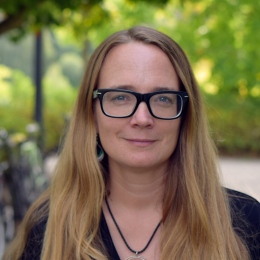
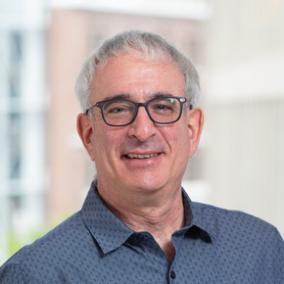
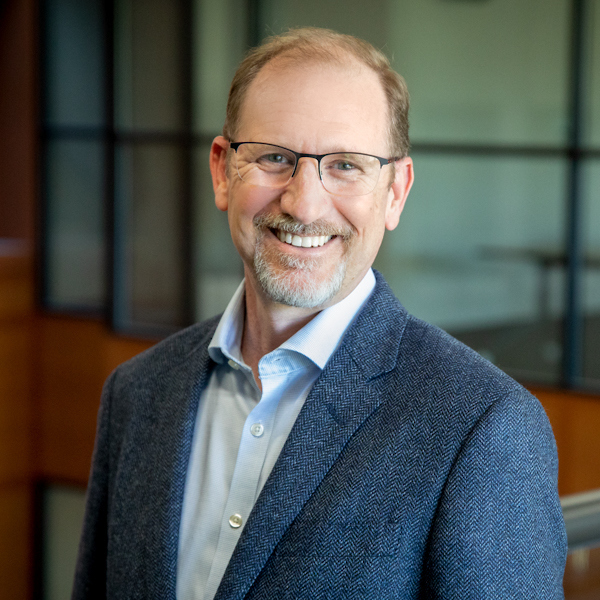
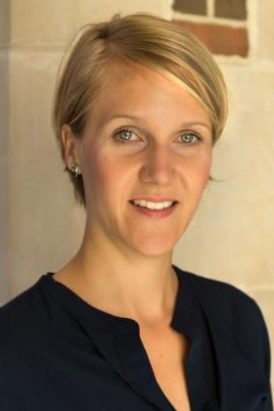
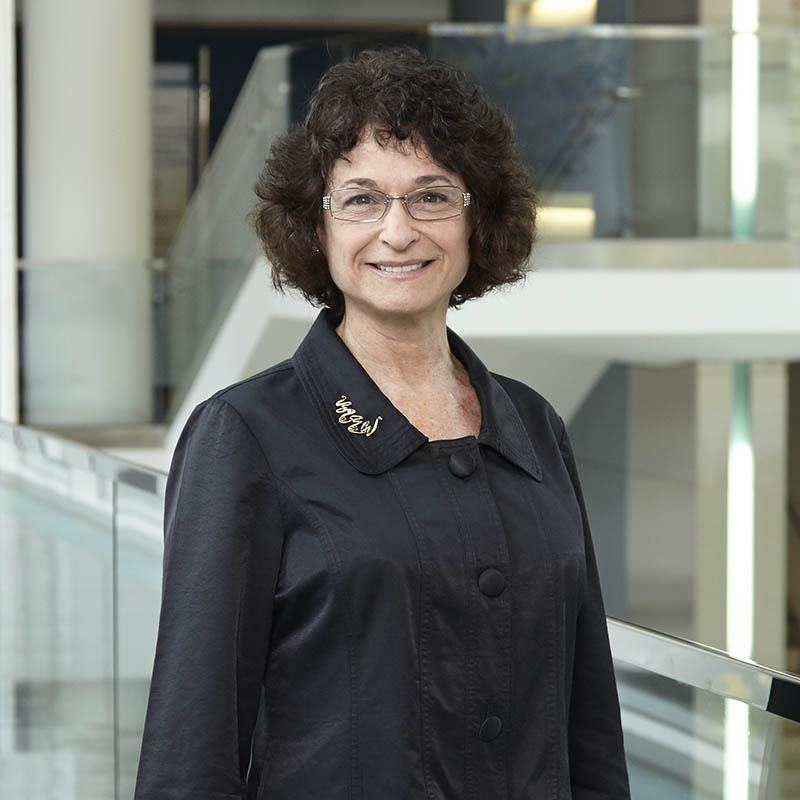
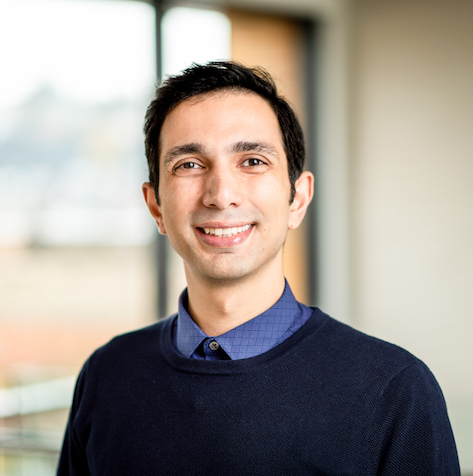
Andrea Voyer is a Professor of Sociology at Stockholm University , focusing on social norms, boundaries, and their role in shaping social inequality , particularly in the context of immigrant integration , class disparities, and ethnic inequality. She employs both qualitative and computational methods , including large-scale text analysis and cultural theory, to explore these themes. Her research has received funding from Riksbankens Jubileumsfond , the Swedish Research Council , the National Science Foundation (USA) , and the Russell Sage Foundation . Voyer serves as a program coordinator for master's programs in sociology and applied social research, and leads the department's research groups in qualitative methods , computational sociology , and cultural sociology . She is also an editorial board member for Sociological Theory and American Journal of Cultural Sociology , and contributes to public discourse on immigration, segregation, and social norms. Her recent publications highlight the use of computational techniques to analyze immigrant incorporation through shifts in mainstream discourse, the cultural processes of inequality during the COVID-19 pandemic , and the evolving role of class distinction-making in etiquette literature. These works bridge cultural theory with empirical analysis, offering actionable insights for addressing social inequality.
Dr. Diyi Yang is an Assistant Professor in the Computer Science Department at Stanford University. She leads the Social and Language Technologies (SALT) Lab, affiliated with the Stanford NLP Group, Stanford HCI Group, Stanford AI Lab (SAIL), and Stanford Human-Centered Artificial Intelligence (HAI). Her research focuses on socially aware natural language processing, large language models (LLMs), and human-AI interaction, aiming to improve human-human and human-computer communication through socially grounded AI systems. Education: Ph.D. in Language Technologies Institute, Carnegie Mellon University (2013–2019) B.S. in ACM Honored Class, Shanghai Jiao Tong University (2009–2013) Research Interests: Dr. Yang’s work bridges computational social science and NLP. She explores how AI can understand social contexts in language use and develop systems that respect cultural norms, ethical standards, and human values. Her lab’s projects include AI companions for skill training (e.g., Rehearsal Dialects), norm-aware LLMs (NormBank), and frameworks for human-AI collaboration (Co-Gym). Recent efforts address bias in AI, societal impacts of LLMs, and ethical evaluation of human-AI systems. Awards & Honors: 2024: Sloan Research Fellowship, ONR Young Investigator Award 2023: Adamic-Glance Young Distinguished Award (ICWSM), Kavli Fellow (NAS) 2022: NSF CAREER Award, Microsoft Research Faculty Fellow 2020: IEEE AI’s 10 to Watch Advising & Grants: Dr. Yang advises over 10 PhD students and postdocs, co-leading projects on LLM evaluation (SWE-bench/SWE-smith), human-AI ethics, and culturally aware NLP. Her research is supported by NSF, Amazon, DARPA, Google, and Stanford’s HAI initiative. Labs & Teams: The SALT Lab collaborates across disciplines, with projects spanning computer science, linguistics, and social sciences. Current initiatives include developing AI tools for mental health support (AI Partner & Mentor) and auditing societal impacts of LLMs.
Laurel MacKenzie is an Associate Professor in the Department of Linguistics at New York University (NYU), affiliated with the Faculty of Arts and Science. She specializes in variationist sociolinguistics, dialectology, and language change, with a focus on English and French varieties. Her work integrates quantitative analysis of speech data to explore intra-speaker variation and language evolution. She co-directs the NYU Sociolinguistics Lab and leads the NSF-funded NYC Individual Differences Corpus project, alongside the Our Dialects initiative, an online atlas of British English dialects. Education: PhD in Linguistics, University of Pennsylvania (2012) BA in Linguistics and French, University of California, Berkeley (2006) Research Interests: Morphological and syntactic variation Regional dialects of English and French Linguistic pedagogy and public engagement Recent Projects: Recent work includes publications on participle leveling in English, sociolinguistic replication studies, and grammatical variation analysis. She has also collaborated on dialect mapping tools and consulted for media projects on language change and accents. Awards: No awards explicitly listed in provided texts. Labs/Teams: NYU Sociolinguistics Lab (Co-Director) Our Dialects Project (Academic Lead)
Joshua D. Angrist is the Ford Professor of Economics at the Massachusetts Institute of Technology, where he has been a faculty member since 1996. He is also a co-founder and director of MIT's Blueprint Labs and a Research Associate at the National Bureau of Economic Research. Angrist shares the 2021 Nobel Prize in Economic Sciences with David Card and Guido Imbens for their methodological contributions to the analysis of causal relationships. Angrist received his B.A. from Oberlin College in 1982 and completed his Ph.D. in Economics at Princeton University in 1989. Prior to joining MIT, he taught at Harvard University and the Hebrew University of Jerusalem. His academic journey began somewhat unconventionally, as he left high school early after 11th grade, worked for over a year, and only later discovered his passion for economics through an inspiring teacher at Oberlin. Angrist's research focuses on developing and applying innovative econometric methods to answer important economic questions using natural experiments. His work spans labor economics, education economics, and causal inference methodology. He is particularly known for his contributions to instrumental variables methods and the Local Average Treatment Effect (LATE) framework developed with Guido Imbens. His research explores the economics of education and school reform, the impact of social programs on labor markets, and the effects of immigration and regulation. His recent publications reveal a continued focus on causal inference methods applied to education policy questions, labor market issues, and health economics. The trend shows increasing sophistication in research design, with particular attention to addressing selection bias and developing methods for external validity. His work spans theoretical econometric contributions alongside empirical applications in education, labor markets, and health. Sveriges Riksbank Prize in Economic Sciences in Memory of Alfred Nobel (2021) Fama Prize for Graduate Education (2018) Fellow of the American Academy of Arts and Sciences Fellow of the Econometric Society Angrist is deeply committed to teaching and mentoring. He has developed influential econometrics textbooks including 'Mostly Harmless Econometrics' and 'Mastering Metrics' with Jörn-Steffen Pischke. At MIT, he teaches courses including Labor Economics I (14.661), Econometric Data Science (14.32), and Labor Economics and Public Policy (14.64). He emphasizes selecting UROP students who have mastered foundational economics through courses like 14.64 and 14.32. Beyond MIT, Angrist co-founded Avela, a software startup using cutting-edge research to help schools improve enrollment and operations. Angrist co-founded and directs MIT's Blueprint Labs, which brings together researchers from economics, computer science, and education to develop innovative solutions for educational challenges. Through Blueprint Labs and Avela, his work bridges academic research with practical applications in education policy and technology.
Minh Q. Phan is an Associate Professor of Engineering at Dartmouth College's Thayer School of Engineering. His expertise spans system identification, iterative learning control, model predictive control, robotic swarm control, and intelligent control systems. He holds a BS from the University of California, Berkeley, and MS/M.Phil/PhD degrees from Columbia University in Mechanical Engineering. Dr. Phan has contributed to over 50 peer-reviewed publications and serves as an Associate Editor for the Journal of Guidance, Control, and Dynamics. His research focuses on advancing control theory applications in robotics, structural health monitoring, and sustainable construction materials. Key contributions include the development of OKID (Observer/Kalman Filter Identification) methods and bilinear system identification frameworks. Education History: Bachelor of Science in Mechanical Engineering, UC Berkeley, 1985 Master of Science in Mechanical Engineering, Columbia University, 1986 Master of Philosophy in Mechanical Engineering, Columbia University, 1988 Doctor of Philosophy in Mechanical Engineering, Columbia University, 1989 Research Interests: Advanced control methodologies for dynamic systems Model-based predictive control strategies Applications in robotics and aerospace engineering Structural health monitoring via system identification Machine learning for materials science Teaching Responsibilities include courses like ENGG 149 (Systems Identification), ENGS 145 (Modern Control Theory), and ENGG 148 (Structural Mechanics). His work bridges theoretical control systems with practical industrial applications, including automation in food processing and sustainable construction practices. Dr. Phan has collaborated on projects addressing viral epidemiology in Vietnam and coastal erosion mitigation strategies.
David Bamman is an Associate Professor in the School of Information at UC Berkeley, specializing in applying Natural Language Processing (NLP) and machine learning to cultural and social science questions. He leads research in born-literary NLP, computational humanities, and cultural analytics, with affiliated roles in EECS, Linguistics, and Computational Precision Health. Bamman holds degrees from Carnegie Mellon (Ph.D., 2015), Boston University (M.A., 2006), and University of Wisconsin-Madison (B.A., 1998). His work is supported by NEH, NSF, and industry grants. Educations: Ph.D. in Computer Science (2015), Carnegie Mellon University M.A. in Applied Linguistics (2006), Boston University B.A. in Classics (1998), University of Wisconsin-Madison Research Interests: NLP for underserved domains (e.g., literature, social media), coreference resolution, cultural analytics, and computational methods for studying literature and culture. Projects include LitBank and BookNLP datasets. Grants & Awards: Hellman Fellow (2019), Amazon Research Award (2017), NSF CAREER Award, and NEH funding. Teaching: Courses include Natural Language Processing (Info 159/259), Computational Humanities (INFO 190), and Applied NLP (INFO 256). His research group explores topics like racial representation in high school literature, Hollywood diversity metrics, and the sociocultural implications of LLMs. Bamman advises multiple PhD students and collaborates on datasets like CMU Book Summaries and 11K Latin Books.
Xin Guo is Professor and Department Chair of Industrial Engineering and Operations Research (IEOR) at UC Berkeley's College of Engineering, holding the Coleman Fung Chair in Financial Modeling. Her research bridges mathematical finance, stochastic control, and machine learning with applications in risk analytics and quantitative trading. Education: Ph.D. in Mathematics, Rutgers University (1999) Research Interests: Professor Guo's work centers on mathematical finance , stochastic games , and reinforcement learning . She develops theoretical frameworks for α-potential games and mean-field systems while applying signature methods and GANs to financial data. Her research addresses critical problems in portfolio optimization, fraud detection (e.g., Medicare analytics), and market forecasting, emphasizing the intersection of stochastic control with machine learning for real-world decision-making under uncertainty. Publication Trends: Recent work (2023-2025) shows increasing focus on multi-agent reinforcement learning through mean-field game theory, with applications spanning finance (corporate bonds, trading), healthcare (fraud detection), and transportation (rate forecasting). Key innovations include BSDE approaches for stochastic games, signature-based time series analysis, and theoretical guarantees for GAN training dynamics. Scientific Awards: Holds the prestigious Coleman Fung Chair in Financial Modeling, reflecting significant contributions to quantitative finance research. Advising and Grants: As IEOR Department Chair, Professor Guo mentors graduate students in stochastic modeling and financial engineering. Her research is supported by the Coleman Fung Endowment Fund, with collaborations spanning finance, healthcare, and transportation sectors through industry partnerships. Labs and Teams: Leads the Risk Analytics & Data Analysis Research (RADAResearch) Lab ( https://risklab.ieor.berkeley.edu/ ), which develops cutting-edge methodologies for risk assessment, data-driven decision-making, and game-theoretic solutions to complex systems. The lab fosters interdisciplinary work connecting mathematical theory with practical applications in FinTech and beyond.
David Williamson Shaffer is the Sears Bascom Professor of Learning Analytics and Vilas Distinguished Achievement Professor of Learning Sciences at the University of Wisconsin-Madison's Department of Educational Psychology. He is also a Data Philosopher at the Wisconsin Center for Education Research. His work focuses on merging statistical and qualitative methods to model complex human collaboration. Shaffer holds an AB in History and East Asian Studies from Harvard University (1987), and MS/PhD in Media Arts and Sciences from MIT (1996/1998). Before academia, he was a teacher, curriculum developer, and game designer. His research emphasizes Quantitative Ethnography —a methodology combining big data analysis with cultural interpretation. Key contributions include Epistemic Network Analysis (ENA) and over 250 publications, including influential books like How Computer Games Help Children Learn (2006) and Quantitative Ethnography (2017). Awardees of the EU Marie Curie Fellowship (2008) and Spencer Foundation Fellowship (2003), Shaffer's work has been presented globally at conferences like Learning Analytics & Knowledge and Computer Supported Collaborative Learning. His interdisciplinary approach bridges education, data science, and humanities, addressing challenges in authentic STEM experiences, collaborative learning analytics, and culturally responsive pedagogy.
Elaine Francis is a Professor of English and Linguistics at Purdue University's College of Liberal Arts, where she serves as Associate Head of the Department of English and directs the Experimental Linguistics Lab. She holds additional affiliations as an Affiliate Faculty Member in the Department of Linguistics and a Courtesy Faculty Member in the Department of Speech, Language, and Hearing Sciences. Ph.D. in Linguistics, University of Chicago (1999) B.A. in Linguistics, College of William and Mary (1993) MA in Linguistics, University of Chicago (1995) Former Assistant Professor at the University of Hong Kong (1999-2002) Professor Francis's research focuses on syntax and its interfaces with semantics, discourse information structure, and language processing in production and comprehension. She employs experimental methods to investigate syntactic, semantic, discourse-pragmatic, and cognitive factors underlying complex sentence structures. Her primary research areas include word order alternations, filler-gap dependencies, resumptive pronouns, and grammatical acceptability. She examines how various factors contribute to grammatical alternations in language use and explores how processing pressures in production and comprehension contribute to grammatical conventions. Her recent publication record shows consistent output across multiple linguistic subfields, with a strong emphasis on experimental syntax and psycholinguistics. Her 2022 book, Gradient Acceptability and Linguistic Theory , represents a significant contribution to understanding acceptability judgment tasks in relation to syntactic theory. Her work spans theoretical syntax, experimental linguistics, second language acquisition, and cross-linguistic comparison, often bridging the gap between theoretical frameworks and empirical evidence. Regularly teaches short courses at Linguistic Society of America Linguistic Institutes Member of Linguistic Society of America Ethics Committee Editorial board member of Glossa Psycholinguistics Co-editor of Polymorphous Linguistics: Jim McCawley's Legacy (2005) Co-editor of Mismatch: Form-Function Incongruity and the Architecture of Grammar (2003) Professor Francis actively supervises graduate students in linguistics, though she has indicated she will be unable to take on new graduate students for the 2025-2026 academic year. She has received research support for her experimental work, particularly for investigating syntactic phenomena through controlled experiments and corpus analysis. Her collaborative work extends across multiple institutions and disciplines, including collaborations with researchers in computational linguistics, cognitive science, and clinical linguistics. She directs the Experimental Linguistics Lab at Purdue University, which conducts research on syntactic processing using various experimental methodologies. The lab investigates how speakers produce and comprehend complex sentence structures, with particular attention to how grammatical knowledge interacts with processing constraints. Current projects include research on relative clauses, syntactic islands, and acceptability gradient phenomena across multiple languages.
Silvia Lindtner is an Associate Professor at the University of Michigan's School of Information and Director of the Center for Ethics, Society, and Computing (ESC). She holds courtesy appointments in the Penny W. Stamps School of Art and Design and the Digital Studies Institute. Her work focuses on the social and cultural study of technology in China and globally, with a focus on data-driven governance, AI ethics, and the intersection of technology and labor. Lindtner has conducted nearly two decades of fieldwork in China, examining innovation ecosystems, digital economies, and the affective dimensions of state control. She is the author of the award-winning *Prototype Nation: China and the Contested Promise of Innovation* (2020) and co-author of *Technoprecarious* (2020). Education: PhD in Information and Computer Sciences from University of California, Irvine; BS/MS in Media Technology and Design from University of Hagenberg, Austria. Research Interests: Science and Technology Studies (STS), China Studies, HCI, Critical Computing, AI Ethics, Data Governance, Labor Studies, and Transnational Digital Economies. She explores how technological systems shape governance, labor practices, and everyday life, particularly in contexts of global inequality and state surveillance. Awards: Joseph Levenson Prize (2021), Francis L.K. Hsu Book Prize (2021), ACM Distinguished Member (2022), and fellowships from the National Committee on US-China Relations (2021-2023) and China-US Scholars Program (2021-2022). Grants: Supported by NSF, IMLS, Intel Labs, Google Anita Borg, and Chinese National Natural Science Foundation. Leads interdisciplinary initiatives including Tech.Culture.Matters research group and Michigan Interactive and Social Computing (MISC) research group. Labs/Teams: Directs the Center for Ethics, Society, and Computing (ESC) and collaborates with the Lieberthal-Rogel Center for Chinese Studies. Current projects include studies on affective control in AI governance and transnational data practices in healthcare and labor.
Dr. Carolyn Emery is a Professor in the Faculty of Kinesiology at the University of Calgary, with joint appointments in Pediatrics and Community Health Sciences at the Cumming School of Medicine. She holds leadership roles as Chair of the Sport Injury Prevention Research Centre (an International Olympic Committee Research Centre) and the Alberta Children’s Hospital Research Institute. Her affiliations include the McCaig Institute for Bone and Joint Health, Hotchkiss Brain Institute, and O’Brien Institute for Public Health. Dr. Emery’s education includes a BScPT from Queen’s University (1988), MSc in Epidemiology from the University of Calgary (1999), and PhD in Epidemiology from the University of Alberta (2004). Her research focuses on injury prevention in youth sports, concussion, and pediatric rehabilitation, aiming to reduce long-term health consequences such as osteoarthritis and post-concussion syndrome. She leads major grants including CIHR’s “SHRed Injuries” and NFL-funded concussion surveillance programs. Her research interests emphasize practical interventions for injury prevention, including neuromuscular training and policy changes. Recent work explores concussion outcomes in adolescents, biomechanical injury mechanisms, and global sport safety initiatives. She has published extensively on topics like sport-related musculoskeletal injuries, concussion management, and the epidemiology of youth sports. Dr. Emery has received over 20 awards, including the Royal Society of Canada Fellowship, Killam Professorship, and CIHR Canada Research Chair. Her work bridges clinical practice, policy, and community engagement to enhance public health outcomes in sports and youth recreation. Her lab, the Sport Injury Prevention Research Centre, collaborates internationally to develop evidence-based strategies for injury prevention. Current projects include evaluating the impact of tackle laws in rugby, head acceleration in wrestling, and long-term consequences of pediatric concussions.
Cheryl Gaimon holds the Esther and Edward J. Brown Chair and serves as a Regents' Professor at the Scheller College of Business, Georgia Institute of Technology. She is Faculty Director of the Management of Technology (MoT) Certificate Program, which she helped establish, and teaches across all academic levels including executive education. Professor Gaimon initiated the Operations Management Program and served as its first Area Coordinator for seven years. Her academic credentials include: Ph.D. in Operations Research from Carnegie Mellon University M.S. in Industrial Administration (Operations Management) from Carnegie Mellon University B.S. in Mathematics and Economics (Magna Cum Laude) from Brooklyn College, City University of New York Professor Gaimon's research centers on managing knowledge-based resources in technology-driven environments. Her work spans Innovation and Management of Technology , Knowledge Management and Outsourcing , New Product/Process Development , Alliances for Innovation , and Sustainability Research . She examines how firms navigate technological change through strategic resource allocation, knowledge transfer, and sustainable operations, with increasing emphasis on environmental strategies in recent years. Her publication trajectory reveals consistent focus on operations management within technological evolution—from foundational work on technology acquisition and capacity planning to contemporary studies on environmental strategies and multidisciplinary technology management. Key journals featuring her research include Management Science , Operations Research , and Production and Operations Management . Major recognitions include: Regents' Professor designation (2005) by the Georgia Board of Regents The 1999 Georgia Tech Research Award for doctoral student development Brady Family Award for Faculty Research Excellence (2014) Best Department Editor Award for POM (2024) POMS Fellow status and Distinguished Service Award (2009/2014) As an educator, she has mentored doctoral students and shaped curriculum through the MoT program. Her professional leadership includes serving as POMS President (2008-2009), founding co-President of the POMS College on Product Innovation and Technology Management, and editorial roles at top journals including Management Science and Production and Operations Management . Professor Gaimon directs the interdisciplinary Management of Technology Certificate Program, fostering cross-departmental collaboration for technology management research and education while advancing sustainability integration in operations.
Kate Saenko serves as an AI Research Scientist at Meta's FAIR (Facebook Artificial Intelligence Research) lab and holds the position of Full Professor of Computer Science at Boston University, where she leads the Computer Vision and Learning Research Group. Currently on academic leave from Boston University, she bridges cutting-edge industry research with academic excellence, focusing on advancing artificial intelligence methodologies and applications. Her educational background includes a PhD in Electrical Engineering and Computer Science (EECS) from the Massachusetts Institute of Technology (MIT), followed by postdoctoral training at the University of California, Berkeley and Harvard University. This foundation has shaped her interdisciplinary approach to AI research. Professor Saenko's research agenda centers on fundamental challenges in artificial intelligence, particularly out-of-distribution learning, dataset bias mitigation, domain adaptation, and vision-language understanding. Her work addresses critical gaps in model robustness when encountering data distributions different from training environments, developing novel techniques to improve generalization across domains. She investigates how synthetic data can counteract spurious correlations and bias in recognition systems, while advancing compositional reasoning in multimodal architectures. Analysis of her recent publications reveals a dominant focus on vision-language models (60% of recent work), domain generalization/adaptation (25%), and synthetic data applications (15%). Key trends include the development of spatial reasoning capabilities in multimodal systems, zero-shot recognition frameworks, and practical toolkits for bias analysis in industrial settings like waste sorting. Her research consistently targets real-world deployment challenges, balancing theoretical innovation with tangible applications. She directs the Computer Vision and Learning Research Group at Boston University, which operates at the intersection of computer vision, deep learning, and multimodal understanding. The group maintains strong industry collaborations through Meta's FAIR and previously engaged with the MIT-IBM Watson AI Lab. Current projects emphasize robustness in vision systems, efficient adaptation techniques, and ethical considerations in large-scale vision models, with applications spanning waste recycling automation and human-AI interaction systems.
Arman Cohan is an Assistant Professor in the Department of Computer Science at Yale University, where he leads the Yale NLP Lab since its founding in January 2023. His research spans natural language processing and machine learning with emphasis on language modeling, representation learning, retrieval systems, and specialized domain applications including scientific discovery and AI for science. His primary research interests include: Natural Language Processing Machine Learning Large Language Models Information Retrieval AI for Science Scientific Problem-Solving Recent publications (2025) demonstrate intense focus on evaluating and advancing LLM capabilities across multimodal reasoning, scientific claim verification, financial domain applications, and biological modeling. The lab consistently produces high-impact work accepted at top-tier conferences including ACL, EMNLP, and ICLR, with 11 papers at ACL 2025 alone. Scientific awards include: Best Paper Award at AI4Research Workshop (IJCAI 2024) Outstanding Paper Award at EACL 2023 Best Paper Award at ACL 2024 for Olmo language model research Professor Cohan actively advises PhD students including Kaili Liu, Jacob Dunefsky, Alan Li, Yilun Zhao, and has graduated researchers such as Linyong Nan (now at Zoom) and Ansong Ni (now at Meta). The lab maintains strong industry partnerships and receives substantial research funding as evidenced by its prolific output and conference presence. The Yale NLP Lab hosts the annual New England NLP Workshop and regularly features speakers from leading institutions including Meta AI, Allen Institute for AI, and DeepMind, fostering a collaborative environment for advancing NLP research.
Samuel J. Gershman is a Professor of Psychology at Harvard University, affiliated with both the Department of Psychology and the Center for Brain Science. He directs the Computational Cognitive Neuroscience Lab (CCNLab), where he investigates how the brain acquires richly structured knowledge about the environment and uses this knowledge to guide adaptive behavior. Gershman received his B.A. in Neuroscience and Behavior from Columbia University in 2007 and his Ph.D. in Psychology and Neuroscience from Princeton University in 2013, followed by postdoctoral training in the Department of Brain and Cognitive Sciences at MIT (2013-2015). His research spans computational neuroscience, cognitive psychology, and machine learning. His primary research interests include learning, memory, decision making, and computational neuroscience. Gershman's work integrates behavioral, neuroimaging, and computational techniques to understand cognitive processes. He has made significant contributions to understanding memory systems, reinforcement learning, and the computational principles underlying human cognition. Analysis of Gershman's recent publications reveals a strong focus on computational approaches to understanding cognitive processes, with particular emphasis on memory systems, decision-making mechanisms, and the intersection of artificial intelligence with cognitive neuroscience. His work often bridges theoretical computational models with empirical neuroscience data, exploring how the brain implements efficient cognitive algorithms. Gershman actively mentors graduate students and postdoctoral researchers, with current advisees working on diverse projects spanning computational modeling, neuroimaging, and behavioral experiments. His lab investigates topics ranging from dopamine signaling to social cognition using a combination of theoretical and experimental approaches. The CCNLab, which Gershman directs, brings together researchers from psychology, neuroscience, computer science, and related fields to explore the computational principles of cognition. The lab utilizes a range of methodologies including behavioral experiments, neuroimaging, computational modeling, and theoretical analysis to address fundamental questions about how the mind works.