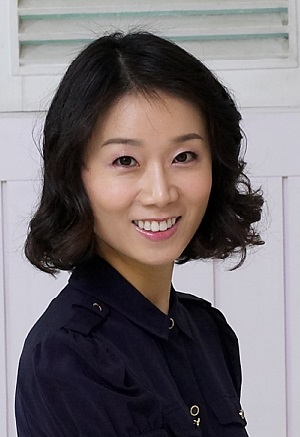
Dr. Muirne Paap is an Associate Professor with Ius Promovendi at the Faculty of Behavioural and Social Sciences, University of Groningen. She specializes in psychometrics, with expertise in test theory, item response theory, and computerized adaptive testing. Her research focuses on enhancing clinical decision-making through advanced measurement methodologies. Education: PhD in Psychiatry from the University of Oslo (2011), MSc in Clinical Psychology and Psychometrics from the University of Groningen (2006, cum laude). Research Interests: Development of reliable clinical assessment tools Computerized adaptive testing (CAT) applications in healthcare Measurement of personality disorders and quality of life Notable Projects: SEALS Project (2024–2028): Methodology for progressive tests in education PersoniCAT Project (2019–2022): Adaptive diagnostic interviews for personality pathology Awards: FRIPRO Young Research Talents Grant (2018) Member of the Young Academy Groningen (2021) Teaching: Test theory, item response theory, and applied statistics at undergraduate and master's levels. Collaborations: Extensive international partnerships, including with Oslo University Hospital, Harvard Medical School, and the Netherlands Cancer Institute.
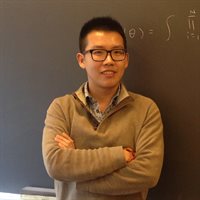
Martin Volker is an Associate Professor in the Department of Counseling, Educational Psychology and Special Education at Michigan State University's College of Education. He holds additional roles as co-director of the MSU Center for Research in Autism, Intellectual, and Other Neurodevelopmental Disabilities (C-RAIND), and director of the C-RAIND Research Assessment Support Unit (C-RAIND RASU). Dr. Volker earned his Ph.D. in combined clinical and school psychology from Hofstra University in 2001, followed by post-doctoral work in early childhood at the Women and Children’s Hospital of Buffalo. His research focuses on ASD assessment tools, social skills interventions, and behavioral interventions for neurodevelopmental disabilities. Key interests include validating assessment instruments, developing evidence-based interventions, and improving transition programs for individuals with ASD. He emphasizes advocacy for disability inclusion in professional training programs. Volker’s work spans clinical, school, and rehabilitation contexts, with publications addressing psychometric analyses, intervention efficacy, and caregiver support. His contributions include randomized controlled trials (RCTs) evaluating social skills programs and factor analyses refining ASD measurement tools. He also examines systemic issues like testing accommodations for English learners and moderating variables in school interventions. His academic service includes roles in graduate education and interdisciplinary centers focused on neurodevelopmental disabilities. Dr. Volker’s research bridges clinical practice and policy, aiming to improve outcomes for individuals with ASD and their families.
Danyu Lin is the Dennis Gillings Distinguished Professor of Biostatistics at the University of North Carolina at Chapel Hill. He is affiliated with the Lineberger Comprehensive Cancer Center and the Center for AIDS Research. His research focuses on statistical methods for biomedical studies, including survival analysis, statistical genetics, and genetic epidemiology. Dr. Lin has published over 200 peer-reviewed articles in leading journals and developed methods incorporated into commercial software. Education: PhD, Biostatistics, University of Michigan, 1989 MS, Biostatistics, University of Michigan, 1986 Research Interests: Dr. Lin’s work spans statistical genetics (GWAS, sequencing studies), survival analysis methodologies, longitudinal data analysis, and design optimization for medical studies. He emphasizes applications in cancer, AIDS, cardiovascular diseases, and psychiatric research. Awards: COPSS George W. Snedecor Award (2019) ICSA Distinguished Achievement Award (2015) Mortimer Spiegelman Award (1999) Fellowships: ASA (2000), IMS (1999) Service & Leadership: Dr. Lin has held editorial roles at Biometrika , JASA , and Statistica Sinica . He served on NIH study sections, DSMB committees, and advisory boards for institutions like the Fred Hutchinson Cancer Research Center. He chairs multiple search and promotion committees within the Gillings School. Labs/Teams: Leads statistical methodology development for large-scale biomedical studies, particularly in genetic epidemiology and vaccine efficacy analysis (e.g., SARS-CoV-2 research).
Pedro U. Lima is a Full Professor at Instituto Superior Técnico (IST), University of Lisbon, and President of the Institute for Systems and Robotics (ISR/IST), coordinating the Intelligent Robots and Systems group (IRSg). He holds a Ph.D. in Electrical Engineering from Rensselaer Polytechnic Institute (1994). His research focuses on intelligent control systems, multi-robot coordination, and human-robot interaction, with contributions to robotics competitions like RoboCup and initiatives like the European Robotics League (E.R.L.). Lima has served as Vice President of the RoboCup Federation, Trustee of IEEE Portugal RAS Chapter, and Portuguese National Delegate to the European Space Agency’s Human Spaceflight Program Board. He led the Cátedra de Excelencia sabbatical at UC3M (2010), contributing decision-theoretic approaches to human-robot interaction. His work integrates robotics with societal impact, including outreach through the Pavilhão do Conhecimento and media appearances. He coordinates large projects like euROBIN (EU Horizon Europe) and CRAI (Portugal’s PRR), advancing robotics in domains like autonomous delivery and social robotics.
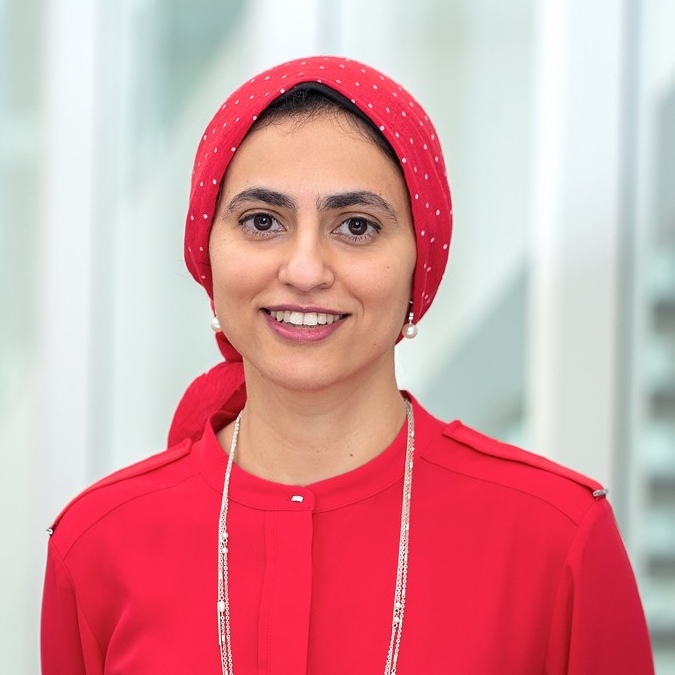
Dr. Mohamed Gharib is an Instructional Associate Professor in the Department of Engineering Technology and Industrial Distribution at Texas A&M University's College of Engineering. He also serves as Program Coordinator for Multidisciplinary Engineering Technology and holds affiliated faculty status in Multidisciplinary Engineering. His roles include teaching, research leadership, and academic program development. Educational Background: Ph.D., Mechanical Engineering, Southern Methodist University (2011) M.S., Aerospace Engineering, Cairo University (2007) B.S., Aerospace Engineering, Cairo University (2002) Research Interests: Dr. Gharib focuses on advanced engineering systems and education innovation. His technical work spans vibration control , robotics systems design , and impact mechanics , with notable contributions to drill string vibration suppression and novel damping technologies. In education, he pioneers STEM outreach programs and curriculum development, including initiatives like the Awesome STEM Lab and e-STEM programs . His COBOTICS Lab integrates robotics research, undergraduate training, and community engagement. Research Impact: Recent work addresses dexterous robotics (via NSF's HAND ERC), adaptive control algorithms for drilling systems, and advanced composite coatings for tribological applications. His publications emphasize real-world applications in oil well operations, structural acoustics, and educational technology. Awards: Francisco José de Caldas Award for Sustainable Excellence (2021) Excellence in STEM Implementation Award (ASME, 2020) Outstanding Graduate Student Awards (2010) Labs & Programs: Director of the COBOTICS Lab , which develops robotic systems, control technologies, and STEM education tools. Active in multidisciplinary projects like the NSF-funded Human Augmentation via Dexterity (HAND ERC) collaboration.
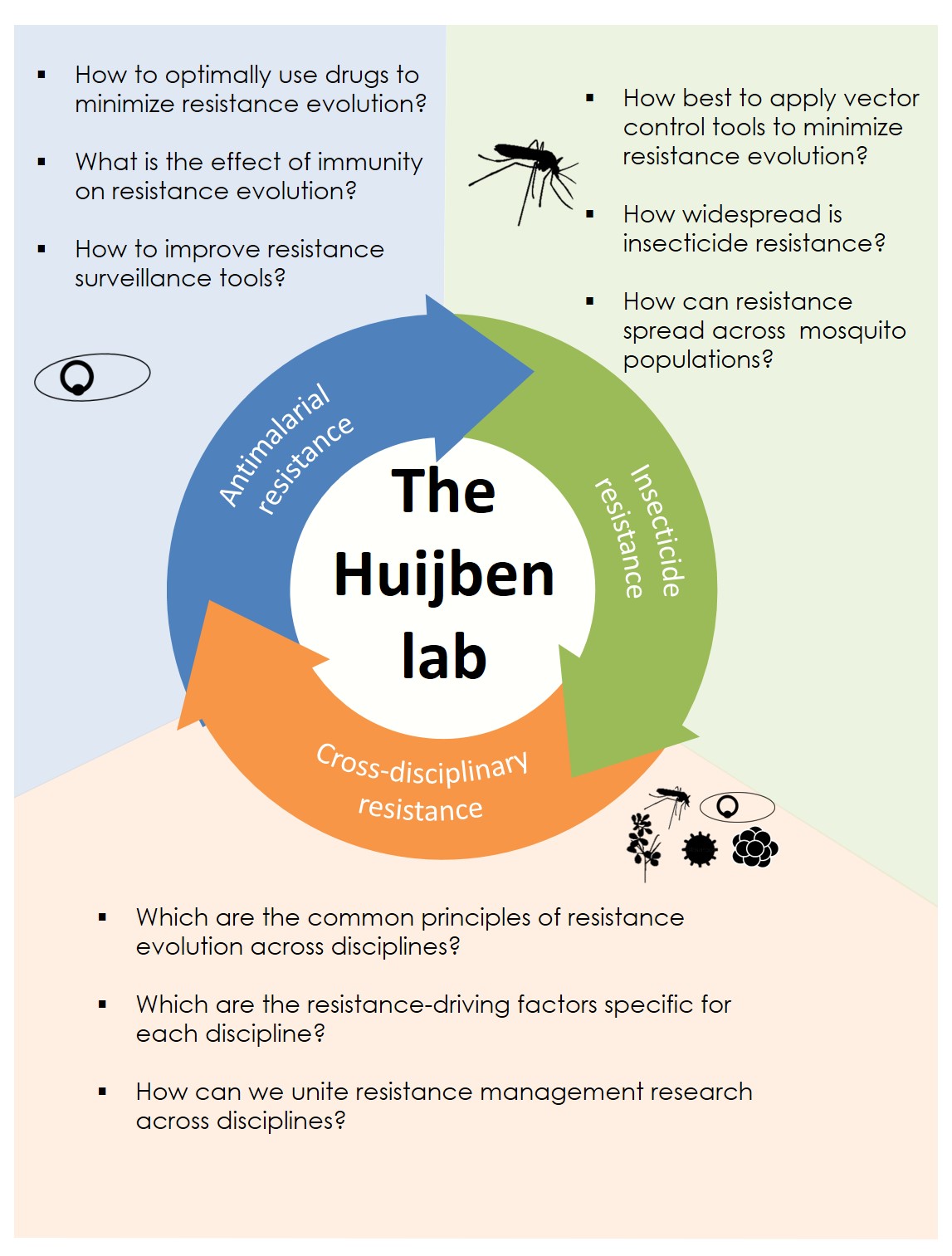
Silvie Huijben is an Associate Professor in the School of Life Sciences at Arizona State University (ASU), core faculty in the Center for Evolution and Medicine . Her research focuses on evolutionary strategies to combat resistance in malaria parasites and disease-transmitting mosquitoes. She holds a PhD in evolutionary biology from the University of Edinburgh (2010) and postdoctoral fellowships from Penn State University and ISGlobal (Spain). Her lab integrates fieldwork, lab experiments, and mathematical modeling to design resistance management strategies. She collaborates with Prof. Abba Gumel on modeling transmission dynamics. Education Background: PhD in Cell, Animal and Population Biology (Edinburgh University, 2010) MSc and BSc in Biology (Wageningen University, Netherlands, 2003-2004) Research interests include: Insecticide resistance evolution in Aedes aegypti mosquitoes Optimizing antimalarial drug resistance strategies Mathematical modeling of disease transmission Field studies in Mozambique and Guyana Teaching: Regularly instructs courses in Evolutionary Biology (BIO 345), Advanced Evolutionary Medicine (ASB 507), and oversees undergraduate research projects (BIO/MBB 495). Laboratory & Teams: Leads the Huijben Lab at ASU, focusing on evolutionary ecology of resistance. Current projects include: Linking insecticide resistance to malaria epidemiology Designing insecticide resistance management protocols In vitro Plasmodium falciparum evolution studies Field-based mosquito resistance surveys in tropical regions
Dr. Yunxiao Chen is an Associate Professor in the Department of Statistics at the London School of Economics and Political Science (LSE), where he co-leads a psychometric lab with Professor Irini Moustaki. Previously, he was an Assistant Professor at Emory University (2016–2018) and earned his PhD in Statistics from Columbia University (2016). His research focuses on developing statistical and computational methods for social data science, addressing challenges in high-dimensional data analysis, latent variable models, and educational assessment. Education: PhD in Statistics, Columbia University, 2016 Research Interests: High-dimensional factor models (matrices, tensors, counting processes) Dynamic behavioral data analysis Sequential decision theory in personalized learning Statistical inference for large-scale item response data Applications in education, psychology, and marketing Publications: Recent work includes advancements in factor analysis, change-point detection, and DIF statistical inference Key journals: Journal of the American Statistical Association , Psychometrika , Journal of Machine Learning Research Awards: 2024 Psychometrics Society Best Reviewer Award 2022 Early Career Award 2018 NCME Loyd Dissertation Award Advising & Grants: Accepts PhD students in statistical methodology Funded by National Academy of Education/Spencer Fellowship (2018–2020) and IEA R&D grants (2022–2023) Labs & Teams: Runs LSE’s psychometric lab focused on educational measurement Collaborates with interdisciplinary teams on machine learning applications
Jeppe Revall Frisvad is an Associate Professor in the Department of Applied Mathematics and Computer Science at the Technical University of Denmark (DTU), within the Visual Computing group. His work bridges computer graphics, material science, and applied optics, focusing on realistic rendering and material appearance modeling. Ph.D. in Computer Graphics, DTU Informatics (2008) M.Sc. in Engineering (Applied Mathematics), DTU (2004) Education in University Teaching, LearningLab DTU (2008–2009) His research centers on computing material appearance from physical and chemical properties, developing faster and more accurate physically based rendering methods. Key areas include light scattering, bidirectional reflectance distribution functions (BRDF), anisotropy, and translucency modeling. Applications span computer games, movies, digital prototyping, architectural visualization, and training simulators. His recent publications (2024–2025) reflect a strong trend in digitizing material appearance, especially for 3D printing and food science, using spectrophotometry and optical validation. The work combines computer graphics with interdisciplinary applications in food structure and biological imaging, emphasizing measurement, modeling, and simulation. Scientific Awards: Research travel prize from AEG Elektronfonden (2006) IGDA scholarship for GDCE 2005 DTU Ph.D. scholarship (2004) He actively supervises Ph.D. students and leads multiple research projects, including those on organ-on-chip imaging, cheese quality analysis, and optical modeling of teeth. He collaborates across disciplines and institutions, with external research stays at UC San Diego and the University of Otago. He is involved in projects integrating AI with 3D imaging and material digitization. Jeppe is a key member of the Visual Computing research environment at DTU, contributing to both fundamental rendering algorithms and practical applications in industry and science.
Caglar Oskay is an Associate Professor in the Department of Civil and Environmental Engineering at Vanderbilt University, where he has held academic positions since 2006. He specializes in multiscale computational mechanics, materials modeling, and failure analysis of heterogeneous materials. His research integrates advanced numerical methods such as the Extended Finite Element Method (XFEM), reduced-order homogenization, and variational multiscale enrichment to study composite materials, viscoelastic systems, and polycrystalline structures under extreme conditions. Dr. Oskay has been recognized with awards including the Chancellor Faculty Fellow (2016–2018) and ASCE ExCEEd Fellow (2011). Education: PhD (Civil Engineering, Rensselaer Polytechnic Institute, 2003), M.S. (Civil Engineering, Rensselaer Polytechnic Institute, 2000), M.S. (Applied Mathematics, Rensselaer Polytechnic Institute, 2000), B.S. (Civil Engineering, Middle East Technical University, 1998). Research focuses on predictive computational models for material behavior under mechanical, thermal, and chemical loading. Key areas include fatigue life prediction, damage accumulation in composites, and coupled transport-deformation phenomena. Recent work addresses multiscale modeling of nickel-based superalloys, polyurea-coated composites, and energetic materials under dynamic loading. His contributions span 100+ peer-reviewed publications, including seminal studies in International Journal for Multiscale Computational Engineering and Acta Materialia . His articles emphasize multiscale frameworks for heterogeneous materials, with trends in reduced-order methods, uncertainty quantification, and interdisciplinary applications (e.g., biology, energy systems). Awards highlight his educational and technical leadership. Advising and grants include collaborative projects on composite durability and energetic material simulation. Dr. Oskay leads the Multiscale Computational Mechanics Lab (MCML), advancing computational tools for engineering materials research.
Do-Hong Kim is a Professor in the Department of Educational Evaluation and Research at Wayne State University. His expertise spans research design, program evaluation, psychometric methods, and quantitative analysis in education. He focuses on assessment for culturally and linguistically diverse students, educational measurement validity, and bilingual research. Education: Ph.D. in Educational Psychology and Research from the College of Education, University of South Carolina. Research Interests: Kim specializes in educational and psychological assessment, validity issues in measurement, and program evaluation. His work often addresses equity in assessment, psychometric properties of scales (e.g., self-efficacy in language learning, mathematical problem-solving), and evaluation systems for early childhood education. Grant Leadership: He has led multiple funded projects, including a subaward from the U.S. Department of Education (2022-2027) for gifted education equity in Detroit. Other grants focus on data analytics, pre-K literacy, and formative assessment implementation. Scientific Recognition: Kim has received the NCARE Distinguished Paper Award (2013) and the College of Education Award for Excellence in Research at UNC Charlotte (2008).
Azza Abouzied is Associate Professor of Computer Science at New York University Abu Dhabi and Global Network Associate Professor at the Tandon School of Engineering. She serves as Vice Provost for Faculty Advancement and Engagement at NYUAD starting September 2024. Her research bridges database systems and human-computer interaction, focusing on intuitive tools for data querying and decision-making in uncertain, collaborative environments. PhD, Yale University (2013) MPhil, Yale University MSc, Dalhousie University BSc, Dalhousie University Her research centers on human-data interaction, designing systems that make data accessible to non-experts. She combines techniques from UI design, machine learning, and databases to build tools that simplify complex data tasks. Her earlier work focused on example-driven querying and synthetic data generation, while her recent work explores in-database prescriptive analytics and decision support in domains like disinformation mitigation and epidemic planning. Her publications span database and HCI venues, with a recurring theme of enhancing usability without sacrificing scalability. She co-founded Hadapt, a Big Data analytics platform, and has led interdisciplinary research through the Human-Data Interaction Lab and the Center for Interacting Urban Networks. Her teaching includes foundational courses such as Database Systems, Operating Systems, and Data, as well as the critical thinking course Techruption. VLDB Test of Time Award (2019) Best Paper Award in Database Systems Honorable Mention in HCI Publications Azza mentors undergraduate capstone students and advises prospective PhDs, research assistants, and postdocs. She is actively involved in academic leadership, having chaired NYUAD’s faculty council in 2024 and co-chaired the SIGMOD 2025 program. Her work emphasizes empowering users to critically engage with data and AI, both in research and education.
Klaus Mosthaf is an Associate Professor in the Department of Environmental and Resource Engineering at the Technical University of Denmark (DTU), where he conducts research on contaminant transport and numerical modeling in porous and fractured media. His work focuses on protecting groundwater resources through advanced modeling of contamination from substances like PFAS, chlorinated solvents, and pesticides. He is actively involved in teaching and academic leadership, coordinating the Nordic Masters program Enviro5Tech and the Sino-Danish Center module on Pollutants and Pollution Control. Research Interests: Transport processes in porous media Groundwater contamination and remediation Numerical modeling of reactive transport Aquifer Thermal Energy Storage (ATES) Fractured and variably saturated geologies Coupled porous-medium and free-flow systems His recent publications reveal a strong focus on PFAS fate, bioremediation in ATES systems, and tracer-based characterization of glacial tills. He employs tools like COMSOL Multiphysics, Python, and FEFlow to develop predictive models grounded in laboratory and field data. Scientific Contributions: Active contributor to over 60 publications in hydrogeology and environmental engineering Key developer of models for coupled processes in subsurface systems Organizer and speaker at international conferences on multiphase flow and contaminant transport Advising and Grants: Klaus Mosthaf supervises multiple PhD students and has coordinated significant research projects, including those on PFAS transport and bioremediation. He is the main supervisor of two active PhD projects and has previously co-supervised two others. His leadership extends to board membership in the Danish Academy of Technical Sciences on Soil and Groundwater (ATV Jord og Grundvand), where he fosters collaboration among academia, consultants, and public authorities. Laboratories and Research Groups: His work is conducted within DTU Sustain, a leading research environment in environmental engineering, where he collaborates with experts in hydrogeology, bioremediation, and sustainable technologies. He is deeply integrated into a network of national and international collaborators focused on groundwater protection and sustainable subsurface utilization.
Dr. Gregor Giebel is a senior researcher and Head of Section in the Department of Wind and Energy Systems at the Technical University of Denmark (DTU), specifically within the Renewable Plants in Energy Systems group. He is actively engaged in advancing wind energy technologies and their integration into modern power systems. His leadership extends to major international and EU-funded initiatives, including IEA Wind Task 51 and the NEST Facilities research infrastructure. Gregor Giebel's research focuses on short-term wind power forecasting , large-scale integration of wind into electricity grids , wind farm flow control , and condition monitoring of wind turbines . His work is instrumental in improving the reliability and efficiency of renewable energy systems. He has made significant contributions to international standardization through the IEC and is a key figure in global wind energy research coordination. The recent publications highlight a strong trend toward weather-driven energy forecasting , modeling wind farm impacts on weather systems , and developing national research infrastructures for energy transition . These works reflect a deep integration of meteorology, energy systems engineering, and policy-relevant research. His scientific recognition includes: Poster Award at the WindEurope Offshore Conference, Copenhagen 2019 Poster Award on WindEurope Conference, Copenhagen 2021 Dr. Giebel is a Principal Investigator (PI) on multiple high-impact projects such as NEST Facilities , IEA Wind Task 51 , and GreenHyScale . He is renowned for his success in research funding, with a proposal success rate exceeding 50%. He has led the EU Marie Curie Initial Training Network Train 2 Wind and previously headed the FarmConners EU Coordination Action on wind farm control. He leads and is deeply involved in the NEST Facilities —a distributed Danish research infrastructure for energy transition—and contributes significantly to the Weather2X and GreenHyScale projects, which aim to advance green hydrogen production and weather forecasting for energy systems.
Dr. Ali Sadaghiani is an Associate Professor in Surface Engineering and an Anniversary Fellow at the University of Birmingham, affiliated with the Department of Mechanical Engineering in the School of Engineering. He leads the Smart Research Group, focusing on advancing phase-change heat transfer and interfacial transport phenomena for sustainable energy and water solutions. PhD in Thermofluidics, Sabanci University, 2019 MSc in Mechatronics Engineering, Sabanci University, 2015 BSc in Mechanical Engineering, Iran University of Science and Technology, 2012 His research lies at the intersection of thermal-fluid engineering and material science, with a strong emphasis on boiling, condensation, evaporation, and freezing. He develops advanced engineered surfaces to enhance heat transfer efficiency in applications such as electronic cooling, battery thermal management, solar desalination, and anti-icing systems. His work integrates experimental methods (e.g., micro-PIV, Raman spectroscopy), multiscale modeling (CFD, MD), and surface modification techniques. His recent publications and projects reflect a consistent focus on sustainable technologies, including solar-driven interfacial evaporation, hydrogen-powered propulsion systems, and solid-state battery thermal regulation. He has led and contributed to multiple Horizon Europe and national research initiatives such as Triathlon, ARISE, MicroFlowTec, and BioAFC, demonstrating strong interdisciplinary collaboration and innovation. ERC Starting Grant laureate Anniversary Fellow Dr. Sadaghiani actively supervises PhD students and welcomes applicants interested in phase-change heat transfer, surface engineering, AI-driven material design, and sustainable thermal systems. He has secured significant research funding and continues to develop scalable solutions for next-generation energy and water technologies.
Dr. Ehsan Mohseni is a Senior Lecturer in the Department of Electronics and Electrical Engineering at the University of Strathclyde, Faculty of Engineering. He is a key member of the Centre of Ultrasound Engineering (CUE) research group and supports the Royal Academy of Engineering and Spirit AeroSystems research chair led by Professor Gareth Pierce. His work focuses on advancing robotic and intelligent Non-Destructive Evaluation (NDE) systems for industrial applications. B.Sc. in Materials Science and Metallurgical Engineering, University of Tehran, 2006 M.Sc. in Metal Forming Processes, University of Tehran Ph.D. in Automated Defect Detection using Electromagnetic NDE, École de Technologie Supérieure (ETS), Montreal, Canada Dr. Mohseni’s research is centered on NDE 4.0, integrating advanced sensing, multi-physics modeling, and machine learning. His expertise spans ultrasonic and eddy current testing, multi-sensor data fusion, and probability of detection studies. He focuses on applications in additive manufacturing, welding, composites, and metal processing, aiming to overcome current technological barriers in industrial inspection. The recent publications highlight a strong trend toward intelligent, automated, and robotic NDE systems. Key themes include self-supervised learning for ultrasonic segmentation, human-machine collaboration in data analysis, and advanced signal processing for weld and composite inspection. The integration of AI, flexible sensor arrays, and embedded navigation systems reflects a shift toward smart, adaptive inspection platforms aligned with Industry 4.0. Scientific Awards: The BINDT Annual Conference Award (2019) Dr. Mohseni is actively involved in research funding and knowledge transfer. He serves as Principal Investigator on KTP projects with ETHER NDE LIMITED and NATIONAL OILWELL VARCO UK LIMITED, focusing on in-process inspection for additive manufacturing and field calibration for ultrasonic testing. He contributes to large-scale collaborative projects funded by Innovate UK and industry partners, emphasizing practical deployment of NDE solutions. He also supervises research staff and collaborates with global aerospace firms including Pratt & Whitney Canada, Safran, and Bell Helicopter. He is a core member of the Centre of Ultrasound Engineering (CUE), a dynamic research group developing next-generation ultrasound technologies. The team works on advanced robotic sensing hubs, flexible transducer arrays, and AI-driven data interpretation tools, often in collaboration with the Royal Academy of Engineering research chair and industrial partners.