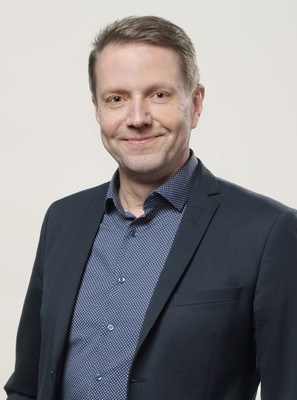
Professor Peter Österholm at Åbo Akademi University's Faculty of Natural Sciences and Engineering specializes in Environmental Geology with a focus on Acid Sulfate Soils . His work addresses critical environmental challenges through interdisciplinary approaches. 2023-2025 : Active principal researcher in two major projects, including EU BIONEER for post-mining waste management Research Themes : Geochemical remediation, microbial interactions, water quality impacts Recent publications highlight: 2025: Microbial responses to limestone/peat treatments in hypermonosulfidic sediments 2024: Machine learning applications for acid sulfate soil mapping 2023: Innovative macropore targeting to reduce acid-metal release Collaborations include European Regional Development Fund , Kiertokaari , and Finnish Transport Agency . He organized the 2024 GeoDays conference and serves as co-investigator in multiple international projects.
Ella Peltonen is an Assistant Professor at the M3S research unit, University of Oulu, Finland. She joined the Ubicomp Oulu research centre and 6Genesis research programme in November 2018. Prior to this position, she was a postdoctoral researcher at the Insight Centre for Data Analytics in Cork, Ireland. She completed her PhD in the Nodes group at the University of Helsinki, Finland, working on the Carat project of collaborative energy diagnostics for mobile devices. Her educational background includes: PhD in Computer Science, University of Helsinki, Finland (Carat project on collaborative energy diagnostics) Ella Peltonen's research focuses on ubiquitous computing, large-scale data analysis, and applied machine learning. Her work particularly emphasizes everyday sensing and mobile and wearable devices. She aims to apply machine learning algorithms to large, complex data in real-time systems, with a focus on distributed machine learning and data analysis of smart devices. Her research spans various applications including energy consumption monitoring of mobile devices, wearable technology for measuring physiological signals, and exploring future sensing technologies. Peltonen has expressed interest in how future devices might sense human states, become smarter, and provide greater benefits, potentially through innovations like augmented reality glasses or subcutaneous chips. Analysis of her recent publications shows a strong focus on edge computing, vehicular networks, and sustainable computing systems. Her work bridges the gap between theoretical machine learning approaches and practical applications in transportation, healthcare, and environmental monitoring. Many of her papers address challenges in distributed systems, real-time data processing, and privacy-preserving techniques for edge intelligence. Her notable scientific awards include: Nominated to the list of 10 Rising Stars in Networking and Communications by N2 Women 2017 Selected as one of 50 Finnish Researchers by the Finnish Union of University Researchers and Teachers Nokia Scholarship 2015 and 2016 Jorma Ollila Grant 2018 Young Teacher of the Year 2012 Young Researcher of the Year 2015 Peltonen is actively involved in teaching and mentoring, with a teaching philosophy focused on supporting students' independent learning rather than lecturing from above. She enjoys guiding small groups where she can discuss topics together with students and get to know them personally. As a researcher, she describes herself as precise, detail-oriented, and committed to verifying the correctness of her work carefully. She values the combination of mathematical work with experimental work and creativity in technology, noting that research tasks are diverse and can apply different types of methodology. She is part of international research collaborations with several major universities worldwide, as required by Finnish Academy funding. Peltonen is also an advocate for diversity in technology fields, noting that technology is used by all kinds of people from various backgrounds, yet the producers of technology lack diversity. She has highlighted the importance of encouraging more women to pursue technology careers from an early age.
Dmitrii Bychkov is a Postdoctoral Researcher affiliated with the University of Helsinki through the Institute for Molecular Medicine Finland (FIMM) and the Helsinki Institute for Information Technology. His research bridges biomedical science and computational methods, focusing on deep learning applications for cancer prognosis and immune response analysis. University: University of Helsinki Institution: Institute for Molecular Medicine Finland (FIMM) Role: Research Fellow His work spans biomedicine , deep learning , and cancer research , with a focus on: Single-cell immune profiling in oncolytic virotherapy Microglia detection via convolutional networks Survival prediction in breast and colorectal cancer Leukocyte segmentation in thyroid cancer Recent publications emphasize predictive modeling , tumor heterogeneity , and immunotherapy biomarkers . He participates in projects funded by the Finnish Medical Society (Finska Läkaresällskapet) related to cancer immunology and machine learning.
Miina Ollikainen serves as Docent (Associate Professor) in Epigenetics and Senior Researcher at the Institute for Molecular Medicine Finland (FIMM), University of Helsinki. She holds a Docentship through the Faculty of Biology and Environmental Sciences and supervises for the Doctoral Programme in Population Health. Internationally recognized for twin epigenetics research, she leads investigations into genome-epigenome-environment interactions in complex diseases. Her research centers on epigenetic mechanisms in obesity, aging, and substance use using trait-discordant/concordant twin pairs and modeling. Key objectives include developing biomarker signatures, identifying intervention targets for common diseases, and establishing epigenetic risk prediction models. This work integrates public health perspectives with molecular genetics to address population health challenges. Recent publication trends (2024-2025) demonstrate strong interdisciplinary output across psychiatry (depression epigenetics), aging research (proteomic healthspan signatures), endocrinology (GDM dietary interventions), and oncology (stress-cancer links). These studies consistently leverage twin cohort designs and multi-omics approaches to unravel complex disease mechanisms. Ollikainen actively supervises doctoral candidates and leads multiple funded projects: Mitochondrial biogenesis, epigenetics & obesity (2019-present) Epigenetic prediction of metabolic syndrome (2017-present) Substance use epigenetics (2017-present) Center of Excellence in Complex Disease Genetics (2023-2025) Her group collaborates with institutions across Europe, Australia, and North America. She directs the Epigenetics of Complex Diseases and Traits Research Group, which utilizes the Finnish Twin Cohort's longitudinal data and advanced computational methods. The lab maintains strong ties with FIMM's core facilities and participates in international epigenetics consortia, providing trainees with access to cutting-edge methodologies and global research networks.
Heli Kytönen is a researcher at Aalto University's School of Chemical Engineering specializing in steel casting metallurgy and solidification phenomena, with 24 research outputs spanning 1998-2015. Her educational background includes a Diplomi-insinööri (Master of Science equivalent) in Materials and Electrochemistry from Helsinki University of Technology, awarded June 17, 1997. Her research focuses on nanoparticle applications in steel casting, thermal conductivity modeling, hydrogen behavior during solidification, and centerline segregation mechanisms. This work addresses critical industry challenges in defect prevention and process optimization through integrated computational models and experimental validation. Analysis of her publications reveals consistent contributions to steel manufacturing science, with emphasis on continuous casting optimization (2010-2015). Key trends include nanoparticle reinforcement techniques (2015), multi-physics modeling of thermal processes (2014), and EU-funded collaborative projects targeting defect elimination (2013). She maintained active international engagement through 53 recorded activities including conference presentations at METEC (2015), International Symposium on Computer Simulation (2013), and Hungarian Materials Science Conferences (2009), alongside research visits to Duferco La Louvière and Centro Sviluppo Materiali.
Sampsa Laakso serves as Assistant Professor in the Department of Energy and Mechanical Engineering, contributing to advanced research in manufacturing processes and material science. His academic journey includes a Doctoral degree from Aalto University (awarded December 21, 2015) and a Master's degree from Helsinki University of Technology (awarded December 19, 2009). His educational background demonstrates a strong foundation in Engineering and Technology, with specialization in mechanical systems and manufacturing processes that informs his current research and teaching activities. Dr. Laakso's research focuses on metal cutting, machining processes, material modeling, and digital manufacturing technologies. His work integrates finite element methods with emerging computational approaches to solve complex manufacturing challenges. The research spans traditional machining techniques to innovative approaches involving machine learning and sustainable manufacturing practices, with particular emphasis on electrical steel processing, tool steel machining, and additive manufacturing of advanced materials. Analysis of his publication record from 2012-2025 reveals a consistent research trajectory focused on improving manufacturing processes through computational modeling, experimental validation, and innovative methodology development. His recent work shows increasing integration of machine learning techniques with traditional finite element analysis, reflecting broader trends in smart manufacturing. Professional activities include editorial board membership for Proceedings of the Institution of Mechanical Engineers journals and research collaborations with institutions including Lund University (2016-2018) and RWTH Aachen University (2013). He has also hosted academic visitors such as Filip Lenrick from Lund University in February 2019. His research contributes to UN Sustainable Development Goals related to industry, innovation, and infrastructure, with practical applications in energy-efficient manufacturing and advanced materials processing.
Saila Kyrönlahti is an active researcher in health sciences, focusing on aging, occupational health, and public health. Her work spans longitudinal cohort studies, clinical trials, and data mining methodologies to understand health trajectories and interventions. Research Interests: She investigates physical activity patterns, frailty in older adults, work-related stressors, and sustainable employability. Her methods include meta-analysis, GUHA data mining, and multi-cohort comparative studies. Publications: Recent work analyzes premature mortality predictors, multidomain lifestyle interventions for aging populations, and workplace factors affecting retirement pathways. Her studies often use large-scale cohort data and randomized trial secondary analyses. Collaborative Networks: She collaborates across Europe and the US, contributing to cross-national public health research. Her work aligns with UN Sustainable Development Goals related to health and wellbeing (SDG 3) and decent work (SDG 8).
Ari Pekka Mähönen is a Professor in the Organismal and Evolutionary Biology Research Program at the University of Helsinki's Faculty of Biological and Environmental Sciences, based at the Viikki Plant Science Centre (ViPS). He serves as a supervisor in multiple doctoral programs including Sustainable Use of Renewable Natural Resources, Integrative Life Science, and Plant Sciences. His research focuses on plant developmental biology, with particular emphasis on cambium development using Arabidopsis thaliana root as a model system. His work spans plant physiology, molecular genetics, and vascular biology, investigating how plants regulate secondary growth, stem cell maintenance, and tissue patterning. His laboratory maintains an active research program with substantial publications in high-impact journals. Analysis of his recent publications reveals a strong focus on vascular development, stem cell regulation, and the molecular mechanisms controlling plant growth. His work frequently appears in top-tier journals including Nature , Science , and Nature Plants , demonstrating significant contributions to understanding plant stem cell biology and vascular development. Scandinavian Plant Physiology Society (SPPS) Early Career Award (2015) The best thesis award from Viikki Research Group Organization (2006) Finnish Academy of Science Award for outstanding doctoral dissertation (2006) Helsinki University Biomedical Thesis Award (2006) University of Helsinki award for outstanding doctoral thesis (2006) Professor Mähönen actively supervises doctoral students and postdoctoral researchers while leading multiple significant research projects. His current research is supported by prestigious grants including Future Forests, Carbon Tree from Novo Nordisk Fonden, Uncovering Turgor Sensing from European Commission, Gates Ag One, and TreeBio from the Academy of Finland. His laboratory maintains a strong international presence through collaborations and invited presentations at major conferences worldwide. Based at the Biocenter 3 in Viikki, Helsinki, his research group operates within the vibrant plant science community of the Viikki Plant Science Centre, contributing significantly to understanding fundamental mechanisms of plant growth and development.
Melis Kucukoglu Topcu is an Academy Research Fellow at the University of Helsinki, affiliated with the Faculty of Biological and Environmental Sciences and the Viikki Plant Science Centre (ViPS) . She supervises doctoral researchers in the Doctoral Programme in Plant Sciences and leads the Forest Tree Cambial Research (FORCAM) group. Education PhD in Biology (2024, University of Helsinki) MSc in Molecular Biology (2015, Umeå University) BSc in Molecular Biology and Genetics (2009, Istanbul Technical University) Her research focuses on molecular mechanisms regulating vascular cambium development , lateral growth , and vascular continuity in plants. Model systems include hybrid aspen trees, birch, and Arabidopsis roots. Key methodologies involve CRISPR-Cas9 , inducible gene expression , and single-cell transcriptomics . Recent publications from 2023-2025 highlight her work on hormone-regulated cambial activity , transcription factor function , and genetic systems controlling plant thickness and vascular patterns. Collaborative projects span Finland, Sweden, and international institutions. Scientific Awards Best Journal Article 2019 prize New Phytologist Symposia Travel Grant (2018) Rank Prize Funds Oral Presentation Award (2015) Seth M Kempe Stipend (2012) Wallenbergs and Hjelms Fund Grant (2011) She has supervised 11 researchers at various levels since 2018, including post-doctoral fellows, doctoral candidates, and international exchange students. Teaching roles include Plant Developmental Biology , Translational Plant Biology , and laboratory courses in molecular biology. Current projects under the Academy of Finland explore genetic control of lateral growth, vascular development, and carbon sink mechanisms in trees. Collaborations include the TreeBio Centre of Excellence and international biotechnology workshops.
Pia Vahteristo serves as a University Researcher at the University of Helsinki's Faculty of Medicine within the Department of Medical Genetics and Inherited Medicine. She leads the ATG - Applied Tumor Genomics research group and supervises doctoral candidates in the Biomedicine Programme. Her research centers on genomic mechanisms of gynecological disorders, particularly uterine leiomyomas and endometriosis. Using whole-genome and exome sequencing, she identifies molecular subtypes, chromosomal rearrangements (HMGA2/HMGA1/PLAG1), and driver mutations (MED12, NRF2 pathway). Current work focuses on translating genomic findings into clinical risk prediction models and personalized intervention strategies. Recent publications (2022-2025) reveal consistent genomic investigation of uterine tumors, with emerging themes in MED12 mutation impacts, surgical outcome correlations, and novel pathways like Cullin-3 neddylation defects. Her work bridges basic tumor genomics with clinical gynecology through multi-institutional collaborations. Dr. Vahteristo currently directs two major funded projects: the JAES initiative (2025-2028; €500,000 from Jane and Aatos Erkko Foundation) exploring tumor evolution, and a Cancer Foundation project (2023-2025; €120,000) investigating endometriosis genetics. As doctoral supervisor, she mentors next-generation researchers in genomic medicine. She operates within the ATG - Applied Tumor Genomics team, which specializes in integrating archival tissue analysis with cutting-edge sequencing technologies to decode gynecological tumor biology and improve diagnostic frameworks.
Juha Sinisalo is a Professor of Cardiology (temp) at the University of Helsinki and Head of the Department at the HUS Heart and Lung Center in Helsinki University Central Hospital. He holds a docentship in Cardiology from the University of Helsinki (2010) and is a Supervisor in the Doctoral Programme in Clinical Research . His career spans interventional cardiology, research in acute coronary syndrome (ACS), and leadership in clinical education committees. Licentiate of Medicine (1990, University of Tampere) Doctor of Philosophy in Medical Sciences (2000, University of Helsinki) Specialist in Internal Medicine (2001, University of Helsinki) Specialist in Cardiology (2003, University of Helsinki) His research interests focus on the clinical genetics and inflammation of Acute Coronary Syndrome , with a particular emphasis on MHC/HLA gene regions , ceramide risk scores , and cryptogenic stroke in young adults. He leads an international study group (AFGen, CARDIOGRAMplusCD4) and supervises 10 ongoing theses on topics like immunogenetics and ECG repolarization . Recent research outputs (2024–2025) include studies on alcohol consumption in stroke , stress-related ischemic events , and ceramide genetics , reflecting his multidisciplinary approach. He participates in consortia like GENIUS-CHD and MELODY . He has received grants from the Heart Research Foundation (2023–2024) for projects on immune gene polymorphisms and HLA regions in ACS . He serves as a grant reviewer for the Polish National Science Center (NCN) and is a chief physician at HYKS Heart and Lung Center. His supervised theses include topics on: MHC gene variants in coronary disease HLA haplotypes in atherosclerosis Prognostic factors in ACS 3D echo for atrial fibrillation CFH-CFHR gene polymorphisms
Professor Sanna Toppila Salmi, MD, is a distinguished academic and researcher specializing in airway diseases. She holds dual appointments at the University of Helsinki and University of Eastern Finland (Kuopio), where she serves as Professor of Otolaryngology within the Clinical Medicine Unit, Department of Medicine, Faculty of Health Sciences. Professor Toppila-Salmi leads the Airway Research Group, which she founded in 2005, and serves as a supervisor for both the Doctoral Programme in Biomedicine and the Doctoral Programme in Population Health. She is also affiliated with the HUS Inflammation Center and has extensive collaborations across European research networks. Professor Toppila-Salmi's research program focuses on identifying clinical and molecular factors to improve prediction and treatment of inflammatory and neoplastic airway diseases. Her work spans several key areas including NSAID-exacerbated respiratory disease (N-ERD), asthma, chronic rhinosinusitis, tongue cancer, and sleep apnea. The Airway Research Group employs advanced methodologies including next-generation sequencing, metabolomics, and machine learning to analyze data from clinical cohorts and randomized trials, bridging the gap between basic science and clinical application. Her publication record demonstrates consistent productivity and impact, with numerous high-quality publications appearing in top journals. Analysis of her recent work reveals a strong focus on translational research with immediate clinical applications, particularly in personalized treatment approaches for complex airway conditions. Her studies often incorporate Finnish population data, leveraging the unique characteristics of this population for genetic and epidemiological insights. Professor Toppila-Salmi has received recognition for her contributions to the field, serving as Associate Editor of the journal Rhinology and previously as Chair of the ENT Section of the European Academy of Allergology and Clinical Immunology (EAACI). She actively participates in developing international clinical guidelines and position papers through organizations like EAACI and EUFOREA. As an educator and mentor, Professor Toppila-Salmi has supervised eight PhD theses to completion and is currently guiding ten doctoral students. She maintains an active research program with multiple ongoing projects funded by various foundations, enabling her to continue advancing our understanding of airway diseases and developing improved diagnostic and treatment approaches. The Airway Research Group maintains active collaborations with institutions across Europe, participating in multiple international research networks including the MASK-air study. These partnerships enhance the scope and impact of the group's research, allowing for larger studies and broader validation of findings across diverse populations.
Mikko Nykyri is a Post-doctoral researcher at the Department of Electrical Engineering within the School of Energy Systems at Lappeenranta-Lahti University of Technology (LUT). His research focuses on energy systems with particular emphasis on smart grids, energy communities, and demand response mechanisms. His work bridges theoretical approaches with practical applications in the energy sector, aligning with LUT's strategic focus on energy transition. Dr. Nykyri's research interests center around the intersection of energy systems and digital technologies. He investigates how machine learning, particularly deep reinforcement learning, can optimize energy efficiency in buildings and industrial processes. His work on energy communities explores economic models, blockchain-based settlement systems, and educational approaches through serious games. He also maintains research interests in power electronics, including inverter technologies and semiconductor device characterization. His research demonstrates strong interdisciplinary connections across electrical engineering, computer science, and energy economics. An analysis of Dr. Nykyri's publication history reveals a clear evolution from fundamental power electronics research toward increasingly complex system-level applications. His early work focused on specific technical challenges in power conversion and semiconductor devices, while his recent publications address holistic energy system challenges including community-scale economics, AI-driven optimization, and educational frameworks. This progression reflects the broader energy transition from component-level improvements to integrated system solutions, with particular emphasis on the role of digitalization in enabling new energy paradigms. Dr. Nykyri has established a robust collaborative network, frequently working with researchers including Tommi J. Kärkkäinen, Saku Levikari, and Pertti Silventoinen. His peer review activity for Applied Energy demonstrates his recognized expertise in the field. His research maintains a practical orientation, with multiple studies involving real-world industrial applications and educational demonstrators that bridge academic research with industry implementation needs.