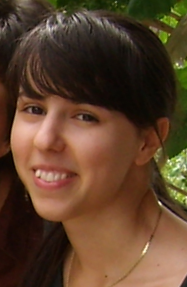
Associate Professor Aleksandra Bensa, PhD, has been a member of the Faculty of Agriculture, University of Zagreb, since 1997, currently serving in the Division for Agroecology, Department of Soil Science. She teaches courses in Soil Chemistry, Soil Nature and Properties, Pedology, and Soil Quality and Protection, and leads national projects focused on soil-water protection and karst denudation. Education Ph.D. 2006, Faculty of Agriculture, University of Zagreb – “Nitrogen in system hydroameliorated soil-water according to different fertilization of arable crops” M.Sc. 2001, Faculty of Agriculture, University of Zagreb – “Influence of drainage and fertilization upon nitrogen distribution in the soil-water-plant system” B.Sc. 1996, Faculty of Agriculture, University of Zagreb Research Interests Prof. Bensa’s research integrates soil chemistry with environmental protection, focusing on nitrogen cycling, soil organic carbon dynamics, heavy-metal contamination (Cu, Cd, Pb, Zn), and the application of Vis-NIR spectroscopy for large-scale soil monitoring. She employs fractal analysis and thermodynamic modelling to understand carbonate formation and dissolution in Mediterranean karst soils. Scientific Output Since 2007 she has published extensively (>50 papers) on soil carbon prediction, humus quality, nitrate leaching, and geochemical behaviour of trace elements. Her work repeatedly combines field campaigns across Dalmatia, Krka National Park, Zagreb peri-urban zones and Adriatic islands with laboratory spectroscopy and modelling. Projects & Funding Co-ordinator, Croatian Science Foundation project “Inter-comparison of karst denudation measurement methods” (2018-2022) Co-ordinator, Ministry of Science project “Impact of agriculture on soil and water pollution” (2007-2013) University of Zagreb internal grants on water protection from fertiliser/pesticide pollution (2015-2016) Teams & Collaborations She heads the soil chemistry and protection research group within the Department of Soil Science, collaborating with colleagues in spectroscopy, GIS-based land evaluation and hydropedological mapping. International links include joint publications on Vis-NIR model development and Mediterranean soil databases.