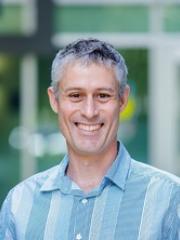
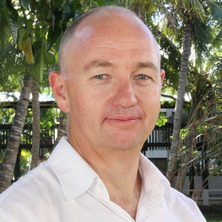
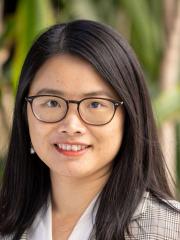
Dr. Sainath Raman is a Senior Lecturer at the Child Health Research Centre, affiliated with the Faculty of Health, Medicine and Behavioural Sciences at the University of Queensland. His research focuses on Paediatric Sepsis , Critical Care , Infectious Diseases , and Therapeutic Interventions . He actively contributes to improving diagnostics and treatment protocols for critically ill children. His recent publications highlight advancements in antibiotic administration , machine learning for risk prediction , and vitamin C/hydrocortisone therapies in septic shock. He leads collaborative initiatives like the RESPOND trial and BUILD study , aiming to optimize paediatric critical care. Raman supervises multiple PhD students working on topics such as machine learning in ICU risk models , drug therapy optimization , and consumer voice integration in paediatric research . He is involved in global research networks, including the Australian and New Zealand Intensive Care Society Paediatric Study Group (ANZICS PSG) and RAPIDS Study Group .
Dr Jessica Schults is a Senior Research Fellow at the School of Nursing, Midwifery and Social Work within the Faculty of Health, Medicine and Behavioural Sciences at The University of Queensland. She is also a Queensland Government Clinical Research Fellow and an incoming NHMRC Emerging Leadership Fellow (2026) based at the Herston Infectious Diseases Institute. With a background as a pediatric critical care nurse, Dr Schults focuses on reducing healthcare-associated infections through improved hospital surveillance, safer invasive device care, and rapid evidence translation. Education: Postgraduate Diploma in Nursing Science, James Cook University Masters (Research) of Applied Science, Queensland University of Technology Doctor of Philosophy, Griffith University Dr Schults' research program aims to reduce the burden of healthcare-associated infections through better hospital surveillance, safer invasive device care, and rapid translation of evidence. She has extensive clinical experience in critical care with a particular passion for ventilator associated infections. Her work strongly emphasizes the application of digital technologies, including AI-enabled risk prediction and clinical decision support tools. She is committed to growing the next generation of clinician-researchers, in-particular, in the underrepresented field of nursing. Dr Schults' recent publications demonstrate a strong focus on infection prevention, particularly related to vascular access devices and pediatric critical care. Her work spans systematic reviews, randomized controlled trials, and consensus methodologies like Delphi studies. Key themes include catheter-related bloodstream infections, endotracheal suction practices, and healthcare-associated infection surveillance. She frequently employs advanced statistical methods and has a growing body of work on the application of technology in improving vascular access outcomes and infection prevention. Major Awards and Fellowships: Queensland Government Clinical Research Fellow incoming NHMRC Emerging Leadership Fellow (2026) Dr Schults is actively supervising three PhD students on projects related to heparinization protocols, the IVCare adaptive platform trial, and alcohol withdrawal assessment in ICU. She has received significant funding including NHMRC MRFF Clinical Trials Activity grants (2025-2030), NHMRC TCR Collaborations in Health Services Research grants (2025-2027), and several other competitive grants focused on infection prevention and vascular access. She is a Chief Investigator on the IVCare adaptive platform trial, which evaluates strategies to prevent catheter-related bloodstream infections, and leads the NHMRC-funded REBUILD project, which aims to strengthen national infection control systems using a learning health system approach. Dr Schults holds leadership roles with the Australian and New Zealand Intensive Care Society, serves as a board member for the ANZ Intensive Care Foundation, and is a technical advisor to the Australian Commission on Safety and Quality in Health Care. She has strong, established partnerships with national and international healthcare consumers, organizations, and health services.
Jessica Ingleman is a Lecturer in Nursing at the University of Queensland , specializing in undergraduate nursing education and critical care skin integrity research . As Program Lead for the Bachelor of Nursing , she contributes to course coordination and co-supervises higher degree research students. Her research focuses on pressure injury prevention in intensive care, examining factors like body morphology , sacral skin microclimate , and medical device safety . Recent studies include evaluating hyper-oxygenated fatty acids for facial pressure injuries and analyzing ICU vs non-ICU patient risks. Acute care Nursing education Clinical research Scientific Awards: Best Nursing Scholarship Paper at 2023 ANZICS ACCCN ASM Grants & Projects: NHMRC Partnership Project: DEFENCE study (device safety in critical illness) Stryker Investigator Grant: Pressure injury care plan implementation
Dr Adam Craig is a Senior Research Fellow at the UQ Centre for Clinical Research, Faculty of Health, Medicine and Behavioural Sciences, University of Queensland. With over 25 years of experience, he is an infectious disease epidemiologist and global health systems researcher specializing in digital health, disease surveillance, and health system strengthening in resource-constrained settings across the Asia-Pacific region. Education: Doctor of Philosophy in Epidemiology, University of New South Wales Master of Public Health (Coursework), University of Sydney Research Interests: Dr Craig’s work focuses on the intersection of digital technologies and health systems, particularly how digital tools can enhance health information systems and support universal health coverage. His research spans: Design and adaptation of health systems in resource-limited settings Surveillance and early detection of infectious diseases Integration of multi-sectoral data for policy and program decision-making Research Trends: His recent publications emphasize the implementation of digital health technologies to support health providers in low- and lower-middle-income countries, comparative studies of vector surveillance methods in the Pacific, and protocols for integrating neglected tropical disease surveillance with broader health system functions. A consistent theme is the use of community-based and digital innovations to strengthen health security and service delivery in small island and low-resource settings. Scientific Contributions & Policy Engagement: Beyond academia, Dr Craig serves as a senior advisor to the Australia-Indonesia Health Security Partnership and as a researcher for the Asia Pacific Observatory on Health Systems and Policies. He has led or contributed to numerous policy reports and systematic reviews informing Pacific Island health authorities on digital health and surveillance strategies. Supervision & Collaboration: Dr Craig is currently available for HDR supervision and offers projects exploring digital health for universal health coverage in Pacific Island countries, infectious disease mortality analysis, and the role of technology in rural health care delivery. His work is supported by grants including the GLIDE Falcon Awards and UQ Consulting and Research Expertise initiatives.
Professor Timothy Carroll serves as Professor and Deputy Head of School at the School of Human Movement and Nutrition Sciences at the University of Queensland. He also holds the position of Centre Director of the Centre for Sensorimotor Performance. His academic career spans over two decades with significant contributions to integrative human physiology, exercise science, and neuroscience. Dr. Carroll completed his doctorate in Neuroscience at the University of Queensland in 2001. He was awarded an Isaac Walton Killam Memorial Scholarship for postdoctoral studies at the University of Alberta in 2002, followed by a Lecturer position in Human Motor Control at the University of New South Wales in 2003. He joined the University of Queensland as a Senior Lecturer in July 2007, eventually advancing to his current professorial role. Professor Carroll's research focuses on how the central nervous system reorganizes through motor learning and exercise. His work integrates exercise science and neuroscience with emphasis on strength training mechanisms. He employs advanced neurophysiological techniques including Transcranial Magnetic Stimulation (TMS), peripheral nerve stimulation, and electromyography (EMG) in human subject research. The ultimate goal of his work is to develop evidence-based exercise protocols that optimize rehabilitation and injury prevention outcomes. His publication record demonstrates sustained investigation into sensorimotor adaptation, neural plasticity, and exercise physiology. Recent work has expanded into computational modeling of human movement, particularly in cycling biomechanics and musculoskeletal simulations, while maintaining strong connections to fundamental neuroscience questions about motor learning and performance. Isaac Walton Killam Memorial Scholarship Professor Carroll has secured continuous funding from the Australian Research Council since 2004, with current projects including "Subcortical control of human reaching?" (2024-2027) and "A new perspective on how we learn motor skills: two adaptation classes?" (2023-2026). His research program demonstrates sustained excellence and relevance across multiple funding cycles. As Centre Director of the Centre for Sensorimotor Performance, Professor Carroll leads a multidisciplinary team investigating neural control of human movement. His laboratory combines traditional neurophysiological approaches with computational modeling to address complex questions about motor learning, adaptation, and performance optimization in both healthy and clinical populations.
Professor Wenbiao Hu is a leading academic in public health and environmental epidemiology at the School of Public Health & Social Work , part of the Queensland University of Technology . With over 34 years of research and professional experience, he specializes in the interplay between climate change, socio-ecological factors, and infectious disease dynamics, particularly dengue and influenza. His work has led to the development of cutting-edge early warning systems for disease outbreaks, which have been implemented in public health programs across Australia and China. His research has been supported by multiple prestigious grants, including the NHMRC postdoctoral research fellowship , three NHMRC project grants , a QUT Vice-Chancellor Senior Research Fellowship , and both the Hong Kong Health and Medical Research Funds and the ARC Future Fellowship . He has supervised 15 PhD candidates and 2 Master’s students to completion, shaping the next generation of public health researchers. PhD in Public Health from Queensland University of Technology (2005) Professor Hu’s work focuses on climate change and infectious disease transmission , GIS and spatiotemporal modeling , biostatistics , and early warning systems . His recent publications highlight the impact of particulate matter on gastric cancer, autoimmune diseases, and respiratory health , as well as spatiotemporal modeling of dengue, influenza, and asthma across diverse geographical contexts. His research underscores the critical role of environmental determinants in shaping infectious disease patterns and public health outcomes. Scientific awards include: NHMRC postdoctoral research fellowship NHMRC project grants (3) QUT Vice-Chancellor Senior Research Fellowship Hong Kong Health and Medical Research Funds ARC Future Fellowship He currently serves as a Principal Supervisor for a PhD project on socio-environmental factors affecting COVID-19 transmission , and his completed supervision includes work on air pollution and active mobility . His research is prominently featured in journals like Nature Sustainability , Environmental Health Perspectives , and PLoS Computational Biology .
Professor Simon Reid is a Professor in the School of Public Health at the University of Queensland, Faculty of Health, Medicine and Behavioural Sciences. He is a prominent researcher in One Health, systems thinking approaches to zoonotic diseases, and multisectoral governance for public health interventions. With expertise spanning veterinary medicine, epidemiology, and public health, Professor Reid has established himself as a leading academic in understanding complex disease systems at the human-animal-ecosystem interface. Education: Bachelor of Veterinary Biology, Murdoch University Bachelor of Veterinary Medicine and Surgery, Murdoch University Doctor of Philosophy, James Cook University Professor Reid is a keen advocate of One Health and the application of systems thinking approaches to understand and improve interventions for wicked zoonotic disease problems at the human-animal-ecosystem interface such as leptospirosis, brucellosis, human-bat interactions and antimicrobial resistance. His research focuses on understanding how to improve multisectoral governance, planning and implementation of responses to manage One Health problems. He delivers postgraduate courses in systems thinking, communicable disease control and One Health. Professor Reid's work spans agricultural, veterinary, biomedical, clinical, and health sciences with particular emphasis on zoonotic diseases and their prevention. Professor Reid's recent publications demonstrate a strong focus on the intersection of environmental factors (particularly greenspace), infectious diseases, and public health outcomes. His research spans from examining metabolic syndrome and vitamin D status in relation to urban environments, to investigating One Health approaches for leptospirosis and antimicrobial resistance. His work increasingly incorporates systems thinking and digital prediction tools for climate-sensitive infectious disease prevention, reflecting the evolving nature of public health challenges in a changing climate. Professor Reid is currently leading significant research projects including a user-friendly digital prediction tool for dengue prevention (2023-2028, Wellcome Trust) and a One Health/System Dynamics approach to reducing Clostridioides difficile infection (2022-2025, University of Western Australia). He has previously secured funding from the Bill & Melinda Gates Foundation, Partnership for Australia-Indonesia Research, and Peter & Mary Ellen Stone Memorial Fund for projects related to One Health, behavior change interventions for COVID-19, and angiostrongyliasis epidemiology. Professor Reid actively supervises numerous PhD students, serving as Principal Advisor for projects on diarrheal disease in Ethiopia, antimicrobial resistance surveillance, enteric infections in Australian children, and acute watery diarrhea in Fiji. As Associate Advisor, he contributes to research on traditional African vegetables, greenspace health effects, dengue hotspot prediction, and spatiotemporal methods for infectious diseases. His completed supervision includes influential work on bat exposures, brucellosis in Jordan, infection control in veterinary practices, Q fever epidemiology, and systems approaches to child stunting.
Professor Michael Nicholas is a Clinical Psychologist with over 40 years of experience in chronic pain research and management. He holds a conjoint Professor position at the Pain Management Research Institute within the Northern Clinical School, University of Sydney , and directs multidisciplinary pain management programs at the MJC Pain Management & Research Centre , Royal North Shore Hospital. He established the first Multidisciplinary Back Pain Program at Westmead Hospital (1988) and developed the globally used Pain Self-Efficacy Questionnaire (PSEQ) . With a PhD from the University of Otago (1988) and an MSc(Hons), he has held leadership roles at St Thomas's Hospital (London), University of NSW (1991), and since 1994 at University of Sydney. PhD, University of Otago MPsychol (Clin) MSc(Hons), University of Sydney His research focuses on psychosocial contributors to chronic pain , early intervention protocols, and workplace disability prevention. He co-developed the Örebro Musculoskeletal Pain Screening Questionnaire with Sweden's Steve Linton, influencing WHO's ICD-11 pain classification. His work on the WISE study (2013–2022) demonstrated cost-effective interventions for injured workers, adopted by NSW Health. Recent publications (2020–2024) emphasize telehealth pain care , cross-cultural pain assessment tools , and workplace pain management . His 15 most recent articles address low back pain interventions, predictive modeling, and economic analyses of multidisciplinary programs. IASP John D Loeser Lifetime Achievement Prize (2022) Honorary Doctorate, Örebro University (2015) Australia's Research Field Leader for Pain (2020–2023) NSW Agency for Clinical Innovation Pain Network Co-Chair (2016–2022) He has trained over 400 ADAPT Pain Management Programs since 1994 and leads the internationally recognized online Masters Degree in Pain Management at University of Sydney. His work extends to opioid deprescribing , rehabilitation psychology , and low-resource setting adaptations . As Associate Editor for PAIN , Journal of Occupational Rehabilitation , and Scandinavian Journal of Pain , he shapes global pain scholarship. His grants exceed $12 million, including $4 million in recent years for rural pain training and CALD community programs.
Dr. Yanfei Xie is a Research Fellow at RECOVER Injury Research Centre within the Faculty of Health, Medicine and Behavioural Sciences at The University of Queensland. She also holds affiliate positions at both the Centre for Innovation in Pain and Health Research (CIPHeR) and RECOVER Injury Research Centre. Her work focuses on understanding biopsychosocial mechanisms of musculoskeletal pain and developing tailored pain treatments. Dr. Xie's educational background includes: Bachelor (Honours) in Rehabilitation Therapy from Sun Yat-Sen University Masters (Research) from Hong Kong Polytechnic University PhD from The University of Queensland (completed October 2021) Dr. Xie's research centers on uncovering the biopsychosocial mechanisms underlying musculoskeletal pain and injury. Her work integrates quantitative sensory testing, biomechanical assessments, and psychological measures to understand pain experiences. She has particular expertise in work-related neck pain and disability, exploring how physical, sensory, and psychosocial factors interact to influence pain outcomes. Her research also extends to occupational health, health equity, and culturally responsive care approaches for diverse populations experiencing chronic pain. Analysis of Dr. Xie's publication record reveals a strong focus on musculoskeletal pain mechanisms, particularly neck pain and work-related disorders. Her research employs diverse methodologies including randomized controlled trials, longitudinal studies, and systematic reviews. A notable trend is her investigation of how language and labeling affect pain perception and recovery expectations, as well as her work on developing tailored interventions for chronic pain management across diverse populations. Dr. Xie has received several prestigious awards for her research contributions: 2021: The Best Poster Award at the Australian Pain Society 41st Annual Scientific Meeting 2019: 2nd Runner-up Best Poster Award at the 2019 Brisbane Pain Research Symposium 2019: People's Choice Best Oral Presentation at the 2019 UQ School of Health and Rehabilitation Postgraduate Research Conference 2018: Winner of the Best Infographic Award at the 2018 School of Health and Rehabilitation Postgraduate Research Conference Dr. Xie is actively involved in research supervision and is currently available for new supervisees. Her current funding includes the 'StressModex' project (2025-2027) focusing on inpatient care following orthopaedic road trauma, funded by the Motor Accident Insurance Commission. She also leads projects on mHealth for chronic musculoskeletal pain in culturally diverse communities, including a 2024-2025 grant from the International Association for the Study of Pain and a 2024 grant from Health Translation Queensland. Dr. Xie works within the RECOVER Injury Research Centre, a leading research group focused on injury prevention, management, and rehabilitation. Her research has directly informed the development of novel technologies for tailored pain management interventions and has influenced policy recommendations by the European Agency for Safety and Health at Work regarding teleworkers.
Daniel Falster is an Associate Professor at the University of New South Wales , specializing in plant ecology and environmental science. His research integrates mathematical models , large ecological datasets , and functional traits to understand ecosystem dynamics, with a focus on Australian flora . He leads the development of the AusTraits database , a comprehensive resource for plant trait data, and contributes to size-structured population theories applicable to both plant and animal systems. Research Areas : Ecological theory, functional trait analysis, forest dynamics, climate-vegetation interactions, data science infrastructure Major Publications : 15+ works on plant allometry, trait-based ecology, and open science frameworks Scientific Contributions : ARC Future Fellowship, leadership in trait data standardization, development of R packages for ecological modeling Teaching : Convenes BEES2041 - Data Analysis for Life and Earth Science and teaches advanced R programming for HDR students
Dr. Nura Lingawi is a Lecturer in the School of Psychology at the University of New South Wales (UNSW). She conducts research on the neural mechanisms of Learning and Memory, with a particular focus on inhibitory predictive learning using various in vivo techniques in animal models. Her educational background includes: Ph.D. in Medicine (2013) from the Brain and Mind Research Institute at The University of Sydney, with a thesis on "The role of the amygdala central nucleus in habitual behavior" under Professor Bernard Balleine B.A. in Psychology (2006) from the University of California, Berkeley Dr. Lingawi's research primarily investigates the role of the infralimbic cortex in various forms of inhibitory learning, including aversive (fear) extinction, appetitive extinction, latent inhibition, and conditioned inhibition. Her work employs a combination of in vivo techniques in animal models to understand the neural and behavioral characteristics of these processes. This research has significant implications for understanding how the brain processes inhibitory signals and how these mechanisms might be disrupted in various psychological conditions. Analysis of her recent publications reveals a consistent focus on the neural mechanisms underlying learning and memory processes, particularly examining the role of specific brain regions like the infralimbic cortex and amygdala in inhibitory learning. Her work spans multiple subfields including fear conditioning, habit formation, and the neural basis of decision-making. A notable trend is her investigation of how metabolic factors (such as high-fat diets) interact with neural mechanisms to influence behavior, suggesting an expanding scope of her research interests. Dr. Lingawi has received research funding including: NHMRC Ideas Grant (2020) - APP2003686 - $400,372 AUD for 3 years, examining "metabolic and cognitive deficits caused by insulin resistance in the ventral striatum" UNSW Science Early Career Academic Network Small Seed Grant (2020) - $500 AUD for the same research project In terms of teaching, Dr. Lingawi currently teaches Graduate Diploma in Psychology courses 5001 and 5002 (Intro to Psychology I & II) and 5003 (Data Analysis and Methods of Psych Inquiry), as well as undergraduate Psychology courses 2081 (Learning & Physiological Psychology) and 1111 (Measuring Mind & Behaviour). Her research appears to directly inform her teaching in physiological psychology and learning. Her laboratory work focuses on neural mechanisms of learning and memory, particularly examining the role of the infralimbic cortex in various forms of inhibitory learning. She collaborates extensively with researchers including Dr. Vincent Laurent, Dr. Billy Chieng, and Dr. Richard Westbrook, among others, suggesting a well-established research team working on interconnected projects in behavioral neuroscience.
Lily Qiao is a Senior Lecturer in Space Systems Engineering at the School of Engineering and Technology , University of New South Wales (UNSW) Canberra . She holds a PhD in Guidance, Navigation, and Control (GNC) from Nanjing University of Aeronautics and Astronautics (2011) and has been affiliated with UNSW since 2011, progressing from Research Associate to her current role. Her teaching includes postgraduate courses on Space Systems Design (ZEIT8008) and Global Navigation Satellite Systems (GNSS) (ZEIT8009), and undergraduate Radar Technology and Application (ZEIT4227). PhD in Guidance, Navigation, and Control (NUAA, 2011) Study exchange at UNSW Sydney Certificate of Completion with Merit (Graduate Teaching Training Program, UNSW Canberra, 2015) Foundations of University Learning and Teaching (FULT) Program (2019) National Mental Health First Aid Certificate (2019–2021) UNSW Course Design Institute (2023) Her research focuses on space systems engineering and the application of AI/CI-based methods to aerospace challenges, including autonomous spacecraft navigation (GNSS, celestial navigation), spacecraft attitude determination and control , Kalman filter technology , and cybersecurity for space systems . She has published over 50 peer-reviewed works and supervised six PhD students. Her recent publications highlight trends in cybersecurity for space systems, GNSS reflectometry for Earth observation, and modular design analysis for CubeSats. Notable awards include the UNSW Career Advancement Fund for Female Academics (2018–2020) and IEEE Senior Membership (2024) . Associate Editor, IEEE Transactions on Aerospace and Electronic Systems Chair, IEEE Australian Capital Territory (ACT) Section (2024) Founder and Chair, AESS Chapter in IEEE ACT Section (2022–2024) President, Women in Space Chapter (WiSC) , National Space Society of Australia Executive Committee, IEEE ACT Section (2020–2023) UNSW Canberra Representative, Women in Research Network (since 2021) She offers $35,000 AUD scholarships for PhD candidates with H1/High Distinction in undergraduate or Master’s programs. Current research supervision topics include AI Test and Evaluation , Real-Time Cybersecurity Platforms , and Dynamic Modular System Architectures .
Dr Anthony Sexton is a Lecturer at UNSW Canberra within the School of Engineering & Technology. His work focuses on advanced manufacturing processes, composite materials, and material deformation analysis. He has published extensively on topics such as thermoplastic fibre metal laminates, resistance spot welding, and stamp/stretch forming processes. Recent research trends include: Optimization of forming processes for hybrid materials Mechanical behavior of thermoplastic composites Finite element simulation of metal and composite forming Quality assessment in welding technologies
Associate Professor Robert Niven is a distinguished academic at UNSW Canberra's School of Engineering and Information Technology, where he has established himself as an internationally recognized research leader in thermodynamics, probabilistic inference, and environmental contaminants. With a career spanning over two decades, he has secured significant research funding and developed impactful technologies with real-world applications. His educational background includes a BSc(Hons) and The University Medal in Chemistry and Geology from UNSW Sydney (1991) and a PhD in Civil and Environmental Engineering from UNSW Sydney (1998). Niven's research interests span three primary areas: (a) Thermodynamics and fluid mechanics, particularly entropic insights into dimensional analysis, generalized conservation laws, and Lie symmetries; (b) Probabilistic inference in data science, including maximum entropy analysis and Bayesian inference applications; and (c) Environmental contaminants and impacts, especially PFAS contaminants and related policy. His work bridges theoretical foundations with practical applications in environmental remediation and engineering systems. Analysis of his recent publications reveals a strong focus on applying entropy-based methods to fluid dynamics problems, developing Bayesian approaches for environmental assessment, and creating innovative solutions for PFAS contamination. His research demonstrates consistent integration of theoretical frameworks with practical engineering applications, particularly in water treatment technologies. Churchill Fellowship (1998) Fulbright Fellowship (2003) JSPS Fellowship (2006) Marie Curie Incoming International Fellowship, Denmark (2007-08) Endeavour Fellowship (2010) Isaac Newton Institute Fellowship (2010) Editorial Board Member of Entropy (since 2007) Editorial Board Member of Stat (since 2019) Niven has secured over A$4.501 million in research funding from diverse sources including ARC Discovery Project grants, an ARC SRI PFAS grant (A$1.364 million), and industry partnerships. He has successfully supervised numerous undergraduate thesis, Masters, and PhD students while also hosting visiting scholars. His PFAS remediation project has led to significant commercialization, with 34 water treatment plants manufactured and exported globally. He leads a major research initiative on PFAS contaminants across UNSW Canberra and Macquarie University, with manufacturing facilities established in Australia and the USA. His work bridges academic research with industrial application, demonstrating strong translational impact in environmental engineering.
Associate Professor Louise Mewton is a public health researcher and academic at the University of Sydney, where she serves as Program Lead in Lifespan and Brain Health Research at the Matilda Centre. Her work focuses on the epidemiology, assessment, prevention, and treatment of alcohol use and related disorders across the lifespan, with particular emphasis on understanding and reducing the cognitive impacts of alcohol exposure during gestation, adolescence, and older adulthood. Dr. Mewton completed her PhD in 2012 at the National Drug and Alcohol Research Centre, UNSW, where her research focused on the epidemiology and diagnosis of alcohol use disorders in youth. Following this, she served as Statistical Advisor and Postdoctoral Research Fellow at the Clinical Research Unit for Anxiety and Depression at St Vincent's Hospital, UNSW (2012-2014), investigating online treatments for anxiety and depression in primary healthcare settings. In 2014, she received an Australian Rotary Health Postdoctoral Fellowship to study online cognitive training for preventing mental illness and risky alcohol use in youth. She was appointed as a UNSW Scientia Lecturer in 2018, continuing her research on alcohol use disorders across the lifespan. Her research program spans multiple domains within public health and addiction science, with a strong emphasis on longitudinal studies and causal inference methods. She has made significant contributions to understanding the relationship between alcohol consumption and cognitive decline, particularly in older adults, while also examining the developmental impacts of alcohol exposure during adolescence and gestation. Her work frequently employs large-scale datasets and international collaborations to address questions of global relevance in substance use and mental health. An analysis of her recent publications reveals a consistent focus on the intersection of alcohol use, mental health, and cognitive outcomes across the lifespan. Her work demonstrates methodological sophistication, particularly in causal inference approaches for observational data, and spans epidemiological studies, clinical trials, and psychometric research. She has made important contributions to understanding the relationship between alcohol consumption and dementia risk, as well as the complex interplay between substance use disorders and mental health conditions. Early career award from Australasian Professional Society for Alcohol and Drugs (2016) Early career award from College of Problems on Drug Dependence (United States, 2012) Young Tall Poppy Award from Australian Institute of Policy and Science (2017) Society for Mental Health Research's Early Career Researcher Award (2017) Dr. Mewton has secured substantial research funding, with $15 million in fellowship and project funding from the National Health and Medical Research Council, Australian Rotary Health, Dementia Centre for Research Collaboration, Dementia Australia, and the National Institutes of Health (US). She currently leads multiple significant research initiatives, including a large-scale randomized controlled trial investigating the effectiveness of an online alcohol intervention for reducing alcohol use and cognitive decline in older adults. She also leads studies using COSMIC cohort data to examine alcohol-dementia relationships cross-nationally and collaborates with the Institute for Health Metrics and Evaluation to improve coverage of low-to-middle income countries in Global Burden of Disease estimates for dementia. Her research is conducted through collaborations with the Centre for Healthy Brain Ageing and the COSMIC consortium, leveraging international datasets to address critical questions in brain health and aging. These collaborations enable her to address research questions with sufficient statistical power and cross-cultural validity, particularly in the areas of alcohol use, cognitive decline, and dementia risk.