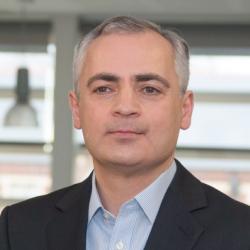
Professor Fehmi Cirak is a faculty member at the University of Cambridge, Department of Engineering, specializing in Computational Mechanics. He joined Cambridge in 2006 after five years as a Senior Scientist at the California Institute of Technology (Caltech). His research integrates advanced computational methods with structural and materials analysis, emphasizing innovation in finite element techniques and data-informed modeling.
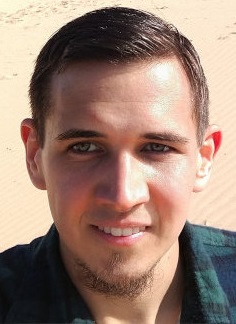
Dr. Zoltan Kocsis is a mathematical logician and educator based at the University of New South Wales (UNSW), where he currently holds the position of Adjunct Lecturer. His research spans multiple areas including proof theory, nonstandard analysis, category theory, and computational logic, with a focus on logical verification, degree of satisfiability, and structured decompositions. PhD in Mathematics from the University of Manchester (2019) Adjunct Lecturer at UNSW Work with interactive theorem proving software like Agda Dr. Kocsis' work on degree of satisfiability explores the probability of logical formulas holding in algebraic structures, revealing gaps in equations from Heyting algebras to group theory. His research on structured decompositions and spined categories provides categorical frameworks for fixed-parameter tractability and tree-width generalizations. In formal verification, he contributed to the seL4 kernel on RISC-V architecture. Recent publications include Proof-theoretic methods in quantifier-free definability (2025), Apartness relations between propositions (2024), and Degree of satisfiability in Heyting algebras (2024). Earlier works cover pseudo-random sequences, homology, and nonstandard analysis in group theory. He has received the CSIRO SCS Engineering and Technology award (2021) and the IBM Prize (2018) for his contributions to logical satisfiability. His collaborations include work with Ben Bumpus on spined categories and Jade Master on structured decompositions, alongside teams at CSIRO and Tallinn University of Technology.
Aggelos Kiayias is the Chair in Cyber Security and Privacy at the University of Edinburgh, where he directs the Blockchain Technology Laboratory. He also serves as Chief Scientist at Input Output, a blockchain technology company. His research focuses on computer security, privacy, applied cryptography, blockchain technologies, distributed systems, e-voting, secure multiparty protocols, and identity management. Ph.D., City University of New York B.Sc., Mathematics, University of Athens With over 200 publications, his work examines blockchain protocol design, consensus mechanisms, privacy-preserving systems, and cryptocurrency economics. Recent research explores transaction fairness, stake-based consensus, and regulatory-compliant financial systems. His studies bridge theoretical cryptography with real-world implementations, including quantum-resistant blockchain frameworks and incentive-aligned protocol designs. Scientific recognitions include the BCS Lovelace Medal (2024), ERC Starting Grant, Marie Curie Fellowship, NSF Career Award, and Royal Society of Edinburgh Fellowship. Supervised 22 Ph.D. students with impactful careers in academia and industry, including researchers at Stanford, Imperial College, and blockchain protocol architects. Current projects investigate tiered transaction fee models, privacy-preserving tokens, and decentralized reliability estimation systems. His work receives funding from European Research Council, Horizon 2020, EPSRC, NSF, and NIST.
Ann Melissa Campbell is a Professor of Business Analytics at the University of Iowa's Tippie College of Business, holding the Clement T. and Sylvia H. Hanson Family Chair in Manufacturing Productivity. Her research bridges theoretical optimization with real-world logistics challenges in delivery systems and disaster response. Her educational background includes: PhD in Industrial Engineering (Optimization), Georgia Institute of Technology BA in Computational and Applied Mathematics, Rice University BA in Economics, Rice University Professor Campbell's work focuses on logistics innovation , particularly last-mile delivery optimization and disaster relief logistics . She investigates how autonomous vehicles, robot deliveries, and data analytics can transform urban and rural delivery systems, while also studying resilience in transportation networks during floods and other emergencies. Her research directly addresses sustainability challenges through 15-minute city planning and parking impact analysis. Recent publications (2022-2025) reveal a strong trend toward technology-integrated urban logistics , with 70% of articles examining autonomous/robotic delivery systems and 30% focused on disaster resilience. Key themes include time-window optimization for attended deliveries, equity in urban-rural delivery access, and underground freight solutions for congestion reduction. Her accolades include: Charles A. Taff Research Excellence Award (Tippie College, 2024) May Brodbeck Distinguished Achievement Award (University of Iowa, 2024) UPS George D. Smith Prize (INFORMS, 2021) National Science Foundation CAREER Award (2003) Professor Campbell leads significant research initiatives including the NSF-funded "Improved Service Through Improved Logistics" project (2003-2010). She serves as Area Editor for Transportation Science and on the editorial board of Transportation Research Part C , while previously holding the role of Department Executive Officer (2020-2023). She is actively affiliated with the Tippie Analytics Cooperative and contributes to the Marketing Institute through logistics expertise, with current work exploring e-grocery fulfillment models and intelligent transportation decision support systems.
Marco Günther is an Adjunct Professor at the Chair of Thermodynamics of Mobile Energy Conversion Systems and the Institute of Thermodynamics at RWTH Aachen University. His academic role focuses on energy conversion technologies for mobile propulsion systems. Chair: Thermodynamics of Mobile Energy Conversion Systems Institute: Institute of Thermodynamics University: RWTH Aachen University Research Interests encompass critical areas in modern propulsion systems. Günther specializes in Internal Combustion Engine Optimization Hydrogen Propulsion Systems Electrochemical Energy Storage Advanced Emissions Control Hybrid Vehicle Technologies Thermodynamics of Mobile Systems Key Research Contributions reveal a strong focus on sustainable mobility solutions. His work spans hydrogen combustion analysis, knock control systems, and emission reduction technologies for both conventional and alternative fuel engines. Scientific Awards : No specific honors mentioned in available records. Contact : marco.guenther@tme.rwth-aachen.de
Finn Tarp is a Professor of Development Economics at the University of Copenhagen 's Department of Economics since 2002 and Coordinator of the Development Economics Research Group (DERG) . He previously served as Director of UNU-WIDER (2009-2018) and has advised institutions in Vietnam, Finland, and Mozambique. Education : Doctoral dissertation (lic. polit.) in Economics, University of Copenhagen (1989-1992) M.Sc. (cand. polit.) in Economics, University of Copenhagen (1977-1978) Graduate Studies, University of Illinois (1976-1977) Research Interests focus on development economics , particularly poverty dynamics, income distribution, structural transformation, and climate change impacts. His work combines empirical analysis with policy modeling in Sub-Saharan Africa and Southeast Asia, emphasizing institutional diagnostics and socioeconomic resilience. Recent publications demonstrate expertise in disaster recovery economics (Cyclone Idai in Mozambique), inequality analysis (Vietnam experiments), and industrial development (Africa-Asia comparisons). Key journals include World Development , Journal of Development Studies , and Review of Development Economics . Awards include: Knighthood, Order of the Dannebrog (2015) Vietnamese Government Medals for Planning Support (2014) and Science Merit (2011) University of Copenhagen Teaching Award (1996) Zeuthen Award, Danish Economic Society (1979) With supervision experience across bachelor to PhD levels and roles in academic governance (e.g., Journal of Development Studies Board), his contributions span research, policy, and education. Current work examines structural transformation in Vietnam and Mozambique's institutional development.
Professor Scott Brown is a distinguished cognitive scientist at the University of Newcastle, where he serves as Professor in the School of Psychological Sciences within the Psychology department. With a unique interdisciplinary background combining psychology and mathematics, Brown has established himself as a leading researcher in mathematical psychology, focusing on how humans process information, make decisions, and solve complex problems. His academic journey began at the University of Newcastle, where he earned multiple degrees: Bachelor of Science (Psychology) Bachelor of Mathematics Bachelor of Science PhD in Psychology After completing his doctorate in 2002, he spent four years as an Assistant Professor at UC Irvine before returning to Australia to join the University of Newcastle. His research has been consistently supported by prestigious fellowships, including an Australian Research Council (ARC) Fellowship from 2008-2013 and a Queen Elizabeth II Fellowship from 2006-2010. Professor Brown's research program uniquely bridges theoretical cognitive science with real-world applications. His primary focus is on mathematical modeling of higher-order cognitive processes, particularly memory and decision-making. What sets his work apart is the application of these models to critical real-world scenarios where human cognition directly impacts outcomes. His team employs a combination of laboratory experiments and analysis of real-world data to develop precise mathematical theories that can make exact predictions about human behavior and thinking. He frequently emphasizes that mathematical theories in psychology allow for precision impossible to achieve with intuition alone. Brown's recent publications reveal a researcher at the forefront of several exciting interdisciplinary frontiers. His work spans from understanding medical decision-making in cancer patients to developing countermeasures against cyber hackers by exploiting their cognitive biases. He has also applied psychological theory to citizen science efforts for endangered species conservation and to improving public transportation systems. The mathematical rigor of his approach is evident across all these domains, with consistent emphasis on developing models that can make precise, testable predictions about human behavior in critical situations. Among his notable scientific achievements are being named a Fellow of the Society for Mathematical Psychology (2015) and a Fellow of the Psychonomic Association (2012). He has also received prestigious New Investigator Awards from both the Society for Mathematical Psychology (2008) and the American Psychological Association (2006). These awards recognize his significant contributions to advancing mathematical approaches in psychological science. Professor Brown has successfully secured substantial research funding, particularly through competitive Australian Research Council grants. His work often involves interdisciplinary collaboration across psychology, mathematics, computer science, medicine, and ecology. He has mentored numerous PhD students and early-career researchers, taking particular pride in how his former students have 'gone on to think much bigger, brighter and deeper thoughts than me!' His approach to research emphasizes the importance of mathematical precision in understanding human cognition, challenging common misconceptions about psychological research, particularly the notion that 'everyone understands what it is to be human' therefore psychological research is unnecessary. Currently, Brown leads a strong research group focused on mathematical psychology, collaborating with researchers across multiple disciplines. His lab investigates how cognitive models can be applied to improve outcomes in critical domains including healthcare decision-making and cybersecurity. One particularly innovative project involves studying state-sponsored hackers to develop cognitive countermeasures that can impede their effectiveness by exploiting psychological biases. This work, funded by a US intelligence agency, represents the cutting-edge application of cognitive science to national security challenges.
Francisco Javier Esparza Estaun (born 1964) is a Professor at the Technical University of Munich, holding the Chair for Foundations of Software Reliability and Theoretical Computer Science within the Department of Computer Science at the TUM School of Computation, Information and Technology. He has held academic positions at Edinburgh University (2001-2003) and the University of Stuttgart (2003-2007) prior to his current appointment at TUM since 2007. Prof. Esparza's research spans theoretical computer science with a focus on formal methods for software verification. His primary interests include algorithms and tools for the design and verification of reactive and distributed systems, verification of systems with infinitely many states, software model checking, program analysis, formal models for distributed systems (particularly Petri nets and process algebras), logic and automata theory, and analysis of probabilistic systems. His work applies mathematical techniques including logic, automata theory and complexity theory to develop methods for locating and eliminating errors in software systems or verifying their correctness. His research output shows consistent contributions to verification techniques, with recent publications focusing on parameterized verification, population protocols, and novel approaches to model checking. His work bridges theoretical foundations with practical verification tools, demonstrating how deep theoretical insights can lead to efficient verification algorithms. ERC Advanced Grant (2018) Honorary Doctor of Masaryk University, Brno, Czech Republic (2009) Member of Academia Europaea (2011) Prof. Esparza has supervised numerous PhD students who have gone on to successful careers in academia and industry. His current research projects include the Continuous Verification of Cyber-Physical Systems (ConVeY) funded by a DFG Research Training Group. Previously, he led the Parameterized Verification and Synthesis (PaVeS) project funded by an ERC Advanced Grant. His research group has developed several influential verification tools including Rabinizer (for LTL translation), Strix (for LTL synthesis), Peregrine (for population protocol verification), and Owl (for omega-automata). His laboratory focuses on developing theoretical foundations for software verification while creating practical tools that implement these theories. The group maintains active collaborations with researchers worldwide and contributes to major verification conferences and journals.
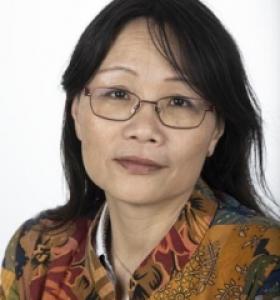
Bing Tie is a researcher at the Paris-Saclay Mechanics Laboratory within the University of Paris-Saclay, focusing on computational mechanics and numerical modeling. Their work bridges theoretical and applied mechanics, with a strong emphasis on wave propagation in composite materials and 3D-printed structures. Key research areas: Mechanics, Numerical Methods, Crack Propagation, 3D Printing, Elastic Wave Dynamics Their recent publications highlight applications of discontinuous Galerkin finite element methods to simulate acoustic/elastic wave coupling, ultrasonic imaging of synthetic tissues, and shock wave propagation in aerospace components. These studies often integrate high-fidelity numerical models for 3D-printed materials and structural components. Notable collaborations include work with Denis Aubry, Andrea Barbarulo, and Hossein Kamalinia. The research spans biomedical imaging , aerospace structural analysis , and material failure dynamics , with applications in synthetic organ printing and spacecraft vibration analysis.
Gwenael Gabard is a Professor at the Institute of Acoustics, Le Mans University, France. His work focuses on computational aeroacoustics, theoretical modeling, and acoustic liner optimization, particularly for aircraft noise reduction. He leads an Industrial Chair funded by ANR and Safran Group. Education : PhD in Acoustics (2003, University of Technology of Compiègne) MSc in Acoustics (2000, University of Technology of Compiègne) Degree in Mechanical Engineering (2000, University of Technology of Compiègne) Research Interests : Aeroacoustics (computational methods, theoretical modeling) Acoustic liners with flow (boundary layer effects, impedance conditions) Wave propagation in lined ducts and heterogeneous media Numerical techniques (high-order finite-element methods, DG-pseudo-spectral coupling) Article Trends : Recent works emphasize shear flow impacts on acoustic propagation, meta-liner design, and advanced numerical methods (DG, pseudo-spectral) for time-harmonic and time-dependent problems. Key areas include impedance eduction, turbulence effects, and subwavelength absorption. Scientific Awards : Industrial Chair (ANR & Safran Group) for acoustic treatments in aircraft engines Teaching & Supervision : He supervises Erasmus exchanges, co-organizes the CMI Acoustics program, and teaches numerical methods, aeroacoustics, and mathematics for acoustics at the Masters level. Organized workshops on acoustic materials (Mat&Flow 2019, 2024) and contributed to ERCOFTAC lectures.
Dr Jefferson Gomes , Senior Lecturer at the University of Aberdeen since 2023, is a computational physicist specializing in multi-fluid dynamics and nuclear engineering. His research spans energy technologies, environmental hazards, and geophysical systems. Education: PhD (Imperial College London, 2004), MSc (State University of Rio de Janeiro, 1999), BSc in Chemical Engineering (Federal University of Rio de Janeiro, 1996) Research Interests: Focus on computational multi-fluid dynamics (CMFD) and multi-physics modeling, with applications in nuclear reactor safety, unconventional shale gas, CO₂ migration, and geothermal energy. Expertise in finite element methods (FEM), machine learning, and reduced-order models. Recent Publications: 2025 work on multifluid reactor dynamics and shale gas adsorption; 2024 studies on CO₂ sequestration and corium flow during accidents. Earlier work includes nuclear reactor design optimization and granular flow modeling. Awards: Fellow of the Higher Education Academy (FHEA). Teaching: Offers courses in Chemical Thermodynamics, Process Engineering, and Computational Fluid Dynamics at undergraduate and postgraduate levels. Collaborations: Partnerships with Imperial College London, Federal University of Rio de Janeiro, and industry projects for BNFL, BP, and JAEA.
University of Applied Sciences Upper AustriaAustria
Hans-Georg Brachtendorf is a Professor at the Research Center Hagenberg Embedded Systems within the School of Informatics, Communications and Media at the University of Applied Sciences Upper Austria - Hagenberg Campus. His work focuses on advanced circuit simulation techniques, RF engineering, and digital signal processing with significant contributions to harmonic balance methods and nonlinear circuit analysis. His research interests span electronic circuit design, RF power amplifiers, digital signal processing, and nonlinear dynamics. Specializing in harmonic balance methods and oscillator circuits, he has developed innovative techniques for steady-state circuit simulation, nonlinear adaptive filtering, and multiplier-less digital filter design. His work bridges theoretical mathematics with practical electronic engineering applications, particularly in THz-wave detection and wireless communication systems. Analysis of his recent publications (2022-2025) reveals a strong focus on nonlinear dynamics identification using symbolic regression, optimization of digital filters through multiplier-less architectures, and governing equation reconstruction from measurement data. His work demonstrates consistent advancement in computational efficiency for circuit simulation while addressing modern challenges in RF and THz technologies. While no specific scientific awards are listed in the available data, his research has generated significant academic impact with 43 publications since 1994 and an h-index reflecting substantial citation influence. Professor Brachtendorf has supervised at least two academic works according to institutional records, though specific student names are not provided. His research activities include collaborations evidenced by joint publications with researchers such as Steiger, Dalpiaz, and Kronberger across multiple institutions. The Research Center Hagenberg Embedded Systems serves as his primary laboratory environment, focusing on digital transformation within ICT strength areas with particular emphasis on circuit simulation and signal processing applications.
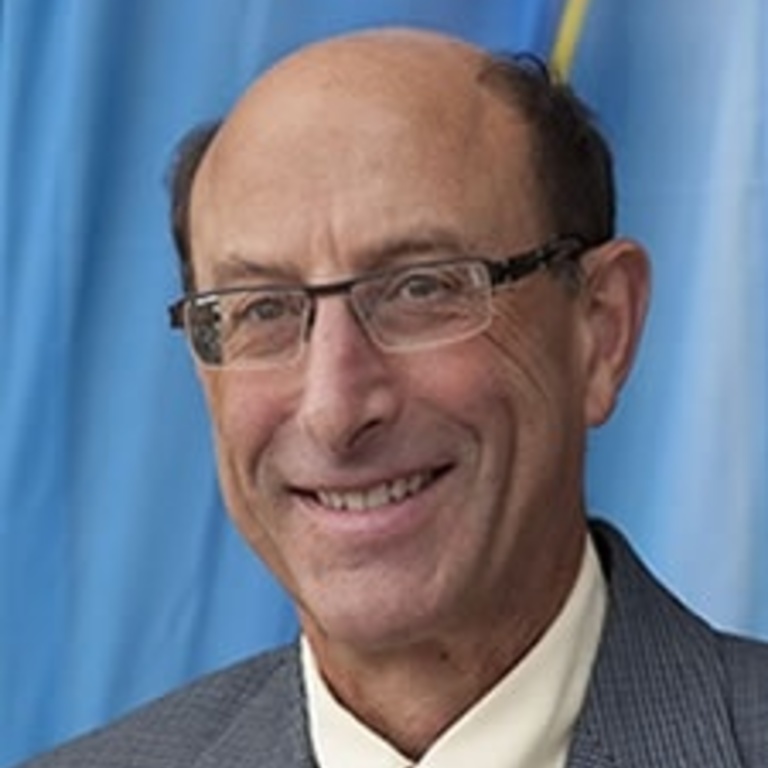
Frederick Stern serves as the George D. Ashton Professor of Hydroscience and Engineering and Professor in the Department of Mechanical Engineering at the University of Iowa's College of Engineering. He additionally holds a Faculty Research Engineer position at IIHR—Hydroscience and Engineering, where he directs the Stern Lab. With over 40 years of continuous service since joining the institution in 1983, Stern maintains active leadership in naval architecture and marine engineering research. Education PhD in Naval Architecture & Marine Engineering, University of Michigan, 1980 MSE in Naval Architecture & Marine Engineering, University of Michigan, 1977 BSE in Naval Architecture & Marine Engineering, University of Michigan, 1975 Research Focus Stern's work centers on computational and experimental fluid dynamics with specialized expertise in ship hydrodynamics , cavitation phenomena , and fluid-structure interaction . His research program bridges high-fidelity CFD simulations with physical towing tank experiments, particularly for high-speed craft and naval vessels. Significant contributions include 6DOF viscous ship hydrodynamics modeling , towing tank maneuvering test methodologies , and multi-criteria optimization for ship design . Stern actively integrates advanced simulation technologies into undergraduate engineering education. Publication Trends Recent publications (2022-2025) demonstrate three converging research trajectories: (1) Multi-fidelity modeling for weight reduction and performance optimization of high-speed small craft, (2) Advanced CFD techniques for free-running vessel simulations in waves including fluid-structure interaction, and (3) Data-driven approaches using machine learning (DMD, RNNs) for ship motion forecasting. These works consistently emphasize validation through experimental data and address practical naval architecture challenges. Professional Recognition Fellow of the American Society of Mechanical Engineers (ASME) Professional Engagement Stern maintains active memberships in the American Society for Engineering Education (ASEE) and Society of Naval Architects and Marine Engineers (SNAME). He serves as Secretary of the Maneuvering Committee for the 24th International Towing Tank Conference, reflecting his leadership in experimental hydrodynamics standardization. His research collaborations include major international workshops such as the Tokyo 2015 CFD Workshop for ship hydrodynamics. Research Infrastructure Stern directs the Stern Lab within IIHR—Hydroscience and Engineering, leveraging the university's Stanley Hydraulics Laboratory facilities including towing tanks and advanced measurement systems. His team develops integrated computational-experimental frameworks like the towing tank maneuvering test flow-map measurement system, supporting both fundamental research and practical naval design applications.
Bingcong Li is a postdoctoral researcher at ETH Zurich collaborating with Prof. Niao He and the ODI group. Previously, they completed doctoral studies at the University of Minnesota under Prof. Georgios B. Giannakis, followed by industry experience focused on large language models (LLMs). Education includes a PhD from the University of Minnesota under Prof. Georgios B. Giannakis. Research centers on making computation efficient, accessible, and affordable across heterogeneous resources—from GPU clusters to consumer hardware—through interdisciplinary approaches combining deep learning, optimization, and signal processing. Key research areas address foundational computing architectures, large-scale system sustainability, and personalized AI access. Their work develops theoretically grounded methods for explainable systems, with recent focus on LLM fine-tuning efficiency. Publication trends show consistent contributions to top conferences (NeurIPS, ICML, ICLR) with emphasis on optimization techniques for resource-constrained LLM deployment. Their advising and grant activities aren't explicitly detailed, though they actively participate in academic service through conference talks (EUROPT 2025, ICASSP 2025) and co-organizing events like the Efficient LLMs Fine-tuning Track at AI+X Summit. Lab affiliation centers on ETH Zurich's ODI group under Prof. Niao He, focusing on optimization-driven AI solutions.
Samuel Zeitler, M.Sc., is a Research Associate at the Chair of Automatic Control within the School of Engineering and Design at the Technical University of Munich (TUM). His work focuses on trajectory planning in automated driving and control engineering applications. He is based in Garching bei München, Germany, and contributes to teaching and research in systems theory and mechatronics. Education: M.Sc. in Munich (2024) B.Sc. at the University of Bayreuth (2021) Research Interests: Samuel specializes in control engineering, with a focus on automated driving systems, trajectory planning, and nonlinear control strategies. His work intersects with mechatronic systems and energy-based modeling techniques. Teaching Contributions: He supports lectures and practical courses at TUM, including "Modern Methods of Control Engineering 2," "Controller Implementation on Microcontrollers," and experiments like the "Multi-tank system" in the summer semester. Laboratory Affiliation: Samuel is part of the Chair of Automatic Control (Prof. Boris Lohmann) at TUM, which engages in advanced research topics such as parametric control, model order reduction, and port-Hamiltonian systems.