Nina Balcan is a Professor at Carnegie Mellon University and holds the Cadence Design Systems Professorship in Computer Science. She is affiliated with the School of Computer Science, specifically the Machine Learning Department (MLD) and Computer Science Department (CSD). Her research spans foundational aspects of machine learning, artificial intelligence, theoretical computer science, algorithmic game theory, and interdisciplinary connections in learning theory. Machine Learning Artificial Intelligence Theoretical Computer Science Algorithmic Game Theory Multi-Agent Systems Data-Driven Algorithm Design Her recent work focuses on advancing algorithm design through machine learning, robustness in adversarial environments, and economic modeling. Key contributions include Learning to Branch (JACM 2024), Regret Minimization in Stackelberg Games (NeurIPS 2024), and Learning Accurate Decision Trees (UAI 2024, Outstanding Student Paper Award). She has pioneered novel approaches to data-driven optimization, semi-supervised learning, and privacy-preserving clustering. Nina has received prestigious accolades including ACM Fellow AAAI Fellow Simons Investigator 2019 ACM Grace Murray Hopper Award Her teaching at CMU includes graduate courses on machine learning, advanced machine learning, and specialized topics like algorithmic game theory.
Dr John Stanton is a Reader in Law at City St George's, University of London, with a focus on Constitutional Law and Comparative Constitutional Law. He has held academic roles since 2010, previously at Kingston University and City University, and is a Visiting Lecturer at the University of Malta since 2018. PhD in Law (Kingston University London, 2010) LLB Law (University of Surrey, 2007) His research spans Maltese constitutional history , local government dynamics , democracy , and central-local relations . Recent projects include Law, Localism and the Constitution (2023) and co-editing The Constitution of Malta at Sixty (2024). John’s publications and conference presentations (e.g., at Melbourne and Texas) address themes like constitutional decay , autocracy , and democratic resilience . He contributes to journals such as Legal Studies , Public Law , and Environmental Law Review . Learning Enhancement Award for Teaching (2017) Fellow, Higher Education Academy He testified before the UK Parliament on devolution and is active in the Society of Legal Scholars , UK Constitutional Law Association , and the Honourable Society of the Inner Temple .
Diane E. Austin is a Professor and Director of the School of Anthropology at the University of Arizona. She also serves as a Research Anthropologist at the Bureau of Applied Research in Anthropology (BARA). Her work focuses on environmental anthropology, particularly community dynamics in industrial and environmental contexts, with a strong emphasis on social justice and collaborative research. She has over 25 years of experience leading interdisciplinary projects in the U.S., Mexico, and Gulf Coast regions. Austin's research spans diverse areas including Native American communities, U.S.-Mexico border sustainability, Gulf Coast oil industry impacts, and urban food systems in arid regions. She has pioneered long-term partnerships with tribal organizations, federal agencies, and community groups, earning recognition such as the University Distinguished Outreach Professor (2008) and Distinguished Director (2023). Her recent work highlights longitudinal studies on the Deepwater Horizon oil spill's social effects, binational environmental initiatives in Nogales, and community-based approaches to disaster resilience. She coordinates BARA's internship and post-baccalaureate programs, supporting hundreds of students in applied anthropological research. Awards: Partners in Conservation Award (2010), Border Research Partnership Award Finalist (2012) Leadership Roles: Chair of the Good Neighbor Environmental Board, Member of the Gulf Research Program Advisory Board Key Projects: Southern Paiute cultural preservation, Gulf Coast oil industry studies, Nogales reforestation initiatives Austin’s teaching includes courses on ethnographic methods, data analysis, and mixed-methods research. She actively engages in policy advocacy, contributing expert testimony in legal proceedings related to environmental disasters and labor rights.
Ram Rajagopal is an Associate Professor of Civil and Environmental Engineering and Electrical Engineering at Stanford University, and a Senior Fellow at the Precourt Institute for Energy. He leads the Stanford Sustainable Systems Lab (S3L), focusing on large-scale monitoring, data analytics, and stochastic control for infrastructure networks, particularly power systems. His research emphasizes renewable energy integration, smart distribution systems, and demand-side data analytics. Education: PhD in Electrical Engineering and Computer Sciences & MA in Statistics (UC Berkeley), MS in Electrical and Computer Engineering (UT Austin), and BEng in Electrical Engineering (Federal University of Rio de Janeiro). Research interests include power grid optimization, renewable energy systems, and data-driven approaches to infrastructure challenges. He has pioneered work in grid flexibility, distributed energy resources, and machine learning applications for energy systems. His lab develops technologies like Smart Dim Fuses and the EV-EcoSim platform for EV charging infrastructure optimization. Received NSF CAREER Award, Powell Foundation Fellowship, and Berkeley Regents Fellowship Over 30 patents and best paper awards Advises/founded companies in sensor networks, power systems, and data analytics Labs/Teams: Stanford Sustainable Systems Lab (S3L), Powernet Project. His work spans grid resilience, energy equity, and scalable energy solutions.
Dai Zhongxiang is an Assistant Professor and Presidential Young Fellow at the School of Data Science, The Chinese University of Hong Kong, Shenzhen (CUHKSZ), where he joined in August 2024. Previously, he was a Postdoctoral Associate at MIT's Laboratory for Information and Decision Systems (January-June 2024) and a Postdoctoral Fellow at the National University of Singapore's Department of Computer Science (April 2021-December 2023). He completed his Ph.D. in Artificial Intelligence at NUS under the supervision of Bryan Kian Hsiang Low and Patrick Jaillet. Dr. Dai's research focuses on the intersection of theoretical and practical AI, with particular emphasis on large language models (LLMs) and optimization techniques. His work spans both theoretical foundations of multi-armed bandits and Bayesian optimization, as well as practical applications in LLM inference, including prompt optimization, in-context learning, personalization of LLMs, LLM-based agents, and scaling up test-time computation of LLMs. His research approach often bridges theoretical principles with real-world applications, particularly in AI4Science problems. His recent publications demonstrate a clear trend toward advancing LLM capabilities through optimization techniques, with increasing focus on practical deployment challenges. The research spans both theoretical contributions to optimization theory and applied work on enhancing LLM performance in real-world scenarios. His work on dueling bandits, neural bandits, and zeroth-order optimization has been consistently published in top-tier venues including NeurIPS, ICML, ICLR, and ACL. Presidential Young Fellow, CUHKSZ (2024) Dean's Graduate Research Excellence Award, NUS (2021) Research Achievement Award × 2, NUS (2019 & 2020) Singapore-MIT Alliance Graduate Fellowship (2017) Dr. Dai actively mentors multiple Ph.D. students and research assistants, with several of his students' papers accepted to top conferences. His research has received significant attention, with invitations to serve as Area Chair for NeurIPS 2025 and ICLR 2025, reflecting his growing influence in the machine learning community. His work bridges theoretical machine learning with practical applications in large-scale AI systems.
Peter A. Raymond is the Oastler Professor of Biogeochemistry at Yale University's School of the Environment and Department of Geology and Geophysics. He serves as Senior Associate Dean of Research & Director of Doctoral Studies and is Co-Director of the Yale Center for Natural Carbon Capture. Raymond leads the Raymond Biogeochemistry Lab, which investigates the biogeochemistry of inland waters, enhanced weathering, methane cycling, and blue carbon systems through cutting-edge field, laboratory, and modeling approaches. Education B.S., Marist College Ph.D., College of William and Mary/Virginia Institute of Marine Science Research Focus Raymond's research fundamentally reshapes our understanding of carbon cycling in aquatic systems, demonstrating that rivers serve as dynamic conduits rather than passive pipes in the global carbon cycle. His work examines how biology and watershed variables alter carbon chemistry in streams, rivers, and estuaries, with particular emphasis on understanding global carbon cycles in relation to climate change. Raymond employs radiocarbon measurements to explore the age and turnover of carbon in aquatic ecosystems, revealing that rivers are variable sources of both old and young terrestrial dissolved organic carbon to oceans. The Raymond Lab is particularly known for developing the Pulse-Shunt Concept, which challenges traditional views of riverine biogeochemistry by emphasizing the episodic and dynamic nature of elemental fluxes. Current research directions include enhanced weathering and alkalinity studies for carbon removal, global greenhouse gas budgets through projects like RECCAP 2, natural methane cycling in aquatic systems, and blue carbon ecosystems such as mangroves and salt marshes. Publication Trends Raymond's recent publications (2023-2025) demonstrate a strong focus on global carbon and methane cycling, with particular attention to inland water systems' role in the Earth's climate system. His work increasingly integrates large-scale datasets with field measurements to understand how climate change and human activities affect greenhouse gas emissions from rivers and streams. A significant portion of his recent work contributes to international efforts like the Global Carbon Project, aiming to refine estimates of global carbon and methane fluxes. His research also shows growing emphasis on carbon removal strategies, particularly enhanced rock weathering through the Earthshot-funded GOAL-A project, and their potential for climate mitigation. Scientific Recognition Fellow of the American Association for the Advancement of Science Member of the Connecticut Academy of Science and Engineering Coastal and Estuarine Research Federations Cronin Award for Young Scientists ISI highly cited author Past Editor and Chief of the American Geophysical Union's journal Global Biogeochemical Cycles Mentorship and Funding Professor Raymond currently mentors four doctoral students (Jon Gewirtzman, Shou-En "Samuel" Tsao, Benjamin Saalidong, and Mingyu Zhang) and masters student Bella Garrioch. His research is supported by multiple grants from the National Science Foundation (NSF), including CAREER awards, and participation in the Earthshot-funded GOAL-A (Global Ocean And Land Alkalinization) project. Raymond has also been involved in significant collaborative projects with USGS data to research how climate and land use change alter carbon export from US watersheds, and with Lamont Doherty to develop methods for measuring air-sea gas exchange of CO2 in rivers and estuaries. Research Infrastructure The Raymond Biogeochemistry Lab at Yale is a dynamic research group comprising research scientists, postdocs, doctoral and masters students, and postgraduate researchers. The lab recently acquired a Mini Carbon Dating System (MICADAS) at Yale, significantly expanding their research capabilities in ecosystem carbon turnover and verification of natural climate solutions. The lab collaborates globally on projects in the Arctic, Hudson River, and middle Atlantic Bight, and is actively involved in the NASA Carbon Monitoring System BlueFlux field campaign to assess carbon exchange in coastal wetlands.
Virginia Smith is the Leonardo Associate Professor of Machine Learning at Carnegie Mellon University (CMU), with a courtesy appointment in the Department of Electrical and Computer Engineering. She holds a Ph.D. from UC Berkeley and undergraduate degrees from the University of Virginia. Her research focuses on developing efficient, privacy-preserving machine learning systems, particularly in federated learning, distributed optimization, and resource-constrained settings. Key areas include federated learning frameworks like CoCoA and Ditto, unlearning algorithms, and privacy amplification techniques. Smith's work bridges theory and practice, addressing challenges such as data heterogeneity, fairness, and robustness. She has led initiatives like the LEAF benchmark for federated learning and has contributed to open-source tools for scalable ML systems. Her awards include the Sloan Research Fellowship, Samsung AI Researcher of the Year (2023), and an NSF CAREER Award. She is actively involved in curriculum development, teaching courses on federated learning and large-scale ML at CMU. Her research group explores cutting-edge topics like federated optimization with sparse communication, unlearning in LLMs, and secure ML pipelines. Collaborations span academia and industry, with applications in healthcare, IoT systems, and AI safety. Smith serves as Program Chair for ICML 2025 and frequently contributes to workshops on federated learning and trustworthy AI.
Jeff Alstott is a Professor of Policy Analysis at the RAND School of Public Policy, serving as the Director of RAND's Center for Technology and Security Policy (TASP) . He holds a concurrent role as a Senior Information Scientist at RAND and directs a program on technology forecasting and improving R&D investment returns at the National Science Foundation. Previously, he held leadership roles in the U.S. government, including the White House as Director for Technology and National Security at the National Security Council and Assistant Director for Technology Competition and Risks at the Office of Science and Technology Policy. Prior to that, he was a program manager at IARPA, focusing on AI, biosecurity, and science forecasting, and has held academic and research positions at MIT, Singapore University of Technology and Design, the World Bank, and the University of Chicago. Education : Doctorate in complex networks from the University of Cambridge; MBA and bachelor's degrees from Indiana University. Alstott's research spans artificial intelligence , technology forecasting , complex networks , and science and technology policy . His recent publications focus on AI security , existential risk from advanced technologies , and collaborative frameworks for AI safety , reflecting his expertise in balancing technological innovation with national and global security. He has contributed to understanding AI model weight protection , cybersecurity challenges , and policy implications of emerging technologies . Alstott has received recognition for his work, including being part of an award-winning team on technology counterintelligence . His policy recommendations and technical research have informed federal strategies for responding to advanced technologies , emphasizing the need for proactive governance and cross-sector collaboration.
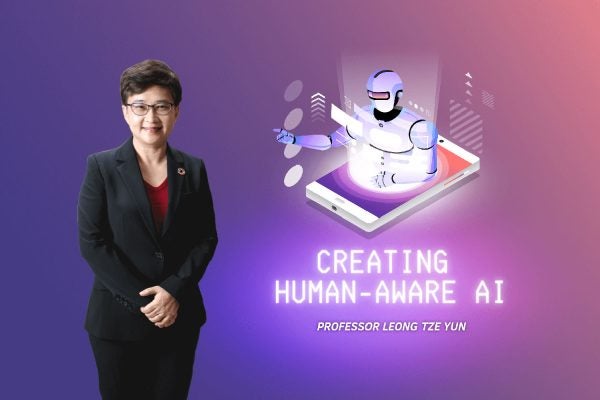
LEONG Tze Yun is a Professor in the Department of Computer Science at the School of Computing, National University of Singapore (NUS). She holds S.B., S.M., and Ph.D. degrees in Computer Science from the Massachusetts Institute of Technology (MIT). Her academic career spans both research and industry experience, with significant contributions to the fields of artificial intelligence and health informatics. Dr. Leong's educational background includes: Ph.D. in Electrical Engineering & Computer Science, Massachusetts Institute of Technology S.M. in Electrical Engineering & Computer Science, Massachusetts Institute of Technology S.B. in Computer Science & Engineering, Massachusetts Institute of Technology Her primary research interests focus on responsible AI, dynamic decision-making, neurocognitive modeling, reinforcement learning, artificial general intelligence, and biomedical and health informatics. Her work bridges the gap between theoretical AI development and practical healthcare applications, with an emphasis on ethical considerations and human-centered design. She directs the Medical Computing Laboratory at NUS, a multidisciplinary research program exploring human-aware decision modeling in complex environments. Analysis of her recent publications reveals a strong trend toward responsible AI development, with significant contributions to reinforcement learning techniques, causal inference methods, and applications of AI in healthcare. Her work increasingly integrates ethical considerations with technical AI development, particularly evident in her 2024 publications on medical AI and human values. Her scientific recognition includes: Fellow of the American College of Medical Informatics (ACMI) Founding Fellow of the International Academy of Health Sciences Informatics (IAHSI) Member of Eta Kappa Nu (Honor Society for Electrical Engineers) Dr. Leong has supervised numerous doctoral and master's students throughout her career, many of whom have gone on to prominent positions at institutions like Google, Netflix, Mayo Clinic, and academic institutions worldwide. Her advisory work extends to significant policy development, including contributions to WHO guidance on ethics and governance of AI for health. She currently serves on the World Health Organization (WHO) Expert Group on Ethics and Governance of AI for Health, the World Economic Forum (WEF) AI Governance Alliance, and the Advisory Council on AI in Uzbekistan. Her laboratory work focuses on developing adaptive systems that evolve with changing technical functionalities, system infrastructures, usage patterns, and operational contexts, with applications spanning prediction and decision analytics, human-aware robotics, game artificial intelligence, personalized education, and assistive care for elderly with neurocognitive disorders.
Todd Sorensen is an Associate Teaching Professor at the University of California, Merced (UC Merced), affiliated with the School of Social Sciences, Humanities & Arts and the Economics and Business Management department. He holds fellowships at IZA (Institute of Labor Economics) and GLO (Global Labor Organization). Prior to UC Merced, he served as an Associate Professor at the University of Nevada, Reno (2014–2023) and an Assistant Professor at UC Riverside (2007–2014). His professional journey includes a visiting role as Visiting Associate Professor at UC Merced before his current appointment in 2022. Education: PhD in Economics, University of Arizona, 2007 Research Interests: Todd's work focuses on labor market structures , exploring topics like monopsony power and wage-setting dynamics; immigration , including its demographic and policy implications; and discrimination , particularly in criminal sentencing and labor markets. His research has been published in journals like ILR Review , Labour Economics , and the Journal of Population Economics , with findings cited in the U.S. Economic Report of the President. Scientific Awards: Fellow at IZA (2022–present) Fellow at GLO (2022–present) Advising & Grants: Todd has advised students across various levels but no specific advisees are listed. His grants and funding sources are not detailed in the provided text. He collaborates with interdisciplinary teams and maintains affiliations across UC campuses through his and his spouse’s academic careers. Labs/Teams: Engaged with research networks at IZA and GLO, focusing on labor market policies and migration studies. Active in collaborative projects analyzing immigration trends, labor market competition, and discrimination metrics.
Pierre Vandergheynst is a Full Professor at the Swiss Federal Institute of Technology Lausanne (EPFL) in the Department of Electrical Engineering, with a courtesy appointment in Computer and Communication Sciences. He serves as EPFL’s Vice-Provost for Education since 2015 and leads the Signal Processing Laboratory 2 (LTS2). His research spans harmonic analysis, sparse approximations, mathematical data processing, and applications in signal/image processing, computer vision, machine learning, and graph-based data analysis. PhD in Mathematical Physics (1998), Université catholique de Louvain Postdoctoral Researcher at EPFL (1998-2001) Assistant Professor at EPFL (2002-2007) His research explores geometry/symmetry in high-dimensional data, redundant dictionaries for dimensionality reduction, and computational harmonic analysis on manifolds. Recent work focuses on protein structure modeling, geometric deep learning, and graph-based signal processing. Key article trends include graph neural networks for protein analysis, geometric deep learning in neuroscience, and structured knowledge priors in neural models. His 2023-2025 publications emphasize interpretable AI, long-range dependencies in graphs, and molecular representation learning. Scientific Awards: IEEE Signal Processing Magazine Best Paper Award (2023) Signal Processing Society Best Paper Award (2022) Apple ARTS Award (2007) De Boelpaepe Prize, Royal Academy of Sciences of Belgium (2009-2010) He has supervised over 30 PhD theses and contributed to foundational work in graph signal processing, compressive sensing, and geometric deep learning. His lab develops tools for data science on non-Euclidean structures, with applications in medicine, astronomy, and wireless systems.
Bradley Olsen is a Professor of Chemical Engineering at the Massachusetts Institute of Technology (MIT), holding the Alexander and I. Michael (1960) Kasser Chair in Chemical Engineering. He is affiliated with MIT's School of Engineering and directs research in the Plastics and the Environment Program. His academic career spans over two decades with numerous prestigious appointments and recognitions. Olsen earned his S.B. from MIT in 2003 followed by a Ph.D. from the University of California Berkeley in 2007. His educational background is complemented by postdoctoral fellowships including NIH and Beckman Institute Postdoctoral Fellowships (2008-2009) and the Hertz Fellowship (2003-2007). Research Interests Professor Olsen's research focuses on designing materials to address important challenges while understanding the fundamental science necessary for materials design. His primary research areas include block copolymers, soft condensed matter physics, protein-based materials, and bioelectronics. His group specializes in polymer networks, protein-polymer conjugates, self-assembly phenomena, and sustainable polymer development. The research has significant implications for biomaterials, sustainable polymers, and advanced materials design. Publication Trends Analysis of Professor Olsen's recent publications reveals a strong focus on polymer network topology, protein-polymer conjugates, and sustainable materials. His work increasingly integrates computational methods with experimental approaches, particularly in polymer characterization and data science applications to materials science. Recent publications show growing emphasis on biodegradable polymers, polymer informatics, and biomedical applications of advanced materials. Scientific Recognition Professor Olsen has received numerous prestigious awards throughout his career, including: American Physical Society (APS) Fellow (2023) Fulbright Amazonia Scholar (2023) Alexander and I. Michael Kasser Chair in Chemical Engineering (2021) ACS Macro Letters/Biomacromolecules/Macromolecules Young Investigator Award (2021) AIChE Owens Corning Early Career Award (2019) American Physical Society Dillon Medal (2018) Alfred P. Sloan Research Fellow in Chemistry (2014) Advising and Funding Professor Olsen has secured significant research funding from multiple federal agencies including NSF, NIH, AFOSR, and DOE. His group has produced numerous high-impact publications across top journals in polymer science, materials science, and chemistry. He has advised multiple graduate students and postdoctoral researchers who have gone on to successful careers in academia and industry. The MIT OGE's Committed to Caring Honor (2019) recognizes his excellence in graduate student mentoring. Research Infrastructure Professor Olsen leads a research group with capabilities spanning polymer synthesis, protein engineering, materials characterization, and computational modeling. His lab maintains strong collaborations with other MIT departments, national laboratories, and international research institutions. The group participates in several interdisciplinary initiatives including the Plastics and the Environment Program and has developed significant data infrastructure for polymer science through projects like CRIPT and BigSMARTS.
Timothy M. Hospedales is a Professor of Artificial Intelligence at the Institute of Perception, Action and Behaviour within the School of Informatics at the University of Edinburgh . He also serves as VP AI and Head of Samsung AI Research Centre Europe . His research focuses on efficient and robust AI , emphasizing meta-learning , lifelong transfer-learning , and domain adaptation in both probabilistic and deep learning frameworks. Applications span computer vision , vision and language , reinforcement learning for robotics , and finance . Professor at University of Edinburgh (2020–present) ELLIS Fellow (2021) Head of Samsung AI Research Europe (2020–present) Founding Director of Applied Machine Learning Lab at QMUL (2012–2016) His work includes pioneering contributions to meta-learning , few-shot learning , and self-supervised methods , with notable awards such as the Best Paper Prize at ICML AutoML 2018 and Best Student Paper at ICPR 2018 . He has co-authored 15+ recent papers on topics like Vision-Language Models , Medical AI Fairness , and Diffusion Model Optimization . He served as Program Co-Chair for BMVC 2018 and AAAI 2022 , and authored a book on Visual Adaptation in the Deep Learning Era (2022). Co-Chair, BMVC 2018 Guest Editor, IET CV Special Issue (2016) Keynote Speaker at TASK-CV Workshop (ECCV 2016) Special Issue on Fewer Labels (IEEE PAMI 2020) His leadership extends to organizing workshops like the Learning-to-Learn Workshop at ICLR 2021 , Meta-Learning Workshop at NeurIPS 2020 , and Domain Generalisation Workshop at ICLR 2023 . Current projects include Meta-Omnium (CVPR 2023) for general-purpose meta-learning and MetaAudio (ICANN 2022) for few-shot audio classification benchmarks.
Gregg M. Garfin is a Professor and Specialist in Climate, Natural Resources, and Policy at the University of Arizona’s School of Natural Resources and the Environment, and Deputy Director for Science Translation and Outreach at the Arizona Institute for Resilience. He holds a Ph.D. in Geosciences from the University of Arizona (2003), an M.S. in Geology and Geography from the University of Massachusetts (1997), and a B.S. in Geology and Geography from the same institution (1993). His work bridges science and societal decision-making, focusing on climate adaptation, drought management, and climate services. He directs the Water, Society, and Policy M.S. Program and has led interdisciplinary projects on climate resilience, including contributions to the Fourth National Climate Assessment. Roles: Professor, Deputy Director, Program Director Affiliations: Arizona Institute for Resilience, School of Natural Resources and the Environment Research Interests His research emphasizes climate adaptation strategies, climate policy, and the co-production of knowledge between scientists and decision-makers. Key areas include: Climate impacts on water resources and ecosystems Extreme heat and drought resilience in urban and border communities Climate change communication and education Awards & Recognition Garfin has received multiple accolades, including AAAS Fellowship (2020), University of Arizona Service Awards (2020, 2015), and the Global Initiative for Academic Networks (GIAN) Visiting Fellowship (2018). His work has been featured in peer-reviewed journals and media outlets, emphasizing actionable science for climate resilience. Grants & Contributions He has led federal and transnational projects, including binational climate resilience initiatives in the U.S.-Mexico border region and flood risk assessments in Seoul, South Korea. His work integrates participatory governance approaches to enhance community preparedness.
Steven I-Jy Chien serves as Professor and Director of the Transportation Program within the Department of Civil and Environmental Engineering at the New Jersey Institute of Technology (NJIT). His career spans academia, government, and industry with significant contributions to transportation engineering research and practice. His educational credentials include: Ph.D. in Civil and Environmental Engineering from University of Maryland-College Park (1995) M.S. in Civil and Environmental Engineering from University of Maryland-College Park (1991) B.S. in Civil Engineering from Tamkang University (1983) Professor Chien's research focuses on transportation system resilience, sustainable transit operations, and advanced traffic modeling. His work addresses critical challenges in urban rail networks, demand-responsive transit services, and energy-efficient transportation systems. He employs sophisticated computational methods including genetic algorithms, machine learning, and Bayesian approaches to solve complex transportation problems involving network vulnerability, passenger behavior, and infrastructure optimization under uncertainty. Analysis of his recent publications reveals strong emphasis on transportation resilience against cascading failures, sustainable operations for electric transit systems, and pandemic-responsive aviation scheduling. His research spans diverse geographic contexts including major Chinese metropolitan areas and U.S. transportation networks, demonstrating global applicability of his methodologies. His professional recognition includes: 2024 Keynote Speaker at Union-Tech Lecture, National Taiwan Ocean University 2022 Keynote Speaker at International Conference of Chinese Institute of Transportation 2022 Best Poster Award from New Jersey Department of Transportation Professor Chien has secured research funding from federal agencies including the Federal Highway Administration (FHWA) where he contributed to CORSIM traffic simulation software development. His industry experience with China Engineering Consultants Inc. and Information Dynamic Inc. informs his practical approach to transportation challenges. As Transportation Program Director, he oversees curriculum development and industry partnerships that prepare students for transportation sector careers. He maintains active collaboration with transportation agencies globally, particularly through his leadership in the Transportation Program at NJIT which serves as a hub for innovation in urban mobility solutions.