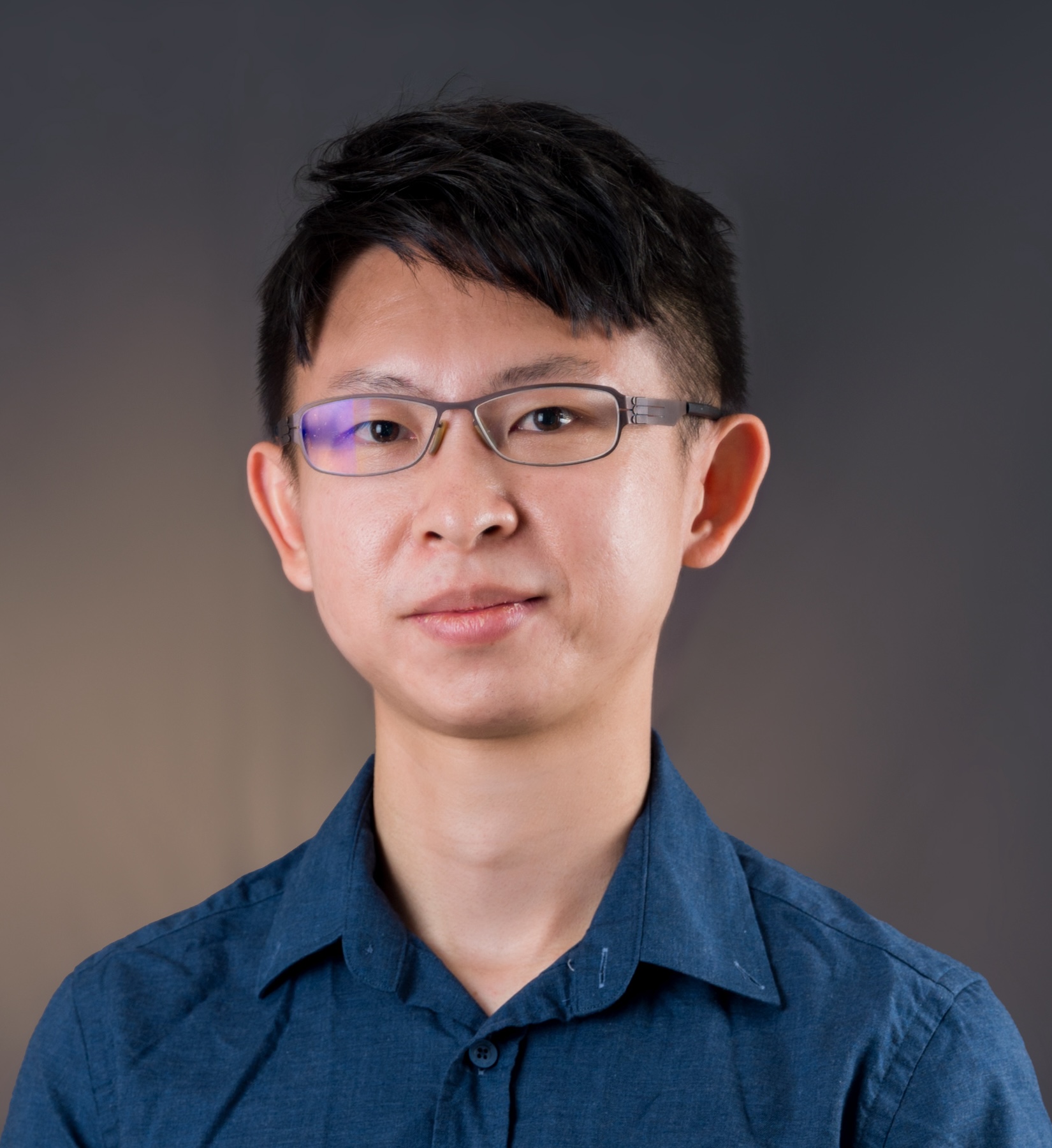
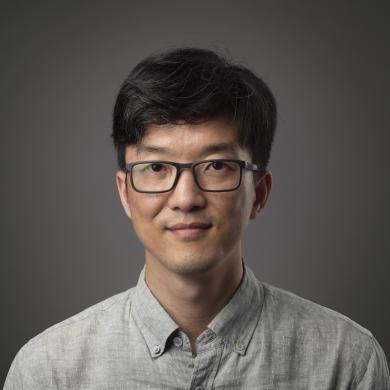
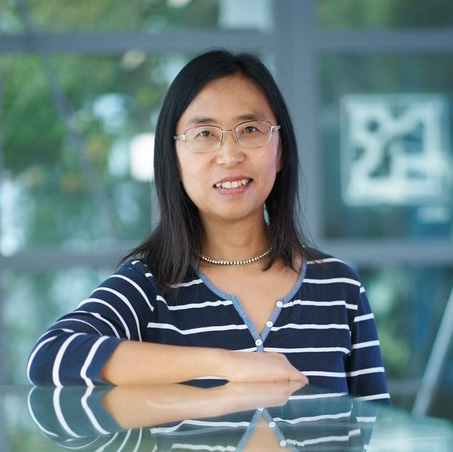
Anil K. Jain is a University Distinguished Professor at Michigan State University, where he has taught and conducted research for over 50 years. His work focuses on Pattern Recognition , Biometrics , and Machine Learning , with foundational contributions to fingerprint, face, and palmprint recognition. B.S., Indian Institute of Technology, Kanpur (1969) M.S. and Ph.D., The Ohio State University (1970, 1973) in Electrical Engineering His research spans Computer Vision , Deep Learning , and Biometric Security , addressing challenges in adversarial robustness , demographic bias , and generative models . Recent publications emphasize transformer-based architectures , domain adaptation , and contactless biometric systems . Scientific awards include: Inductee, National Academy of Engineering (2016) Inductee, The World Academy of Sciences (2019) BBVA Foundation Frontiers of Knowledge Award (2025) Fellowships: Guggenheim, Humboldt, Fulbright Doctor Honoris Causa: 3 universities He has authored seminal works like Introduction to Biometrics and Handbook of Face Recognition , and served as Editor-in-Chief of IEEE Transactions on Pattern Analysis and Machine Intelligence . His leadership in Forensic Science includes roles on the Defense Science Board and AAAS study teams.
Shang-Tse Chen is an Associate Professor at the Department of Computer Science and Information Engineering and Graduate Institute of Networking and Multimedia , National Taiwan University . He leads the NTU AI Security Lab , focusing on applied and theoretical machine learning with emphasis on cybersecurity, adversarial ML, and ML privacy/fairness. Education: PhD in Computer Science (Georgia Tech, 2019), BSc in CSIE (NTU, 2010) Awards: K. T. Li Young Researcher Award (2025), IBM PhD Fellowship (2018), KDD Best Student Paper Runner-Up (2016), NSF SaTC Grant (2017-2021) His research spans adversarial ML, certified defenses, model inversion attacks, and intersection with differential privacy/fairness. Recent work includes physical adversarial attacks on object detectors and practical defenses using JPEG compression. He teaches courses like Security and Privacy of Machine Learning and Introduction to Medical Informatics . Key publication trends show focus on adversarial robustness (ICML/NeurIPS/ICLR), cybersecurity applications (ACSAC), and ML fairness (ACL/EMNLP). Collaborations include industry partnerships with Intel Labs and Symantec. Scientific Awards: K. T. Li Young Researcher Award (2025) ACM TiiS Best Paper Honorable Mention (2020) IBM PhD Fellowship (2018) KDD Audience Appreciation Award Runner-Up (2018) Symantec Fellowship Runner-Up (2016) KDD Best Student Paper Runner-Up (2016) NSF Grant (2017) He advises 13 current students (PhD/MS/Undergrad) and has mentored alumni now at CMU/UC Berkeley. The lab actively recruits postdocs and students across levels.
Maarten de Rijke is a Professor at the University of Amsterdam and affiliated with the Innovation Center for Artificial Intelligence (ICAI) . He is a leading expert in Information Retrieval , Recommender Systems , and Machine Learning , with over 500 publications and 10,000 citations. His work spans theoretical and applied domains, including conversational recommender systems , domain generalization , and neural ranking models . Research Pillars: Information retrieval, e-commerce search, learning to rank, and empathetic AI systems Awards: Best Paper (2x), Best Student Paper Community Roles: Organized workshops (MANILA25, SIGIR editions) His recent publications focus on robust recommendation systems , cross-domain contract extraction , and brain signal integration for query refinement. He leads the AIRLab (Amsterdam) and collaborates with institutions like Shandong University and the University of Chinese Academy of Sciences. Scientific Contributions : Over 500 publications in ACM Transactions, SIGIR proceedings, and journals Developed novel frameworks for learning-to-rank and user satisfaction modeling Pioneered research on conversational AI and adversarial attacks in retrieval He actively engages in community service, including organizing conferences and advocating for epilepsy research through initiatives like Emma’s collection box (over €24,448 raised). His work bridges theoretical rigor with real-world impact in search and recommendation technologies.
Nozomu Togawa is a Professor at Waseda University's Faculty of Science and Engineering, School of Fundamental Science and Engineering, specializing in Computer Science. He has held this position since 2009 and also serves as Chief Scientific Officer (CSO) of Quanmatic Inc. since 2022. With a PhD in Engineering from Waseda University (1997), his academic journey includes positions at Waseda University and the University of Kitakyushu before his current professorship. His research interests focus on integrated system design , quantum computation , and information security . Togawa has published extensively with over 368 papers and significant citation metrics (Scopus h-index: 23, Google Scholar h-index: 28). His work bridges theoretical quantum computing with practical security applications, particularly in hardware security and IoT systems. Togawa's research demonstrates a clear progression from traditional hardware security toward quantum-inspired computing solutions. His recent publications focus on Ising machines, quantum annealing, and hardware Trojan detection, showing how quantum approaches can solve complex optimization problems in security contexts. He has made significant contributions to applying quantum computing techniques to practical problems like course selection optimization, travel planning, and hardware security verification. Among his notable recognitions are the Minister of Education, Culture, Sports, Science and Technology Award for Science and Technology (2018), SCOPE Results Development Promotion Award (2022), and multiple Best Paper Awards. He serves on important committees including the Ministry of Internal Affairs and Communications Cyber Security Task Force and the Institute of Electronics, Information and Communication Engineers' VLSI Design Technology Research Committee. Togawa actively mentors students who frequently appear as co-authors on his publications. His research group produces high-impact work in quantum computing applications and hardware security, with strong industry connections through his CSO role at Quanmatic Inc. He has received substantial research funding supporting his innovative work at the intersection of quantum computing and security.
Professor Jun Zhang is a leading academic in cybersecurity at Swinburne University, Australia, where he directs the Cybersecurity Lab. He has been honored as Australia's top cybersecurity researcher and instrumental in establishing Swinburne as a globally recognized cybersecurity research institution. His work includes high-impact papers and multi-million-dollar R&D projects, culminating in awards like the 2021 'Top Cybersecurity Research Institution' accolade. As course director of the Bachelor of Cyber Security, he pioneered an industry-driven teaching model with Deloitte and CSIRO, significantly boosting course enrollment. His collaborations extend to Adobe's Curriculum Innovation Program and the Australian P-TECH initiative, promoting STEM education and cybersecurity awareness. He supervises doctoral candidates and leads grants focused on AI-driven cybersecurity, smart home security, and blockchain-based edge computing. His research spans vulnerability detection, GAN forensics, IoT security, and privacy preservation in OSNs. Research interests include cybersecurity fundamentals, data science applications, and distributed systems. Notable achievements include the PTFix framework for Java vulnerabilities, the IoTFuzz smart home testing system, and CTI mining methodologies. Awards reflect his mid-career research excellence and industry partnerships. His grants with CSIRO and defense organizations emphasize real-world impact, addressing challenges from malware detection to adversarial machine learning. The Cybersecurity Lab and collaborative projects like Artchain demonstrate his commitment to bridging academia and industry. Professional activities include supervising over 20 HDR students and securing grants totaling millions. His work on blockchain-based edge storage (CSEdge) and SDCCP congestion control highlights innovation in networking. Future directions include advancing AI for design collaboration with CSIRO and enhancing privacy in smart energy technologies. His contributions span technical, educational, and community outreach domains, positioning him as a pivotal figure in cybersecurity's evolution.
Jishen Zhao is an Assistant Professor in the Department of Computer Science and Engineering at the University of California, San Diego (Jacobs School of Engineering). His research focuses on computer architecture, non-volatile memory systems, and deep learning acceleration. Dr. Zhao has published extensively in top venues including ISCA, MICRO, ASPLOS, and IEEE Transactions. He collaborates with researchers at UCSD and beyond to advance systems for emerging applications in AI and autonomous vehicles. Dr. Zhao's primary research areas include persistent memory systems, hardware/software co-design for deep learning, and safety-critical computing. He develops techniques for crash consistency, memory disaggregation, and efficient neural network deployment. His work on autonomous vehicles addresses scenario generation and perception-aware system design. Recent projects explore LLM applications for software engineering and hardware verification. Analysis of Dr. Zhao's 2024-2025 publications reveals a strong shift toward AI-integrated systems research. He applies large language models to tasks like RTL verification and software issue localization while continuing to innovate in memory systems for serverless computing. There is growing emphasis on safety-critical systems for autonomous vehicles and energy-efficient neural network training using novel hardware architectures. Information about Dr. Zhao's scientific awards, advising activities, grants, and laboratory facilities was not available in the provided documentation.
Hima Lakkaraju is an Assistant Professor at Harvard University with dual appointments in the Harvard Business School and the Department of Computer Science. Her research focuses on trustworthy AI, including machine learning interpretability, fairness, privacy, and safety. She holds a PhD from Stanford University and has received accolades such as the Alfred P. Sloan Fellowship and NSF CAREER Award. Her work bridges algorithmic foundations and societal implications of AI, with applications in healthcare, policy, and business. Education: PhD in Computer Science from Stanford University (2013-2017). Academic background includes roles at IBM Research, Microsoft Research, and Adobe. Research Interests: Algorithmic Foundations of AI Interpretability and Explainable AI Fairness and Bias Mitigation Privacy-Preserving ML Generative Models and LLMs Ethical AI Policy and Regulation Key Achievements: Over 100 publications in top venues like NeurIPS and ICML; co-founder of the Trustworthy ML Initiative; featured in MIT Tech Review, Forbes, and Harvard Business Review. Current projects include the AI4LIFE research group and work on regulatory frameworks for AI. Advising and Grants: Supervises over 30 students across PhD, master's, and postdoc levels. Research supported by NSF, Sloan Foundation, Schmidt Sciences, Google, Amazon, and others. Initiatives include the Regulatable ML workshop and NeurIPS ethics co-chair roles. Labs and Collaborations: Leads Harvard's AI4LIFE group and collaborates with industry partners like Fiddler AI. Active in policy discussions on AI regulation and societal impact.
Arthur Gervais is a Professor of Information Security at University College London's Department of Computer Science. His work focuses on blockchain systems, smart contract security, and decentralized finance (DeFi) risk analysis. He has published extensively on topics ranging from privacy technologies to systemic vulnerabilities in financial cryptography. Research Interests: Gervais investigates security challenges in blockchain ecosystems, including censorship mechanisms, zero-knowledge proofs, and DeFi liquidation risks. His interdisciplinary approach bridges computer science, cryptography, and financial systems. Publications Trends: Recent articles emphasize empirical studies of DeFi attacks, hybrid fuzzing for smart contract verification, and privacy trade-offs in blockchain mixers. His work spans conferences like ACM SIGMETRICS, IEEE Security & Privacy, and World Wide Web Conference.
Richard M. Stern is a Professor of Electrical and Computer Engineering at Carnegie Mellon University (CMU), holding courtesy appointments in the Language Technologies Institute and Department of Computer Science, and serving as an Artist Lecturer in the School of Music since 2007. His interdisciplinary work bridges engineering and music technology through the School of Music's programs. Education: Ph.D. in Electrical Engineering from Massachusetts Institute of Technology (MIT), 1976 Professor Stern's research spans sound, speech, hearing, and music, with core emphases on robust speech processing in variable acoustic environments, music information retrieval, automated accompaniment, and foundational contributions to binaural perception theory. His work integrates psychoacoustic principles with machine learning to address challenges in speech recognition and human-robot interaction. Recent publications (2022-2025) reveal intensified focus on deep learning for speech enhancement in reverberant/noisy conditions, human-robot interaction scenarios, and music tagging—highlighting innovations in beamforming, source separation, and temporal modulation modeling. Awards and Honors: Fellow of the IEEE Fellow of the Acoustical Society of America Fellow of the International Speech Communication Association (ISCA) ISCA Distinguished Lecturer Allen Newell Award for Research Excellence (1992) Lutron Award for Teaching Excellence (2018) Professor Stern has advised numerous graduate students in speech and audio research, though specific names are unlisted in source materials. His grant portfolio includes significant National Science Foundation and industry-funded projects in speech technology, with leadership roles in initiatives like Interspeech 2006. He actively collaborates with CMU's Language Technologies Institute and Music and Technology program. He maintains strong ties to CMU's interdisciplinary ecosystem through the Language Technologies Institute and School of Music's Music and Technology program, contributing to research that merges acoustic engineering with musical applications.
Gautam Kamath is an Assistant Professor at the University of Waterloo's Cheriton School of Computer Science, a Faculty Member at the Vector Institute, and a Canada CIFAR AI Chair. He leads The Salon, a research group focused on statistics, algorithms, machine learning, and optimization. His work bridges theoretical foundations with practical applications in data privacy and robustness, contributing to both academic research and real-world deployments that impact millions of users. Dr. Kamath earned his PhD and SM degrees in Electrical Engineering and Computer Science at MIT, where he was advised by Costis Daskalakis. Prior to MIT, he graduated from Cornell University in May 2012 with a degree in Computer Science and Electrical and Computer Engineering, where he worked with Bobby Kleinberg. His academic journey reflects a strong foundation in both theoretical computer science and practical applications. His research focuses on developing solutions for trustworthy and reliable machine learning and statistics, with particular emphasis on data privacy and robustness. He addresses fundamental problems in these areas, revitalizing statistical toolkits for the modern data era where privacy preservation is paramount. His work spans theoretical foundations of differential privacy to practical applications that have been deployed at scale, including contributions to systems that protect the sensitive information of hundreds of millions of individuals. Analysis of his recent publications reveals a strong trend toward addressing the interplay between privacy, robustness, and machine learning performance. His work increasingly examines practical deployment challenges while maintaining theoretical rigor, with growing emphasis on diffusion models, generative AI, and the legal implications of AI systems. There's a clear trajectory from foundational privacy theory toward addressing real-world implementation challenges across diverse application domains. Canada CIFAR AI Chair Ontario Early Researcher Award 2024 Caspar Bowden Award for Outstanding Research in Privacy Enhancing Technologies STOC Best Student Presentation Award ICML 2024 Best Paper Award Microsoft Research Fellow at the Simons Institute for the Theory of Computing Dr. Kamath actively mentors students, with notable successes including Valentio Iverson winning the Germain-Erdős Undergraduate Award and Chris Trevisan receiving the CRA Outstanding Undergraduate Researcher Award. His service to the research community is extensive, serving as Editor-in-Chief of TMLR, on the Executive Committee of the Learning Theory Alliance, and on steering committees for major conferences including ICML, COLT, and ALT. He has organized numerous workshops focused on privacy-preserving machine learning and differential privacy. Through The Salon research group, Dr. Kamath fosters a collaborative environment where postdoctoral fellows, graduate students, and undergraduates work together on cutting-edge problems at the intersection of statistics, algorithms, machine learning, and optimization. The group maintains strong connections with industry partners and participates in major research initiatives, including the Vector Institute's privacy and security research efforts. Looking forward, Dr. Kamath will be moving to the Computer Science department at NYU's Courant Institute of Mathematical Sciences in September 2026, where he plans to expand his research program.
Thomas Peyrin is a Full Professor at Nanyang Technological University (NTU) in Singapore, leading the Symmetric Key and Lightweight Cryptography Lab (SyLLab) since 2012. He co-founded TT-logic.ai, focusing on cryptographic innovations. His academic journey includes a Ph.D. in Cryptology from Orange Labs and University of Versailles (2008), a Master in Computer Science from MPRI (2005), and engineering training at CPE Lyon (2004). Education : Ph.D. (2008), MPRI Master (2005), EPFL Exchange (2003-2004), CPE Lyon (1999-2004) Career : Full Professor at NTU (2022-present), Associate Professor (2017-2022), Nanyang Assistant Professor and NRF Fellow (2012-2017), Research Fellow at NTU (2010-2012), Cryptography Expert at Ingenico (2008-2010) Thomas specializes in symmetric cryptography, cryptanalysis of hash functions and block ciphers, and machine learning applications to security. His work includes groundbreaking research on SHA-1 collisions, lightweight cryptographic primitives (e.g., GIFT, PHOTON), and automated cryptanalysis frameworks. Recent projects explore integrating AI with cryptographic verification and fault attack resistance. His publications span top conferences like CRYPTO, EUROCRYPT, and CHES, with awards including the FSE Test of Time Award (2025), FSE Best Paper (2023), and NRF Investigatorship (2022). He has advised numerous students in cryptographic research and co-founded SyLLab, a leading lab for symmetric cryptography innovation. Scientific Awards : Test of Time Award at FSE 2025 Best Paper Award at FSE 2023/ToSC NRF Investigatorship (2022) Lee Kuan Yew Postdoctoral Fellowship Best Paper Awards at FSE 2012 and ASIACRYPT 2007
Il Memming Park is a Professor and Group Leader at the Centre for Restorative Neurotechnology within the Champalimaud Research division of the Champalimaud Foundation in Lisbon, Portugal. His work bridges computational neuroscience, machine learning, and statistical modeling to understand neural dynamics and computation. Dr. Park's research focuses on developing statistical and machine learning methods for analyzing neural time series data. His lab investigates the appropriate language for neural dynamics that can explain and generate specific predictions on neural data and behavior. He builds on foundations of dynamical systems and stochastic processes to create models of neural computation tightly tied to biology. His publications reveal a strong emphasis on developing methods like variational latent Gaussian processes and exponential family dynamical systems to extract meaningful patterns from complex neural recordings. His work spans both theoretical developments in computational methods and their application to real neural data from areas like visual cortex, parietal cortex, and other brain regions involved in perception and decision making. Dr. Park has previously held positions at Stony Brook University and the University of Texas at Austin, where he was affiliated with departments of Neurobiology and Behavior, Applied Mathematics and Statistics, Psychology, and Neuroscience. His lab at Champalimaud includes multiple PhD students, postdoctoral researchers, and research staff working collaboratively on various aspects of neural data analysis and modeling. The team employs an interdisciplinary approach combining neuroscience, statistics, machine learning, and dynamical systems theory.
Ying Cai is an Associate Professor in the Department of Computer Science at Iowa State University, joining in 2003 after earning his Ph.D. in Computer Science from the University of Central Florida (2002). His research focuses on AI, machine learning, data science, cybersecurity, privacy protection, and database systems. He leads projects funded by the Air Force Research Laboratory, including work on authentication data structures for rank-aware queries, requiring U.S. citizenship and expertise in linear algebra/cryptography. Dr. Cai’s work spans cybersecurity (e.g., adversarial example defense, secure secret sharing), spatio-temporal systems (e.g., traffic risk prediction, check-in time modeling), and healthcare AI (e.g., cervical spine diagnosis with transformers). His publications emphasize practical applications of ML in privacy, security, and distributed systems. Professional roles include Associate Editor for Multimedia Tools and Applications (since 2009), Co-chair for COMPSAC TAIN/NCIW symposium (2014–2017), and TPC Chair for Mobilware 2010. His service includes contributions to INFOCOM, ICDCS, and MDM conferences. Current research opportunities exist for graduate students with strong programming/math skills, particularly in cryptography and linear algebra. He emphasizes interdisciplinary work, such as bridging AI with social sciences via large language models.
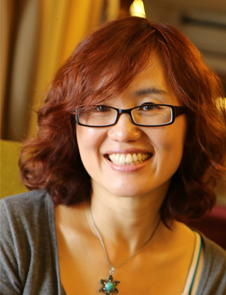
Zhao Guoying is an Academy Professor at the Academy of Finland and holds a tenured Full Professorship at the University of Oulu, Finland. His research focuses on human behavior understanding, emotion AI, and computer vision. He has held visiting positions at institutions including Stanford University and Aalto University. He earned his PhD (2005) in Computer Science from the Chinese Academy of Sciences. His work has led to pioneering contributions in facial expression analysis, micro-expression recognition, and remote physiological signal measurement. Zhao has secured over €19.8 million in research grants as PI, including the prestigious Academy Professor Grant (2021-2026) and Profi-7 Hybrid Intelligence funding. He has supervised 22+ PhD students and 16+ postdocs, many of whom hold academic and industry leadership roles. His awards include IEEE Fellow (2022), IAPR Fellow (2020), and Finland’s Most Publishing AI Researcher (2017). His research interests span machine learning, affective computing, and feature representation. Notable contributions include the first systems for spontaneous micro-expression analysis, novel methods for face anti-spoofing, and remote health monitoring via video. He actively organizes conferences (e.g., Arctic AI Days) and chairs committees such as the Finnish AI Society board.
WonSook Lee is a tenured Full Professor in the School of Electrical Engineering and Computer Science at the University of Ottawa’s Faculty of Engineering. Her expertise spans medical imaging, machine/deep learning, computer graphics, and computer vision. She earned her Ph.D. in Computer Science from the University of Geneva (Switzerland) and holds degrees from POSTECH (Korea) and NUS (Singapore). Before academia, she worked at Korea Telecom, Samsung Advanced Institute of Technology, and Eyematic Interfaces Inc. (USA). Her research focuses on applications such as virtual/augmented reality, MRI/CT/Ultrasound analysis, and 3D mesh modeling. She has authored over 130 publications, including 30+ journal papers, and serves on conference committees and editorial boards. Lee has secured major grants (NSERC, CFI, ORF) as Principal Investigator and contributed to global initiatives like South Korea’s National Research Foundation. Her lab explores cutting-edge techniques in medical imaging, AI-driven object detection, and multimodal systems. Notable projects include adversarial perturbation analysis for model robustness, cross-domain GANs for semantic segmentation, and real-time ultrasound-enhanced pronunciation training. She actively promotes interdisciplinary research in healthcare technology and autonomous systems.