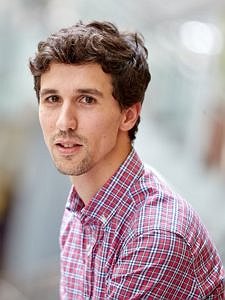
Kelly J. Clifton is a Hans Fischer Senior Fellow at the Institute for Advanced Study (TUM-IAS) , affiliated with the Department of Civil and Environmental Engineering at Portland University. Hosted by Prof. Rolf Moeckel, her research focuses on Modeling Spatial Mobility , integrating land use, transportation systems, environmental impact, and health outcomes. She investigates travel behavior, spatial analysis of household/firm location choices, and the interplay between urban design and mobility patterns. Her work emphasizes data-driven approaches to infrastructure planning, including pedestrian and bicycle facility design, and the implications of spatial resolution in transport models. Collaborations with institutions like TUM-IAS and co-authors such as Cat Silva and Qin Zhang highlight her contributions to sustainable urban development.
Daria Podmetina, D.Sc. (in Technology), serves as Visiting Professor at Estonian University of Life Sciences in Tartu and Senior Researcher at Taltech University in Tallinn, Estonia. An experienced researcher, university teacher, and project manager, she specializes in innovation management and sustainability through education innovation frameworks. Her research pioneers the integration of arts into STEM (STEAM) to develop critical competencies for innovation professionals, addressing modern challenges like digital transformation and societal uncertainty. She actively promotes entrepreneurship, challenge-based education, and social innovation through international projects and presentations at Academy of Management, ISPIM, and WOIC conferences. Her Art-Driven Competence Model emphasizes innovative problem-solving, emotional cognition, and interpersonal skills to cultivate responsible innovation practices. Scientific Awards: None mentioned in the provided text. Advising and Grants: The source material does not specify student advisees, grant funding, or research team structures.
Peter J. Klenow is the Landau Professor of Economics at Stanford University and a Gordon and Betty Moore Fellow at the Stanford Institute for Economic Policy Research (SIEPR). He serves as a Research Associate at the National Bureau of Economic Research (NBER) where he co-directs the Economic Fluctuations and Growth program, and acts as a consultant to the Federal Reserve Bank of Minneapolis. Professor Klenow specializes in macroeconomics with particular emphasis on productivity measurement, economic growth, and price dynamics. His groundbreaking research focuses on creative destruction and how innovation-driven firm turnover contributes to economic growth that traditional measurement methods often miss. He has extensively studied resource allocation across firms, the impact of new product introduction on productivity measurement, and the relationship between business dynamism and economic growth. His recent publications analyze how imputation methods affect Total Factor Productivity (TFP) measurement and investigate the relationship between R&D misallocation and growth. Professor Klenow's work demonstrates that declining business dynamism in the United States has contributed significantly to slower productivity growth. Member of the American Academy of Arts and Sciences Fellow of the Econometric Society Gordon and Betty Moore Fellow Professor Klenow currently serves as co-Editor of Econometrica , one of the most prestigious journals in economics, having previously served as co-Editor for American Economic Review: Insights . His research is supported through his NBER affiliation and Stanford position, with significant influence on how economists measure and understand economic growth dynamics. While not leading a specific named research lab, his work through the NBER's Economic Fluctuations and Growth program coordinates a substantial research agenda involving numerous economists studying innovation, productivity, and growth.
Dr. Jörg Pohle is a PostDoc researcher at the Humboldt Institute for Internet and Society (HIIG) where he heads the research programme 'Data, actors, infrastructures: The governance of data-driven innovation and cyber security' and the 'Global Privacy Governance' project. His interdisciplinary work bridges Informatics, Law, and Sociology, focusing on data protection theory and practice, privacy governance, and the societal implications of digital technologies. Pohle completed his doctorate at Humboldt-Universität zu Berlin with a dissertation on the history and theory of data protection and its implications for ICT system design. His academic background spans Law, Political Science, and Computer Science, with early work examining security of voting computers and related security discourse. His research interests include the intersections of Informatics and Law, Informatics and Sociology, modellification processes, and data protection by design. He has developed critical frameworks like 'Welt → Modell → Technik → Welt' for analyzing how power structures become embedded in sociotechnical systems. His work often takes historical perspectives on data protection debates while addressing contemporary challenges in technology governance. Analysis of his recent publications reveals a strong focus on translating data protection principles into practical applications, particularly in healthcare contexts like nursing care and pandemic response. His research increasingly addresses AI governance challenges, examining large language models' impact on scientific practices and developing legal design patterns for law-technology translation. He advocates for freedom-preserving approaches to digital governance and information separation of powers in digital environments. Pohle serves as a board member of the Working Group on Digitalization as a Challenge for Sociological Theory within the German Sociological Society. He has contributed to significant research projects including 'Strengthening Digital Skills through Micro-Credentials,' 'DUCAH @ HIIG,' and 'Making Repositories and AI Systems Usable in Everyday Nursing Care.' He is a prolific organizer of the annual Interdisciplinary Workshop on Privacy, Data Protection & Surveillance and regularly contributes to policy discussions through media appearances in Handelsblatt, Leipziger Volkszeitung, and specialized podcasts examining the intersection of IT and law.
Hendrik Send is Professor at HTW Berlin University of Applied Sciences and Project Leader for the 'Internet-enabled Innovation' research area at the Humboldt Institute for Internet and Society (HIIG). His work bridges academic research with practical applications in digital innovation, focusing on user-driven and community-based approaches across energy, AI, and organizational contexts. His educational background includes Physics studies, a Diploma in Electronic Business from UdK Berlin, and a PhD from Universität St. Gallen investigating Innovation-Communities and idea generation. Send's research centers on Innovation Management and Open Innovation , with rapidly growing expertise in AI's organizational impact . Current projects examine generative AI in workplaces, people analytics, and smart energy systems, emphasizing employee empowerment amid surveillance concerns. His work uniquely connects co-determination frameworks with digital transformation, addressing tensions between autonomy and algorithmic control in German labor contexts through empirical studies of knowledge workers. Analysis of his 2021-2025 publications reveals a decisive pivot toward AI-human collaboration in knowledge work, featuring generative AI case studies and people analytics implementations. Earlier research (2017-2019) established foundations in open business models and energy user innovation, showing consistent methodology in community-driven design. His interdisciplinary approach spans computer science, labor economics, and innovation theory with strong empirical grounding in German organizations. No scientific awards were documented in source materials. Send secures major third-party funding including DFG's Open! project on collaborative design (with TU Berlin/Grenoble), innogy Foundation's Smart Energy User Innovation , and current generative AI initiatives. While student advisees aren't explicitly listed, his 15+ collaborative publications since 2021 indicate active mentorship. He frequently partners with Georg von Richthofen and Sonja Köhne on labor-AI intersections. As core member of HIIG's Innovation, Entrepreneurship & Society group, he co-organizes workshops like the 'KI in der Arbeitswelt' series with IG Metall and Spreehub, directly engaging labor representatives in shaping AI governance frameworks through initiatives like the 'Mitbestimmtes People Analytics' project.
Daoyuan Wu is an Assistant Professor at the School of Data Science, Lingnan University, Hong Kong, one of eight UGC-funded universities in the region. Previously, he held positions as a Research Assistant Professor at HKUST CSE, Senior Research Fellow at Nanyang Technological University, Senior Researcher at Huawei HKRC, and Research Assistant Professor in the Department of Information Engineering at The Chinese University of Hong Kong (CUHK), where he also served as an Adjunct Assistant Professor from 2022-2023. His research focuses on the intersection of Large Language Models and security, with specialization in LLM for Security and Security of AI/Blockchain/Code/Mobile . His work spans multiple domains including AI/LLM4Sec (using LLMs for vulnerability detection), AI/LLM-Sec (securing LLMs themselves), Blockchain and Web3 Security, and Mobile and Software Security. He leads the AIS2Lab which is actively researching LLM applications in cybersecurity contexts. His recent publications demonstrate a strong trend toward applying LLMs to security problems across multiple domains, with significant contributions to smart contract security through tools like PropertyGPT (which received a Distinguished Paper Award at NDSS 2025), GPTScan, and ACFix. His work combines program analysis with LLM capabilities to address complex security challenges that traditional methods struggle with. Distinguished Paper Award at NDSS 2025 for PropertyGPT: LLM-driven Formal Verification of Smart Contracts through Retrieval-Augmented Property Generation Dr. Wu actively advises PhD and research students, with several former students now working at top institutions and companies including Huawei, OKX, and academia. He's currently hiring PhD students for Fall 2026 with scholarship support of approximately HK$19,000 per month. His lab receives funding from multiple internal and external grants supporting PhD students, RAs, and PostDocs. He leads the AIS2Lab which focuses on AI/LLM applications in security contexts across multiple domains including blockchain, mobile security, and software security. The lab maintains active collaborations with researchers at top institutions globally and has developed multiple influential tools and frameworks for security analysis.
Michael Lyu is a Professor at The Chinese University of Hong Kong specializing in software engineering with a focus on cloud reliability, AIOps, and log analysis. His research bridges the gap between theoretical advances and practical industrial applications in large-scale cloud systems. His research interests span Software Engineering , Cloud Computing Reliability , AIOps , and Log Analysis . Dr. Lyu's work addresses critical challenges in modern cloud operations, including failure diagnosis, anomaly detection, and reliability engineering. His recent research has pivoted toward leveraging large language models for software engineering tasks, particularly in code generation and log analysis. His publication portfolio demonstrates consistent contributions to major software engineering conferences (ASE, ICSE, ESEC/FSE) from 2018-2025, with a noticeable increase in LLM-related research since 2023. The trend shows a clear evolution from traditional software engineering topics toward AI-driven approaches for cloud operations. ICSE 2021 Keynote: "Reliability-Driven AIOps for Cloud Resilience" ASE 2023: Maat: Performance Metric Anomaly Anticipation for Cloud Services ASE 2024: LILAC: Log Parsing using LLMs with Adaptive Parsing Cache Dr. Lyu actively mentors students, with numerous co-authored publications showing his advisees as first authors. His work receives significant attention in both academic and industrial software engineering communities, addressing practical problems faced by large-scale cloud service providers. His research group appears focused on developing data-driven approaches for improving cloud system reliability through advanced analytics of logs, traces, and KPIs.
Sergio Segura is a Full Professor of Software Engineering at the University of Seville (Spain), where he leads the research line on Software Engineering within the SCORE Unit of Excellence. He is a member of the Applied Software Engineering research group and affiliated with the SCORE Lab at the I3US Institute. His research focuses on applied and tool-oriented software engineering, with particular emphasis on improving software quality and developers' productivity through automation. He actively collaborates with industry through research contracts and technical training initiatives. Segura's research interests include software testing, AI-driven software engineering, trustworthy AI, and software engineering education. His recent work shows a strong trend toward testing RESTful APIs, safety and fairness testing of large language models, and mutation testing in practice. His publications demonstrate a consistent focus on practical, tool-oriented solutions to real-world software engineering challenges. Docentia Teaching Accreditation - Excellence Mention (2025) Best Application Paper Award at AITest 2022 His student Alberto Martín won the SCIE/BBVA National Young Researcher Award 2023 Segura has supervised numerous PhD students, many of whom have achieved significant recognition including First and Second Place Winners in ACM SRC Grand Finals. He leads the TRUST4AI project focused on trustable AI-driven internet search and maintains close collaboration with industry partners such as Schneider Electric through industrial PhD programs.
Xavier Devroey is an Assistant Professor of Software Engineering at the University of Namur in Belgium. He co-leads the SNAIL Team with Benoît Vanderose, focusing on innovative approaches to software testing and automation. His work bridges academic research with practical applications in the software engineering community. His educational background includes a Ph.D. and Master's in Computer Science from the University of Namur, plus a Bachelor's in Analyst Programming from Haute Ecole de Bruxelles, Belgium. This comprehensive academic training informs his research and teaching approach. Devroey's research interests center on Software Testing , with particular emphasis on Search-Based Software Engineering and Software Variability . His specific focus areas include: Search-Based Testing and Fuzzing Model-Based Testing Mutation Testing Variability Modeling Software Product Line Testing Test suite augmentation DevOps integration These interests reflect his commitment to advancing automated approaches for test case design, generation, selection, and prioritization. His recent publication portfolio (2019-2025) demonstrates consistent contributions to software testing research, with particular focus on crash reproduction, API testing, and innovative approaches to test automation. The articles reveal a strong emphasis on practical applications of search-based techniques across various testing domains. Devroey maintains active engagement with the academic community through conference participation, having served on program committees for major software engineering conferences including ASE, ICSE, ISSTA, and ICST across multiple years (2019-2025). He also contributes to educational aspects of software engineering, with publications examining testing education approaches and tools for programming exercise assessment. His personal website (xdevroey.be) and GitHub profile demonstrate his commitment to open academic practices and community engagement.
Dr. Liming Zhu serves as Research Director at CSIRO's Data61 and conjoint full professor at the University of New South Wales (UNSW), where he leads research in AI/ML infrastructure, responsible AI, and software engineering. He chairs Standards Australia's blockchain committee and contributes to AI trustworthiness initiatives through the National AI Center's Responsible AI think tank. His research interests span software architecture , responsible/ethical AI , blockchain , quantum software , and cybersecurity . Recent work focuses on reference architectures for foundation model systems, guardrail frameworks for AI safety, and vulnerability analysis tools. His publications demonstrate strong emphasis on bridging ethical principles with practical implementation in AI systems. His recent publications (2024-2025) reveal concentrated research on generative AI safety frameworks, architectural patterns for foundation model agents, and blockchain applications for software supply chain security. Key themes include multi-layered AI safety mechanisms, human-AI collaboration models, and vulnerability tracing methodologies. Professional contributions include: Chairperson of Standards Australia's blockchain committee Member of AI trustworthiness-related committees Member of Responsible AI think tank at National AI Center Steering Committee Member for AIware 2025 Dr. Zhu has supervised over 20 PhD students and taught software architecture courses at UNSW and University of Sydney. His leadership extends to conference organization, serving as General Chair for ICSSP 2023 and Steering Committee Member for multiple conferences including AIware, CAIN, and ICSA.
Davide Fucci is an Assistant Professor in the Software Engineering department at Blekinge Institute of Technology (BTH) in Sweden. His academic career spans multiple prestigious software engineering conferences where he serves on program committees for ESEM, EASE, ICSSP, and PROFES. Dr. Fucci received his Ph.D. (cum laude) from the Department of Information Processing Science at the University of Oulu, Finland. He earned his B.Sc. in Computer Science from the University of Bari, Italy, and his M.Sc. in Information Processing Science from the University of Oulu, Finland. Davide Fucci's research focuses on empirical software engineering with particular emphasis on requirements engineering, human aspects of software engineering, and agile software development methodologies. His work explores psycho-cognitive studies in software engineering and Green software engineering. He has a strong commitment to methodological rigor and empirical approaches, advocating for open science practices in software engineering research. His research often bridges theoretical frameworks with practical applications in industry settings. Dr. Fucci's publication record demonstrates a consistent focus on improving software engineering practices through empirical validation. His recent work addresses emerging challenges in integrating AI technologies like Large Language Models into software development processes, security concerns in modern applications, and quality assessment of requirements. He has made significant contributions to understanding experimental design in software engineering research and promoting reproducibility in the field. As an active member of the software engineering research community, Dr. Fucci serves on numerous program committees and has organized workshops focused on open science and requirements engineering. He is a member of both ACM and IEEE Computer Society, reflecting his standing in the international computer science community. Davide Fucci has advised numerous research projects and has been involved in various collaborative efforts exploring the human dimensions of software engineering. His work on crossover designs in experiments, requirements quality assessment, and threat modeling for AI-integrated applications demonstrates his commitment to advancing methodological rigor in empirical software engineering research.
Dr. Aitor Arrieta is a permanent full-time Lecturer and Researcher at Mondragon University in Spain. His research focuses on software engineering and testing methodologies for complex systems including Cyber-Physical Systems, AI-based systems, and Generative AI models. He maintains strong industry collaborations with companies like Orona and Developair to address real-world engineering challenges. Research interests span: AI system validation and safety testing Metamorphic testing techniques Autonomous vehicle verification Large Language Model bias/fairness analysis Search-based software engineering His recent publications demonstrate a focus on developing automated testing tools for AI systems, particularly in safety-critical domains. Awarded Best Paper at the 15th International Symposium on Search-Based Software Engineering. Active in European research projects: InnoGuard: Generative AI for autonomous cyber-physical systems TRUST4AI: Trustable AI-driven internet search
Alastair F. Donaldson is a Professor in the Department of Computing at Imperial College London, where he leads the Multicore Programming Group. His primary affiliation is with Imperial College London's Department of Computing within the broader Faculty of Engineering structure. He serves as a Program Committee Member for major conferences including ASE, PLDI, and POPL. His research spans Programming Languages , Compilers , Verification , Testing , and Multicore Programming , with significant contributions to randomized testing techniques. He pioneered GraphicsFuzz (acquired by Google in 2018) and developed innovative approaches like grammar mutation for parser testing, metamorphic fuzzing for C++ libraries, and specialized tools for GPU API validation. His work bridges theoretical foundations with industrial impact, particularly in compiler correctness and GPU computing. Analysis of his recent publications reveals a strong trend toward fuzzing infrastructure development (40%), GPU/compiler testing (30%), and formal methods integration (30%). His research increasingly focuses on large-scale automated testing for complex systems including WebGPU, Dafny, and Rust, while maintaining rigorous theoretical grounding in concurrency models and memory semantics. Donaldson has held significant leadership roles including General Chair for PLDI 2020 and Program Chair for ECOOP. His research has been supported through conference organizational roles and industrial collaborations, notably the GraphicsFuzz spinout. He actively contributes to the PL community through mentoring initiatives like PLMW and community-building efforts such as The PLDI Song. He leads the Multicore Programming Group at Imperial College London, focusing on practical tools for compiler and GPU driver validation. The group's work combines theoretical program analysis with real-world testing frameworks, maintaining strong industry connections through projects adopted by Google and other technology companies.
Adel Mhamdi is a Professor at RWTH Aachen University's Department of Chemical Engineering within the Faculty of Mechanical Engineering. His research focuses on process systems engineering with emphasis on nonlinear model predictive control, hybrid modeling, and sustainable process design for chemical and biochemical systems. He leads research in electrified biodiesel production, distillation optimization, and polymerization process control. His research interests span chemical process control, biodiesel production optimization, distillation modeling, hybrid mechanistic-data-driven approaches, polymerization processes, and heat transfer optimization. Mhamdi develops advanced control strategies including economic NMPC, distributed control architectures, and chance-constrained optimization to address challenges in flexible operation of energy-intensive processes. His work integrates computational fluid dynamics with process modeling for reactor design and optimization. Analysis of his recent publications reveals strong trends in electrification of chemical processes, particularly biodiesel production with heat integration. His research increasingly incorporates machine learning for hybrid modeling and employs advanced computational techniques like Bayesian optimization for reactor geometry design. Key application areas include renewable energy systems, polymer manufacturing, and separation processes. Mhamdi actively supervises doctoral researchers including M. El Wajeh, J.M. Faust, and P.J. Joy who appear as first authors on multiple publications. His research group collaborates extensively with the Mitsos group at RWTH Aachen, securing publications in top journals including Industrial & Engineering Chemistry Research and Computers & Chemical Engineering . Current projects focus on real-time optimization of electrified processes and development of open-source modeling platforms like HybridML.
Tova Milo is a leading academic in database systems and data management at Tel Aviv University. Her research focuses on advancing automated data analysis, machine learning, and efficient data management techniques. She has contributed to systems like LINX (language-driven data exploration), TabEE (tabular embeddings explanations), and DPClustX (differentially private clustering explanations). Her work bridges database theory and practical applications, addressing challenges in fraud detection, crowdsourcing, and large language model utilization. Key contributions include: Development of systems for automated data exploration (e.g., ATENA, LINX) Foundations for explainable AI in databases (FEDEX, TabEE) Algorithms for category tree construction and cost-effective data processing Techniques for photo archiving under storage constraints She has received the 2022 TCDE Impact Award and actively contributes to top venues like SIGMOD, VLDB, and ICDE. Her research emphasizes balancing theoretical rigor with real-world applicability.