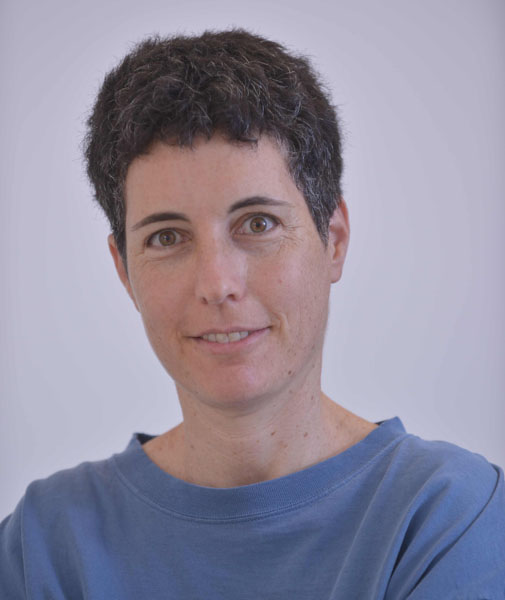
Orna Kupferman is a Full Professor in the Computer Science Department at the Hebrew University since 2008, where she has held multiple leadership roles including Head of the Computer Science Department (2005-2007), Chair of the School of Engineering (2008-2011), and Advisor on Gender Issues to the University President (2011-2013). She currently serves as Vice Rector of the Hebrew University. Professor, Hebrew University (2008-present) Vice Rector, Hebrew University (2012-present) Editor-in-Chief, ACM Transactions on Computational Logic Keynote speaker at LICS, CONCUR, ICALP, and TACAS conferences Her research focuses on the theoretical foundations of formal verification and synthesis of computer systems, with notable contributions to automata-theoretic approaches for branching-time model checking and synthesis of reactive systems. She pioneered 'safraless decision procedures' for automata on infinite words and developed formal measures for system quality analysis. Prof. Kupferman received an ERC Starting Grant (2012-2017) and secured competitive international grants for collaborations between Israel and the US/Germany. Her editorial roles include membership on the Editorial Board of Formal Methods in System Design and Logical Methods in Computer Science . Published over 40 journal papers and 140 conference papers Chaired the IEEE Symposium on Logic in Computer Science (LICS) in 2013 Volunteer speaker at high schools and drug-addiction centers
Johannes Hübl is a Full Professor at the University of Natural Resources and Life Sciences, Vienna (BOKU), leading the Institute for Alpine Natural Hazards within the Department of Landscape, Water and Infrastructure. His research focuses on alpine mass movement dynamics—particularly debris flows, rockfalls, and floods—with emphasis on risk management, mitigation engineering, and climate change adaptation. He maintains an active project portfolio including EU-funded initiatives and Austrian federal collaborations. His primary research interests include the physical processes of debris flows (surge dynamics, run-up behavior, sediment transport), rockfall hazard assessment, flood protection engineering, and climate change impacts on alpine hazards. Recent work pioneers advanced monitoring techniques like pulse-Doppler radar and LiDAR for real-time measurement of flow velocity and height, directly informing protective dam design and early warning systems. He also develops GIS-integrated simulation models for granular flows and risk assessment. Hübl's publications trend toward high-resolution field studies of debris flow dynamics, with significant focus on spatial impact distribution, statistical discharge modeling, and wildfire-hazard linkages. This reflects growing priorities in climate-resilient infrastructure and quantifiable risk assessment methodologies across European alpine regions. Scientific awards: No awards, fellowships, or medals are documented in the provided materials. Advising and grants: Professor Hübl has supervised numerous university theses as indicated by his profile. His grant leadership spans over 30 projects since 1994, including: EU projects: Nature-Based Solutions for Climate-Resilient Infrastructure (2024-2028), THARMIT (2000-2003) Austrian federal funding: 20+ projects with BMLFUW/BMF (e.g., rockfall detection, sediment management) International commissions: Bhutan flood mitigation (2000), Melamchi River reviews (2023) Industry collaborations: Check dam failure analysis, Cougar Creek optimization Labs and teams: He directs field monitoring operations including the Illgraben (Switzerland) and Gadria Creek (Italy) test sites. His institute employs physical modeling (hydraulic experiments, laser scanning) and develops real-time warning systems for alpine catchments, working closely with Austrian watershed management agencies and European consortia on event documentation and structural countermeasures.
Tomasz Miksa is a researcher affiliated with TU Wien's Department of Research Data Management, focusing on machine-actionable data management plans (maDMPs), semantic web technologies, and data reproducibility. He collaborates extensively on projects involving automated assessment of data management workflows, FAIR data implementation, and privacy-preserving analysis platforms. Primary affiliation: TU Wien Department: Research Data Management Key projects: WellFort, FAIR Data Austria, openEO API His research integrates semantic technologies with data governance to enhance reproducibility in scientific workflows, particularly in domains like environmental monitoring and legal informatics. Recent publications emphasize ontological frameworks (DCSO), API harmonization, and auditable machine learning systems. Notable collaborative works include: Reproducibility standards for soil moisture data Knowledge graph applications in cyber-physical energy systems Dynamic data citation mechanisms He supervises students in theses related to maDMP integration, data citation frameworks, and institutional research data planning architectures.
Gabriel Ciobanu is a Professor at Alexandru Ioan Cuza University of Iasi, Romania, and a Senior Researcher at the Romanian Academy, Iasi. He has held various academic positions internationally including as a Visiting Professor at Newcastle University (UK) from 2010-2015 and as a Research Fellow/Professor at the National University of Singapore (2000-2004). His educational background includes PhD studies at A.I.Cuza University and Edinburgh University (1990-1994) under the mentorship of Robin Milner, and his undergraduate studies in the Faculty of Mathematics and Computer Science at A.I.Cuza University of Iasi (1977-1982). Professor Ciobanu's research focuses on Membrane Computing and Natural Computing , Distributed Systems Models including process calculi with emphasis on semantics, behavioral equivalences, logics, and verification. He has made significant contributions to bridging membrane computing and process calculi, and to the Foundations of Mathematics and Computer Science through his work on Finitely Supported Mathematics. His research has applications in theoretical computer science, formal methods, and computational biology. His publication record shows a consistent research trajectory focusing on theoretical computer science with applications to natural computing, membrane systems, process calculi, and finitely supported structures. Recent work (2023-2025) continues to explore these areas with increasing focus on multi-agent systems, continuation semantics, and applications to medical systems and reaction systems. Scientific Awards and Recognition 2013 Grigore Moisil Award, Romanian Academy (as co-author of "Mobility in Process Calculi and Natural Computing", Springer) 2010-2013 Member of the National Research Council (CNCS) in Romania 2008-2010 Royal Society of London Joint International Project (Newcastle University, School of Computing) 2004 Octav Mayer Award for Scientific Achievements, Romanian Academy of Sciences, Iasi branch 2000 Grigore Moisil Award of the Romanian Academy of Sciences for results in Theoretical Computer Science 1995-1996 Japan Society for the Promotion of Science Fellowship (Tohoku University and Kyoto University) 1994 DAAD Research Fellowship (Institute of Computer Science, University of Kiel) 1991-1992 Royal Society of London and Romanian Academy Fellowship (University of Edinburgh) Professor Ciobanu has supervised 8 PhD students and numerous master's students. He has served as Editor-in-Chief of the Scientific Annals of Computer Science since 2006 and has been a guest editor for special issues of several international journals. He has collaborated with researchers from numerous countries including UK, France, Netherlands, Spain, Italy, Russia, China, Singapore, and India. He has been involved in various research projects and has spent research periods at prestigious institutions worldwide including Edinburgh University, Universite de Paris XI, CWI and VU Amsterdam, Tohoku and Kyoto University, National University of Singapore, and Newcastle University.
Krishnendu Chatterjee is a Professor at the Institute of Science and Technology Austria (IST Austria) , Department of Computer Science. His research spans formal verification, probabilistic systems, game theory, and evolutionary dynamics, with over 300 peer-reviewed publications in top venues such as DISC, AAAI, LICS, PNAS, Nature , and Journal of the ACM . His research focuses on developing theoretical foundations and practical algorithms for analyzing complex systems, including Markov decision processes, stochastic games, probabilistic programs, and evolutionary models. He has made significant contributions to topics such as reachability analysis, termination of probabilistic programs, synthesis of controllers, and evolutionary game dynamics. Chatterjee's work is highly interdisciplinary, bridging computer science, mathematics, and biology. He has collaborated extensively with leading researchers worldwide and has been involved in editorial roles and program committees for major conferences in formal methods and theoretical computer science.
Aniello Murano is a Professor in Computer Science at the Department of Electrical Engineering and Information Technology of the University of Naples Federico II. He serves as Scientific Director of the ASTREA (Automated Strategic REAsoning) Laboratory and has been actively involved in numerous research projects including H2020-MSCA project SEAL as Principal Coordinator and PNRR Research Unit Coordinator on Resilient Strategic Reasoning in AI (2023-2025). His primary research interests focus on Artificial Intelligence, Formal Aspects for Strategic Reasoning in Multi-Agent Systems under Perfect and Imperfect Information, Specification, Verification, and Synthesis of Reactive Systems, Model Checking and Module Checking, Formal Languages, Automata Theory, Real-time Systems, Pushdown and Hierarchical Systems, Temporal and Modal Logics, Logics for Strategic Reasoning in AI, Game Theory, Parity Games, Solution Concepts, and Automated Mechanism Design. His work bridges theoretical computer science with practical applications in AI systems. Murano has published extensively in top-tier venues, with recent publications spanning KR, IJCAI, AAAI, AAMAS, and other premier conferences. His research shows strong trends in strategic reasoning frameworks, verification techniques for multi-agent systems, and applications of game theory to mechanism design. He has made significant contributions to Strategy Logic and its extensions. JPMorgan Faculty Research Award 2022 Best Paper Award PRIMA 2015 Vigevani Research Project Prize 2010 In KR Top 100, best AI-2000 world researchers Italian Scientific Abilitation as Full Professor in Engineering Computer Science (March 2018) Italian Scientific Abilitation as Full Professor in Computer Science (April 2017) Royal Society Award 2016 Murano has supervised numerous PhD students including Silvia Stranieri, Antonio Di Stasio, Vadim Malvone, and Giuseppe Perelli. He has served as Program Chair for major conferences including ECAI 2025 (Program co-chair), KR 2024 (Area chair), and CSL 2024. His research has been supported by significant grants including Horizon 2020 projects, JPMorgan funding, and Italian national research programs. He leads the ASTREA Laboratory focused on automated strategic reasoning and has been instrumental in establishing collaborative research initiatives with institutions worldwide.
Stefan Alexander Schupp is a researcher affiliated with the Department of Cyber-Physical Systems at Technische Universität Wien (TU Wien). His work focuses on formal verification, hybrid systems, and controller synthesis for cyber-physical systems. Department: Cyber-Physical Systems (E191-01) Research Affiliation: TU Wien Network Lab Research interests include: Hybrid and stochastic system verification Controller synthesis for real-time systems Formal methods in software engineering Design and analysis of safety-critical systems Automated model checking techniques Flowpipe construction for reachability analysis Recent publications highlight collaborations with researchers from multiple institutions, covering topics such as: Hyperproperty verification in distributed systems Metric Temporal Logic (MTL) controller synthesis Adaptive simplex architectures for bounded-liveness properties Stochastic hybrid automata analysis tools HyPro verification tool developments Probabilistic reachability optimization
Orna Grumberg is a Professor at the Computer Science Department of the Technion-Israel Institute of Technology. She holds the Leumi Chair in Science since 2011 and has been a full professor since 2005. Her work focuses on model checking and automated verification of hardware and software systems. Leumi Chair in Science (2011–present) Full Professor, Technion (2005–present) Steering Committee, CAV Conference (2010–present) Editorial Board, Journal on Formal Methods in System Design (2003–present) Dr. Grumberg’s research interests span automated verification, abstraction-refinement techniques, compositional and distributed model checking, and their application to security vulnerabilities and temporal logics. She is a co-author of the seminal book Model Checking , which serves as a foundational reference in the field. Her recent work explores security in network protocols via parameterized systems, SAT-based approaches for hardware verification, and interpolation-based model checking. These contributions integrate abstraction refinement, lazy abstraction, and reachability analysis. Collaboration with IBM on UML verification Collaboration with Rafael on security vulnerabilities in protocols Dr. Grumberg has mentored students who now lead verification teams at Intel, IBM, and Israeli universities. She previously served as Associate Dean for Graduate Studies at the Technion.
Igor Konnov is a Lecturer at TU Wien, Faculty of Informatics, in the Department of Formal Methods in Systems Engineering (E192-04). His contact email is igor.konnov@tuwien.ac.at, and he maintains an active research profile through the university's informatics portal. His research focuses on distributed systems verification, specializing in parameterized model checking, fault-tolerant algorithm analysis, and threshold automata frameworks. Key contributions include developing formal methods for Byzantine fault-tolerant systems and creating verification tools like ByMC that handle arbitrary process counts in distributed protocols. Analysis of his recent publications reveals consistent innovation in bounded model checking techniques and parameterized verification approaches. His work bridges theoretical concurrency models with practical verification challenges in distributed computing, particularly through threshold-based algorithm verification and message counter elimination strategies. No scientific awards were documented in the provided materials. Konnov has supervised two PhD students: J. Kukovec (2024 dissertation on SMT-driven verification techniques) and T. H. Tran (2023 work on TLA+ symbolic verification). His research has been funded by the Austrian Science Fund (FWF, 2011-2019) and Vienna Science and Technology Fund (WWTF, 2011-2015). He is an integral member of TU Wien's Formal Methods in Systems Engineering research group, contributing to projects focused on concurrent and distributed system verification within the Institute of Information Systems Engineering.
Pedro Bernardo is a PreDoc Researcher in the Security and Privacy group at TU Wien, focusing on formal security analysis of web platforms. His work develops automated tools like WPT for vulnerability detection and WebSpec for machine-verified analysis of browser security mechanisms. Research investigates Spectre vulnerabilities across programming language implementations and execution environments.
Ezio Bartocci is a Full Professor in Formal Methods for Cyber-Physical Systems Engineering at TU Wien's Faculty of Computer Science. He leads the Trustworthy Cyber-Physical Systems (TrustCPS) Group within the Cyber-Physical System Research Unit. His research focuses on formal verification, probabilistic systems, and runtime monitoring, with applications in autonomous systems, safety-critical software, and embedded systems. Roles & Affiliations: Full Professor, TU Wien (100% research focus) Principal Investigator in projects funded by EU, WWTF, FFG, and industry partners Chair of the Curriculum Commission for Computer Engineering Editor-in-Chief of the Formal Methods in Outer Space series Research Interests: Formal methods for CPS: verification, synthesis, and runtime monitoring Probabilistic programming and loop analysis Temporal logic specifications and mining Automated tools for safety-critical systems (e.g., Polar, MoonLight) Applications in healthcare, robotics, and autonomous vehicles Key Projects: ProbInG (2020–2025): Analyzing probabilistic loops ARTIST (2021–2026): AI and robotics safety EdgeAI (2022–2025): Optimizing embedded processing TAIGER (2023–2027): Trustworthy AI and CPS Grants & Funding: €10M+ secured from EU Horizon 2020, WWTF, FFG, and industry partners like TTTech Auto AG. Academic Leadership: Teaches courses on logical methods, CPS engineering, and scientific research at TU Wien. Supervises PhD students in formal methods and CPS domains. Tools Developed: Polar (probabilistic loop analyzer), MoonLight (spatio-temporal monitoring), and FIM (fault injection tool).
Christian Schranz is an Associate Professor at TU Wien, affiliated with the Forschungsbereich Digitaler Bauprozess . His work focuses on digital transformation in construction processes, particularly in Building Information Modeling (BIM), augmented reality applications, and regulatory process automation. He co-developed the BIMcert Handbook and leads the BRISE-Vienna project to implement openBIM in building permit processes. Key Projects: BRISE-Vienna (openBIM permitting), TAniA (asset valuation in infrastructure management) Research Themes: Digitalization of construction workflows, AR for building inspection, BIM standardization He has authored/co-authored over 150 publications, including conference presentations on AR applications in Austrian building authorities and technical reports on BIM implementation challenges. His work emphasizes bridging regulatory frameworks with digital tools to enhance construction efficiency and sustainability.
Ao.Univ.Prof. Stefan Biffl is a Professor at TU Wien's Forschungsbereich Information und Software Engineering. His work focuses on Cyber-Physical Production Systems (CPPS), Industrie 4.0, and software engineering, with an emphasis on security, quality, and interdisciplinary approaches to production systems. He leads projects like 'Security Improvement of Information Processing in the Production System Lifecycle.' Research interests span Complex Event Processing, data analytics in production, and self-adaptive systems. Recent work explores test-driven validation, risk management, and multi-domain modeling in CPPS. He collaborates on frameworks like MDM-CPPS and QualSec, addressing challenges in automation, security, and sustainability. No scientific awards listed, but extensive contributions to publications and industry-oriented research are evident. He advises on production systems engineering and contributes to open-access publications through TU Wien's platforms.
Patrick Cousot is a Professor of Computer Science at École Normale Supérieure (ENS) in Paris, France, where he directs educational activities and leads the ENS-CNRS-INRIA joint project team "Abstraction." He has held academic positions at École Polytechnique (1984–1997), University of Metz (1979–1984), New York University (2008), and MIT (2005) as a J. C. Hunsaker Distinguished Visiting Professor. Education: Engineer, École des Mines of Nancy (1971) Doctor Engineer (PhD) in Computer Science, University of Grenoble (1974) Doctor ès Sciences in Mathematics, University of Grenoble (1978) As co-inventor of Abstract Interpretation with Radhia Cousot (1975), he developed a foundational theory for sound approximation of mathematical structures in computer systems. This framework underpins methods for solving undecidable or complex problems across semantics, verification, static analysis, program optimization, and security, with industrial applications in hardware/software safety and security. Scientific honors include: Chevalier in Ordre des Palmes académiques (1990) Chevalier in Ordre National du Mérite (1993) CNRS Silver Medal (1999) Honorary doctorate from Saarland University (2001) Grand Prix de l'Académie des Sciences (2006) Humboldt Research Award (2008) Member of Academia Europaea (2006) His prior roles include Research Scientist at CNRS (1974–1979), where he developed foundational work in static analysis. He also established the LIX research laboratory at École Polytechnique.
Michael Hofbaur is a full Professor at the University of Klagenfurt, where he works in the Institute for Intelligent Systems Technologies within the Faculty of Technical Sciences. His office is located at Lakesidepark Haus B04, Ebene 2, Raum B04.2.206, and he can be contacted at michael.hofbaur@aau.at. Professor Hofbaur has established himself as a leading researcher in robotics with particular expertise in human-robot collaboration, safety systems, and formal verification methods for robotic applications. His research interests focus on the intersection of robotics, safety engineering, and human factors. Professor Hofbaur has made significant contributions to the field of robot safety, particularly in developing methods for safe human-robot collaboration without physical barriers. His work spans multiple dimensions of robotics including kinematic analysis, motion planning, sensor integration, and formal verification techniques to ensure system reliability. He has published extensively on topics such as obstacle avoidance strategies, proximity perception systems, and methods to enhance flexibility in collaborative workspaces while maintaining safety standards. Analysis of his recent publications reveals a clear trend toward integrating formal verification methods with practical robotics applications, particularly focusing on safety-critical aspects of human-robot interaction. His research increasingly incorporates advanced sensing technologies like radar and capacitive proximity sensors to create more intelligent and responsive robotic systems. The work demonstrates a progression from theoretical kinematic analyses toward practical implementations in industrial and collaborative settings, with a consistent emphasis on safety assurance throughout. Professor Hofbaur's research portfolio includes numerous projects related to robotic safety, formal verification, and human-robot collaboration, though specific awards directly attributed to him are not listed in the available materials. His work appears to have significant practical applications in industrial automation and collaborative robotics settings. While specific information about his students and advising activities isn't provided in the available materials, his extensive publication record spanning over two decades suggests he has likely supervised numerous graduate students and postdoctoral researchers. His research activities indicate involvement in both theoretical and applied projects, potentially including collaborations with industry partners given the practical nature of many of his publications. Based on his departmental affiliation and research focus, Professor Hofbaur is likely associated with robotics laboratories at the University of Klagenfurt that specialize in human-robot interaction, safety systems, and formal verification of robotic workflows. These facilities likely include experimental setups for testing collaborative robots, sensor integration systems, and simulation environments for verifying robotic behaviors before physical implementation.