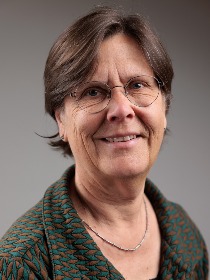
Marcel van 't Veer is an Education/Research Officer at Eindhoven University of Technology's Biomedical Engineering department, specializing in Cardiovascular Biomechanics. With 11,096 citations and 139 research outputs since 2004, his work focuses on Fractional Flow Reserve, Coronary Circulation, and Percutaneous Coronary Intervention. His research bridges biomedical engineering and clinical cardiology, with recent projects including FORSEE: Video monitoring for early adverse event detection (2020-2025) Development of wearable sensors for cardiac health assessment post-TAVI Clinical trials on intracoronary hypothermia during PCI Beyond technical contributions, van 't Veer actively participates in educational initiatives and industry collaborations, particularly evident in MedTech Day events. His work aligns with multiple United Nations Sustainable Development Goals related to healthcare innovation.
Theo van der Lee is a Researcher at Wageningen University & Research specializing in Biointeractions and Plant Health . With over 254 research outputs and 20 datasets, he focuses on plant-pathogen interactions, particularly within Fusarium and Pectobacterium genera. His work spans molecular diagnostics, genome sequencing, and evolutionary analysis of plant diseases. Key research areas: Fusarium head blight, bacterial virulence, mitochondrial genomics Active projects: Wart disease control, maize stalk rot resistance, pangenome mining Major contributions include: Developing NGS-based diagnostic tools Unraveling evolutionary histories of plant pathogens Creating efficient target enrichment methods He has received international recognition including the 2007 Friendship Award from Liaoning Province for agricultural research contributions and frequently contributes to professional conferences on plant disease detection and resilience. Notable collaborations include: Dr. S. Aarts (plant genetics) Prof. Y. Bai (disease phenotyping) Dr. M. Duhamel (plant immunity)
Dr. Marjolein Irwin-Knoester is an active virology researcher at the University Medical Center Utrecht's Faculty of Medicine, specializing in viral infections affecting immunocompromised populations. Her work spans transplant virology, respiratory pathogens, and emerging viral threats with significant contributions to clinical management strategies. Her primary research focuses on transplant-associated viral infections including hepatitis E, HIV, and herpesviruses, alongside respiratory pathogens like SARS-CoV-2 and parainfluenza. Key methodologies involve pharmacokinetic modeling, molecular epidemiology, and diagnostic assay development. Recent work demonstrates expertise in optimizing antiviral dosing for transplant recipients and evaluating infection control measures during outbreaks. Analysis of her 2024-2025 publications reveals consistent focus on Viral management in immunocompromised hosts (60% of recent work) Diagnostic innovation for emerging pathogens (25%) Evidence-based infection control protocols (15%) with strong emphasis on Dutch healthcare settings and translational clinical applications. Dr. Irwin-Knoester maintains significant public engagement through 33 media appearances where she provides expert commentary on infectious disease threats including measles outbreaks, COVID-19 management, and winter respiratory virus surges. Her research collaborations span multiple Dutch medical centers with emphasis on practical clinical solutions for viral complications in vulnerable populations.
Wouter van de Worp is a Researcher at the Faculty of Health, Medicine and Life Sciences , Maastricht University , focusing on NUTRIM - Healthy Ageing . His work bridges pulmonology, oncology, and metabolic research. Research Interests : Cachexia, sarcopenia, lung cancer metabolism, COPD-related muscle atrophy, and nutritional interventions. Methodologies : Develops animal models, employs CT imaging, and conducts systematic reviews. Publications (2017–2024) reveal a focus on cancer-induced muscle wasting, radiotherapy effects, and therapeutic strategies. His 2024 Cancers study links cachexia to NSCLC prognosis, while 2023 work in Journal of Cachexia explores orthotopic models. Collaborations include experts in oncology (Dr. Langen), radiology (Dr. Verhaegen), and nutrition (Dr. Schols). His research emphasizes translational approaches for cachexia management in respiratory and oncologic contexts.
Gerrit Brem is a full Professor at the Faculty of Engineering Technology, University of Twente, in the Department of Sustainable Energy Technology. His research is centered on sustainable energy systems, with a focus on thermochemical heat storage, biomass conversion, pyrolysis, and fuel chemistry. He has an extensive publication record, with over 180 research outputs and an h-index of 41, reflecting significant academic impact. His research interests include Thermochemical Heat Storage , Hydrothermal Carbonization , Biomass and Waste Valorization , Pyrolysis and Combustion , and Advanced Energy Materials . These areas are crucial for developing sustainable and circular energy solutions. His work often involves material development, process optimization, and system integration for long-term thermal storage and clean fuel production. The recent articles demonstrate a strong trend in developing stable and efficient materials for thermal energy storage, particularly using salt hydrates and potassium carbonate-based systems. Innovations in encapsulation, nucleation control, and mechanical stability are central themes. His work bridges fundamental chemistry with engineering applications in renewable energy. Scientific Awards: No awards explicitly mentioned in the text. Prof. Brem has supervised at least 32 research projects or students, indicating a strong commitment to academic mentoring and team leadership. His collaborations span multiple institutions and disciplines, particularly in materials science and energy engineering. He has been involved in research on pyrolysis of waste tires, hydrogel-based storage, and advanced characterization techniques like micro-CT. He is actively involved in research teams focusing on Thermal Energy Storage , Biomass and Waste Conversion , and Advanced Materials for Energy . These teams work on both experimental and modeling aspects of sustainable energy technologies, aiming to develop scalable and economically viable solutions for the energy transition.
Arlene John is an Assistant Professor at the Biomedical Signals and Systems (BSS) group within the Faculty of Electrical Engineering, Mathematics and Computer Science at the University of Twente. She holds a Ph.D. in Electrical and Electronic Engineering from University College Dublin (2022), with prior academic experience including a bachelor’s degree in Electrical and Electronics Engineering from the National Institute of Technology, Calicut (2017) and research internships at the Indian Institute of Science (2016) and Beijing University of Technology (2019). Bachelor: Electrical and Electronics Engineering, National Institute of Technology, Calicut (2017) Ph.D.: School of Electrical and Electronic Engineering, University College Dublin (2022) Her research focuses on biomedical signal processing, machine learning, explainable AI, and multisensor data fusion for wearable health monitoring devices. She has industry experience as a Project Manager at Bosch India Ltd. and a Machine Learning Mathematics Engineer at ASML Netherlands B.V., bridging technical sales, engineering strategy, and computational modeling. Recent publications emphasize language testing frameworks, CEFR alignment, and psychometric modeling for vocabulary and grammar assessment. These works span interdisciplinary themes in education, linguistics, and standardized evaluation systems.
Florian Schuberth is an Associate Professor at the Chair of Product–Market Relations within the Faculty of Engineering Technology at the University of Twente. His research focuses on composite-based structural equation modeling (SEM), particularly Partial Least Squares (PLS) methods, with applications across Information Systems, Social Sciences, and Computer Science. He actively contributes to quantitative research methodology and open science. Bachelor's and Master's in Business Administration and Economics, University of Würzburg PhD in Econometrics, summa cum laude, University of Würzburg (2017) His research interests center on advancing composite-based SEM, including model specification, fit assessment, higher-order constructs, and robust estimation techniques. He emphasizes methodological rigor and reproducibility in social science research. His recent work, reflected in publications and software development, demonstrates a strong trend toward improving the transparency, validity, and accessibility of composite modeling techniques, particularly through R-based tools. He has made significant contributions to model evaluation, measurement invariance, and endogeneity correction in PLS-SEM. Florian Schuberth is a passionate educator, coordinating and teaching courses on quantitative research methods. He is also deeply committed to open science, serving as coordinator of the Open Science Community Twente. Notable contributions include the development and maintenance of the cSEM R package, which enables researchers to perform composite-based SEM in R, promoting open, reproducible research practices. Maintainer of the R package cSEM Coordinator, Open Science Community Twente (since 2022) Active contributor to methodological software and open science infrastructure
Cynthia Liem is an Associate Professor at the Multimedia Computing Group, part of the Faculty of Electrical Engineering, Mathematics and Computer Science at Delft University of Technology (TU Delft). Her work uniquely bridges computer science and music, leveraging her dual expertise in both domains. Education: BSc and MSc in Media and Knowledge Engineering (Computer Science), TU Delft (2007, 2009); PhD, TU Delft (2015); BMus and MMus in Classical Piano Performance, Royal Conservatoire, The Hague (2009, 2011). Her research centers on human-centered multimedia analysis, with two core themes. First, she investigates how to algorithmically surface information in large multimodal archives that users would not discover through conventional search or recommendation systems, aiming to broaden user perspectives and help uncover underutilized digital content. Second, she focuses on validation and validity in data science, particularly in contexts where human responses are implicit and hard to measure, drawing inspiration from psychometric validity in the social sciences. Her work emphasizes real-world applicability, especially in music and cultural heritage domains. The two recent publications highlight her engagement with cutting-edge AI challenges: one explores algorithmic recourse dynamics, while the other examines evolutionary algorithms in adversarial example generation, indicating strong interests in robustness, explainability, and human-aligned AI systems. Notable scientific recognitions include: Google Anita Borg Scholarship (2008) Google European Doctoral Fellowship (2010) Top-5 nominee, New Scientist Science Talent Prize (2016) Cynthia Liem has been involved in several significant research projects, including the H2020 TROMPA project on crowd-powered enrichment of public-domain music, an NWO-KIEM project on musician well-being, an NWO-Veni project on perspective-broadening in recommender systems, and an ERASMUS+ initiative on big data in psychological assessment. She collaborates with key institutions such as the National Library of The Netherlands and CDR/Muziekweb. Beyond academia, she remains active as a performing pianist, notably in the Magma Duo, which won first prize at the A Feast of Duos competition and was part of the Dutch Classical Talent Tour, leading to a national concert tour. There is no indication of lab or research team leadership beyond project involvement, though her role as an Associate Professor suggests supervision of students and researchers. Future work appears directed toward socially responsible AI, improved validation frameworks, and interdisciplinary applications of music and data science.
Prof. Andreas Voss is Chair of Medical Microbiology and Infection Prevention at the University of Groningen's Faculty of Medical Sciences. He leads research on infectious diseases, antimicrobial resistance, and hospital-acquired infections. His work bridges clinical microbiology, epidemiology, and public health policy. Active in cross-border initiatives, he collaborates on infection control guidelines in the Dutch-German region. Voss has held leadership roles such as Past President of the International Society of Antimicrobial Chemotherapy (ISAC). Research areas emphasize nosocomial pathogens, molecular diagnostics, and evidence-based infection prevention strategies. Notable contributions include PCR-based outbreak tracking, probiotic environmental cleaning, and cost-effectiveness studies of hand hygiene interventions. His work frequently addresses multidrug-resistant organisms and healthcare-associated infections. Media contributions highlight expertise in hygiene practices and pandemic preparedness. Key collaborations include the University Medical Center Groningen (UMCG) and the Samenwerkingsverband Richtlijnen Infectiepreventie (SRI). He advises on infection control policies and has published over 300 peer-reviewed articles, focusing on translational research impacting clinical practice.
Sergi Campos Jara is a Guest Researcher at the Leiden Institute of Chemistry (LIC), Leiden University, affiliated with the Catalysis and Surface Chemistry group under the Fundamental Research in Energy & Sustainability division. His research focuses on nanomaterials for energy applications, particularly catalytic systems for hydrogen evolution reactions (HER) and electrochemical processes. He collaborates with institutions like the Universitat Autònoma de Barcelona and the CNRS (France). Education: PhD (not explicitly stated in text, inferred from research role) Research interests span catalysis, surface chemistry, and the design of advanced materials for energy sustainability. His work combines experimental synthesis (e.g., Ru-based nanoparticles on carbon supports) with computational modeling (DFT) to optimize electrocatalytic performance. Notable contributions include studies on RuO₂@Ru core-shell nanoparticles and their role in HER kinetics. Key publications include studies on carbon dots for light-emitting electrochemical cells and Ru-based nanomaterials for hydrogen evolution, published in Advanced Optical Materials and Inorganic Chemistry Frontiers . Collaborations involve multidisciplinary teams across Europe, focusing on materials synthesis, characterization (TEM, XPS), and electrochemical testing.
Prof. Margriet Sitskoorn is a Full Professor in the Department of Cognitive Neuropsychology at Tilburg University’s Tilburg School of Social and Behavioral Sciences. Her work focuses on neurocognitive outcomes in brain tumor patients, radiation therapy effects, and healthcare decision-making processes. She leads research projects such as De Sterkste Schakel , exploring resilience in neurological patients. Key research interests include cognitive functioning post-treatment, brain metastases imaging, and patient-centered approaches to neurosurgical consultations. She has over 296 publications spanning articles, books, and datasets, with recent work emphasizing automated medical imaging techniques and shared decision-making frameworks. Her recent projects analyze the impact of radiation therapy on cognitive decline using voxel-based methods and explore digital tools like the Goings-On app to enhance patient-neurosurgeon communication. She collaborates internationally on studies involving glioma patients and brain tumor treatment outcomes. Prof. Sitskoorn holds external roles, including oversight for Topsport community and leadership in cognitive neuroscience initiatives. Her work contributes to UN Sustainable Development Goals related to health and well-being.
Myroslav Kavatsyuk is an Assistant Professor in the Faculty of Science and Engineering at the University of Groningen, affiliated with the Nuclear Energy — Energy and Sustainability Research Institute Groningen. His research focuses on high-energy particle physics, particularly using the BESIII detector at the BEPCII collider. He specializes in studying rare decays of particles like charmed baryons, branching fractions, and resonance structures in electron-positron collisions. His work includes analysis of data from the BESIII collaboration, contributing to precision measurements in quantum chromodynamics and exploring new physics through non-open charm hadron interactions. He has co-authored over 600 publications, with recent studies on topics such as proton inelastic scattering, coupled-channel resonance analysis, and decay asymmetry measurements. His research interests span particle physics, nuclear physics, and collider experiments, with a focus on advancing understanding of fundamental interactions and particle dynamics. He collaborates internationally on projects like the WASA-FRS HypHI experiment and contributes to detector development for high-energy physics applications.
Dr. Janny Dekker is an Associate Professor at the Faculty of Medical Sciences, University of Groningen. Her research focuses on primary healthcare, pelvic floor disorders, urinary incontinence, and randomized controlled trials. She holds an ORCID identifier and has been active in clinical research since at least 2016. Expertise: Radiology, Nuclear Medicine & Medical Imaging, General Practice Affiliations: Faculty of Medical Sciences, University Medical Center Groningen (UMCG) Email: j.h.dekker@umcg.nl Her research interests span clinical practice innovations, including app-based treatments for urinary incontinence and cost-effectiveness analyses of medical interventions. She has supervised 3 works and contributed to studies on pelvic floor symptoms, functional constipation in children, and heavy menstrual bleeding treatments. Recent articles highlight her work on sexually transmitted infections diagnosis, pelvic floor muscle function, and digital health interventions. Over 90 publications demonstrate her sustained academic output.
Bert Kramer is a Lecturer at the University of Groningen's Faculty of Economics and Business, specializing in climate change's economic and financial impacts. He concurrently serves as Head of Climate Research at Ortec Finance, leading teams analyzing climate risks for institutional investors. He holds a cum laude PhD in Business and a Master's in Econometrics from the University of Groningen. His research focuses on quantifying climate change effects on financial systems, aligning portfolios with the Paris Agreement, and asset-liability management for insurers and pension funds. Notable projects include work for the Dutch Pensions Authority and Government Buildings Agency. His work has been internationally recognized through awards for scientific publications. Teaching interests include econometrics, finance, and risk management. He advises global investors on climate adaptation strategies and has published widely on topics ranging from climate scenario analysis to long-term economic modeling. Professional activities include actuarial research and contributions to housing policy frameworks.
Charlotte Gooskens is an Associate Professor with ius promovendi at the University of Groningen's Faculty of Arts, Department of Applied Linguistics. Her research focuses on multilingualism, sociolinguistics, dialectology, and the mutual intelligibility of closely related languages. She holds a PhD from the University of Nijmegen (1997) and has held academic positions since 1999, progressing from Assistant to Associate Professor in Scandinavian and European linguistics. Her key projects include a Netherlands Organization for Scientific Research (NWO)-funded study on mutual intelligibility across Germanic, Romance, and Slavic languages (2011–2016), and earlier work on Scandinavian language comprehension asymmetries (2006–2011). She explores linguistic and extra-linguistic factors like prosody, syntax, and socio-cultural attitudes influencing language comprehension. Research highlights include studies on Finland-Swedish bilingualism, articulation rates in Scandinavian languages, and computational models of linguistic distances. She advises on language policy, particularly regarding receptive multilingualism in Europe, and collaborates internationally on projects like ELF (English as a Lingua Franca) comprehension compared to native language pairs. Her work spans experimental methods (e.g., web-based intelligibility tests), dialectometry, and psycholinguistic approaches. She has published extensively in journals like Linguistics , Nordic Journal of Linguistics , and Language Variation and Change , and authored a monograph on mutual intelligibility in 2024.