Børge Rokseth is an Associate Professor at the Department of Engineering Cybernetics , Norwegian University of Science and Technology (NTNU). His work focuses on integrating advanced methodologies for safety and risk control in autonomous maritime systems. He has held academic positions since at least 2014, with a consistent record of research collaboration and publication. Research Areas: Maritime risk analysis, autonomous ship systems, safety engineering, dynamic positioning systems, systems-theoretic process analysis (STPA) Key Publications: 15 most recent articles cover topics like trajectory prediction for autonomous vessels, hybrid power systems safety, machine learning in risk assessment, and dynamic positioning system reliability His publications (2014-2025) emphasize safety-critical systems in marine environments. Common themes include: Application of STPA for hazard analysis in autonomous shipping Development of risk-informed control systems Integration of machine learning with engineering risk assessment Comparative studies of different ship autonomy levels As a supervisor, Rokseth has guided master's students including Ane Joramo Stokke and Ludvig Vik Løite. His work has been presented at international conferences such as the European STAMP Workshop, International Conference on Conceptual Modeling, and the International Seminar on Safety and Security of Autonomous Vessels.
Michihiro Yasunaga is an Assistant Professor in the Department of Computer Science at Stanford University's School of Engineering. He received his PhD in Computer Science from Stanford, advised by Percy Liang, Jure Leskovec, and Chris Manning. Prior to his faculty position, he worked as a researcher at Google DeepMind and Meta. His research focuses on building LLMs and agents that assist humans in diverse tasks, with particular expertise in post-training techniques (RL, reward models, and evaluation), reasoning systems (AnalogicalReasoner), retrieval and tool use for LLMs (LinkBERT, QAGNN, DRAGON, REPLUG, HippoRAG), and multimodality (RA-CM3, Med-Flamingo, Transfusion). His work spans both theoretical foundations and practical applications of large language models. Yasunaga's publication record demonstrates significant contributions to the field of AI, with 15 recent articles (2023-2025) covering diverse aspects of language model development, evaluation, and application. His research shows a clear trajectory toward building more capable, efficient, and reliable multimodal AI systems, with particular emphasis on knowledge integration and robust evaluation frameworks. Among his notable achievements is the Best Paper Award at AAAI 2023 Deep Learning on Graphs Workshop for the DRAGON paper. He has also been deeply involved in major benchmarking efforts including HELM and HEIM, which provide comprehensive evaluation frameworks for language and vision-language models. Yasunaga actively contributes to the research community through service roles including Organizing Committee for the Workshop on Knowledge-Augmented Methods for NLP (ACL 2024), Workshop on Structured and Unstructured Knowledge Integration (NAACL 2022), and the Workshop on Scientific Document Summarization (SIGIR 2017-2020). He has also served on program committees for top conferences including NeurIPS, ICML, ICLR, ACL, EMNLP, CVPR, and ICCV from 2020-2025.
Andrea Del Prete is an Associate Professor in the Industrial Engineering Department at the University of Trento (Italy) since 2022. His research focuses on robot control, reinforcement learning, trajectory optimization, and numerical algorithms for dynamic systems. He leads the Interdepartmental Robotics Lab (IDRA) and has previously held roles as a tenure-track assistant professor at the University of Trento (2019-2021), a research scientist at the Max-Planck Institute for Intelligent Systems (2018), and an associated researcher at LAAS-CNRS (2014-2017) working with the HRP-2 humanoid robot. Earlier, he conducted PhD and post-doc research at the Italian Institute of Technology (2010-2013) on iCub robot control. PhD in Robotics (2013) - Italian Institute of Technology MEng in Computer Engineering (2009) - University of Bologna BSc in Computer Engineering (2006) - University of Bologna Dr. Del Prete specializes in merging learning and model-based techniques for safe robot control, particularly in legged systems. His work bridges trajectory optimization (TO) with reinforcement learning (RL) to overcome local minima challenges (CACTO/CACTO-SL algorithms) and develops robust controllers for humanoid and quadrupedal robots in unstructured environments. He explores viability kernels in MPC, safety certificates, and bi-level optimization for co-designing hardware/control policies. Key application areas include mountain rescue robotics (ALPINE platform), aerial maneuver recovery, and energy-efficient legged locomotion. His recent publications (2023-2025) emphasize numerical optimization algorithms, multi-contact locomotion, and hybrid control frameworks. Topics span from analytical integral optimization (2025) to climbing robots for mountain operations (2025), demonstrating a trajectory from theoretical algorithm development to real-world robotic applications. Research keywords include robotics, numerical optimization, and machine learning, with sub-fields like MPC for dynamic systems, humanoid control, and terrain adaptation. As an educator, he teaches advanced courses on: Optimization and Learning for Robot Control (48-hour master's course) Optimization-based Control of Legged Robots (12-hour PhD course) Task-Space Inverse Dynamics (3-hour PhD course) Current PhD advisees include Mohammad Hasan Yeganegi (generalization bounds for imitation learning), Pietro Noah Crestaz (numerically-efficient RL), Veronica Campana (ergodic control for defect detection), Elisa Alboni (data-efficient model-based RL), and Gianni Lunardi (MPC for legged locomotion).
Fabrizio Falchi is a researcher at the Artificial Intelligence for Media and Humanities (AIMH) Lab of the Institute of Information Science and Technologies (ISTI) within Italy's National Research Council (CNR). He also maintains an associate position at the Biorobotics Institute of Scuola Superiore Sant'Anna. His work focuses on developing advanced multimedia retrieval systems, with the VISIONE platform being his most notable contribution, which has won international competitions including the Video Browser Showdown in 2024 and placed second in 2023. Falchi's educational background includes: Ph.D. in Information Engineering from University of Pisa (Italy) Ph.D. in Informatics from Faculty of Informatics of Masaryk University of Brno (Czech Republic) M.B.A. from Scuola Superiore Sant'Anna in Pisa His research spans deep learning, convolutional neural networks, deep features extraction, similarity search algorithms, distributed indexing systems, multimedia information retrieval, computer vision applications, and peer-to-peer systems. Falchi has made significant contributions to fine-grained visual understanding, cross-modal retrieval (particularly image-text matching), and robustness of deep learning systems against adversarial attacks. His work demonstrates a strong focus on practical applications of these technologies, particularly in video retrieval systems and safety monitoring solutions. Analysis of Falchi's recent publications reveals a strong focus on video and image retrieval systems, with the VISIONE platform being central to his work. His research shows increasing emphasis on fine-grained understanding in computer vision, cross-modal retrieval, and addressing practical challenges like cross-resolution face recognition. Recent work demonstrates innovation in making these systems more efficient through techniques like knowledge distillation (ALADIN) and leveraging virtual worlds for training data. His publications consistently bridge theoretical advances with practical applications in surveillance, safety monitoring, and multimedia search. Falchi's work has received significant recognition: Best paper award at CBMI 2024 for 'Is ClLIP the main roadblock for fine-grained open-world perception?' VISIONE 2024 won the Video Browser Showdown competition in Amsterdam VISIONE obtained second place at Video Browser Showdown 2023 in Bergen Best Paper Award for 'Learning Safety Equipment Detection using Virtual Worlds' at CBMI 2019 Falchi collaborates extensively with researchers at ISTI-CNR, particularly within the AIMH Lab. His work on VISIONE involves collaboration with Giuseppe Amato, Paolo Bolettieri, Fabio Carrara, Claudio Gennaro, Nicola Messina, Lucia Vadicamo, and Claudio Vairo. As co-chair of Ital-IA 2023, the 3rd National Conference on Artificial Intelligence, he plays an active role in the academic community. He is a member of ACM (since 2012), the Computer Vision Foundation, the Italian Association for Computer Vision Pattern Recognition and Machine Learning (CVPL), and the CINI Lab on Artificial Intelligence and Intelligent Systems. Falchi is a key member of the Artificial Intelligence for Media and Humanities (AIMH) Lab at ISTI-CNR, where he leads research on video retrieval systems. The lab has developed the award-winning VISIONE platform, which combines multiple scientific results in content-based video retrieval. His team focuses on developing systems that enable users to search for target videos using textual prompts, drawing objects and colors, or images as query examples. The lab's work demonstrates strong interdisciplinary collaboration, bridging computer science with practical applications in media, safety monitoring, and urban environments.
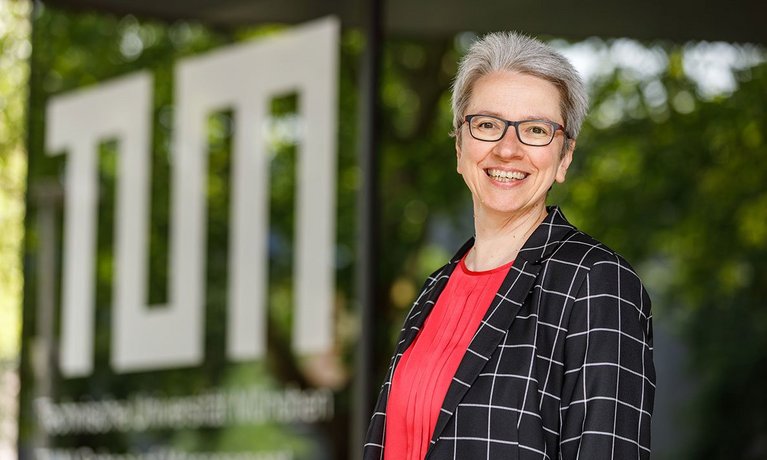
Niklas Grabbe is a postdoctoral researcher at the Chair of Ergonomics, Technical University of Munich (TUM), where he leads the research group on "Automated Driving and Mobility Systems" and is establishing a new working group focused on "Modelling complex socio-technical systems" with emphasis on Resilience Engineering and the Functional Resonance Analysis Method (FRAM). His research centers on human factors in automated and teleoperated driving, mobility systems, and behavior modeling. He applies systems engineering principles to analyze safety and usability, particularly using FRAM to study performance variability and resilience in socio-technical systems. His work addresses critical challenges in urban automated driving, teleoperation, and multi-driver interactions through rigorous quantitative modeling and field studies. Analysis of Grabbe's publications reveals a dominant trend in applying FRAM to driving scenarios, with recurring themes of safety enhancement, human-automation interaction, and usability evaluation. His interdisciplinary work bridges transportation psychology, safety engineering, and human-computer interaction, consistently emphasizing systems thinking to solve complex problems in automated vehicle technology. Grabbe contributes to academic instruction through courses like "Modelling Complex Sociotechnical Systems" (Winter 2025/26). He operates within TUM's Chair of Ergonomics infrastructure, utilizing specialized labs including driving simulators and ergonomic mockups to support experimental research in human factors and automated systems.
Lorenz Dörschel is an Adjunct Professor (Lehrbeauftragter) at the Institute of Automatic Control at RWTH Aachen University. He holds the academic title PD Dr.-Ing. habil, signifying post-doctoral research qualifications. His position is part-time, focusing on advanced control theory and applications. His primary research interests include: Control of distributed parameter systems (e.g., fluid dynamics, thermal processes) Model predictive control for industrial and automotive systems Parameter space methods for robust controller design Model reduction techniques for complex nonlinear systems Dörschel's recent publications (2018-2024) demonstrate broad applications across biomedical engineering, renewable energy, automotive systems, and industrial automation. His work consistently integrates mathematical rigor with practical implementations, emphasizing advanced control methodologies like nonlinear MPC, Lyapunov-based design, and Bayesian optimization. A recurring theme is the development of computationally efficient control strategies for distributed parameter systems. No scientific awards, student advising relationships, or research grants are documented in the available information.
Dr. Kenneth Bader is an Associate Professor in the Department of Radiology at the University of Chicago's Pritzker School of Medicine. He leads the Biomedical Acoustics Development and Engineering Research Laboratory (BADER Lab), focusing on translating therapeutic ultrasound into clinical applications for non-invasive treatment of cardiovascular and cancerous diseases. His work bridges physics, engineering, and medicine, with emphasis on developing innovative ultrasound-based therapies. Education: B.S. in Physics from Grand Valley State University (2005), Ph.D. in Physics from the University of Mississippi (2011) Current Funding: Principal Investigator on two major NIH R01 grants (R01EB035230 and R01HL133334) totaling nearly a decade of continuous research support Lab Affiliation: BADER Lab (baderlab.uchicago.edu) Dr. Bader's research centers on acoustic cavitation and histotripsy for combinatorial ablation and enhanced drug delivery strategies targeting pathologies resistant to standard interventions. He develops multi-modal imaging approaches combining diagnostic ultrasound and magnetic resonance imaging to assess bubble activity and resultant tissue changes. His work spans fundamental bubble dynamics modeling to translational applications in thrombosis and cancer treatment. Key areas include chronic thrombus ablation, histotripsy-enhanced drug delivery, sonochemical reactions for cancer therapy, and MR-guided transurethral prostate ablation. His publication record demonstrates consistent productivity with over 40 publications since 2012, showing an upward trajectory with 25 publications in the last five years (2020-2025). His work appears in high-impact journals including IEEE Transactions on Ultrasonics, Ferroelectrics, and Frequency Control; Physics in Medicine & Biology; and Journal of Ultrasound in Medicine. His research shows strong interdisciplinary collaboration across engineering, physics, radiology, and vascular medicine. Dr. Bader serves as Principal Investigator on two major NIH-funded projects: Imaging Feedback for Histotripsy Renal Tumor Ablation (2024-2028) and Treatment of chronic venous thrombosis with histotripsy and thrombolytics (2017-2028). These projects represent significant sustained funding for developing ultrasound-based therapies for cancer and vascular diseases. His work has generated substantial interest in the scientific community, with multiple publications receiving over 50 citations, particularly his foundational work on bubble dynamics in histotripsy. The BADER Lab represents a hub for ultrasound research at the University of Chicago, developing both theoretical models and practical applications of therapeutic ultrasound. The lab focuses on translating laboratory discoveries into clinical practice, with particular emphasis on making treatments more effective while minimizing invasiveness. Current work includes developing AI approaches for ultrasound image analysis, novel transducer designs, and combination therapies that leverage both mechanical and biochemical effects of ultrasound.
Marie-Florence THOMAS is a Professor at the School of Public Health, affiliated with the LERES Laboratory for Study and Research in Environment and Health, UMR 1085 IRSET, and the Observatory of the Environment and Sustainable Development. She holds a Doctorate in Process Engineering, a Master’s in Air and Water, and a DEA in Hydrology. Education Doctorate in Process Engineering Masters in Air and Water DEA in Hydrology Her research focuses on water and climate change , water quality measurement , urban water systems , and water risk management . She employs a multidisciplinary approach integrating environmental sciences, public health, and policy analysis. Recent projects include PHARE (HAloacetic acid production under climate change), URB-Bain (urban swimming and climate change), Aladins (climate vulnerability modeling in Brittany), and Expo-Eau (exposure to disinfection by-products). Her scientific expertise spans water quality monitoring, microbial contamination, and health determinants in urban environments. She serves on the Creseb Scientific Committee, the ANR’s Environmental Technologies Evaluation Committee, and the EHESP Board of Directors. Her work emphasizes interdisciplinary collaboration and decision-support tools for climate resilience. She teaches in academic, professional, and continuing education programs, including modules for Health Studies Engineers, the Master’s in Water Sciences, and the Master’s in Public Health. Her pedagogical approach integrates water quality, risk control, and sustainable urban practices.
Sean Wilson is a Researcher at the Georgia Institute of Technology , affiliated with the College of Engineering and the School of Electrical and Computer Engineering . He serves as the Collaborative Autonomy Branch Chief at the Georgia Tech Research Institute (GTRI) and Director of the Robotarium Lab (https://www.robotarium.gatech.edu/), which provides free remote access to robotic hardware for algorithm testing. Educational Background: B.A. in Physics and Mathematics from State University of New York at Geneseo (2012) M.S. and Ph.D. in Mechanical Engineering from Arizona State University (2017) Dr. Wilson's research focuses on remotely-accessible robotic hardware , collaborative autonomy , and control of multi-agent and swarm robotic systems . His recent publications emphasize distributed control, swarm robotics, and bio-inspired robotic behaviors. The Robotarium Lab he directs enables global access to robotics testbeds for control research. Research Themes (2014-2023): Remote-access robotics (5), swarm coordination (7), bio-inspired algorithms (3), barrier functions (2), multi-robot systems (9), and control theory (4). Sean operates from the Robotarium Lab (Office Location: CCRF B11-3133D) as part of Georgia Tech's Institute for Robotics and Intelligent Machines (IRI) core faculty. His work bridges robotics infrastructure development with theoretical control research.
Aaron Young is an Associate Professor in the Woodruff School of Mechanical Engineering at Georgia Institute of Technology and a program faculty member in the Biomedical Engineering School. He serves as Director of the Exoskeleton and Prosthetic Intelligent Controls (EPIC) Lab, focusing on robotic human augmentation through advanced control systems for prosthetics and exoskeletons. Education: Postdoctoral Fellow, University of Michigan (2014-2016) Ph.D., Northwestern University (2014) M.S., Northwestern University (2011) B.S., Purdue University (2009) Dr. Young's research addresses clinically viable control systems for wearable robotic devices, emphasizing intent recognition , EMG signal processing , and machine learning integration. His work targets mobility impairments from stroke, amputation, cerebral palsy, and neurological injuries, aiming to reduce metabolic costs, restore natural biomechanics, and enhance community ambulation. Key innovations include data-driven control frameworks , biomechanical terrain adaptation , and anthropometry-based personalization . His recent publications highlight advancements in deep learning for real-time biomechanics , EMG-informed joint estimation , and adaptive assistance systems . The EPIC Lab's facilities feature a terrain park with force plates , motion capture systems , and HumoTech simulation platforms for device testing. Scientific Awards: New Faces of Engineering (IEEE USA, 2017) Military Health System Team Award (2015) NSF Graduate Fellowship (2010) NDSEG Fellowship (2010) IEEE EMBC 3rd Place (2013) Projects include NSF-funded hip exoskeletons for stroke survivors, DoD-powered prostheses for amputees, and Pediatric knee exoskeletons for cerebral palsy. The lab cultivates interdisciplinary expertise in robotics , biomedical engineering , and human-machine interaction .
Mike Rubenstein is an Assistant Professor with joint appointments in the Department of Computer Science and Department of Mechanical Engineering at Northwestern University. He holds the Lisa Wissner-Slivka and Benjamin Slivka Professorship in Computer Science and is affiliated with the Center for Robotics and Biosystems. His educational background includes a Ph.D. in Computer Science from the University of Southern California, an M.S. in Electrical Engineering from USC, and a B.S. in Electrical Engineering from Purdue University. Prior to joining Northwestern, he completed a postdoctoral fellowship at Harvard University's Self-Organizing Systems Research Group. Rubenstein's research focuses on advancing multi-robot systems to enable capabilities beyond traditional single robots, emphasizing parallelism, adaptability, and fault tolerance at scale (hundreds to millions of robots). His work spans swarm shape control, modular self-reconfigurable robotics, bio-inspired satellite constellations, and novel sensing for air vehicle swarms. Key themes include algorithmic control for large-scale systems and hardware innovations to overcome current limitations in swarm robotics. His advising has produced notable student achievements, including Petras Swissler's Best Student Paper Award at DARS 2021 and Drew Curtis's NDSEG Fellowship. Research trends across his publications reveal a consistent emphasis on scalability, real-world applicability, and bridging hardware constraints with algorithmic innovation in swarm systems. Rubenstein actively mentors graduate students and leads projects involving swarm robotics platforms like FireAnt and PCBot. His lab focuses on developing systems where simplicity in individual robots enables emergent complexity at the swarm level, with applications ranging from space exploration to medical imaging.
Panagiotis Christofides is a Distinguished Professor in the Department of Chemical and Biomolecular Engineering at the University of California, Los Angeles (UCLA), with a secondary affiliation in Electrical and Computer Engineering. He serves as Department Chair and holds the William D. Van Vorst Chair in Chemical Engineering Education. Education: Diploma in Chemical Engineering (1992), University of Patras M.S. in Electrical Engineering (1995), University of Minnesota M.S. in Mathematics (1996), University of Minnesota Ph.D. in Chemical Engineering (1996), University of Minnesota Research Focus: Christofides specializes in control systems engineering for complex industrial processes, including nonlinear/hybrid systems, economic model predictive control, fault-tolerant control, and multiscale modeling. His work bridges chemical engineering with advanced computational methods, particularly in water/energy systems and solar-cell technologies. Scientific Leadership: He has authored over a dozen influential books and special issues on control theory and its industrial applications. Awards include AIChE Fellow, IEEE/IFAC/AAAS Fellowships, the Donald P. Eckman Award, and multiple Schuck Best Paper Awards. His research has been recognized through the NSF CAREER Award and ONR Young Investigator Award.
Prof. Dr. Dr. h.c. Gudrun Kiesmüller serves as Full Professor holding the Chair for Operations Management at TUM School of Management, Technical University of Munich, based at Campus Heilbronn since July 2019. She concurrently holds the position of Hedda Andersson Guest Professor at Lund University's Department of Industrial Management & Logistics since January 2021. Previously, she held professorial positions at Otto-von-Guericke-University Magdeburg (2013-2019), Christian-Albrechts-University zu Kiel (2010-2013), and Technical University Eindhoven (2002-2009). Her research program focuses on Operations Management with particular emphasis on the implications of digitization in Industry 4.0, especially in after-sales services. She develops analytical methods to optimize processes across manufacturing and supply chains. Her work spans three interconnected domains: stochastic manufacturing systems design (examining buffer sizing and spare parts planning), safety stock optimization under uncertain demand and supply conditions, and maintenance-reliability integration. She investigates how digitization transforms traditional operations, with growing emphasis on AI applications for supply chain optimization and inventory planning. Prof. Kiesmüller's extensive publication record reveals consistent contributions to operations research methodology with practical business applications. Her work demonstrates increasing integration of data-driven approaches, particularly in the most recent publications which explore AI applications for supply chain optimization. The research shows progression from theoretical inventory models toward more complex, integrated systems that consider multiple uncertainties simultaneously, reflecting the growing complexity of modern supply chains. Her professional recognition includes: 2022 Service Award from the International Society for Inventory Research Multiple Outstanding Reviewer Awards from OR Spectrum (2017, 2020) EURO Best Paper Award (2014) for influential review on lateral transshipments Multiple teaching awards recognizing excellence in both bachelor and master level instruction At TUM, Prof. Kiesmüller teaches a comprehensive curriculum in Operations Management, emphasizing both theoretical foundations and practical applications. Her courses equip students with skills to analyze supply chain planning problems, apply quantitative models, and solve complex operational challenges. She maintains an active research group investigating how digitization transforms operations management practices, particularly in after-sales service contexts where Industry 4.0 technologies enable new optimization possibilities.
Associate Professor Abdul Ihdayhid is a Research Leader in Cardiovascular Biology at the Curtin Medical School , Curtin University, within the Faculty of Health Sciences. His work focuses on advanced cardiac imaging techniques, particularly coronary CT angiography, fractional flow reserve modeling, and AI integration in cardiovascular diagnostics. Key Research Areas: Cardiovascular imaging, artificial intelligence applications, aortic stenosis interventions, and ethical implications of AI in medicine. Recent Publications: Analysis of high-risk coronary plaque, telehealth adaptations during pandemics, and AI-driven CAC scoring innovations. Collaborations: Extensive partnerships with institutions across Australia and New Zealand on multicenter studies like the Australian-New Zealand SCAD cohort. His 2024-2025 work emphasizes machine learning for plaque quantification and ethical frameworks in AI implementation. Email: Abdul.Ihdayhid@curtin.edu.au
Tracy Becker is an Adjunct Assistant Professor in the Department of Civil Engineering at McMaster University, where she has been since 2014. Her expertise lies in the design, modeling, and experimental testing of high-performance structural systems with a focus on seismic isolation. Education: BS in Structural Engineering, University of California, San Diego MS and PhD in Structural Engineering, Mechanics and Materials, University of California, Berkeley Post-doctoral research at Kyoto University's Disaster Prevention Research Institute Research Interests: Becker specializes in seismic isolation systems, hybrid simulation methods, and structural performance under extreme events. Her work spans bridge engineering, nuclear infrastructure protection, and innovative materials for earthquake resilience. She integrates computational modeling with experimental validation to address challenges in: Nonlinear system behavior in isolated structures Multi-hazard optimization for seismic and wind loads Bridge management using data-driven and fuzzy logic frameworks Advanced gusset plate design for seismic retrofit Adaptive isolation systems for nuclear facilities Probabilistic lifetime demand predictions for infrastructure Teaching: She has instructed courses in Seismic Design (CIVENG 4ED4), Structural Mechanics (CIVENG 2C04), and Earthquake Engineering (CIVENG 730) at McMaster University.