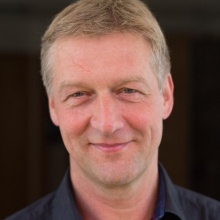
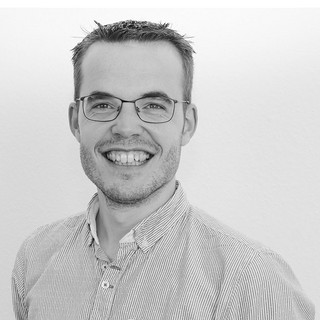
Jacques-Henri Jourdan is a CNRS researcher at the Laboratoire Méthodes Formelles (LMF) , Université Paris-Saclay. His work focuses on formal verification and programming language design , particularly for Rust and OCaml , using proof assistants like Coq and the Iris framework. Current academic rank: Researcher (CNRS) Affiliation: LMF, Université Paris-Saclay Research highlights include: Developing Creusot , a deductive verification tool for Rust Contributing to the Iris concurrent separation logic Formalizing RustBelt for Rust's type system soundness Building a statistical memory profiler for OCaml Scientific awards: GdR GPL 2016 Thesis Prize for his PhD on formal verification Notable contributions to academia: Co-teacher of Advanced Programming at ENS Paris-Saclay Co-development of OCaml's runtime library and parser Active program committee member in POPL, ICFP, and WITS
Dr. David Vinson is a Senior Lecturer in the Department of Experimental Psychology at University College London (UCL), where he conducts research at the intersection of language, cognition, and emotion. His academic profile demonstrates a strong commitment to understanding how humans process and represent meaning across various communication modalities. Dr. Vinson received his Doctor of Philosophy from University College London in 2009 and his Bachelor of Arts from Northwestern University in 1991. His educational background spans transatlantic institutions, providing him with a diverse academic foundation for his interdisciplinary research. His primary research focuses on language representations and processes, with particular emphasis on word, phrase and sentence meaning and its relation to other cognitive functions. A significant thread throughout his work examines the relationship between language and emotion, investigating how emotional content influences semantic processing. Dr. Vinson also explores how different communicative expressions integrate in multimodal contexts, studying both spoken language and sign systems. His methodological approach combines behavioral experimentation with selective neuroimaging techniques to provide comprehensive insights into language processing mechanisms. Dr. Vinson's publication record reveals consistent scholarly output across multiple high-impact journals in psychology, linguistics, and cognitive neuroscience. His recent work demonstrates growing interest in interdisciplinary semantic frameworks, with contributions to understanding how semantic representations differ for concrete versus abstract concepts, how iconicity functions in language, and how multimodal cues contribute to meaning construction. His research increasingly bridges theoretical linguistics with empirical cognitive science, reflecting contemporary trends in psycholinguistic research. As an educator, Dr. Vinson serves as module convenor for PSYC0004 Language and Cognition, an undergraduate second-year course at UCL. He actively contributes to the academic community as an ad hoc peer reviewer for numerous journals in psychology and neuroscience, a role he has maintained since 2002.
Rohit Parikh is a Professor in the Department of Computer and Information Science at the School of Natural and Behavioral Sciences, City University of New York (CUNY). He maintains dual appointments at Brooklyn College and the CUNY Graduate Center, where he teaches courses in Belief, Knowledge and Games, Artificial Intelligence, Formal Languages, Theory of Computation, and Modal Logic. His academic career spans institutions including Stanford, NYU, Boston University, SUNY Buffalo, Bristol, and Panjab universities, with research positions at IBM, Bell Labs, Caltech, MIT, and Berkeley. Educated at Harvard University (A.B. in Physics, 1957; A.M. in Mathematics, 1959; Ph.D. in Mathematical Logic, 1962) Former student placements include Brown University, University of Maryland, Haifa, Chennai, Paris, and CUNY Principal organizer of the Seminar in Logic and Games at CUNY Graduate Center Parikh's research centers on the intersection of logic, knowledge, and social systems. His work bridges computer science, mathematics, and philosophy through investigations into epistemic logic, game theory, belief revision, and the philosophy of language. He pioneered the concept of 'social software'—applying logical frameworks to analyze social procedures and algorithms. His research on vagueness connects Wittgensteinian language games with computational models, while his contributions to epistemic game theory examine how knowledge structures influence strategic behavior. Recent work explores the logic of collective action, non-person ontology, and the relationship between Buddhist philosophy and Popperian rationalism. His publication trends reveal deep engagement with knowledge representation (62% of recent works), social interaction modeling (23%), and philosophical logic (15%). Key recurring subfields include epistemic game theory, vagueness semantics, belief dynamics, social ontology, logical omniscience, and language-game formalization. His methodological approach consistently integrates mathematical rigor with philosophical insight across disciplines. Parikh has advised numerous doctoral students whose careers span global institutions. His professional leadership includes organizing the NYCAC-3 conference, serving on program committees for WOLLIC, DEON, LOFT, and other major logic conferences, and co-organizing the Seminar in Logic and Games which attracts speakers from Princeton, Yale, Columbia, and international institutions. His research infrastructure includes the Logic and Games seminar series and collaborations through the CUNY Graduate Center's computer science department. Current projects examine the capability approach, vagueness through social software, and theoretical foundations of collective action.
Line Burholt Kristensen is an Associate Professor in the Department of Nordic Studies and Linguistics at the University of Copenhagen's Faculty of Humanities. She leads the research group "Broken Grammar & Beyond," financed by the Independent Research Fund Denmark, and serves as Principal Investigator for the Steno Diabetes Center Sjælland-funded project "Vulnerability and related notions - an investigation of language to and about individuals with diabetes" with co-PI Christina Fogtmann Fosgerau. Her educational background includes an MA in linguistics, PhD, and completion of the Teaching and Learning in Higher Education Programme at the University of Copenhagen (2013-2014). Her academic career spans positions as Associate Professor (2018-present), Postdoc at the ProGram research group (2013-2017), External lecturer (2012-2013), and PhD student (2009-2012). Kristensen's research integrates psycholinguistics, neurolinguistics, and experimental methodologies to investigate grammatical processing. Her primary focus examines how native speakers process texts with anomalous learner syntax, particularly verb placement errors in Danish as a second language. She employs eye-tracking technology to measure reading times and comprehension, comparing grammatical anomalies in native versus non-native Danish writing. Her work on information structure and sentence context builds on her 2013 PhD thesis "Context, you need," which investigated how these elements interact during sentence processing. Her recent publications reveal a strong trajectory in second language acquisition research, with particular emphasis on verb-second constructions in Danish, preposition usage, and error detection mechanisms. These studies combine corpus linguistic approaches with experimental methods, demonstrating how language users react to grammatical anomalies both cognitively and neurologically. Her work increasingly bridges theoretical linguistics with practical applications for language teaching. As an educator, Kristensen teaches at BA and MA levels in Linguistics and has previously instructed courses in Audiologopedics, Danish, and IT & Cognition. She actively supervises student projects in experimental linguistics and corpus linguistics, encouraging research on language processing and acquisition. Her grant portfolio includes substantial funding from the Independent Research Fund Denmark and Steno Diabetes Center Sjælland for interdisciplinary projects examining language in both educational and medical contexts. She directs the "Broken Grammar & Beyond" research group, which employs a multidisciplinary approach combining psycho- and neurolinguistic experiments with grammar research. The team investigates the neural underpinnings of language processing using neuroimaging techniques while analyzing naturally occurring grammatical anomalies in both native and non-native Danish writing. This work has significant implications for understanding language acquisition, processing limitations, and the cognitive architecture of grammar.
Eric Yang is an Associate Professor of Philosophy at Santa Clara University's College of Arts and Sciences. He holds a Ph.D. from the University of California, Santa Barbara (2013). His research spans metaphysics (focusing on human persons and material objects), philosophy of mind, epistemology, and philosophy of religion, with a notable emphasis on topics like free will, grounding, metaontology, and theological paradoxes. He teaches courses on the history of philosophy, engaging deeply with thinkers like Plato, Aquinas, and Hume. Yang has published extensively, including books on Christian philosophical theology and edited volumes on character formation through exemplars. His work bridges philosophical analysis with theological inquiry, addressing questions about divine nature, human flourishing, and the intersection of psychology and religious practice. Notable contributions include debates on Kenoticism, divine properties, and the problem of eternal separation in heaven. He actively participates in interdisciplinary discussions, such as applying psychological insights to theological challenges like imitating a non-present Christ. Yang’s academic contributions are complemented by his engagement in public intellectual work, including media contributions and speaking engagements on topics linking philosophy, religion, and ethics. Education: Ph.D., University of California, Santa Barbara, 2013. Research Interests: Metaphysics, philosophy of mind, epistemology, philosophy of religion, ethics, and the history of philosophy. His work often explores intersections between analytic philosophy and theological concepts, such as divine attributes, personal identity, and moral virtues like humility. Publications: Over 20 peer-reviewed articles, two authored books (including An Introduction to Christian Philosophical Theology with Stephen T. Davis), and edited volumes. Recent works address imitation in Christian practice, theological paradoxes, and monastic influences on virtue. Awards: While no specific awards are listed, his academic contributions and publications reflect sustained recognition in philosophical and theological circles. Grants and Fellowships: None explicitly mentioned in the provided texts. Lab/Team Affiliations: Active within the Philosophy Department at Santa Clara University, contributing to interdisciplinary initiatives like the Imaginarium/Virtual Reality Lab and the Center for the Arts and Humanities.
Tomer Sagi is an Associate Professor in the Department of Computer Science at Aalborg University (AAU), Denmark. He is affiliated with The Technical Faculty of IT and Design and leads projects in the AI for the People and BLUE – Marine & Maritime Research groups. His research focuses on data integration, ontology engineering, artificial intelligence applications in healthcare and environmental science, and knowledge graph development. PhD in Information Systems from Technion-Israel Institute of Technology (2015) Former Lecturer at University of Haifa (2017–2022) Principal Investigator/Co-PI in projects like ODINI (AI-based Data Integration), MEHDIE (Middle Eastern Heritage Knowledge Graph), and DarkScience (Microbial Data Science) Research Interests: Data Integration, AI for Ocean Science, Medical Informatics, Ontology Evaluation, Multilingual Knowledge Systems, and Explainable AI. His work contributes to UN Sustainable Development Goals related to innovation and infrastructure. Key Projects (2022–2025): DarkScience: Metagenomic data analysis funded by Villum Foundation ODINI: AI-driven ocean data fusion and 3D reconstruction MEHDIE: Multilingual historical knowledge graphs for Middle Eastern heritage Awards: Received NLP4KGC Best Paper Award (2023) and AIME 2020 Best Paper Nomination. His contributions span 46+ publications, 8 datasets, and media coverage on AI applications in healthcare and environmental science. Labs/Teams: Active in AI for the People (applied AI solutions) and BLUE (marine data science). Collaborations include work on virtual twin technology for stroke management and medical data analytics.
Julian Gutierrez is a Lecturer at the University of Oxford's Department of Computer Science and an Associate Member of the same department. He holds a Ph.D. in Informatics from the University of Edinburgh (2011) and has held postdoctoral roles at the University of Cambridge and Oxford. His research focuses on theoretical computer science, artificial intelligence, logic, and concurrency, particularly in game theory, verification, and multi-agent systems. Education: Ph.D. in Informatics (University of Edinburgh, 2011), Engineering degrees in Computer Science and Electronics (Pontificia Universidad Javeriana, Colombia). His research interests emphasize logic and games in AI, concurrency semantics, and verification of multi-agent systems. Key contributions include work on Nash equilibria, rational verification, and tool development for equilibrium analysis. He has authored over 15 papers in top venues like IJCAI, AAMAS, and CONCUR. Awards: Overseas Research Studentship Award, School of Informatics Scholar, multiple academic excellence distinctions, and INFIVALLE Scholarship. He advises students in theoretical computer science and collaborates with the Avispa Research Group. His academic genealogy traces to Turing and Gauss through notable figures like Alan Turing and Alonzo Church.
John R. Kender is a Professor in the Department of Computer Science at Columbia University, affiliated with the Fu Foundation School of Engineering and Applied Science. He previously served as former Vice Dean of the same school and has been recognized as a Great Teacher by the Society of Columbia Graduates and a Distinguished Faculty Teacher by the Columbia Engineering School Alumni Association. His research focuses on computer vision, video understanding, gesture recognition, and artificial intelligence, supported by grants from DARPA, NSF, and industry partners like IBM and Microsoft. He has advised over 25 doctoral students and co-chaired the 2016 ACM International Conference on Multimedia Retrieval (ICMR). His teaching spans courses in object-oriented design, visual interfaces, and visual databases, with a strong emphasis on project-based learning. Kender's work includes pioneering contributions to semantic video indexing, multimodal analysis, and transfer learning techniques. Education: Advanced degrees in Computer Science (details not explicitly stated in texts). His research interests bridge computational methods and human-centric applications, including gesture-audience engagement correlations using EEG, cultural differences in news video production, and visual meme tracking in social media. His projects, such as the NSF-funded 'Tagging and Browsing Videos According to Affinity Groups,' highlight user-centered multimedia systems. Kender's work has been published in over 100 peer-reviewed articles and patents, addressing challenges in video segmentation, motion anticipation, and neuroimage alignment. Recent articles explore geometric approaches to transfer learning, 3D motion prediction, and cultural analysis through computational aesthetics. These reflect a trend toward cross-disciplinary methods combining AI, computer vision, and social sciences. Awards: Multiple teaching recognitions, including Columbia's top faculty teaching honors. Advising highlights include mentoring students across decades, with notable alumni contributing to academia and industry. His grants total over $10M from federal and industrial sources. Kender's lab focuses on real-world applications like educational video analysis, medical imaging, and event-driven multimedia systems. Current projects include developing explainable AI for video clustering and probabilistic GAN-based human motion prediction.
Dr. Yang Deng is a tenure-track Assistant Professor at the School of Computing and Information Systems, Singapore Management University, and a Lee Kong Chian Fellow. Previously, he was a Postdoctoral Research Fellow at NExT++ (National University of Singapore). His research focuses on Natural Language Processing, Information Retrieval, and Large Language Models, with special interests in Proactive Conversational AI, Trustworthiness of LLMs, and Human-Centered Information Seeking. He has published over 40 papers in top-tier venues including ACL, EMNLP, WWW, and SIGIR. PhD from The Chinese University of Hong Kong (2023) Research Advisor to CHEANG Chi Seng Research Domains: Natural Language Processing Information Retrieval Large Language Models Human-Agent Interaction Digital Transformation Trustworthy AI Scientific Recognition: Lee Kong Chian Fellowship Google South Asia & Southeast Asia Research Awards 2024 EMNLP 2024 Outstanding Area Chair NeurIPS 2024 Best Reviewer
Ziyan Wang is a researcher affiliated with Carnegie Mellon University's School of Computer Science, Department of Computer Science. Their work focuses on computer graphics, machine learning, and medical imaging, with a strong emphasis on dynamic capture and animation of human hair and heads. They hold a PhD in Computer Science from Carnegie Mellon University (2023). Research interests include 3D modeling, neural networks, reinforcement learning, and applications in medical informatics. Notable contributions include high-fidelity hair modeling using computed tomography and neural dynamic models for volumetric hair capture. Their work spans conferences like CVPR, NeurIPS, and ECCV, demonstrating expertise in both theoretical and applied aspects of computer vision and graphics. Publications highlight advancements in diffusion models, multi-agent reinforcement learning, and domain adaptation for fault diagnosis. Collaborations span institutions like the University of Washington, Max Planck Institute, and NVIDIA Research, reflecting interdisciplinary engagement. Recent work explores AI-generated content in virtual environments and cybersecurity in package management systems.
Jason Bishop is a Professor of Linguistics at the College of Staten Island (CSI), CUNY, with an additional appointment in Linguistics at the CUNY Graduate Center. He directs the CSI Speech Laboratory and specializes in phonetics, laboratory phonology, and prosody. His research explores how prosody (rhythm/melody of speech) encodes linguistic structure and influences perception across languages. He holds a PhD from UCLA, where he studied at the Phonetics Laboratory. Previously, he served as a Fulbright Scholar in Germany, conducting neuropsychological research on reading at the Max Planck Institute and teaching English as a Second Language. His work bridges experimental methods with theoretical linguistics, focusing on speech production/perception, prosodic structure, and individual differences in language processing. Bishop's research has examined topics such as pitch perception, focus realization, and the relationship between prosody and information structure. His recent studies investigate how prosodic cues affect syntactic processing and how autistic traits influence linguistic priming effects. He has published widely in journals like the Journal of the Acoustical Society of America and edited conference proceedings for major linguistic conferences. Awarded the prestigious Fulbright Scholarship, Bishop has also contributed to academic service through editorship of the 27th West Coast Conference on Formal Linguistics proceedings. His lab employs advanced acoustic analysis and experimental paradigms to study speech perception and production mechanisms.
Arvind Satyanarayan is an Associate Professor of Computer Science at the Massachusetts Institute of Technology (MIT), where he leads the Visualization Group at MIT CSAIL. His research centers on interactive data visualization as a mechanism for intelligence augmentation—enhancing human cognition and creativity while preserving agency. Education PhD in Computer Science, Stanford University (advised by Jeffrey Heer, UW Interactive Data Lab) His research spans four primary themes: Visualization Authoring Tools , where he develops languages and systems (e.g., Vega-Lite extensions) to democratize visualization creation; Interpretability & Alignment , focusing on metrics and interfaces to align ML models with human expectations; Accessible Data Representations , co-designing non-visual displays with blind collaborators using alt text, screen readers, and tactile graphics; and Sociocultural Design , studying visualizations as social artifacts that shape norms and propagate misinformation. His work on Animated Vega-Lite , Bluefish , and Tactile Vega-Lite exemplifies his focus on expressive, usable, and inclusive tools. His recent publications show a strong trend toward AI-human collaboration , accessibility , and cultural interpretability of LLMs , with frequent appearances at top venues like ACM CHI, IEEE VIS, ACL, and UIST. Key topics include semi-formal programming, generative AI agency, tactile chart prototyping, and saliency evaluation frameworks. Scientific Awards & Recognition NSF CAREER Award Alfred P. Sloan Research Fellow (2024) Best Paper Honorable Mention, ACM CHI 2021 Outstanding Paper Award, ACL 2023 Apple Scholars in AIML (advised student) Forbes 30 Under 30 (advised student) He advises a vibrant group of PhD, MEng, and postdoctoral researchers, with alumni now faculty at MIT, Brown, and Utah. His group has secured significant recognition and impact, with tools widely used in industry, Wikipedia, and the Jupyter/Python data science communities. He collaborates across disciplines, including anthropology (Graham M. Jones), medicine, and social science. The Visualization Group at MIT CSAIL is actively developing next-generation tools for semi-formal programming with foundation models, accessible multimodal representations, and culturally grounded AI evaluation frameworks.
Norbert Haala is an Adjunct Professor and Deputy Director at the University of Stuttgart's Department of Photogrammetric Computer Vision. He leads the Research Group in Photogrammetric Computer Vision and is involved in ISPRS Working Group II/2 (Point Cloud Generation) and EuroSDR Commission 2 (Modelling and Processing). His work focuses on 3D data collection, SLAM algorithms, LiDAR integration, and UAV-based geospatial technologies. Research interests include image-based data collection, photogrammetric computer vision, and semantic segmentation of 3D point clouds. He has contributed to benchmarks like Hessigheim 3D and TIME, and developed tools like SURE for dense image matching. Teaching includes courses on digital image processing, terrain modeling, and computer vision. His publications emphasize real-time mapping, hybrid georeferencing, and neural surface reconstruction from airborne imagery. Projects involve UAV monitoring, indoor SLAM for robotics, and multi-modal data fusion for urban modeling. He collaborates on EuroSDR initiatives and publishes regularly in remote sensing and robotics domains.
Dr. Constantijn Kaland is a Lecturer in Word Prosody & Laboratory Phonology at the University of Cologne since 2022, specializing in experimental phonetics and prosodic analysis. His research focuses on Speech production and perception , particularly in Papuan Malay , with interests in Language typology and Acoustic phonetics . He has previously held positions at Utrecht University, Free University of Bolzano, and University of Malta. Education: PhD (2014) in Prosodic marking of semantic contrasts, Tilburg University MA (2009) in Clinical and Experimental Linguistics, Leiden University BA (2007) in General Linguistics, Leiden University His research explores the acoustic correlates of prosody, including fundamental frequency (F0) analysis, stress perception, and the interaction of tone and intonation. Using computational tools like contour clustering, he investigates prototypical F0 patterns and their functional implications in speech processing. Publications span journals such as The Journal of the Acoustical Society of America and Journal of Phonetics , focusing on cross-linguistic prosody and speech technology. Dr. Kaland has taught courses on prosody at the University of Cologne, Utrecht University, and University of Malta. His work bridges theoretical and applied phonetics, with methodological contributions to analyzing prosodic patterns in field data.
John Breslin is a Personal Professor in Electronic Engineering at the University of Galway, leading the TechInnovate/AgInnovate programs. His roles include Director of the Insight (Data Analytics) and VistaMilk (AgTech) research centers. He has authored 350+ publications and co-created the SIOC framework, widely used in web applications. His research spans Data Science, AI, Semantic Web, IoT, and Entrepreneurship. He has won multiple awards, including the Best Irish-Published Book and IIA Net Visionary Awards. His teaching spans 25 years, covering topics like Digital Control Systems and Innovation. He co-founded boards.ie, StreamGlider, and leads initiatives in Galway's innovation ecosystem. Research Interests: Data Science, AI, Social Semantics, IoT, Agricultural Technology, and Innovation. He is ranked top in Engineering and Computer Science citations at the University of Galway. His work contributes to UN SDGs related to Industry, Innovation, and Infrastructure. Education: Details not explicitly provided in text. Collaborations include Bosch, Cisco, IBM, and Harvard Medical School. Active in industry partnerships and startups, including the PorterShed Innovation District. Awards: Best Paper Awards, Entrepreneurship Recognition, and Academic Excellence. Supervised nearly 30,000 ECTS across modules, with a focus on graduate and postgraduate tech innovation programs.