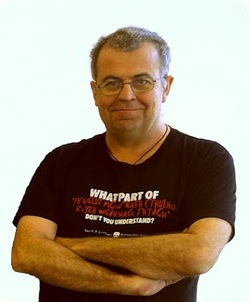
Kees van Berkel is an Assistant Professor in AI Ethics at the Institute of Logic and Computation, TU Wien. His research focuses on logical and formal approaches to normative reasoning, AI ethics, and deontic logics. He holds a PhD in Computer Science from TU Wien (2022) and has held postdoctoral positions at Ruhr Universität Bochum and the University of Amsterdam. He teaches courses on AI Ethics, logical argumentation, and normative reasoning at both bachelor and master levels. Van Berkel's work bridges philosophy, computer science, and artificial intelligence. His research explores formal methods for ethical AI, including deontic explanations, normative systems, and argumentation frameworks. He has published extensively on topics like STIT logics, inconsistency measures in deontic reasoning, and applications of formal logic to Indian philosophical texts. His academic roles include co-coordinator of the AI Ethics Special Interest Group at TU Wien's Center for Artificial Intelligence and Machine Learning (CAIML), and membership in the Cluster of Excellence 'Bilateral AI' (BILAI). He has organized workshops and tutorials on logical argumentation and serves on program committees for major conferences like AAAI and KR. Key projects include the LoDEx initiative (Logical Argumentation for Deontic Explanations) and involvement in interdisciplinary research on normative reasoning in AI systems. His recent work emphasizes ethical auditing of LLM-based chat services and formalizing dialogical approaches to deontic explanations.
Elaine Pimentel is an Associate Professor at the University College London's Department of Computer Science, specializing in Programming Principles, Logic, and Verification. She also serves as Schools Outreach Lead, supporting initiatives like the Afghan Female Student Outreach project. Previously, she held professorships at MAT/UFMG and DMAT/UFRN, and has been actively involved in academic leadership roles, including Treasurer of the Brazilian Logic Society and Editor of the Bulletin of Symbolic Logic. Her research focuses on proof theory, ecumenical systems, concurrency theory, and logical frameworks, with notable contributions to the ECUMENICAL project on proof-theoretic semantics for non-classical logics. Elaine earned her Ph.D. in Computer Science from UFMG under advisors Dale Miller and Carlos Camarão de Figueiredo. She has held visiting positions at institutions like TU Wien and LIX - École Polytechnique, collaborating on proof theory and λ-calculus. Her work bridges theoretical computer science and philosophy, emphasizing interdisciplinary projects like the MOSAIC and PROSA initiatives. Elaine has been honored with the Rae Harbird Award and has organized influential events such as the World Logic Day activities and international conferences like STACS and CSL. She is a strong advocate for diversity in STEM, leading projects like POTIMÁTICAS to inspire girls in mathematics and computer science.
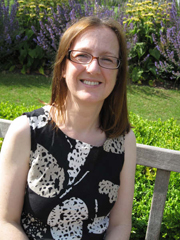
Patrick Blackburn is a Professor of Formal Philosophy at the University of Roskilde, Denmark, since 2011. Previously, he served as Director of Research at INRIA (France), and held academic positions in Germany, the Netherlands, and the UK. He specializes in philosophical logic, computational semantics, and the application of logic in cognitive science and computing. Education: Habilitation, Computational Linguistics, University of the Saarland (2000) PhD, Cognitive Science, University of Edinburgh (1990) MSc, Logic and Scientific Method, Sussex University (1986) BA, Philosophy & Mathematics, University of Waikato (1981) Research Interests: Blackburn’s work bridges logic, philosophy, and computational linguistics. Key areas include hybrid logics, modal logic applications, formal semantics of natural language, and computational methods in cognitive science. He emphasizes interdisciplinary approaches, integrating mathematical rigor with linguistic and philosophical insights. Publications & Impact: With over 80 journal articles and 3 books—including the seminal Modal Logic (2001)—he has achieved significant scholarly impact (6,376 citations, h-index 35). His work is foundational in hybrid logic and computational semantics. Awards: Elected Member of the Academy of Europe (2014) Editorial Roles: He has edited 10 books and journal issues, and currently serves on editorial boards for Notre Dame Journal of Formal Logic and Logique et Analyse . He also co-edits the Logic and Language section of the Stanford Encyclopedia of Philosophy.
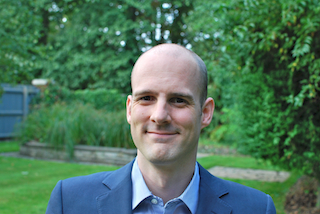
Manuel García-Carpintero is a Professor at the Department of Logic, History and Philosophy of Science , University of Barcelona . His research spans Philosophy of Language , Philosophy of Logic , Metaphysics , and Aesthetics , focusing on topics like truth theories, reference, vagueness, and fictional discourse . He has held visiting positions at Stanford University , M.I.T. , New York University , and Oxford University . Licenciado (≈B.A.) in Philosophy, University of Barcelona (1979) Doctor (≈Ph.D.) in Philosophy, University of Barcelona (1988), cum Laude His research themes include disquotational truth theories, supervaluationism, singular imaginings, and the logic of quotation . He has secured major research grants, including a €2M SDGI Consolider project (2009-2014) and the LOGOS research group (2006-2011). Scientific awards : Distinció de la Generalitat de Catalunya (2002) ICREA Acadèmia Prize (2008) Honorary Professorship at University of Lisbon (2012-2016) He has served as Associate Editor for journals like Theoria and Linguistics and Philosophy , reviewed grants for international agencies, and advised 13 doctoral dissertations to highest distinction. His work connects analytic philosophy with linguistic theory and cognitive modeling .
Katarzyna Malgorzata Jaszczolt is Professor of Linguistics and Philosophy of Language at the University of Cambridge and Professorial Fellow of Newnham College, Cambridge where she also serves as Director of Studies. She has held academic positions at Cambridge since 1995, progressing from Assistant Lecturer to her current professorship, while also holding fellowships at Newnham College. Previously, she held research and teaching positions at the University of Brighton, University of Sussex, and University of Oxford. Her research focuses on semantics, pragmatics, and philosophy of language, with particular expertise in propositional attitude reports, belief ascription, temporal representation, and the semantics/pragmatics interface. She is the creator of the influential Default Semantics theory, which offers a framework for understanding how meaning is constructed through the interaction of linguistic and contextual information. Her extensive publication record includes over 70 articles in top-rated journals and 12 books (4 single-authored monographs and 8 edited collections). Her recent work demonstrates consistent focus on temporal representation, default interpretations, belief reports, and the boundaries between semantic and pragmatic content in language understanding. President of Cambridge Institute of Language Research (2009-11) Head of Department of Linguistics, University of Cambridge (2009-11) Chair, Strategic Initiative in Language Sciences, Cambridge (2010-11) Newton Trust Research Grant (2010) Leverhulme Research Fellowship (2003-04) British Academy grant (1994-95) Professor Jaszczolt serves on numerous editorial boards including Journal of Pragmatics and Intercultural Pragmatics, and acts as a referee for major grant-awarding organizations including Leverhulme Trust and AHRC. She is frequently invited to deliver keynote addresses at international conferences, such as the 11th International Pragmatics Conference and the 1st International Pragmatics Conference of the Americas where she was the only non-US keynote speaker in 2012.
Adam Smith is a Senior Lecturer in the Department of Linguistics at Macquarie University. He specializes in corpus linguistics, focusing on language variation over time and across regions, lexicography, and editing practices. As Course Director for the Graduate Certificate of Editing and Electronic Publishing, he oversees curriculum development and teaches undergraduate linguistics units. His research centers on Australian and New Zealand English dialects, with particular attention to grammatical structures, historical language change, and sociolinguistic influences. Notable projects include Linguistic Epicenters: Empirical Perspectives on Regional and International Influences on World Englishes (2018-2019) and Shifting Attitudes to Immigration (2021). Collaborations span global institutions, with emphasis on parliamentary discourse analysis and corpus-driven methodologies. Smith leads three major datasets: the Australian Corpus of English , International Corpus of English , and Australian Radio Talkback Corpus . His work bridges computational linguistics and traditional lexicography, addressing challenges in terminology clarity and register analysis across medical, legal, and political domains. Key Themes: Epicentral influence, language policy, historical syntax Methodologies: Corpus linguistics, multidimensional analysis, comparative dialectology
Michael Blome-Tillmann is an Associate Professor of Philosophy at McGill University, holding a William Dawson Scholarship (equivalent to a Canada Research Chair). He previously held positions at the University of Cambridge (Marie Curie Fellowship) and University College, Oxford (Stevenson Junior Research Fellow). He earned his BPhil (2003) and DPhil (2007) in philosophy from the University of Oxford. His research focuses on epistemology and philosophy of language, particularly the semantics of knowledge attributions. He has developed Presuppositional Epistemic Contextualism (PEC), arguing that pragmatic presuppositions shape knowledge ascriptions. His work addresses closure principles, skepticism, contextualism, and the intersection of logic, language, and linguistics. Notable awards include the William Dawson Scholarship, Marie Curie Fellowship, and British Academy Rising Star Engagement Award. He has published extensively in journals like Mind , Philosophical Studies , and Philosophy and Phenomenological Research . His monograph Knowledge and Presuppositions (OUP 2014) has been widely praised in reviews.
Andreas Møgelmose is an Associate Professor at Aalborg University's Department of Architecture, Design and Media Technology under the Technical Faculty of IT and Design. His research focuses on computer vision, artificial intelligence, and their applications in autonomous systems, driver assistance, and industrial vision. He leads projects like AI Color Fashion and Real-world adaption of generative AI for architecture. Møgelmose teaches introductory programming, computer vision, and advanced master's courses, emphasizing practical project-based learning. His work includes developing datasets such as the Multi-view Traffic Intersection Dataset (MTID) and exploring vision-language models for autonomous vehicle safety. He actively engages in media discussions on AI ethics and societal impacts. Research interests span dynamic gesture interpretation for cooperative autonomous vehicles, surgical skill assessment via automated metrics, and multimodal classification of environmental data. He has contributed to over 50 publications, including work on 3D object detection frameworks and generative AI education. Møgelmose collaborates on projects funded by industry partners like COWI and Danish government initiatives. His teaching philosophy centers on blended learning and practical application, fostering innovation in AI and computer vision education. Notable projects include AI:Xpertise Lab (2025–present), which explores AI-driven expertise systems, and collaborations on forest biodiversity analysis using LiDAR and orthophotos. His recent media engagements highlight societal AI challenges, emphasizing responsible implementation in public sectors.
Roberto Casati is a distinguished academic serving as a Senior Researcher (Directeur de Recherche) at the French Centre National de la Recherche Scientifique (CNRS) since 2002, and as a Director of Studies (Directeur d'Etudes) at the School for Advanced Studies in the Social Sciences (EHESS) in Paris since 2016. His academic career spans multiple institutions across Europe and North America, including previous positions as Research Fellow at CNRS (1993-2002), Assistant at Université de Neuchatel, Switzerland (1991-1994), and Research Fellow with the Swiss National Science Foundation (1991-1993). Dr. Casati received his PhD from the University of Milan, Italy in 1992 and from the University of Geneva, Switzerland in 1991. He has taught at the Ecole Normale Supérieure and served as visiting professor or scholar at prestigious institutions including Università IUAV in Venice, the University of Turin, Columbia University, and Dartmouth College. His research focuses on the intersection of philosophy and cognitive science, with particular emphasis on perception, representation, and cognition. Dr. Casati has made significant contributions to understanding shadow perception, cognitive artifacts, spatial representation, and the philosophy of sound. His work bridges theoretical philosophy with empirical cognitive science, creating a rich interdisciplinary approach to understanding human cognition and its relationship with the physical world. Dr. Casati has published extensively, with nine academic books and numerous research articles in leading journals across philosophy and cognitive science. His publications span topics from metaphysics to visual perception, demonstrating the breadth and depth of his scholarly contributions. Scientific Awards 2003 Prix de la Science du Livre for the book "La découverte de l'ombre" 2001 Premio Castiglioncello di Filosofia for the book "La scoperta dell'ombra" 2000 Premio Fiesole speciale for the book "La scoperta dell'ombra" 1996 CNRS Bronze Medal in Philosophy (most distinguished researcher in the year for Philosophy) 1990 Geneva University Prize in Philosophy Dr. Casati has been actively involved in academic service and leadership. He is co-founder and co-editor of the Review of Philosophy and Psychology (Springer). He was responsible for Institut J. Nicod's Enactive Network of Excellence (IST-2002-002114) and has served as an evaluator for the VI Framework Programme of the European Commission, the European Science Foundation, and national research institutions of France and Italy. He has organized numerous national and international conferences in both philosophy and cognitive science. Beyond academic research, Dr. Casati has been committed to public philosophy, publishing a widely translated book (Semplicità insormontabili, with A. Varzi) that was adapted for theater, and over 250 short philosophical articles in the Italian daily IlSole/24Ore. Dr. Casati combines his academic pursuits with diverse personal interests, including professional competence in drawing and design, and completed a Transat Retour sailing race on a Challenge 67 sailboat in 2017. His future research projects focus on cognitive artifacts and wayfinding, continuing his tradition of innovative interdisciplinary work.
Timothy Williamson is the Wykeham Professor of Logic at the University of Oxford (since 2000) and holds a concurrent Visiting Professor role at Yale University (2016–2018, 2018). He has held prestigious positions at the University of Edinburgh, University College Oxford, and Trinity College Dublin. His research spans epistemology , metaphysics , philosophy of language , and philosophical logic , with a focus on metaphilosophy and the nature of knowledge. Education: Undergraduate in Mathematics and Philosophy, Doctorate in Philosophy (both from the University of Oxford) Williamson’s publications include foundational works like Knowledge and Its Limits (2000), Modal Logic as Metaphysics (2013), and Doing Philosophy (2018). His articles address topics such as logical neutrality , necessitism , and the epistemology of evidence . He has supervised over 48 doctoral theses globally. Scientific Awards: Fellow of the British Academy (1997) Fellow of the Royal Society of Edinburgh (1997) Foreign Member of the Norwegian Academy of Science and Letters (2004) Foreign Honorary Member of the American Academy of Arts and Sciences (2007) Honorary Doctorates from the Universities of Belgrade (2018) and Bucharest (2015) His academic leadership includes presidency roles at the Aristotelian Society and Mind Association, alongside advisory roles in epistemology and logic.
Shuyan Li is a Lecturer at the School of Electronics, Electrical Engineering and Computer Science, Queen’s University Belfast. Her research focuses on foundational computer vision methods and their healthcare applications, including unsupervised learning, multi-modal learning, and medical imaging analysis. She actively mentors early-career researchers through the Cambridge Trinity College Postdoctoral Mentorship Program and serves as Director of the Tsinghua Alumni Association (UK) and Secretary-General of the UK Association of Distinguished Young Scholars. Education Background: While specific degree details are not explicitly listed, Dr. Li has received prestigious awards such as the First Prize Scholarship (Tsinghua University, 2020) and the National Scholarship (Ministry of Education, PRC, 2013), indicating a strong academic foundation. Research Interests: Central themes include unsupervised learning, digital twins for construction and healthcare, video understanding, representation learning, and domain adaptation. Her work bridges theoretical advancements and practical applications, such as medical image translation and point cloud-based building digitization. Awards and Recognition: Key achievements include the Athena Postdoctoral Fellowship (NSF AI Research Center), Forbes’ Top 100 Most Influential Chinese (2024), and the Excellent Doctorate Dissertation Award (2023). She is also a Guest Editor for Innovation and Technology of Computer Vision . Advising & Grants: Currently supervising PhD students Ben Redden (UK) and Shurui Xu (China). She offers multiple funded PhD opportunities, including EPSRC and CSC scholarships, and collaborates with institutions like Cambridge and UCL. Labs & Collaborations: Active in interdisciplinary projects involving digital twin construction, medical AI, and point cloud analysis. Recent collaborations include work with the University of Cambridge on digital construction modules and Newcastle University on AI-driven data analysis.
Ece Demir-Lira is an Assistant Professor in the Department of Psychological and Brain Sciences at the University of Iowa. Her research focuses on developmental cognitive neuroscience, examining how socioeconomic status, parental input, and early brain injuries influence children's cognitive and language development. She is affiliated with the Developmental Psychopathology and Developmental Science research groups. Ph.D. in Psychology, University of Chicago (2009) Her work explores brain plasticity in typical and atypical development, with a particular emphasis on preterm infants and the impact of environmental factors on neural structures. She utilizes neuroimaging techniques and behavioral assessments to study these phenomena. Recent publications highlight her investigations into gesture-speech integration, socioeconomic disparities in cognition, and the neural correlates of math attitudes. She also contributes methodological expertise in longitudinal data analysis through her involvement with the Adolescent Brain Cognitive Development (ABCD) Study. Demir-Lira leads the Development, Experience, and Neurocognition (DEN) Lab, which investigates how early experiences shape brain development and cognitive outcomes. Her research bridges psychology, neuroscience, and education to inform interventions for at-risk populations.
Professor Katarzyna Wołowska is a distinguished academic at the John Paul II Catholic University of Lublin (KUL), where she serves in the Department of Romance Linguistics within the Faculty of Humanities. With a career spanning over two decades since 2003, she has established herself as a leading scholar in linguistic theory, particularly in the fields of interpretative semantics, textual analysis, and discourse studies. Her academic journey reflects a deep commitment to both research excellence and pedagogical innovation in Romance languages and linguistics. Professor Wołowska's research interests span multiple dimensions of linguistic inquiry, with particular emphasis on semantic isotopy, virtuality in semantics, and the interplay between language structure and meaning construction. Her scholarly work demonstrates a consistent focus on how meaning is generated and interpreted in various textual contexts, from literary works to digital communication platforms. She has made significant contributions to understanding the mechanisms of thematic motif construction, semantic operations in discourse, and the organization of meaning in both traditional and new media environments. Her publication record reveals a strong trajectory in analyzing how language functions across different communicative contexts, with recent work focusing on digital discourse, war rhetoric in media, and the semiotics of literary texts. The thematic progression of her research shows an evolution from foundational work on paradoxes and semantic oppositions to more complex analyses of textual structures in contemporary communication environments, particularly online forums and social media. Individual award from KUL rector for scientific monograph (2008) Collective award from KUL rector for participation in Lublin Science Festival (2007) Professor Wołowska has secured significant research funding through multiple projects with the National Science Centre (NCN) and Ministry of Education and Science (MEiN), demonstrating her ability to lead substantial scholarly initiatives. She has mentored numerous academic projects and served as a foreign consultant for doctoral research at Oakland University in the USA. Her editorial leadership as Editor-in-Chief of the "Études de linguistique, littérature et art" series and membership on the editorial board of "Études romanes de Brno" highlights her influence in academic publishing. She has also organized several international conferences, including "Rivalry in language and literature" and "Emotions and values in communication," fostering scholarly exchange across disciplinary boundaries.
Manuel Perea Lara is a Professor at the University of Valencia, affiliated with the Faculty of Psychology and Speech Therapy and the Department of Behavioural Science. He leads research at the ERI Reading Research institute and the READit Cognitive Neuroscience and Reading group, focusing on behavioral science methodology in language processing. He obtained his PhD from the University of Valencia in 1993 with a thesis titled Influencia de los factores de vecindad sobre el acceso léxico análisis experimentales y de simulación , supervised by Dr. Arcadio Gotor Sicilia. His research explores cognitive mechanisms in reading, including: Orthographic processing and visual word recognition Cross-linguistic studies of writing systems Eye movement dynamics during reading Development of literacy skills in children Neurocognitive aspects of language in neurodiverse populations Experimental methodologies in psycholinguistics Analysis of his 15 most recent publications (2024-2025) reveals strong emphasis on masked priming paradigms, cross-script comparisons (Arabic, Chinese, Javanese), literacy development interventions, and cognitive processing in autism. The work demonstrates advanced methodological rigor in exploring orthographic encoding, attentional mechanisms, and bilingual language processing. No awards or supervised students are mentioned in available materials. His laboratory conducts innovative research using techniques like event-related potentials (ERPs) and behavioral experiments to investigate reading mechanisms across different populations and writing systems.
Prof. Dr. Stephanie E. Combs is a leading academic in Radiation Oncology at Technische Universität München (TUM), holding the position of Professor and Chair of the Department of Radiation Oncology. She also serves as the Dean of the TUM Faculty of Medicine since 2022. Her expertise spans highly conformal radiation therapy techniques (e.g., IMRT/IGRT/ART, proton, and carbon ion therapy), with a focus on brain and skull base tumors, pediatric oncology, gastrointestinal oncology, and biomarker-driven therapies. Prof. Combs studied medicine in Heidelberg and the United States, completed postdoctoral training in Heidelberg, and became Vice Chair of Radiation Oncology there before joining TUM in 2014. She has held leadership roles, including heading the TUM Senate from 2019 to 2022. Her research emphasizes precision medicine, radiation biology, and translational radiotherapy innovations. Her awards include the Basic/Translational Senior Science Award (2019), Robert Janker Award (2012), and multiple honors from German and international radiation oncology societies. Her work bridges clinical practice and research, with contributions to guidelines on target delineation for glioblastoma and skull base tumors. Prof. Combs’ publications focus on advancing radiation techniques, radiomics, and personalized therapy, with over 300 peer-reviewed articles. She leads initiatives in education, including a Master of Science program in Radiation Biology, and collaborates internationally in translational research.