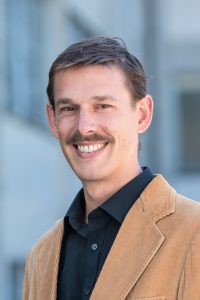
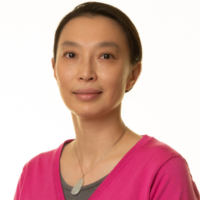
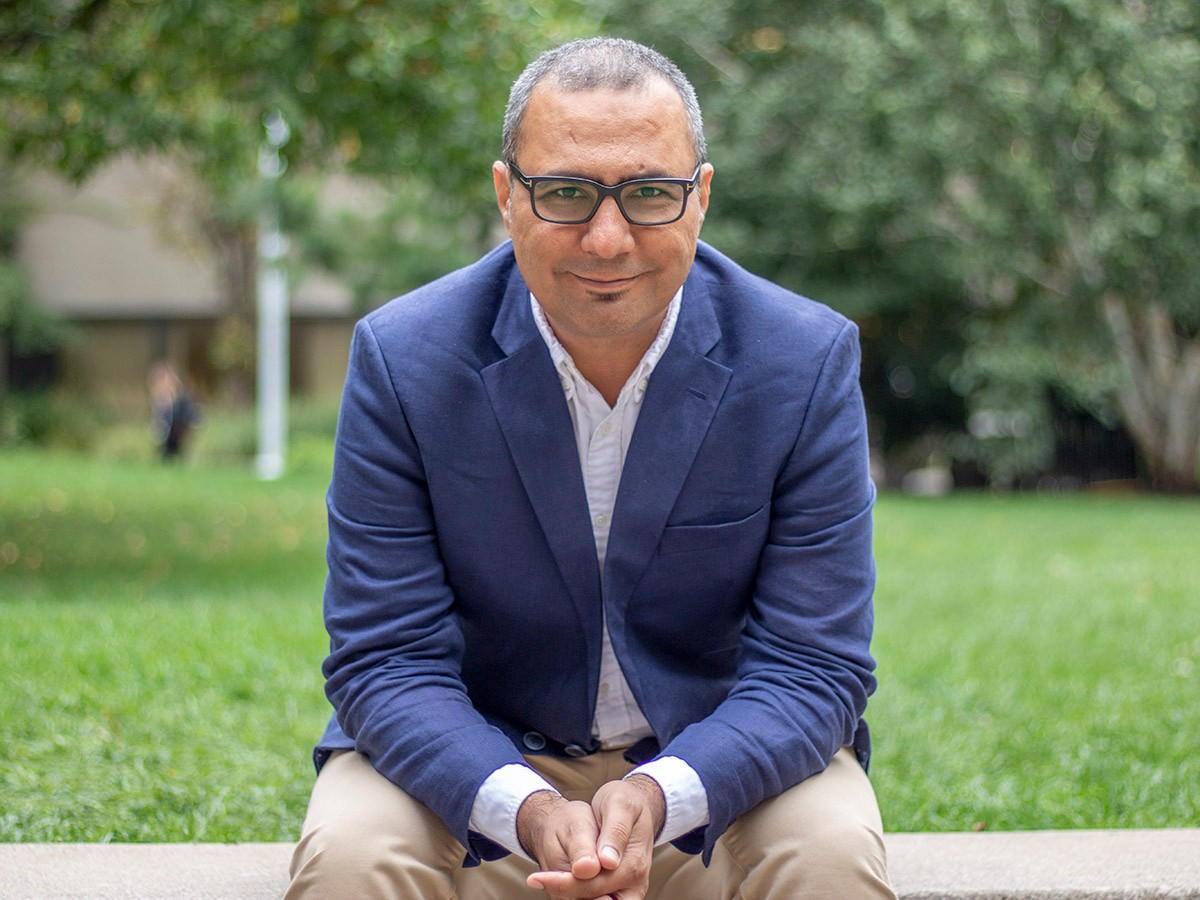
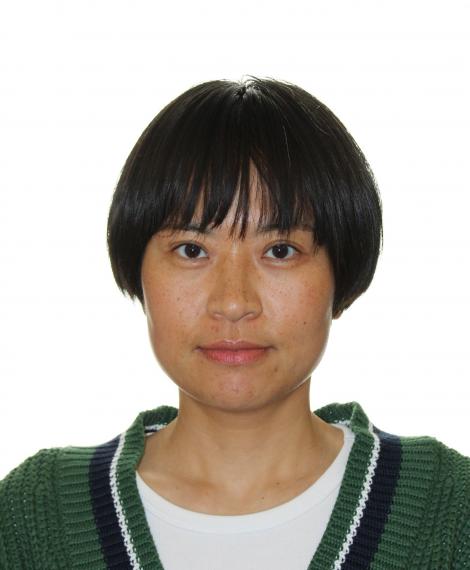
Dr. Alex Bigazzi is an Associate Professor and Associate Head (Undergraduate Program) in the Department of Civil Engineering at the University of British Columbia (UBC), with a joint appointment in the School of Community and Regional Planning. He leads the REACT Lab, focusing on active transportation, micromobility, and sustainable infrastructure design. His research emphasizes the intersection of physics, physiology, and behavior in active travel, particularly for pedestrians and cyclists, and addresses emissions reduction and equitable urban mobility. Bigazzi holds a B.M. in Jazz Saxophone from the University of Miami and a Ph.D. in Civil Engineering from Portland State University. His career includes academic and practical contributions, such as founding the REACT Lab and leading projects on e-bike incentives, air pollution exposure, and infrastructure design. His work has earned awards like the 2024 Wall Legacy Award for inclusive transport design and the 2023 Climate Action Award. He teaches courses on pedestrian/bicycle facility design and capstone projects, mentoring students through UBC’s Civil Engineering programs.
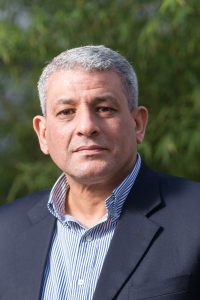
Dr. Tarek Sayed is a Professor at the University of British Columbia's Department of Civil Engineering within the Faculty of Applied Science. He specializes in Transportation Engineering, focusing on road safety analysis, traffic operations, and Intelligent Transportation Systems (ITS). He serves as the Director of the Bureau of Intelligent Transportation Systems and Freight Security (BITSAFS-Engineering) and Editor of the Canadian Journal of Civil Engineering . His research addresses three core areas: improving road safety evaluation techniques, enhancing safety through traffic operations and highway design analysis, and advancing ITS technologies. Notable contributions include frameworks for safety-audits of infrastructure projects like the Sea to Sky Highway and methodologies for evaluating transit signal priority systems in Vancouver. He has authored/co-authored over 250 publications and supervised 60 graduate students. Key Roles: Professor, BITSAFS Director, Journal Editor Awards: Tier 1 Canada Research Chair, Wilbur Smith Award, Sandford Fleming Award, Prince Michael International Road Safety Award Consulting: Global projects in traffic safety and ITS for agencies like ICBC, FHWA, and Ashghal His research integrates Bayesian statistical methods, extreme value theory, and machine learning to model traffic conflicts, pedestrian behavior, and safety interventions. Current projects include real-time safety optimization using autonomous vehicle data and analyzing shared space interactions between cyclists and pedestrians. Dr. Sayed chairs national/international committees, including the U.S. Transportation Research Board’s safety data committee. His work bridges academia and practice, influencing policy and infrastructure investment decisions worldwide.
Ming-Syan Chen is a distinguished academic holding dual roles as a Distinguished Research Fellow and Director of the Research Center for Information Technology Innovation (CITI) at Academia Sinica, Taiwan, and a Distinguished Professor jointly appointed across multiple departments at National Taiwan University (NTU), including Electrical Engineering (EE), Computer Science and Information Engineering (CSIE), and the Graduate Institute of Communication Engineering (GICE). His career spans academia and industry, with prior roles as a research staff member at IBM Watson Research Center and leadership positions in Taiwan's technology sector. Education: He earned a B.S. in Electrical Engineering from National Taiwan University, followed by M.S. and Ph.D. degrees in Computer, Information, and Control Engineering from the University of Michigan, Ann Arbor. Research Interests: Chen's work focuses on databases, data mining, machine learning, multimedia networking, and cloud computing. He has authored over 350 papers and holds numerous patents, contributing to foundational advancements in query processing, data management, and networked systems. Award Highlights: Recipient of ACM and IEEE Fellowships, National Chair Professorship (lifetime honor), Teco Award, Pan Wen Yuan Distinguished Research Award, and IBM's Outstanding Innovation Award. His contributions span research, teaching, and technology commercialization. Leadership & Service: Former Dean of NTU's College of Electrical Engineering and Computer Science, CEO of Taiwan's Networked Communication Program, and Editor-in-Chief of the International Journal of Electrical Engineering. He has chaired international conferences and served on editorial boards of journals like IEEE TKDE and VLDB. Labs & Teams: Leads the Network Database Laboratory and collaborates on national initiatives in information and communication technologies. His research groups focus on data science, distributed systems, and social network analysis.
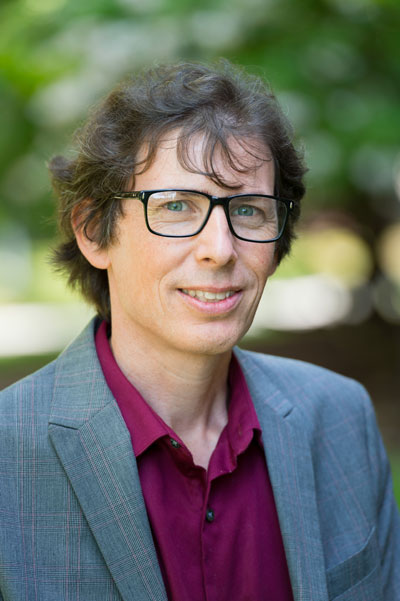
Steven Rogak is a Professor in the Department of Mechanical Engineering at the University of British Columbia's Faculty of Applied Science. He holds a P.Eng. license and degrees including a B.A.Sc. in Mechanical Engineering from UBC, and M.Sc. and Ph.D. from Caltech. P.Eng., University of British Columbia B.A.Sc., University of British Columbia M.Sc., Ph.D., California Institute of Technology His research focuses on aerosol science, particularly solid nanoparticles from combustion processes, their climate and health impacts, and mitigation strategies. Key areas include: Soot morphology and transport properties Engine emission reduction via fuel injectors Indoor air filtration systems Membrane-based energy exchangers Atmospheric particulate analysis The 15 most recent articles span experimental and theoretical studies on soot characterization, membrane technologies, and aerosol dynamics, with applications in climate modeling, healthcare ventilation, and sustainable materials. Collaborations include Westport Innovations and interdisciplinary teams. Rogak leads the Aerosol Laboratory at UBC, where he applies fluid mechanics and heat transfer fundamentals to address environmental and health challenges. He emphasizes experimental rigor and welcomes graduate students with expertise in these areas.
Dr. Euijin (Alley) Choo is an Assistant Professor in the Department of Computer Science at the University of Alberta, specializing in data-driven cybersecurity and big data analytics. Her research focuses on AI-based cybersecurity solutions, anomaly detection in network traffic, and adversarial attacks on federated learning systems. She holds a Ph.D. from North Carolina State University and has held roles at Qatar Computing Research Institute, Korea University, and the University of Missouri-Rolla. Education: Ph.D., Computer Science, North Carolina State University (2015) M.S., Computer Science & Engineering, Korea University (2008) B.S. Dual Degree in Computer Science & Mathematics, Korea University (2006) Research Interests: Security and big data analysis intersections Federated learning security and privacy Anomaly detection in network logs and enterprise systems Malware/phishing detection using graph inference AI-driven threat intelligence aggregation Recent Grants: Mitacs Accelerate Program Grant: Fraud Detection in Financial Graphs ($60,000, 2025) National CyberSecurity Consortium Grant: IntruderInsight ($2M, 2025-2027) NSERC Discovery Grant: Threat Detection Framework ($180,000, 2025-2031) Awards: Best Paper Award at DBSEC 2015 NSERC Early Career Researcher Award (2025) Provost Fellowship (NC State, 2009-2010) Labs/Teams: Leads the Data-driven Network and Cyber Security (DANS) Lab, focusing on federated learning defenses, compromised entity detection, and malicious domain analysis.
Professor Alexandra M. Schmidt is a leading academic in Biostatistics at McGill University, holding an endowed University Chair. She specializes in spatial and spatio-temporal modeling, particularly in epidemiology and environmental health. Previously, she served as a Full Professor at the Federal University of Rio de Janeiro (2012–2016). Her research focuses on Bayesian methodologies for analyzing complex processes, including disease spread, environmental hazards, and socio-economic disparities. She has authored influential books such as Spatio-Temporal Methods in Environmental Epidemiology with R (2023) and contributed to over 150 peer-reviewed articles. Key awards include the ISBA Fellowship (2024), ASA Fellowship (2020), and the Abdel El-Shaarawi Award (2008). Education: PhD in Statistics (2001, University of Sheffield, UK), MSc and BSc in Statistics (Federal University of Rio de Janeiro, Brazil). Research interests span Bayesian inference, spatial statistics, and environmental epidemiology. She has advised numerous PhD/MSc students and collaborated on projects linking statistical methods to public health challenges, such as modeling dengue outbreaks and air pollution impacts. Active in academic service, she has chaired major conferences (e.g., 2022 ISBA World Meeting) and serves on editorial boards of top journals like Bayesian Analysis and Canadian Journal of Statistics . Teaching includes advanced courses on generalized linear models, spatial epidemiology, and Bayesian analysis. Her work bridges theoretical statistics with practical applications, addressing global health issues through innovative spatio-temporal modeling techniques.
Maher Elshakankiri is an Assistant Professor, Teaching Stream at the University of Toronto's Faculty of Information. He holds a Ph.D. in Computer Engineering from Ain Shams University (Egypt), followed by a postdoctoral fellowship at the University of Regina. His research focuses on IoT, Wireless Sensor Networks (WSN), and pedagogical integration of technology and gaming. He has supervised over 100 student projects and authored a book on WSNs. Education: Ph.D. in Computer Engineering, Ain Shams University, Egypt M.Eng., B.Eng. in Engineering, Ain Shams University, Egypt Postdoctoral Fellowship, University of Regina, Canada Research Interests: IoT in healthcare, agriculture, and sports Active learning classrooms and technology in education Wireless communication protocols (V2V, UAV, RFID) Leadership & Grants: Director, Bachelor of Information (BI) Program (2024–present) Coordinator, Information Systems and Design (ISD) Concentration (2023) SSHRC Grant: 'Gaming in teaching towards a more inclusive class' (2022–2023) Professional Activities: Member, SCC IoT & Digital Twins Standards Committee Reviewer for journals including Wireless Networks , Telematics and Informatics , and Computational Intelligence Technical Program Committee member at multiple conferences Teaching: Courses include INF1340 (Programming for Data Science), INF1005/1006 (IoT Workshops), and INF452 (Information Design Coding).
Rong Zheng is a Professor in the Department of Computing and Software and a member of the School of Biomedical Engineering at McMaster University, Canada. She holds a Tier-1 Canada Research Chair in Mobile Computing and serves as Acting Chair of the Computing and Software department from July to December 2025. She is also an Associate Member of the Electrical & Computer Engineering department. Education: Ph.D. in Computer Science, University of Illinois, Urbana-Champaign, USA Master of Engineering (thesis) in Electrical Engineering, Tsinghua University, Beijing, China Bachelor of Engineering in Electrical Engineering, Tsinghua University, Beijing, China Dr. Zheng's research lies at the intersection of mobile computing, wireless networking, and machine learning, with a strong focus on applications for aging populations. She directs the NSERC Smart Mobility for the Aging Population CREATE program. Her work encompasses sensor development, wireless network design, and mobile data analytics to address real-world challenges in healthcare, mobility, and data center monitoring. She has developed innovative solutions like the MacQuest campus navigation app and has captured first prize in indoor localization competitions. Her recent publications demonstrate a clear trajectory toward applying wireless sensing technologies (particularly acoustic, Wi-Fi, and mmWave) to health monitoring and mobility assessment for older adults. There's a strong emphasis on developing efficient edge computing solutions that can process data in real-time on resource-constrained devices, as exemplified by her TeamNet framework for collaborative inference on the edge. Her work bridges theoretical advances with practical applications that have social impact. Scientific Awards: Tier-1 Canada Research Chair in Mobile Computing US National Science Foundation CAREER Award (2006) Joseph Ip Distinguished Engineering Fellow (2015-2018) Dr. Zheng leads the Wireless System Research Group (WiSeR) at McMaster University, which has secured significant funding including a $1.65M NSERC CREATE grant for smart mobility research for older adults. Her research has been supported by multiple funding agencies including NSERC, NSF, UH GEAR, and DURIP. She actively mentors graduate students and has developed specialized courses including CAS 772 (Mobile Data Analytics) and CAS 781 (Mobility in the Aging Population). The WiSeR group conducts impactful research on communication, networking, and data analytics issues in Cyber Physical Systems, with applications spanning healthcare, smart infrastructure, and data center monitoring. Their work on data center infrastructure monitoring networks has been featured in EurekAlert and Data Center Dynamics, and they've made significant contributions to indoor localization technology.
Lana Wells is an Associate Professor at the University of Calgary's Faculty of Social Work and holds the Brenda Strafford Chair in the Prevention of Domestic Violence. As Founder/Director of Shift: Primary Prevention Research Hub and Research Fellow at the School of Public Policy, she specializes in preventing gender-based violence through systems change, policy innovation, and community engagement. Key research areas: Gender equity, Indigenous sovereignty, AI ethics for social work, and male allyship in violence prevention Led over $11M in research funding and 22.5M+ in prevention initiatives 2023 Killam Professor Award recipient Recent publications focus on AI applications for violence prevention, gamification in male engagement, and rural/small-town violence reduction strategies. Her work spans interdisciplinary collaborations with public health agencies, Indigenous communities, and international organizations. Major projects: Alberta's Primary Prevention Playbook, Strong Women's Circle with Indigenous communities, ConnectED Parents virtual intervention Active in policy advisory roles for governments and NGOs Scientific awards include: 2023 Killam Annual Professor Award 2022 Queen Elizabeth II Platinum Jubilee Medal 2019 Alberta Inspiration Award 2015 & 2013 Carthy Foundation Leadership Awards 2012 School of Public Policy Fellowship As a graduate supervisor in Social Work and Public Policy, she develops prevention workforce capacity through Shifttolearn.com. Current initiatives include data-driven dashboards for real-time violence prevention and cultural transformation in male-dominated institutions.
Ning Nan is an Associate Professor at the University of British Columbia's Sauder School of Business, specifically within the Department of Accounting and Information Systems. With a BA from Peking University, an MA from the University of Minnesota, and a PhD from the University of Michigan, Dr. Nan focuses on digital business strategy, evolvable IT infrastructure, and complex adaptive systems. His research explores blockchain applications, agent-based modeling, and the intersection of AI with societal challenges like sustainability. Education: PhD in Information Systems, University of Michigan MA in Information Systems, University of Minnesota BA in Computer Science, Peking University Research Interests: Dr. Nan investigates how technology shapes organizational and societal systems, with a focus on AI ethics, sustainability through personalized recommendations, and blockchain's role in decentralized supply chains. He employs agent-based modeling to simulate complex phenomena like innovation diffusion and online community dynamics. Recent work addresses explainable AI in smart cities and carbon-reduction gamification strategies. Teaching: In 2024-2025, he teaches Data Management for Business Analytics , emphasizing practical applications of data-driven decision-making. Key Research Themes: His articles highlight trends in AI sustainability (e.g., carbon footprint impacts of recommendation systems), digital business strategy (blockchain governance, app update strategies), and foundational IS theory (hyperturbulence and IS strategy).
Bilal Farooq is an Associate Professor and Program Director for the Master of Engineering in Interdisciplinary Engineering (MEIE) at Toronto Metropolitan University, holding the Canada Research Chair in Disruptive Transportation Technologies and Services within the Department of Civil Engineering. His educational background includes a PhD from the University of Toronto (2011), MASc from Lahore University of Management Sciences (2004), and BSc from the University of Engineering and Technology (2001). Dr. Farooq's research pioneers disruptive transportation solutions through cyber-physical systems, AI/machine learning applications, behavioral modeling, and optimization techniques. His work specifically targets on-demand multimodal systems, sustainable urban transportation, urban air mobility, automated vehicles, and extended reality applications, addressing critical urban mobility challenges with human-centered approaches. Analysis of his recent publications reveals a strong trend toward quantum-enhanced computational methods, privacy-preserving federated learning frameworks, and sustainability-focused decarbonization strategies across transportation domains, with increasing emphasis on human factors and real-world implementation. Notable scientific awards include: Ontario Early Researcher Award (2018) Canada Research Chair (2017) MassMotion Academic Pedestrian Modelling Project of the Year (2016) Québec Early Researcher Award (2014) Dr. Farooq actively supervises graduate students and secures significant research funding through his Canada Research Chair position and Early Researcher Awards. He directs the Laboratory of Innovations in Transportation (LiTrans), which develops interdisciplinary solutions integrating mathematics, engineering, computer science, and economics to address emerging transportation challenges. LiTrans focuses on disruptive transportation technologies, complete streets design, cyber-physical systems, pedestrian dynamics, resilience, and climate change impacts, collaborating with industry and government partners to translate research into practical urban mobility innovations for smart cities worldwide.
Scott Hopkins is a Professor in the Department of Chemistry at the University of Waterloo, specializing in Physical Chemistry. His research integrates machine learning with experimental techniques to study ion mobility, mass spectrometry, and spectroscopic analysis. He directs the Hopkins Laboratory, focusing on computational predictions of chemical behaviors and molecular interactions. His work addresses fundamental questions in gas-phase chemistry, cluster formation, and analytical method development. Research interests span physical chemistry, computational modeling, and analytical instrumentation, with a strong emphasis on developing predictive tools for complex chemical systems. Recent investigations explore ion-solvent dynamics, fragmentation mechanisms, and machine-learning applications for spectral interpretation.
Dr. Wenjing Zhang is an Assistant Professor in the School of Computer Science at the University of Guelph, Canada. She holds a Ph.D. in Computer Science from the University of Guelph (2024) and was a visiting research scholar at the University of Arizona's Department of Electrical and Computer Engineering (2016–2018). Her research focuses on cybersecurity in AI/ML, including security threats to models, privacy-preserving techniques, and data privacy in generative AI. She leads projects on robust defenses against adversarial attacks, secure federated learning, and privacy-preserving prompt engineering for LLMs. Dr. Zhang’s research areas include: Security in AI/ML (e.g., poisoning, evasion, prompt injection attacks) Model Privacy (protection of internal parameters) Data Privacy (synthetic data generation, privacy-preserving prompt engineering) She has secured a five-year NSERC Discovery Grant (2025–2030) for her research on enhancing security, privacy, and fairness in generative AI. Her work has been published in top-tier venues such as NeurIPS, IEEE Transactions on Information Forensics and Security, and IEEE Transactions on Communications. She is a recipient of the 2022 Westin Scholar Award and serves on technical committees for IEEE conferences including CNS 2025 and ICC 2025. Her team collaborates on interdisciplinary projects involving federated learning, information theory, and reinforcement learning. She actively seeks partnerships in security, privacy, and generative AI applications.
Dr. Karim El-Basyouny is a Killam Laureate Professor and City of Edmonton Urban Traffic Safety Research Chair at the University of Alberta's Faculty of Engineering, where he serves as Associate Dean (Research Infrastructure and Innovation) in the Civil and Environmental Engineering Department. A licensed Professional Engineer in Alberta, he holds advanced degrees in Transportation Engineering from the University of British Columbia and has dedicated his career to advancing road safety through data-driven management frameworks. His academic credentials include: Doctor of Philosophy, Civil Engineering, University of British Columbia, 2011 Engineering Management Sub-specialization, Civil Engineering, University of British Columbia, 2010 Master of Applied Science, Civil Engineering, University of British Columbia, 2006 Bachelor's degree (ABET Equivalent), Civil & Environmental Engineering, United Arab Emirates University, 2003 El-Basyouny's research pioneers the integration of remote sensing, machine learning, and statistical modeling to enhance transportation safety. His work develops automated tools for infrastructure digitization, collision prediction, and speed management, treating safety as a systemic product requiring management frameworks. Key contributions include LiDAR-based road feature extraction, network-level safety evaluations, and frameworks for vision-zero outcomes that address both human-driven and autonomous vehicle contexts. His recent publications demonstrate a cohesive research trajectory centered on leveraging point cloud data and computational intelligence for safety management. Over 15 major publications since 2021 focus on automated infrastructure assessment (light pole detection, clear zone mapping, vertical clearance evaluation), weather-impact modeling, and enforcement resource optimization. This body of work bridges transportation engineering with computer vision and operations research to create scalable safety solutions. His scientific contributions have been recognized with prestigious honors including: 2024 Killam Annual Professorship Award 2024 Road Safety Achievement Award from TAC 2023 Donald Stanley Award for environmental engineering 2022 Faculty of Engineering Graduate Teaching Award 2021 Daniel B. Fambro Student Paper Award As an academic leader, El-Basyouny actively mentors graduate students and secures significant research funding through his endowed chair position. He currently recruits fully-funded PhD and postdoctoral candidates specializing in remote sensing applications, machine learning, and geomatics for road digitization projects. His research group collaborates with national safety committees and municipal agencies to translate findings into policy, while he serves on editorial boards for Transportation Research Record and Analytic Methods in Accident Research. The research group operates at the intersection of transportation engineering and computational science, developing automated frameworks that merge sensor technologies with data processing tools. Current projects focus on semantic segmentation of 3D point clouds, safety implications of infrastructure digitization, and machine learning applications for road feature extraction in both urban and rural environments.
Pourang Irani is a Professor and Principal’s Research Chair in Ubiquitous Analytics at the University of British Columbia (Okanagan campus), within the Irving K. Barber Faculty of Science’s Department of Computer Science, Mathematics, Physics and Statistics. Previously, he served at the University of Manitoba for 19 years as a faculty member and Acting Associate Dean of Science. His research focuses on Human-Computer Interaction (HCI), Wearable Computing, and Information Visualization, with an emphasis on designing interactive systems for 'anytime, anywhere' sensemaking using emerging technologies like mixed reality and smart devices. He leads interdisciplinary projects such as the NSERC CREATE grant on Visual and Automated Disease Analytics, training data scientists in health analytics. Education: PhD in Computer Science (University of New Brunswick, 2002), supervised by Dr. Colin Ware. Research Interests: Wearable interfaces (smartwatches, smartrings, and AR/VR) Data visualization for health and pervasive systems Persuasive health technologies and data storytelling Mid-air and hands-free interaction techniques Embodied interaction through social robots Recent Work Trends: Articles emphasize innovations in smartwatch interaction (e.g., bezel-to-bezel gestures), tactile visualizations via skin-dragging, and voice assistant-driven health data queries. Projects like Databiting explore transient personal data exploration, while Data Videos focus on narrative-driven health communication. Grants & Leadership: Principal Investigator of NSERC CREATE Visual and Automated Disease Analytics program. Co-leads UBCO’s Digital Transparency cluster. Active in interdisciplinary teams addressing health informatics and HCI challenges. Labs & Teams: Leads a lab developing prototypes in wearable computing, spatial analytics, and immersive technologies. Collaborates with researchers in medicine, engineering, and data science to translate HCI innovations into practical solutions.