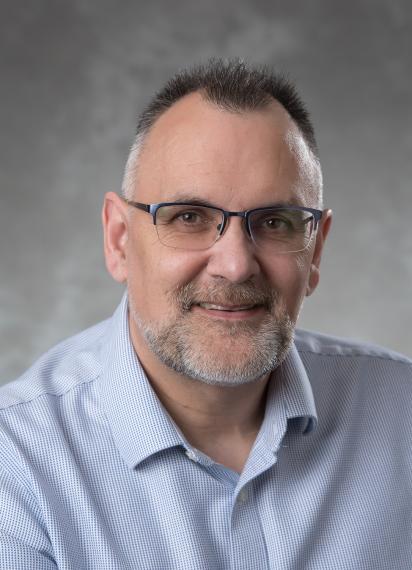
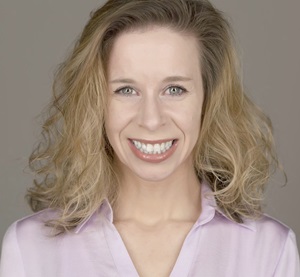
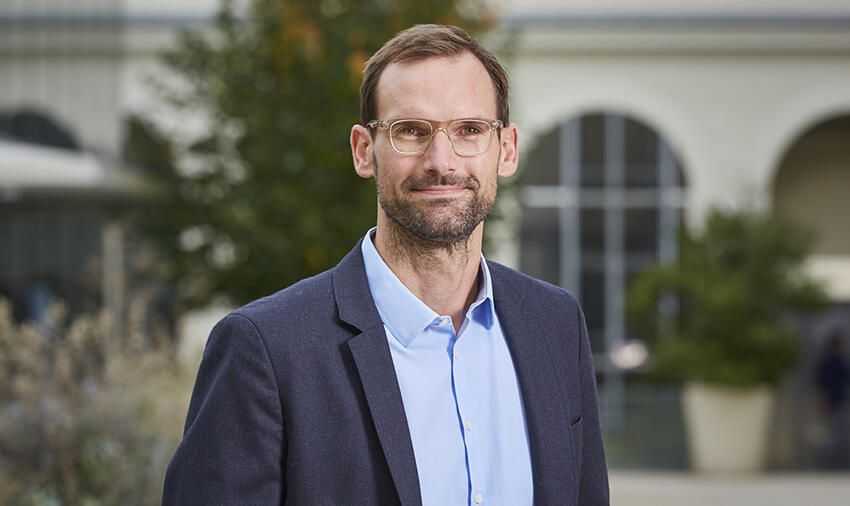
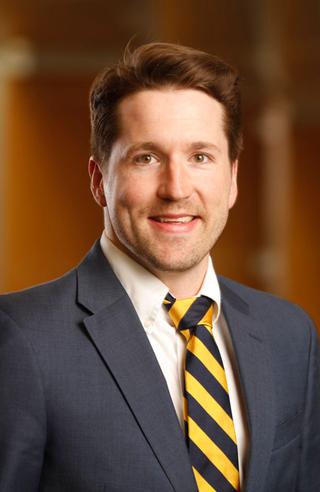
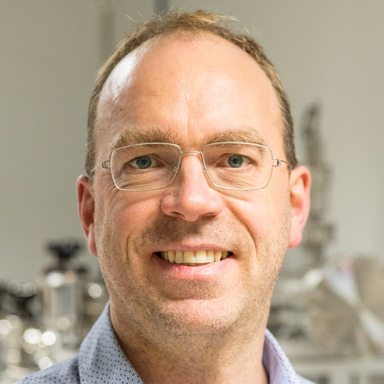
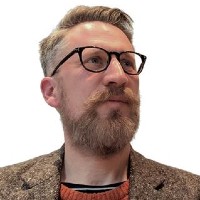
Gary Grewal is an Associate Professor at the School of Computer Science , University of Guelph. His research focuses on developing intelligent Computer-Aided Design (CAD) tools for Field Programmable Gate Arrays (FPGAs) , integrating classical optimization techniques with machine learning and deep learning to address challenges in placement and routing for heterogeneous devices. He has received the Michal Servit Award (2017, 2018) for outstanding FPGA research and the University of Guelph Faculty Association Distinguished Professor Award for Excellence in Teaching (2017) . Grewal has held NSERC Discovery Grants annually from 1999 to 2023. Co-founder of the Guelph FPGA CAD Group Key collaborator with institutions like Ryerson University , University of Toronto , and University of British Columbia His work extends to health technology through the IronTracker mobile app , developed with Andrew Hamilton-Wright and students (A. D'Angelo, J. Carter, F. Liu, R. Pattison) to manage Hereditary Hemochromatosis (HHC) . The app, available in four languages and adopted in 100+ countries, was recognized at Parliament Hill and the Ontario Legislature. Scientific Awards : Michal Servit Award (2018) Michal Servit Award (2017) Distinguished Professor Award for Teaching (2017) NSERC Discovery Grants (1999-2023) His recent publications highlight trends in machine learning for FPGA CAD , including reinforcement learning for partitioning, deep learning for congestion estimation, and adaptive algorithms for placement. Grewal remains active in teaching courses like Discrete Optimization (CIS*6070) and Digital Systems I (CIS*3120).
Kara Sutton is a Senior Lecturer at Southern Methodist University, specializing in research and consulting at the intersection of public policy, community development, and human services planning. Her work focuses on socially impactful innovations for underserved populations through collaborations with governments and nonprofits. Doctorate: Ph.D., University of Texas at Dallas Her research spans healthcare access, education, criminal justice reform, and economic security, with recent projects including early childhood education initiatives, mental health services, and workforce opportunities for individuals with disabilities. She employs evaluation research and spatial analysis to address disparities in marginalized communities. Her publications cover diverse topics such as women’s health, disability rights, LGBTQ needs assessment, and mobile technology’s role in employment equity. Awards include multiple HOPE Award nominations (2020-2022), SMU’s Extra Mile Award (2021), and recognition at the University of Texas at Dallas for teaching excellence.
Bastian Betthäuser is an Assistant Professor at Sciences Po, Paris, affiliated with the Centre for Research on Social Inequalities (CRIS) and the Laboratory for Interdisciplinary Evaluation of Public Policies (LIEPP). He is also an Associate Member at Nuffield College, University of Oxford, and the Department of Social Policy and Intervention. His research focuses on social inequality, intergenerational mobility, educational policy, and life course dynamics . He investigates how socio-economic background influences early development, education, labor market outcomes, and life chances, and how policies can mitigate structural disadvantages. His work combines quantitative methods with comparative and longitudinal analyses across Europe. The recent publications show a strong trend in analyzing educational disruptions (e.g., during the pandemic) , parental employment instability , and regional and historical variations in educational opportunity . His research often leverages large-scale datasets and meta-analytic techniques to assess policy impacts and inequality mechanisms. Scientific Awards: ERC Starting Grant 2024 for the LEARN project on health crises and education He has taught courses on Educational Inequality & Education Policy and Social Inequality across the Life Course at both bachelor’s and master’s levels at Sciences Po. His research is supported by competitive grants and involves collaborations with leading scholars in sociology and public policy. He actively contributes to public discourse through media appearances and academic seminars. He is affiliated with key research units including CRIS and LIEPP, which focus on interdisciplinary evaluation of public policies and social inequalities. These labs support his work on policy-relevant sociological research using advanced empirical methods.
Professor Kevin Burden is an international expert in the application and impact of digital technologies in learning at the University of Hull's Education Studies school. His work focuses on mobile technologies' transformational use in formal and informal educational spaces, including schools, universities, and museums. Visiting Scholar at the University of Hong Kong Distinguished Visiting Professor at the University of Technology, Sydney His research interests span mobile learning , educational technology , and digital pedagogy , including the ethics of AI in K-12 education and the development of next-generation digital eBooks. Recent publications analyze 360-degree video in education, the ethics of AI, and mobile learning frameworks like the iPAC model. Supervision activities include PhD students on topics such as Interactive Whiteboards in Brunei , Web 2.0 in Educational Supervision , and Analytics for Student Retention . Collaborative projects involve international partners like the EU, British Council, and UNESCO.
Tae J. Kwon is an Associate Professor in the Department of Civil and Environmental Engineering at the University of Alberta . His research spans Winter Transportation Engineering , Intelligent Transportation Systems (ITS) , Traffic Optimization , and Geospatial Information Science . Developed LoRWIS , a web-based decision support system for road weather sensor optimization Recipient of multiple awards including ITS Canada Excellence in Research and Development Award (2024) , KOFST Scientist of the Year (2024) , and Early Career Research Award (University of Alberta, 3 times) Active in professional committees like the TRB Surface Transportation Weather Research Group (2016–present) Research Highlights : Winter Road Maintenance : Advanced geostatistical and deep learning techniques for road condition monitoring Location Optimization : Pioneered models for RWIS sensor placement using hybrid geostatistical methods Intelligent Transportation Systems : Focused on big data applications for traffic safety and connected vehicles Climate Resilience : Integrated ecological vulnerability into fire hazard modeling Scientific Awards : ITS Canada Excellence in Research (2024) KOFST Scientist of the Year (2024) Donald Stanley Best Paper Award (2023) AKCSE Early Achievement Award (2021) University of Alberta Early Career Research Award (2020) Great Supervisor Award (2019) Teaching & Leadership : Teaches courses like CIV E 419 (Transportation Engineering: Highway Planning and Design) and CIV E 612 (Transportation Planning: Methodology and Techniques) Leads the Geospatial Transportation System & Sensing Solutions Lab (GeoTrans) , mentoring PhD students Juan Cuellar and Jiehao Bi Collaborates with agencies including Alberta Transportation , NSERC , and Iowa DOT
Ayden Mccarthy is a Lecturer at the Department of Health Sciences within Macquarie University's Faculty of Medicine, Health and Human Sciences. His research focuses on biomechanics, military science, and wearable technology integration for physical performance assessment. Ph.D. in Health Sciences Specializes in predictive modeling and biomechanical validation Active in military ergonomics and wearable sensor research His work applies machine learning to military manual handling and load carriage biomechanics , with recent studies examining 3D body scanning accuracy and joint angle measurement systems under armor conditions. Publications emphasize physical fitness assessment and gender-specific performance metrics in tactical mobility tasks. Article trends show specialization in military ergonomics , biomechanical modeling , and wearable technology validation , with interdisciplinary connections to computer science and health informatics . Collaborations span Medicine , Sports Science , and Engineering domains. Scientific Awards: Best Student Presentation, ABC Sydney (2023) Correspondence available via ayden.mccarthy@mq.edu.au or ayden.mccarthy@hdr.mq.edu.au .
Tyler Schmidt, D.O., is an Assistant Professor in the Department of Neurosurgery at the University of Rochester Medical Center. He serves as Surgical Director of the Metastatic Brain and Spinal Tumor Program within the Wilmot Cancer Institute and is actively involved in the Translational Brain Mapping Program, integrating neuroscience research to optimize neurological outcomes in brain tumor surgery. Clinical Focus: Neurosurgical oncology, brain/spinal tumor surgery, metastasis management, and degenerative spine conditions. Technical Expertise: Minimally invasive techniques, stereotactic neuro-navigation, brain mapping, and tumor fluorescence-guided resection. Research Emphasis: Patient-centered value-based care for spinal disorders and surgical complication risk modeling. His publications span glioma surgery, spinal reconstruction, pediatric neurosurgical emergencies, and mobile stroke units, reflecting interdisciplinary collaborations. Recent works (2017-2020) highlight outcomes research in spinal surgery, thromboembolic complications in meningioma resection, and innovative approaches to neonatal neurovascular malformations. Dr. Schmidt completed his neurosurgical residency (2014-2020) and fellowship (2017-2018) at Rochester, with prior internship (2013-2014) at the same institution. He holds certification from the American Board of Neurological Surgery and contributes to national neurosurgical organizations.
Robin Ras is a Professor and Head of Department at the Department of Applied Physics at Aalto University, where he leads the Soft Matter and Wetting research group. His work focuses on surface science, particularly superhydrophobic and superoleophobic materials, with applications spanning renewable energy, biomedical engineering, and agricultural science. Ras earned his Master's degree in Engineering and Technology from Catholic University of Leuven in 1999, followed by a Doctoral degree from the same institution in 2003. His academic journey has positioned him as a leading researcher in wetting phenomena and nanoscale surface engineering. His research interests center on understanding and manipulating liquid-solid interactions at micro and nanoscales. Ras's work explores how surface topography and chemistry affect wetting behavior, with particular focus on superhydrophobic surfaces, droplet dynamics, and liquid-repellent materials. His group develops innovative approaches for creating surfaces with controlled wettability for applications ranging from self-cleaning materials to advanced biomedical devices. The research trends evident in Ras's recent publications show a strong focus on precision control of liquid-solid interfaces, with increasing attention to underwater applications, molecular-scale surface engineering, and biomimetic approaches. His work bridges fundamental surface science with practical applications in energy, healthcare, and sustainability. Among his notable scientific achievements: Anton Paar Research Award for Instrumental Analytics & Characterization (2018) for Scanning Droplet Adhesion Microscopy invention Academy of Finland Research Fellow (2011-2016) ERC Consolidator Grant (2017) Ras has secured significant research funding including the ERC Consolidator Grant for the SuperRepel project (2017-2022) focused on superslippery liquid-repellent surfaces, and the Academy of Finland project 'Electric Field; an Active Method to Control Phase Change' (2019-2022). His research group actively collaborates with international institutions and industry partners to translate fundamental discoveries into practical applications. The Soft Matter and Wetting research group under Ras's leadership combines experimental and theoretical approaches to investigate surface phenomena. The team utilizes advanced imaging techniques, precision surface fabrication methods, and computational modeling to understand and engineer surfaces with tailored wetting properties. Their work has applications across multiple sectors including renewable energy, biomedical devices, and sustainable agriculture.
Jan Bergström is Assistant Professor of Clinical Psychology at Stockholm University's Department of Psychology, where he serves as Director of Studies for the Postgraduate Psychotherapist Program and Head of the Stockholm University Psychology Clinic. His research focuses on self-help based CBT and digital psychological interventions, with particular emphasis on clinical behavior analysis, psychotherapy supervision, Behavioral Activation for depression, exposure-based interventions for anxiety/OCD, and Functional Analytic Psychotherapy (FAP). He also investigates metatheoretical aspects of psychotherapy and mental health treatment mechanisms. Research group: Clinical psychology, neuroscience and health Key clinical interests: Mental health problems in neurodiverse populations (autism, ADHD) His publications demonstrate extensive work on internet-delivered therapies for panic disorder, OCD, and depression, including comparisons of blended vs full treatment modalities. He has developed non-heteronormative psychometric instruments like the revised Social Interaction Anxiety Scale (SIAS). Current projects include ZeroOCD smartphone app development for OCD treatment and iMERAT emotion recognition training for adolescents. The academic literature shows his focus on treatment efficacy, therapist time optimization (47% reduction in blended models), and functional analytic approaches to mental health classification. His cross-disciplinary work combines psychological theory with technology-mediated solutions, bridging clinical practice, neuroscience, and digital health innovations.
Dr. Alison McCarthy is an Associate Professor in Irrigation and Cropping Systems at the Centre for Agricultural Engineering , University of Southern Queensland . With a background in mechatronic engineering, she specializes in developing automated irrigation systems and machine vision technologies for cotton and dairy pasture management. Education: BEng (2006) and PhD (2010) from University of Southern Queensland Research Interests: Irrigation control systems Machine vision for soil and plant sensing Automation in agriculture Recent Publications highlight her work in nitrogen management, autonomous irrigation frameworks, and pest detection systems. These contributions align with her expertise in AI-driven agricultural solutions and sensor integration. Scientific Awards: 2024 Australian Future Cotton Leader 2021 WatSave Young Professionals Award 2018 Cotton Seed Distributors Researcher of the Year 2015 Queensland Young Tall Poppy Science Award 2014 Science and Innovation Award for Young Professionals Research Affiliations: Centre for Agricultural Engineering (CAE) Association of Australian Cotton Scientists (Full Member)
Ridha Khedri is a Professor in the Department of Computing and Software at McMaster University . His research spans formal methods in software engineering, cybersecurity, information security ontology, network segmentation, and covert channels analysis. Full Professor since 2000 Contact: khedri@mcmaster.ca Research Interests : Prof. Khedri develops algebraic frameworks for software security, with recent work on network segmentation , ontology engineering , and covert channel detection . His interdisciplinary efforts include hybrid machine learning-ontology models for environmental predictions (e.g., river ice breakup) and digital twin healthcare systems . Article Trends : His 15 most recent works (2016-2025) focus on network security , knowledge representation , and formal verification . Notable trends include automated security testing , ontology modularization , and multi-context reasoning systems . Teaching : He has taught courses like Software Design (CAS 703), Discrete Mathematics (SFWRENG 2DM3), and Algebraic Methods in Software Engineering (CAS 738) since 2017.
Edith C. H. Ngai is an Associate Professor in the Department of Information Technology at Uppsala University, Sweden. She leads the Smart City Arena initiative and serves as project leader for the national GreenIoT project on energy-efficient IoT for sustainable city development funded by Vinnova. Her academic career spans multiple prestigious institutions including Chinese University of Hong Kong, Imperial College London, Simon Fraser University, UCLA, and Tsinghua University. Dr. Ngai's research focuses on Internet-of-Things, mobile crowdsensing, network security and privacy, cloud computing, and data analytics, with particular applications in smart cities and healthcare. Her work bridges theoretical foundations with practical implementations for sustainable development. She has pioneered research in energy-efficient IoT systems, data privacy in participatory sensing, and mobile health monitoring applications. Her recent publications demonstrate strong trends in IoT for smart cities, privacy-preserving techniques in social sensing, and energy-efficient data collection systems. The research spans both theoretical contributions and practical implementations, with applications ranging from urban environmental monitoring to healthcare solutions. Her work consistently addresses the tension between functionality and privacy in connected systems. Professional recognition includes: ACM Senior Member (2016) IEEE Senior Member (2015) ACM/IEEE IPSN Best Paper Runner-Up (2013) IEEE IWQoS Best Paper Runner-Up (2010) VINNMER Fellow from Swedish government agency (2009) Dr. Ngai actively mentors PhD and Master's students, with numerous graduates working at leading technology companies including Google. She serves as Associate Editor for IEEE Access, IEEE Transactions on Industrial Informatics, and IEEE Internet-of-Things Journal. Her current research projects include EU SimpliCITY, EU CRUNCH, and the GreenIoT platform for sustainable development, with funding from European Commission, Swedish Research Council, and Vinnova. She leads the Uppsala Urban Computing Lab, which focuses on IoT and mobile crowdsensing for smart cities, network security and data privacy, and smart sensing for healthcare applications. The lab develops integrated decision support tools for smart cities and citizen engagement platforms.
Professor Joseph Wood is a Professor of Visual Analytics at City St George's, University of London, where he serves as a founding member of the giCentre. His academic career spans over three decades, with continuous contributions to Geographic Information Science and visualization since 1990. He previously served as Head of Department for Computer Science at City University between 2014 and 2017. Professor Wood's educational background includes a PhD in Geographical Information Science from the University of Leicester (1996), an MSc in the same field from the University of Leicester (1990), and a BSc in Physical Geography & Geology from the University of Sheffield (1989). His academic progression shows steady advancement from Research Scholar at the University of Leicester (1990-1992) through various lecturer and senior positions to his current professorship. His research interests center on visual analytics and data visualization, with particular expertise in geographic information science and terrain analysis. Professor Wood has developed innovative methods bridging GI Science, Data Visualization, and education domains. His specific interests include narrative of visual analytic design, computational thinking in pedagogy, and novel visualization design for geographic data. His work demonstrates a consistent focus on making complex spatial data understandable through innovative visualization techniques. Analysis of Professor Wood's recent publications reveals a strong emphasis on practical applications of visualization techniques across diverse domains including transportation, epidemiology, sports analytics, and historical migration patterns. His work shows an evolution from foundational geographic information science toward broader applications in visual analytics, with increasing focus on narrative structures, responsive design, and accessibility considerations in visualization. The interdisciplinary nature of his research is evident in collaborations spanning computer science, geography, urban planning, and public health domains. Professor Wood has been actively involved in the academic community, serving on organizing and program committees for major international conferences including IEEE Infovis and VAST, Eurovis, GIScience, Spatial Accuracy, and Geomorphometry. His contributions to the field have been recognized through invitations to deliver keynote talks at prestigious venues ranging from GeoComputation to TEDx, where he presented on topics such as visualizing movement behavior of cyclists. As an advisor, Professor Wood has supervised numerous PhD and Master's students, with current supervision of Julia Crossley (Student conceptualisation of abstraction in computer science) and Jude Nzemeke (Understanding student misconception in recursive algorithmic thinking). His extensive supervision history includes completed PhDs on topics ranging from cycling behavior to spatio-social relations in photographic archives. His academic leadership extends to software development, with contributions to tools like litvis, elm-vega/el-vegalite, giCentre Utils, handy, and LandSerf GIS. Professor Wood is an active member of professional organizations including IEEE (2007-present), Association of Computing Machinery (ACM) (2007-present), and Association of Geographic Information (AGI) (1997-present), demonstrating his commitment to interdisciplinary collaboration across computer science and geographic information domains.
Md. Zoheb Hassan serves as an Assistant Professor in the Department of Electrical Engineering and Computer Engineering at Laval University, where he leads cutting-edge research in wireless communications and spectrum management. His academic role includes graduate recruitment and active participation in the university's research ecosystem, particularly through the Establishment of the Next Generation of Professors program funded by FRQNT. Dr. Hassan's research centers on spectrum sharing and management, wireless communication systems, and communications network control systems. He pioneers the integration of digital twin technology and machine learning to solve critical challenges in next-generation networks, including interference management in 5G/6G aerial corridors, Internet of Vehicles, and satellite-terrestrial integration. His work emphasizes practical implementations such as proof-of-concept demonstrations for tactical networks and proactive resource allocation in dynamic environments. Analysis of his 2024-2025 publications reveals a dominant trend toward AI-driven wireless resource optimization, with 12 of 15 recent papers featuring digital twins for interference management, spectrum sharing, and energy efficiency. Key thematic clusters include vehicular communications (4 papers), underwater IoT networks (2 papers), and hardware-impairment resilient designs (3 papers), demonstrating his focus on bridging theoretical advances with real-world deployment challenges across diverse network topologies. Dr. Hassan has secured significant competitive funding for his research initiatives: Digital Twin-Enhanced Interference Management for Next-Generation Radio Access Networks in the FR3 Band (FRQNT, 2025-2027) Center for Radio Frequency and Communications Systems, Technologies and Applications (FRQNT, 2024-2030) Context-Aware Spectrum Sharing and Management for Next Generation Wireless Networks (NSERC, 2024-2029) Development of innovative technologies for modeling predictive systems in urban mobility (MITACS, 2022-2026) Springboard to Discovery supplement for Context-Aware Spectrum Sharing (NSERC, 2024-2025) He actively mentors doctoral candidates, currently supervising Mahima Karim (PhD in Electrical Engineering, expected 2025) and Mohammadamin Parhizgar (PhD in Electrical Engineering, expected 2024). His supervisory approach combines theoretical rigor with practical problem-solving, focusing on spectrum management algorithms and digital twin implementations for next-generation networks. While specific laboratory affiliations aren't detailed in the source material, his projects indicate strong alignment with Laval University's wireless research infrastructure and the Center for Radio Frequency and Communications Systems.
Akhtar Hussain serves as an Assistant Professor in the Department of Electrical and Computer Engineering at Laval University, Quebec. His research centers on AI-driven optimization of power and energy systems, with emphasis on microgrid resilience, distributed energy resource integration, and electric vehicle-grid interactions. He actively contributes to advancing grid reliability through innovative resource allocation and consumer satisfaction frameworks. Ph.D. in Electrical Engineering, Incheon National University, South Korea (2019) M.Sc. in Electrical Engineering, Myongji University, South Korea (2014) B.Sc. in Electrical Engineering, National University of Sciences and Technology, Pakistan (2011) Dr. Hussain's research spans power systems resilience, smart grid technologies, and equitable energy access. His work integrates artificial intelligence with traditional power engineering to address challenges in microgrid operation, electric vehicle integration, and renewable energy management. Key focus areas include developing algorithms for optimal resource utilization, enhancing grid stability during contingencies, and designing frameworks for fair energy distribution in diverse communities. His recent publications (2023-2025) reveal a strong trajectory toward AI-enhanced grid management, with recurring themes of resilience optimization, equity-focused resource allocation, and electric vehicle-grid synergies. The research demonstrates increasing sophistication in handling uncertainty through machine learning while addressing socio-technical dimensions of energy transition. Dr. Hussain currently supervises one Master's student and has guided five Ph.D. candidates to completion. His research is funded by a Natural Sciences and Engineering Research Council of Canada (NSERC) Discovery Grant ($160,000/year) for the project 'Grid Condition and Resilience-Aware Incentivization and Deployment of Distributed Energy Resources' (2024-2029), supplemented by a Springboard to Discovery award ($40,000) for 2024-2025. As an IEEE member, he collaborates with industry partners on real-world grid modernization initiatives, focusing on practical implementation of resilience strategies through microgrids and mobile energy resources.