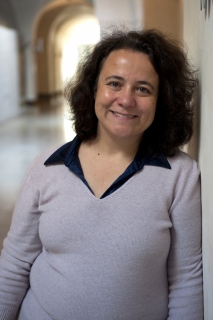
Assoc. Prof. Dr. Dilek Yıldız Özkan is an Associate Professor at Istanbul Technical University , Faculty of Architecture, Department of Architecture. Her interdisciplinary work bridges Architecture, Neuroscience, and Environmental Psychology , with a focus on human experience in urban spaces. PhD in Architectural Design, Istanbul Technical University Licence in Architecture, Istanbul Technical University (1992) Her research explores how spatial configurations influence social interaction (e.g., cul-de-sacs), emotional responses (via VR studies), and pedestrian behavior in waterfront and commercial areas. Recent articles highlight neuroscience-based methodologies and machine learning applications for evaluating urban safety and ambiance. Awarded the 2024 YÖK Outstanding Achievement Award and 2024 Academic Performance Award , her work also includes the 2022 TUBITAK and BAP grants for projects analyzing visual attention in museums , safe street design , and psychophysiological data in historical spaces . She contributes to Archnet-IJAR and Frontiers of Architectural Research as an expert.
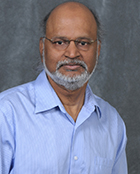
I.V. Ramakrishnan is a Professor in the Department of Computer Science at Stony Brook University. His research spans Artificial Intelligence, Computational Logic, Machine Learning, Information Retrieval, and Computer Accessibility. Ph.D. in Computer Science, University of Texas at Austin (1983) His work focuses on advancing AI and machine learning to solve accessibility challenges for visually impaired users, healthcare informatics, and robotic manipulation. Key contributions include leveraging large language models for multimodal text correction, developing gesture recognition systems for blind users, and applying reinforcement learning to medical data analysis. Recent publications highlight the integration of LLMs in accessibility tools, AI-driven healthcare solutions (e.g., mortality risk prediction, physician attribution), and robotics innovations (e.g., manipulation planning, vertical farming automation). Faculty Service Award (2014) He teaches courses CSE 352 (Artificial Intelligence) and CSE 537 (AI). His research bridges theoretical and applied domains, emphasizing inclusive technology and clinical decision support systems.
Nitin Agarwal is the Jerry L. Maulden-Entergy Chair & Donaghey Distinguished Professor of Information Science at the University of Arkansas – Little Rock (UALR), where he has been a faculty member since Fall 2009. He serves as the Founding Director of the Collaboratorium for Social Media and Online Behavioral Studies (COSMOS) and holds a Faculty Fellowship at the International Computer Science Institute, University of California, Berkeley. His work spans social computing, behavior-cultural modeling, collective action, and social cyber forensics. Education: Ph.D. in Computer Science, Arizona State University (2009) Bachelor of Technology in Information Technology, Indian Institute of Information Technology (2003) Dr. Agarwal’s research focuses on understanding digital/cyber social behaviors, particularly coordinated disinformation campaigns. He has secured over $25 million in federal grants from agencies like DoD, DARPA, and NSF. His tools (Blogtracker, VTracker) are used by NATO, DHS, and WHO. Recent work includes modeling toxicity propagation, analyzing algorithmic biases, and combating misinformation via AI-driven frameworks. His publications cover social cyber forensics, AI, and computational epidemiology, with 11 books and over 300 peer-reviewed articles. His 2025 articles emphasize YouTube’s recommendation algorithms, Instagram’s visual media impact, and TikTok’s role in political mobilization. Themes include anomaly detection, semiotic analysis, and toxicity mitigation using epidemiological models. Scientific Awards: University-wide Faculty Excellence Awards (2015, 2021) Social Media Educator of the Year (2015) NATO Innovation Hub Top 10 Solution (2021) WHO Recognition for COVID-19 Misinformation Tracker (2022) IEEE Senior Member (2022) Dr. Agarwal advises Little Rock-based FinTech firms and collaborates with global governments and defense agencies. His COSMOS lab leads projects on cognitive warfare, disinformation, and social network simulations, supported by extensive media coverage in Bloomberg, US News, and local outlets.
Chiara Petrioli is Full Professor at Sapienza University of Rome's Department of Computer, Control and Management Engineering and Deputy Rector for scouting, fundraising, and business incubation. She founded the spinoff WSENSE S.r.l. and coordinated the university's Computer Science Ph.D. program. Her research pioneers the Internet of Underwater Things, leading to breakthrough technologies featured in international media and the NT100 list. Her research interests center on wireless, embedded, IoT, and cyber-physical systems, with a focus on underwater networking. She designs and optimizes communication protocols, security mechanisms, and energy-efficient architectures for underwater sensor networks, enabling applications in environmental monitoring, archaeology, and deep-sea exploration. Recent publications highlight trends in underwater acoustic communications (e.g., dual-channel protocols, S2C modulation), security (authentication, key exchange), and energy efficiency (wake-up radio, UAV-assisted data collection). Applications span dissolved oxygen monitoring, submerged heritage preservation, and sustainable deep-sea mining impact assessment. Her scientific awards include: IEEE Fellow 2021 Fulbright Scholar Inspiring Fifty 2018 N2Women 2019 Star in Computer Networking and Communications Gamma Donna Women Startup Award 2022 Top 2% World Scientist by Stanford Repubblica D 100 Women to Change the World 2021 As principal investigator, she has led over twenty national and international projects, including EC projects GENESI and SUNRISE, and EASME projects ArcheoSub and Seastar. She founded WSENSE S.r.l., a spinoff that translates research into innovative technologies, resulting in international patents and features in BBC, RAI, Wired, and National Geographic. She actively contributes to the academic community as chair of IEEE SECON steering committee, associate editor of ACM/IEEE Transactions on Networking, and through leadership roles in ACM SIGMOBILE and IEEE Transactions on Mobile Computing.
Rosa Maria Castro Fernandes Vasconcelos is an Associate Professor at the University of Minho's School of Engineering, specializing in Textile Engineering. With a Ph.D. in Textile Technology and Chemistry Engineering (1993), she has held continuous academic positions since 1984, progressing from Assistant to Associate Professor. She currently serves as the University Ombudsman for Students (since 2019) and has held leadership roles including Scientific Council member (2016-2018) and Pedagogical Council member (2013-2018). Her research spans textile engineering (yarn/fabric quality analysis, data mining for cotton properties) and engineering education (gender equality, academic success, dropout prevention). She has led significant projects including FRICTORQ (fabric friction analysis), EU-funded EDUSPIN, and gender equality initiatives. Her work integrates technical textile research with pedagogical innovation, particularly in project-based learning and Bologna Process adaptation. Analysis of her 15 most recent publications reveals strong focus on engineering education transformation, with 60% addressing gender dynamics and pedagogical strategies, while 40% cover textile technology innovations. Key trends include data-driven approaches to material science and systemic interventions for inclusive engineering education. She has supervised over 10 doctoral and master's students in textile engineering and fashion design, with recent theses covering sustainable marketing, low-linear-mass yarn development, and fashion blog analytics. Her advisory work extends to institutional projects like the University of Minho's Student Dropout Diagnostic (2010-2012). Vasconcelos leads research within the Textile Science and Technology Center, collaborating with international teams on projects spanning Portugal, Brazil, and Lusophone Africa. Her current work emphasizes transnational higher education models and sustainable textile innovations.
Satoru Hayamizu is a Professor at Waseda University 's Green Computing Systems Research Organization , with a career spanning over four decades. His research focuses on Audio-Visual Speech Recognition , Machine Learning , and Medical Informatics , as evidenced by 126 publications and an h-index of 18. Education: The University of Tokyo (PhD in Mechanical Engineering) Prior affiliations: Gifu University (2002-), National Institute of Advanced Industrial Science and Technology (1981-2001) Research Interests include: Audio-visual speech recognition with sparse representation and DNN techniques Development of low-cost CNN-based road condition detection systems Swallowing function evaluation using acoustic and image processing Human behavior analysis for service operation estimation Research Trends reveal consistent work in multimodal signal processing (2006-2024), deep learning applications (2012-2024), and medical diagnostic systems (2006-2017). His publications show integration of sparsity modeling (2012-2021), industrial equipment diagnostics (2018-2021), and social impact technologies (2013-2024). Research Projects funded by Japan Society for the Promotion of Science include: Swallowing timing estimation (2018-2021) Multimodal silent speech recognition (2016-2020) ICT-based piano learning systems (2013-2016) Keyword display mechanisms (2010-2012) Labs & Collaborations include partnerships with Satoshi Tamura (co-author on 12+ papers), Hidekazu Fukai , and Chiyomi Miyajima . His work bridges academic research and industrial applications , particularly in manufacturing AI (2024 book) and Timor-Leste infrastructure monitoring.
David Roueche serves as the Gottlieb Associate Professor of Structural Engineering within the Department of Civil and Environmental Engineering at Auburn University's Samuel Ginn College of Engineering. His research focuses on structural performance under extreme wind events, forensic engineering methodologies, and improving building resilience against hurricanes and tornadoes through interdisciplinary approaches. Dr. Roueche's academic foundation includes advanced degrees from the University of Florida, with complementary physics training: Ph.D. in Structural Engineering, University of Florida M.S. in Civil Engineering, University of Florida B.S. in Civil Engineering, University of Florida B.S. in Engineering Physics, Jacksonville University His primary research explores extreme wind loads on low-rise buildings , post-disaster field investigations , and performance-based wind engineering , with specialized expertise in light wood-frame structures and surge/flood modeling. He integrates engineering analysis with social science through survivor interviews to reconstruct tornado events and identify vulnerabilities in residential construction, particularly for mobile and manufactured housing in the Southeastern United States. Analysis of his recent publications reveals a dominant focus on post-disaster assessment frameworks, field data collection protocols, and performance-based evaluation methods for wind-affected structures. His work increasingly emphasizes interdisciplinary collaboration—combining engineering, social science, and geospatial technologies—to develop comprehensive disaster response systems and improve building codes. Key trends include standardization of forensic engineering practices through organizations like StEER and application of computational modeling to predict structural failures. Dr. Roueche's significant recognitions include: Ginn Faculty Achievement Fellow designation NSF CAREER Award (2020) for advancing post-windstorm assessment methodologies He directs substantial research funding including a $500,000 USDA grant for timber-steel composite research and leads the Auburn Mass Timber Collaborative—an interdisciplinary initiative uniting forestry, architecture, and engineering faculty. Through the Structural Engineering Emergency Response (StEER) network, he coordinates Field Assessment Structural Teams for disasters like Hurricane Ian and the 2022 Arabi tornado, developing standardized protocols adopted nationally for post-disaster evaluations. His mentoring extends to doctoral students in civil engineering, with recent success in securing competitive fellowships for advisees. As a core member of StEER, Dr. Roueche develops and implements field assessment protocols used in rapid disaster response. He leads FAST teams deploying UAVs, LiDAR, and ground surveys to document structural performance after hurricanes and tornadoes, with datasets informing FEMA guidelines and building code revisions. His work with the Auburn Mass Timber Collaborative advances sustainable construction methods through experimental testing of innovative structural systems.
Daniele Toninelli is an Associate Professor of Economic Statistics (SECS-S/03) at the University of Bergamo's Department of Economics, where he also serves as Director of the 'Data Analyst for Strategic Decisions' program, Internship Manager for the department, and member of the School of Economics and Management's Joint Teacher-Student Commission. His educational background includes a PhD in Marketing for Business Strategies (University of Bergamo, 2009), Master's in Statistics for Market Research (University of Milan-Bicocca, 2004), and Degree in Statistical and Economic Sciences (University of Milan-Bicocca, 2003). Toninelli's research focuses on: Survey and web survey methodology design and optimization Integration of big data for economic and social indicators Development of price indexes and composite indicators Social media analytics for economic measurement His work bridges statistical theory with applications in labor markets, sustainability metrics, and environmental data analysis. Teaching activities encompass undergraduate and graduate courses including Economic Statistics, Quantitative Methods for Business Data Analysis, Advanced Business Statistics, and specialized 'Data Skills' modules covering visualization, survey methods, and SAS certification preparation. International research collaborations include visiting positions at Statistics Canada (2008-2013), University of Ottawa (2012-2013), VŠB-Technical University of Ostrava (2012-2013), RECSM at Universitat Pompeu Fabra (2014), and guest lectures at University of Ljubljana (2018). He previously served on the management committee of the WEBDATANET network (COST Action IS1004). Professional experience includes roles at PiTre Milan, IBM Semea/Celestica, and Multiplex Arcadia, applying statistical expertise in industrial settings.
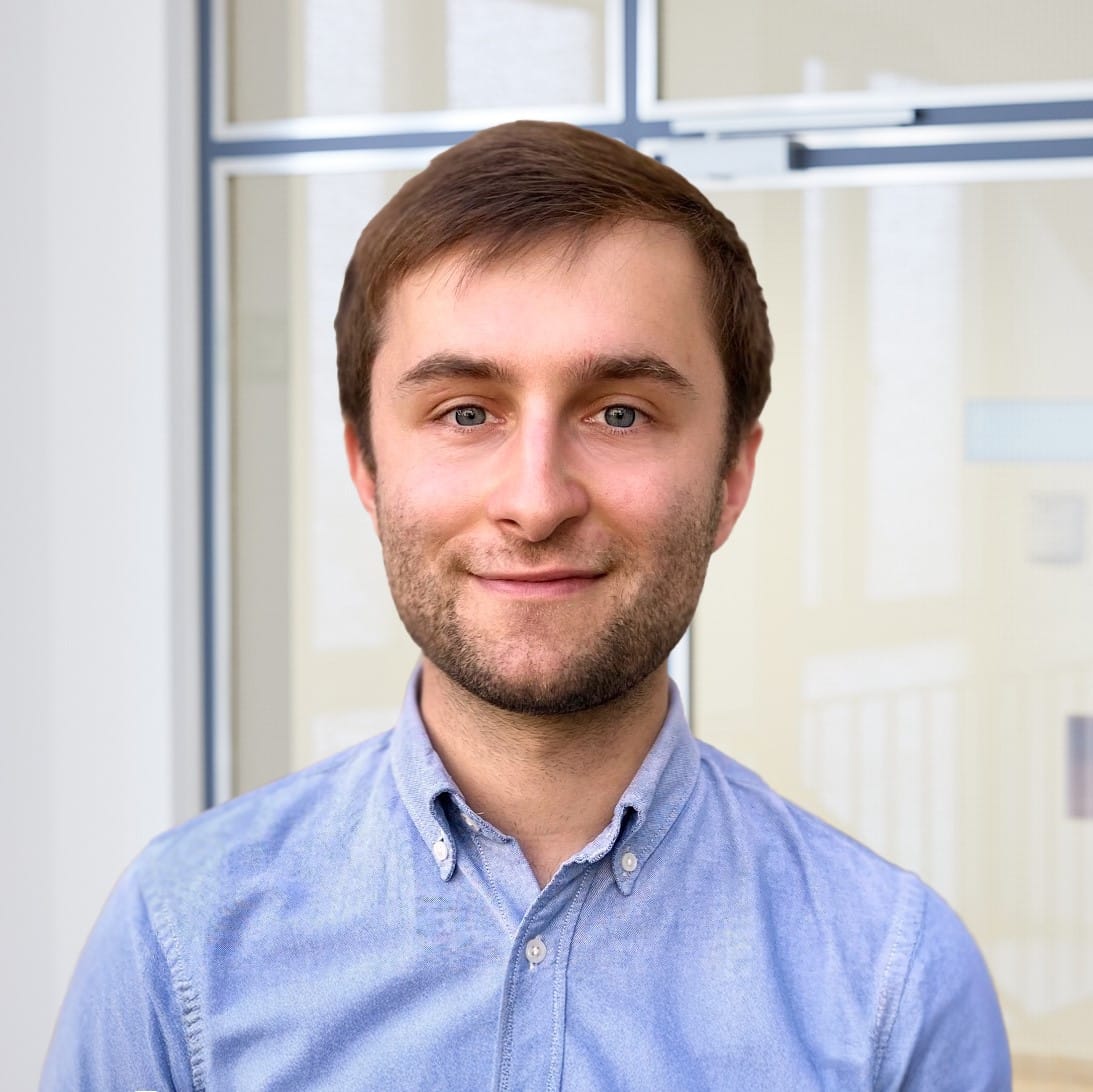
Ben Hermann is a Professor for Secure Software Engineering at Technische Universität Dortmund, Germany, with research focusing on the intersection of programming languages and security. His work primarily centers on vulnerability detection using static analysis, risk assessment of software libraries, security guarantees in type systems, and language-based security. His academic journey includes a doctoral degree from Technische Universität Darmstadt in 2016, followed by postdoctoral work in Eric Bodden's Secure Software Engineering Group at the Heinz Nixdorf Institute. Since 2020, he has held a tenure-track professorship at TU Dortmund, after serving as an interim Professor for IT Security at Paderborn University from October 2019 to September 2020. Hermann's research portfolio demonstrates consistent output in static program analysis frameworks, particularly with contributions to Soot and PhASAR. His work spans vulnerability detection, analysis reusability, and research quality in computer science, with emphasis on artifact evaluation. His recent publications show progression from framework development toward security applications and research methodology. Hermann has been actively involved in numerous conferences including ASE, ICSE, ECOOP, and SPLASH, often serving in program committees and as session chair. His research group at TU Dortmund includes students like Maximilian Krebs who presented work on energy consumption prediction of programs. He maintains an active presence in the academic community, advocating for research quality and reproducibility, and serves in various organizational roles including Doctoral Symposium Chair and Diversity & Inclusion Chair for conferences.
Elodie GUILLON is a Research Fellow at Université Toulouse-Jean Jaurès, affiliated with the Patrimoine, Littérature, Histoire (PLH) research unit within the Faculty of Arts and Humanities. Since October 2017, she has coordinated and co-directed the ERC Mapping Ancient Polytheisms project (MAP - 741182), a significant European research initiative. Previously, from September 2015 to August 2017, she held a post-doctoral position within the Idex project in Toulouse, ATS Patrimoine 2014, focusing on "PPI. Phoenicians and Punics in Ibiza, 7th-2nd century BC. Archaeological heritage and spatial modeling." She completed her doctorate in Ancient Sciences in November 2013 with Highest Honorable Mention and congratulations from the jury. Her research spans multiple interconnected fields: History of Phoenicia and Phoenician territories of expansion, spatial modeling applied to ancient data, computer analyses of ancient historical and archaeological data, reception and valorization of archaeological heritage, reception of Semitic antiquity by Moderns (particularly 19th and 20th centuries), and rural and territorial archaeology. GUILLON has pioneered the integration of digital humanities methodologies with traditional historical and archaeological research, creating innovative approaches to studying ancient religious systems and territorial organization. Her scholarly output demonstrates a clear trajectory from traditional historical and archaeological research toward increasingly sophisticated digital methodologies. The Mapping Ancient Polytheisms project represents the culmination of this evolution, combining spatial analysis, database design, and digital mapping to create comprehensive visualizations of ancient Mediterranean religious systems. Her work bridges the gap between traditional humanities scholarship and cutting-edge digital tools, making significant contributions to both fields. GUILLON has received recognition through her coordination of the prestigious ERC MAP project, though specific awards aren't detailed in the available information. Her collaborative work, particularly with Corinne Bonnet and other international scholars, demonstrates her standing within the global academic community focused on Mediterranean antiquity and digital humanities. She has taught various courses including Introduction to Historical Sciences - Antiquity (Bilingual L1, 2016-2019), Written and Oral Scientific Communication (Master's, 2012, 2014), Introduction to Research in History (Master's 2 MEEF, 2014), Introduction to Ancient History (L1, 2010, 2013), and Commerce and Exchanges in Antiquity (L2, 2011). Her teaching reflects her interdisciplinary approach, connecting traditional historical methods with contemporary digital practices. GUILLON's research is centered around the Mapping Ancient Polytheisms project, which represents a significant collaborative effort to digitally map ancient Mediterranean religious systems. This work involves creating sophisticated digital tools and methodologies for analyzing the spatial distribution of divine epithets and religious practices across the ancient Mediterranean world.
Maria Lantin serves as Director of Research and Director of Intersections Digital Studio at Emily Carr University of Art + Design, where she bridges computing science expertise with artistic practice. With a PhD in Computing Science from Simon Fraser University, she previously led the Visualization Research Lab at Banff Centre's Banff New Media Institute before joining Emily Carr. Her research focuses on immersive digital environments , particularly exploring the intersection of physical and virtual breath in interactive installations. Lantin's work combines stereoscopic video, biometric sensing, and data visualization to create experiences that examine how humans interact with media environments. Her projects often investigate how information flows through social groups and how virtual spaces affect bodily awareness . Lantin's creative output reveals a consistent pattern of transforming abstract concepts into tangible visual experiences. Her projects demonstrate expertise in creating interactive systems that visualize social dynamics, group behavior, and environmental relationships through stereoscopic and immersive technologies. SSHRC-funded Breath I/O project investigating breath in virtual environments Collaborations with Leila Sujir (Concordia University), Joy James, and Ron Burnett Regular participation in conferences like Interactive Futures Lantin maintains an active research blog where she explores theoretical connections between technology, perception, and human behavior, particularly examining how digital environments affect physiological processes like breathing patterns. Her work positions her at the forefront of art-science collaborations that investigate human interaction with emerging media technologies.
Ansgar Hudde is a Lecturer ("akademischer Rat a.Z.") in Sociology at the University of Cologne, working at the Institute of Sociology and Social Psychology. He completed his PhD at the University of Bamberg in 2019 and finished his habilitation at the University of Cologne in 2024. He has served as interim professor at Goethe-University Frankfurt and been a visiting scholar at Sciences Po Paris and Nuffield College, University of Oxford. In spring 2026, he will join Harvard University's Center for European Studies as a visiting scholar. Hudde received his PhD from the University of Bamberg in 2019. After a postdoctoral position at the University of Munich, he worked briefly as a policy advisor at the Bavarian Transport Ministry before returning to academia. His habilitation at the University of Cologne in 2024 qualified him for full professorship in the German academic system. Hudde specializes in quantitative social research with three primary focus areas: political attitudes and their relationship to private lives and social cohesion; family demography, gender, and life course analysis; and behavior and attitudes concerning mobility and sustainability. His methodological expertise includes advanced statistical techniques and data visualization, particularly applied to electoral geography and demographic patterns. He frequently bridges sociology with political science and public policy in his work. Fritz Thyssen Foundation recognition German Demographic Society (DGD) award Arbeitsgemeinschaft Sozialwissenschaftlicher Institute (ASI) award Hans Kelsen Prize for Young Researchers (2025, €60,000) Hudde actively contributes to public discourse through media appearances, guest editorials, and interviews. His book "Wo wir wie wählen: Politische Muster in Deutschlands Nachbarschaften" was published on June 18, 2025, examining political patterns at the neighborhood level in Germany. He regularly conducts workshops on data visualization, including with GESIS Training. As a quantitative social scientist, Hudde collaborates with various research institutions across Europe. His upcoming visit to Harvard University's Center for European Studies reflects his growing international reputation in political sociology and demographic research. His work on the intersection of sustainability concerns with political behavior represents an emerging research direction.
Pourang Polad Irani is a Professor in the Department of Computer Science at the University of Manitoba and holds the Canada Research Chair in Ubiquitous Analytics (Tier 2). His research focuses on Human-Computer Interaction (HCI), Information Visualization, and novel interactive systems for sensemaking in mixed reality and wearable technologies. He is relocating to the University of British Columbia (Okanagan campus) to launch a new lab, and currently oversees the NSERC CREATE grant 'Visual and Automated Disease Analytics' (VADA), training data scientists in health analytics. Current Affiliation: University of Manitoba, Department of Computer Science Research Themes: Ubiquitous Analytics, Pervasive Health, Mobile Interfaces Grants: NSERC CREATE VADA Program (Health Data Analytics) His research team develops prototypes integrating MR and wearable tech for visual interfaces. He has taught advanced HCI courses, including Comp 7920 (Mobile HCI) and Comp 7210 (Research Methodologies). Awards include the prestigious Canada Research Chair designation. Future plans include establishing a UBCO lab and mentoring students in emerging HCI domains. His work bridges theoretical HCI advancements with practical applications in healthcare and pervasive computing.
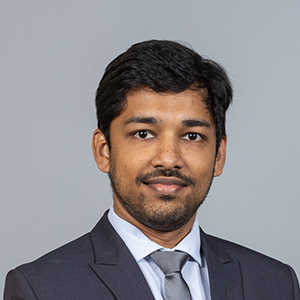
Sanka Rasnayaka is a Lecturer at the School of Computing, National University of Singapore , where he has worked since 2022. He previously served as a full-time Teaching Assistant and PhD candidate at the same institution. PhD in Computer Science (2021), National University of Singapore B.Sc. Engineering (Honours) in Computer Science and Engineering (2016), University of Moratuwa, Sri Lanka Research interests focus on Artificial Intelligence and Computer Vision , specifically in biometrics, privacy, and human perception. Current projects explore: Biometrics & Continuous Authentication (gait, keystroke dynamics) Large Language Models for Software Engineering Physics-Informed Generative AI for flood modeling Recent publications demonstrate expertise in: Biometric authentication systems Privacy-preserving AI Transformer architectures for behavioral analysis Generative AI in environmental modeling Teaching includes foundational courses like CS1101S Programming Methodology (co-teaching since 2022) and CS2040 Data Structures and Algorithms (AY2410). He also developed workshops on Generative AI, LLMs, and Computer Vision. Projects supervised: CRISP Platform for classroom management Live Annotation Tool for educators AI Pal for customized LLM assistants Scientific awards include multiple Teaching Excellence Awards (2024-2025) and scholarships from NUS (2017-2021).
Dr. Rainer Meyhöfer is an Adjunct Professor at the Department of Phytomedicine , Institute for Horticultural Production Systems , within the Faculty of Natural Sciences at Leibniz University Hannover . His work focuses on biological control strategies for greenhouse and field pests, particularly whiteflies and thrips. Key research areas: Biological Control , Integrated Pest Management , Entomology , Sustainable Agriculture Recent projects include the LuMoS initiative (2024-2027) for mobile LED-laser pest systems and ORDIAmur (2019-2022) analyzing soil mesofauna in replant disease. His 93+ publications emphasize light-based pest monitoring, plant resistance mechanisms, and natural enemy conservation. Advising 12 theses , he has mentored researchers on topics ranging from thrips resistance in chrysanthemums to endophyte impacts on insect pests. Collaborative grants with institutions like the Julius Kühn Institute highlight his interdisciplinary approach.