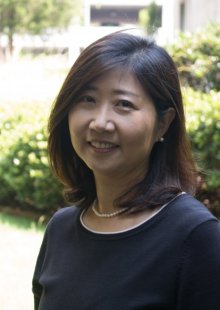
Dr. Gloria Crisp is a Professor of Adult and Higher Education at Oregon State University and currently serves as Associate Dean in the College of Education. With 25 years of experience in community colleges and bachelor’s granting institutions, her work focuses on equity in higher education , particularly for Latinx students and other minoritized populations. Research Focus : Transfer pathways, mentoring frameworks, and policies reducing educational inequities Key Contributions : Created the College Student Mentoring Scale (CSMS), used globally to assess mentoring effectiveness Awards : ASHE 2020 Mentoring Award Leadership : Former Editor-in-Chief of New Directions for Institutional Research , President of Council for the Study of Community Colleges (2022-23) Publications include over 60 articles in journals like American Educational Research Journal and Research in Higher Education , with citations exceeding 10,000. Her co-edited book Unlocking Opportunity through Broadly Accessible Institutions (2022) challenges deficit narratives about broad-access universities.
Shaun M. Dougherty is a Professor and Department Chair of Measurement, Evaluation, Statistics, and Assessment (MESA) at Boston College's Lynch School of Education & Human Development. He directs the Catholic Education Research Initiative and serves as a Strategic Data Project (SDP) Faculty Adviser at Harvard University's Center for Education Policy Research. His work bridges academia and policy, focusing on equity and effectiveness in career and technical education (CTE), educational accountability systems, and regression discontinuity methodologies. Dougherty holds an Ed.D. in Quantitative Policy Analysis from Harvard University. Education: Ed.D., Harvard University, Quantitative Policy Analysis Research Interests: Dougherty's research emphasizes education policy analysis , causal program evaluation , and CTE program impacts . He examines how CTE can address human capital development while addressing systemic inequities related to race, class, gender, and disability. His work integrates advanced statistical methods (e.g., regression discontinuity designs) with policy implementation studies in K-12 systems and postsecondary transitions. Grants & Awards: PI: $647,499 grant from Institute for Education Sciences (2020–2025) Co-PI: $1.7 million grant from Institute for Education Science (2022–2026) Co-PI: $250,000 grant from Institute for Education Sciences (2019–2021) His awards include the Outstanding Reviewer (2017, 2020) and Outstanding Research Paper (2020) from leading journals. Labs & Teams: Leads the MESA department's research initiatives and collaborates with the Catholic Education Research Initiative and Harvard's SDP program. His work engages with states and large districts on applied policy analysis, including Massachusetts, Michigan, and Connecticut.
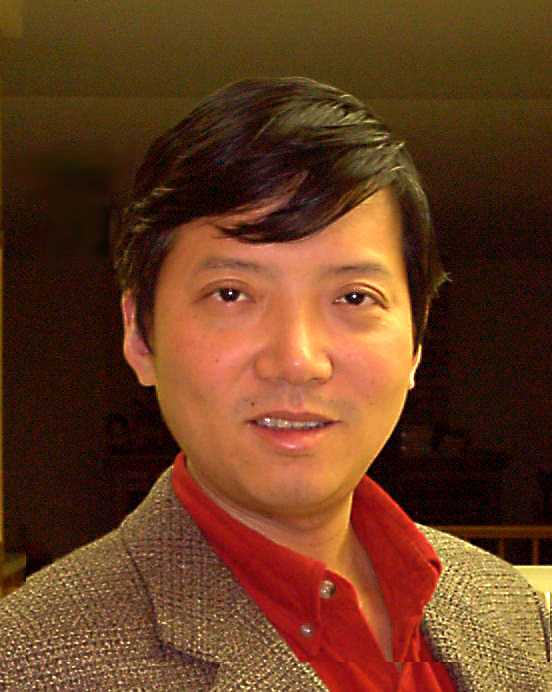
Charles Ling is a Professor of Computer Science at Western University, holding the title of Science Distinguished Research Professor. He also serves as Director of the Data Mining and Business Intelligence Lab and Associate Scientist at the Lawson Health Research Institute. His academic background includes a B.Eng. (CS and EE) from Shanghai Jiao Tong University and MSc/PhD from the University of Pennsylvania (UPenn). Research interests span machine learning, deep learning, AI, and healthcare informatics, with notable contributions to the GlucoGuide diabetes management system. He has authored over 220 peer-reviewed papers and a book titled Crafting Your Research Future , focusing on academic career development. Awarded Fellow of the Canadian Academy of Engineering (CAE) and recipient of the First Prize for Best Clinical Research Presentation (2011). Active in grants (NSERC, FedDev, Mitacs) and organizational roles in top conferences (KDD, ICDM). Supervises 5 PhD and 4 MSc students, with notable advisees including Harry Zhang and Victor Sheng. Leverages AI in education to enhance children's cognitive abilities through video-based programs like Power Thinking , approved by Curriculum Services Canada. His work integrates machine learning with healthcare, finance, and software engineering.
Brittany M. Bond is an Assistant Professor of Organizational Behavior at Cornell University's ILR School. Her research focuses on status recognition's role in labor markets, personnel management systems, and organizational performance. She holds a PhD from MIT Sloan's Economic Sociology Program (2020) and previously worked at the U.S. Commerce Department and Census Bureau. Her work has been published in Management Science , Organization Science , and Sociological Science , and recognized with top awards like the Academy of Management's William H. Newman Award. Education: PhD, Management, MIT Sloan School of Management (2020) MS, Public Policy & Management, Carnegie Mellon University (2010) BA, International Economic Relations, American University (2007) Research Interests: Bond investigates how performance evaluations, talent recruitment, and status recognition shape careers and organizational productivity. Her recent work highlights unintended consequences of forced ranking systems and the motivational effects of task inferiority for specialists. Awards & Honors: 2020 Academy of Management William H. Newman Award 2020 OMT Division Pondy Best Dissertation Paper 2019 INFORMS/Organization Science Dissertation Proposal Finalist Teaching & Service: Teaches courses on power dynamics, organizational behavior, and PhD research methods. Serves as a Faculty Fellow at Cornell's Center for Applied Research on Work and Workplace Inclusion & Diversity Education (WIDE).
Dr. David Green is a Senior Research Fellow at the School of Public Health, Faculty of Medicine at Imperial College London, leading the Aerosol Science Team within the Environmental Research Group. His research focuses on aerosol and gas measurement, source apportionment, and health impact studies. Key leadership roles include directing the Centre for Low Emission Construction and contributing to diversity initiatives. His work integrates advanced analytical techniques, such as real-time supersite monitoring in London, to inform public health policies and environmental forecasting systems. Research interests emphasize aerosol composition measurement, development of new techniques, and quantifying emission sources in urban environments. Collaborative projects span agencies like the Environment Agency, EPSRC, and EU initiatives. He supervises PhD students exploring topics such as non-road mobile machinery emissions, satellite-based traffic analysis, and subway air quality. His team’s work bridges environmental science and public health, addressing issues like ultrafine particle exposure, particulate matter on public transport, and policy-driven emission reductions. Key Collaborations: Includes STFC Air Quality Network, High Speed 2, and EU Metrology for Nitrogen Dioxide projects. Advising: Oversees five PhD students and post-doctoral fellows, focusing on environmental engineering and public health applications. Labs/Teams: Leads the Aerosol Science Team and contributes to the MRC Centre for Environment and Health.
Stephanie Posthumus serves as Associate Professor at McGill University, specializing in contemporary French and Québécois literature through the lens of ecocriticism, animal studies, and plant studies. Her research interrogates representations of the non-human across European literary traditions while examining cultural specificities in environmental discourse. Professor Posthumus develops French-specific ecocritical frameworks by engaging with thinkers like Guattari ( écosophie ), Latour ( nature-culture ), and Serres ( contrat naturel ), arguing against universal ecocritical models. Her work spans three interconnected domains: constructing French ecocriticism through monographs like French Écocritique (2017); analyzing animal representations via co-edited volumes including French Thinking about Animals (2015); and pioneering plant studies in Québécois contexts through recent works like Entre les feuilles (2024). She further bridges digital and environmental humanities through SSHRC-funded platform development. Her publication trajectory (2016-2024) reveals intensifying focus on vegetal agency and digital methodologies within ecocritical practice. Articles consistently address cultural differences in environmental representation, with increasing attention to sensory plant studies and posthumanist reconfigurations of human/non-human boundaries across French and Québécois literary landscapes. Professor Posthumus leads the Digital Environmental Humanities initiative, which functions as a research hub featuring digital exhibits, analytical tools like topic modeling, and pedagogical resources. This SSHRC Connections grant project (2013) exemplifies her commitment to interdisciplinary knowledge mobilization through digital innovation. She currently directs collaborative research networks connecting Canadian environmental humanities scholars with digital humanities practitioners, fostering experimental approaches to ecological representation through multimodal projects examining plant intelligence and sensory environmental engagement.
Felix Leach is an Associate Professor of Engineering Science and Shell-Pocock Fellow at Keble College, University of Oxford. He holds a DPhil from Oxford (Oxon), is a Chartered Engineer (MIMechE), and a Fellow of the Higher Education Academy. His research focuses on thermal propulsion systems and air quality, with projects like Ammospray (green-ammonia propulsion) and OxAria (air pollution monitoring in Oxford). He collaborates with Jaguar Land Rover, Siemens, and local governments on emissions reduction and policy. Education: DPhil (Oxford), MEng. Awards include the 2021 ASME ICED Most Valuable Technical Paper Award and multiple SAE recognitions. He co-authored the prize-winning book *Racing Toward Zero: The Untold Story of Driving Green*. Research interests span engine efficiency, alternative fuels (hydrogen, ammonia), and public health impacts of emissions. He leads interdisciplinary projects combining experimental and computational methods, such as machine learning for flow field analysis and sensor networks for urban pollution monitoring. Grants include EPSRC, NIHR, and NERC funding. He advises on policy for Oxford City Council and serves as associate editor for the ASME Journal of Engineering for Gas Turbines and Power. His work bridges academic research, industry collaboration, and public engagement to address climate and air quality challenges.
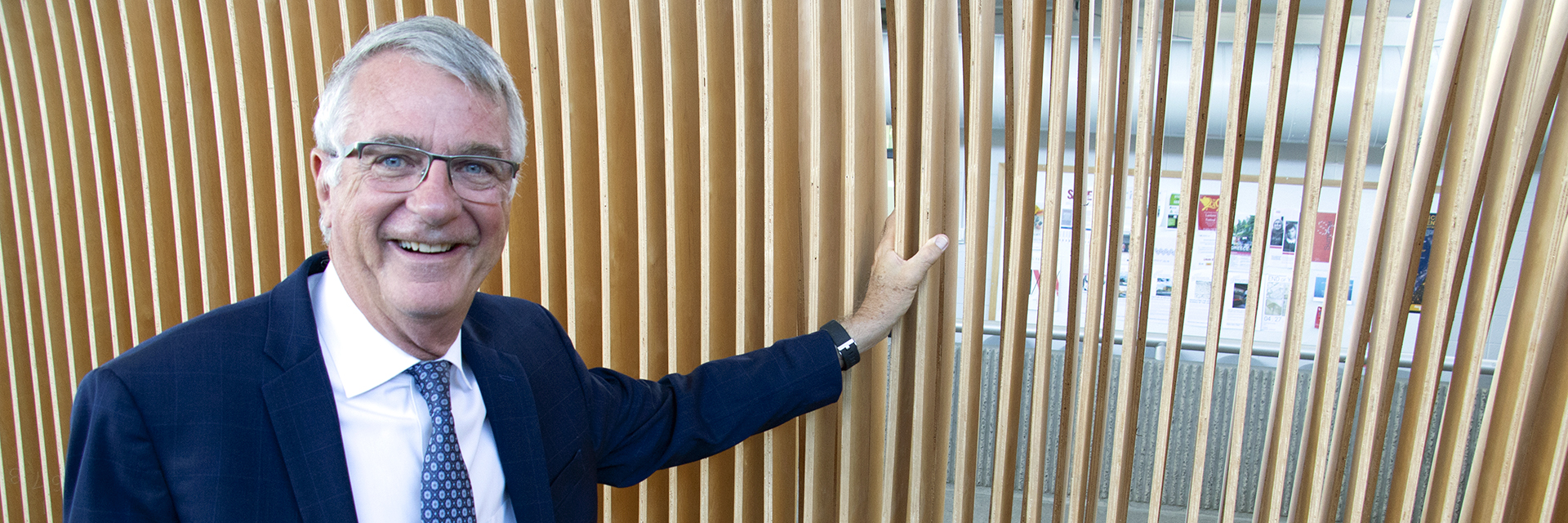
Steven P. French is a Professor of City & Regional Planning at Georgia Institute of Technology, affiliated with the College of Design. He has held leadership roles including Dean of the College of Design (2013–2021), Associate Dean for Research (2009–2013), and Director of the Center for Geographic Information Systems (1997–2011). His expertise spans natural hazards, sustainable development, land use planning, and GIS applications. French earned his Ph.D. in City & Regional Planning from the University of North Carolina at Chapel Hill and previously taught at California Polytechnic State University and Stanford University as a Visiting Professor. His research focuses on disaster resilience, urban sustainability, and infrastructure systems integration. He has advised over 50 Master’s students and graduated six Ph.D. students, with notable contributions to planning education and disaster risk assessment. French has led over 70 research projects, including NSF-funded studies on earthquake and flood hazards, and served as Social Science Thrust Leader for the Mid-America Earthquake Center. He is a Fellow of the American Institute of Certified Planners (FAICP). French’s work bridges interdisciplinary collaboration between planners, engineers, and scientists. His recent projects emphasize leveraging big data and GIS for urban decision-making, sustainable infrastructure design, and analyzing urban health impacts. He has authored/co-authored over 25 journal articles and four books, contributing to journals like the Journal of the American Planning Association.
David J. Reinkensmeyer is a Professor at the University of California, Irvine (UCI), holding appointments in the Department of Mechanical & Aerospace Engineering (The Henry Samueli School of Engineering), Anatomy & Neurobiology (School of Medicine), and Biomedical Engineering. His research focuses on neurorehabilitation engineering, developing robotic and sensor-based technologies to enhance motor recovery after neurological injuries such as stroke and spinal cord injury. He leads interdisciplinary efforts in robotic therapy, sensor design for movement assessment, and computational models of motor learning. Key areas include: Design of robotic devices for upper/lower extremity rehabilitation Development of wearable sensors to monitor home exercise programs Studying motor adaptation and proprioception in clinical populations Optimizing neurorehabilitation interventions through computational modeling His work integrates biomechanics, machine learning, and clinical neuroscience to create practical solutions for disabling movement disorders. Recent projects explore scalable mRehab systems, data-driven diagnostics, and real-time feedback technologies. Funding sources include NIH grants (e.g., R01 HD062744) and industry collaborations. Over 200 peer-reviewed publications and numerous patents reflect his impact in translating engineering innovations into clinical practice.
Dr. Sundaresan Jayaraman is a Professor at the School of Materials Science and Engineering, Georgia Institute of Technology, and Founding Director of the Kolon Center for Lifestyle Innovation. His research focuses on converging textiles with computing, notably pioneering the concept of 'Fabric is the Computer.' Key contributions include the Smart Shirt (Wearable Motherboard™), featured in LIFE Magazine and archived at the Smithsonian. He has secured $16M+ in research funding from NSF, DARPA, and industry. His work spans smart textiles, respiratory protection systems, and computer-aided manufacturing. Awards include the 1989 Presidential Young Investigator Award and the 2018 Textile Institute Research Publication Award. He holds ten U.S. patents and serves on editorial and advisory boards for journals like the Journal of the Textile Institute. Professional roles include leadership in National Academies committees on manufacturing and personal protective equipment. Education & Early Career: Dr. Jayaraman’s career began at Software Arts, Inc. (developers of VisiCalc) and Lotus Development Corporation, where he contributed to early spreadsheet and equation-solving software. His PhD research led to TK!Solver, a pioneering equation-solving program. Research Interests: His work bridges engineering and healthcare through smart textiles, wearable biomedical systems, and advanced manufacturing. Current projects address respiratory protection systems, wearable sensor networks, and personalized healthcare technologies. He emphasizes interdisciplinary collaboration to address societal challenges in health, security, and quality of life. Publications & Impact: Over 100 refereed papers and book chapters highlight his contributions to textile informatics, healthcare wearables, and manufacturing automation. Recent articles focus on next-generation respiratory protection devices and continuous fit monitoring systems. Past innovations include the Wearable Motherboard™ and sensor-integrated garments for vital signs monitoring. Awards & Recognition: In addition to his NSF and Textile Institute honors, he received the Georgia Technology Research Leader Award (2000) and Distinguished Alumni Award from A.C. College of Technology (2019). He is a Fellow of the Textile Institute and founding member of IEEE Technical Committees on Biomedical Wearables. Labs & Teams: Leads the Kolon Center for Lifestyle Innovation and collaborates with industry partners on textile-based computing solutions. His lab’s work on 3D-printed respiratory devices and smart garments exemplifies cutting-edge translational research.
Sungmee Park is a Principal Research Scientist at the School of Materials Science and Engineering at Georgia Institute of Technology. Her work bridges academia and industry, with groundbreaking contributions to smart textiles and wearable technologies. She co-invented the world’s first Wearable Motherboard (Smart Shirt) in 1996, foundational to modern wearables. At Kolon Glotech in South Korea, she developed Printronix printing technology and heating textiles (HeaTex), applied in sports, military, and automotive sectors. She also served as Vice President and Head of Future Strategy at Kolon Corporation, driving innovation in strategic partnerships and new ventures. Her research focuses on electronic textiles, smart fabrics, and wearable biomedical systems, addressing health monitoring, security, and human welfare. With over 30 patents and numerous publications, her work emphasizes translating research into practical applications like low-cost reusable masks and respiratory protection devices. Key collaborations include ongoing projects with Professor Jayaraman on wearable data platforms and Big Data analysis. Dr. Park’s articles highlight advancements in textile-based electronics, wearable healthcare systems, and smart textile manufacturing. She has pioneered methodologies for integrating sensors and communication systems into fabrics, enabling applications from athlete monitoring to SIDS prevention. Her contributions reflect a vision of technology enhancing quality of life through interdisciplinary innovation at the intersection of art, science, and engineering. Notable projects include the Inspiring Journey Exhibit showcasing her work in art-science fusion and strategic leadership in identifying new growth areas for the Kolon Group. Her research continues to drive global impact through sustainable, human-centered technological solutions.
Stephen Lee is an Assistant Professor in the Department of Computer Science at the University of Pittsburgh, affiliated with Pitt Cyber. His research focuses on distributed systems, cyber-physical systems, and sustainability, emphasizing energy efficiency and cost optimization. Dr. Lee holds a PhD from the University of Massachusetts Amherst, a Master’s from Chennai Mathematical Institute, and a Bachelor’s from St. Stephen’s College, Delhi. He actively seeks students for his research group. Education: PhD, Computer Science, University of Massachusetts Amherst Master’s, Chennai Mathematical Institute Bachelor’s, St. Stephen’s College, Delhi Research Interests: Dr. Lee’s work integrates distributed systems, machine learning, and optimization to enhance sustainability. Key areas include IoT-enabled energy systems, emission-aware computing, and privacy-preserving frameworks. He leads projects like GreenWhisk (serverless emission reduction) and Sat2map (3D building modeling from satellite imagery). Recent Achievements: Best Paper Award in IEEE TPS 2024 DOE-funded Cyber Energy Center (2024) MCSI Seed Grant for Pitt building sustainability (2024) NSF Grant on sustainable distributed infrastructures (2023) Grants & Advising: Secured over $2M in grants, including NSF and DOE funding. Advises on energy-efficient systems and IoT security. Teaches CS 2510 (Operating Systems) and CS 1699 (Systems & Sustainability). Labs & Teams: Directs the Sustainable Systems Research Group, focusing on decarbonizing IT and optimizing renewable energy systems. Collaborates with industry partners on smart grid solutions and edge-cloud systems.
Ehud Sharlin is a Professor in the Department of Computer Science at the University of Calgary, Faculty of Science. His research focuses on Human-Computer Interaction (HCI) with specializations in human-robot interaction, tangible interfaces, virtual/augmented reality, and autonomous vehicle interactions. He holds a Ph.D. in Computing Science from the University of Alberta (2003), and M.Sc. and B.Sc. degrees in Electrical and Computer Engineering from Ben-Gurion University of the Negev (1997 and 1990). Teaches CPSC 481: Human-Computer Interaction I Recipient of the NSERC Discovery Accelerator Award (2019), ACM Creativity & Cognition Honourable Mention (2018), and multiple academic excellence awards Active in industry collaborations, particularly in medical simulation (e.g., VRSpineSim) and geosciences (e.g., PLANWELL) Research explores: Embodied interaction through robotics and wearables Autonomous vehicle-pedestrian communication systems Immersive tools for creative and professional domains Accessibility in human-technology interfaces Publications span over 100 peer-reviewed works, emphasizing design methodologies, user experience in XR systems, and ethical considerations in sociotechnical systems. His work bridges technical innovation with human-centered design principles.
Julie F. Codell is a Professor of Art History at Arizona State University, with affiliations in Asian Studies, Film and Media Studies, English, and Gender Studies. She previously served as Director of the School of Art (1991-2001) and Interim Chair of Film and Media Studies (2010-11). Her research focuses on 19th-century British visual culture, colonialism, and transnational art histories. Codell’s work bridges art historical analysis with critical engagements in gender studies, postcolonial theory, and material culture. Her research interests include the Grosvenor Gallery’s role in the Aesthetic Movement, British colonial exhibitions like the Delhi Coronation Durbars, and the intersections of art, power, and identity. She has authored The Victorian Artist (2003/2012) and edited volumes on transculturation, imperial historiography, and art market dynamics. Codell’s scholarship emphasizes transnational frameworks, examining how art objects and cultural practices mediate colonial and postcolonial identities. Her recent work explores global art networks, replication cultures in Victorian art, and the transatlantic circulation of art objects. Codell’s publications frequently address the politics of display, cultural hybridity, and the material conditions of artistic production. She is a leading figure in redefining 19th-century art history through interdisciplinary and transnational perspectives.
Ole Nørregaard Jensen is a Professor in Biomedical Mass Spectrometry and Systems Biology at the Department of Biochemistry and Molecular Biology, University of Southern Denmark . His research integrates advanced mass spectrometry, proteomics, and bioinformatics to study chromatin biology, post-translational modifications, and cellular signaling networks. He is actively involved in major research initiatives funded by Novo Nordisk Foundation and Lundbeck Foundation. His research interests include Mass Spectrometry, Proteomics, Posttranslational Modification, Histone Biology, Chromatin Biology, Bioinformatics, Systems Biology, Lipidomics, and Protein Chemistry . He employs cutting-edge techniques such as tandem mass spectrometry and ion mobility spectrometry to analyze protein isomers and dynamic modifications. His work has significant implications for understanding gene regulation, DNA replication, and disease mechanisms. His recent publications demonstrate a strong trend in chromatin dynamics, epigenetics, and integrated omics approaches , combining proteomics with transcriptomics and lipidomics to unravel complex biological systems. His research spans from fundamental molecular mechanisms to translational applications in biomedicine and food science. He has been recognized with several prestigious awards: MCP Lectureship Award Juan Pablo Albar Proteomics Pioneer Award 2019 EliteForsk 2009 prize Knight Order of Dannebrog (Ridder af Dannebrogordenen) Jensen is deeply involved in academic service, including peer review for journals like Nature Communications and Molecular and Cellular Proteomics , organizing conferences, and supervising students. He teaches courses such as Biomedical Mass Spectrometry - Principles and Applications and coordinates the Computational Biomedicine international Master’s program. He leads multiple active research projects, including PLATO and INTEGRA, focusing on health data, imaging, and protein networks. He is a key member of a vibrant research environment in biomedical mass spectrometry at SDU, contributing to both national and international scientific collaborations. His lab is at the forefront of developing and applying novel mass spectrometry methodologies for systems biology.