Trey Miller is an Associate Professor of Economics and Director of the Texas Schools Project at the University of Texas at Dallas (UTD), housed in the School of Economic, Political and Policy Sciences. He specializes in the economics of education, postsecondary education systems, and career and technical education policy. Dr. Miller holds a PhD in Economics from Stanford University (2009) and a BA in Mathematics and Economics from the University of Texas at Austin (2003). His research focuses on evaluating educational policies and interventions, particularly corequisite remedial education models, access to same-race instructors, and the impacts of developmental education reforms. He leads mixed-methods studies funded by organizations such as the Institute of Education Sciences, the Bill and Melinda Gates Foundation, and the US Department of Education. Key projects include analyzing pandemic-era enrollment trends at Texas community colleges and strategies to support part-time college students. Dr. Miller’s publications appear in top journals like the Journal of Policy Analysis and Management and Economics of Education Review , and he frequently advises policymakers through collaborations with the Texas Higher Education Coordinating Board and legislative committees. His work bridges academic research and practical policy solutions, emphasizing equity and institutional effectiveness in higher education. He has received accolades such as the RAND Bronze Medal Award (2015) and RAND Idea Showcase Winner (2012). Prior roles include Principal Researcher at the American Institutes for Research (2017–2020) and Economist at the RAND Corporation (2009–2017).
Prof. Dr. Özlem İlk Dağ is a Professor of Statistics at the Middle East Technical University (METU), Ankara, Turkey. She holds the position of Department Head of Statistics and serves on advisory boards for TUBITAK and the Journal of Biostatistics. Her academic journey includes roles from Research Assistant (1997) to Professor (2018), with affiliations in Actuarial Sciences and Biostatistics. Education: Ph.D. in Statistics (Iowa State University, 2004), M.S. and B.S. from METU. Research focuses on longitudinal data analysis, multilevel modeling, Bayesian methods, and biostatistics. She authored three editions of R Yazilimina Giris and a foundational book on multivariate longitudinal data analysis. Key contributions include developing marginalized transition random effects models (MTREM) and R packages like 'mmm'. Awards include METU's 20-year service recognition and teaching excellence. She has supervised numerous research projects and co-authored over 50 peer-reviewed articles across biostatistics, genomics, and statistical computing. Her work bridges statistical theory and application, with notable contributions to gene expression clustering, maternal antibody studies in veterinary science, and computational methods for longitudinal data. She maintains active collaborations in genomics and biostatistics, and her lab focuses on integrating statistical computing with biomedical research.
Dr. Lucia D'Ambruoso is a Senior Lecturer at the Institute of Applied Health Sciences, School of Medicine, Medical Sciences and Nutrition, University of Aberdeen. She is based at the Aberdeen Centre for Health Data Science and leads international research on health systems, participatory methods, and verbal autopsy. She holds honorary and visiting positions at the University of the Witwatersrand (South Africa), Umeå University (Sweden), and Stellenbosch University, and serves on multiple international research and policy committees. PhD in Public Health, University of Aberdeen (2011) MSc in Public Health and Health Services Research, University of Aberdeen (2003) BSc (Hons) in Pharmacology, University of Aberdeen (1997) Her research focuses on health policy and systems, social determinants of health, and participatory action research, especially in sub-Saharan Africa and South Asia. She uses qualitative and mixed methods to understand how health systems can be made more equitable and responsive through community engagement, inter-sectoral action, and innovative data systems like verbal autopsy. Her recent publications demonstrate a strong focus on community-led health research, digital health platforms for emergency care, school-based mental health, and mortality data systems. She leads major NIHR and GCRF-funded programmes in South Africa and Rwanda, aiming to strengthen primary care and injury response systems through participatory methods. Scientific Awards: University of Aberdeen Interdisciplinary Research Award (2024) University of Aberdeen Outstanding Research Award (2024) Fellow, Stellenbosch Institute of Advanced Study (2025) Fellow, Royal Society for Public Health (2021) Fellow, Higher Education Academy (2017) Dr. D'Ambruoso teaches across global health, health policy, and research methods at both undergraduate and postgraduate levels. She supervises PhD students and is Deputy Director of the Centre for Global Development at the University of Aberdeen. She is actively involved in community engagement through NHS Grampian and serves on the editorial board of Global Health Action and the Steering Committee of the Politics of Health Group. Her research is supported by NIHR, MRC, Wellcome Trust, and international philanthropies. She leads the Verbal Autopsy with Participatory Action Research (VAPAR) initiative, which connects communities, researchers, and policymakers to generate actionable evidence on health equity. Her team works closely with the Agincourt HDSS in South Africa and has developed innovative tools for community health worker training and data collection.
Dr. Jonathan Hu is a Professor in the Department of Electrical and Computer Engineering at Baylor University's School of Engineering and Computer Science. He holds a PhD from the University of Maryland Baltimore County (2008) and completed a postdoctoral fellowship at Princeton University (2009–2011). He is an active researcher in optics and photonics, leading the Photonics Research Laboratory and advising both graduate and undergraduate research assistants. Research Interests: Nanophotonics and metamaterials for photovoltaic and biomedical applications Mid-IR supercontinuum generation using chalcogenide photonic crystal fibers 2D materials such as graphene and their alignment via magnetic fields Coherent optical communication and quantum optical Fredkin gates Numerical simulation of electromagnetic problems and leaky mode analysis His recent publications (2019–2024) demonstrate a strong focus on quantum plasmonics, specialty optical fibers, optofluidics, and nonlinear optical phenomena, with high-impact work in journals like Science Advances , ACS Photonics , and Advanced Materials . The research shows a clear trend toward integrating photonics with 2D materials and quantum systems, with applications in sensing, communication, and materials characterization. Scientific Awards and Recognition: 35 Baylor faculty named among top 2% most cited researchers (2023) Editor’s Pick, Journal of Applied Physics (2018) Top three downloads in OSA journals for three consecutive months (2009) NSF Graduate Research Fellowship (awarded to advisee) Chinese Government Award for Outstanding Self-Financed Students Abroad (awarded to advisee) Second Place in FiO + LS Student Competition (awarded to advisee) Advising and Grants: Dr. Hu actively mentors students at all levels, with current graduate research assistants including Wei Zhang, Zhihao Hu, and Sterling Walzel. His lab is supported by external funding, though specific grants are not detailed in the text. He has advised PhD students such as Joshua Young, Chao Niu, and Chengli Wei, many of whom have gone on to successful academic and industry careers. His teaching includes core courses like EGR 1302, ELC 2320, and ELC 4320, as well as advanced topics in computational photonics and integrated photonics. Labs and Teams: He leads the Photonics Research Laboratory at Baylor University, located at the BRIC facility. He is also involved with the Baylor University Optica Student Chapter, promoting optics outreach and networking among students and researchers.
Kevin John Grimm is a Professor in the Department of Psychology at Arizona State University (ASU), serving as Director of Operations and Research within the College of Health Solutions. He holds a B.A. in Mathematics and Psychology from Gettysburg College (2000), and M.A. (2003) and Ph.D. (2006) in Psychology from the University of Virginia. Previously, he served as faculty at UC Davis before joining ASU in 2014. His research focuses on multivariate methods for analyzing developmental change, including nonlinear growth modeling, latent class analysis, and integrating machine learning with psychological data. Notable contributions include co-authoring the textbook *Growth Modeling: Structural Equation and Multilevel Modeling Approaches* (Guilford Press, 2017). Teaches courses like Structural Equation Modeling, Longitudinal Growth Modeling, and Machine Learning in Psychology at ASU. Active in professional service: Associate Editor of *Structural Equation Modeling: A Multidisciplinary Journal* since 2012. Recipient of NIH/NIDA grants for drug abuse/HIV prevention research and NICHD-funded studies on sleep health in children. His methodological work bridges quantitative innovation with substantive developmental research, emphasizing rigorous model specification and cross-disciplinary applications.
Kamila A. Alexander, PhD, RN, is an Associate Professor and Director of the PhD, DNP/PhD, and Postdoctoral Programs at the Johns Hopkins School of Nursing. She holds the endowed Natalie and Wes Bush Rising Professorship. Her research integrates health equity and social justice frameworks to examine socio-structural determinants of trauma, violence, and sexual/reproductive health outcomes among marginalized youth, with emphasis on intimate partner violence, HIV resilience, and economic opportunity. Education Dr. Alexander earned: B.S. in Exercise Science (Howard University) BSN and MSN/MPH (Johns Hopkins School of Nursing) PhD in Nursing Science (University of Pennsylvania) Research Focus Her work spans: Socio-structural drivers of health disparities Intersections of violence, trauma, and sexual/reproductive health Community-engaged interventions to promote HIV resilience Policy impacts on health equity for Black and Latino communities Publication Trends Recent articles (2019–2024) cluster around reproductive coercion, intimate partner violence, and HIV/STI prevention, employing mixed-methods approaches. Key themes include gender-based power dynamics, structural barriers in healthcare, and culturally responsive intervention strategies. Awards & Honors Notable recognitions: Betty Irene Moore Fellowship for Nurse Leaders (2020) Dean’s Award for Outstanding Nurse Researcher (2020) Johns Hopkins Catalyst Award (2018) New Nurse Faculty Fellowship (2015) Leadership & Affiliations She directs NIH-funded training programs and chairs key initiatives including: Nursing Initiative, Mid-Atlantic CFAR Consortium Violence Working Group, Johns Hopkins Center for Injury Research NIH T32 Training Program in Trauma and Violence She is affiliated with six Hopkins research centers focused on global health equity, adolescent health, and infectious diseases.
Jennifer Ludrosky is an Assistant Professor in the Department of Behavioral Medicine & Psychiatry at the West Virginia University School of Medicine, specializing in Child and Adolescent Psychiatry through the HRSA-funded Graduate Psychology Education (GPE) program. Her educational credentials include: PhD from Miami University (2005) Child and Adolescent Psychology Internship at University of Rochester School of Medicine (2005) HRSA-funded GPE Fellowship at University of Rochester School of Medicine (2006) Dr. Ludrosky's research centers on critical gaps in behavioral healthcare delivery, with emphasis on rural mental health access for children, palliative care integration in pediatric oncology, and telehealth service optimization. Her work addresses systemic barriers like insurance authorization processes, geographic isolation, and pandemic-related service disruptions, while developing interventions for caregiver education and provider wellness. This portfolio reflects a commitment to equity-focused solutions in underserved communities. Her 2022-2023 publications reveal consistent methodological rigor across diverse settings—from rural Appalachia to school systems—using mixed-methods approaches to evaluate distance metrics, telehealth adoption, and mindfulness interventions. Key trends include intersectional analysis of socioeconomic barriers, real-world implementation challenges, and patient-family centered care models. No scientific awards were documented in source materials. Regarding academic mentorship and funding, the provided texts contained no information about supervisees, grant awards, or research teams.
Debbi Marais is a Professor (Teaching Focussed) at the University of Warwick within the Warwick Medical School and Health Sciences department. She serves as the Director of Postgraduate Education and is a Principal Fellow of the UK Higher Education Academy , demonstrating strategic leadership in enhancing teaching quality, curriculum development, and student mentorship. With over 25 years of experience in higher education, she has held academic positions at Stellenbosch University , University of Aberdeen , and University of Warwick . Her expertise spans teaching, assessment, program coordination, quality assurance, and reflective practice. Marais’ research interests include pedagogical innovation , with a focus on technology-enhanced teaching and employability & professionalism , as well as public health nutrition covering infant and young child feeding , nutrition transition , and global health . She employs mixed methods in her research and has contributed to understanding exclusive breastfeeding barriers , maternal obesity trends in Africa, and Arabic weight-loss app design . Her work often intersects with technology-enhanced health education and interdisciplinary collaboration . Her recent publications highlight qualitative studies on food-based dietary guidelines in Kenya and South Africa, mobile health interventions for weight loss, and educational innovations in medical and nutrition training. These works reflect her commitment to global health equity and digital pedagogy , with recurring themes in African and Southeast Asian health contexts. She emphasizes participatory research methods and policy translation in maternal and child nutrition. Scientific Awards Principal Fellow of the UK Higher Education Academy Marais has supervised postgraduate research students (PhD and Masters) and contributed to curriculum reform through collaborative international projects. She has secured external funding for research and demonstrated interdisciplinary expertise in nutrition , public health , and health education .
Michael Molloy is a Professor in the Department of Computer Science at the University of Toronto, with a cross-appointment to the Department of Computer and Mathematical Sciences at the University of Toronto Scarborough (UTSC). He teaches courses in Discrete Mathematics and the Probabilistic Method, including CSC/MAT A67 and CSC2427/MAT1500 . Research Focus: Graph Theory, Probabilistic Methods, Random Graphs, Constraint Satisfaction Problems, and Markov Chain analysis. His work includes foundational contributions to graph coloring, such as adaptable/conflict coloring and correspondence coloring, and exploring phase transitions in random graphs. He has supervised numerous graduate students, including Lora Hrisch, Jurgen Aliaj, and Hamed Hatami, advancing combinatorial and algorithmic research. Recent publications analyze random graph processes, the freezing threshold for k-colorings, and the resolution complexity of constraint satisfaction problems. These studies intersect theoretical computer science, combinatorics, and probabilistic modeling, often revealing deep structural insights through rigorous mathematical proofs.
Dr. Jessica C. Fisher is a Research Fellow at the Durrell Institute of Conservation and Ecology (DICE), University of Kent. Her work focuses on the intersection of human health, environmental change, and social inequalities, particularly exploring how biodiversity influences well-being through nature-based interventions. She holds a BSc in Zoology from Newcastle University, an MRes in Biodiversity, Evolution, and Conservation from University College London, and a PhD from DICE, where she examined human-nature interactions in urban Guyana. Her research employs mixed-methods approaches, including participatory visual methods, structural equation modeling, and data visualization. Key areas include the design of nature-based health programs, the socio-cultural dimensions of biodiversity conservation, and the impacts of environmental changes on marginalized communities. She has contributed to projects funded by the Woodland Trust and European Research Council (ERC), such as the 'RELATE' initiative analyzing biodiversity's role in human well-being across socio-economic gradients. Dr. Fisher is a Professional Associate Fellow of the Higher Education Academy and chairs the Women’s Researcher Network. Her publications span high-impact journals like Nature Ecology and Evolution and Environmental Research , with a focus on topics including robotic biodiversity monitoring, participatory video in conservation, and equitable access to nature. She actively engages in policy advocacy, emphasizing the integration of social and ecological sciences to address planetary health challenges. Education: BSc Zoology, Newcastle University MRes Biodiversity, Evolution, and Conservation, University College London PhD in Human-Nature Interactions (Urban Guyana), DICE, University of Kent Affiliations: Member, Durrell Institute of Conservation and Ecology (DICE) Co-chair, Women’s Researcher Network Member, IUCN Commission on Ecosystem Management Grants & Projects: ERC-funded 'RELATE' project (2020–present) Woodland Trust-funded 'Woodland Biodiversity for Human Health and Wellbeing' (2020)
Dr. Arnab Samanta is an Associate Professor at the Department of Aerospace Engineering , Indian Institute of Technology Kanpur. His research focuses on fundamental and applied aspects of fluid mechanics and aeroacoustics. PhD in Theoretical & Applied Mechanics (2009), University of Illinois at Urbana-Champaign ME in Aerospace Engineering (2004), Indian Institute of Science BE in Mechanical Engineering (2001), Jadavpur University His research interests include: Fluid mechanics of complex flows Aeroacoustics and noise prediction Hydrodynamic stability analysis Wave mechanics in compressible flows Active flow control strategies Recent publications highlight work on vortex ring stability, swirling jet dynamics, supersonic flow acoustics, and jet instability modeling. His laboratory (Low Speed Aerodynamics Lab - A02) serves as a hub for aerospace research and student training.
Elizabeth A. Koebele serves as Associate Professor of Political Science and Director of Graduate Studies at the University of Nevada, Reno, where her research centers on environmental policy with emphasis on collaborative governance, western U.S. water management, and disaster policy. Her methodological expertise combines qualitative and mixed approaches to analyze policy processes and outcomes. Her educational background includes: Ph.D. in Environmental Studies, University of Colorado Boulder (2017) M.S. in Environmental Studies, University of Colorado Boulder (2014) B.A. in English Literature, Arizona State University (2010) B.A. in Secondary Education, Arizona State University (2010) Dr. Koebele's research investigates how collaborative policymaking shapes environmental governance, particularly in water resources and disaster contexts. She examines coalition dynamics, narrative power in policy frameworks, and institutional arrangements enabling adaptive responses to climate challenges. Her work bridges political science with environmental studies through rigorous mixed-methods analysis. Analysis of her recent publications reveals consistent focus on polycentric governance systems, especially in western U.S. water basins. Key trends include studying collaborative forums in the Colorado River Basin, urban water management transitions in cities like Miami and Las Vegas, and the interplay between narrative strategies and policy change. Her scholarship increasingly integrates climate adaptation with equity considerations in resource governance. Her notable recognitions include: 2021 NSF CAREER award for Colorado River water governance research 2022 NSHE Board of Regents Rising Researcher award Dr. Koebele has secured significant external funding from the U.S. National Science Foundation and U.S. Department of Agriculture. As Director of Graduate Studies, she oversees the Political Science department's graduate program while maintaining an active research group focused on environmental governance. Her editorial role as co-editor of Policy & Politics further demonstrates her leadership in the field.
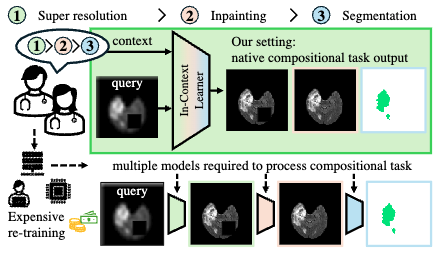
Prof. Dr. Erik Rodner is a faculty member at the University of Applied Sciences Berlin (HTW Berlin), where he serves as a Professor for Machine Learning and Data Science. He also contributes to the School of Engineering Sciences - Technology and Life. His research spans computer vision, machine learning, and biomedical applications, with a focus on learning with limited data, robust visual recognition models, and medical image analysis. He has developed innovative methods for medical diagnostics, industrial classification, and anomaly detection. Recent publications (2025-2016) highlight his expertise in visual in-context learning, semi-weakly segmentation, and active learning frameworks. He has collaborated with institutions such as ZEISS Group, Friedrich Schiller University Jena, and UC Berkeley. Scientific Awards: Award for Excellent Teaching (2023)
Panagiotis Papapetrou is a Professor of Data Science and Deputy Head of Department at the Department of Computer and Systems Science , Stockholm University (since 2017). He also serves as Head of the Data Science Research Group and holds an Adjunct Professor position at Aalto University (Finland). As a Board Member of the Swedish Association for Artificial Intelligence (SAIS) , he contributes to shaping AI research directions in Sweden. Research Pillars: Algorithmic data mining, interpretable machine learning, time series classification, and health informatics Key Projects: AI for societal fairness, digital twins for smart buildings, EXTREMUM for explainable medical AI, and e-learning personalization Teaching Legacy: Developed courses in Data Mining (HT2013-2022), Machine Learning (VT2022-2024), and Health Informatics (VT2018-2021) His work focuses on interpretable AI for healthcare applications, particularly through counterfactual explanations for time series classification and forecasting. This includes developing methods like Glacier for constrained counterfactuals and Ijuice for k-justified explanations. His research also explores multimodal clustering of sepsis patient records and federated learning approaches for ICU mortality prediction. Recent scientific contributions include: CounterFair (2024): Group fairness analysis via counterfactual burden metrics M-ClustEHR (2024): Multimodal clustering for electronic health records COMET (2024): Constraint-based glucose forecasting explanations Temporal pattern mining (2024-2025): Enhanced forecasting models through decomposition Z-Time (2024): Interpretable multivariate time series classification His editorial leadership includes: Action Editor at Machine Learning Journal (since 2024) Action Editor at Data Mining and Knowledge Discovery (since 2018) Guest Editorial Board for ECML/PKDD Journal Track (2014-2019)
Peter X. K. Song is a Professor in the Department of Biostatistics at the University of Michigan School of Public Health. With expertise spanning statistical methodology development and interdisciplinary applications, Dr. Song maintains active collaborations across Nutritional Sciences, Environmental Health Sciences, Chronic Disease research, and Nephrology. His work bridges theoretical statistics with practical healthcare solutions, focusing on innovative approaches to complex data challenges in public health and medicine. Based at the M4140 SPH II building in Ann Arbor, he leads the Song Lab and contributes significantly to the academic community through teaching, research mentorship, and scholarly publications. PhD, University of British Columbia, Vancouver, 1996 BS, Jilin University, Changchun, 1985 Dr. Song's research focuses on the statistical foundation of big data analytics, with particular emphasis on data integration, distributed inference, high-dimensional data analysis, longitudinal data analysis, mediation analysis, and spatiotemporal modeling. His methodological innovations address critical challenges in smart health applications, including organ exchange programs, children's health, chronic disease management, environmental health assessment, and nutritional sciences. His approach combines statistical theory, integer optimization, and algorithm development to create practical tools that help researchers understand complex relationships between environmental exposures and health outcomes. Dr. Song's publication record demonstrates a consistent trajectory of methodological innovation applied to pressing health challenges. His recent work shows increasing focus on sleep classification using AI techniques, personalized treatment effect analysis, distributed statistical methods for high-dimensional data, and epigenetic applications in adolescent health. The interdisciplinary nature of his research is evident in publications spanning biostatistics journals, computer science venues, and domain-specific medical publications. His work increasingly addresses the challenges of integrating diverse data sources while maintaining statistical rigor in the era of big data. IMS Fellow ASA Fellow Elected Member of the International Statistical Institute 2017 ENAR John Van Ryzin Award Dr. Song has mentored an impressive 22 PhD students and 6 postdoctoral trainees throughout his career, with many now holding faculty positions at prestigious institutions or working as data scientists in leading technology companies. His lab, the Song Lab, currently supports two postdoctoral research fellows and eight doctoral students working on cutting-edge statistical methodology development. His collaborative research extends across numerous grants that support interdisciplinary projects in kidney paired donation programs, environmental health studies, nutritional sciences, and chronic disease research, demonstrating his commitment to translating statistical innovation into practical health solutions. The Song Lab serves as a hub for interdisciplinary statistical research at the University of Michigan, bringing together experts from statistics, operations research, and machine learning to address complex challenges in medical and public health sciences. Current lab members include eight doctoral students and three postdoctoral fellows working on projects related to optimal organ matching strategies, causal mediation pathways of omics biomarkers, and statistical methods for big data integration. The lab maintains strong connections with clinical researchers across nephrology, pediatrics, environmental health sciences, and nutritional sciences, ensuring that methodological developments remain grounded in real-world applications.