- Computational Complexity
- Algorithms
- Algebra
- +۶ مورد دیگر
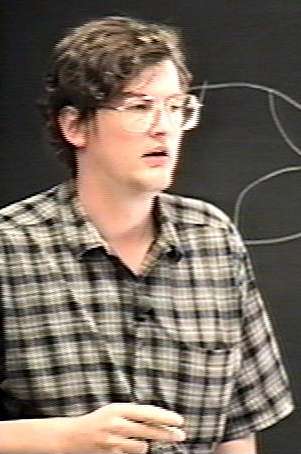
Alexander Barvinok is a Professor in the Department of Mathematics at the University of Michigan, Ann Arbor. His office is located in East Hall (4066 East Hall), where he has been conducting research and teaching advanced courses in computational mathematics since receiving his Ph.D. from Leningrad State University in 1988. Professor Barvinok's research focuses on computational complexity and algorithms in algebra, geometry and combinatorics. He is particularly interested in connections between various notions of phase transition in statistical physics, analytical properties of partition functions and computational complexity. His work bridges theoretical mathematics with practical computational approaches, exploring how physical phenomena can inform algorithmic design and analysis. His research spans convex geometry, combinatorial optimization, and the computational aspects of polynomial systems. His recent publications (2016-2024) demonstrate a consistent focus on partition functions, computational aspects of convex bodies, and approximation algorithms for counting problems. He has made significant contributions to understanding the zeros of partition functions in statistical physics models, developing efficient volume estimation algorithms for polyhedra, and creating polynomial-time approximation schemes for problems previously thought to be computationally intractable. His work frequently connects algebraic properties of polynomials with computational feasibility. Professor Barvinok has authored several influential textbooks including "A Course in Convexity" (AMS Graduate Studies in Mathematics, 2002), "Integer Points in Polyhedra" (Zurich Lectures in Advanced Mathematics, 2008), and "Combinatorics and Complexity of Partition Functions" (Springer, 2016). He regularly teaches advanced graduate courses such as Math 669 on specialized topics including "Combinatorics, Geometry and Complexity of Integer Points" and "Topics in Convexity," with his lecture notes often evolving into significant research contributions.