Joseph Chee Chang is a researcher at Carnegie Mellon University's Human-Computer Interaction Institute. His work focuses on Human-Computer Interaction Artificial Intelligence Natural Language Processing He develops tools for scholarly synthesis, literature review, and research ideation. Research Highlights Chang designs mixed-initiative systems like IdeaSynth for research idea development and Social-RAG for socially grounded AI generation. His PaperWeaver system recontextualizes academic recommendations, while Qlarify offers hierarchical paper summaries. Current projects include SciArena (2025) for evaluating scientific foundation models and PaperMage (2023) for document processing.
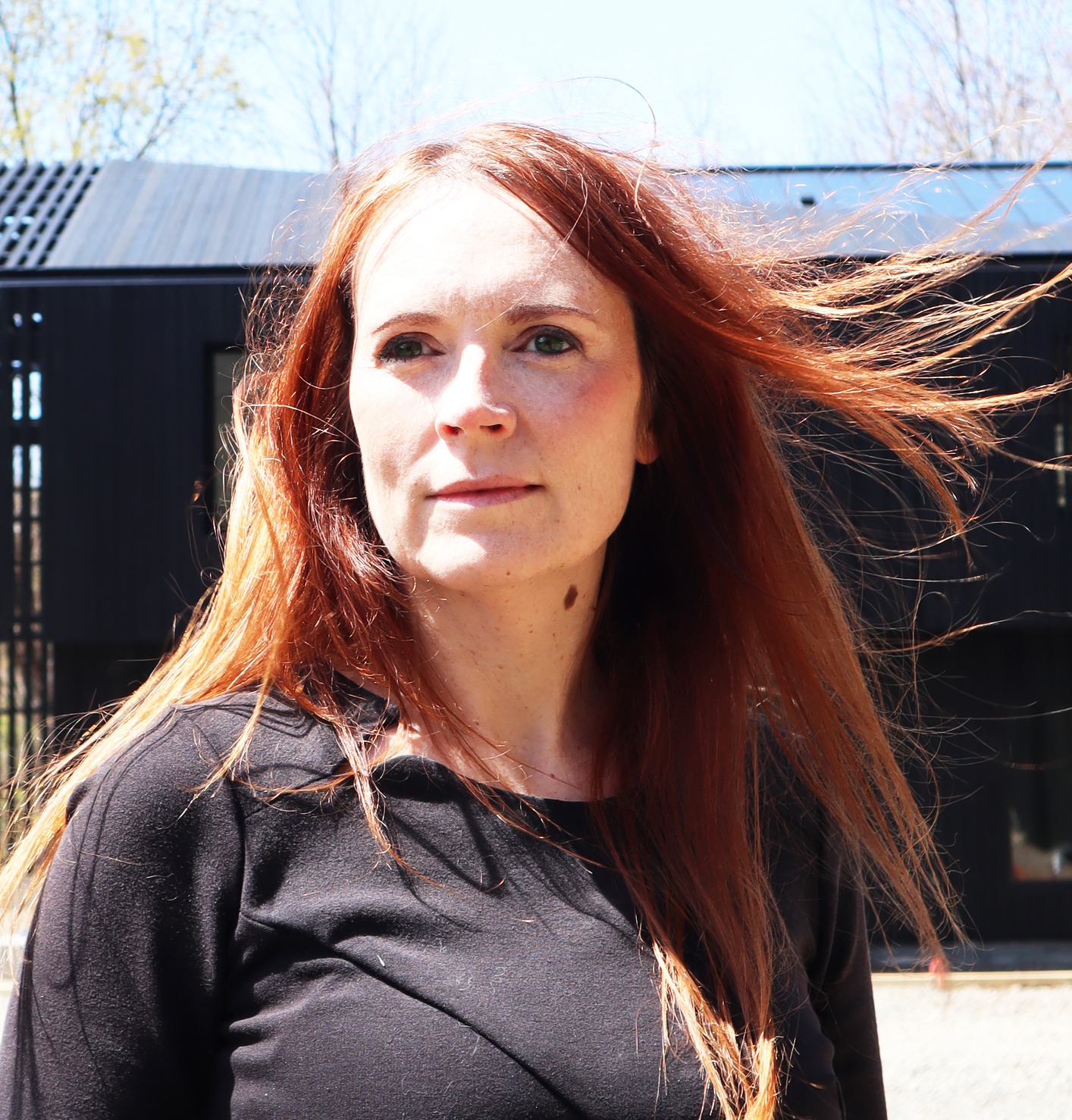
Caroline O'Donnell is the Edgar A. Tafel Professor of Architecture in the Department of Architecture at Cornell University’s College of Architecture, Art, and Planning. She served as Chair of the Department and is a licensed architect, educator, and researcher with a strong focus on ecological design, sustainability, and architectural theory. She is the founder and principal of CODA (Caroline O'Donnell Architecture), a practice based in Ithaca, NY, known for innovative, environmentally responsive design. B.Arch, Manchester School of Architecture (2000) M.Arch, Princeton University (2006) Her research centers on sustainability, material innovation, and the circular economy, explored through her leadership of the Ecological Action Lab (EAL) at Cornell. Her work challenges conventional material use by experimenting with waste, biodegradable substances, and 'nose-to-tail' design practices. Projects like Primitive Hut and Etvitim at Art Omi demonstrate her commitment to reimagining architecture’s relationship with nature and material lifecycles. O'Donnell’s publications, including Niche Tactics , The Architecture of Waste , and Werewolf , reflect a deep engagement with architectural theory, ecology, and cultural narratives. Her edited journals— Cornell Journal of Architecture (issues 8–10) and Pidgin —further establish her as a key voice in architectural discourse. Her recent articles and books explore themes of material metamorphosis, performativity, anti-aesthetics, and narrative in design. The works collectively emphasize a shift from static form to dynamic, responsive, and ecologically grounded architecture, often drawing from biological analogues and philosophical inquiry. MoMA/PS1 Young Architects Program Winner (2013) Pelli Clarke Pelli Fellowship MacDowell Colony Fellowship AIA Peconic Jury Award Europan Competition Prizes Heywood Medal and Suzanne Kolarik Underwood Prize O'Donnell has advised numerous projects and research initiatives through CODA and the Ecological Action Lab, securing grants such as the NEXUS-NY and Cornell Council for the Arts awards. She has previously taught at Harvard GSD and The Cooper Union, mentoring the next generation of architects. Her collaborative work with OMG (O'Donnell Miller Group) extends her research into walking pavilions and decomposing structures. Future work continues to explore the boundaries of architecture, waste, and narrative, pushing the discipline toward more resilient and imaginative futures.
Mohammad Aliannejadi is an Assistant Professor at the Information Retrieval Lab (IRLab) within the Informatics Institute at the University of Amsterdam. His research focuses on conversational search systems, information retrieval, and recommender systems, with an increasing emphasis on Large Language Model applications in IR. He obtained his PhD from the Faculty of Informatics at Università della Svizzera italiana (USI) in Lugano, Switzerland, and completed his MSc at Tehran Polytechnic in Iran. His research interests span conversational search systems, clarification question generation, mobile search, cross-market recommendation, and point-of-interest recommendation. Dr. Aliannejadi has made significant contributions to understanding how users formulate information needs in conversational settings and how systems can effectively respond through clarification mechanisms. His work bridges theoretical IR concepts with practical implementations, particularly in mobile contexts where information needs often evolve rapidly. His recent publications show a clear trend toward leveraging Large Language Models for conversational search evaluation, query understanding, and performance prediction. The 15 most recent articles demonstrate his leadership in adapting traditional IR techniques to the LLM era, with particular focus on efficient and effective conversational search systems that can handle complex user information needs through natural dialogue. Dr. Aliannejadi is deeply embedded in the IR community through extensive service activities. He has served as Program Co-Chair for ICTIR 2023, Tutorial Co-chair for ECIR 2024, and Lab Co-Chair for CLEF 2023. He regularly organizes workshops such as XMRec, SCAI, and MICROS, and has been a SIGIR Student Liaison. His service extends to program committees for major conferences including SIGIR, ACL, WSDM, and ECIR, and as a reviewer for journals like TOIS and TKDE. His leadership extends to organizing significant academic events including the 15th European Summer School in Information Retrieval (ESSIR 2024) and serving on the Program Committee for the Bachelor Program in AI at UvA. His lab, IRLab (formerly ILPS), focuses on developing innovative approaches to information access through conversational interfaces and advanced retrieval techniques.
Dr. Heidi Wittmer is a Professor and Deputy Head of the Department of Environmental Politics at the Helmholtz Centre for Environmental Research - UFZ in Leipzig, Germany. With over two decades of experience in environmental research and policy, she leads the Working Group on Land Use, Ecosystem Services and Biodiversity and serves as a UFZ Science-Policy Expert. Her work bridges the gap between scientific research and practical policy implementation, focusing on biodiversity conservation, ecosystem services, and sustainable development. Dr. Wittmer's educational background includes: Ph.D. in Socio-economics of rural development from the University of Göttingen (1995-1998) M.Sc. in Agricultural Sciences from TU-Berlin (1989) B.Sc. in Agricultural Sciences from University of Gießen (1985) Dr. Wittmer's research interests span environmental politics, biodiversity conservation, ecosystem services, and the science-policy interface. Her work emphasizes understanding how societal values relate to nature, developing frameworks for transformative change in biodiversity conservation, and creating practical tools for integrating ecosystem services into policy and planning. She has made significant contributions to international initiatives like The Economics of Ecosystems and Biodiversity (TEEB) and has advised on national biodiversity strategies across multiple countries. Her research often employs interdisciplinary approaches that combine ecological, economic, and social perspectives to address complex environmental challenges. Analysis of Dr. Wittmer's recent publications reveals a strong focus on transformative approaches to biodiversity conservation, the integration of ecosystem services into spatial planning, and the role of science in environmental policy debates. Her work demonstrates a consistent trajectory toward understanding and facilitating systemic change in environmental governance, with increasing emphasis on implementation challenges and practical frameworks for action. The publications span multiple disciplines including environmental policy, ecology, economics, and social sciences, reflecting her commitment to interdisciplinary research that addresses real-world conservation challenges. Dr. Wittmer has supervised numerous students and early-career researchers throughout her career, contributing to the development of the next generation of environmental scientists and policy experts. She has secured significant research funding for projects examining biodiversity conservation, ecosystem services, and sustainable development pathways, with particular focus on Latin America and Germany. Her work has informed national and international policy processes, including contributions to EU environmental legislation and global biodiversity frameworks. As part of the UFZ's Department of Environmental Politics, Dr. Wittmer collaborates with interdisciplinary teams working on environmental governance, policy analysis, and sustainability transitions. Her research group engages with policymakers, practitioners, and stakeholders to ensure research relevance and impact, emphasizing participatory approaches and knowledge co-production.
Winslow Burleson is a Professor at the University of Arizona's School of Information, specializing in Human-Computer Interaction (HCI), Robotics, and Assistive Technology. His research focuses on developing innovative systems for education, healthcare, and marine engineering. Notable projects include the DRESS system for dementia care, CrowdMuse for collaborative creativity, and underwater robotics interfaces. He has received the James Chen Annual Award for Best Journal Article (2012) and leads interdisciplinary teams in cyberlearning and adaptive tutoring systems. Education background includes advanced studies in computer science and engineering, though specific details are not provided. His work integrates robotics, affective computing, and smart environments to address real-world challenges such as aging, education, and environmental exploration. Research interests span robotics applications in education (e.g., co-robotic learning agents), assistive technologies for independent living, and multimodal learning environments. His contributions include adaptive systems for creative crowdsourcing, emotion-aware tutoring platforms, and underwater human-robot interaction frameworks. Current projects emphasize scalable crowd ideation tools and sensor-driven behavior change interventions. Awards include recognition for impactful journal contributions, while grants fund initiatives like cyberlearning with teachable robots and precision oncology IT tools. Advising and grant activities are central to his academic contributions, though specific student names are not listed. Collaborations involve cross-disciplinary teams in engineering, healthcare, and arts to create impactful technologies. Burleson's lab focuses on developing responsive emotive systems, wearable assistive devices, and immersive multimedia applications. Ongoing work explores scalable solutions for dementia support, marine technology interfaces, and creative human-computer interaction paradigms.
Gustav Delius is a Senior Lecturer in the Department of Mathematics at the University of York. His research focuses on transferring methods from Quantum Field Theory, String Theory, and Integrable Systems to theoretical ecology and mathematical biology. He leads the York node of the MINOUW consortium, addressing unwanted catches in European fisheries, and develops size-spectrum models for marine ecosystems to inform fisheries policy. Dr. Delius holds a PhD from Stony Brook University. His work spans stochastic processes, complex networks, and ecological modeling. He has led projects such as the NERC-funded 'Pyramids of Life' initiative and the EPSRC IAA grant for sustainable fisheries policy. His research integrates mathematical rigor with real-world applications in marine ecology and conservation. Recent collaborations include interdisciplinary work on climate change impacts on coastal ecosystems and Bayesian inference for pandemic modeling. He has supervised research projects and contributed to initiatives like the MINOUW consortium, emphasizing practical policy implications of his findings.
Dr. Gun A. Lee serves as a Senior Research Fellow at the Empathic Computing Lab within the School of Information Technology and Mathematical Sciences at the University of South Australia. He concurrently holds an Adjunct Senior Fellow position at the HIT Lab NZ, University of Canterbury. His academic journey spans multiple institutions with significant contributions to extended reality research. Dr. Lee's educational foundation includes: Ph.D. in Computer Science and Engineering from POSTECH (2002-2009) M.S. in Computer Science and Engineering from POSTECH (2000-2002) B.S. in Computer Science from Kyungpook National University (1996-2000) His research centers on extended reality technologies and their applications. Dr. Lee's work explores Virtual Reality (VR), Augmented Reality (AR), and Mixed Reality (MR) systems with emphasis on creating immersive experiences for learning, training, and collaboration. His concept of 'Immersive Authoring' represents a significant contribution to the field, enabling content creation while immersed in the experience itself. In Human-Computer Interaction, he develops novel interaction techniques that leverage natural human behaviors and multimodal inputs, particularly focusing on eye tracking, gesture recognition, and spatial awareness. Analysis of Dr. Lee's recent publications reveals a clear trajectory from foundational AR frameworks to sophisticated collaborative mixed reality systems. His work increasingly integrates social and emotional dimensions into remote collaboration, with projects like SharedSphere demonstrating practical applications of live 360-degree mixed reality. The research consistently bridges theoretical HCI principles with real-world applications across education, professional training, and entertainment domains. As a Research Degree Supervisor, Dr. Lee mentors graduate students in extended reality and human-computer interaction. His teaching portfolio includes the 'Human Interface Technology - Design and Evaluation' course at the HIT Lab NZ, where he specialized in evaluation methodologies for interactive systems across multiple semesters from 2014-2016. He has also conducted specialized workshops including 'The Glass Class' on Google Glass development. At the Empathic Computing Lab, Dr. Lee leads research initiatives focused on creating technologies that enhance human connection. His project portfolio spans from fundamental interaction research like 'Interaction with Augmented Mirrors' to applied mobile AR applications including CityViewAR, AntarcticAR, and GeoBoids. His work on the Mobile AR Framework represents significant infrastructure development for the field, while projects like VPS (VR-based Paint Spray Training Simulator) demonstrate practical industrial applications of his research.
Dr. Meghdad Fazeli is a Senior Lecturer in the Department of Electronic and Electrical Engineering at Swansea University, Faculty of Science and Engineering. His research focuses on renewable energy integration, smart grids, and microgrid technologies, with a particular emphasis on virtual synchronous machines (VSM) and energy management strategies. He leads projects addressing climate change mitigation through decarbonized energy systems, aligning with UN Sustainable Development Goals 7, 11, and 13. Dr. Fazeli collaborates with National Grid ESO and colleagues across disciplines including Computer Science and Business School via the CARI initiative. He founded Innoverters-Ltd, a Swansea spin-out consultancy for future power systems innovation. His teaching uses blended learning, including MATLAB-SIMULINK integration and recorded lectures, coordinating modules like Power Systems (EG-342) and Advanced Power Systems (EGLM05). Research interests span renewable energy control, grid-forming inverters, and energy communities. Recent articles address VSM applications, peer-to-peer trading, and buffered microgrid designs. He advises PhD projects on topics like solar forecasting and grid-less power system architectures. His work emphasizes sustainable energy transitions, long-term resilience, and interdisciplinary solutions for net-zero systems.
Arsalan Heydarian is an Associate Professor in the Department of Civil and Environmental Engineering at the University of Virginia (UVA) , with affiliations to the UVA Link Lab and Omni Reality and Cognition Lab (ORCL Lab) . His work focuses on user-centered intelligent infrastructure through virtual/augmented reality and data-driven design . Education: Ph.D. in Civil Engineering (USC) M.Sc. in Systems Engineering (USC) M.Sc. in Civil Engineering (Virginia Tech) B.Sc. in Civil Engineering (Virginia Tech) Research Streams: Intelligent built environments Mobility infrastructure design User-centered autonomous vehicles Data-driven mixed reality Construction automation Recent Article Trends: Spanning smart buildings , VR/AR applications , and transportation systems , his publications emphasize human-environment interaction , adaptive infrastructure , and immersive technology in civil engineering. Awards: NSF $1M Grant for inclusive AI education initiatives Labs & Teams: Co-founder of the Omni Reality and Cognition Lab (ORCL) , a leading facility for VR/AR-based infrastructure research and human behavior studies in built environments.
Scotty D. Craig is an Associate Professor in Human Systems Engineering at The Polytechnic School, Arizona State University. He serves as Director of Strategic Initiatives at ASU's Learning Engineering Institute and co-directs the ASU Advanced Distributed Learning Lab in collaboration with the U.S. Department of Defense. His research spans cognitive science, educational technology, and immersive learning environments with applications in virtual humans, mixed reality training systems, and intelligent tutoring technologies. Ph.D. Experimental Psychology (Cognitive Learning), University of Memphis (2005) M.S. Psychology, University of Memphis (2001) B.A. Psychology with minors in Anthropology and History, University of Memphis (1998) Dr. Craig's research focuses on the intersection of human cognition, technology, and learning sciences. His work includes virtual humans for training, cognitive load optimization in medical websites, and mixed reality systems for medical education. He leads multiple DOD-funded projects totaling $8.5M, including the $5M Virtual Insomnia Patients system and $2M WaterSim America sustainability game. Recent publications emphasize immersive learning technologies, with 2025 work on collaborative AR learning companions and 2024 studies on voice quality impacts in pedagogical agents. His research has produced over 150 publications, including three edited books on educational technology. Scientific Honors: Pacific Southwest Best Paper Award (ASEE 2016) Best Poster Award (AIED 2017) Innovation in Scholarship Award (ASU 2017) Faculty Teaching Excellence Award (ASU 2018) Top 5% Teaching Recognition (Fulton Engineering 2024) Dr. Craig serves on editorial boards for International Journal of STEM Education and Computers & Education . He has organized five journal special issues and conducted extensive research evaluations for the U.S. DoD.
Lieve Van den Block is Full Professor at Vrije Universiteit Brussel (VUB) and founding chair of the Ageing and Palliative Care Research Program within the End-of-Life Care Research Group, which she co-chairs with Prof. Joachim Cohen. Her dual affiliation spans VUB and Ghent University in Belgium, where she leads national and international initiatives focused on palliative care systems for aging populations. Her educational foundation includes a Master in Clinical Psychology and PhD in Medical Social Sciences. These qualifications underpin her 20+ years of expertise in developing evidence-based interventions for serious illness care. Her research pioneers integrative approaches at the intersection of palliative care, geriatrics, and public health. Key themes include advance care planning for dementia patients, compassionate community models, and policy frameworks for residential aged care. She employs mixed-methods designs spanning epidemiological studies, Delphi consensus processes, and digital health innovation. Recent publications reveal accelerating trends in technology-enabled care solutions and cross-border policy harmonization. Her team's work increasingly addresses environmental determinants of end-of-life experiences through interdisciplinary 'Compassionate Communities' frameworks, reflecting Europe's evolving long-term care landscape. Scientific recognition includes: Collen-Francqui Research Professor Chair (2020) EAPC Early Researcher Award (2014) Excellent PhD Supervision Award (2018) Léon Favyts and Hugo Van den Enden Award (2018) 2nd place Passion for Palliative Care (2018) She mentors doctoral candidates through VUB's graduate programs while securing competitive funding from the European Commission (including Horizon Europe coordination), national research councils, and health charities. Current projects like EU NAVIGATE demonstrate her leadership in translating evidence into practice across 28 European countries. Her End-of-Life Care Research Group operates as a hub for interdisciplinary collaboration, integrating psychologists, clinicians, and policymakers within VUB's Faculty of Medicine and Pharmacy. The Aging and Palliative Care Reference Group she chairs at the European Association for Palliative Care extends this influence continent-wide.
Björn Johansson is a Professor at Chalmers University of Technology, specializing in Production Systems. His research focuses on sustainability aspects of manufacturing through virtual tools, aiming to minimize environmental, social, and economic impacts. Key methodologies include flow simulation, dynamic environmental assessments, 3D visualization, and layout optimization. Primary research areas: Sustainable Manufacturing, Digital Twins, Environmental Impact Assessment Collaborations: Mélanie Despeisse, Henrik Söderlund, and others in automotive, battery production, and maritime industries His work emphasizes integrating digital technologies (e.g., VR, IoT) with sustainable practices, addressing challenges in supply chain resilience, human-robot collaboration, and circular economy models. Recent studies explore VR training environments, 5G-enabled manufacturing, and extended reality (XR) frameworks. Current projects involve 44 initiatives across battery systems, servitization, and digitalization for sustainability. Publications span 179 articles, including topics like digital twin implementation, ergonomic VR assessments, and hybrid simulation models for environmental analysis.
Dr. Julian Frommel is a tenured Assistant Professor in the Interaction/Multimedia group at Utrecht University's Faculty of Science. His research in human-computer interaction and human-centered AI investigates the benefits and harms of interactive systems with a focus on creating healthy, meaningful, and enjoyable digital experiences for users. He is actively involved in several research themes including AI Labs, Dynamics of Youth, Game Research, Governing the Digital Society, and Human-centered Artificial Intelligence. Frommel earned his doctorate degree (Dr. Rer.-Nat.) in computer science from Ulm University in Germany. Prior to that, he completed both his Bachelor's and Master's degrees at Augsburg University in Germany. Before joining Utrecht University, he was a postdoctoral fellow at the University of Saskatchewan in Saskatoon, Canada, working with Dr. Regan Mandryk. His research focuses on assessing and modeling user states to predict when experiences go awry, leveraging games user and player experience research as a foundation for understanding digital experiences, implementing novel interaction concepts for solving problems inherent to new technologies, and studying social interactions between users to address human factors of negative experiences such as toxicity. He employs mixed methods with a strong emphasis on quantitative research and data-driven approaches. Frommel's recent publications demonstrate a clear focus on toxicity in gaming environments, player experience, and adaptive systems. His work spans virtual reality, esports, and traditional gaming contexts, with particular attention to how interactive systems can mitigate negative outcomes like harassment and toxicity. He has published extensively in top-tier venues including CHI, CHI PLAY, and IEEE Transactions on Games. Professionally, Frommel serves as Technical Program Chair for ACM CHI PLAY 2022 & 2023 and is a Review Editor for Frontiers in Virtual Reality: Technologies for VR. He is actively involved in building the academic community around game research and human-computer interaction. His approach to research integrates theoretical understanding with practical implementation of interactive systems. He has supervised numerous students through Master's projects and collaborates extensively with researchers in North America and Europe. His work on toxicity intervention systems, player state assessment, and game-based digital biomarkers represents significant contributions to the field. Frommel is affiliated with multiple research initiatives including Dynamics of Youth (DoY), Game Research, and Institutions for Open Societies (IOS). His 'Healthy play, better coping' research theme reflects his commitment to understanding how gaming experiences can positively impact mental health and well-being.
Dr Craig Stewart is an Associate Professor in the Department of Computer Science at Durham University and serves as MDS Director in the Faculty of Science. He holds a doctoral degree from the University of Nottingham (2012), focusing on adaptive multimedia interfaces in eLearning. His research explores adaptive systems, human-computer interaction (HCI), user modeling, personalized learning, and cultural dimensions in education. Stewart has contributed to frameworks like CAE-L and WHURLE, emphasizing cross-cultural adaptation and ethical implications of personalization technologies. He has advised postgraduate student Arwa Al Saqaabi and collaborated with institutions like FutureLearn on MOOC dropout prediction studies. His work integrates interdisciplinary approaches, combining engineering, arts, and programming to enhance STEAM education. He also explores immersive virtual reality's impact on learning through mixed-methods studies. Education Track: Completed his PhD in 2012 at the University of Nottingham. Prior research includes studies at the University of Nottingham and other institutions, reflecting his long-standing engagement in adaptive learning systems development. Research Interests: Stewart's work addresses cultural barriers in online education, adaptive hypermedia systems, and gamification strategies. He has investigated internationalization of learning resources, authoring tools for personalized courseware, and the role of learning styles in system design. His recent projects include analyzing MOOC engagement patterns and developing taxonomies for measurable learner outcomes. Advising & Grants: Supervised postgraduate student Arwa Al Saqaabi. His research has been supported through collaborations with academic and corporate partners in fields like ontology development and workplace learning solutions. Grants and funding details are not explicitly listed in the provided texts. Labs/Teams: While specific lab affiliations are not mentioned, his work is closely tied to Durham University's Computer Science department and the MDS initiative within the Faculty of Science. He collaborates with interdisciplinary teams on projects combining technology, culture, and education.
Amar Kumar Seeam is a Lecturer at the Mauritius Campus of Middlesex University. He holds a PhD in Building Simulation and Predictive Control from the University of Edinburgh (2015). His research spans cybersecurity, IoT, smart cities, eHealth systems, and public administration innovations. He has led projects on blockchain-based healthcare systems, augmented reality control platforms, and cyber deception frameworks for IoT-edge networks. Notably, he contributed to pandemic response initiatives like ventilator prototyping during the 2020-21 crisis and developed disinfection technologies using visible light. He co-founded the Centre for African Smart Public Value Governance (C4SP), focusing on policy innovation in African urban development. His work integrates interdisciplinary approaches, combining technical systems with societal impact analysis. Education: PhD in Building Simulation (University of Edinburgh, 2015) Key Projects: MRIC/IEEE-funded multi-purpose light disinfection chamber Smart tourism chatbot for Mauritius Cybersecurity frameworks for IoT and SCADA systems Research Interests: Cyber-physical security, AI in education, blockchain healthcare systems, and sustainable energy management. His work emphasizes practical applications in developing regions, such as Mauritius and Africa, focusing on scalable solutions for public infrastructure and digital governance. Recent articles highlight trends in AI-driven education tools, cultural governance in multicultural projects, and IoT security protocols. His contributions span conferences like IEEE, ACM, and Edward Elgar Publishing, addressing both technical and policy-oriented challenges in emerging technologies.